Who Is José Antonio Kast? Chile’s President Explained: the Right Turn and What to Watch
GUIDES · CHILE
Key Facts
- —The person José Antonio Kast Rist, born in Santiago on 18 January 1966. A lawyer and the son of German immigrants, he is a practising Catholic and a father of nine.
- —The office President of Chile since 11 March 2026. The term is four years with no immediate re-election, so it ends on 11 March 2030.
- —The mandate He won the runoff of 14 December 2025 with 58.17 percent against the Communist Jeannette Jara. Voting is compulsory, and turnout was 85 percent.
- —The party He founded the Republican Party in 2019 and resigned from it on inauguration day. His coalition lacks the four-sevenths majority needed to change the constitution.
- —The team Claudio Alvarado runs the interior ministry, Jorge Quiroz the treasury and Francisco Pérez Mackenna foreign affairs. Martín Arrau has been security minister since May 2026.
- —What comes next The 2027 budget bill is due in Congress by 30 September 2026. Cadem put his approval at 35 percent on 28 September, near the term low of 34 percent it recorded in mid-September.
Who José Antonio Kast is and how the leader of Chile’s hard right reached power. His first six months, explained for readers abroad.
José Antonio Kast lost the presidency in 2021 and won it four years later by a landslide. This profile is about the man: his family, his path, his team and his critics. For the country itself, read our companion guide, Chile Explained: The Country, the Kast Government and What to Watch.
Early life and path to power
Kast was born in Santiago on 18 January 1966. His parents came from Bavaria in southern Germany. His father, Michael Kast, arrived in Chile in 1950 and settled in Paine, south of the capital.
The family turned a roadside stall selling cold meats into Cecinas Bavaria, a food manufacturer and restaurant chain. One elder brother, Miguel Kast, became an economist of the military government. He served as labour minister and as president of the central bank under General Augusto Pinochet.
Kast studied law at the Pontifical Catholic University of Chile and graduated in 1990. There he joined the gremialista movement of Jaime Guzmán, the conservative thinker behind the 1980 constitution. He backed the “Yes” vote for Pinochet in the 1988 plebiscite, which Pinochet lost.
His elected career began in 1996 as a councillor in Buin, a town near Santiago. From 2002 to 2018 he sat in the Chamber of Deputies for the UDI. The Independent Democratic Union was then the largest party of the right. He left the UDI in 2016.
He ran for president as an independent in 2017 and took 7.93 percent. He then founded Acción Republicana, which became the Republican Party in 2019. In 2021 he won the first round but lost the runoff to the left’s Gabriel Boric, 44.13 percent to 55.87 percent.
The next step came through the constitution. His party won the most seats on the council that drafted a new text in 2023. Voters rejected that draft in December 2023, as they had rejected a left-leaning draft a year earlier.
In the first round of 16 November 2025 he came second with 23.93 percent, behind Jara on 26.85 percent. The right then united behind him. On 14 December he won 7,263,236 votes, or 58.17 percent, and he took office on 11 March 2026. Our election-day report set out the stakes.
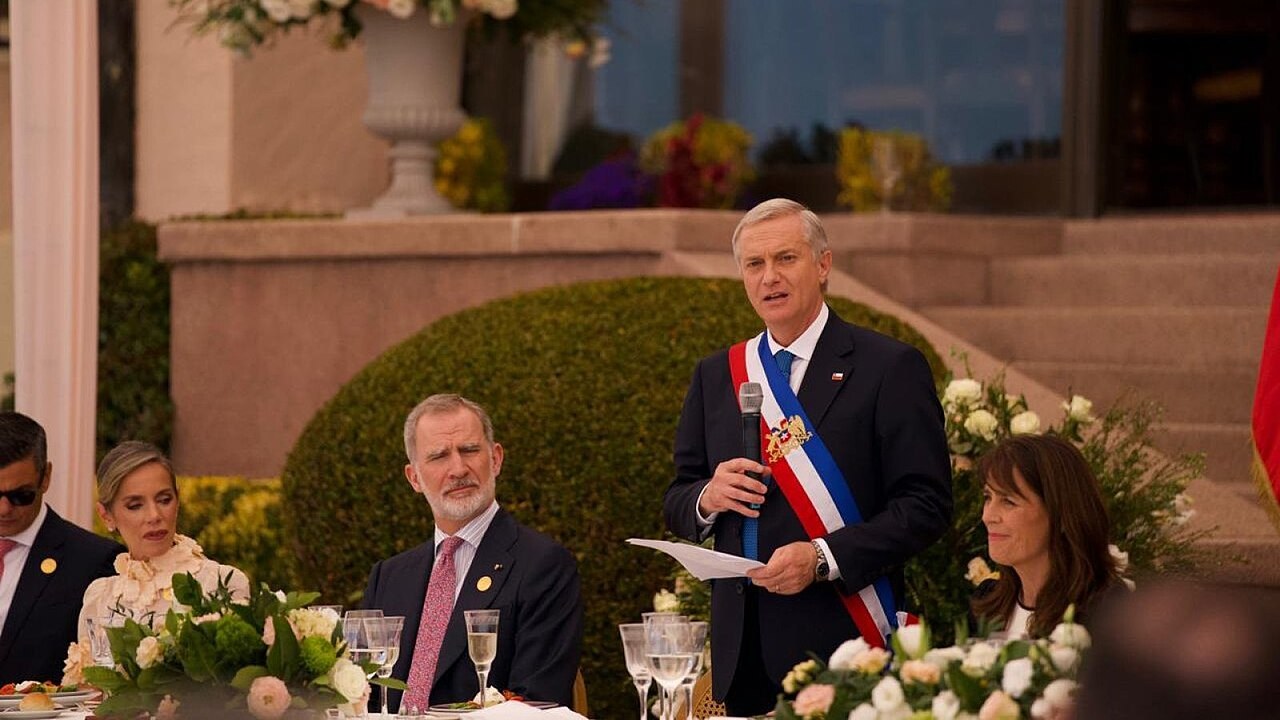
The current office
Chile’s president is head of state and head of government. Congress has 155 deputies and 50 senators, and it sits in Valparaíso, not Santiago. Ordinary laws need simple majorities, but constitutional reforms need four-sevenths of each chamber.
That threshold is his main constraint. On 22 September 2026 his reform to lengthen detention before administrative expulsions got 88 votes in the Chamber of Deputies. It needed 89. Our report on the vote explains who was missing.
He began with what he called an emergency government. In his first week he ordered an audit of the state and started digging trenches on the northern border with Peru. In March 2026 his finance minister also let fuel prices rise sharply, ending part of a costly subsidy.
His main legislative success is the economic reform his government calls National Reconstruction. Congress cleared it on 4 August 2026. It cuts the corporate income tax from 27 percent to 23 percent by 2029. The steps are 25.5 percent in 2027 and 24 percent in 2028.
The Constitutional Court then struck out a clause compensating investors whose environmental permits are annulled, and narrowed a tax-stability guarantee. What the reform means for foreign residents is covered in our tax report.
The economy has not yet turned. Unemployment was 9.5 percent in May to July 2026, the highest in five years. The central bank cut its 2026 growth forecast to between 0.25 and 0.75 percent. In June a new fiscal decree dropped the government’s balanced-budget pledge.
His team has been unstable. A reshuffle on 19 May 2026 replaced the security minister, and press counts reached 48 departures of senior and regional officials by mid-September 2026. Our running count explains how the tallies differ.
The political model
Kast’s programme rests on three ideas: order, a smaller state and open doors for investors. On crime and migration he borrows openly from El Salvador’s Nayib Bukele. On the economy he sits closer to Argentina’s Javier Milei, though with less appetite for shock therapy.
His border plan, which the government calls Escudo Fronterizo, combines trenches, surveillance technology and soldiers in the north. Deportation flights began in April 2026. To send Venezuelans home he has sought a working channel with Caracas, where Delcy Rodríguez is acting president.
The flagship security bill is a constitutional reform. It would create a new state of exception for public security of up to 120 days, and a register of criminal organisations. In August 2026 the government slowed it down after allies and opponents alike attacked it. Why the reform stalled traces the revolt.
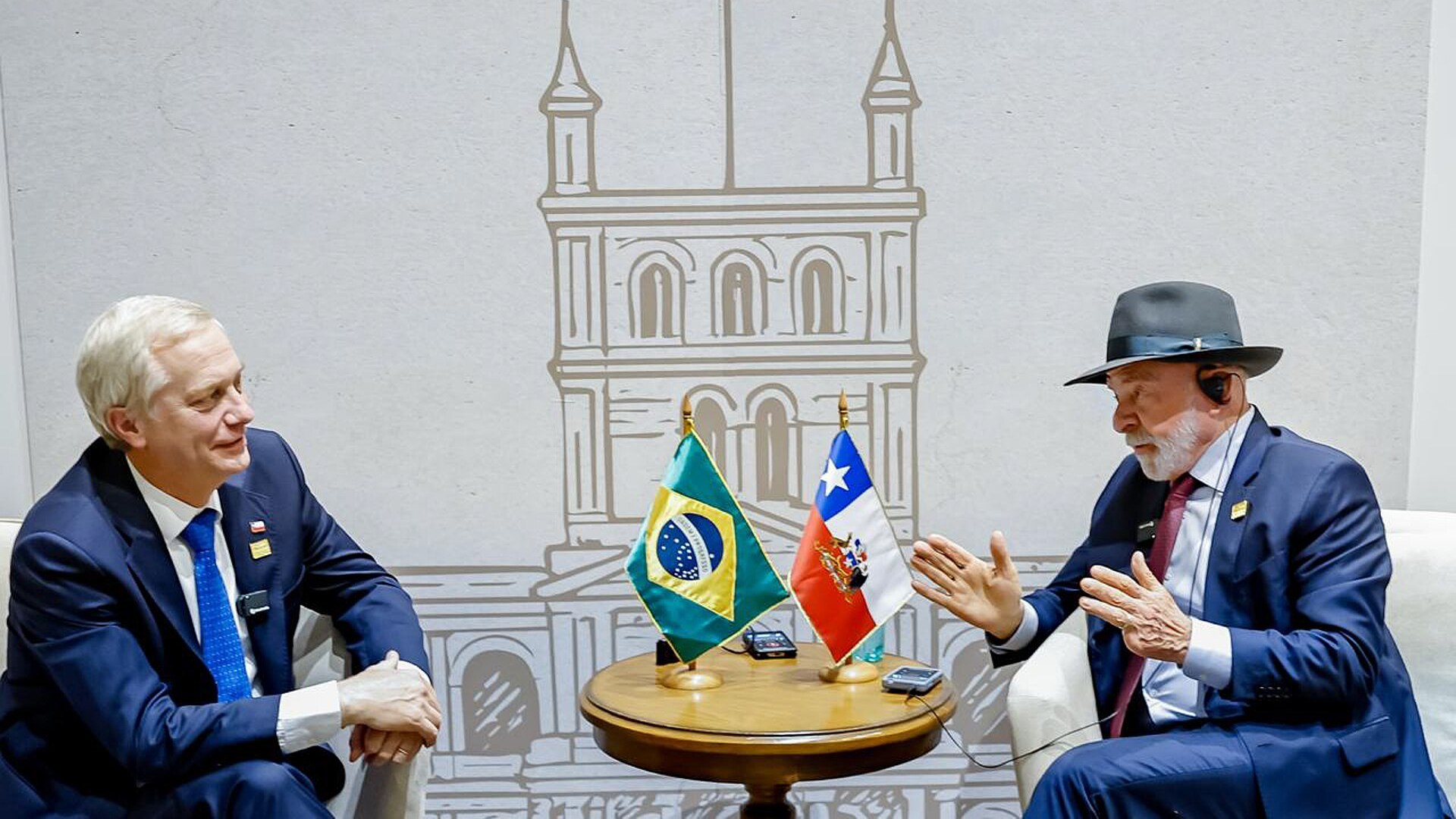
Abroad, he has aligned Chile with Washington and with the region’s right. On 22 September 2026 Chile joined the Shield of the Americas, a US-led coalition against organised crime, as a full member. What Chile signed up to remains vague: no treaty text or budget has been published.
The same day he told the United Nations General Assembly that “Chile is back”. He pitched the country to investors and criticised the organisation’s bureaucracy. Our report on the speech checks the figures he cited.
What this does not mean: Chile is not leaving its trade agreements. China remains its largest customer, taking 35.4 percent of exports of goods and services in 2025, according to the trade undersecretariat (SUBREI), and no government can easily change that.
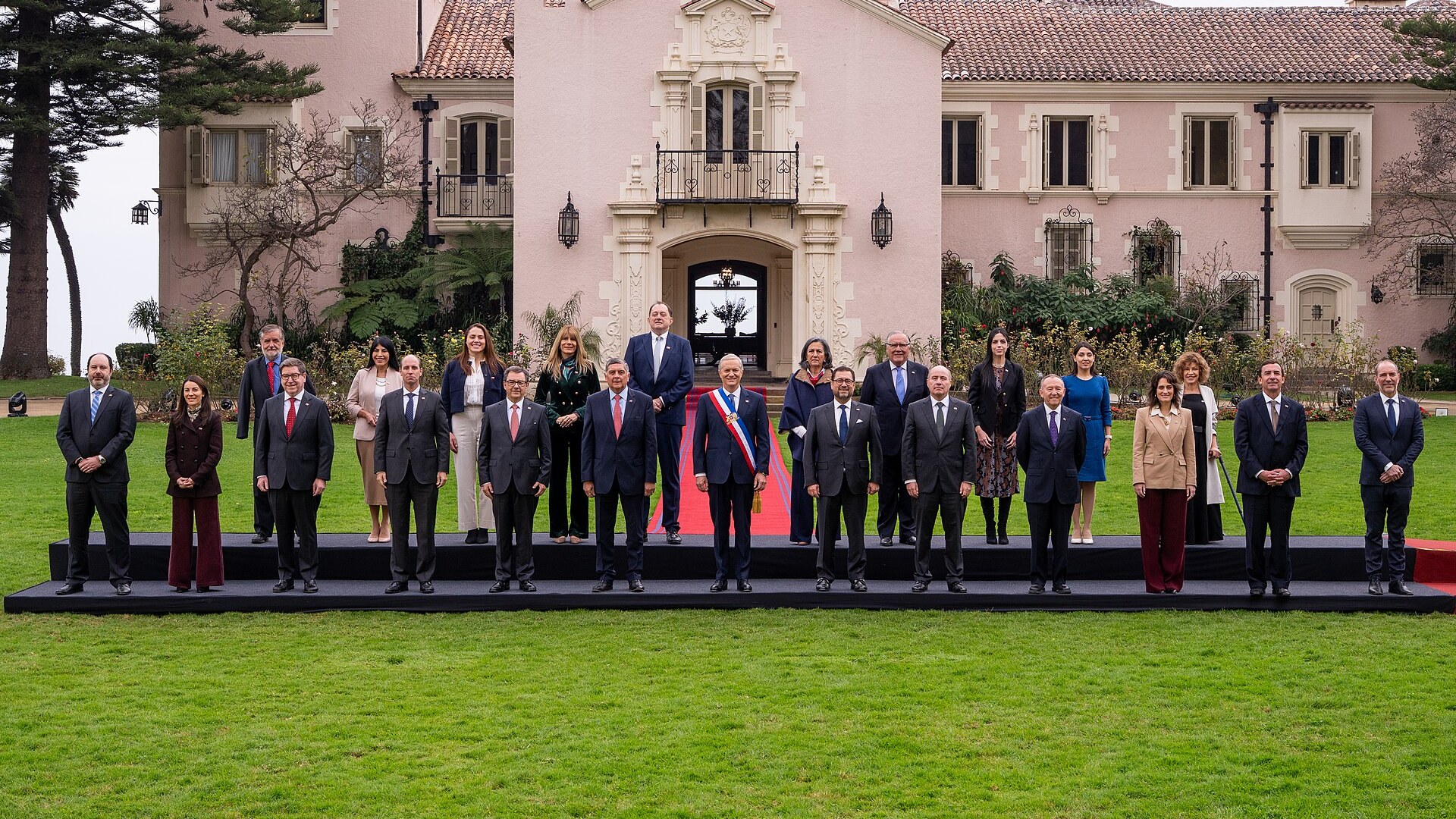
Controversies and critics
The family history follows him. In 2021 the Associated Press reported a German archive card showing that his father joined the Nazi party in 1942, aged 18. Kast has described his father as a forced conscript in the German army.
His own record on the dictatorship is the second line of attack. Critics on the left call him the most right-wing president since the return of democracy in 1990. He supported the Yes vote in 1988 and has defended parts of the military government’s economic legacy.
The third is broken promises. He campaigned on cutting no existing social benefit. In April 2026 the investigative outlet CIPER published a finance ministry memo listing cuts to hundreds of programmes, including the universal pension. Kast said the memo was taken out of context.
In September 2026 officials merged 25 social programmes into nine for 2027. The finance ministry’s wider fiscal adjustment target is about US$6 billion over eighteen months. Our report on the merger sets out what is known.
Foreign policy has produced its own rows. In April 2026 he signed a statement with Milei backing Argentina’s Falklands claim, including “surrounding maritime areas”. Chilean senators said the wording weakened Chile’s own claims in the south. The Falklands backlash is in our report.
His government also withdrew Chile’s sponsorship of Michelle Bachelet’s bid for UN Secretary-General. She left the race on 19 September 2026. Seven former foreign ministers and four former deputy foreign ministers blamed the government. The Chamber had already voted to summon the foreign minister for formal questioning on 28 September 2026, the first such interpellation of a foreign minister in Chile’s history.
Human rights groups oppose the security reform. Human Rights Watch urged Congress to reject it. Even a UDI mayor, Jaime Bellolio, said it followed an “authoritarian logic”.
What to watch
The 2027 budget is the first test. The bill is due in Congress by 30 September 2026. The joint budget commission votes between 29 October and 5 November. Floor debates run through November, with dispatch targeted for 25 November.
If Congress fails to dispatch the budget within sixty days, the president’s text takes effect as submitted. That rule gives him leverage, but the cuts are politically costly with approval at 35 percent. Criteria had him at 29 percent on 20 September.
Security is the second. Watch whether the Senate committees agree a narrower text of the constitutional reform. Watch too whether the government revives the migrant detention change through the Senate. The Senate has called three ministers to explain the Shield of the Americas on 7 October.
The economy is the third. The central bank meets on 26 and 27 October 2026, with the policy rate at 4.5 percent. Monthly jobs figures will show whether unemployment starts to fall. Municipal and regional elections in October 2028 will be the first nationwide verdict on his government.
What this means for foreigners and investors
For investors, the direction is clear. Corporate tax falls from 2027, permits are meant to speed up, and the government courts mining and energy money. The institutions around him matter as much. S&P kept Chile at A on 25 September 2026, the highest grade it gives a Latin American country.
For residents, most tax rules are untouched. New arrivals are still taxed only on Chilean-source income for their first three years, and Chile has no wealth tax. Our tax guide for foreigners has the detail.
Migration is where the tone has changed most. Irregular migrants face more removals and a harder border. Legal routes still run through the 2021 migration law and the national migration service; see our visa and residency guide.
The peso traded at 961.58 to the US dollar on 25 September 2026, according to market data. The statutory monthly minimum wage is 553,553 pesos (about US$576). Our cost of living guide turns that into budgets.
What this does not mean: the Shield of the Americas changes no visa, tax or residency rule. Nor is a presidential announcement law. Check the official gazette, the Diario Oficial, before acting on a headline.
Connected Coverage
Chile Explained: The Country, the Kast Government and What to Watch
Chile Visa and Residency Guide for Expats
Chile Relocation: Visa to Bank in 90 Days
Chile Taxes for Foreigners: 3-Year Exemption
Investing in Chile as a Foreigner: Rules, Rates and Registration
Open a Bank Account in Chile: Expat Guide
Chile FONASA and ISAPRE Systems Shape Healthcare Costs for Expats
Buying Property in Chile as a Foreigner 2026
Is Chile Safe for Expats as Homicides Fall 11.5 Percent
Chile Cost of Living: Budgets for Expats
Kast Tightens Chile Migration as Foreign Retirees Face New Residency Path
Chile vs Argentina for Expats in 2026
Who Is Javier Milei? Argentina’s President Explained
Chile Credit Rating Stays at A as S&P Warns Budget Repair Will Take Longer
Sources: Election results from Chile’s electoral service, Servel; cabinet posts from Chilean government websites and ministry releases, checked on 28 September 2026; the father’s party card from the Associated Press (via VOA); unemployment from INE; growth forecasts and the policy rate from the Banco Central de Chile; approval from Cadem and Criteria; the credit rating from the Finance Ministry.
- Servel — proclamation of the president-elect
- Servel — runoff turnout, 15 December 2025
- Radio Universidad de Chile — Kast resigns from the Republican Party, 11 March 2026
- José Antonio Kast — career summary, offices and earlier results
- AP via VOA — father’s Nazi party card, December 2021
- El País — Kast takes office, 11 March 2026
- World Leaders — Chile cabinet listing, August 2026
- Chilean government — release naming Quiroz and García Ruminot, 9 September 2026
- Diario Financiero — the reform after the Constitutional Court
- El Dínamo — Cadem approval at 35 percent, 28 September 2026
What Is Not Known
Whether his security figures are new. At the UN he cited an 11.5 percent fall in homicides. That matches the official 2025 figure, published before he took office. The claimed 86 percent drop in irregular border entries has no published dataset behind it.
What Chile has committed to in the Shield of the Americas. No treaty text, budget or lead agency has been published. The government says it is coordination, not a treaty, and that no foreign troops will operate in Chile.
Whether the security reform survives. The bill sits in Senate committees with opposition majorities, and the Senate president has said the votes are not there. A narrower text is possible; its content is not known.
How deep the 2027 cuts will go. The finance ministry’s wider adjustment target is about US$6 billion over eighteen months, but the budget bill had not been filed as of 28 September 2026. Which benefits are trimmed, merged or protected will only be clear once it is.
Whether the tax cut delivers the investment he promised. The lower corporate rate starts only in 2027. The government cites investment applications above US$44 billion, but no underlying list has been published.
Frequently Asked Questions
Who is the president of Chile in 2026?
José Antonio Kast, a conservative lawyer who took office on 11 March 2026. He succeeded Gabriel Boric and serves a single four-year term ending on 11 March 2030.
How did Kast win the 2025 election?
He came second in the first round on 16 November 2025 with 23.93 percent. The right then united behind him, and he won the runoff on 14 December with 58.17 percent against the Communist Jeannette Jara.
Is Kast a member of the Republican Party?
He founded the Republican Party in 2019 and led it through two presidential campaigns. He resigned his membership hours before taking office on 11 March 2026, keeping a campaign promise.
Was Kast’s father in the Nazi party?
A German archive card reported by the Associated Press in 2021 shows Michael Kast joined the Nazi party in 1942, aged 18. Kast has described his father as a forced conscript in the German army.
What has Kast changed for foreigners in Chile?
Border control and deportations of irregular migrants have tightened. Legal residency routes and the three-year tax exemption on foreign income for new residents are unchanged. The corporate tax cut from 2027 mainly affects investors.
How popular is Kast?
Less than at the start. Cadem put his approval at 35 percent and disapproval at 60 percent on 28 September 2026. Its lowest reading of his term was 34 percent, in mid-September. Criteria had him at 29 percent a week earlier.
This article was produced by The Rio Times’ automated newsroom system. How we use AI · Report an error
Read More from The Rio Times