CHILE · CITY GUIDE
Key Facts
- Power Index Chile ranks 3rd of 14 in The Rio Times Latin America Power Index, with 63.6 points (October 2026 edition).
- The city Chile’s capital sits in a region of 7,400,741 people, 40% of the country (2024 census).
- The economy The region’s economy grew 2.8% in 2025, while joblessness stood at 9.8% in mid-2026.
- The government President José Antonio Kast has governed from Santiago since 11 March 2026.
- Safety The region had 6.2 homicides per 100,000 people in 2025, against 5.4 nationally.
- The Metro Seven lines, 149 km and 143 stations as of March 2026; Line 7 is due in late 2028.
This Santiago city guide explains Chile’s capital and its region of 7.4 million people, 40% of all Chileans (2024 census). It covers the economy, the neighbourhoods, who governs, how safe the city is and how the Metro works, as of October 2026.

In Plain English: Santiago and Its Layers
Chile is a long, narrow country on the Pacific coast of South America, and Santiago is its capital. The city lies in a valley with the snow-capped Andes mountains along its eastern edge.
Three names are easy to mix up. This Santiago city guide uses them as follows, with a commune meaning a local district run by an elected mayor.
- The commune of Santiago is the historic centre, covering 22 square kilometres and home to about 544,000 people in an official 2024 projection.
- Gran Santiago is the built-up city of 34 communes, and the Metro serves 27 of them as of March 2026.
- The Santiago Metropolitan Region is the wider administrative region, with 52 communes and 52 mayors.
Why Santiago Matters to Chile
About 40% of Chile’s 18,480,432 people live in the Metropolitan Region, according to the 2024 census run by the national statistics institute. That makes it by far the largest population centre in the country.
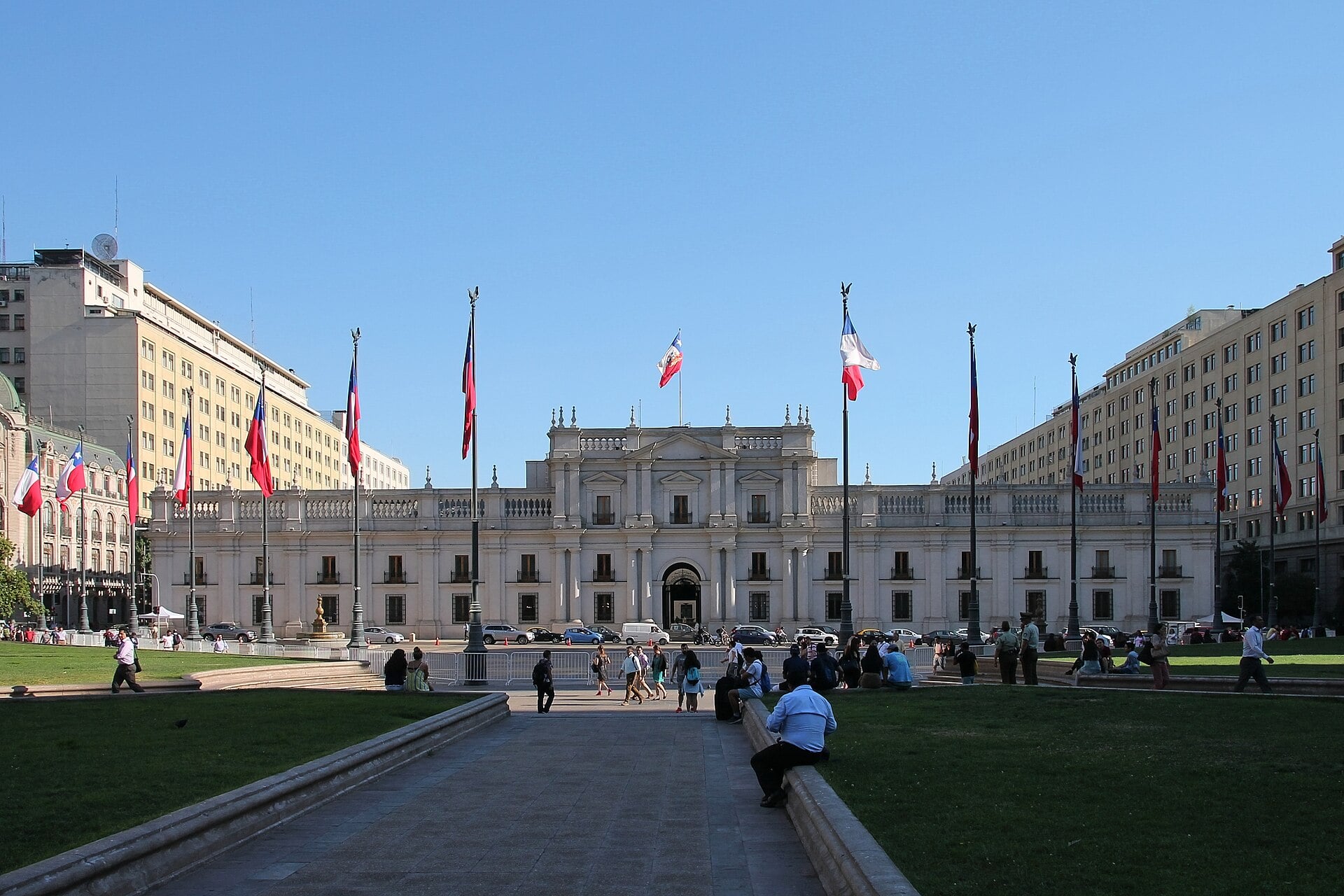
The national government works from Santiago. President José Antonio Kast, a conservative who founded the Republican Party, took office on 11 March 2026.
His term runs to 2030.Santiago is also Chile’s main door for immigrants.The 2024 census counted 964,835 foreign-born residents in the region.That is roughly 13% of its people and about 60% of all immigrants in Chile.The region ages a little more slowly than the country as a whole.
It has 76 people aged 65 or older for every 100 children under 15, against 79 nationally.Our guide to Chile’s population and ethnic groups covers the national picture.
Santiago is where most of those groups meet and work side by side.
How the Santiago Economy Works
The Central Bank of Chile said on 23 April 2026 that the region grew 2.8% in 2025, led by commerce and services. Household spending rose 3.7%, and exports of goods and services rose 7.3%, led by tourism spending.
The whole Chilean economy grew 2.5% in 2025. The Central Bank named the Metropolitan Region as the largest contributor to that growth among the country’s zones.
Jobs are the weak spot. The national statistics institute put the regional jobless rate at 9.8% for June to August 2026, with 4,128,399 people employed.
About 23.4% of workers hold informal jobs, meaning work without a formal contract or social security. Nationally the jobless rate was 9.6% in the same period, so Santiago sits slightly above the country.
The monthly minimum wage has been CLP 553,553 (about US$562) since 1 May 2026, under Law 21,830. The peso trades near CLP 985 per US$1 as of late October 2026.
Neighbourhoods Worth Knowing
Santiago works best as a set of districts, each with its own mood. This Santiago city guide picks five central ones that most visitors and newcomers see first.
Green Space and Views
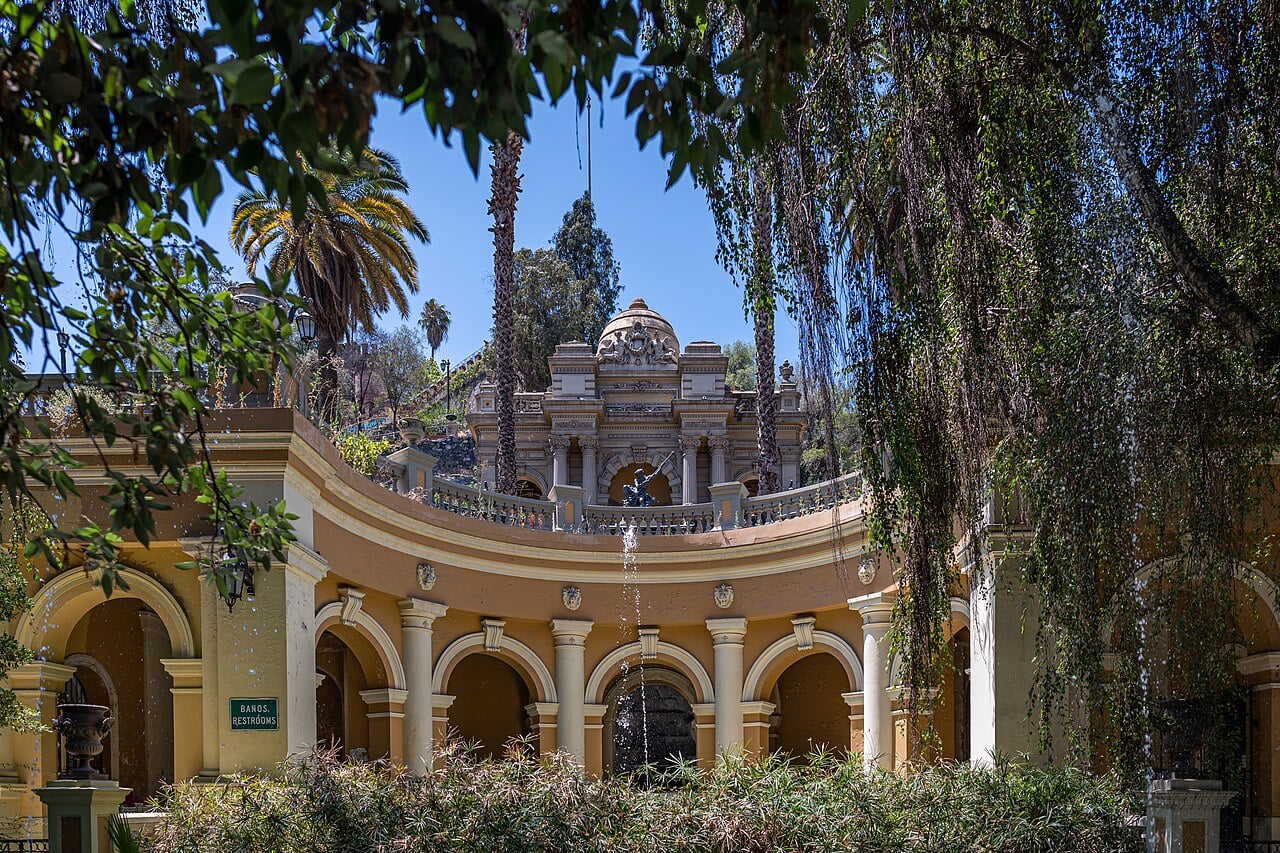
Cerro San Cristóbal is the big hill park at the edge of Bellavista, and the Mapocho River runs below it. Cerro Santa Lucía is a smaller hill park beside Lastarria, close to the historic centre.
The Sky Costanera observatory sits in the Costanera Center complex in Providencia. The national tourism board calls the building South America’s tallest.
Our Santiago expat city page and the What to Do in Santiago in November 2026 guide list restaurants, events and practical tips. Vitacura, a wealthy eastern district, will be the last stop on the planned Line 7.
- Santiago Centro is the historic downtown, with the Plaza de Armas square and the Mercado Central market.
- Lastarria is a historic district now known for culture, festivals and live shows.
- Bellavista is a bohemian area between Cerro San Cristóbal hill and the Mapocho River, with art by day and nightlife after dark.
- Barrio Italia is an older district named after its main avenue, known for antiques, design shops, bookstores and international food.
- Providencia is a favourite base for visitors, with a main shopping and restaurant zone and the Costanera Center complex.
Who Governs Santiago
Four offices share power over the capital, and this Santiago city guide names each one. The national government sits above the rest, but each of the others has its own voters or appointer.
The Plan for 2041
Orrego’s government presented the first Metropolitan Plan on 26 October 2026, called AMS 2041 because Santiago turns 500 that year. It lists 120 investment projects over 15 years and sets up a committee of the region’s 52 mayors.
Its themes are mobility, security, environment and economic development. Examples include new cycle lanes, 10 metropolitan parks and eight economic subcentres outside the downtown.
Orrego calls Santiago a deeply fragmented city that must stop solving problems one commune at a time. On 26 October 2026 regional authorities also went to the Constitutional Court against a housing ministry decree that changes urban planning rules.
Floods are a live concern. On 19 October 2026 the governor announced CLP 450 million (about US$457,000) for 11 motor pumps to strengthen flood response.
The presidential delegation and the Maipú municipality closed the Campamento Latinoamericano, an informal settlement of 140 households, on 6 October 2026. Housing and land use remain among the sharpest local disputes.
- President José Antonio Kast leads the national government, in office since 11 March 2026.
- Germán Codina is the presidential delegate, the President’s appointed representative in the region, and was mayor of Puente Alto from 2012 to 2024.
- Claudio Orrego is the regional governor, elected by voters to lead a regional government that plans and funds projects across the 52 communes.
- Mario Desbordes is the mayor of Santiago commune, elected for the 2024 to 2028 term, while the other 51 communes have mayors of their own.
Safety and Security in Santiago
Chile’s prosecutors counted 1,091 homicide victims nationwide in 2025, a rate of 5.4 per 100,000 people and 11.5% lower than in 2024. The Santiago region had 525 of them, a rate of 6.2 per 100,000, down from 6.6 a year earlier.
That puts the capital region a little above the national rate. Arica y Parinacota in the far north is well above both, at 10.6.
The region holds 40% of the population and about 48% of the country’s homicide victims.Everyday crime worries visitors more than homicide.A US State Department Level 2 advisory, dated 16 January 2025, calls street crime common.It also says rates of violent crime are increasing.Protests can start with little notice and disrupt buses and the Metro.
The State Department advises visitors to carry a copy of their passport and keep the original somewhere secure.Mayor Desbordes names organised crime, drug trafficking and violence as the main threats to community life in the centre.
His municipality drew 3,000 applicants for security jobs in October 2026.The regional plan would extend interoperable camera networks from 3 to 42 communes.
Getting Around by Metro and Bus
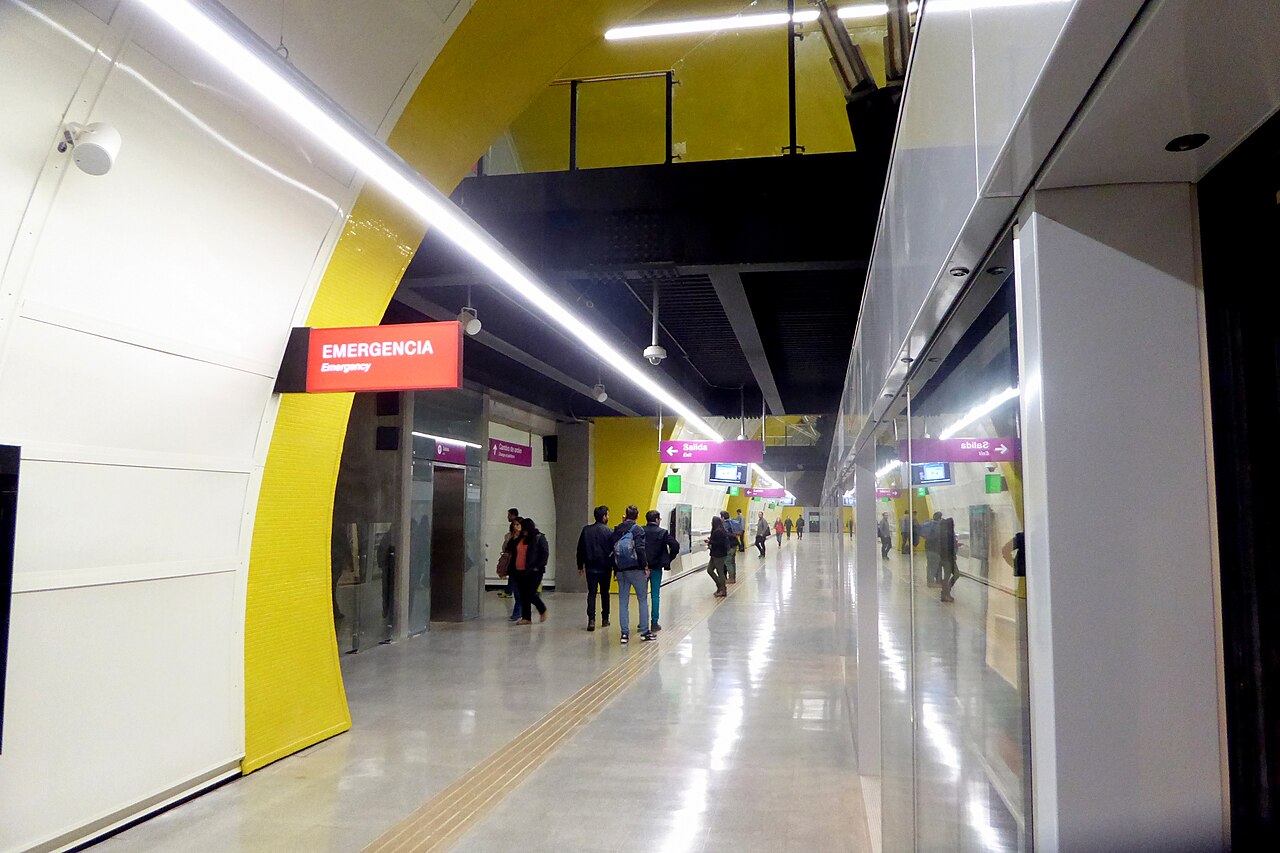
The Metro has 7 lines, 149 kilometres of track and 143 stations as of March 2026. It reaches 27 of the 34 communes of Gran Santiago.
It carried 666 million validated users in the 12 months to March 2026.The new Line 7 will link Renca and Vitacura in about 37 minutes, with 26 kilometres of track and 19 stations.Metro said on 13 May 2026 that works were 42% complete, with 17.7 kilometres excavated and opening planned for late 2028.Metro puts the total investment for Line 7, including the Line 6 east extension, at US$2.528 billion.The new line will reach Renca, Cerro Navia and Vitacura for the first time.
Fares in 2026
One payment covers up to two transfers among buses, the Metro and the Metrotren suburban rail within 120 minutes. A Metro ride costs CLP 710 (US$0.72) early and late, CLP 790 (US$0.80) off-peak and CLP 870 (US$0.88) at peak hours.
A bus ride costs CLP 770 (US$0.78) at any hour. Off-peak Metro fares also apply on weekends and holidays, which helps any Santiago city guide budget.
Daily Life, Wages and Big Events
Daily life in Santiago mixes a modern business core with long commutes from the outer communes. A minimum-wage worker earns about US$562 a month.
A Metro fare of US$0.88 weighs more on a local household than on a visitor.The city is also a stadium and concert stop.In October 2026 the presidential delegation coordinated security and traffic for BTS concerts at the Estadio Nacional.
What It Means for US Readers
US citizens need no visa for a tourist or business stay of up to 90 days. They must travel on a tourist passport.
A 90-day extension costs US$100 at the Chilean immigration office, and tourists must show at least US$46 a day in funds.At roughly CLP 985 per US$1, a Metro ride costs under US$1 and the minimum wage is about US$562 a month.This Santiago city guide treats the US State Department’s Level 2 advisory as the practical safety standard.For investors, Santiago is the seat of government and the centre of Chile’s economy.The 9.8% jobless rate is the main drag.Policy under President Kast’s conservative government shapes security, migration and business rules.Our own Rio Times Latin America Power Index tracks how Chile ranks among the region’s powers.
See also our guides to Chile’s power structure and the Chile diaspora in the United States.
What Is Not Known
The true size of Santiago commune is still open, because 544,000 is an official 2024 projection, not a census count. Line 7 is planned for late 2028, and tunnelling projects of this size can run late.
Which of the 120 Plan AMS 2041 projects get built first is also open. The mayors’ committee has only just been created.
The jobless rate of 9.8% is the number most likely to shape the mood in the capital.
Frequently Asked Questions
How many people live in Santiago?
The Santiago Metropolitan Region had 7,400,741 residents in the 2024 census, about 40% of Chile. The historic commune of Santiago is much smaller, at roughly 544,000 people in a 2024 projection.
Is Santiago safe for tourists?
Street theft is common, and the US State Department rates Chile Level 2, exercise increased caution. The region’s homicide rate was 6.2 per 100,000 in 2025, down from 6.6 in 2024.
Do Americans need a visa for Santiago?
No, US citizens on a tourist passport can stay up to 90 days without a visa. A 90-day extension costs US$100 at the Chilean immigration office.
How much does the Santiago Metro cost?
Fares run from CLP 710 (US$0.72) to CLP 870 (US$0.88), depending on the hour. One payment covers up to two transfers within 120 minutes.
Who runs Santiago?
President José Antonio Kast leads the national government, and Claudio Orrego is the elected regional governor. Germán Codina is the presidential delegate, and Mario Desbordes is mayor of Santiago commune.
When will Santiago’s Line 7 open?
Metro plans to open Line 7, with 26 kilometres and 19 stations, in late 2028. Works were 42% complete on 13 May 2026.
Sources: INE, Síntesis de resultados Censo 2024, 2025-12; BCN, Reporte estadístico comunal, comuna de Santiago, 2026-10-29; BCN, Reseña biográfica José Antonio Kast Rist, 2026-10-29; Banco Central de Chile, PIB regional año 2025, 2026-04-23; INE, Boletín empleo trimestral Región Metropolitana n.º 123, 2026-09-30; Dirección del Trabajo, ingreso mínimo mensual (Ley 21.830), 2026-10-29; Fiscalía de Chile, Informe de víctimas de homicidios consumados 2025, 2026-03; Gobierno Regional Metropolitano, Plan Metropolitano AMS 2041, 2026-10-26; Delegación Presidencial Regional Metropolitana, delegado y noticias, 2026-10-21; Municipalidad de Santiago, alcalde y noticias, 2026-10-27; Municipalidad de Santiago, portada, 2026-10-27; Metro de Santiago, Corporate Presentation March 2026, 2026-03; Metro de Santiago, Línea 7 alcanza 42% de avance, 2026-05-13; Red Movilidad, tarifas, 2026-10-29; US Department of State, Chile Travel Advisory, 2025-01-16; US Department of State, Chile country information, 2026-10-29; Chile Travel (Sernatur), Santiago neighbourhoods and Cerro San Cristóbal, 2026-10-29.
This article was produced by The Rio Times’ automated newsroom system. How we use AI · Report an error · Editorial responsibility: Matthias Camenzind, Editor-in-Chief
The Santiago Guide
What The Rio Times publishes for foreigners in Santiago, Chile.
This month
Coming up in Santiago
- Los Fabulosos Cadillacs Play Santiago on 29 October 29 Oct
- Foro de las Artes 2026 in Santiago, Chile: 30+ Free Events, 1–30 October 30 Oct
- Iron Maiden in Santiago, Chile: Two Estadio Nacional Nights, October 31 and November 1, 2026 31 Oct
- Jorja Smith Santiago 2026: Two Caupolicán Nights in Chile on 3 and 4 November 3 Nov
Living in Santiago
- Santiago Rent for Foreigners in 2026, US$422 to US$886
- Kast Government Sharpens Chile Bet as Foreigners Access Santiago Exchange
- Ricardo Arjona’s Record Santiago Residency: Final Nights This Week
- Living in Santiago: The 2026 Expat Guide
Understand Chile
Brazil runoff date: Sunday, October 25, poll closing times and when results start · Brazil runoff polls: Flávio 51%, Lula 49% · Kalshi and Polymarket odds
Rotate for Best Experience
This report is optimized for landscape viewing. Rotate your phone for the full experience.
You've reached your free article limit
Subscribe to The Rio Times for unlimited access to our news, expat and nomad guides and market intelligence on Latin America and Africa.
Keep reading for free
Your first article was on us. Register with your email address to read 6 free articles every month. You will also receive The LatAm Brief: what moved in Latin American markets, politics and expat life, every weekday morning.
The Santiago Guide
What The Rio Times publishes for foreigners in Santiago, Chile.
This month
Coming up in Santiago
- Los Fabulosos Cadillacs Play Santiago on 29 October 29 Oct
- Foro de las Artes 2026 in Santiago, Chile: 30+ Free Events, 1–30 October 30 Oct
- Iron Maiden in Santiago, Chile: Two Estadio Nacional Nights, October 31 and November 1, 2026 31 Oct
- Jorja Smith Santiago 2026: Two Caupolicán Nights in Chile on 3 and 4 November 3 Nov
Living in Santiago
- Santiago Rent for Foreigners in 2026, US$422 to US$886
- Kast Government Sharpens Chile Bet as Foreigners Access Santiago Exchange
- Ricardo Arjona’s Record Santiago Residency: Final Nights This Week
- Living in Santiago: The 2026 Expat Guide
Understand Chile