Is Chile Safe for Expats as Homicides Fall 11.5 Percent

Guides · Chile
—The stakes. Chile remains one of Latin America’s safer large countries, but safety is now split between stable affluent Santiago districts and worsening border and organised-crime contexts.
—The date. Official first-semester 2026 data recorded 472 homicide victims, down 11.5 percent from the same period of 2025.
—The trend. Homicides fell from 660 in 2022 to 513 in 2025, yet the share linked to organised groups rose to 41.3 percent in early 2026.
—The geography. Providencia, Las Condes, Vitacura and Ñuñoa remain the practical expat bases, while the northern border and Araucanía carry separate higher-risk dynamics.
—The comparison. Chile, Argentina and Uruguay all rank among South America’s safer countries, with Uruguay often strongest on peacefulness metrics.
Chile’s safety story in 2026 is not one of collapse or calm, but of divergence. Official figures show fewer homicides overall, yet a growing share linked to organised crime and extortion, leaving expats with a clearly uneven risk map.

The National Homicide Trend in 2026
Chile’s official first-semester 2026 report recorded 472 homicide victims nationwide. That represented 41 fewer victims than the same period in 2025, a decline of 11.5 percent.
The homicide rate stood at 2.3 per 100,000, still low by Latin American standards. The longer trend is equally clear from official data: 660 victims in 2022, 633 in 2023, 586 in 2024 and 513 in 2025.
The homicide rate has fallen 32.4 percent from 2022 through the first half of 2026. For foreign residents, that national direction supports Chile’s reputation as one of the region’s safer countries.
Organised Crime Is Rising Inside the Falling Trend
The more complicated signal sits inside the official numbers. Authorities reported that 41.3 percent of first-half-2026 homicides were associated with crime or organised groups.
That share rose from 165 victims in the first half of 2025 to 195 in the same period of 2026. A separate prosecutorial balance counted 26 organised-crime-linked homicides in a short post-inauguration window in 2026, against 19 in the comparable 2025 period.
That was described as a 36.8 percent increase in that narrow window. The pattern matters because it shows violent crime becoming more concentrated in criminal networks rather than random street violence.
Kidnapping and Extortion in the Metropolitan Region
A 2026 prosecutorial report cited in Chilean media recorded 849 kidnapping reports in 2025 and 394 in the first half of 2026. The first-half figure was down 17.6 percent versus the same period of 2025.
The Metropolitan Region, which includes Santiago, concentrated the largest share of cases. Prosecutors said extortion had become the main motive in a growing share of kidnappings.
Kidnappings occurring between or within criminal groups rose from 1.2 percent in 2024 to 4.6 percent in 2025. That shift means fewer kidnapping cases resemble tourist abductions and more resemble organised-crime debt collection.
Santiago Districts Where Expats Actually Live
The commonly used expat bases in Santiago remain Providencia, Las Condes, Vitacura and Ñuñoa. Those eastern and northeastern communes are generally viewed as more residential and better served than much of the capital.
Expat life in those districts is not crime-free, but it is more predictable and policed than in many parts of the city. Caution is greater in areas with nightlife theft, robbery, or transport-related opportunism.
The practical contrast is between a daytime walk in Providencia and a late-night commute through crowded central transit points. Most long-term foreign residents manage risk by choosing their commune carefully and adjusting behaviour after dark.
Common Urban Crime in Wealthy Areas
The most practical day-to-day risks cited in Chile are phone snatching, pickpocketing, car break-ins and home burglaries. Those crimes occur even in upper-income districts where valuables attract theft.
Phone snatching is often fast and non-confrontational, targeting pedestrians near traffic or outside metro stations. Car break-ins tend to follow visible bags or electronics left on seats.
Home burglaries in affluent communes are usually planned around empty properties or weak rear access. None of this makes Santiago dangerous by regional standards, but it does reward basic urban precautions.
The Post-Estallido Protest Legacy
After the estallido social beginning in 2019, Chile retained a visible protest culture. Demonstrations can still disrupt traffic, metro access, business hours and school or work commutes.
Most protests are not directed at foreigners, but they alter daily movement in the capital. Expats learn to check metro status and avoid known demonstration routes on anniversary dates.
The legacy is less about direct danger and more about periodic urban friction. That friction does not typically extend into the eastern residential communes, though transport disruptions are citywide.
Tren de Aragua and the Northern Border
Public reporting tied part of Chile’s organised-crime concern to Tren de Aragua and other foreign criminal groups. Authorities have linked those networks especially to the north and to metropolitan kidnapping and extortion cases.
The northern border is the principal entry concern in official security discussions. That geography matters for expats because it is far from the Santiago residential core.
The practical impact in the capital appears mainly through extortion economies rather than street predation on foreigners. Still, the foreign-network phenomenon has changed how Chilean authorities talk about security since 2019.

The Mapuche Conflict Is Regional, Not National
The Mapuche-related conflict matters primarily in the Araucanía region and adjacent southern areas. It is not a broad national expat-safety issue for Santiago or central Chile.
Foreigners living in the capital rarely encounter that conflict in daily life. Those travelling south for tourism or land investment should monitor local conditions and roadblock reports.
For a standing reference, the Mapuche conflict should be understood as a geographically bounded risk. It does not define safety in Providencia, Las Condes or Vitacura.
Carabineros and Police Reliability
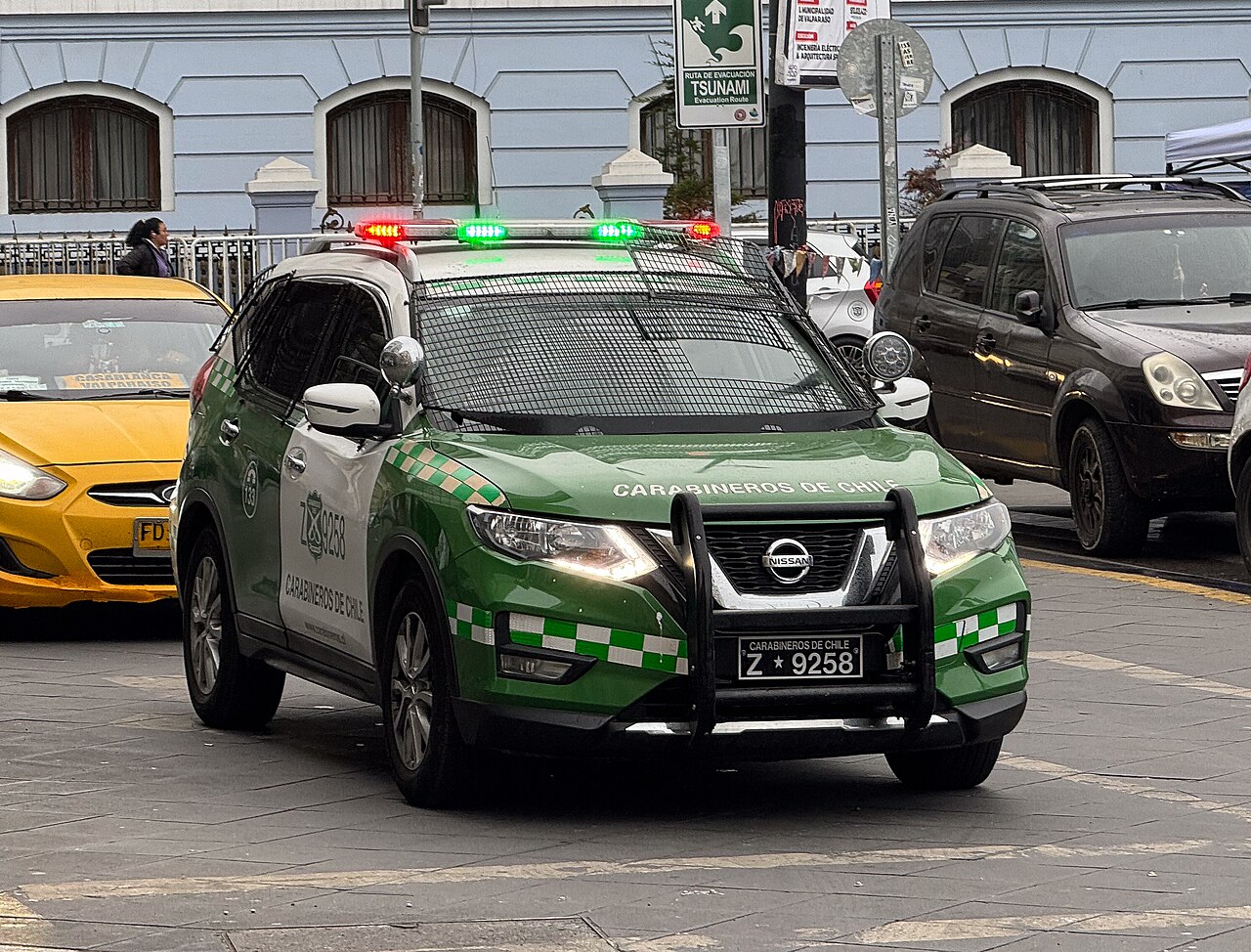
Chile’s Carabineros are generally viewed as more capable and more present than police in many Latin American countries. They remain the main public-order institution for urban safety.
Confidence has nonetheless been affected by corruption scandals and resource stress. Expats typically report a more formal and rules-based police interaction than in some neighbouring states.
Response times and visible patrols are stronger in the eastern Santiago communes. By regional standards, the Carabineros are an asset, though not an infallible one.
Earthquake Preparedness as Everyday Culture
Earthquake preparedness is a core part of everyday Chilean safety culture. Routine awareness covers building standards, evacuation behaviour and emergency planning.
The country’s seismic exposure makes this a normal part of residential and workplace life. Expats quickly adopt local habits such as knowing exit routes and securing heavy furniture.
Chilean construction codes are designed for strong seismic forces, which adds a structural layer of safety. In a safety reference for foreigners, earthquake culture is as relevant as crime statistics.
More: Chile news in English, every day from The Rio Times.
How Chile Compares With Argentina and Uruguay
Regional country-safety datasets in 2026 place Chile, Argentina and Uruguay among South America’s safer countries. Uruguay typically appears strongest on peacefulness and safety metrics.
Argentina often shows a lower homicide rate than Chile in some datasets. Chile still benefits from stronger institutions and infrastructure than many neighbours.
For expats, the choice is rarely about absolute safety alone but about institutional predictability. Chile’s mix of low national homicide trends and organised-crime pressure places it between Uruguay’s calm and Argentina’s larger urban complexity.
Connected Coverage
Chile Markets: IPSA & the Peso — September 12, 2026
Falklands Dispute Spills Into Chilean Congress Over Strait of Magellan
Jamiroquai in Santiago, Chile: The Acid-Jazz Legends Play Claro Arena on September 15, 2026
The Big Picture
Latest developments
- Chile Stocks Fall 1.59% on Brazil Shock — 26 October 2026
- Chile Tornado Damages 20 Homes and a School — 26 October 2026
- Mexican Duo Ha*Ash Plays Santiago on 21 and 22 March — 26 October 2026
- What Lula’s Fourth Term Means for Chile and the Region — 26 October 2026
This article was drafted with automated assistance and reviewed before publication. How we use AI · Report an error · Editorial responsibility: Matthias Camenzind, Editor-in-Chief
Expat Guide to Chile
What The Rio Times publishes for foreigners who live in or move to Chile.
Start here
- Chile Security and Crime Explained 2026
- Santiago Rent for Foreigners in 2026, US$422 to US$886
- Best Places to Live in Chile for Expats 2026
- Chile’s Rent Unit Rose 0.6% Before Inflation Data
City guides
Coming up in Chile
- Los Fabulosos Cadillacs Play Santiago on 29 October 29 Oct
- Foro de las Artes 2026 in Santiago, Chile: 30+ Free Events, 1–30 October 30 Oct
- Iron Maiden in Santiago, Chile: Two Estadio Nacional Nights, October 31 and November 1, 2026 31 Oct
- Torres del Paine O Circuit Could Reopen 1 November 2026 1 Nov
Understand Chile