
ETHIOPIA · AFRICA
Ethiopia is a landlocked nation of more than 130 million people whose capital, Addis Ababa, hosts the African Union (AU), the continent’s political bloc. For US readers it matters because on 18 September 2026 Washington announced that a national emergency over Ethiopia had lapsed, just as the Nile and the Red Sea pull the region towards friction.
Key Facts
- The country Ethiopia is landlocked, home to over 130 million people, and has had no coastline since 1993.
- Diplomacy The African Union (AU) has its headquarters in Addis Ababa, host of the 39th summit in February 2026.
- Economy Ethiopia’s rewritten accounts put 2025/26 output at 31.86 trillion birr, the local currency (about US$210.7 billion).
- The Nile The Grand Ethiopian Renaissance Dam, Africa’s largest hydropower plant, opened on 9 September 2025, and Egypt and Sudan object.
- United States On 18 September 2026 the US Treasury said its Ethiopia emergency had expired and delisted mostly Eritrean targets.
Ethiopia matters in Africa less for one great strength than because its capital, economy, army and rivers all touch other countries’ interests.
In Plain English
- African Union (AU): the continent’s political bloc, run day to day by the AU Commission from Addis Ababa.
- IGAD: the Intergovernmental Authority on Development, the Horn of Africa bloc based in Djibouti.
- BRICS: a group of large emerging economies that began with Brazil, Russia, India and China.
- AfCFTA: the African Continental Free Trade Agreement, a continent-wide trade pact.
- G20 Common Framework: a group-of-20 mechanism for restructuring poor countries’ debts.
- GERD: the Grand Ethiopian Renaissance Dam on the Blue Nile.
Africa’s Diplomatic Capital
Addis Ababa is the home of the African Union, so Ethiopia’s capital doubles as the continent’s meeting place. The AU Commission, the bloc’s secretariat, runs its day-to-day business from the city.
The AU Commission Conference Centre and office complex in Addis Ababa was inaugurated in 2012. More recently, the AU Assembly, the bloc’s gathering of heads of state, held its 39th Ordinary Session at the Mandela Hall in Addis Ababa on 14 and 15 February 2026.
The AU’s Executive Council, the bloc’s foreign ministers’ body that meets ahead of the heads of state, held its 48th session on 11 and 12 February 2026. Burundi’s President Évariste Ndayishimiye became AU chairperson for 2026.
On 4 November 2026 senior officials of the AU and the European Union (EU) met at AU headquarters, in Nelson Mandela Hall in Addis Ababa. The AU has not yet published, as far as we found, the dates of the next February summit.
Hosting gives Ethiopia no vote above the others, but it keeps the country at the centre of continental conversation. Anyone following the Horn of Africa and who backs whom in 2026 will often find the story starts in Addis Ababa.
Economic Weight
On 4 November 2026 Ethiopia’s Ministry of Finance published rewritten national accounts. They put output for 2025/26 at 31.86 trillion birr (about US$210.7 billion) and for 2024/25 at 24.03 trillion birr (about US$201.4 billion at the government’s rate for that year, near 119 birr per dollar).
The new base year is 2024/25, and the method follows the 2008 System of National Accounts, the international standard. The government says the change brings in digital financial services, modern trade and mining.
Ethiopian officials say this GDP rebasing makes Ethiopia the fifth-largest economy in Africa and third in sub-Saharan Africa. A rebasing changes how output is counted; it does not mean real output rose by that amount.
The dollar figure depends on the exchange rate, and the market rate on 12 November 2026 was about 160.8 birr per US dollar. At that rate the figure is about US$198 billion, below the US$210.7 billion from the government’s own rate of about 151 birr per dollar.
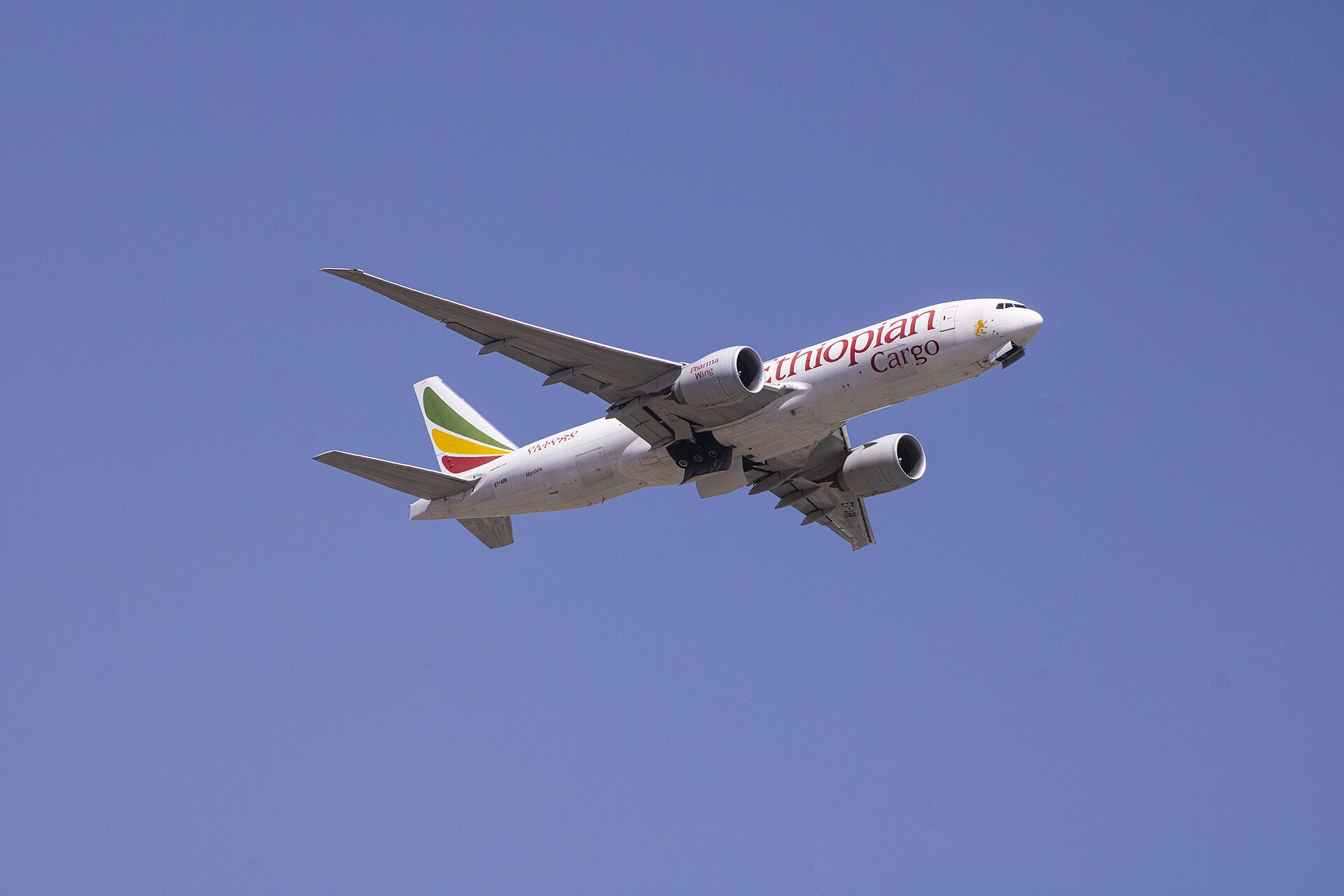
Ethiopian Airlines Group describes itself as the leading airline in Africa. Its August 2026 fact sheet lists more than 145 international passenger and cargo destinations.
Its first flight was on 8 April 1946 to Cairo via Asmara. A new Addis Ababa mega-airport at Bishoftu, southeast of the capital, is planned, and its financing was on the agenda of talks with China in 2026.
Ethiopia has no sea port of its own, so its trade depends on neighbours. Its route to the sea runs mainly through Djibouti.
Blocs and Alliances
IGAD is the Horn of Africa bloc, and its headquarters is in Djibouti. Djibouti, Ethiopia, Kenya, Somalia, Sudan and Uganda founded it as a drought-control body.
Eritrea joined as the seventh member after its independence in 1993. The revitalised IGAD was launched at a summit in Djibouti on 25 and 26 November 1996, with priorities in food security, economic cooperation, and peace and security.
Three Memberships
- IGAD: founding member, with the bloc revitalised in November 1996.
- AfCFTA: ratified on 10 April 2019, as the 19th country to do so.
- BRICS: full member since 1 January 2024.
Ethiopia deposited its instruments of ratification of the African Continental Free Trade Agreement (AfCFTA) on 10 April 2019, at the AU in Addis Ababa. It was the 19th country to do so, and Ethiopia’s trade negotiator called it the first free trade agreement Ethiopia had ever signed.
Ethiopia became a full member of BRICS on 1 January 2024. Egypt, Iran and the United Arab Emirates joined the group on the same day.
So Ethiopia sits in an African bloc, a continental trade pact and a club of emerging powers at once. Each gives it a different audience.
Peace and Security Role
A UN statement of January 2026 said more than 1,500 military and police officers from Ethiopia serve in UN peacekeeping missions. Peacekeeping gives Ethiopia a reputation as a security provider as well as a diplomatic host.
Ethiopian troops also serve in the African Union Support and Stabilisation Mission in Somalia (AUSSOM). In August 2026 Ethiopia handed its Burhakaba base in Somalia to the Somali army’s 60th Division, after holding it since 2014.
The mission faces a funding problem. Without steady money, an African-led force struggles to keep its soldiers in the field.
On Sunday 1 November 2026 Sudan’s army-aligned government filed complaints with the UN Security Council and the AU’s Peace and Security Council, its security decision body. It says the paramilitary Rapid Support Forces (RSF) launch drones into Sudan from Ethiopian territory.
The complaints name Asosa airport, the Kurmuk-Gizen border area and the Bahir Dar airbase. Who fired the drones is disputed.
Ethiopia denies the charge. No UN or AU decision on the complaint had been reported by 12 November 2026.
The government answering these claims is led by Prime Minister Abiy Ahmed, whose ruling Prosperity Party won 438 seats in the House of Peoples’ Representatives, the lower house of parliament. The National Election Board of Ethiopia, the national electoral commission, announced final results on 21 June 2026.
The Nile Dam and Egypt
Prime Minister Abiy Ahmed inaugurated the Grand Ethiopian Renaissance Dam (GERD) on the Blue Nile on 9 September 2025. Ethiopia’s government puts its capacity at about 5,150 megawatts and calls it Africa’s largest hydropower plant.
Egypt and Sudan held the third round of their joint foreign and water ministers’ talks, known as “2+2”, in Cairo in early November 2026. In the joint statement they said running the dam without a binding legal framework threatens their water security.
The statement urged Ethiopia to return to talks under international law. It gave no date for resuming talks with Ethiopia.
US President Donald Trump offered in January 2026 to restart US mediation. Egypt and Sudan call for a binding legal agreement on how the dam is filled and run.
Ethiopia says it will keep developing the Nile inside its own territory. Both sides treat the river as a matter of survival or sovereignty, as our explainer on the Nile dam dispute sets out.
The Horn of Africa and the Red Sea Question
Ethiopia has had no coastline since Eritrea became independent in 1993. Prime Minister Abiy has called sea access an existential question for Ethiopia.
For now, Ethiopia’s route to the sea runs through Djibouti. Our Djibouti explainer covers that neighbour in more detail.
In January 2024 Ethiopia signed a memorandum with the breakaway region of Somaliland, which Somalia rejected. On 11 December 2024 Ethiopia and Somalia then signed the Ankara Declaration, mediated by Turkey.
In it they agreed to work out “mutually advantageous commercial arrangements” that would give Ethiopia reliable, secure and sustainable access to and from the sea. That access would sit under Somalia’s sovereign authority.
Whether the commercial deal is concluded is still open, and no date has been set. Eritrea, whose independence in 1993 left Ethiopia landlocked, is the other piece of the puzzle, and our Eritrea explainer covers it.
Ties With the US, China and Europe
On 18 September 2026 the US Treasury’s Office of Foreign Assets Control (OFAC) announced that a national emergency over Ethiopia had expired. That emergency was declared in Executive Order 14046 of 17 September 2021, over the humanitarian and human rights crisis in Ethiopia.
OFAC also removed the people and groups designated under the order from its sanctions list, among them Eritrea’s ruling People’s Front for Democracy and Justice. Other US restrictions may remain.
The US State Department’s arms-export office announced on 11 May 2026 that it was ending its policy of denying arms-export licences to Ethiopia. Together the two steps mark a thaw between Washington and Addis Ababa.
Ethiopia’s finance ministry and China announced on 3 April 2026 an agreement on debt treatment. They said they would finalise a bilateral deal within the G20 Common Framework, the group-of-20 mechanism for restructuring poor countries’ debts.
The talks also covered the planned Bishoftu mega-airport, whose financing the two finance ministers discussed in 2026. More on the foreign powers is in our Ethiopia geopolitics guide.
On 20 April 2026 EU Commissioner Jozef Síkela announced in Addis Ababa that the EU will resume budget support of more than EUR 140 million (about US$155 million at EUR/USD 1.1077). The money is for energy, connectivity, health and business-climate reforms, ending a suspension that began in December 2020, during the war in northern Ethiopia.
The international rights group Human Rights Watch said on 22 April 2026 that the EU’s approach ignores the human rights situation. Brussels and Washington have thus both moved closer to Addis Ababa, while critics warn about the cost.
What It Means for You
If you work in business or compliance, the end of the US emergency removes one barrier, though other US restrictions may remain, so check before you deal. If you follow US foreign policy, note that Washington ended its arms-export denial policy in May 2026 and that President Trump offered to mediate on the Nile in January 2026.
If you invest in African debt, watch the G20 Common Framework deal with China, because its final terms are still open. If you follow global trade routes, remember that Ethiopia’s trade runs mainly through one corridor to Djibouti.
For everyone else, the lesson is simple. The home of the African Union is also one of the continent’s most connected economies and the centre of its most contested river.
What We Know and What Is Not Known
What We Know
- The AU is headquartered in Addis Ababa, and its 39th summit met there on 14 and 15 February 2026.
- Ethiopia published rewritten national accounts on 4 November 2026, with 2025/26 output at 31.86 trillion birr (about US$210.7 billion).
- The US announced on 18 September 2026 that its Ethiopia emergency had expired, and said on 11 May 2026 that its arms-export denial policy was ending.
- Egypt and Sudan said in early November 2026 that the dam without a binding legal framework threatens their water security.
What Is Not Known
- Whether the IMF will confirm fifth place for Ethiopia once it publishes numbers on the new series, since the rebasing is Ethiopia’s own.
- Who launched the drones that Sudan blames on Ethiopian territory.
- Whether Ethiopia and Somalia will conclude the sea-access commercial deal promised in the Ankara Declaration.
- Whether talks on the Nile dam will resume.
What to Watch
No scheduled economic calendar release bears on this topic. The checkpoints below have no confirmed dates, apart from the customary February timing of the AU summit.
- The next AU summit, customarily held in Addis Ababa in February (the 39th was on 14 and 15 February 2026); the 2027 date is not yet confirmed.
- Whether Egypt, Sudan and Ethiopia restart Nile talks; no date was set as of early November 2026.
- The response of the UN Security Council and the AU Peace and Security Council to Sudan’s 1 November complaint; no date is set.
- The final terms of the China debt deal and other creditor deals under the G20 Common Framework; no date is set.
Frequently Asked Questions
What is Ethiopia’s role in Africa?
Ethiopia hosts the African Union headquarters in Addis Ababa, where the AU’s 39th summit met on 14 and 15 February 2026. It also belongs to IGAD, the AfCFTA and BRICS.
How big is Ethiopia’s economy?
Ethiopian officials say rewritten accounts published on 4 November 2026 make it the fifth-largest economy in Africa. They put 2025/26 output at 31.86 trillion birr (about US$210.7 billion).
Is Ethiopia a member of BRICS?
Yes. Ethiopia became a full member of BRICS on 1 January 2024, together with Egypt, Iran and the United Arab Emirates.
Why is the Nile dam disputed?
Egypt and Sudan say running the dam without a binding legal framework threatens their water security. Ethiopia says it will keep developing the Nile inside its own territory.
Has the US ended its Ethiopia sanctions programme?
On 18 September 2026 OFAC said the national emergency behind the sanctions had expired, and it removed those designated under it. Other US restrictions may remain.
Sources: African Union Commission, 2026-11-12 · African Union, Ethiopia country page, 2026-11-12 · US Treasury OFAC, recent actions, 2026-09-18 · Ethiopian Airlines Group, fact sheet, 2026-08 · IGAD, about, 2026-11-12 · African Union, AfCFTA ratification by Ethiopia, 2019-04-10 · Ethiopia Ministry of Finance and China, debt statement, 2026-04-03 · EU Delegation to Ethiopia, budget support, 2026-04-20 · Human Rights Watch, EU relations with Ethiopia, 2026-04-22
This article was produced by The Rio Times’ automated AI newsroom. Editorial responsibility: Matthias Camenzind, Publisher and Editor-in-Chief. The Rio Times also runs Ask Rio Times, which answers from 100,000+ of our own articles, the daily Latin America Power Map, and prediction-market odds on elections and markets.. How we use AI · Report an error
Expat Guide to Ethiopia
What The Rio Times publishes for foreigners who live in or move to Ethiopia.
Start here
- Cost of Living in Ethiopia for Expats
- Moving to Ethiopia in 2026, A Practical Guide
- Ethiopia Golden Visa Explained: Fees for Americans in US$
- Safaricom's M-Pesa Enters Ethiopia as Wave Secures a West African Bank Licence
City guides
Coming up in Ethiopia
- Great Ethiopian Run Returns to Addis Ababa 22 November 22 Nov
- Ethiopian Christmas 2027 Ends a 43-Day Fast 7 Jan
- Timkat 2027 Falls on 19 January in Addis 18 Jan
- Ethiopia's Lake Hawassa Half Marathon on 14 February 2027 14 Feb
Understand Ethiopia
Horn of Africa and the Red Sea
- Horn of Africa 2026: Why It Matters and Who Backs Whom
- Ethiopia’s Neighbors Explained, Ports, Eritrea, Somalia
- Eritrea Explained 2026, a Red Sea Country Guide
- Somalia Explained: Al-Shabaab, Somaliland, the Ports and the Fight Over a 2026 Vote