
CHILE · SECURITY
Key Facts
- —The basics Chile, home to about 20 million people, recorded 1,091 homicide victims in 2025, a rate of 5.4 per 100,000, yet as of October 2026 organised crime, armed muggings and protests shape its security debate.
- —Why it matters Security is a central test for President José Antonio Kast, in office since 11 March 2026, and it drives travel advice, business costs and Chile’s September 2026 entry into a regional anti-crime framework.
- —The numbers Homicide victims fell from 1,330 in 2022 to 1,091 in 2025, 472 were counted in the first half of 2026, and 7.9% of households suffered a violent crime in 2025.
- —Who is who Martín Arrau is Minister of Public Security, Carabineros are the uniformed national police, the PDI is the civilian investigative police, and Ángel Valencia leads the independent Public Prosecutor’s Office.
- —What to watch Congress is debating a 2027 security budget of about CLP 7 trillion (about US$7.1 billion), and Sunday, 18 October 2026 is a frequent protest date in Santiago.
- —Prediction markets Polymarket gives a 93.5% chance that the Central Bank of Chile makes no change to its policy rate at its October meeting (16 October, 10:20 a.m. ET).
- —Power Index Chile ranks 3rd of 14 in The Rio Times Latin America Power Index, with 63.6 points (October 2026 edition).
- —What it means for you Washington rates Chile Level 2, exercise increased caution, with no do-not-travel areas, so visitors should expect pickpocketing and armed muggings in Santiago and Valparaíso and avoid protests.
Chile security improved on homicides for a third straight year in 2025, yet organised crime, armed muggings and protests still shape risk. This guide maps the numbers, the gangs, the hotspots and the safer areas as of October 2026.
Chile security in 2026 pairs falling homicides with persistent public worry about crime. The country recorded 1,091 homicide victims in 2025, a rate of 5.4 per 100,000 residents.
For a US visitor, investor or resident, the district matters more than the national average. This guide draws on Chilean government statistics, the Senate, the Foreign Ministry and the US and UK travel advisories.
Daily coverage is in the Rio Times Chile section, with background in the Chile power structure explainer and foreign players guide. Newcomers can add the Santiago city guide and the Rio Times guide to safety for expats in Chile.
How Chile Security Is Organised
Chile’s Ministry of Public Security, created under Law 21,730, now leads anti-crime policy. President José Antonio Kast has governed since 11 March 2026, and Martín Arrau is his security minister.
Arrau presented his plan to the Chamber of Deputies’ security committee in June 2026, listing seven axes. They include street control, border and critical-route protection, the fight against organised crime and prison policy.
Carabineros are the uniformed national police, and the Policía de Investigaciones, known as the PDI, is the civilian investigative force. Arrau counts Gendarmería, the prison service, as the third police force.
The crime-prevention undersecretariat runs the centre that consolidates the official homicide count. The Public Prosecutor’s Office validates that count.

The Public Prosecutor’s Office is independent of the government and directs criminal investigations. National Prosecutor Ángel Valencia leads it, with 19 regional and 140 local offices.
The armed forces answer to Defence Minister Fernando Barros. Congress passed a bill on rules for the use of force in October 2026, covering police and, in some cases, the military.
What the Crime Numbers Show
The government counted 1,091 homicide victims in 2025, a rate of 5.4 per 100,000 people. That compares with 1,209 victims and a rate of 6.1 in 2024.
The 2022 peak was 1,330 victims, so the count has fallen three years in a row. The Subsecretaría de Prevención del Delito says the rate is down 20.6% since 2022.
The ministry counted 472 victims in the first half of 2026, 41 fewer than the 513 a year earlier. The Metropolitan, Valparaíso and Biobío regions held 65.5% of them.
Homicides linked to crime or organised groups made up 35.3% of 2025 victims, the lowest share since the series began in 2018. The official category is broad, because it also counts attacks by unknown people.
It also counts deaths during police action and killings in self-defence. It is therefore not a count of gang killings alone.
Most victims were men (89.1%), and 48.7% died from firearms and 34.6% from knives or other sharp objects. Foreign nationals were 14.8% of victims in 2025, down from a peak of 18.3%.
A household survey, ENUSC, measures crime that victims experience whether or not they report it. Published on Friday, 10 July 2026, it found violent crime hit 7.9% of households nationwide in 2025, down from 8.5%.
Any crime touched 37.7% of households, with no significant change, and robbery with violence or intimidation hit 3.2%. Only 41.3% of households that suffered a violent crime reported it to the authorities.
Perception remains much gloomier than the trend: 82.9% of people believed crime had risen nationally, down 4.8 points from 2024. In their own commune 70.5% said so, and in their neighbourhood 47.2%.
The security minister’s balance for 1 January to 28 June 2026 put violent robberies down 11% nationally from a year earlier. It also reported fewer rapes and serious injuries and a 6.1% rise in minor injuries.
Kidnapping cases confirmed by the PDI fell to 43 by 28 June 2026, from 75 a year earlier. Carabineros counted 163 by 30 June, 6% fewer, using a different method.
Gangs, Organised Crime and Armed Groups
Chile’s Foreign Ministry calls Tren de Aragua a real and complex threat, among 25 groups on a regional list. The list belongs to the Shield of the Americas, a voluntary framework against transnational organised crime.
On Tuesday, 22 September 2026, Chile announced it was joining that framework. The ministry lists access to crime information, data-analysis systems, training for Carabineros and the PDI, and better cross-border coordination.
The ministry names Chile’s three land neighbours, Argentina, Bolivia and Peru, among its partners. For the full story, see the Rio Times report on Chile joining the Shield of the Americas.
Other armed groups act in the south and in Santiago. The UK says groups claiming to represent Indigenous communities have attacked state actors and businesses in Araucanía, Biobío and Los Ríos.
The US advisory says people claiming Mapuche ties have burned churches and homes, though attacks mainly target forestry firms and landowners. It also says anarchist groups have placed bombs and incendiary devices in public spaces in Santiago.
Prisons are a security issue of their own. The official count recorded 31 homicide victims in prisons in 2025, down 36.7% from 49 in 2024.
Police, Army and the Southern Emergency
A state of emergency has covered La Araucanía and the Arauco and Biobío provinces since May 2022. The Senate renewed it for 30 days from 23 August 2026, by 27 votes to one, with one abstention.
Senators who backed the renewal pointed to a fall in violent acts but asked for evaluations. One senator voted against, arguing that a state unable to restore order in four years has failed.
On Tuesday, 8 September 2026, the Senate approved another 30-day renewal, and the government said the measure had helped lower violence. It cited an 85% fall in rural violence events compared with 2021.
Homicide rates in the south are low: La Araucanía recorded 3.4 per 100,000 in 2025, below the national 5.4. The report’s southern macro-zone, Biobío, La Araucanía and Los Ríos, recorded 4.8, down from 5.7 in 2024.
Defence Minister Fernando Barros and Kast visited the Los Álamos military post in the southern macro-zone and thanked the armed forces. Senators also criticised an earlier proposal for states of exception of up to 240 days without Congress approval.
Kast’s government said on Wednesday, 30 September 2026 that it would withdraw its constitutional reform once senators file a replacement. The alternative drops the new state of exception and would let a president declare an emergency over a serious public security threat.
Five senators filed the replacement text on Thursday, 8 October 2026, and it went to the Senate Constitution Committee. A constitutional change needs 29 of the 50 senators, and a Socialist and a Communist senator stayed out of the drafting.
Arrau backs extending the flagrante-delicto deadline from 12 to 24 hours and a bill allowing trials in absentia. He has also announced bills on migratory retention, which would need a constitutional reform, and tougher penalties for gang membership.
The 2027 budget bill sets CLP 7 trillion (about US$7.1 billion) for public security, up 9.1%. Congress began debating it in early October 2026, and on 12 October Arrau called it historic for the three police forces.
Hotspots and Safer Areas
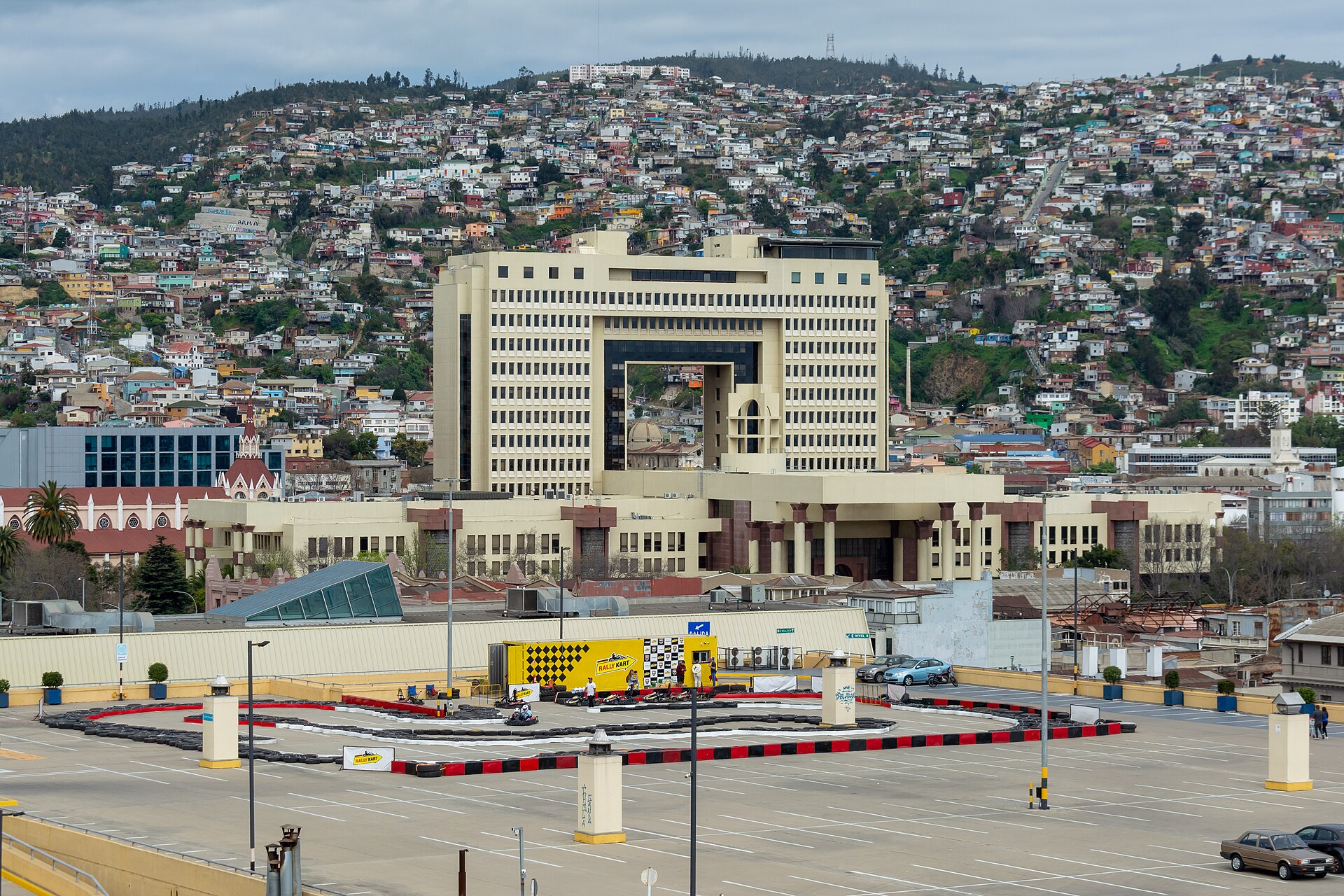
Homicides are concentrated in a few regions. The Metropolitan, Valparaíso and Biobío regions recorded 732 of the 1,091 victims in 2025, or 67.1%.
By rate, Arica y Parinacota, on the Peruvian border, was highest in 2025 at 10.6 per 100,000. Aysén followed at 8.3, though that rests on only nine victims in a small population.
The Santiago region, at 6.2, was the only macro-zone above the national rate of 5.4. Atacama recorded 6.9 and Biobío 5.7, while Ñuble had the lowest rate at 2.9.
Early 2026 data shifted parts of that picture, though small counts make regional swings volatile. In the first half of 2026 the rate rose 78.9% in Tarapacá, 42.1% in Coquimbo and 33.3% in O’Higgins.
In Santiago, the highest 2025 counts were Puente Alto (46), Santiago centre (44), La Pintana (40), San Bernardo (28) and Recoleta (27). These are raw counts rather than rates, so they partly reflect population size.
The US country page asks for significant caution in nine Santiago areas. It lists no do-not-travel areas anywhere in Chile.
- Villa Francia, El Castillo, La Victoria and La Pincoya.
- Bajos de Mena y Mahuidanche.
- Cerro Navia, Pudahuel, Quilicura and San Bernardo.
The US says pickpocketing and muggings are most frequent at Cerro Santa Lucía, Plaza de Armas, Bellavista and Mercado Central. The UK says muggings are increasingly armed in Santiago and Valparaíso and can happen in daylight.
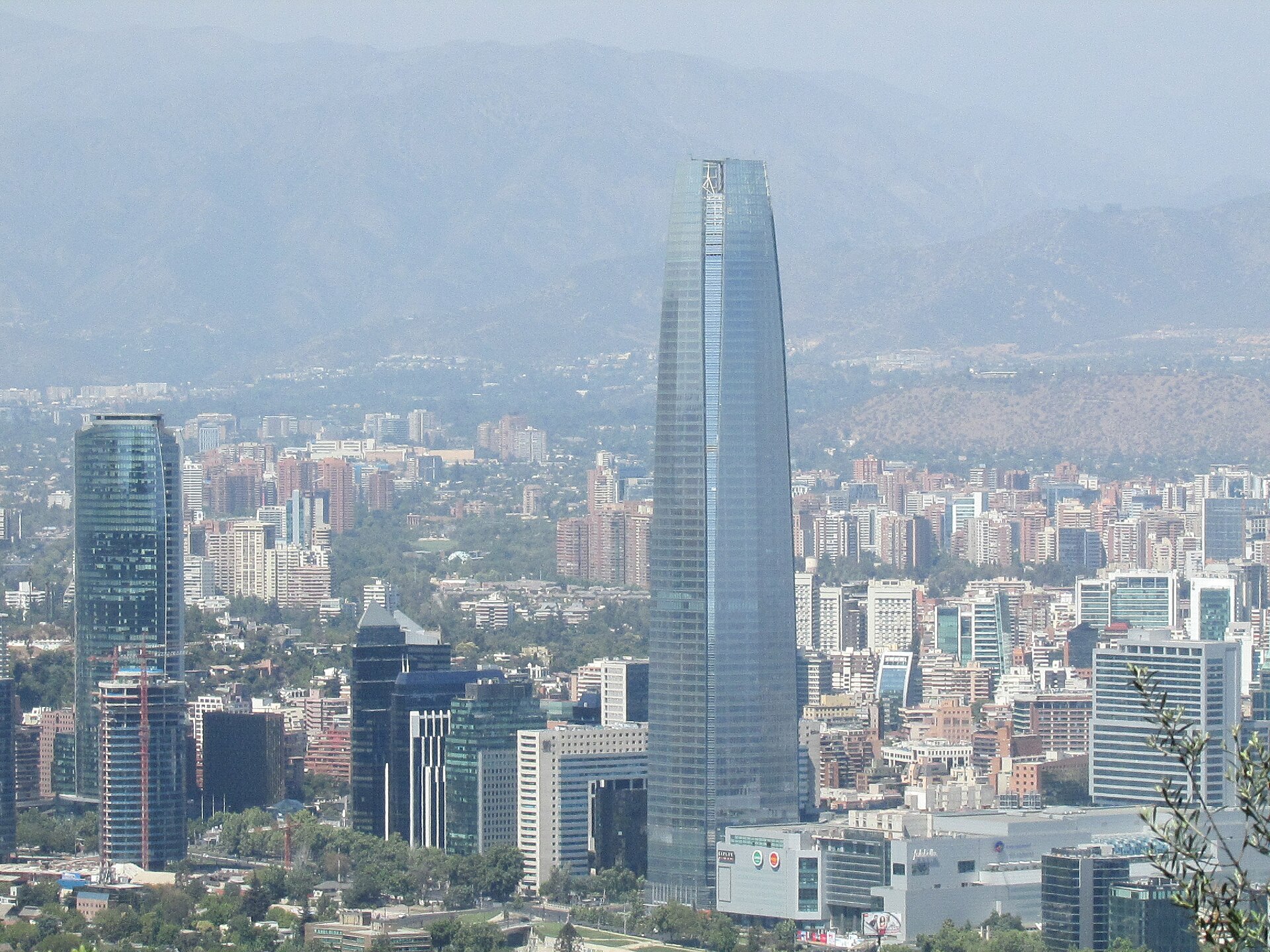
Several eastern Santiago communes recorded very few homicides in 2025, with one victim each in Las Condes, Providencia and Lo Barnechea. Vitacura had two and Ñuñoa seven, but homicide counts say little about theft, which both advisories flag citywide.
Outside the capital, 2025 counts were 28 in Arica, 24 in Valparaíso, 22 in Antofagasta and 15 in Viña del Mar. Iquique recorded 11 and Alto Hospicio two.
Protests and Public Order
Large demonstrations can start with little notice in Santiago and other cities and disrupt buses and the Metro. The US lists frequent protest dates as 29 March, 1 May, 21 May, 11 September and 18 October.
The UK warns of violent protest, particularly on Friday afternoons and evenings, with police using tear gas and water cannons. It advises visitors to avoid all demonstrations, because even peaceful ones can turn violent.
On 18 October each year, the anniversary of the 2019 social unrest, protesters often gather in Santiago. Minister Arrau said on 12 October 2026 that police expect some gathering on that date and will have safeguards in place.
Chile’s new use-of-force bill sets criteria of graduation, necessity, proportionality and differentiation. It also regulates how force may escalate and what duties officers have when they use it.
Practical Safety Advice for Visitors and Residents
In an emergency, dial 133 for police, 131 for an ambulance and 132 for the fire service. The US Embassy in Santiago can be reached on +56-2-2330-3000.
The US strongly recommends supplemental medical evacuation insurance, because many providers require payment up front. It also advises using only regulated taxis with orange or yellow plates, or legal ride-share apps.
The US and UK advice converges on a short list of habits. These are the main ones for a first visit:
- Do not resist a mugging; hand over cash and valuables.
- In a carjacking, raise your hands and get out of the vehicle, as local authorities advise.
- Lock rental-car doors, keep bags out of sight and expect tyre-puncture distraction scams at viewpoints and petrol stations.
- At Santiago airport, pay taxis only at the official booths after customs and check the amount before paying by card.
- Keep drinks in sight in bars and clubs, since drink spiking has been reported around Suecia and Bellavista.
- Keep valuables in a hotel safe and carry a printed copy of your passport photo page.
- Avoid demonstrations and do not take part in them, because foreigners can be deported for involvement in violent acts.
- Stay on marked trails near the borders with Peru, Bolivia and Argentina, where landmines remain.
- Follow SENAPRED warnings for heavy rain and forest fires, and read the earthquake instructions in your hotel room.
What It Means for US Readers
For travellers, Chile is a Level 2 destination, exercise increased caution, under a State Department advisory dated Wednesday, 19 August 2026. It lists no do-not-travel areas, so the main risks are theft, armed muggings and disruption from protests.
For residents, the practical risks are street crime, carjackings and residential break-ins. The choice of commune matters, because homicide counts range from one in Las Condes to 46 in Puente Alto.
For investors, the Chile security signals to follow are the homicide trend, the 2027 budget and the Senate debate on emergencies. Conversions in this guide use CLP 981.82 per US$1, the open.er-api.com rate of 15 October 2026.
For US policy, Chile’s Foreign Ministry says the Shield of the Americas brings training for Carabineros and the PDI and data-analysis tools. Readers can follow the next steps in the Rio Times coverage of the security reform, which the Senate must still decide.
What Prediction Markets Say
Polymarket lists a market titled Central Bank of Chile decision in October, with volume of about US$10,500 as of 16 October 2026. Traders give no change 93.5% as of 10:20 a.m. ET, and each of the four other outcomes trades below 4%.
These are bets, not polls, and this market does not price crime or security. It tracks the central bank’s decision due on Tuesday, 27 October 2026, after a hold at 4.5% on 8 September.
Why we show this: prediction markets turn real-money bets into a live probability that moves within minutes of the news, which is why investors, campaigns and newsrooms in the United States now follow them closely. We show them next to polls and official results, never instead of them.
What Is Not Known
It is not confirmed whether the Senate renewed the southern emergency again after the renewal approved on 8 September 2026. Nor is it confirmed whether the government has withdrawn its own reform or when the Senate will vote on the replacement.
The first-half 2026 count of 472 comes from the ministry’s summary as relayed by Chilean media. Those reports also quote an 11.5% fall, but 41 fewer than 513 victims is about 8%.
Full-year 2026 homicide figures could not be confirmed for this guide. The official police crime statistics for 2026 could not be read directly either.
No official figure for troops in the southern emergency zone or on the northern border was found. No official count of members of Tren de Aragua or other gangs in Chile was found either.
It is not confirmed whether the use-of-force bill has been promulgated. The Senate described it as sent to law in the week of 5 to 9 October 2026.
Frequently Asked Questions
Is Chile safe for American tourists?
The US rates Chile Level 2, exercise increased caution, and lists no do-not-travel areas. Petty theft, armed muggings and protests are the main risks.
What is Chile’s homicide rate?
Chile recorded 5.4 homicide victims per 100,000 people in 2025, or 1,091 victims, down from 6.1 in 2024. In the first half of 2026 the ministry counted 472 victims, 41 fewer than a year earlier.
Which parts of Santiago need extra care?
The US asks for significant caution in nine areas, including La Pincoya, Cerro Navia, Pudahuel and San Bernardo. Pickpocketing is most common at tourist sites such as Plaza de Armas, Bellavista and Cerro Santa Lucía.
Is there a state of emergency in Chile?
A state of emergency has covered La Araucanía and the Arauco and Biobío provinces since May 2022, renewed in 30-day periods. The Senate approved the latest renewal confirmed for this guide, another 30 days, on 8 September 2026.
What is the emergency number in Chile?
Dial 133 for police, 131 for an ambulance and 132 for the fire service. The US Embassy in Santiago answers on +56-2-2330-3000.
Is Tren de Aragua active in Chile?
Chile’s Foreign Ministry calls Tren de Aragua a real and complex threat, among 25 groups on a regional list. No official count of its members in Chile was found for this guide.
When are protests most likely in Chile?
The US lists 29 March, 1 May, 21 May, 11 September and 18 October as frequent protest dates. The UK warns of violent protest particularly on Friday afternoons and evenings.
Sources: US State Department, Chile Travel Advisory (19 August 2026); US State Department, Chile country information; UK Foreign, Commonwealth and Development Office, Chile safety and security; Subsecretaría de Prevención del Delito, Informe Nacional de Víctimas de Homicidios Consumados en Chile 2025; INE and Subsecretaría de Prevención del Delito, ENUSC 2025 (10 July 2026); Senado de Chile, state of emergency extension (19 August 2026); Senado de Chile, budget law and rules on the use of force (9 October 2026); Senado de Chile, state of emergency renewal (8 September 2026); Senado de Chile, new constitutional reform filed (8 October 2026); Cámara de Diputados, Minister Arrau on legislative and management axes (4 June 2026); Diario Oficial, Decree 87 naming the Undersecretary for Crime Prevention (12 August 2026); Ministerio de Relaciones Exteriores, Chile adhiere a Escudo de las Américas (22 September 2026); Ministerio de Defensa Nacional; Ministerio Público, Fiscalía de Chile; Central Bank of Chile, Monetary Policy Meeting press release of 8 September 2026; Emol, homicides in the first half of 2026 (9 September 2026); Chilevisión, first-half 2026 homicide report; Meganoticias, first-half 2026 homicides (9 September 2026); Pauta, security balance and kidnapping figures (6 July 2026); Radio Agricultura, security balance (6 July 2026); Meganoticias, security balance (6 July 2026); Emol, Arrau on the 2027 budget and 18 October safeguards (12 October 2026); Radio Agricultura, Arrau on the 2027 budget (12 October 2026); El Mostrador, Kast withdraws security reform (30 September 2026); La Tercera, new security reform text (5 October 2026) (all accessed 16 October 2026).
This article was produced by The Rio Times’ automated newsroom system. How we use AI · Report an error · Editorial responsibility: Matthias Camenzind, Editor-in-Chief
Expat Guide to Chile
What The Rio Times publishes for foreigners who live in or move to Chile.
Start here
- Santiago Rent for Foreigners in 2026, US$422 to US$886
- Best Places to Live in Chile for Expats 2026
- Chile’s Rent Unit Rose 0.6% Before Inflation Data
- How to Get Residency in Chile in 2026: Permits, Fees and the Kast-Era Rules
City guides
Coming up in Chile
- What to Do in Valparaíso in October 2026 16 Oct
- BTS Santiago Shows on 16 and 17 October, From US$107 17 Oct
- Aitana in Santiago, Chile: Cuarto Azul World Tour at Movistar Arena on October 19, 2026 19 Oct
- Los Fabulosos Cadillacs Play Santiago on 29 October 29 Oct
Understand Chile