Investing in Chile as a Foreigner: Rules, Rates and Registration
CHILE · INVESTING
Key Facts
- —The market The Santiago exchange, now part of the nuam group with Lima and Colombia.
- —The index The IPSA passed to MSCI on 1 September 2026 and is now the MSCI IPSA, with 31 starting members.
- —The registration rule Foreign capital inflows above US$10,000 must be registered with the central bank. It is notification, not approval.
- —Withholding on dividends The additional tax at 35%, with credit for corporate tax already paid.
- —The policy rate 4.50% in September 2026.
- —The inflation-linked unit, the UF The UF, an inflation-indexed unit worth about 40,926 pesos, roughly US$43.50.
Chile is the easiest market in South America for a foreigner to put money into. It is also the market where one piece of paperwork matters more than any other: registering the money in. So it can come back out again.
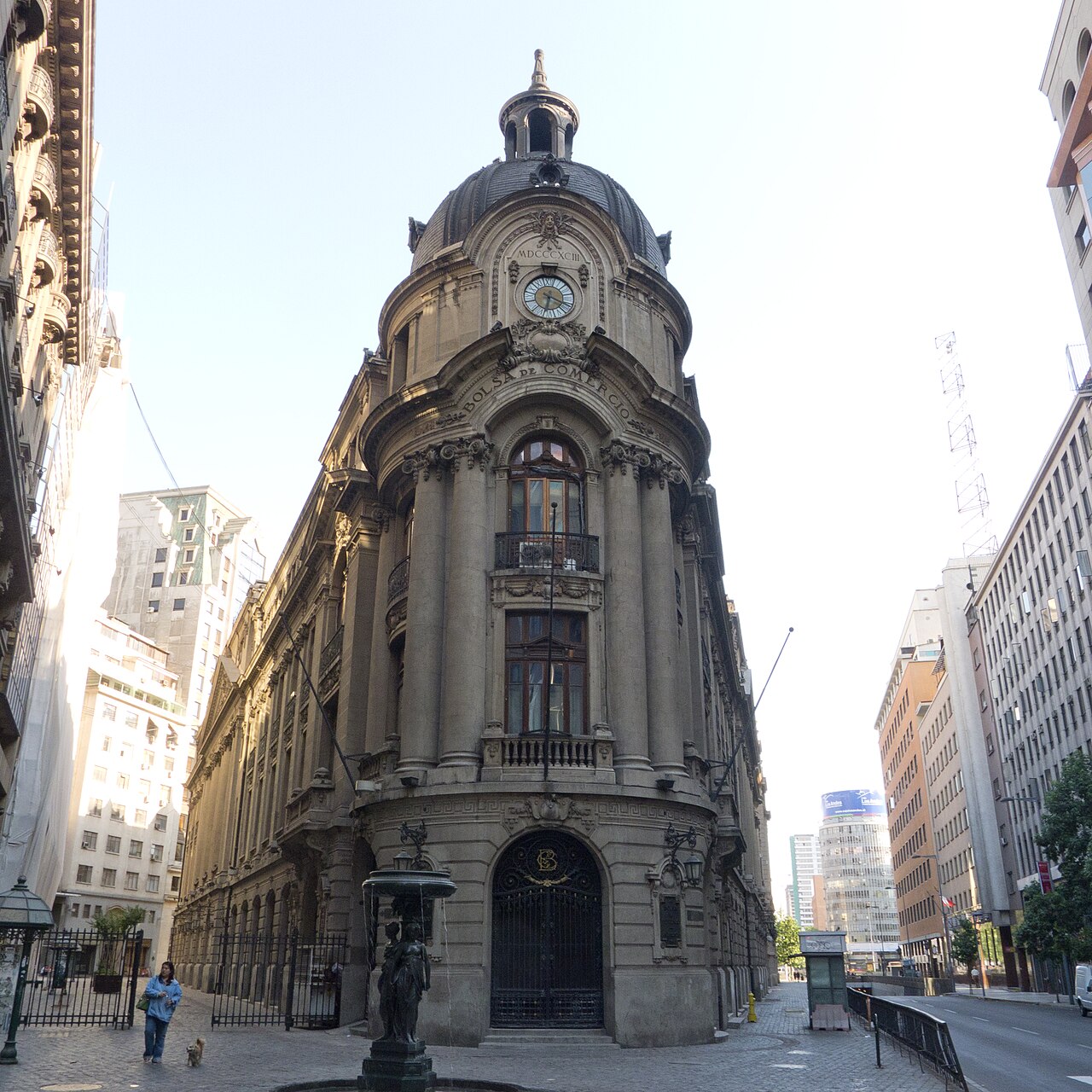
Chile’s stock index passed from local administration to MSCI on 1 September 2026 and is now called the MSCI IPSA. Foreign investors can still buy Chilean assets freely. They must only register any transfer above US$10,000 with the central bank.
Where This Fits in a Longer Story
The MSCI move is not an isolated Chilean event. It is one step in a regional project that has been running for years. Chile, Peru and Colombia agreed in 2023 to merge their exchanges into a single holding company, nuam. Colombia’s index had already moved to MSCI administration in 2021. Peru’s followed in 2025. Chile’s came last, on 1 September 2026, completing the trio.
Two other cycles run underneath this one. Chile’s pension funds, the country’s dominant domestic investors, absorbed a system-wide reform in 2025 that changed how contributions are split and managed. A new government under President Kast has been in office since 11 March 2026. It has not yet set its direction on tax, mining and pension policy for a full term. Both cycles will shape the market a foreign investor is entering, independent of the MSCI change itself.
What Changed in the Index, and What Did Not
Membership moved from a fixed thirty-company cap to a size and liquidity screen, starting at 31 companies. Rebalancing is now quarterly rather than twice a year. The first review under the new rules is announced on 11 November 2026 and takes effect on 1 December.
Common equity-trading technology is now complete across all three nuam markets, with Chile’s platform launching in July 2026 as the final piece. Institutional access runs through a point of presence at a Santiago data centre.
What has not happened is a genuine single regional order book or a unified securities depository. Settlement still takes two days, moving to one day only in the second half of 2027. Anyone told the three markets already trade as one book is being told something that is not yet true.

Live Market IntelligenceChile — Live Market Board
Rio Times · Live Market Intelligence
Chile — Live Market Board
-0.31%
205,082.56
+0.47%
69,879.62
-0.01%
10,746.36
-0.31%
3,017,221
—
2,540.10
+0.46%
57,021.19
+0.13%
| Instrument | Last | Change | YoY | Prev. | High | Low | Volume |
|---|---|---|---|---|---|---|---|
| IPSA | 10,746.36 | -0.31% | — | 10,780.31 | 11,210 | 10,984 | 1,513,213,483 |
| USD/CLP | 913.98 | +0.04% | -5.67% | 913.65 | 915.11 | 906.68 | — |
| COPPER | 6.61 | +0.03% | +46.70% | 6.61 | 6.71 | 6.61 | 39,543 |
| SQM-B | 65,305 | -0.84% | +49.03% | 65,860 | 66,949 | 64,978 | 76,539 |
| COPEC | 5,964 | -1.09% | -11.70% | 6,030 | 6,100 | 5,960 | 634,331 |
| BSANTANDER | 78.37 | -2.28% | +35.94% | 80.20 | 81.69 | 78.34 | 36,288,711 |
| FALABELLA | 6,334 | -1.48% | +23.28% | 6,429 | 6,450 | 6,300 | 26,085,814 |
| ENELAM | 87.09 | +0.10% | -10.13% | 87.00 | 87.40 | 86.50 | 13,106,417 |
| CENCOSUD | 1,946 | -2.19% | -35.30% | 1,990 | 2,010 | 1,945 | 966,528 |
| CMPC | 1,020 | -1.96% | -29.10% | 1,040 | 1,050 | 1,015 | 3,526,677 |
| BANCO CHILE | 184.96 | -1.01% | +32.87% | 186.85 | 189.99 | 184.33 | 18,101,240 |
| LATAM AIR | 24.08 | -1.11% | +16.61% | 24.35 | 24.59 | 23.88 | 573,612,753 |
| SOUTHERN COPPER | 193.97 | -0.26% | +104.01% | 194.48 | 199.36 | 192.59 | 367,102 |
What Is in the Index
Roughly 31 names, concentrated in mining and materials, banks, retail and utilities. SQM is usually the busiest stock by turnover, alongside Falabella, Cencosud, Banco de Chile and Enel Chile.
The drivers are what you would expect: lithium and copper prices, and the disruption of the domestic car market by Chinese manufacturers. Cautious household spending and pension reform headlines add to it.
That concentration is the risk as much as the opportunity. An investor buying the Chilean index is buying a commodity position with a consumer overlay, not a diversified economy.
The Registration Rule, and Why It Exists
Chapter XIV of the central bank’s foreign exchange compendium governs credits, deposits, investments and capital contributions from abroad. Foreign investors must register capital contributions with the central bank where inflows exceed US$10,000.
The point most often misstated is that this is a notification mechanism, not an approval requirement. Nobody decides whether you may invest. What the registration does is create the record that lets your capital, and its returns, leave again through the formal exchange market.
Transactions must run through that formal market: banks and authorised entities. Money that arrives outside it is money whose exit is complicated.
Taxes for Non-Residents
Dividends and profit remittances to non-residents carry the additional tax at 35%. There is credit for corporate tax already paid at the company level, since Chile operates a partially integrated system. The credit is not always complete, and the effective burden depends on the shareholder’s treaty position.
Investors resident in a country with a Chilean double taxation treaty generally receive full credit for the corporate tax. That brings the effective rate back toward 35% rather than above it. Investors without a treaty can face a materially higher combined burden. This is the single most important question to settle before structuring an investment.
Capital gains treatment varies by instrument, with a specific exemption regime for shares with sufficient market presence traded on the exchange. Take advice on the instrument rather than assuming a general rule.

Copper, Lithium and the Budget
Copper traded around US$6.45 a pound in mid-September 2026, having touched US$6.60 the preceding week, while the 2027 budget assumes US$5.37. Output fell 9.4% in July after storms.
A budget written on a conservative copper price, against a higher spot price, gives the fiscal position room to move. That is part of why Chilean credit remains investment grade through a difficult growth period. Monthly output was down 1.5% in July, and unemployment stood at 9.53%.
Lithium is the other resource story. The arrangement between the state copper producer and SQM is the structure through which the state takes a larger share of it. Anyone investing in Chilean lithium is investing in a public-private arrangement, not a purely private one.
The UF, Chile’s Everyday Yardstick
The unidad de fomento is an inflation-indexed unit, revalued daily, worth about 40,926 pesos or US$43.50 in mid-September 2026. Mortgages, long leases, insurance and a large share of corporate debt are denominated in it.
For an investor, that means a nominal peso return and a UF return are different things. A contract quoted in UF carries automatic inflation indexation built in. It is the single most useful piece of Chilean financial vocabulary to learn early.
What This Means for Your Money
The mechanics work in your favour. There is no gatekeeper deciding whether you may invest. There is only a registration step, and it protects your ability to take the money out again. That is a genuine advantage over markets where approval is discretionary.
What the mechanics do not remove is concentration risk. Buying the Chilean index is a leveraged bet on copper, lithium and Chilean consumer spending, not a diversified holding. The peso traded near 941 to the dollar in mid-September, against a year’s weakest of 965.50, and it moves with copper. Hedging that currency exposure is a decision to make deliberately, not a default.
Your tax outcome depends heavily on whether your home country has a treaty with Chile. That is worth confirming before any money moves. The political direction under a government less than a year into office is also a genuine unknown. Anyone planning to hold Chilean assets for the long run should treat that as a real risk, not a detail to skip past.
None of this resolves quickly. The exchange integration itself will not be complete until settlement moves to one day, in the second half of 2027. An investor weighing Chile today is making a multi-year decision, not a single trade.
More: Chile guides and news, every day from The Rio Times.
Frequently Asked Questions
Can foreigners invest in Chile?
Yes, freely. Inflows above US$10,000 must be registered with the central bank, which is a notification requirement rather than an approval.
What happened to the IPSA?
It passed to MSCI on 1 September 2026 and is now the MSCI IPSA. It comes with 31 starting members, a liquidity screen instead of a fixed cap, and quarterly rebalancing.
Do the three nuam markets trade as one?
No. Common technology and common indices are in place; a single order book and unified depository are not. Settlement moves to one day in the second half of 2027.
How are dividends taxed for non-residents?
At the 35% additional tax, with credit for corporate tax already paid. The effective burden depends on whether your country has a treaty with Chile.
What is the UF?
An inflation-indexed unit revalued daily, worth about 40,926 pesos or US$43.50. Mortgages, long leases and much corporate debt are denominated in it.
What are the main risks?
Concentration in commodities, a currency that moves with copper, and a political cycle whose tax and mining direction is not yet settled.
Sources: Banco Central de Chile, nuam, MSCI, mindicador.cl, Chambers Banking Regulation 2026.
This article was drafted with automated assistance and reviewed before publication. How we use AI · Report an error · Editorial responsibility: Matthias Camenzind, Editor-in-Chief
In depth
Expat Guide to Chile
What The Rio Times publishes for foreigners who live in or move to Chile.
Start here
- Chile Security and Crime Explained 2026
- Santiago Rent for Foreigners in 2026, US$422 to US$886
- Best Places to Live in Chile for Expats 2026
- Chile’s Rent Unit Rose 0.6% Before Inflation Data
City guides
Coming up in Chile
- Los Fabulosos Cadillacs Play Santiago on 29 October 29 Oct
- Foro de las Artes 2026 in Santiago, Chile: 30+ Free Events, 1–30 October 30 Oct
- Iron Maiden in Santiago, Chile: Two Estadio Nacional Nights, October 31 and November 1, 2026 31 Oct
- Torres del Paine O Circuit Could Reopen 1 November 2026 1 Nov
Understand Chile