ERITREA · HORN OF AFRICA
Key Facts
- Land neighbours Ethiopia to the south, Sudan to the west and Djibouti to the southeast; Yemen and Saudi Arabia lie across the Red Sea.
- Size gap Eritrea has about 3.6 million people and Ethiopia about 135 million (World Bank estimates for 2025).
- Diplomatic break Eritrea says Ethiopia closed its embassy in Asmara on 1 October 2026 and expelled ten Eritrean diplomats.
- Refugees UNHCR counts 124,650 Eritrean refugees and asylum-seekers in Ethiopia as of 31 August 2026.
- Regional clubs Eritrea is a member of COMESA, but not on the seven-member list of the IGAD bloc.
- US rule A US proclamation signed on 4 June 2025 fully restricted entry of Eritrean nationals from 9 June 2025.
- Prediction markets Polymarket, a real-money prediction platform, gives a 13.5% chance that Eritrea invades Ethiopia by 31 December 2026 (31 October 2026, 7:48 a.m. ET).
Eritrea neighbours three countries on land, Ethiopia, Sudan and Djibouti, and sits across the Red Sea from Yemen and Saudi Arabia. For American readers the guide matters because its dispute with Ethiopia lies beside the shipping lane that leads to the Suez Canal.

Eritrea Neighbours at a Glance
Eritrea is a narrow country on the Red Sea coast of the Horn of Africa, with about 3.6 million people in 2025. Its capital is Asmara, a highland city of Italian-era buildings, and President Isaias Afwerki has led its one-party state since 1993.
The Eritrea neighbours that matter most are Ethiopia, Sudan and Djibouti, plus the Gulf states across the water. Our Africa hub follows the wider continent, and this guide explains how each neighbour fits together.
- Horn of Africa: the eastern tip of the continent, covering Eritrea, Ethiopia, Djibouti and Somalia.
- Assab: Eritrea’s southern Red Sea port, once Ethiopia’s main outlet to the sea.
- Bab el-Mandeb: the narrow strait at the southern end of the Red Sea, the gateway to the Suez Canal.
- Tigray: the northern Ethiopian region that borders Eritrea and shares its Tigrinya language.
- IGAD: the Intergovernmental Authority on Development, the Horn’s regional bloc, based in Djibouti.
Ethiopia, the Neighbour Behind Every Headline
Ethiopia lost its coastline when Eritrea became independent in 1993, and its 135 million people outnumber Eritrea’s nearly 38 times. Its economy was worth US$126.4 billion in 2025, against the last published Eritrean figure of US$2.07 billion for 2011.
The two countries fought a border war from 1998 to 2000 and signed the Algiers Agreement on 12 December 2000. A boundary commission created by that deal ruled on 13 April 2002, using colonial treaties of 1900, 1902 and 1908.
The border stayed contested for years, until the leaders signed a Joint Declaration of Peace and Friendship on 9 July 2018. In November 2018 the UN Security Council welcomed that declaration and lifted its sanctions on Eritrea.
Peace frayed in the Tigray war of 2020 to 2022, in which Eritrean forces fought beside the Ethiopian army. Ethiopia’s government and Tigray’s ruling party signed the Pretoria agreement on 2 November 2022, and Eritrea says it was never a party.
On 13 October 2026 Eritrea sent a note to UN Security Council members, answering an Ethiopian note of 11 October. It accuses Ethiopia of seeking sea access “by force if necessary” and says Ethiopia’s navy plans threaten Eritrea’s southern coast.
Eritrea also says Ethiopia closed its embassy in Asmara on 1 October 2026 and expelled all ten Eritrean diplomats. These are Eritrea’s claims, and Ethiopia’s side is not covered here.
On 21 October 2026 Eritrea’s government said its army stays inside its own borders and called talk of an Eritrean invasion fabricated. We follow the diplomatic fight in our report on Eritrea’s note to the UN about the port of Assab.
Where the Borders Come From
Eritrea’s Ministry of Information published an editorial on 29 October 2026 listing documents in which Ethiopia accepted Eritrea’s borders. It points to treaties of 1900, 1902 and 1908, which fix the southern line, the Sudan line and the Red Sea frontier.
The editorial adds that Ethiopia’s transitional government recognised Eritrean independence in a statement of 4 May 1993. Eritrea presents these papers as proof that no border question is open.
Sudan and Djibouti, the Other Two Land Borders
Sudan lies to Eritrea’s west, and its civil war since April 2023 shapes the whole region. Eritrea joined a consultative meeting on Sudan peace efforts in Geneva on 20 and 21 October 2026, for the first time.
Eritrea told that meeting that outside powers are arming the Rapid Support Forces, the paramilitary group fighting Sudan’s army. It also argued that peace efforts should be led by Sudanese and coordinated with the Sudanese government’s own initiative.
Djibouti is the smallest neighbour, with about 1.2 million people in 2025, and the two countries fought border clashes in 2008. In 2018 the UN Security Council noted that the two were engaging again, after their presidents met in Jeddah on 17 September.
Among the Eritrea neighbours, Djibouti matters mainly as the port that handles Ethiopia’s trade, and as the home of IGAD. The World Bank estimates its economy grew 6.5% in 2025, helped by port operations and the Djibouti-Ethiopia corridor.
The Red Sea Across the Water
Eritrea’s coast faces Yemen and Saudi Arabia. The Bab el-Mandeb strait at the sea’s southern end links the Red Sea to the Gulf of Aden.
Eritrea’s Ministry of Information says over 26,000 vessels used the Suez Canal yearly before recent disruptions, with 10 to 15% of world trade. The same editorial says Eritrea joined the Council of Arab and African States Bordering the Red Sea and the Gulf of Aden.
Eritreans live in Saudi Arabia too, and the community in Jeddah held its ninth congress on 15 October 2026, says the Ministry. For the wider picture of foreign forces on the continent, see our guide to foreign military bases in Africa.
Ports, Trade and the Corridor Eritrea Lost
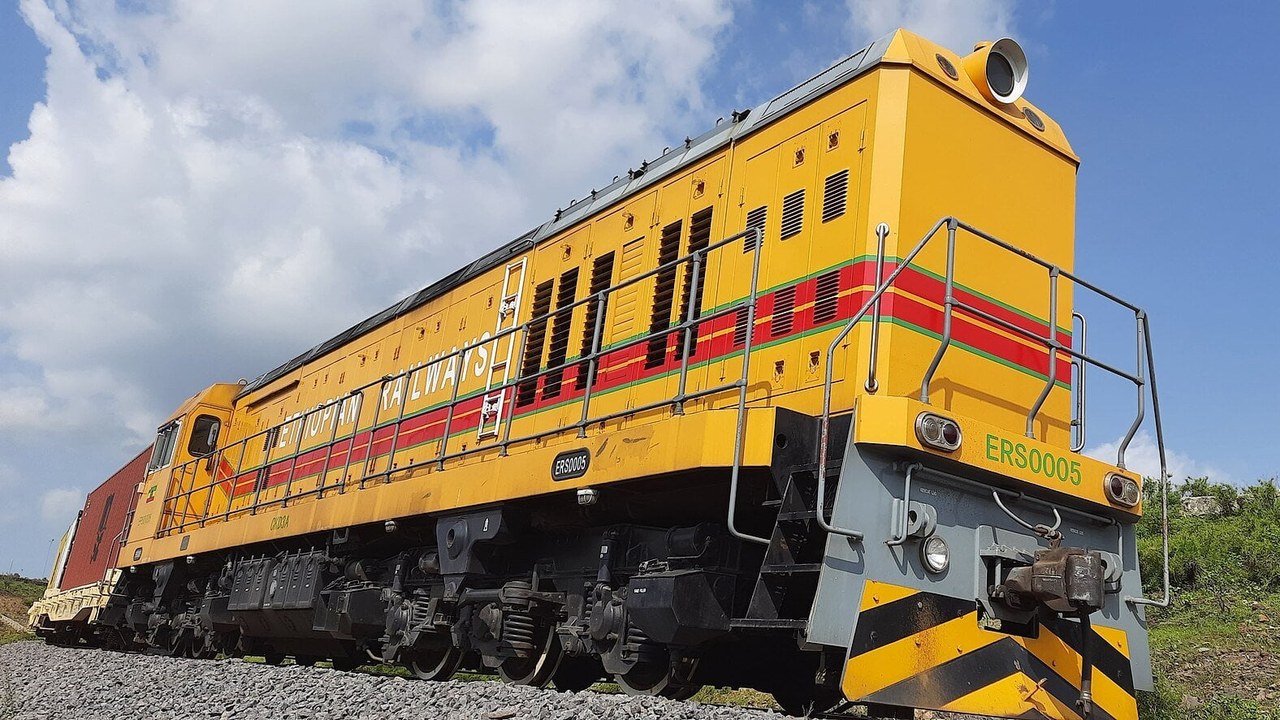
Ethiopia has been landlocked since 1993, and the Eritrean ports of Assab and Massawa no longer serve its trade. The World Bank calls the Djibouti-Ethiopia corridor the main trade route that supports Djibouti’s role as a gateway to the Horn.
That shift cut Eritrea off from the biggest customer on its doorstep. Eritrea publishes few economic figures, so its trade numbers with its neighbours are not known with confidence.
Ethiopia’s search for another sea outlet is the reason Assab sits at the centre of the 2026 dispute. Eritrea calls that search a campaign against its sovereignty.
Migration and Refugees Across the Borders
Many young Eritreans leave because of the open-ended national service, and the nearest border is usually the first stop. UNHCR counts 124,650 Eritrean refugees and asylum-seekers in Ethiopia as of 31 August 2026, and 1,571 in Djibouti on the same date.
UNHCR also publishes a dashboard of Eritrean refugees in Sudan as of 30 September 2026, though the war makes counting harder. Many Eritreans move on from these camps toward Europe, the Gulf and North America.
The refugee flow ties each neighbour to Eritrea’s domestic politics, because every border crossing reflects a decision to leave. It also gives the diaspora a large voice, with community groups in Saudi Arabia, Europe, Australia and the United States.
Regional Bodies and Where Eritrea Leads or Follows
Eritrea joined the African Union on 24 May 1993 and belongs to COMESA, the 21-member Common Market for Eastern and Southern Africa. It is absent from the seven-member list of IGAD: Ethiopia, Djibouti, Sudan, Somalia, Kenya, South Sudan and Uganda.
That gap leaves Eritrea outside the main club where its neighbours settle disputes. IGAD’s secretariat sits in Djibouti, one of the countries Eritrea borders.
Eritrea rarely leads regional bodies and prefers to deal with partners one on one. Among its neighbours, it signed a friendship pact with Ethiopia in 2018, watched it collapse, and now looks to Russia.
President Isaias travelled to Moscow on 27 October 2026 and attended the Third Russia-Africa Summit on 28 and 29 October. Read more in our report on President Isaias at the Russia-Africa summit.
Eritrea also set up formal ties with The Gambia on 23 October 2026, through a communique signed in New York. See Eritrea and The Gambia opening diplomatic ties for the details.
What Prediction Markets Say
Polymarket, a betting platform, gives a 13.5% chance of an Eritrean invasion of Ethiopia by 2026’s end (31 October 2026, 7:48 a.m. ET). The market for an invasion by 31 October stood at 0.4%.
About US$119,000 has traded across the whole market, so the price reflects real money but a small crowd. Eritrea’s government calls the invasion claim fabricated, so treat the price as a bet on a fear, not as a forecast.
Why we show this: prediction markets turn real-money bets into a live probability that moves within minutes of the news, which is why investors, campaigns and newsrooms in the United States now follow them closely. We show them next to polls and official results, never instead of them.
What It Means for US Readers
A war between Eritrea and Ethiopia would put pressure on ships using the Bab el-Mandeb strait, the gateway to the Suez Canal. Shipping costs and oil prices are the channels through which American households would feel it.
A US proclamation signed on 4 June 2025 fully restricted entry of Eritrean nationals from 9 June 2025. Eritrean families in the United States should check the current rules before planning any travel.
Eritrea’s own government says the region faces rising rivalries and armed conflicts. Anyone with family in the Horn of Africa should follow official US travel advice before any trip.
What Is Not Known
No independent body has confirmed how many troops each side has near the border. Eritrea also publishes little data, so the World Bank figure of 3.6 million people is an estimate.
The details of Ethiopia’s note of 11 October 2026 are not known. The size of Eritrean trade with Ethiopia, Sudan and Djibouti is also not published.
Frequently Asked Questions
Which countries are Eritrea neighbours on land?
Eritrea shares land borders with Ethiopia to the south, Sudan to the west and Djibouti to the southeast. Across the Red Sea lie Yemen and Saudi Arabia.
Why do Eritrea and Ethiopia dispute the Red Sea?
Ethiopia has been landlocked since 1993 and wants sea access, while Eritrea says its campaign for a port such as Assab threatens its sovereignty. Eritrea set out that position in notes to the UN Security Council in October 2026.
Is Eritrea part of IGAD?
Eritrea does not appear on the seven-member list on the IGAD website. It is a member of the African Union and of COMESA.
How many Eritrean refugees live in neighbouring countries?
UNHCR counts 124,650 refugees and asylum-seekers in Ethiopia and 1,571 in Djibouti as of 31 August 2026. A separate UNHCR dashboard covers Sudan.
Can Eritreans enter the United States?
A US proclamation signed on 4 June 2025 fully restricted entry of Eritrean nationals from 9 June 2025. Check the current rules before planning any travel.
Sources: World Bank, Eritrea, Ethiopia and Djibouti data (population, GDP) and Djibouti overview, 2026-10-31; UNHCR, Operational Data Portal, Ethiopia and Djibouti, Eritrean refugees as of 31 August 2026, 2026-08-31; UNHCR, Sudan, Eritrean Refugees Dashboard as of 30 September 2026, 2026-10-14; UN Security Council, resolution 2444 (2018), 2018-11-14; Eritrea Ministry of Information: note to UN Security Council members (13 October 2026), statement of 21 October 2026, Geneva Sudan statement (22 October 2026), editorial of 29 October 2026, 2026-10-29; Eritrea Ministry of Information: President Isaias in Moscow, The Gambia communique, Jeddah community congress, 2026-10-27; IGAD, member states and secretariat, 2026-10-31; COMESA, member states, 2026-10-31; African Union, member states, 2026-10-31; US White House, proclamation restricting entry, 4 June 2025, 2025-06-04.
This article was produced by The Rio Times’ automated newsroom system. How we use AI · Report an error · Editorial responsibility: Matthias Camenzind, Editor-in-Chief
Horn of Africa and the Red Sea
- Horn of Africa 2026: Why It Matters and Who Backs Whom
- Ethiopia’s Neighbors Explained, Ports, Eritrea, Somalia
- Eritrea Explained 2026, a Red Sea Country Guide
- Somalia Explained: Al-Shabaab, Somaliland, the Ports and the Fight Over a 2026 Vote
Brazil runoff date: Sunday, October 25, poll closing times and when results start · Brazil runoff polls: Flávio 51%, Lula 49% · Kalshi and Polymarket odds
Rotate for Best Experience
This report is optimized for landscape viewing. Rotate your phone for the full experience.
You've reached your free article limit
Subscribe to The Rio Times for unlimited access to our reporting from across Africa.
Keep reading for free
Your first article was on us. Register with your email address to read 6 free articles every month. You will also receive Africa Intelligence: African markets, politics and business, every weekday morning.