Horn of Africa 2026: Why It Matters and Who Backs Whom
Horn of Africa · Pillar Guide
Key Facts
- The region Ethiopia, Eritrea, Djibouti and Somalia, home to about 160 million people, with Sudan and Yemen across the borders and the water.
- Why it matters The Bab el-Mandeb strait links the Red Sea and the Suez Canal to the Indian Ocean and the trade routes of Asia.
- Why now Ethiopia and Eritrea cut ties on 1 October 2026, and Ethiopian troops reached the Eritrean border at Zalambessa by 13 October.
- Who backs whom The UAE is close to Ethiopia and to Sudan’s RSF. Egypt, Eritrea and Saudi Arabia favour Sudan’s army, and Egypt courts Somalia and Eritrea.
- Foreign bases Djibouti hosts bases for the United States, China, France, Japan and Italy, a rare cluster of rival armies in one small country.
- Prediction markets Polymarket gives a 19.5% chance that Eritrea invades Ethiopia by 31 December 2026 (15 October, 6:06 a.m. ET).
- Still open Whether Ethiopia and Eritrea fight a full war, and who could mediate between them, is not settled.
Horn of Africa geopolitics come down to one fact: the region overlooks the Bab el-Mandeb strait, the southern gate to the Red Sea and the Suez Canal. Those routes carried about 12% of all oil traded by sea in the first half of 2023, according to the US Energy Information Administration.
In 2026 five conflicts overlap there at once, from Ethiopia’s clash with Eritrea to Sudan’s civil war and Houthi attacks from Yemen. Almost every major and middle power has taken a side, which makes this corner of Africa one of the most explosive places on earth.

Why the Horn Matters to the World
The Horn of Africa is the wedge of land that points east into the Indian Ocean, with Yemen just across the water. At the Bab el-Mandeb, Africa and Arabia sit only a short boat ride apart, and every ship between the Suez Canal and Asia must pass.
The IMF said in March 2024 that the Suez Canal normally carries about 15% of global maritime trade by volume. The US Energy Information Administration found that the Red Sea routes carried about 8% of world trade in liquefied natural gas in the first half of 2023.
Egypt feels the cost first, because Suez Canal tolls are one of its main sources of dollars. Prime Minister Mostafa Madbouly said in October 2026 that canal revenue fell from about US$10 billion a year to US$3.3 billion, before recovering to about US$4.4 billion.
The seabed matters too, because the data cables that link Europe, Africa and Asia run under the Red Sea. Djibouti now hopes to turn that position into a digital and computing hub, and our Djibouti explainer shows how it earns its living.
Inland lies the Nile, whose Blue Nile branch rises in Ethiopia and supplies most of the river’s water downstream in Sudan and Egypt. The four core Horn states of Ethiopia, Somalia, Eritrea and Djibouti held about 160 million people in 2025, according to World Bank estimates.
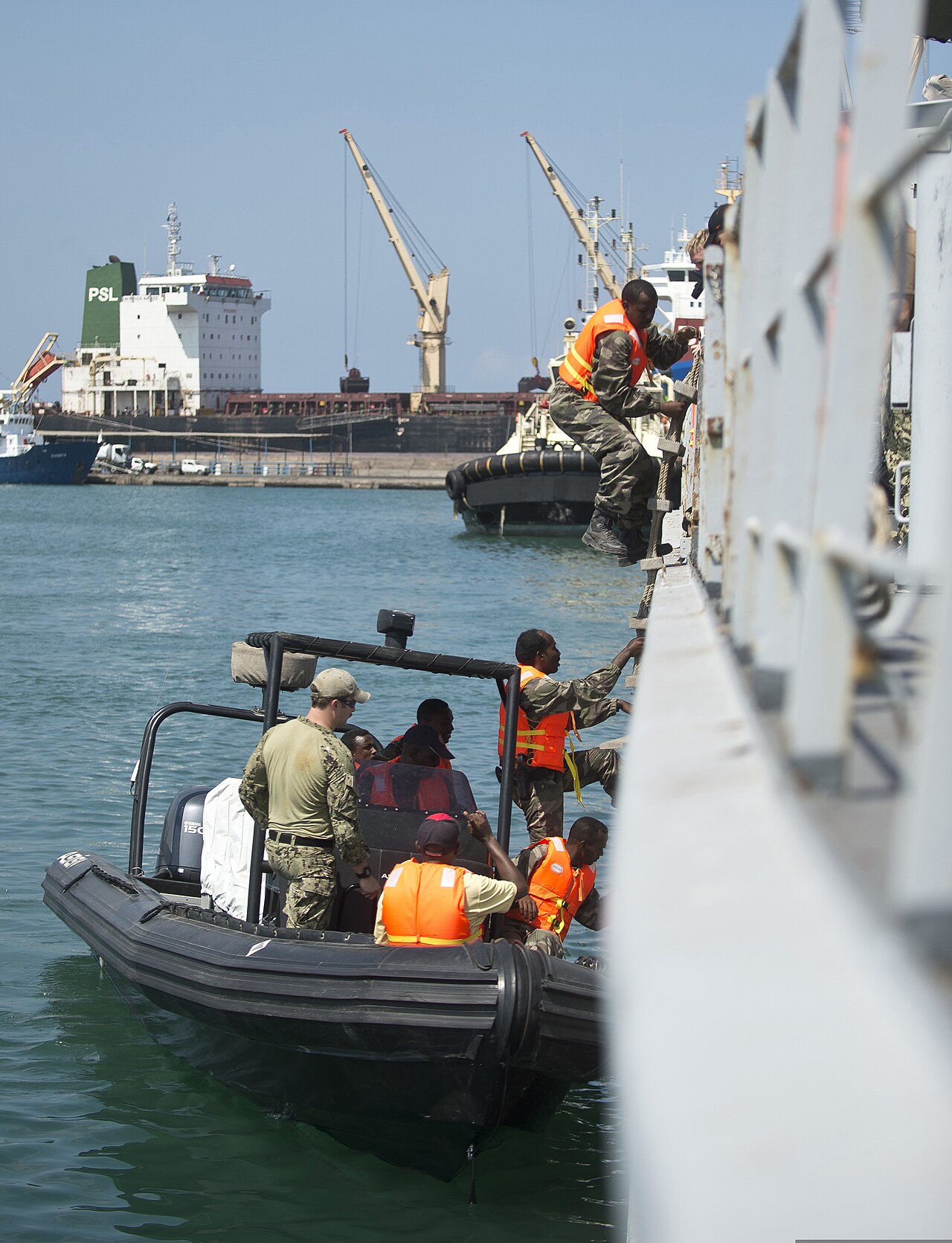
Djibouti, a country of about 1.2 million people, hosts military bases for China, France, Italy, Japan and the United States, according to the World Bank. Few places on earth pack so many foreign armies into so small a territory.
Why It Is So Explosive Now
Several local wars have always simmered in the Horn, but in 2026 they have begun to touch each other. Five fault lines now run through the region, each with outside backers, and our Horn of Africa hub follows all of them.
The first runs between Ethiopia and Eritrea, with Tigray in the middle. Federal troops retook Mekelle in early October 2026 and reached the border town of Zalambessa, as our report on the Zalambessa advance and our Tigray guide explain.
The second pits Somalia against Somaliland, the northwestern region that declared independence in 1991 and runs its own state. Israel recognised it on 26 December 2025, and our Somaliland recognition explainer sets out the stakes for Somalia.
The third is Sudan’s war between the army and the Rapid Support Forces (RSF), a paramilitary force led by Mohamed Hamdan Dagalo, known as Hemedti. It began on 15 April 2023, and our Sudan war explainer and our guide to Sudan in the Horn map the fronts and the backers.
The fourth is the Red Sea itself, where Yemen’s Houthi movement, an Iran-backed armed group, has attacked shipping since late 2023. It also struck Saudi Arabia in 2026, and our Houthis and Red Sea explainer and our Bab el-Mandeb analysis follow the shipping risk.
UN Secretary-General António Guterres condemned a Houthi attack on Riyadh’s King Khalid International Airport in October 2026, which reportedly killed 12 people. Saudi Arabia, which leads the coalition backing Yemen’s government, is now itself a front line.
The fifth is the Nile, where Egypt sees Ethiopia’s Grand Ethiopian Renaissance Dam as a threat to its water. Our Nile dam explainer covers the dispute, which pushes Cairo towards Ethiopia’s rivals.
The Region at a Glance
Seven countries and territories shape the Horn’s politics, including Yemen across the strait. Population figures below are World Bank estimates for 2025 unless stated otherwise.
Ethiopia
Population: About 135.5 million (World Bank, 2025)
Capital: Addis Ababa, seat of the African Union
Leader: Prime Minister Abiy Ahmed, in office since 2018, sworn in for a new five-year term on 5 October 2026
Ports: None; landlocked since Eritrea’s independence in 1993, it trades mainly through Djibouti and wants its own access to the sea
Main conflict: Renewed war in Tigray and a standoff with Eritrea; see our Ethiopia explainer
Eritrea
Population: About 3.6 million (World Bank, 2025)
Capital: Asmara
Leader: President Isaias Afwerki, in power since independence in 1993, with no national election held
Ports: Massawa and Assab on the Red Sea
Main conflict: Fears an Ethiopian push for Assab; cut ties with Addis Ababa on 1 October 2026; see our Eritrea explainer
Djibouti
Population: About 1.2 million (World Bank, 2025)
Capital: Djibouti City
Leader: President Ismail Omar Guelleh, in office since 1999
Ports: Djibouti, Doraleh and Tadjourah, the main gateway for Ethiopia’s trade
Main conflict: None at home; it rents land to foreign armies, as our military bases explainer shows
Somalia
Population: About 19.7 million (World Bank, 2025)
Capital: Mogadishu
Leader: President Hassan Sheikh Mohamud, who says his mandate runs to May 2027; the opposition says it expired in May 2026
Ports: Mogadishu, Kismayo and Bosaso, and it claims Berbera in Somaliland
Main conflict: The al-Shabaab insurgency, an election dispute and the Somaliland question
Somaliland
Population: Not known; no reliable census figure exists
Capital: Hargeisa
Leader: President Abdirahman Mohamed Abdullahi, known as Irro, elected in November 2024
Ports: Berbera, run by the Dubai port operator DP World
Main conflict: Seeks recognition as a state; Somalia says it is Somali territory
Sudan
Population: About 51.7 million (World Bank, 2025)
Capital: Khartoum; the army-backed government ran the war from Port Sudan
Leader: General Abdel Fattah al-Burhan, army chief and head of the Transitional Sovereignty Council
Ports: Port Sudan, the country’s only major seaport
Main conflict: War between the Sudanese Armed Forces and the Rapid Support Forces since April 2023
Yemen
Population: About 41.8 million (World Bank, 2025)
Capital: Sanaa, held by the Houthis; the recognised government sits in Aden
Leader: Split: Abdul-Malik al-Houthi leads the Houthis, and a Presidential Leadership Council leads the recognised government
Ports: Hodeidah under the Houthis, Aden under the government
Main conflict: Civil war since 2014 and Houthi attacks on shipping and on Saudi Arabia
The Great-Power Contest
Horn of Africa geopolitics drew in the great powers long before the current wars. Each now has troops, ships, loans or ports in the region, and each reads the crisis through its own rivalries.
United States
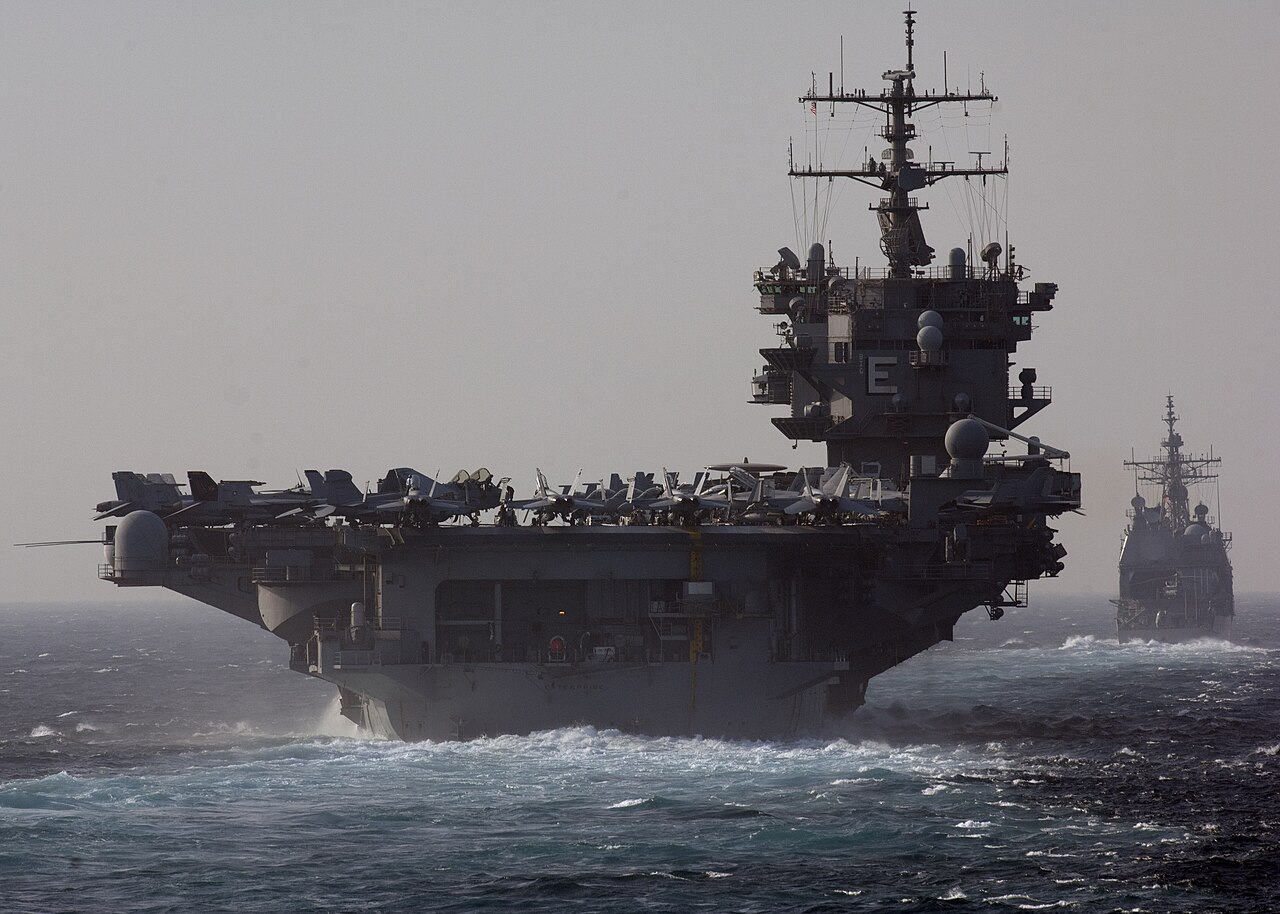
Camp Lemonnier in Djibouti is the anchor of American power in the region and hosts the Combined Joint Task Force-Horn of Africa, according to US Africa Command. The command logged 86 airstrikes in Somalia in 2026 through September, against al-Shabaab, an al-Qaeda affiliate, and the Islamic State’s Somali branch.
At sea, the United States set up a naval coalition to protect shipping in December 2023 and has struck Houthi targets since January 2024. Washington has not recognised Somaliland, which has offered minerals and a base in return for recognition.
China
China keeps a military base in Djibouti, one of the five national bases the World Bank lists there, not far from Camp Lemonnier. Chinese firms also built the railway from Addis Ababa to Djibouti, the main rail link between Ethiopia and the sea.
Ethiopian officials fear that the railway and other routes to Djibouti are vulnerable to attack or sabotage, Crisis Group reported in February 2026. The same group listed China among the powers that should warn Ethiopia that military action against Eritrea is unacceptable.
Russia
Russia has long sought a naval logistics centre at Port Sudan, under a 2020 agreement with Khartoum that has yet to produce a working base. Moscow courts both Sudan’s army-led government and Eritrea, one of only five countries that voted against the UN General Assembly’s March 2022 resolution on Ukraine.
At the UN Security Council, Russia has opposed extending Sudan sanctions beyond Darfur, noted Security Council Report, an independent research group, in September 2026. A Red Sea foothold would let its navy refuel and repair ships far from home waters.
France, the EU and Japan
France keeps a garrison in Djibouti, its former colony, and Japan’s Self-Defense Forces also keep a base there. Italy keeps a base as well, according to the World Bank, and our report on Djibouti and the EU mission covers Europe’s naval role.
The EU runs two naval operations nearby: Atalanta, launched in 2008 against Somali piracy, and Aspides, which protects merchant ships in the Red Sea. The EU’s foreign service describes the mandate of Aspides as defensive, so unlike the US Navy it does not strike targets on land.
The Middle Powers and Who Backs Whom
The Gulf states, Turkey, Egypt, Iran and Israel are often more decisive than the great powers, because they bring money, drones and ports. Their rivalries in the Horn date back years, and Crisis Group described a new quarrel between Saudi Arabia and the UAE beginning in late December 2025.
The United Arab Emirates is the most active of them, and Crisis Group wrote in February 2026 that Abiy Ahmed is close to it. Crisis Group also called the UAE the RSF’s chief sponsor, which Abu Dhabi contests, and the Emirati firm DP World operates Berbera port in Somaliland.
Saudi Arabia, across the Red Sea from Eritrea, backs Yemen’s recognised government against the Houthis and, according to Crisis Group, favours Sudan’s army. It mediated the 2018 Jeddah Agreement between Ethiopia and Eritrea and has kept friendly ties with both since.
Turkey has long been one of Somalia’s main partners, and Turkish companies run Mogadishu’s airport and seaport, according to Turkey’s foreign ministry. In late 2024 Ankara brokered the Ankara Declaration between Ethiopia and Somalia, which Crisis Group said ended Abiy’s hopes of a naval base in Somaliland.
Egypt is Ethiopia’s main regional rival because of the Nile dam, and Crisis Group calls it a close wartime ally of Sudan’s army. On 4 October 2026 Egypt, Eritrea, Somalia and Sudan adopted the El Alamein Joint Declaration on the Red Sea, as our report on Cairo describes.
Qatar works mostly through money and mediation, and Crisis Group reported in 2019 that it planned to expand the Somali port of Hobyo. The same report found that Qatar and the UAE had paid rival Somali allies to undermine each other’s interests.
Iran backs the Houthis, Security Council Report noted in September 2026, and Israel has accused Tehran of shipping them weapons through the port of Hodeidah. The UN Security Council has kept a targeted arms embargo on the Houthis since resolution 2216 of April 2015.
Israel became the first UN member state to recognise Somaliland on 26 December 2025. Israeli forces have also struck Houthi targets in Yemen in response to missile and drone attacks on Israel.
Who Backs Whom
The cards below list each local actor’s outside backers. Documented means an official statement or agreement, reported means credible specialist reporting, and alleged means an accusation that is disputed.
Ethiopia’s federal government
UAE: Close partner, reported by Crisis Group (2026)
Turkey: Brokered its Ankara Declaration with Somalia, documented (2024)
Rivals: Egypt and Eritrea, documented in official statements
Eritrea
Egypt: Partner in the El Alamein Joint Declaration, documented (October 2026)
Russia: Diplomatic partner; voted with Moscow at the UN, documented (2022)
Saudi Arabia: Friendly ties and quiet diplomacy, reported by Crisis Group (2026)
Somalia’s federal government
Turkey: Turkish firms run Mogadishu’s airport and seaport, documented by Turkey’s foreign ministry
Egypt: Partner in the El Alamein Joint Declaration, documented (2026)
Eritrea: Part of a loose alliance with Egypt and Somalia, reported by Crisis Group (2026)
Somaliland
Israel: Recognition on 26 December 2025, documented
UAE: DP World runs Berbera port, documented
United States: No recognition so far, documented
Sudan’s army (SAF)
Egypt: Close wartime ally, reported by Crisis Group (2026)
Saudi Arabia: Favours the army, reported by Crisis Group (2026)
Eritrea: Sided with the army and trains allied militias, reported by Crisis Group (2026)
Iran: Iranian-made drones bought for the army, documented by the US Treasury (2025)
Rapid Support Forces (RSF)
UAE: Called the RSF’s chief sponsor by Crisis Group (2026); alleged, the UAE contests it
Ethiopia: An RSF training camp in Benishangul-Gumuz, alleged (Crisis Group, 2026)
The Houthis
Iran: Backing reported by Security Council Report (2026); weapons shipments through Hodeidah alleged by Israel (2024)
Al-Shabaab (partner): Over 100 fighters trained in Yemen, reported by Garowe Online citing US and regional officials (2026); see our report
How the Rivalries Feed Each Other
The Nile dispute drives Egypt towards Ethiopia’s neighbours, because Cairo wants allies around the country it blames for its water risk. Crisis Group wrote in February 2026 that Egypt, Somalia and Eritrea had formed a loose alliance to counter what they saw as Ethiopia’s ambitions.
Analysts at the Critical Threats Project, part of the American Enterprise Institute in Washington, read the El Alamein summit of October 2026 the same way. They wrote that most of its aims involve countering Ethiopia’s actions and objectives in the Nile valley and the Red Sea.
Gulf rivalries then play out on the ground in Sudan and Somaliland. When Saudi Arabia and the UAE quarrel, the army and the RSF in Sudan, and Mogadishu and Hargeisa in Somalia, each find a patron.
At sea, the Houthis and their Iranian backers face a naval presence led by the United States, Europe and Saudi Arabia. In September 2026 the UN Security Council held an emergency briefing on Houthi attacks on Saudi Arabia, requested by Bahrain and the UK.
On land, Ethiopia’s drive for a port collides with Eritrean and Somali sovereignty, and Abiy repeated the demand when he was sworn in on 5 October 2026. In a letter to the UN Security Council, Eritrea’s foreign minister accused Ethiopia of seeking to acquire sovereign access to the sea by force.
Three Scenarios for 2027
No one can say where Horn of Africa geopolitics will lead in 2027, but specialist analysts have sketched the main risks. Crisis Group, the conflict-prevention organisation based in Brussels, has written most closely about the Ethiopia and Eritrea front.
The first scenario is a contained standoff, in which armies face each other along the border without a full war. Crisis Group wrote in February 2026 that the huge costs of another conflict were helping hold the sides back.
In that case Saudi Arabia, Turkey and the African Union gain as mediators, and shipping keeps a risk premium without a new shock. Insurers would keep charging war-risk premiums, but more ships could return to the Suez route.
The second scenario is a regional war that starts between Ethiopia and Eritrea and spreads. Crisis Group warned that a slide toward hostilities would be easy to start but much more difficult to stop.
It added that such a war would overlap with Sudan’s, drag in powers from outside the Horn and further roil the Red Sea. Egypt, the UAE and Saudi Arabia would face pressure to choose sides openly, and our comparison of the two armies sets out what each could field.
The third scenario is a negotiated Red Sea settlement that trades secure Ethiopian access to a port for guarantees of Eritrean and Somali sovereignty. Crisis Group urged exactly that kind of quiet diplomacy, addressing Ethiopia’s desire for reliable sea access and Eritrea’s fears of an attack.
Such a deal would reward the mediators and calm shipping insurance on the Suez route. It would also need the Houthis to stop attacking ships, which no regional deal can guarantee.
What It All Means
For global trade, every flare-up near the strait raises freight rates and insurance costs, because ships must either pay more or sail around Africa. Egypt’s lost canal revenue shows how quickly one chokepoint can drain a national budget.
For energy, the Red Sea route matters more when the Strait of Hormuz is disrupted, because Saudi Arabia can export oil from its Red Sea coast. That makes the Houthi threat to Saudi ports a risk for oil prices worldwide.
For Europe, war in Sudan and Ethiopia pushes more people to flee, first to neighbouring countries and then north. UN data on 5 October 2026 counted about 11.3 million people forcibly displaced by Sudan’s war, including 4.6 million who reached neighbouring countries.
Horn of Africa geopolitics also mirror the contest between the United States and China, whose bases sit close together in Djibouti. Above all, the region’s people pay the price in hunger, displacement and death, as in the 2020 to 2022 Tigray war.
Security Council Report, an independent research group, notes that estimates put the death toll of that war at about 600,000. Another war on the same ground would hit a population that has barely recovered.
What the Markets Say
On Polymarket, bets priced a 14.5% chance that Eritrea invades Ethiopia by 31 October and 19.5% by 31 December (15 October, 6:06 a.m. ET). That market had drawn about US$97,000 in bets, and the chance that Donald Trump recognises Somaliland before 2027 stood at 5%.
Bets on the market “Perim Island no longer under Houthi control”, an island in the strait, stood at 17.3% for 31 October and 34% for 31 December. A market on Somali pirates seizing a vessel by 31 October traded at 24.5% (all 15 October, 6:06 a.m. ET).
Why we show this: prediction markets turn real-money bets into a live probability that moves within minutes of the news, which is why investors, campaigns and newsrooms in the United States now follow them closely. We show them next to polls and official results, never instead of them.
What It Means for US Readers
For American shippers and consumers, trouble at the Bab el-Mandeb means longer voyages around the Cape of Good Hope and higher freight costs. Those costs feed into the price of goods from Asia and fuel bound for Europe.
For the US military, Camp Lemonnier puts American forces close to any fighting in the region, from Somalia to Yemen. A wider war could expose them to drone and missile attacks, as the Houthis have shown at sea.
For US policy, the open questions are whether to recognise Somaliland and how hard to press Ethiopia and Eritrea to stand down. The United States requested the UN Security Council session on the Horn of Africa held on 13 October 2026.
For investors, the region touches shipping stocks, oil prices and Egypt’s bonds, which depend on canal revenue. The US State Department advises Americans not to travel to Tigray or to Ethiopia’s border with Eritrea.
What Is Not Known
It is not known whether Eritrean troops remain inside Ethiopia, or whether either army will cross the border in force. Both governments have given the UN Security Council opposite accounts of who attacked whom.
The size of outside arms supplies to Sudan’s army and the RSF is not publicly documented in full. The UAE contests UN experts’ assertions linking it to the war, and their 2026 report had not been published by September 2026.
It is also not known whether Russia will ever open its planned base at Port Sudan, or whether Washington will recognise Somaliland. The death toll and displacement since fighting escalated in Tigray in September 2026 have not been counted.
Frequently Asked Questions
Why is the Horn of Africa so important?
It overlooks the Bab el-Mandeb strait, the gate between the Red Sea and the Indian Ocean on the Suez route between Asia and Europe. The Red Sea routes carried about 12% of seaborne oil in the first half of 2023, according to the US Energy Information Administration.
Which countries have military bases in Djibouti?
The World Bank lists military bases for China, France, Italy, Japan, the United States and NATO, plus forces of other countries fighting piracy. The US base, Camp Lemonnier, hosts the Combined Joint Task Force-Horn of Africa.
Who backs whom in the Horn of Africa?
Crisis Group says the UAE is close to Ethiopia and sponsors Sudan’s RSF, which Abu Dhabi contests. Egypt, Eritrea and Saudi Arabia lean towards Sudan’s army, while Turkey and Egypt back Somalia’s government.
Could Ethiopia and Eritrea go to war in 2026?
The risk is real, since the two cut diplomatic ties on 1 October 2026 and Ethiopian troops reached the border by 13 October. Crisis Group has warned that such a war would be easy to start but hard to stop.
Sources: US Energy Information Administration, Red Sea chokepoints, 4 December 2023; World Bank, population estimates, 2025 data; Masrawy, Madbouly on Suez Canal revenue, 4 October 2026; Security Council Report, Horn of Africa closed consultations, 12 October 2026; Crisis Group, Ethiopia, Eritrea and Tigray: A Powder Keg in the Horn of Africa, 18 February 2026; Crisis Group, Intra-Gulf Competition in Africa’s Horn, 19 September 2019; Critical Threats Project, Africa File, 8 October 2026; Critical Threats Project, Ethiopia War Security Review, 13 October 2026; Eritrea Ministry of Information, note on Eritrea-Ethiopia relations, 14 October 2026; African Union Commission, congratulations to Abiy Ahmed, 5 October 2026; US Africa Command, Combined Joint Task Force-Horn of Africa, accessed October 2026; Garowe Online, Houthi and al-Shabaab ties, 8 September 2026; Somali Guardian, presidential term dispute, 16 May 2026; UN News, General Assembly resolution on Ukraine and the vote, 2 March 2022; World Bank, Djibouti overview, accessed October 2026; Office of the UN Special Envoy for Yemen, Secretary-General’s statement on the attack on Riyadh, 11 October 2026; US Treasury, sanctions on the leader of the Sudanese Armed Forces, 16 January 2025; EUNAVFOR Atalanta, mission, accessed October 2026; BTI Transformation Index, Eritrea country report, 2026; EEAS, EUNAVFOR Aspides, accessed October 2026; UNHCR, Sudan situation data portal, 5 October 2026; US State Department, Ethiopia travel advisory, 27 August 2026; IMF Blog, Red Sea Attacks Disrupt Global Trade, 7 March 2024; Security Council Report, Yemen: Emergency Briefing, 10 September 2026; Security Council Report, Yemen monthly forecast, February 2024; Security Council Report, Yemen monthly forecast, August 2024; Security Council Report, Sudan monthly forecast, September 2026; US Africa Command, 2026 strikes, accessed 15 October 2026; Turkish Ministry of Foreign Affairs, relations with Somalia, accessed 15 October 2026.
This article was produced by The Rio Times’ automated newsroom system. How we use AI · Report an error · Editorial responsibility: Matthias Camenzind, Editor-in-Chief
Expat Guide to Ethiopia
What The Rio Times publishes for foreigners who live in or move to Ethiopia.
Start here
Coming up in Ethiopia
Understand Ethiopia
Horn of Africa and the Red Sea
- Ethiopia’s Neighbors Explained, Ports, Eritrea, Somalia
- Eritrea Explained 2026, a Red Sea Country Guide
- Somalia Explained: Al-Shabaab, Somaliland, the Ports and the Fight Over a 2026 Vote
- Bab el-Mandeb: US, China Forces Guard Oil Chokepoint
Rotate for Best Experience
This report is optimized for landscape viewing. Rotate your phone for the full experience.
You've reached your free article limit
Subscribe to The Rio Times for unlimited access to our reporting from across Africa.
Expat Guide to Ethiopia
What The Rio Times publishes for foreigners who live in or move to Ethiopia.
Start here
Coming up in Ethiopia
Understand Ethiopia