Ethiopia Neighbours Explained, the Horn of Africa in 2026

ETHIOPIA · REGIONAL RELATIONS
Key Facts
- —What it is Ethiopia is a landlocked Horn of Africa power whose six neighbours shape its trade, security and water politics.
- —The numbers About 97% of Ethiopia’s seaborne cargo moves through Djibouti’s ports, and a US$660 million fuel pipeline to Djibouti was launched on 24 September 2026.
- —The catch Ethiopia’s search for maritime access collides with Somalia’s sovereignty claims and Eritrea’s deep mistrust.
- —Who is who Prime Minister Abiy Ahmed Ali leads Ethiopia as of October 2026, with President Taye Atske Selassie as head of state.
- —What it means for you Anyone investing or travelling in Ethiopia depends on corridors, ports and peace deals negotiated with its neighbours.
Ethiopia neighbours are not a backdrop; they are the operating system for the country’s economy, security and diplomacy. A foreigner cannot understand Ethiopia without understanding Djibouti’s ports, Somalia’s fragile truce, Eritrea’s broken peace and Sudan’s war next door.
Ethiopia is the demographic and diplomatic centre of gravity in the Horn of Africa, yet it is landlocked and surrounded by six states with competing interests. This guide explains how those relationships work, where they are heading in 2026 and what they mean for anyone doing business, investing or simply trying to make sense of the region.

The neighbourhood at a glance
Ethiopia shares borders with Eritrea to the north, Djibouti to the northeast, Somalia to the east and southeast, Kenya to the south, South Sudan to the west and Sudan to the northwest. That geography gives Addis Ababa direct access to the political and security systems of the Horn, but not to the sea.
The principal commercial gateway is Djibouti, connected to Addis Ababa by road and the Addis Ababa–Djibouti railway. This dependence makes port access a strategic issue rather than merely a logistics concern. Every container, every fuel shipment and most of Ethiopia’s external trade must pass through a neighbour’s territory.
Ethiopia is a member of IGAD, the African Union, COMESA, the Nile Basin Initiative and the Eastern Africa Power Pool. Djibouti hosts the IGAD Secretariat in Djibouti City. Ethiopia’s influence varies sharply depending on the issue.
Who leads the relevant institutions
The principal officeholders relevant to Ethiopia’s neighbourhood policy, as of October 2026, are Prime Minister Abiy Ahmed Ali and President Taye Atske Selassie. Foreign Minister Gedion Timothewos handles day-to-day diplomacy. Abiy’s Prosperity Party won 438 seats in the June 2026 election, and the new parliament is expected to confirm his next term in October.
Among Ethiopia’s neighbours, the key leaders are President Ismaïl Omar Guelleh of Djibouti, President Hassan Sheikh Mohamud of Somalia, President Isaias Afwerki of Eritrea, President William Samoei Ruto of Kenya, President Salva Kiir Mayardit of South Sudan and General Abdel Fattah al-Burhan, chairman of Sudan’s Transitional Sovereignty Council.
At the regional level, Workneh Gebeyehu serves as IGAD Executive Secretary, Mahmoud Ali Youssouf chairs the African Union Commission and Chileshe Mpundu Kapwepwe is Secretary-General of COMESA. These institutions matter because they set the rules for trade, security cooperation and dispute resolution across the Horn.
Ethiopia and Djibouti: the indispensable partnership
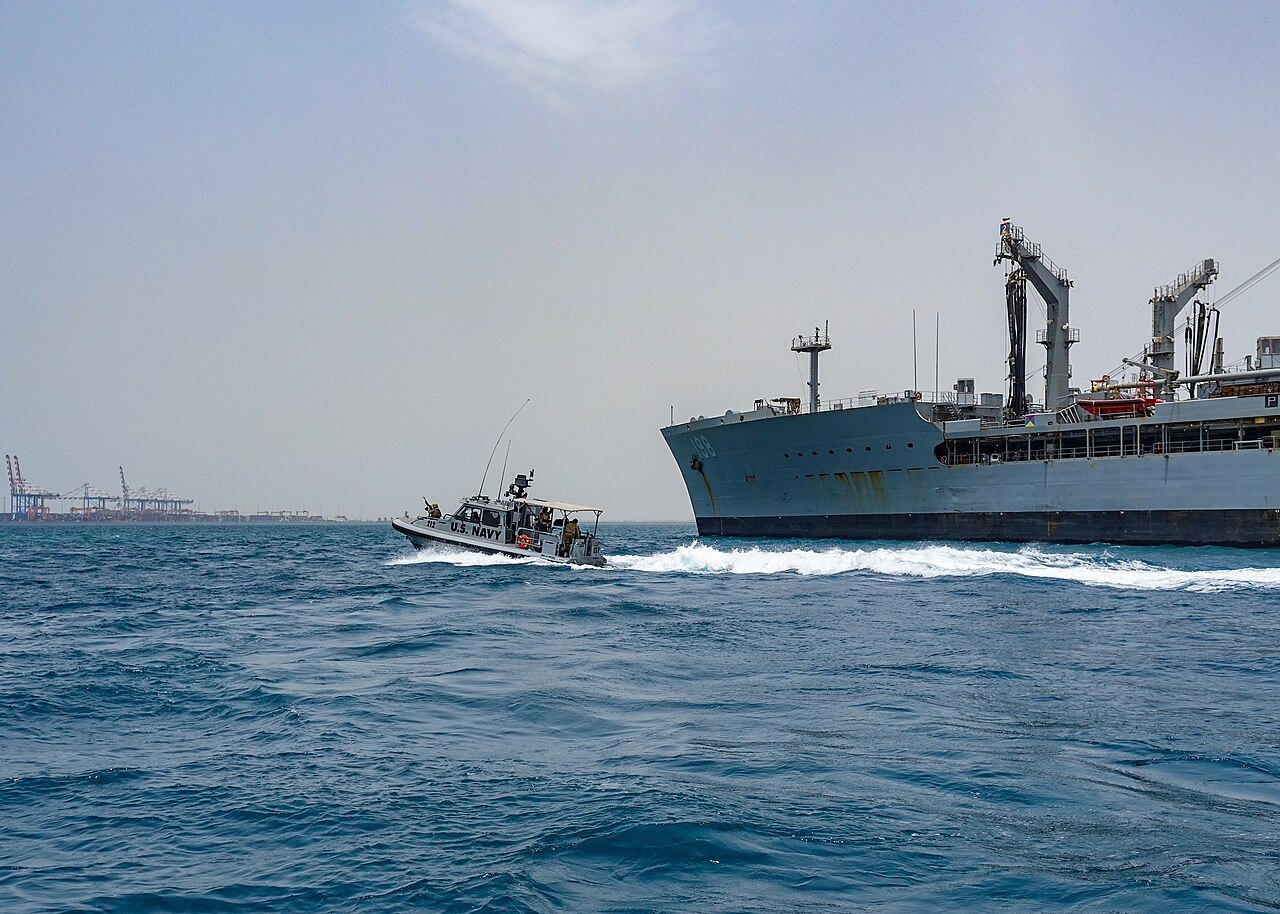
Djibouti is Ethiopia’s most important economic neighbour. The relationship is strategically asymmetric: Ethiopia is Djibouti’s largest hinterland economy, while Djibouti provides Ethiopia with its principal maritime outlet.
The relationship rests on several pillars: port access through Doraleh and related terminals, the Addis Ababa–Djibouti railway, road and freight corridors, electricity exports from Ethiopia to Djibouti, fuel-storage and petroleum logistics, security coordination and joint participation in IGAD. Each pillar reinforces the others.
On 24 September 2026, Prime Minister Abiy and President Guelleh, together with Nigerian industrialist Aliko Dangote, launched a planned 120-kilometre refined-products pipeline linking Damerjog in Djibouti with Dewele in Ethiopia, at a ceremony in Djibouti. The project is valued at US$660 million and is being developed by Ethiopian Investment Holdings and the Dangote Group, with operation targeted in about 18 months. It is planned to include storage of about 375,000 cubic metres at Damerjog and about 800,000 cubic metres at Dewele. The project is intended to connect maritime fuel-receiving and coastal-storage facilities with Ethiopian storage and distribution networks.
For Ethiopia, the pipeline could reduce road tanker traffic, lower logistics costs and improve fuel security. For Djibouti, it reinforces the country’s position as Ethiopia’s energy and trade gateway. The partnership is commercially complementary even when the two countries compete for investment, transit revenue and influence.
Ethiopia does not control the security environment around its principal port and must therefore maintain working relations not only with Djibouti but also with external military powers operating there.
Ethiopia and Somalia: from confrontation to managed rapprochement
Relations with Somalia have been among Ethiopia’s most politically sensitive in the region. The relationship includes close security cooperation against Al-Shabaab, substantial trade and cross-border family ties, but also disputes over sovereignty, military presence and Ethiopia’s search for maritime access.
The January 2024 memorandum of understanding between Ethiopia and Somaliland was widely understood as giving Ethiopia potential access to a leased coastal area in exchange for recognition or a pathway toward recognition of Somaliland. Somalia rejected the arrangement as a violation of its territorial integrity.
The dispute began to de-escalate through the Ankara Declaration, facilitated by Türkiye. Ethiopia and Somalia subsequently committed themselves to dialogue and to pursuing mutually acceptable commercial arrangements that would give Ethiopia reliable access to the sea without undermining Somalia’s sovereignty.
By 2026, relations had moved beyond the sharpest phase of the dispute. No agreements were published, and Ethiopian troops remain in parts of southern Somalia.
The central unresolved issues remain: whether Ethiopia will obtain a long-term port or naval-access arrangement through Somalia, the legal status and future of Somaliland’s external partnerships, the role of Turkish and other foreign mediators, the future of the African Union Transition Mission in Somalia, Ethiopia’s military role in countering Al-Shabaab and competing alignments involving Egypt, Eritrea and Somalia.
Ethiopia and Somaliland: strategic access without formal recognition
Somaliland has developed close relationships with the United Arab Emirates and other external actors. Ethiopia has historically maintained practical relations with Somaliland while formally recognising Somalia’s territorial integrity.
The 2024 memorandum brought the relationship into the open. Ethiopia’s interest was not only commercial. Access to a Red Sea or Gulf of Aden port could diversify the country’s dependence on Djibouti and provide strategic maritime options.
The political cost was significant. Somalia condemned the agreement. Egypt increased diplomatic and military engagement with Somalia. Eritrea opposed arrangements that could expand Ethiopia’s regional reach. IGAD stressed the importance of respecting Somalia’s sovereignty and territorial integrity.
A durable Ethiopian-Somaliland port arrangement would require either Somali consent or a major change in the regional diplomatic balance. Ethiopia’s practical relationship with Somaliland therefore remains strategically important but legally and politically contested.
Ethiopia and Eritrea: from the 2018 peace to a diplomatic rupture
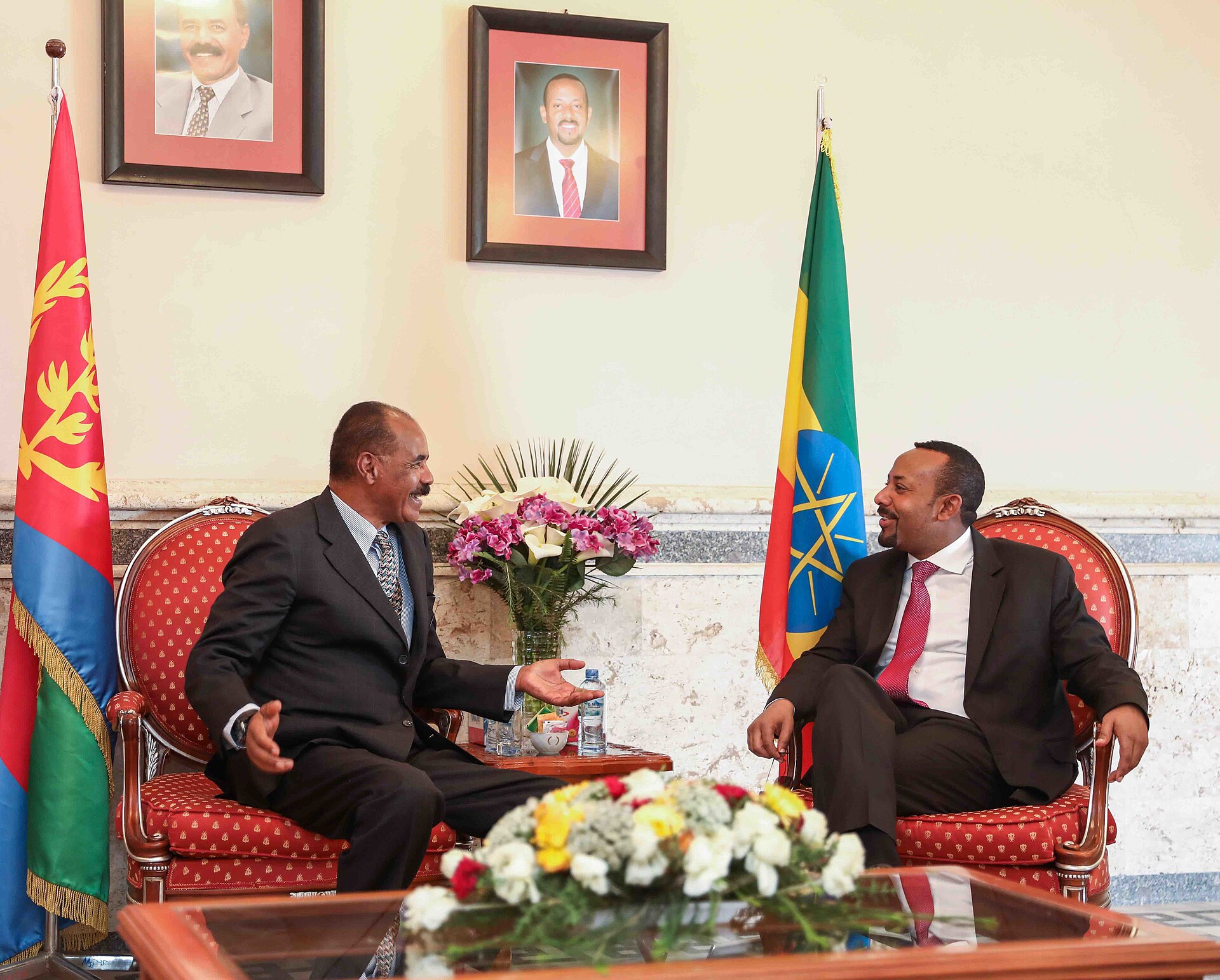
Ethiopia and Eritrea share a long and difficult history. A formal peace process resumed in 2018, when Prime Minister Abiy and President Isaias Afwerki signed a declaration ending the state of war. Normalisation stalled, and Eritrea responded by severing all diplomatic ties. Asmara accused Addis Ababa of hosting and arming Eritrean armed opposition groups. Ethiopia accuses Eritrea of arming rebels.
The key sources of tension include the unresolved implementation of the Algiers border arrangements, Eritrean military involvement in the Tigray conflict, Ethiopia’s interest in maritime access, Eritrea’s opposition to perceived Ethiopian expansionism, disputes over the political future of Tigray and mutual accusations concerning support for armed and political opponents.
Eritrea’s ports at Massawa and Assab are geographically attractive to Ethiopia, but political relations are too strained for them to function as dependable commercial outlets. Reopening those routes would require a far broader settlement than a commercial port agreement.
Eritrea also has close security relations with Egypt and has engaged with Sudanese and Somali actors in ways Ethiopia views cautiously. The Ethiopia–Eritrea relationship is consequently one of the region’s most structurally constrained bilateral relationships.
Ethiopia and Sudan: border insecurity and Nile politics
Sudan is Ethiopia’s western neighbour and one of its most consequential strategic relationships. The Sudanese civil war has transformed the border environment.
Ethiopia faces several consequences: refugee inflows, arms and smuggling risks, disruption of cross-border trade, pressure on the Metema and other frontier areas, risk of armed-group spillover, diplomatic competition involving Egypt and Gulf states and greater uncertainty over the Ethiopia–Sudan border.
The most prominent territorial dispute concerns al-Fashaga, a fertile area claimed by both Ethiopia and Sudan. Sudanese forces and allied farmers have periodically challenged Ethiopian cultivation and settlement there. The war inside Sudan has made a negotiated settlement more difficult.
The Nile is an additional source of strategic friction. Ethiopia’s Grand Ethiopian Renaissance Dam (GERD) is located on the Blue Nile, the largest tributary of the Nile. Ethiopia argues that the dam is essential for electricity generation, economic development and regional power exports. Egypt regards the dam’s filling and operation as a potential threat to its water security; Sudan has taken positions that have varied according to its internal politics and assessment of the dam’s benefits and risks.
These are the Ethiopian government’s claims. Ethiopia’s official position is that GERD will not significantly reduce downstream water availability and can help Sudan by regulating flows, reducing floods and improving dry-season electricity supply. Egypt continues to seek a binding agreement governing filling and long-term operation.
Ethiopia and South Sudan: trade and security partnership
South Sudan is a relatively young state with substantial dependence on regional transport corridors. Ethiopia and South Sudan share a border, pastoral communities and security concerns, while Ethiopia has hosted South Sudanese refugees and participated in regional peace diplomacy.
Their relationship centres on cross-border trade, refugee movements, pastoralist mobility, security along the Gambella and western Ethiopian borderlands, oil and transport possibilities and South Sudan’s internal peace process.
Ethiopia has promoted closer economic links with South Sudan, but the corridor faces serious constraints: poor roads, insecurity, limited customs infrastructure and South Sudan’s continuing political fragility. South Sudan could eventually provide Ethiopia with an alternative route toward the Nile and potentially regional oil and energy markets. At present, however, the relationship is more diplomatic and security-oriented than commercially transformative.
Ethiopia and Kenya: the southern economic and security corridor
Kenya is Ethiopia’s most important southern neighbour and a major regional economic power. The countries cooperate through border trade, transport corridors, security coordination, energy and electricity, the Lamu Port–South Sudan–Ethiopia Transport corridor and IGAD and wider East African institutions.
The LAPSSET corridor was designed to connect Lamu Port to South Sudan and Ethiopia through roads, rail, pipelines and related infrastructure. For Ethiopia, Lamu offers a potential alternative to Djibouti, although the corridor remains less developed and more exposed to security and financing constraints.
The project links Ethiopia’s hydropower capacity with Kenya’s electricity market and forms part of the broader Eastern Africa Power Pool. Such interconnection allows Ethiopia to monetise generation capacity while helping Kenya diversify its energy mix.
What this means for foreigners, investors and expats
For a foreigner, Ethiopia’s neighbourhood is not an abstraction. It determines whether goods arrive on time, whether fuel prices spike, whether borders stay open and whether regional travel is safe. An investor in Ethiopian manufacturing depends on Djibouti’s ports and the road and rail corridors that connect them to Addis Ababa.
An expat living in Addis Ababa feels the neighbourhood through inflation driven by logistics costs, through the availability of imported goods and through the security environment. The war in Sudan has pushed refugees into Ethiopia and disrupted cross-border trade. Tensions with Somalia or Eritrea can affect everything from flight routes to the cost of doing business.
The Grand Ethiopian Renaissance Dam matters beyond water politics. It is central to Ethiopia’s ambition to become a regional electricity exporter. If the dam operates as planned, it could power Ethiopian industry and generate revenue from sales to neighbours. If downstream disputes escalate, the diplomatic fallout could complicate Ethiopia’s broader regional agenda.
What to watch
Several questions will shape Ethiopia’s neighbourhood in the coming years. First, whether Ethiopia and Somalia convert their 2026 rapprochement into a durable port-access arrangement without reigniting sovereignty disputes. Second, whether the planned Djibouti petroleum pipeline, launched in September 2026, is built on schedule and how it changes fuel logistics.
Third, whether the war in Sudan stabilises enough to allow border demarcation talks and the resumption of normal trade. Fourth, whether the October 2026 diplomatic rupture with Eritrea de-escalates or feeds the renewed fighting in Tigray. Fifth, whether the GERD dispute produces a binding agreement or remains a source of periodic tension with Egypt and Sudan.
For anyone watching the Horn, the pattern is clear: Ethiopia’s neighbours are not obstacles to be managed but partners, rivals and gatekeepers whose choices determine Ethiopia’s economic and strategic future. The country leads in population, diplomacy and ambition, but it follows the geography of a landlocked power.
Related reading: more from Ethiopia, Djibouti explained, Somalia explained, Eritrea cutting ties with Ethiopia and the US$660 million Djibouti pipeline.
Frequently Asked Questions
Which countries border Ethiopia?
Ethiopia borders Eritrea to the north, Djibouti to the northeast, Somalia to the east and southeast, Kenya to the south, South Sudan to the west and Sudan to the northwest.
Why is Djibouti so important to Ethiopia?
Djibouti is Ethiopia’s principal maritime outlet and most important economic neighbour.
What is the dispute between Ethiopia and Somalia about?
The Ankara Declaration, facilitated by Türkiye, began a de-escalation that had eased relations by 2026.
What is the state of relations between Ethiopia and Eritrea?
Despite the 2018 peace declaration, normalisation had stalled over unresolved border arrangements, Eritrean military involvement in the Tigray conflict, Ethiopia’s maritime ambitions and mutual accusations concerning support for armed opponents.
What is the Grand Ethiopian Renaissance Dam dispute about?
Ethiopia sees the GERD on the Blue Nile as essential for electricity generation and regional power exports. Egypt regards its filling and operation as a potential threat to its water security and seeks a binding agreement governing filling and long-term operation.
Does Ethiopia have access to the sea?
Ethiopia is landlocked and depends on neighbouring countries for maritime access, principally through Djibouti’s ports. It has explored alternatives through Somaliland, Somalia and the Lamu corridor in Kenya.
Sources: ena.et, igad.int, igad.int, igad.int, mfaethiopia.blog, amn.gov.et. Retrieved 3 October 2026.
This article was produced by The Rio Times’ automated newsroom system. How we use AI · Report an error · Editorial responsibility: Matthias Camenzind, Editor-in-Chief