
Moving to Ethiopia means settling in Addis Ababa, the capital at high altitude, and it suits people who arrive with a job, a spouse or a business. It is hard for anyone without a plan, because the Immigration and Citizenship Service (ICS), the national immigration agency, and the banks work differently from those in the United States.
For a reader in the United States, the stakes are practical, since the State Department, the US foreign ministry, rates the country Level 3 on its four-level scale, Reconsider Travel. Ethiopia also hosts the African Union, the continent’s political body, which makes Addis Ababa a diplomatic centre, so the rules below are worth knowing before any commitment.
Key Facts
- Entry. Tourists apply online for an eVisa, an electronic visa, and the fee shows at checkout.
- Residence. The immigration service (ICS) offers marriage, student, business and employer-backed five-year permits.
- Money. Banks set their own rates, about 161 birr (Ethiopia’s currency) per US$; plan to pay in birr.
- Health. The US Centers for Disease Control and Prevention (CDC) advises malaria prevention even in Addis Ababa.
- Safety. The US government rates Ethiopia Level 3 of 4, Reconsider Travel, with some areas at Level 4, Do Not Travel.
Foreign residents can enter Ethiopia through several documented routes, but the practical limits sit in banking, health and safety rather than in the visa alone.
Visas and Residence
Tourists apply for an eVisa online at the official government portal, and the fee is shown at checkout. Third-party websites list conflicting amounts, so check the portal before paying.
The ICS site lists business and student visas, temporary residence through marriage, renewals and a five-year renewable Permanent Residence ID. Most applications take about 5 to 10 business days, and some take longer.
- Business visa. Passport valid six months, form, two photos, invitation letter from a partner in Ethiopia, proof of business activities.
- Student visa. Passport valid six months, acceptance letter from an accredited Ethiopian institution, proof of tuition payment or scholarship, proof of financial means.
- Marriage permit. Marriage certificate (authenticated by the foreign ministry if issued abroad), a copy of the entry visa, the spouse’s kebele ID (a local residence ID) or Ethiopian passport, and a bank statement of 500,000 birr (about US$3,100) or more, a house title or a vehicle licence.
- Permanent Residence ID. Employer’s letter to ICS, the company’s valid trade certificate, a passport copy and a valid working or tourist visa.
Renewals must be filed before the current permit expires, with proof of continuous residence such as a rental agreement or utility bills. Our guide to the Ethiopia Golden Visa covers a 10-year permit for foreign investors that was launched in March 2026, reported, not confirmed by us at a primary source.
Several legal guides report, but we have not confirmed, that the employer applies and the Ministry of Labour and Social Affairs issues the work permit. They also report that working without one breaks the law, and they warn against entering on a tourist eVisa while planning to switch later.
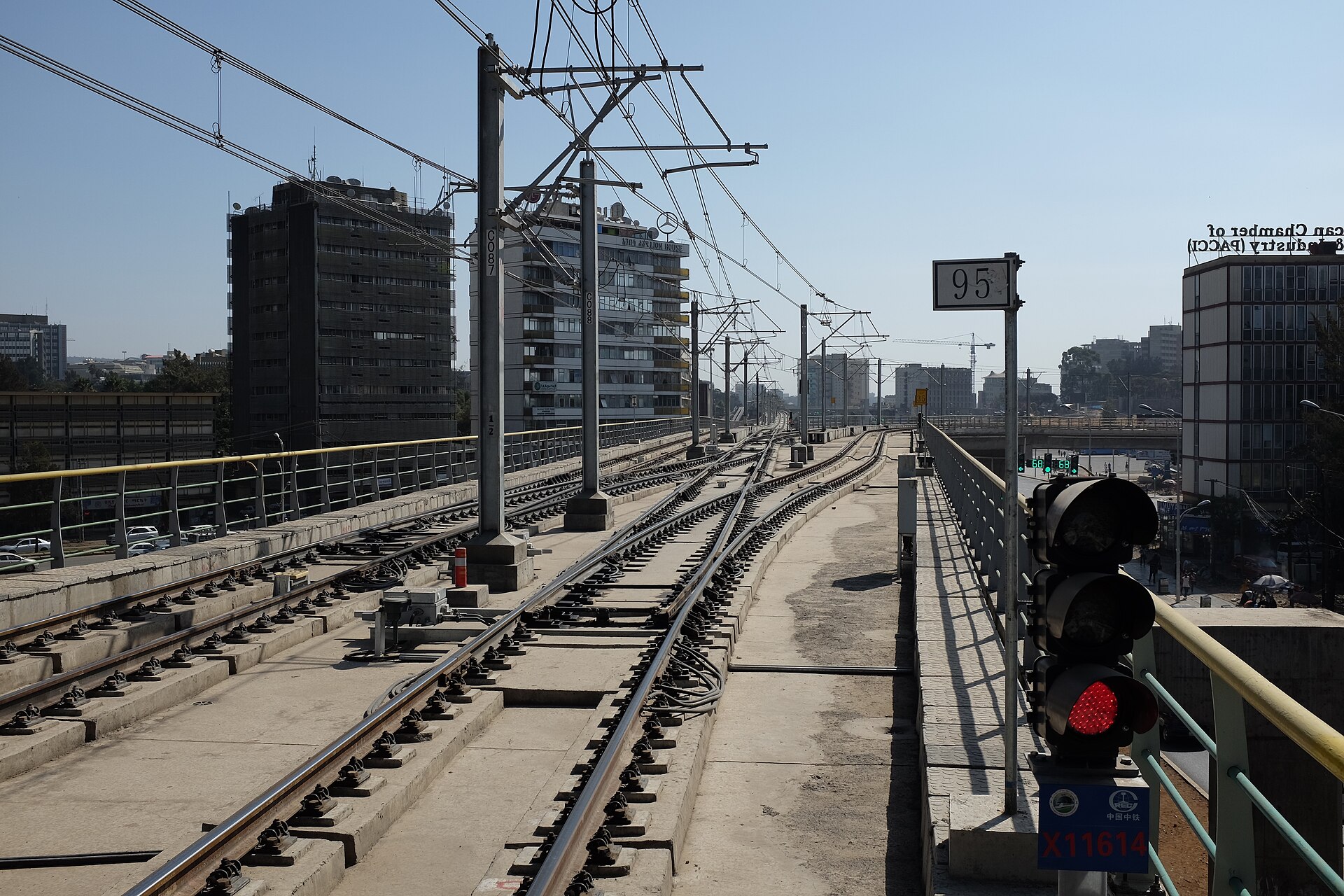
Addis Ababa Neighbourhoods
Bole, near Bole International Airport, is the most common choice of foreigners, with many apartments, restaurants and hotels. Kazanchis is central, with offices and hotels.
Old Airport and Sarbet are residential districts popular with families. Piassa, also called Arada, is the historic old centre, and it is busy with older buildings and less housing aimed at foreigners.
Megenagna is a busy transport junction in the north-east of the city. Ask people who live there which district suits your daily route.
The right district depends on where you work, where your children study and how long a commute you accept. Visit at least two areas before you sign a lease.
What Life Costs in Birr
Estimates reported by listing platforms, not official statistics, put a furnished one-bedroom in Bole, Kazanchis or Old Airport at about 113,000 to 193,000 birr (about US$700 to US$1,200) a month. A furnished two-bedroom is put at about 161,000 to 242,000 birr (about US$1,000 to US$1,500).
Flats in less central, local neighbourhoods are put at about 24,000 to 64,000 birr (about US$150 to US$400) a month. Landlords often ask for several months upfront, reported, not confirmed.
- ICS. Immigration and Citizenship Service, the national immigration agency.
- NBE. National Bank of Ethiopia, the central bank.
- Birr. Ethiopia’s currency.
- eVisa. An electronic visa applied for online.
- Kebele ID. A local residence ID issued in a person’s neighbourhood.
Annual inflation has run near 15% since July 2026, at 15.3% in July and 14.9% in September. Prices in birr therefore rise quickly, and cash held in birr loses value against the dollar over time.
Food, transport and utility prices vary widely and are not covered here. Treat every rent figure above as a starting point and check it on the ground.
Banking and Foreign Currency Rules
Since July 2024 banks and authorised dealers set their own exchange rates under a National Bank of Ethiopia (NBE) directive, FXD/01/2024. The NBE publishes an indicative daily rate, a weighted average of the previous business day’s bank transactions, only as a reference.
The NBE sets the rules on which businesses may accept foreign currency inside Ethiopia. Plan to pay in birr for daily costs.
Rules on cash limits, foreign-currency accounts and traveller allowances have been amended several times since 2024. Confirm every figure with the NBE and your bank before you travel or move money.
It is not clear whether resident foreigners who are not of Ethiopian origin can hold a foreign-currency account, so ask your bank early. Ask what documents it needs before you transfer money.
Healthcare and Vaccines
The US Centers for Disease Control and Prevention (CDC) recommends prescription malaria prevention for all areas below 2,500 m, including Addis Ababa. Options include atovaquone-proguanil, doxycycline, mefloquine and tafenoquine, and you should speak to a doctor.
The CDC recommends yellow fever vaccination for all travellers aged nine months and over, though generally not for travel limited to the Afar or Somali regions, two regions of eastern Ethiopia. It is not required for direct travel from the United States, yet it is required on arrival from yellow fever risk countries, including after layovers of more than 12 hours.
The CDC also recommends hepatitis A, hepatitis B and typhoid vaccines for most travellers. It advises a polio booster, because poliovirus was found in Ethiopia in the past year, and a meningococcal vaccine for the dry season from December to June in meningitis-belt areas, a band of African countries with frequent outbreaks.
Cholera transmission is widespread but rare in travellers, and infected dogs are common, so rabies is a risk. The CDC advises medical evacuation insurance and lists a Level 2 travel health notice for global polio, dated 23 September 2026.
Safety and Travel Advisories
The US State Department rates Ethiopia Level 3, Reconsider Travel, citing unrest, crime, kidnapping, terrorism, landmines, communications disruptions and exit bans. The rating covers the whole country, and some areas carry a higher one.
The advisory also lists some areas at Level 4, Do Not Travel, including the Amhara Region in northern Ethiopia. The list covers other areas too, so read it in full.
The list changes, so read the current advisory before every trip. Our guide to the Level 3 travel alert for Americans explains what the rating means in practice.
- Read the current State Department advisory.
- Keep offline copies of your passport and permits.
- Carry a backup SIM card.
- Plan malaria prevention and yellow fever vaccination with a doctor.
- Buy medical evacuation insurance.
- Confirm current cash limits with your bank.
Communications disruptions, meaning internet or phone cuts, are a named risk. Exit bans, which stop a person leaving the country, are named too.
Altitude and Climate
Addis Ababa lies at about 2,350 m (7,700 ft) above sea level, which makes it one of the highest capitals in the world. New arrivals can feel breathless or tired for the first days.
Plan a slow first week, and ask a doctor about altitude before you fly. Rainy seasons and temperatures are not covered here.
Americans should also read our guide to the Ethiopia health declaration form before they fly. The form is a separate step from the vaccines and prevention described above.
Ask your insurer whether altitude problems and medical evacuation are covered by your policy. Settle that before you leave, not after you arrive.
Schools for Children
Families have three named options in Addis Ababa. The International Community School of Addis Ababa is an International Baccalaureate (IB) school, which offers a worldwide diploma programme.
Lycée Guébré-Mariam is the French school, and Sandford School, a private school, is the third option. Tuition is set by each school and not all schools publish it, so ask admissions.
Fees are not quoted here. Ask each school about tuition and the documents it needs before you commit to a lease.
Our guide to Ethiopian holidays and events helps you plan around public dates. Check each school’s own calendar as well.
Internet and Phones
Ethio Telecom is the long-established national operator. Safaricom Ethiopia, the Ethiopian unit of the Kenyan operator, launched mobile service in 2022 after its consortium won a US$850 million licence bid.
Safaricom Ethiopia reached 10 million active customers in July 2025. Check coverage at your street address before you sign a lease.
The State Department lists communications disruptions as a risk, so do not rely on a single connection. Connection speeds are not quoted here.
Keep offline copies of key documents and a backup SIM card. Save embassy and insurer numbers on paper as well.
What It Means for You
For an American, moving to Ethiopia is a documentation project more than a leap of faith. The visa route, the cash rules and the health plan each need settling before you land.
The strongest cases are tied to an employer, a spouse, a school or a business, because those routes have written requirements on the ICS site. Open-ended arrivals on a tourist eVisa are the weakest, and legal guides warn against planning to switch later.
Money needs the most thought, since inflation is near 15% and the rules on foreign currency are tight and change often. Check the cash limits and ask your bank early about a foreign-currency account.
Getting there is part of the plan, and our guide to Ethiopian Airlines flights from Atlanta to Addis Ababa covers one route from the United States. Read it alongside the safety advisory before you book.
Government policy drives many of these rules, so it helps to know who sets it. Our report on the new cabinet Ethiopia approved for Prime Minister Abiy Ahmed in October names the team behind them.
Ethiopia’s rules have changed in recent years, from the exchange rate system in 2024 to the Golden Visa in 2026. Check each rule at the official source before you act.
A calm approach works best, with a short first visit, documents in order and a plan that still works if the internet goes down. That preparation costs little and protects the larger decision.
What Is Not Known
We could not confirm the current eVisa fee, so check the portal at checkout. We also could not confirm whether resident foreigners can open foreign-currency accounts, so ask your bank.
Exact work-permit fees and processing times are not confirmed, and the work-permit process described by legal guides is reported, not confirmed. School fees are not confirmed either.
The rent figures above are estimates reported by listing platforms, not official statistics. Safety advisories and Level 4 areas change, so read the current advisory each time.
We have not forecast the birr, and we have not quoted the Golden Visa investment amount. Nothing here is legal, medical or financial advice.
Frequently Asked Questions
How do I get a tourist visa for Ethiopia?
Apply online at the official eVisa portal, where the fee is shown at checkout. Third-party websites list conflicting amounts, so check the portal before paying.
Do Ethiopia’s currency rules change often?
Yes. The National Bank of Ethiopia has amended its foreign-exchange rules several times since 2024, so confirm cash limits and account rules with your bank before you travel.
Can I pay in US dollars in Ethiopia?
Plan to pay in birr for daily costs. The National Bank of Ethiopia sets rules on foreign-currency payments and has amended them since 2024, so ask your bank what is allowed.
Do I need vaccines to live in Addis Ababa?
The US CDC recommends malaria prevention and yellow fever vaccination, plus hepatitis A, hepatitis B and typhoid vaccines for most travellers. Speak to a doctor before you go.
Is Ethiopia safe for Americans?
The State Department rates Ethiopia Level 3, Reconsider Travel, with some areas at Level 4, Do Not Travel. Read the current advisory before every trip.
Sources
Immigration and Citizenship Service · Ethiopia eVisa portal · National Bank of Ethiopia, FX directive FXD/01/2024 · US State Department, Ethiopia travel advisory · US CDC, Ethiopia traveler page · All read 8 November 2026.
Connected Coverage
Ethiopia approves a new cabinet under Abiy
Ethiopia golden visa explained
Ethiopia travel advice for Americans, Level 3
Ethiopia health declaration form for Americans
This article was produced by The Rio Times’ automated AI newsroom. Editorial responsibility: Matthias Camenzind, Publisher and Editor-in-Chief. How we use AI · Report an error
Expat Guide to Ethiopia
What The Rio Times publishes for foreigners who live in or move to Ethiopia.
Start here
- Ethiopia Golden Visa Explained: Fees for Americans in US$
- Safaricom's M-Pesa Enters Ethiopia as Wave Secures a West African Bank Licence
City guides
Coming up in Ethiopia
- Great Ethiopian Run Returns to Addis Ababa 22 November 22 Nov
- Ethiopian Christmas 2027 Ends a 43-Day Fast 7 Jan
- Timkat 2027 Falls on 19 January in Addis 18 Jan
- Ethiopia's Lake Hawassa Half Marathon on 14 February 2027 14 Feb
Understand Ethiopia
Horn of Africa and the Red Sea
- Horn of Africa 2026: Why It Matters and Who Backs Whom
- Ethiopia’s Neighbors Explained, Ports, Eritrea, Somalia
- Eritrea Explained 2026, a Red Sea Country Guide
- Somalia Explained: Al-Shabaab, Somaliland, the Ports and the Fight Over a 2026 Vote