DJIBOUTI · NEIGHBOURHOOD
Key Facts
- The country Djibouti: 1.18 million people in 2025 and an economy of about US$4.6 billion, on the southern gate of the Red Sea.
- Land neighbours Ethiopia (342 km), Eritrea (125 km) and Somalia (61 km); Yemen lies across the narrow Bab el-Mandeb strait.
- The big neighbour Ethiopia, with 135 million people and no coast, sends most of its trade through Djibouti’s ports.
- Regional role Djibouti hosts the secretariat of IGAD, the Horn of Africa bloc, and its president chairs the bloc as of October 2026.
- Newest link On 24 September 2026 Djibouti and Ethiopia broke ground on a US$160 million fuel terminal for a planned 120 km pipeline.
- Pressure point Yemen’s war pushed thousands of refugees across the strait to Djibouti in September 2026.
Djibouti neighbours Ethiopia, Eritrea and Somalia by land and Yemen across the sea, and each shapes how this tiny country lives. As of 29 October 2026, this guide explains who they are, what each one wants and why it matters to US readers.

Djibouti and Its Neighbours in Plain English
Djibouti is a country of about 23,180 square kilometres, slightly smaller than New Jersey, on the Horn of Africa. The World Bank counted 1,184,076 people there in 2025, while its three land neighbours hold about 159 million.
That gap explains almost everything about Djibouti and its neighbours. A very small state next to very large ones has to be useful to all of them.
- Djibouti: a Red Sea republic led by President Ismail Omar Guelleh, with the port as its main business.
- Ethiopia: the giant next door, with 135 million people and no coastline of its own.
- Eritrea: a small state to the north with 3.6 million people and a 125 km border with Djibouti.
- Somalia: the neighbour to the south, with 19.7 million people and a 61 km border.
- IGAD: the Intergovernmental Authority on Development, a Horn and East Africa bloc founded in 1986 with its headquarters in Djibouti.
- Bab el-Mandeb: the narrow strait between Djibouti and Yemen that links the Red Sea to the Gulf of Aden.
Where Djibouti Sits on the Map
The retired US World Factbook listed 528 km of land borders: Ethiopia 342 km, Eritrea 125 km, Somalia 61 km. Djibouti also has 314 km of coast, and our Djibouti hub collects every guide.
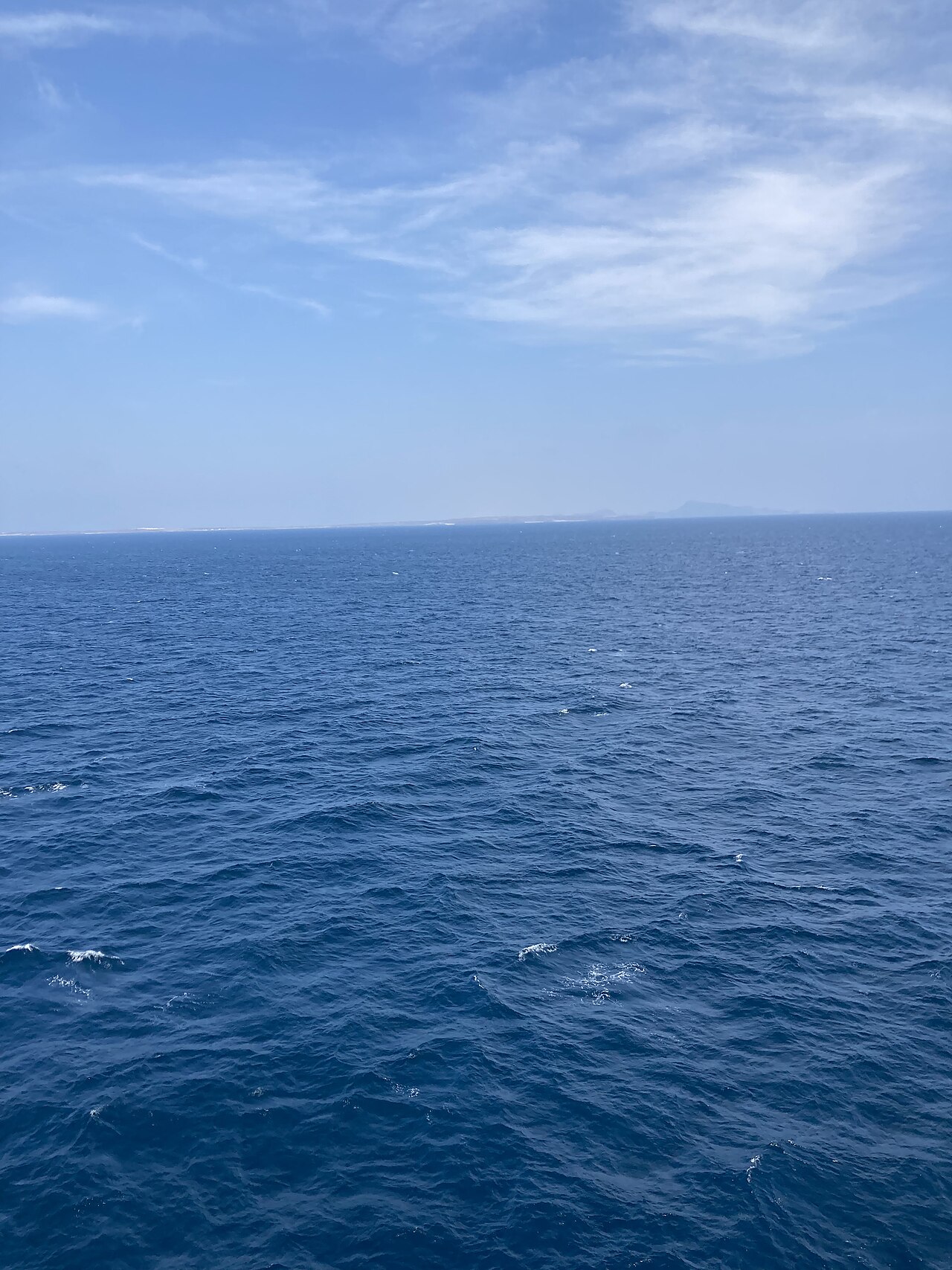
Across the water, Yemen is only a short boat ride away. The northern town of Obock lies about 20 km from the Yemeni coast, according to Djibouti’s government.
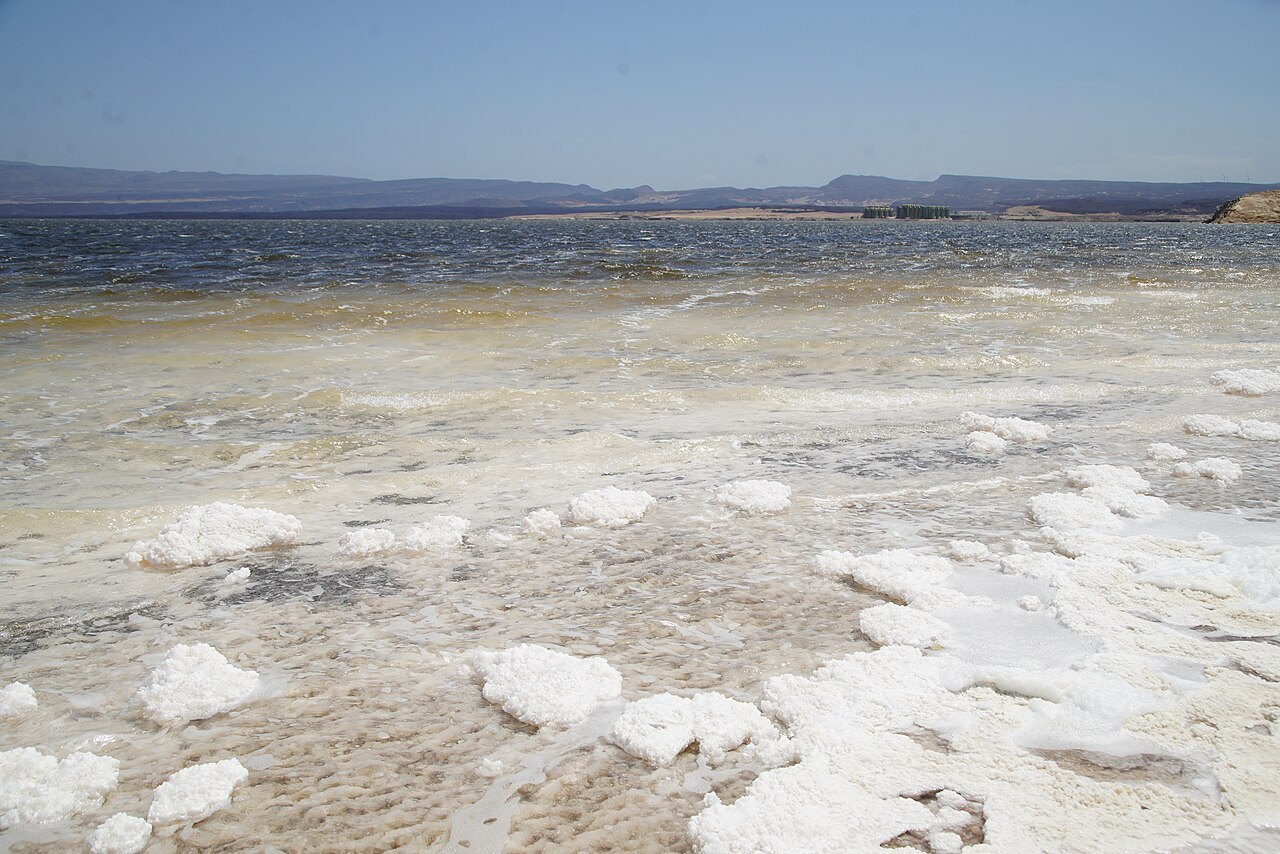
Most of the land is desert, and Lake Assal is the lowest point in Africa. Because there is little farming or oil, the country lives from its location.
Ethiopia, the Neighbour Djibouti Lives On
Ethiopia has no coast, so almost all of its imports and exports pass through Djibouti. The World Factbook said Djibouti’s ports handle about 95 percent of Ethiopia’s trade.
The World Bank says Djibouti’s exports of goods and services reached about US$5.1 billion in 2025, or 110 percent of its economy. That odd number appears because cargo that passes through the ports counts as Djibouti’s own trade.
A railway links Ethiopia’s capital, Addis Ababa, with the Djibouti coast, which Djibouti’s prime minister calls Africa’s first cross-border electric line. Our guide to the Djibouti and Ethiopia corridor explains how the ports, rail and debt fit together.
Water also crosses the border, flowing under pressure from the Ethiopian highlands to Djibouti. On 1 July 2026 the national water office started a turbine at PK20 that turns that pressure into 200 kVA of power.
Customs officers watch the land route at the Galafi border post. On 22 October 2026 they seized 4.7 kilograms of cannabis from a vehicle arriving from Ethiopia.
A Fuel Pipeline Ties the Two Closer
On 24 September 2026 President Guelleh, Ethiopia’s prime minister Abiy Ahmed and Aliko Dangote laid the first stone of a fuel terminal at Damerjog. Dangote heads the Dangote Group, a Nigerian industrial conglomerate.
Dangote’s group and Ethiopian Investment Holdings, an Ethiopian investment company, are putting in about US$160 million. The terminal will store 375,000 cubic metres of fuel and handle 5 million tonnes a year.
It is the first step toward a 120 km pipeline to carry fuel from Damerjog toward Ethiopia. Its backers say it would cut tanker trucks on the road and protect Ethiopia against fuel shortages.
On 27 September 2026 Djibouti’s government said it regretted the return of conflict in Ethiopia. Abiy was re-elected as prime minister on 5 October, and President Guelleh sent his congratulations the next day.
Our report on a second fuel project at Doraleh port shows how crowded this route is becoming. Both projects show that Djibouti and its neighbours now plan their energy together.
Eritrea and Somalia, the Two Smaller Neighbours
Eritrea shares a 125 km border with Djibouti and is the smallest of the three land neighbours, with about 3.6 million people. The UN refugee agency, UNHCR, counted 1,187 Eritrean refugees and 390 asylum seekers in Djibouti at the end of 2025.
Our guide to Ethiopia and its neighbours looks at the same map from Addis Ababa’s side.Somalia is the friendlier case among Djibouti neighbours.Its president, Hassan Sheikh Mohamud, visited Djibouti City on 30 September 2026.Djibouti’s government says it backs Mogadishu’s wish to restore its authority over all Somali territory.Mogadishu’s mayor, Hassan Mohamed Hussein Muungaab, had made a three-day official visit in mid-September.Somalis are also the largest refugee group in Djibouti, with 13,853 refugees at the end of 2025.Ethiopians follow with 5,877, then Yemenis with 3,932.
Yemen Across the Water
On 11 September 2026 Djibouti’s foreign ministry said it was watching the Bab el-Mandeb strait and backed a political solution in Yemen. Within days, boats of Yemenis fleeing the war reached Obock, with 3,400 arrivals in 48 hours by 13 September.
By 27 September the social affairs ministry had listed 3,635 displaced people from Yemen in 988 households, and 46.6 percent were minors. Interior Minister Omar Abdi Said said the world must help, because his country should not face the flow alone.
The same coast is a departure point for migrants heading the other way. On Friday 9 October 2026 a boat with 305 people bound for Yemen sank off Obock, with at least 139 dead and 84 missing.
The head of the ports and free zones authority, Aboubaker Omar Hadi, said on Thursday 8 October that transhipment was rising. He added that costs had climbed.
IGAD and Friends, Where Djibouti Leads
Djibouti hosts the IGAD secretariat, and on 14 and 15 September 2026 it held the bloc’s 74th extraordinary council of foreign ministers. Foreign Minister Abdoulkader Houssein Omar, also the government spokesman, chaired the meeting.
Djibouti’s government says President Guelleh holds the bloc’s rotating chair as of 29 September 2026. That day he urged South Sudan’s leaders to publish a transition roadmap and to hold elections by December 2026.
Outside the region, Djibouti courts the great powers carefully. Foreign Minister Abdoulkader Houssein Omar made his first official visit to China from 19 to 24 October.
On 26 October Prime Minister Abdoulkader Kamil Mohamed called China Djibouti’s most reliable partner and invited its firms to invest in ports. The foreign minister then flew to Moscow for the Russia-Africa summit of 28 and 29 October.
Closer to home, the cabinet moved regional and local elections to April 2027 on 27 October 2026, to avoid Ramadan. Our guide to Djibouti covers how the government works.
What It Means for US Readers
The US military operates from Camp Lemonnier in Djibouti, close to the neighbours that matter most to Washington. The World Factbook said France, Japan, Italy, Germany, Spain and China also keep forces there.
Our guide to the foreign bases shows who is where. It also shows why every Djibouti neighbour wants a say in how the bases are used.
Trouble among Djibouti neighbours, from Ethiopia’s conflict to Yemen’s war, can reach the Red Sea shipping lane and US freight costs. Our guide to the Horn of Africa explains why American shippers and investors watch it.
Americans planning to travel to Djibouti or its borders should check the State Department’s advice before booking. Investors should watch the Damerjog terminal and the ports, because Djibouti’s income depends on Ethiopia’s trade.

What Is Not Known
As of October 2026, it is not known when the Damerjog pipeline will be finished or what it will cost in total. Only the US$160 million terminal has been priced.
Djibouti’s government has not said how many of the Yemenis who arrived in September will stay. It has also not said how the conflict in Ethiopia will affect the trade route.
Frequently Asked Questions
Which countries border Djibouti?
Djibouti shares land borders with Ethiopia (342 km), Eritrea (125 km) and Somalia (61 km). Yemen lies across the Bab el-Mandeb strait, so it is a sea neighbour.
Why does Ethiopia need Djibouti?
Ethiopia has no coast, so its trade goes through Djibouti’s ports. The US government’s World Factbook says those ports handle about 95 percent of Ethiopian trade.
What is the Damerjog fuel terminal?
It is a US$160 million fuel storage terminal whose first stone was laid on 24 September 2026. It is meant to start a 120 km pipeline into Ethiopia.
What is IGAD and what is Djibouti’s role?
IGAD is the Intergovernmental Authority on Development, a Horn of Africa bloc founded in 1986. Its secretariat is in Djibouti, and Djibouti’s government says President Guelleh holds its chair.
Are refugees arriving in Djibouti?
Yes. UNHCR counted 24,899 refugees and 10,141 asylum seekers at the end of 2025, and thousands of Yemenis arrived in September 2026.
Does the United States have a base in Djibouti?
Yes. The US military operates from Camp Lemonnier in Djibouti, and the World Factbook listed the United States among the countries with forces there.
Sources: World Bank, World Development Indicators for Djibouti, Ethiopia, Eritrea and Somalia (population, GDP, exports, land area), 2026-10-08; UNHCR Refugee Data Finder, Djibouti population statistics 2025, 2026-10-29; US government, The World Factbook, Djibouti entry (retired edition: borders, coastline, ports, forces), 2026-10-29; IGAD (Intergovernmental Authority on Development), home page and region, 2026-10-29; Government of Djibouti, official communiques (Djibouti News Agency, state source) and statements of 11 September to 29 October 2026 (presidency, foreign ministry, interior ministry, ports authority, Council of Ministers), 2026-10-29.
This article was produced by The Rio Times’ automated newsroom system. How we use AI · Report an error · Editorial responsibility: Matthias Camenzind, Editor-in-Chief
Horn of Africa and the Red Sea
- Horn of Africa 2026: Why It Matters and Who Backs Whom
- Ethiopia’s Neighbors Explained, Ports, Eritrea, Somalia
- Eritrea Explained 2026, a Red Sea Country Guide
- Somalia Explained: Al-Shabaab, Somaliland, the Ports and the Fight Over a 2026 Vote
Brazil runoff date: Sunday, October 25, poll closing times and when results start · Brazil runoff polls: Flávio 51%, Lula 49% · Kalshi and Polymarket odds
Rotate for Best Experience
This report is optimized for landscape viewing. Rotate your phone for the full experience.
You've reached your free article limit
Subscribe to The Rio Times for unlimited access to our reporting from across Africa.
Keep reading for free
Your first article was on us. Register with your email address to read 6 free articles every month. You will also receive Africa Intelligence: African markets, politics and business, every weekday morning.