Ethiopia Politics Explained, Who Holds Power in 2026
ETHIOPIA · POLITICS
Key Facts
- Who leads Abiy Ahmed began a second five-year term as prime minister on 5 October 2026.
- The party The ruling Prosperity Party won 438 seats in the 1 June 2026 election.
- The cabinet Parliament approved 22 ministers and a deputy prime minister on 8 October 2026.
- The flashpoints A federal caretaker government has run Tigray since 16 October 2026, and ties with Eritrea are tense.
- Prediction markets Polymarket gives Abiy Ahmed leaving office in 2026 a 4.2% chance (1 November, 6:28 a.m. ET).
Ethiopia politics in 2026 revolves around one man, Prime Minister Abiy Ahmed, who won a second five-year term in October. This guide explains who holds power in Africa’s second most populous country, how the system works and who stands against it.
Every office-holder named here is confirmed by a dated source from September or October 2026, and gaps are listed near the end.

Ethiopia Politics at a Glance
Ethiopia is a federal republic in the Horn of Africa. Its capital, Addis Ababa, is also home to the African Union, the continental body of 55 member states.
Ethiopia held its seventh general election on 1 June 2026, and more than 54 million citizens cast ballots, according to the government. The National Election Board of Ethiopia, the independent electoral authority, announced the final results on 21 June 2026.
The ruling Prosperity Party, led by Abiy, won 438 seats in the House of Peoples’ Representatives, the elected lower chamber. The Ethiopian Citizens for Social Justice, known as EZEMA, took 13 seats, and the National Movement of Amhara won six.
A Sidama-based political platform won three seats, and independents and small parties took the rest. Power is therefore concentrated in one party, and Ethiopia politics is shaped by that fact.
For the wider country profile, see the Rio Times Ethiopia hub and the guide Ethiopia Explained 2026.
The Prime Minister and His Party
Abiy Ahmed, a former army officer in office since 2018, was re-elected by parliament on 5 October 2026 and sworn in that day. Deputy Prime Minister Temesgen Tiruneh presented him as the Prosperity Party’s nominee, and the vote was unanimous.
The Prosperity Party is the ruling party, formed in 2019 from the parties of the former coalition government. It calls its programme Medemer, an Amharic word that roughly means coming together.
Temesgen Tiruneh is Abiy’s deputy and the second most senior figure in the executive. He returned to the post on 8 October 2026 when parliament endorsed the new cabinet.
Ahmed Shide was elected speaker of the House of Peoples’ Representatives on 5 October 2026. The speaker runs the lower chamber’s business, which keeps the legislature in step with the prime minister.
How the Government Is Built
Under the 1995 constitution, executive power sits with the prime minister and the Council of Ministers, the cabinet that answers to the lower chamber. The prime minister is also commander-in-chief of the armed forces.
The president, Taye Atske Selassie, is head of state with mostly ceremonial duties, and he attended Abiy’s swearing-in on 5 October 2026. The prime minister, not the president, runs the government.
The second chamber, the House of Federation, represents Ethiopia’s nations, nationalities and peoples and interprets the constitution. It also authorised the caretaker government for Tigray in October 2026, which shows how much weight the chamber carries in a crisis.
The courts are meant to be independent. The constitution gives the House of Federation, not the judges, the last word on constitutional questions.
The Cabinet, Minister by Minister
Parliament approved the Council of Ministers on 8 October 2026: Deputy Prime Minister Temesgen Tiruneh and 22 ministers. Women hold nine of the 22 ministries, about 41 percent, which is notable in Ethiopia politics.
Gedion Timothewos stays as foreign minister for a second term, and Mohammed Idris is defence minister. The finance ministry now belongs to Fitsum Assefa, who moves over from the planning ministry.
Opposition Names Inside the Cabinet
Two ministers are linked to parties that ran on 1 June. Birhanu Nega, tied to EZEMA, runs education, and Musa Adem, tied to the Afar People’s Party, a regional party from the north-east, runs peace.
It is not clear whether either party has formally joined the government. For the full list, see the Rio Times list of ministers and the report on the cabinet approval.
- Foreign Affairs: Gedion Timothewos
- Defence: Mohammed Idris
- Finance: Fitsum Assefa
- Justice: Hanna Araya-Selassie
- Education: Birhanu Nega
- Peace: Musa Adem
- Health: Mekdes Daba
- Agriculture: Addisu Arega
- Trade and Regional Integration: Yasmin Wohabrebbi
- Revenues: Aynalem Niguse
- Mining: Alemtsahay Paulos
- Water and Energy: Habtamu Itefa

The Army and the Security Forces
The Ethiopian National Defence Force, the federal army, answers to the prime minister through the defence minister, Mohammed Idris. He spoke at the 119th Defence Forces Day ceremony on 25 October 2026 and praised the force for protecting the country’s sovereignty.
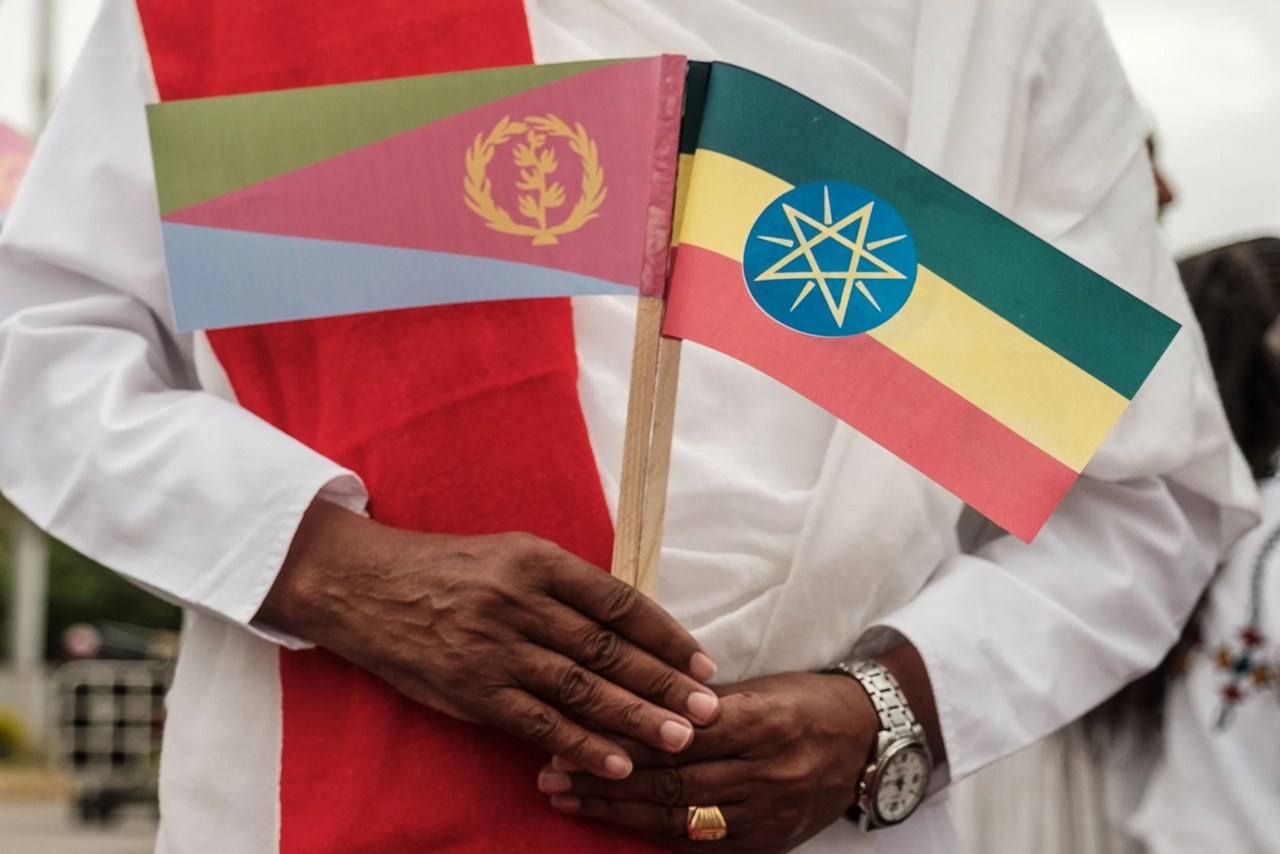
Security matters shape almost every political choice in Addis Ababa, from the Tigray caretaker government to the tense dispute with Eritrea, its northern neighbour.Foreign policy, including the Red Sea and ties with Washington, Beijing and the Gulf, is covered in the guide to Ethiopia geopolitics.Ethiopia politics at home and abroad are tightly linked.
Opposition, Rivals and the Tigray Question
The opposition is small in parliament and split by region and ethnic base. EZEMA, a national party, and the National Movement of Amhara, a regional party in Amhara, hold 13 and six seats of the elected House.
The Tigray People’s Liberation Front, the main Tigrayan party, is the government’s sharpest rival. On 16 October 2026 the prime minister’s office said the 2022 Pretoria Agreement, which ended the Tigray war, had failed because the front obstructed it.
The same day the federal government set up a six-month caretaker administration for the Tigray Region, acting on a House of Federation resolution. Its tasks include restoring services, collecting weapons from armed groups and preparing free elections within six months.
Five officials lead it, among them Asefa Abraha Hagos for administration and public services and Tewodros Aregay Wolde-Selassie for economy and reconstruction. Brigadier General Gebre-Egziabher Beyene Hailu handles security and peace, Redai Halefom Wolde-Selassie handles political affairs, and Shishay Amare is mayor of Mekelle, the regional capital.
The administration works under federal direction and may only run routine government until an elected one takes office. The front has not accepted this arrangement, and its response was not confirmed in the sources we reviewed.
Regions, Governors and Rising Figures
Ethiopia’s regional states have their own councils and governments, and some, such as Oromia, Amhara, Tigray and Sidama, are politically important. Dated September or October 2026 sources do not confirm who now holds each governorship, so none is named.
The people to watch are the newly appointed ministers. Fitsum Assefa, a doctor of philosophy and former planning minister, now controls the finance ministry, and Hanna Araya-Selassie heads justice.
Gedion Timothewos is the best known face abroad, and Birhanu Nega, an opposition-linked professor, is the most closely watched minister at home. Their performance will show how far Abiy lets other voices into government.
What Prediction Markets Say
On Polymarket, a real-money prediction platform, bets on Abiy Ahmed leaving office in 2026 priced Yes at 4.2% (1 November, 6:28 a.m. ET). About US$13,000 has been traded, so the market is thin and moves on small bets.
A separate market on an Eritrean invasion of Ethiopia by 31 December 2026 priced Yes at 13.5% then, with about US$120,000 traded. Both prices are bets, not forecasts or polls.
Why we show this: prediction markets turn real-money bets into a live probability that moves within minutes of the news, which is why investors, campaigns and newsrooms in the United States now follow them closely. We show them next to polls and official results, never instead of them.
What It Means for US Readers
The US Treasury announced on 18 September 2026 that the Ethiopia emergency declared in 2021 had expired, and it removed the related sanctions listings. Americans doing business in Ethiopia should still check current rules with the Office of Foreign Assets Control, which enforces sanctions.
US investors, lenders and aid groups deal first with the finance, trade and foreign ministries named above. Politics also drives risk, since the Tigray administration and the Eritrea dispute could change the picture quickly.
What Is Not Known
No dated primary source confirms who now leads the federal courts, the intelligence service or the regional governments. Parliament’s approval of the cabinet was unanimous, but no vote count has been published.
It is not known how the Tigray People’s Liberation Front will answer the caretaker administration. Nor is it known whether EZEMA and the Afar People’s Party will join the government, or whether the Tigray vote will happen on time.
Frequently Asked Questions
Who is the prime minister of Ethiopia?
Abiy Ahmed. Parliament re-elected him on 5 October 2026 and swore him in for a second five-year term.
Which party rules Ethiopia?
The Prosperity Party, formed in 2019. It won 438 seats in the 1 June 2026 general election, according to the National Election Board of Ethiopia.
Who is Ethiopia’s president?
Taye Atske Selassie. The president is head of state with mostly ceremonial duties, while the prime minister runs the government.
Who is Ethiopia’s finance minister?
Fitsum Assefa, approved by parliament on 8 October 2026. She moved from the planning ministry.
What is happening in Tigray?
On 16 October 2026 the federal government set up a six-month caretaker administration to restore services and prepare elections. It acts under a House of Federation resolution.
Is Abiy Ahmed likely to leave office in 2026?
Polymarket bettors gave it 4.2% on 1 November 2026, at 6:28 a.m. ET. It is a thin market and a bet, not a forecast.
Sources: National Election Board of Ethiopia, 7th general election news and final results announcement of 21 June 2026, 2026-06-21; Office of the Prime Minister of Ethiopia, statements on the caretaker administration for Tigray and cabinet formation, 2026-10-16; House of Peoples’ Representatives, re-election of the prime minister and approval of the Council of Ministers, 2026-10-08; US Treasury, Office of Foreign Assets Control, expiration of the Ethiopia emergency and designation removals, 2026-09-18; Constitution of the Federal Democratic Republic of Ethiopia, 1995, 1995-08-21.
This article was produced by The Rio Times’ automated newsroom system. How we use AI · Report an error · Editorial responsibility: Matthias Camenzind, Editor-in-Chief
Expat Guide to Ethiopia
What The Rio Times publishes for foreigners who live in or move to Ethiopia.
Start here
- Ethiopia Golden Visa Explained: Fees for Americans in US$
- Safaricom's M-Pesa Enters Ethiopia as Wave Secures a West African Bank Licence
City guides
Coming up in Ethiopia
- Great Ethiopian Run Returns to Addis Ababa 22 November 22 Nov
- Ethiopian Christmas 2027 Ends a 43-Day Fast 7 Jan
- Timkat 2027 Falls on 19 January in Addis 18 Jan
Understand Ethiopia
Horn of Africa and the Red Sea
- Horn of Africa 2026: Why It Matters and Who Backs Whom
- Ethiopia’s Neighbors Explained, Ports, Eritrea, Somalia
- Eritrea Explained 2026, a Red Sea Country Guide
- Somalia Explained: Al-Shabaab, Somaliland, the Ports and the Fight Over a 2026 Vote
Brazil runoff date: Sunday, October 25, poll closing times and when results start · Brazil runoff polls: Flávio 51%, Lula 49% · Kalshi and Polymarket odds
Rotate for Best Experience
This report is optimized for landscape viewing. Rotate your phone for the full experience.
You've reached your free article limit
Subscribe to The Rio Times for unlimited access to our reporting from across Africa.
Keep reading for free
Your first article was on us. Register with your email address to read 6 free articles every month. You will also receive Africa Intelligence: African markets, politics and business, every weekday morning.
Expat Guide to Ethiopia
What The Rio Times publishes for foreigners who live in or move to Ethiopia.
Start here
- Ethiopia Golden Visa Explained: Fees for Americans in US$
- Safaricom's M-Pesa Enters Ethiopia as Wave Secures a West African Bank Licence
City guides
Coming up in Ethiopia
- Great Ethiopian Run Returns to Addis Ababa 22 November 22 Nov
- Ethiopian Christmas 2027 Ends a 43-Day Fast 7 Jan
- Timkat 2027 Falls on 19 January in Addis 18 Jan
Understand Ethiopia