
ETHIOPIA · CULTURE
Key Facts
- What is happening Ethiopia’s culture spans Ethio-jazz, runners, novelists and festivals that UNESCO, the UN culture body, lists.
- Why it matters Ethiopia has 12 World Heritage sites and six living-heritage traditions of its own on UNESCO’s lists.
- The numbers Press freedom ranks 148th of 180 in 2026; Tigst Assefa ran a 2:11:04 marathon on 27 September.
- Who is who Mulatu Astatke plays Ethio-jazz; Maaza Mengiste writes; Julie Mehretu paints; Haile Gebrselassie and Tigst Assefa run.
- What to watch Epiphany eve on 18 January, Meskel on 26 September, and whether independent journalists can work freely.
- What it means for you Read Mengiste in English, see Mehretu’s art in US museums, and check State Department advice before travelling.
- Prediction markets Polymarket, a prediction market, gives Abiy Ahmed a 4.2% chance of leaving office in 2026 (3 November, 7:17 a.m. ET).
Jazz, running legends, novelists and ancient festivals shape Ethiopia’s culture. Here are the people and traditions to know in November 2026.
Ethiopia’s culture runs from rock-hewn churches to Olympic tracks, and its best-known artists work at home and abroad. This guide names the key figures a first-time reader should know, with dated facts.
The names include the jazz composer Mulatu Astatke, the marathon runner Tigst Assefa and the novelist Maaza Mengiste. Alongside them stand festivals of the Orthodox, Oromo, Sidama, Wolaita and Harari communities that UNESCO has listed.
More coverage sits on the Rio Times Ethiopia page, the politics guide and the geopolitics guide. The holidays and events guide lists festival dates.
Ethiopia Culture in One Page
The list below gives each name and what to know in one line. Details and dates follow in the sections after it.
- Mulatu Astatke (born 1943): jazz composer and vibraphonist, called the godfather of Ethio-jazz, a blend of jazz with African and Latin American sounds.
- Getatchew Mekurya (1935 to 2016): saxophonist known as a pioneer of African jazz.
- Mahmoud Ahmed and Aster Aweke: singers, one a star of the 1960s and 1970s golden age, the other known abroad.
- Maaza Mengiste: novelist whose The Shadow King was shortlisted for the 2020 Booker Prize.
- Dinaw Mengestu: Ethiopian-born novelist and MacArthur Fellow of 2012.
- Haile Gerima, Zeresenay Berhane Mehari and Yared Zeleke: film makers behind Teza, Difret and Lamb.
- Julie Mehretu (born 1970) and Aida Muluneh (born 1974): a painter and a photographer.
- Bikila, Gebrselassie, Tulu, Bekele, Dibaba and Assefa: Olympic distance runners.
- Abiy Ahmed: prime minister, sworn in for a second term on 5 October 2026.
Who Runs Ethiopia in 2026
Ethiopia voted on 1 June 2026. On 21 June the National Election Board, the electoral commission, announced that the ruling Prosperity Party won 438 of 547 seats.
The seats are in the House of Peoples’ Representatives, the lower house of parliament. The new parliament opened on 5 October 2026, when Abiy Ahmed took the oath for a second term as prime minister.
Parliament also elected Ahmed Shide, a former finance minister, as speaker. Taye Atske Selassie remains president, a largely ceremonial post, and addressed both houses in early October.
Parliament approved the new cabinet on 8 October. Temesgen Tiruneh is deputy prime minister and Gedion Timothewos stays foreign minister.
The Music, From Ethio-Jazz to Pop
Mulatu Astatke was born on 19 December 1943 in Jimma, Ethiopia. Store norske leksikon, Norway’s national encyclopedia, says he is popularly called the godfather of Ethio-jazz.
Ethio-jazz mixes traditional jazz with African and Latin American elements and instruments such as the vibraphone and bongo and conga drums. Astatke studied clarinet in London and later vibraphone and percussion at the Berklee College of Music in Boston.
The encyclopedia lists three landmarks in his recording career, shown below. It also says he played with Duke Ellington’s band when it toured Ethiopia in 1973.
- 1966: Afro-Latin Soul volumes 1 and 2, released by his Ethiopian Quintet on Worthy Records.
- 1972: Mulatu of Ethiopia, recorded while he moved between Ethiopia and the United States.
- 2010: Mulatu Steps Ahead, made with the Either/Orchestra, an ensemble.
Wider audiences came in 2006, when the director Jim Jarmusch used several of his pieces in the film Broken Flowers. Berklee named him an honorary doctor of music in 2012, the encyclopedia says.
The same encyclopedia calls Getatchew Mekurya, who lived from 1935 to 2016, a pioneer of African jazz on the saxophone. It names him and the singer Mahmoud Ahmed as central to the golden age of Ethiopian music before 1974.
Its music entry calls the singer Aster Aweke, born in 1959, a major name in pop who drew international attention. It adds that Western influence marks both traditional and new popular music.
The Writers, Maaza Mengiste and Dinaw Mengestu
Maaza Mengiste was born in Addis Ababa and wrote The Shadow King and Beneath the Lion’s Gaze, the Booker Prizes site says. The Shadow King made the 2020 shortlist of the Booker Prize, a leading British award for fiction in English.
Mengiste teaches creative writing at Queens College in New York, the same site says. It also says she was a Fulbright Scholar and lives in New York City.
Dinaw Mengestu was born in Ethiopia and came to the United States at the age of two, the MacArthur Foundation says. The foundation, a US philanthropy, named him a MacArthur Fellow in 2012.
His debut novel, The Beautiful Things That Heaven Bears (2008), follows an Ethiopian refugee in a changing Washington, DC neighbourhood. How to Read the Air (2010) follows a young man facing his parents’ past.
Film Makers and Visual Artists
Haile Gerima returned to Ethiopia to shoot Teza, which the Academy Museum says won the Venice festival’s Special Jury Prize. The museum, in Los Angeles, screened it on 25 October 2021.
Zeresenay Berhane Mehari was born and grew up in Ethiopia, says SFFILM, a San Francisco film organisation. His first feature, Difret, won audience awards at the Sundance and Berlin festivals.
SFFILM calls Difret a drama based on a true story about customs that endanger the lives of young women. Its 2014 screening listed the film at 96 minutes, in Amharic.
Yared Zeleke’s first feature, Lamb, played at Cannes in 2015. The New Zealand International Film Festival calls it the first Ethiopian film ever to play there.
Lamb is in Amharic, runs 94 minutes and was made by Ethiopia, France, Germany and Norway. It follows a small boy who would rather cook than plough.
Julie Mehretu was born in 1970 in Addis Ababa, the Whitney Museum of American Art in New York says. The MacArthur Foundation named her a Fellow in 2005 for large paintings built from maps and architectural plans.
The foundation says she studied in Dakar, Senegal, in 1990 and 1991 and took a BA at Kalamazoo College in 1992. She earned an MFA at the Rhode Island School of Design in 1997.
Aida Muluneh was born in Ethiopia in 1974 and took a film degree at Howard University in 2000. The Aga Khan Museum in Toronto says her photographs are in the Smithsonian’s National Museum of African Art.
The Running Legends, From Bikila to Assefa
Olympedia, an Olympic statistics archive, says Abebe Bikila was born on 7 August 1932 and died on 25 October 1973. He won the marathon at the 1960 and 1964 Olympics, the first person to win it twice in a row.
Olympedia says his best time was 2:12:12 in 1964. Between a 1960 trial race and October 1966 he ran 13 marathons and won 12.
Haile Gebrselassie was born on 18 April 1973 in Asella and won the Olympic 10,000 metres in 1996 and 2000, Olympedia says. His best 10,000 metres time was 26:22.75 in 1998, and he set world records at many distances.
He won the Berlin Marathon four times in a row from 2006 to 2009, with a best of 2:03:59 in 2008. Olympedia counts him a five-time world champion.
- Kenenisa Bekele (born 13 June 1982): three Olympic golds and one silver, with bests of 12:37.35 for 5,000 metres and 26:17.53 for 10,000 metres.
- Kenenisa Bekele in Berlin: he won the 2019 Berlin Marathon in 2:01:41, two seconds short of the world record then held by Eliud Kipchoge of Kenya.
- Derartu Tulu (born 21 March 1972): winner of the 1992 Olympic 10,000 metres, the first black African woman to win an Olympic gold, and again in 2000.
- Tirunesh Dibaba (born 1985 in Bekoji): six Olympic medals, three gold and three bronze, with golds in the 5,000 and 10,000 metres in 2008 and the 10,000 metres in 2012.
- Tigst Assefa (born 3 December 1996): silver medallist in the women’s marathon at the 2024 Paris Olympics.
World Athletics, the sport’s governing body, lists Assefa’s 2:11:53 in Berlin on 24 September 2023, a world record at the time. On 26 April 2026 she won in London in 2:15:41, which it flags as a women-only world record.
On 27 September 2026 she won in Berlin in 2:11:04, her fastest time. World Athletics ranks her number one in the women’s marathon.
Heritage Sites, Festivals and Traditions
UNESCO, the United Nations cultural body, lists 12 World Heritage properties in Ethiopia. They include Lalibela, Aksum, Fasil Ghebbi in Gondar, Harar Jugol and Simien National Park.
UNESCO also lists six living-heritage traditions of Ethiopia’s own, plus Xeer Ciise, shared with Djibouti and Somalia. Meskel, inscribed in 2013, is celebrated on 26 September.
UNESCO describes the Demera bonfire in Meskel Square in Addis Ababa, a cone of poles decorated with green grass and Abyssinian daisies. The patriarch of the Ethiopian Orthodox Tewahedo Church lights it at the climax.

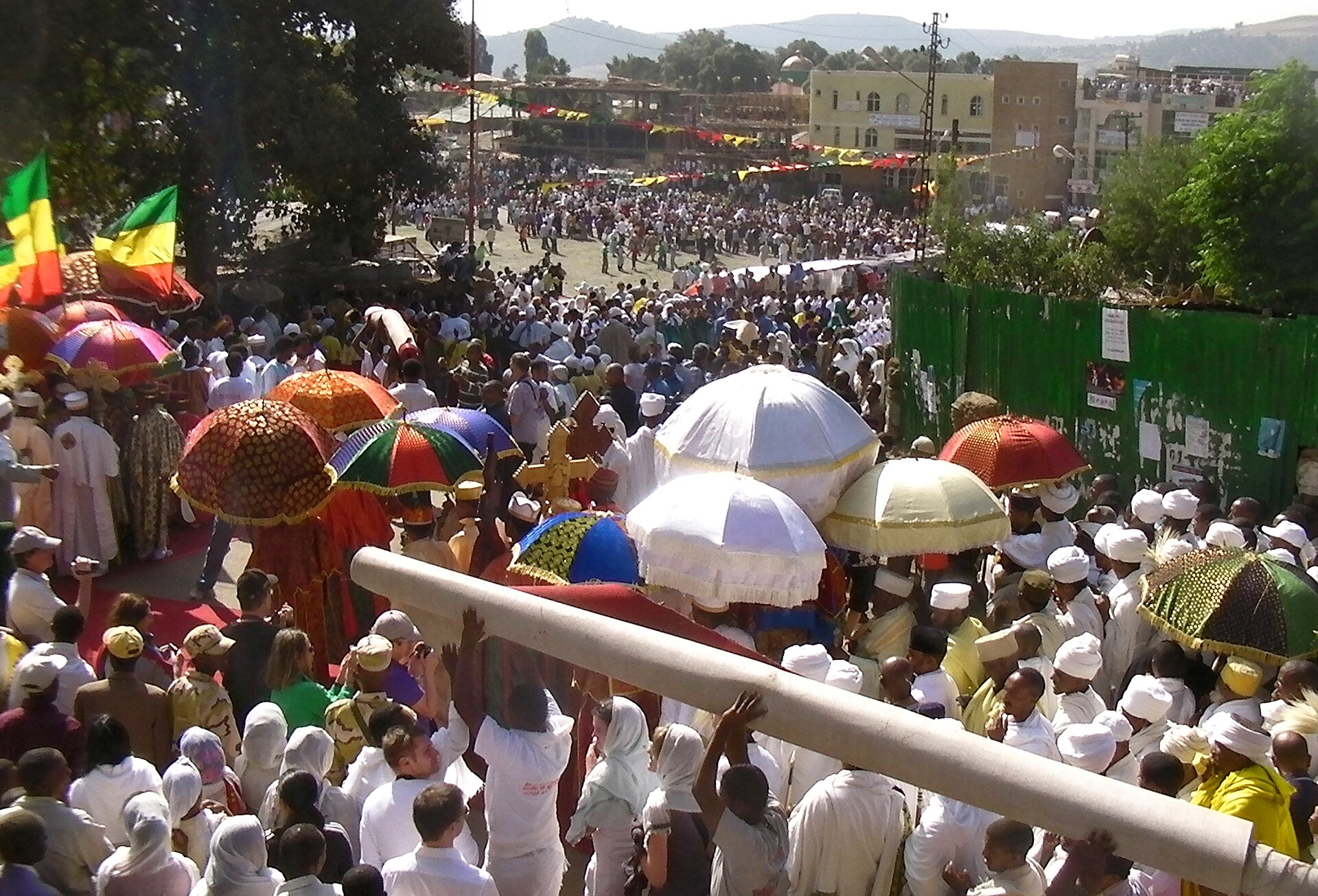
The Ethiopian Epiphany, inscribed in 2019, marks the baptism of Jesus in the River Jordan. Its eve begins on 18 January, when parishes carry their tabots, replicas of the Ark of the Covenant, to water.
UNESCO says people spend the night in prayers and hymns. The same festival is celebrated all over Ethiopia.
The newest World Heritage property, Melka Kunture and Balchit, was added in 2024. Fichee-Chambalaalla, inscribed in 2015, is the New Year festival of the Sidama people.
Gifaataa, the Wolaita new year festival, was inscribed in 2025 and runs ten days. The Gada system, inscribed in 2016, is the traditional system of governance of the Oromo people.
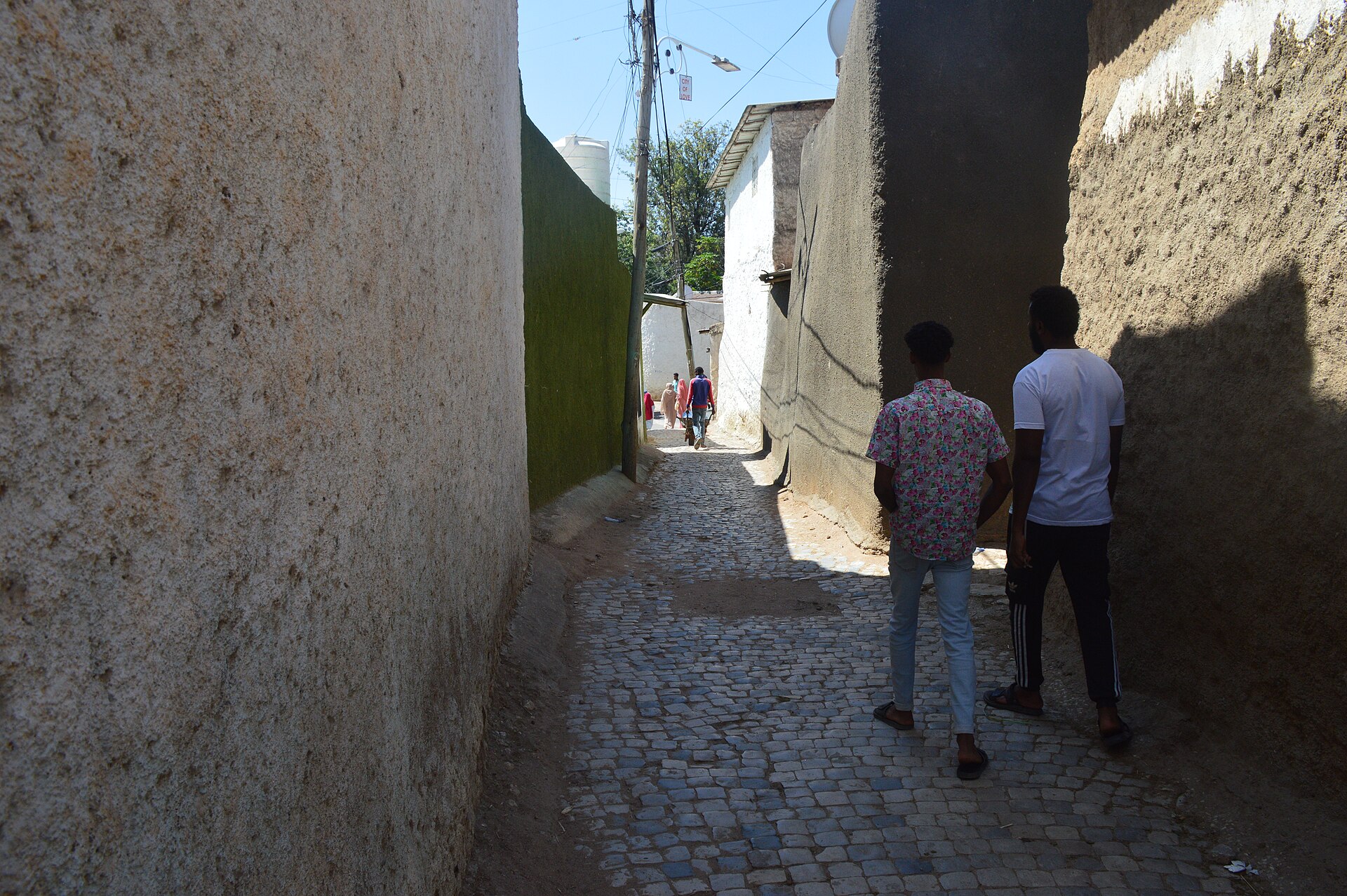
Shuwalid, inscribed in 2023, is a three-day festival of the Harari people held at shrines by the gates of Harar. Harar Jugol, the old walled town, is itself a World Heritage property.
Media Under Pressure
Reporters Without Borders (RSF), a press freedom group in Paris, ranked Ethiopia 148th of 180 countries in 2026, with 34.66 points. A year earlier it ranked Ethiopia 145th, with 36.92.
RSF says a 2021 media law decriminalised defamation and protects journalists’ sources, but that in practice it is usually circumvented. It counted five journalists detained in Ethiopia as of 3 November 2026.
RSF says a handful of businessmen own most of the leading media outlets and calls the media regulator a government tool. In August 2026 it condemned abductions of journalists and a raid on the newsroom of an independent news site.
What It Means for US Readers
Mengestu’s debut novel is set among Ethiopian refugees in Washington, DC, and Mengiste’s books reach English-language readers directly. The Whitney Museum in New York devoted a 2021 exhibition to Mehretu.
Mulatu Astatke studied at Berklee in Boston and received an honorary doctorate there in 2012. Bikila finished fifth at the 1963 Boston Marathon, Olympedia says.
This guide did not retrieve the current US State Department travel advisory for Ethiopia. Travellers should check it on travel.state.gov before any trip.
What Prediction Markets Say
Polymarket, where users bet real money, asks whether Abiy Ahmed will be out as prime minister of Ethiopia in 2026. The Yes side showed 4.2% at 7:17 a.m. ET on 3 November 2026, bid 2.3 cents, ask 6.2 cents.
About US$13,100 has traded on that contract. A month earlier the price was about 1.8 points higher.
The market is about politics, not culture. It is a bet on political change, which would shape the setting in which Ethiopia’s artists, festivals and media work.
Why we show this: prediction markets turn real-money bets into a live probability that moves within minutes of the news, which is why investors, campaigns and newsrooms in the United States now follow them closely. We show them next to polls and official results, never instead of them.
What Is Not Known
Musicians such as Hachalu Hundessa and Tilahun Gessesse are not profiled, because no non-artist source was checked. Other Oromo and Amharic-language artists, and television and film actors, are also left out.
The 2026 festival calendar and attendance figures were not verified. The number of Ethiopian-born artists in US collections was not confirmed either.
No individual presenter, editor or broadcaster is profiled, because none could be confirmed from a primary source. The Ethiopian government’s own account of its media sector was not retrieved.
The election figures come from the election board’s announcement as reported, and the board’s own website could not be opened. The only prediction market found concerns Abiy Ahmed’s tenure, and none on Ethiopian culture has real trading.
Frequently Asked Questions
Who is Ethiopia’s most famous musician?
Mulatu Astatke, born on 19 December 1943 in Jimma, is called the godfather of Ethio-jazz. He studied at Berklee College of Music in Boston and received an honorary doctorate there in 2012.
Which festivals does UNESCO list for Ethiopia?
UNESCO lists Meskel (2013), Fichee-Chambalaalla (2015), the Gada system (2016), Ethiopian Epiphany (2019), Shuwalid (2023) and Gifaataa (2025). It also lists Xeer Ciise (2024), shared with Djibouti and Somalia.
Which Ethiopian runners won Olympic gold?
Abebe Bikila won in 1960 and 1964, Haile Gebrselassie in 1996 and 2000, and Derartu Tulu in 1992 and 2000. Kenenisa Bekele and Tirunesh Dibaba each won three golds.
Who is Tigst Assefa?
Tigst Assefa won Olympic marathon silver in Paris in 2024 and won the Berlin Marathon in 2:11:04 on 27 September 2026. World Athletics ranks her first in the women’s marathon.
Which Ethiopian novelists should I read first?
Maaza Mengiste’s The Shadow King was shortlisted for the 2020 Booker Prize. Dinaw Mengestu’s The Beautiful Things That Heaven Bears and How to Read the Air follow Ethiopian immigrants in the United States.
How free is the press in Ethiopia?
RSF ranked Ethiopia 148th of 180 countries in its 2026 index, down from 145th in 2025. It counted five journalists detained as of 3 November 2026.
Is there a prediction market on Ethiopia?
Yes, Polymarket has a market on whether Abiy Ahmed is out as prime minister in 2026. It showed 4.2% on 3 November 2026 at 7:17 a.m. ET.
Sources: UNESCO, Ethiopia living-heritage elements ; UNESCO, World Heritage in Ethiopia ; UNESCO, Meskel ; UNESCO, Ethiopian Epiphany ; UNESCO, Fichee-Chambalaalla ; UNESCO, Gada system ; UNESCO, Gifaataa ; UNESCO, Shuwalid ; Olympedia, Abebe Bikila ; Olympedia, Haile Gebrselassie ; Olympedia, Kenenisa Bekele ; Olympedia, Derartu Tulu ; Olympedia, Tirunesh Dibaba ; Olympedia, Tigst Assefa ; World Athletics, Tigst Assefa ; RSF, Ethiopia country page ; MacArthur Foundation, Dinaw Mengestu ; MacArthur Foundation, Julie Mehretu ; Whitney Museum, Julie Mehretu ; Aga Khan Museum, Aida Muluneh ; Booker Prizes, Maaza Mengiste ; Booker Prizes, 2020 shortlist ; Academy Museum, Teza ; SFFILM, Difret ; New Zealand International Film Festival, Lamb ; Store norske leksikon, Mulatu Astatke ; Store norske leksikon, Getatchew Mekurya ; Store norske leksikon, music in Ethiopia ; Rio Times, Ethiopia election result ; Prime Minister’s Office of Ethiopia ; Polymarket, Abiy Ahmed out as Prime Minister of Ethiopia in 2026? (all accessed on 3 November 2026).
This article was produced by The Rio Times’ automated newsroom system. How we use AI · Report an error · Editorial responsibility: Matthias Camenzind, Editor-in-Chief
Expat Guide to Ethiopia
What The Rio Times publishes for foreigners who live in or move to Ethiopia.
Start here
- Ethiopia Golden Visa Explained: Fees for Americans in US$
- Safaricom's M-Pesa Enters Ethiopia as Wave Secures a West African Bank Licence
City guides
Coming up in Ethiopia
- Great Ethiopian Run Returns to Addis Ababa 22 November 22 Nov
- Ethiopian Christmas 2027 Ends a 43-Day Fast 7 Jan
- Timkat 2027 Falls on 19 January in Addis 18 Jan
Understand Ethiopia
Horn of Africa and the Red Sea
- Horn of Africa 2026: Why It Matters and Who Backs Whom
- Ethiopia’s Neighbors Explained, Ports, Eritrea, Somalia
- Eritrea Explained 2026, a Red Sea Country Guide
- Somalia Explained: Al-Shabaab, Somaliland, the Ports and the Fight Over a 2026 Vote