
GUATEMALA · CENTRAL AMERICA
Guatemala shares land borders with four countries: Mexico, Belize, Honduras and El Salvador. Together they run 1,667 kilometres, and the longest, 958 km, faces Mexico, according to the US Central Intelligence Agency’s World Factbook.
For US readers these borders carry the migrants, money and drug routes that shape American politics. In 2025 Banguat, Guatemala’s central bank, reported US$25,530.2 million in remittances, and its migration institute counted 48,405 deportations from the US.
Key Facts
- Borders 1,667 km in total: Mexico 958, Belize 266, Honduras 244, El Salvador 199.
- Dispute Guatemala claims Belizean land; the ICJ, the United Nations court, lists no hearing date.
- Bloc SICA, the Central American integration system, was founded in 1991 and is based in San Salvador.
- Money Migrants sent home US$25,530.2 million in 2025, up 18.7% from US$21,510.2 million in 2024.
- Security The US targeted three Guatemalan drug groups with terrorism-related sanctions on 13 November 2026.
Guatemala is the northern gateway of Central America, with its longest border facing Mexico and shorter ones facing Belize, Honduras and El Salvador. This guide explains how each tie works.
The Big Picture: A Gateway With Four Neighbours
Guatemala is the northern gateway of Central America, the land bridge between Mexico and South America. It borders Mexico to the north and west, Belize to the north-east, Honduras to the east and El Salvador to the south-east, according to the CIA World Factbook.
Its ties with each neighbour differ sharply. With Mexico the issue is trade and migration, with Belize a legal claim, and with Honduras and El Salvador a joint effort to move goods and people with fewer checks.
The political mood in the region shifted in 2026. Honduras swore in conservative President Nasry Asfura on 27 January 2026, ending four years of left-wing government under former President Xiomara Castro.
Guatemala’s President Bernardo Arévalo, in office since January 2024, congratulated Asfura on social media and wrote that the two countries would keep working together on regional development. Guatemala holds its next general elections in 2027, and our politics explainer covers who holds power.
Mexico: The Longest Border
Mexico accounts for 958 of Guatemala’s 1,667 kilometres of land border, or more than half of the total. It is the only one of Guatemala’s four neighbours that lies outside Central America.
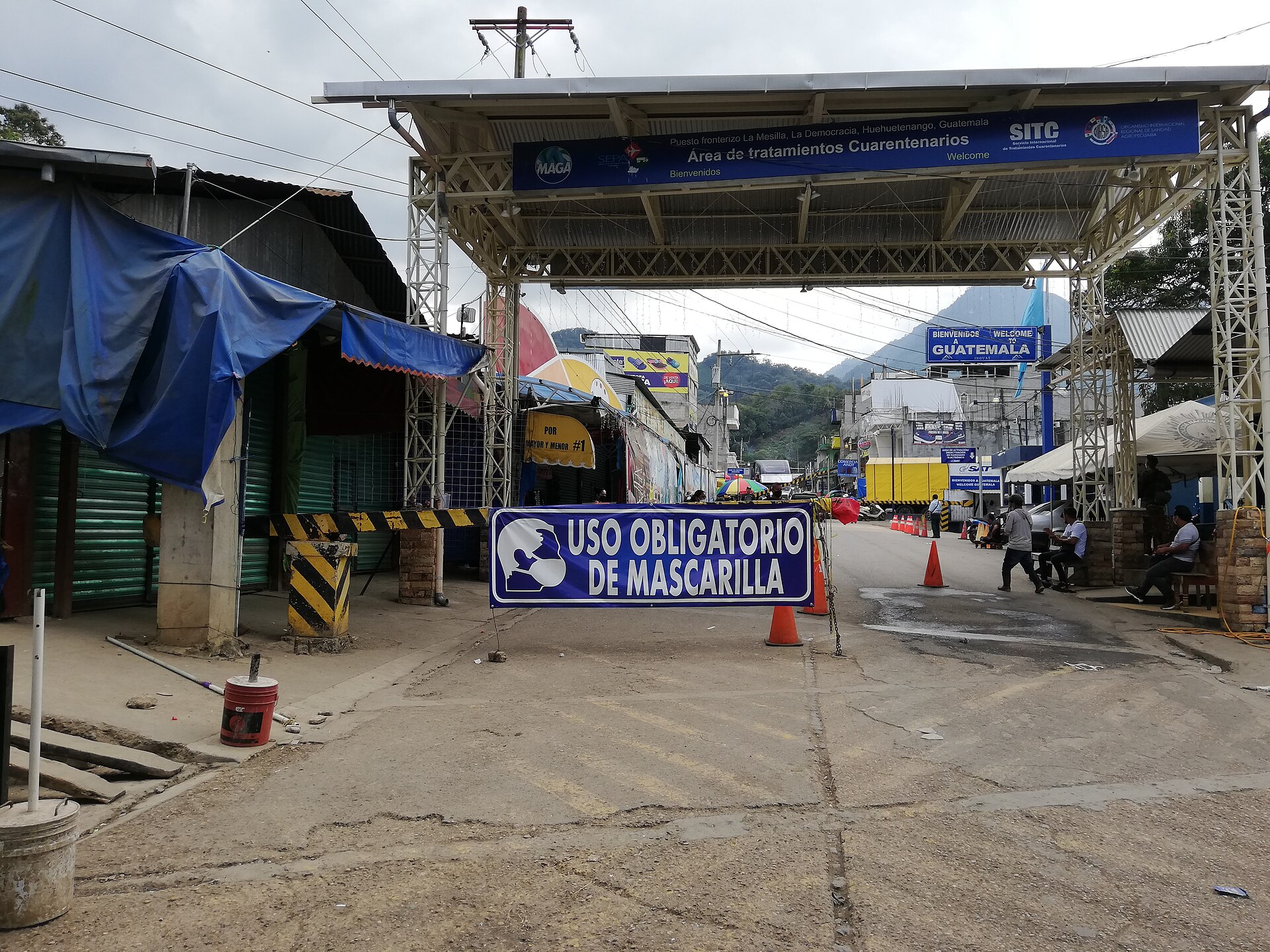
Guatemala also receives people sent back through Mexico. Guatemala’s migration institute (IGM) served 53,272 returnees from the United States and Mexico combined between 1 January and 21 December 2025.
Mexican criminal networks also work through Guatemalan partners. The US sanctions of 13 November 2026, described under security below, tie two of the three named Guatemalan groups to Mexico’s Sinaloa Cartel, a major drug-trafficking group.
Belize: A Territorial Claim at the World Court
Guatemala has long claimed part of Belize, a former British colony that became independent in 1981. The ICJ lists a Special Agreement of 8 December 2008, a deal to ask the court to rule, and a Protocol of 25 May 2015.
Guatemalan voters approved going to the International Court of Justice (ICJ), the UN’s main court, on 15 April 2018, and Belizeans did so on 8 May 2019. The ICJ announced on 12 June 2019 that it had been seised of the dispute.
The latest order on the ICJ case page, dated 24 June 2022, fixed time limits for the second round of written arguments. We found no hearing date or judgment listed there on 17 November 2026.
A related case also involves Guatemala. On 19 March 2026 the ICJ let Guatemala join as a non-party in Belize’s separate case against Honduras over the Sapodilla Cayes, a group of small islands.
Guatemala’s role is limited to the question of sovereignty over the cays. Belize’s government said the decision does not affect the legal rights or claims of any party.
The dispute also surfaces on the Sarstoon River, which forms part of the Belize-Guatemala border. Belize’s Foreign Ministry reported a 7 November 2026 incident involving Guatemalan vessels there, which we could not confirm independently.
We found no Guatemalan response to that report. Our earlier report on the Sarstoon protest sets out Belize’s account.
Honduras and El Salvador: Fewer Checks at the Border
Guatemala and Honduras began a customs union in June 2017 at the border posts of Corinto, El Florido and Agua Caliente. El Salvador joined on 20 August 2018 at a ceremony in Corinto.
In plain terms, goods are cleared once instead of being stopped and checked at each border. The World Bank described the aim as speeding up trade between the countries and lowering its cost.
People also move with fewer limits. Under the CA-4 Border Control Agreement, signed in 2006 by Guatemala, El Salvador, Honduras and Nicaragua (the “Central America Four”), citizens can cross using only a national identity card.
Visitors can stay up to 90 days in the four countries together. Anyone planning a trip should check each country’s migration authority for the current rules.
SICA and CA-4: How the Regional System Works
SICA, the Central American Integration System, was created by the Tegucigalpa Protocol of 13 December 1991. Its six signatories were Guatemala, El Salvador, Honduras, Nicaragua, Costa Rica and Panama.
Belize joined in 2000 and the Dominican Republic in 2013. The General Secretariat sits in San Salvador.
SICA works through meetings of presidents and ministers, with a rotating presidency among members. The CA-4 agreement and the customs union involve only some members, so they move faster than the whole bloc.
In Plain English
- SICA The club of Central American states that coordinate trade, security and politics.
- CA-4 A pact letting citizens of four countries cross borders with an ID card.
- Customs union Goods are declared and cleared once, not at every border.
- ICJ The International Court of Justice, the UN’s court for disputes between states.
- FTO A US “foreign terrorist organisation” listing, which brings sanctions and a ban on support.
Trade and Money: The US Link
Trade with the United States is large and one-sided. In 2025 US goods exports to Guatemala were US$9,960.7 million and imports were US$5,173.2 million, a US surplus of US$4,787.5 million, according to the US Census Bureau.
The two governments agreed a framework for an Agreement on Reciprocal Trade in November 2025, according to the Office of the US Trade Representative (USTR). We did not find a primary-source figure for Guatemala’s 2025 trade with Mexico.
Money from migrants is the other pillar. Banguat reported US$25,530.2 million in family remittances in 2025, up 18.7% from US$21,510.2 million in 2024.
Remittances from the United States alone rose 19.8% in January to September 2025 against the same months of 2024, Banguat data show. That ties household income in Guatemala closely to US jobs and immigration rules.
Migration and Deportations
Deportation flights and buses bring Guatemalans home from both the United States and Mexico. The IGM counted 48,405 Guatemalans deported from the United States in 2025, a full-year figure that is about 22% fewer than the 61,680 of 2024.
Counting Mexico too, the IGM served 53,272 returnees from 1 January to 21 December 2025. The counts differ by cut-off date and by whether Mexico is included, so totals from different reports are not directly comparable.
Security and Gangs
Gangs and drug groups operate across Guatemala’s borders. On 23 September 2025 the US State Department designated Barrio 18, a street gang with roots in Los Angeles, as a foreign terrorist organisation (FTO).
The department said the gang has attacked security forces, officials and civilians in El Salvador, Guatemala and Honduras. MS-13, another gang with Central American ties, was already on the US list.
On 13 November 2026 the US Treasury’s Office of Foreign Assets Control (OFAC), its sanctions office, listed Los Lorenzanas and Los Mendoza as terrorist-linked drug groups. The State Department designated Los Lorenzanas a foreign terrorist organisation.
It also added a global-terrorist tag to Los Huistas, based in Huehuetenango, a Guatemalan department. OFAC places Los Mendoza in Guatemala, Honduras and Belize and links both groups to the Sinaloa Cartel, and Los Huistas also to Mexico’s Jalisco New Generation Cartel.
At home, Guatemala declared a 30-day state of siege in the eastern departments (provinces) of Zacapa and Izabal, the Interior Ministry said on 15 November 2026. A state of siege is an emergency regime that limits some rights.
Government Decree 8-2026 puts the Defence Ministry in charge of the measures. Our report on the state of siege has more detail.
El Salvador has run a state of exception against gangs since March 2022, which suspends some constitutional rights. Its Legislative Assembly approved the 52nd 30-day extension on 24 June 2026, and our El Salvador power explainer covers President Nayib Bukele’s government.
What It Means for You
US readers meet Guatemala’s neighbours mainly through immigration enforcement, money transfers and counter-narcotics sanctions. US citizens, residents and companies are barred from dealing with groups on the sanctions lists, which now include Guatemalan trafficking organisations.
The 30-day state of siege was announced on 15 November 2026, and its exact end date is not confirmed. The latest extension of El Salvador’s state of exception that we found began on 28 October 2026 and runs to 26 November.
What Is Not Known
- When the ICJ will hold hearings on Guatemala’s claim to Belizean territory; none is listed.
- Whether the 7 November 2026 Sarstoon incident happened as Belize describes, and Guatemala’s response.
- Whether Honduras still operates a state of exception in 2026; we found no confirmation.
- The 2025 value of Guatemala’s trade with Mexico from a primary source.
Frequently Asked Questions
Which countries border Guatemala?
Four countries share a border with Guatemala. They are Mexico (958 km), Belize (266 km), Honduras (244 km) and El Salvador (199 km), a total of 1,667 km, according to the US Central Intelligence Agency’s World Factbook.
What is Guatemala’s claim on Belize?
Guatemala claims part of Belize. The two agreed in 2008 to ask the International Court of Justice (ICJ) to decide; the court announced the case in June 2019, and no hearing date is listed.
What are SICA and CA-4?
SICA is the Central American Integration System, created in 1991 and based in San Salvador. CA-4 is a 2006 pact among Guatemala, El Salvador, Honduras and Nicaragua that lets citizens cross borders with an ID card.
How much money do migrants send to Guatemala?
Banguat, the central bank, reported US$25,530.2 million in family remittances in 2025. That is up 18.7% from US$21,510.2 million in 2024.
How many Guatemalans were deported in 2025?
Guatemala’s migration institute counted 48,405 deported from the United States, about 22% fewer than in 2024. Including returns from Mexico, it served 53,272 people from 1 January to 21 December 2025.
Why did the US sanction Guatemalan groups in November 2026?
On 13 November 2026 OFAC, the US sanctions office, targeted Los Lorenzanas, Los Mendoza and Los Huistas with terrorism-related measures. It describes them as drug trafficking organisations, two of them linked to Mexican cartels.
Sources: US Central Intelligence Agency, World Factbook, land boundaries (archived edition); International Court of Justice, Guatemala/Belize case page and orders, to 24 June 2022; International Court of Justice, Sapodilla Cayes case, judgment of 19 March 2026; Government of Belize Press Office, 19 March 2026; Tegucigalpa Protocol, 13 December 1991; World Bank, customs union between Guatemala and Honduras; Guatemala Ministry of Economy (MINECO), trade agreements; US Census Bureau, US trade in goods with Guatemala, 2025; Office of the US Trade Representative, fact sheet, November 2025; US Treasury OFAC, recent actions, 13 November 2026; US State Department, Barrio 18 designation notice, Federal Register, 24 September 2025; Guatemala Interior Ministry, state of siege, 15 November 2026; Banguat (Banco de Guatemala), family remittances series; Guatemalan Migration Institute (IGM), returnee counts, 2025.
This article was produced by The Rio Times’ automated AI newsroom. Editorial responsibility: Matthias Camenzind, Publisher and Editor-in-Chief. The Rio Times also runs Ask Rio Times, which answers from 100,000+ of our own articles, the daily Latin America Power Map, and prediction-market odds on elections and markets.. How we use AI · Report an error
Expat Guide to Guatemala
What The Rio Times publishes for foreigners who live in or move to Guatemala.
Start here
- Best Places to Live in Guatemala for Expats
- Guatemala’s Fuel Tax Cut Sits on the President’s Desk: What Expats Need to Know
- Moving to Guatemala 2026 — Residency, Costs and Your First Year Explained
- Investing in Guatemala as a Foreigner in 2026: Two Taxes Just Went
City guides
Understand Guatemala