Who Is Abiy Ahmed? Ethiopia’s Prime Minister, From Nobel Peace Prize to a New War

PROFILES · ETHIOPIA
Key Facts
- —The country Ethiopia is Africa’s second most populous nation, with about 135.5 million people in 2025 on World Bank figures. It is landlocked, hosts the African Union and has a US$126 billion economy.
- —Who he is Abiy Ahmed Ali, born on 15 August 1976 in Beshasha, in today’s Oromia region. A former army officer and intelligence official, he has been prime minister since 2 April 2018.
- —Power base The Prosperity Party, which he founded in 2019 and which won 438 seats in the 547-seat parliament in the June 2026 election, plus the federal army.
- —Record Peace with Eritrea and the 2019 Nobel Peace Prize; the 2020–2022 Tigray war; a floating currency since July 2024; and Africa’s largest hydropower dam, inaugurated in 2025.
- —Controversies UN investigators and rights groups allege abuses by federal forces in Tigray and Amhara. Press-freedom groups document jailed journalists. His government rejects the UN findings.
- —Outlook The new parliament opens on 5 October 2026 and is expected to re-elect him. War has returned to the north, where a seven-group alliance seeks his removal.
Who is Abiy Ahmed? A profile of Ethiopia’s prime minister: the Nobel laureate who opened a closed economy, fought a devastating civil war and now faces a new rebellion.
Abiy Ahmed runs the second most populous country in Africa, a key partner for Western governments, China and the Gulf states. What he decides shapes Red Sea shipping, migration towards Europe and one of the continent’s fastest-growing markets.
Few leaders have been judged so differently in so short a time. In 2019 he was a Nobel Peace Prize winner, praised in Oslo and Washington. Within two years his government was at war in its own north, and UN investigators later alleged war crimes by all sides.
This profile sets out where he came from, how he holds power and what his record is. It treats allegations as allegations, with their status and his government’s response. It ends with what to watch as his second full term begins.
Early life and career
Abiy Ahmed Ali was born on 15 August 1976 in Beshasha, a small town in the coffee country of south-western Ethiopia. His father, Ahmed Ali, was a Muslim Oromo. His mother, Tezeta Wolde, was a Christian. Abiy himself is a Pentecostal Christian.
That mixed background matters in a country organised along ethnic and religious lines. It lets him present himself as a bridge between Ethiopia’s largest group, the Oromo, and the rest of the country. Critics say the same flexibility makes his loyalties hard to pin down.
As a teenager he joined the armed struggle against the Derg, the military regime of Mengistu Haile Mariam, which fell in 1991. He then served in the Ethiopian army, where he worked in signals and intelligence. He rose to the rank of lieutenant colonel.
In 2006 he helped found the Information Network Security Agency (INSA), Ethiopia’s cyber-intelligence service. He later ran it as acting director. That experience in surveillance and security is a thread that runs through his career.
He entered parliament in 2010 and served as minister of science and technology from October 2015 to November 2016. Along the way he collected degrees in computer engineering, leadership and business. In 2017 he completed a doctorate in peace and conflict studies at Addis Ababa University.
Rise to power
Abiy rose on a wave of protest. From 2015 young Oromo and Amhara demonstrators challenged the ruling coalition, the Ethiopian People’s Revolutionary Democratic Front (EPRDF). The coalition had governed since 1991 and was dominated by the Tigray People’s Liberation Front (TPLF).
In February 2018 Prime Minister Hailemariam Desalegn resigned. On 22 February Abiy was elected chairman of the Oromo party within the coalition. On 27 March the EPRDF chose him as its leader, and he was sworn in as prime minister on Monday 2 April 2018.
His first months were a burst of change. According to the Norwegian Nobel Committee, he granted amnesty to political prisoners, ended media censorship and legalised outlawed opposition groups. He also removed military and civilian leaders suspected of corruption.
Half of his cabinet ministers were women, and Ethiopia gained its first female president and first female head of the Supreme Court. He promised free and fair elections. Exiled opposition leaders and diaspora television channels returned home.
The biggest move was abroad. Ethiopia and Eritrea had been in a frozen conflict since their 1998–2000 border war. Abiy accepted a 2002 international ruling on the border, flew to Asmara and signed a joint declaration of peace with President Isaias Afwerki on 9 July 2018.
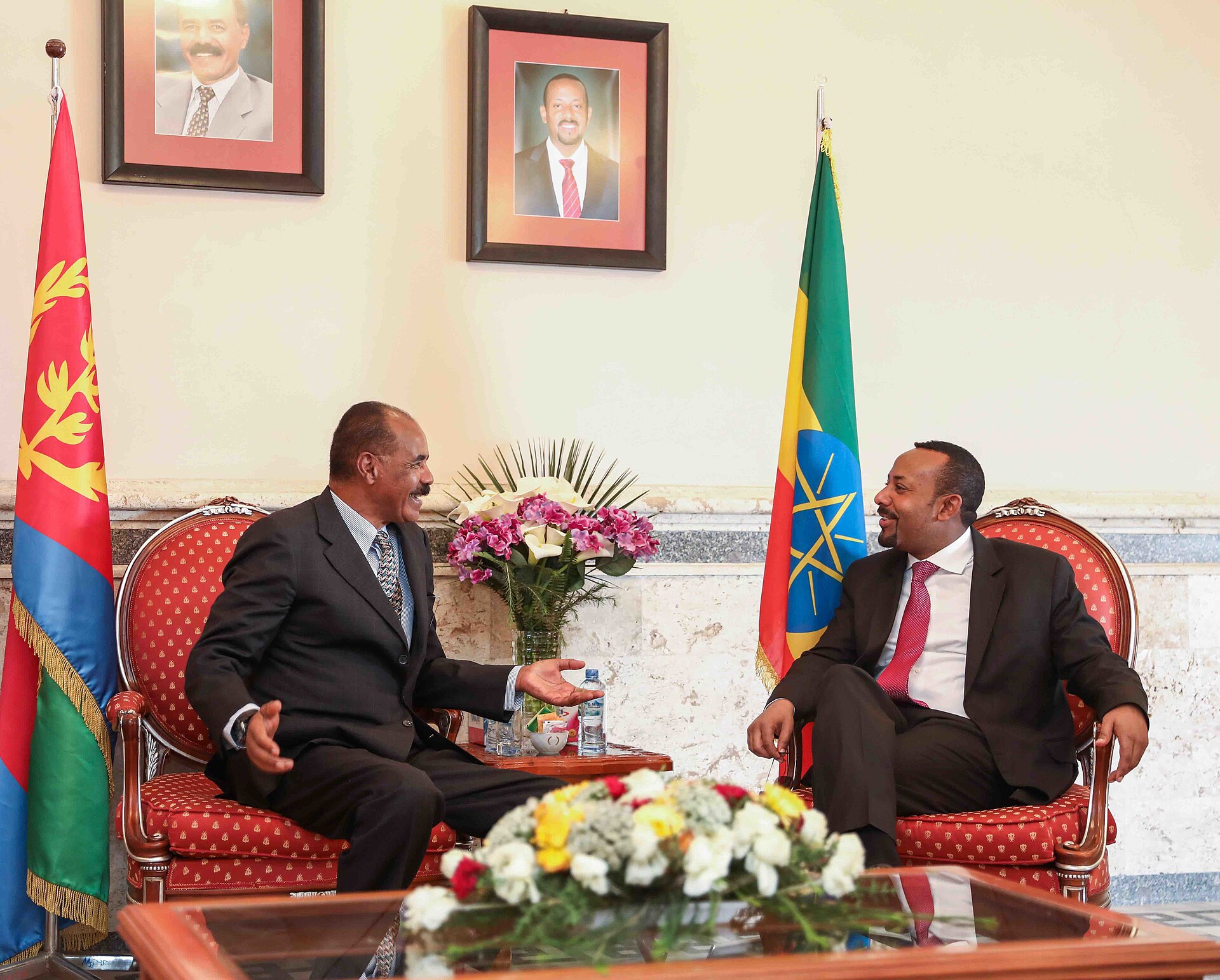
On 11 October 2019 the Nobel Committee awarded him the Peace Prize. It cited “his efforts to achieve peace and international cooperation”. It singled out “his decisive initiative to resolve the border conflict with neighbouring Eritrea”.
Power base
Abiy’s main instrument is the Prosperity Party. It was formed on 21 November 2019 by merging three of the EPRDF’s four parties with five allied regional parties. The TPLF refused to join, ending its role at the centre of power.
The merger replaced a coalition of ethnic parties with a single national party under his chairmanship. Supporters saw it as a step towards a less ethnic politics. The TPLF and some Oromo leaders saw it as a grab for central control.
The party has since won two general elections by huge margins. In June 2021 it took 410 of the 436 seats contested, and Abiy was sworn in for a five-year term on 4 October 2021. No vote took place in Tigray, which was then held by forces opposed to the government.
At the election of Monday 1 June 2026 it won again. The National Election Board of Ethiopia declared it the winner of 438 seats in the 547-seat House of Peoples’ Representatives, far above the 274 needed for a majority. Voting did not take place in Tigray or parts of Amhara. Opposition groups and rights advocates complained of restrictions on campaigning and arrests of opposition figures.
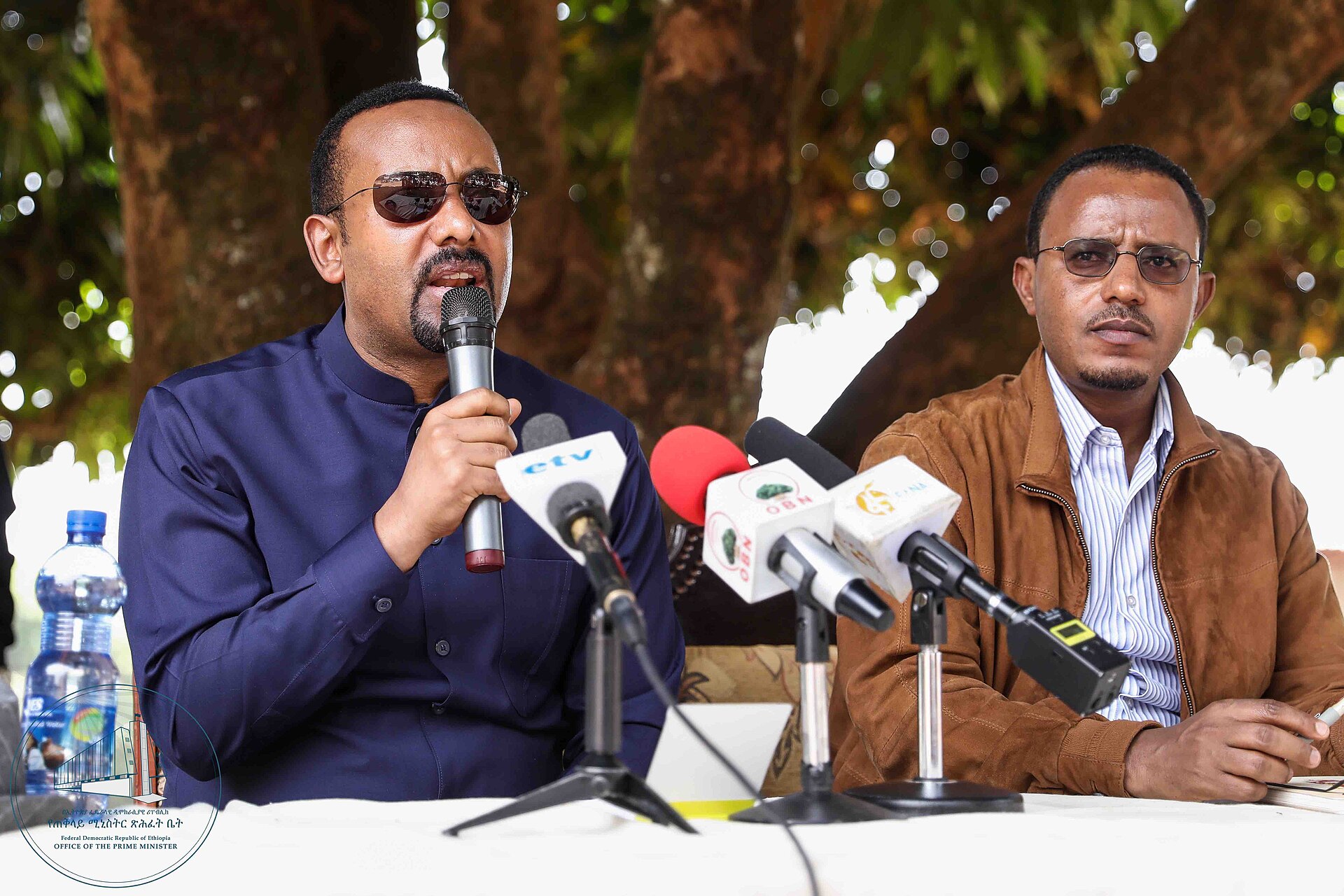
Beyond the party, his power rests on the federal army and security services. In 2023 his government moved to fold regional special forces into the national army and police. That decision triggered the Fano insurgency in Amhara, a region that had fought on his side in Tigray.
He also governs through a personal brand. His book and philosophy of “Medemer”, an Amharic word for adding together, frames his politics as national unity.
Record in office
The Tigray war
Relations with the TPLF broke down after the merger. Tigray held its own regional election in September 2020 against federal wishes. On Wednesday 4 November 2020 Abiy ordered troops into Tigray, accusing the TPLF of attacking the army’s Northern Command.
He called the campaign a “law enforcement” operation, and Eritrean troops fought alongside federal forces. The war lasted two years. It ended with the Pretoria agreement, signed in South Africa on 2 November 2022 under African Union mediation.
No agreed death toll exists, and estimates vary widely. Olusegun Obasanjo, the African Union mediator, has put the number of dead at about 600,000.
The economy
Abiy’s government calls its economic programme the Homegrown Economic Reform Agenda. It licensed Kenya’s Safaricom as the first private mobile operator in 2021. The Ethiopian Securities Exchange opened in January 2025, and state-owned Ethio Telecom listed on it in May 2026.
The biggest step came on Monday 29 July 2024, when the central bank let the birr float. The same day the International Monetary Fund approved a four-year loan of about US$3.4 billion. The birr trades at around 162 to the US dollar, against 57.48 before the float.
The cost fell on households. Inflation averaged 26.6 percent in 2023/24, the IMF says, and stood at 15.1 percent in August 2026 after a fuel-price shock. Exports reached a record of more than US$10.7 billion in the fiscal year to July 2026, led by gold and coffee.
The dam and the sea
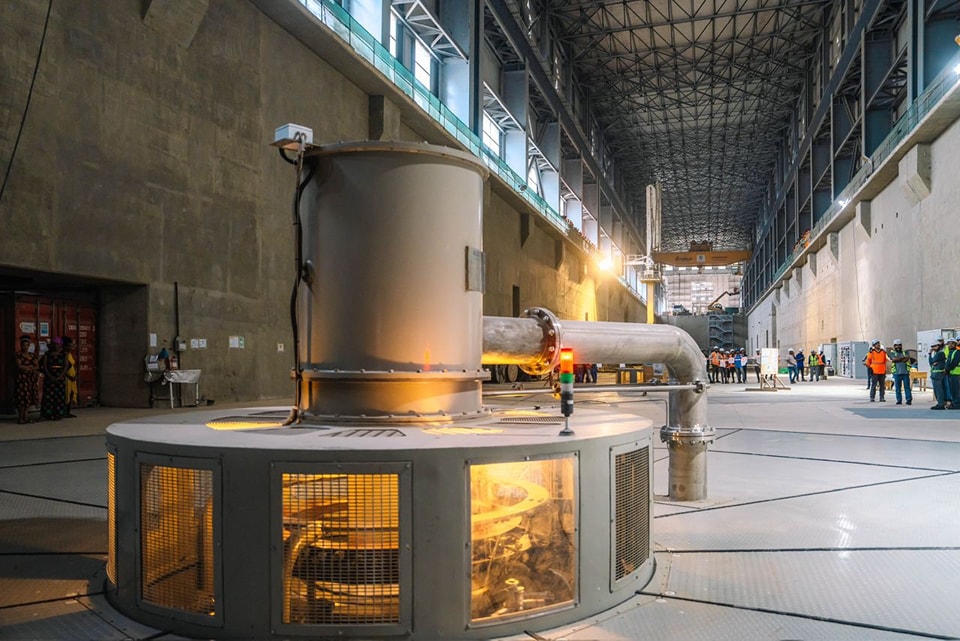
Abiy inaugurated the Grand Ethiopian Renaissance Dam (GERD) on the Blue Nile on Tuesday 9 September 2025. At 5,150 megawatts it is Africa’s largest hydroelectric plant, financed at home for about US$5 billion. Egypt, which depends on the Nile, calls it an existential threat.
Ethiopia has had no coast since Eritrea’s independence in 1993, and Abiy calls sea access an existential issue. In October 2023 he told parliament that Ethiopia had a natural right to the Red Sea. The remarks alarmed neighbours, and he later said he had no intention of going to war.
On Monday 1 January 2024 he signed a memorandum with Somaliland, a breakaway region of Somalia, for a naval base and sea access. Somalia called the deal null and void. Turkey brokered a settlement, the Ankara Declaration of 11 December 2024.
Since then his focus has shifted to Eritrea’s port of Assab, a claim Eritrea rejects. In September 2026 Djibouti publicly rejected a reported Ethiopian request for a corridor and naval base at Tadjourah. Days later, Abiy broke ground on a US$660 million fuel pipeline to Djibouti’s coast.
Controversies
The allegations below come from UN investigators, rights groups and press-freedom monitors. None has been tested in an Ethiopian or international court against Abiy personally. Each is set out with its status and the response on record.
Abuses in the Tigray war
Allegation: In September 2022 the UN International Commission of Human Rights Experts on Ethiopia reported evidence of war crimes by all sides. It said the federal government used starvation as a method of warfare. It also documented murder, rape and pillage by federal and Tigrayan forces.
Response and status: Ethiopia’s ambassador in Geneva, Zenebe Kebede, rejected the report as “self-contradictory and biased”. He said it ignored atrocities in Afar and Amhara. No international court has charged Ethiopian officials over the war.
Killings in Amhara
Allegation: Amnesty International said in April 2024 that soldiers of the national army killed more than 50 people in the town of Merawi on 29 January 2024. It called the killings possible war crimes of murder and extrajudicial execution.
Response and status: Amnesty called for an independent investigation. Its report cites a federal statement that the government had already taken “all the necessary measures” over crimes in the northern war. No independent inquiry into Merawi has published findings.
Press freedom
Allegation: The Committee to Protect Journalists (CPJ) has documented a string of cases. In February 2026 three Reuters journalists lost their accreditation after an investigative report. In August 2026 the editor-in-chief of Addis Standard, Yonas Kedir, was detained and his newsroom raided; he was later released.
Response and status: CPJ says five journalists have spent about three years in detention awaiting trial. Abiy has defended internet shutdowns during unrest, saying the internet is “neither water nor air”.
The palace project
Allegation: In May 2022 The Reporter, an Ethiopian weekly, reported the cost of a new palace complex on Yeka hill. It put the bill at more than 49 billion birr (roughly US$940 million at the time; about US$300 million today). Critics questioned the spending and reported evictions.
Response and status: Officials call it the Chaka Project and say it belongs to the government’s ten-year plan. In July 2023 Abiy told parliament such projects were funded outside the budget, partly by foreign grants. He pledged a thorough audit; no audit has been published.
Abiy’s government, for its part, accuses others. In September 2026 his spokesperson, Billene Seyoum, told Reuters that a new rebel alliance had Eritrean financial backing. Eritrea denies supporting armed groups in Ethiopia, and no independent body has confirmed the claim.
What to watch
As of 27 September 2026, Abiy faces the most serious armed challenge of his time in office. On Sunday 20 September seven armed groups, including the TPLF, Amhara’s Fano and the Oromo Liberation Army, formed an alliance to remove him. Fighting broke out in the north on Wednesday 23 September.
Tigrayan forces seized the airports at Mekelle, Axum and Shire, and Ethiopian Airlines suspended flights there. Each side blames the other for starting the fighting. Neither account has been independently verified.
Monday 5 October 2026: the new parliament opens and forms the government for the next five years. Abiy is widely expected to be re-elected prime minister. Watch who holds defence, finance and foreign affairs.
The northern front: whether fighting spreads further into Afar and Amhara, and whether Eritrea is drawn in directly. The African Union, which brokered the Pretoria deal, is urging a return to talks.
The IMF programme: the sixth review of the loan is the next checkpoint. Its date has not been announced.
The Red Sea: any new move on Assab or on port deals with Djibouti or Somaliland. Rhetoric on sea access has twice raised tensions with neighbours.
What this means for foreigners and investors
For investors, Abiy is the author of Ethiopia’s opening. Telecoms, capital markets and foreign exchange have all moved further under him than under any predecessor. His re-election would keep that agenda in place.
The same concentration of power is a risk. Decisions depend heavily on one man and one party, and conflict can change priorities fast. The IMF still describes exchange restrictions as only partially eased.
For travellers, the US State Department rates Ethiopia at Level 3, “Reconsider Travel”, in its advisory of 27 August 2026. It advises against travel to Tigray, Amhara, parts of Oromia and several border areas. Internet and phone services are often cut during unrest.
This guide uses a reference rate of 162.45 birr per US dollar (ExchangeRate-API, 30 September 2026). Anyone planning a trip, a posting or an investment should watch both the IMF calendar and the northern front.
Connected Coverage
Ethiopia Explained: The Country, Abiy’s Reforms, the Economy and What to Watch
Tigray Offensive in Ethiopia: Airports Seized, Flights Halted
Ethiopia Accuses Eritrea of Funding Rebels as War Returns to Its North
Landlocked Ethiopia Starts US$660 Million Fuel Pipeline to Djibouti’s Coast
Djibouti Rejects Ethiopian Request for Tadjourah Corridor and Naval Base
What Is Not Known
How far the new war spreads. Casualty claims from both sides cannot be independently verified. Eritrea’s role is disputed: the government alleges financing, and Asmara denies it.
The true cost of the Tigray war. Estimates of the dead vary widely, up to about 600,000. Accountability for abuses alleged by UN investigators remains unresolved.
The final cost and funding of the Chaka palace project. No audit has been published. It is also unclear what cabinet Abiy will name, and whether the election left any room for opposition in parliament.
Sources: Biography and prize citation from the Norwegian Nobel Committee, and election results from the National Election Board of Ethiopia. The loan programme comes from the International Monetary Fund, population and output from the World Bank, and human-rights findings from the UN, Amnesty International and CPJ. All accessed 27 September 2026.
- Nobel Prize — Abiy Ahmed Ali, biographical
- Nobel Prize — The Nobel Peace Prize 2019, press release
- Africanews — Ethiopia rejects UN report on possible crimes against humanity in Tigray
- Amnesty International — Merawi killings should be independently investigated
- Committee to Protect Journalists — Ethiopia
- Al Jazeera — Abiy Ahmed sworn in for new five-year term
- Al Jazeera — Abiy promises final offensive in Tigray
- The Reporter — Government plans palace project on Yeka hill (May 2022)
- Addis Standard — Abiy pledges audit of non-government-funded mega projects
- International Crisis Group — the Ethiopia-Somaliland memorandum
- Ethiopian News Agency via allAfrica — Prosperity Party wins June 1 election
More: Ethiopia news in English, every day from The Rio Times.
Frequently Asked Questions
Who is Abiy Ahmed?
Abiy Ahmed Ali is the prime minister of Ethiopia, in office since 2 April 2018. Born on 15 August 1976 in Beshasha, he is a former army lieutenant colonel and intelligence official. He won the Nobel Peace Prize in 2019.
Why did Abiy Ahmed win the Nobel Peace Prize?
The Norwegian Nobel Committee cited his efforts to achieve peace and international cooperation, and in particular his decisive initiative to resolve the border conflict with Eritrea. He signed a peace declaration with Eritrea’s President Isaias Afwerki on 9 July 2018.
What party does Abiy Ahmed lead?
The Prosperity Party, formed on 21 November 2019 from most of the old ruling coalition. It won 410 of 436 contested seats in 2021 and 438 of the 547 seats in parliament in the June 2026 election.
What was the Tigray war?
A war between federal forces, backed by Eritrean troops, and the Tigray People’s Liberation Front from November 2020 to November 2022. It ended with the Pretoria agreement. Death toll estimates vary widely, up to about 600,000.
Is Ethiopia at war again in 2026?
Yes. Fighting between federal and Tigrayan forces broke out on 23 September 2026, three days after seven armed groups formed an alliance to remove Abiy. Tigrayan forces seized three airports, and Ethiopian Airlines suspended flights to them.
This article was produced by The Rio Times’ automated newsroom system. How we use AI · Report an error · Editorial responsibility: Matthias Camenzind, Editor-in-Chief