Dominican Republic and Its Neighbours in the Caribbean
DOMINICAN REPUBLIC · NEIGHBOURS
Key Facts
- —The country The Dominican Republic covers the eastern part of Hispaniola, a Caribbean island it shares with Haiti, between Cuba and Puerto Rico.
- —The border Its only land border is a 391-kilometre line with Haiti, watched by thousands of soldiers and a fence the military keeps extending.
- —The sea All other Dominican Republic neighbours lie across water, from Puerto Rico in the east to Cuba, Jamaica, the Bahamas and Turks and Caicos.
- —The anchor The United States dominates: US goods and services trade with the country reached an estimated US$34.2 billion in 2025, says the US Trade Representative.
- —The clubs It belongs to SICA, CARIFORUM, the OAS and DR-CAFTA, but not to CARICOM, the Caribbean Community that Haiti and Jamaica belong to.
- —What it means for you Haiti policy, deportations and US trade and security deals are the neighbourhood forces most likely to touch investors, shippers and travellers.
- —Still open How strictly Haiti enforces its September 2026 transit ban, and when the postponed Summit of the Americas in Punta Cana will meet.
For US readers, the Dominican Republic neighbours that matter most are Haiti, on the same island, and Puerto Rico, a US territory.
This guide explains each border and sea lane, the regional clubs the country joins, and where it leads or follows Washington.

One Island, One Land Border and Many Sea Lanes
The Dominican Republic and Haiti share Hispaniola, an island in the northern Caribbean between Cuba and Puerto Rico. The Dominican side is the eastern part of the island, and Haiti holds the west.
The land border between them runs for 391 kilometres, by the figure Dominican officials use. It is the only land border either country has.
All other Dominican Republic neighbours sit across the sea. Puerto Rico, a US territory, lies to the east across the Mona Passage, a strait crossed by migrant boats.
To the north are the Turks and Caicos Islands, a British Overseas Territory, and farther north-west the Bahamas. Cuba lies to the west beyond Haiti, and Jamaica to the south-west.
Law 66-07 of May 2007 proclaimed the Dominican Republic an archipelagic state, according to the UN’s law-of-the-sea office. It sets the baselines from which Dominican sea zones are measured.
The country has signed sea-boundary treaties with Colombia, in January 1978, and with Venezuela, in March 1979. Both lie to the south, across the open Caribbean Sea.
A guide to the Dominican Republic covers its politics, economy and daily life in one read. Day-to-day coverage sits on the Dominican Republic news page.
Haiti: Border, Security and Migration
Of all the Dominican Republic neighbours, Haiti weighs most on its politics. The Haitian government, led by Prime Minister Alix Didier Fils-Aimé, is fighting armed gangs with help from a UN-authorised force.
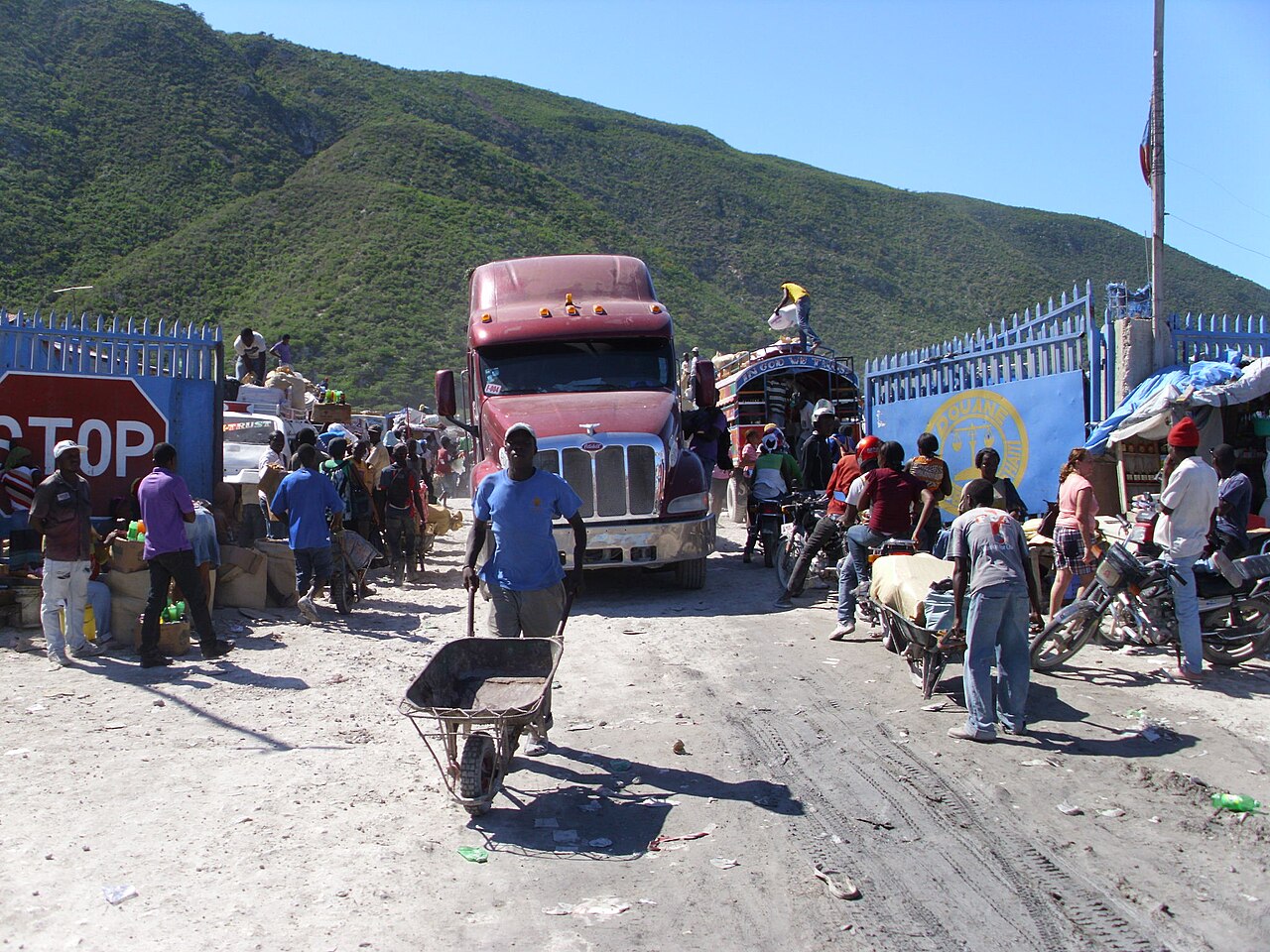
Relations can turn fast. On 15 September 2023 Santo Domingo shut the border by land, sea and air over a Haitian canal on the Massacre River.
The government said the canal breached a 1929 peace treaty by altering a shared river. Trade corridors reopened on 11 October 2023, while visas for Haitians stayed suspended, Diario Libre reported.
Soldiers, a Fence and No Troops Inside Haiti
President Luis Abinader, in office since 2020, presented a border plan called FUERTE, Spanish for strong, in June 2026. Under it, 1,500 more soldiers would join 9,500 already deployed, El Día reported.
A fence covers the most vulnerable stretches, and the defence ministry keeps adding sections. In September 2026 work was extending to Jimaní, a town on the southern half of the border, El Día reported.
In July 2026 Abinader ruled out sending troops to the Gang Suppression Force, the UN-backed mission fighting gangs in Haiti. He offered logistical and medical help instead, The Haitian Times reported.
In May 2026 the Dominican Republic pledged US$20 million to a UN trust fund for that force. Half comes at once and half in 2027, the newspaper Hoy reported.
Migration and Deportations
Haitians are by far the largest immigrant group. The last national immigrant survey, from 2017, counted 497,825 people born in Haiti, or 87.2% of all immigrants.
Deportations are rising. The migration authority, known as the DGM, deported or returned 250,429 Haitians between January and July 2026, Acento reported.
That was 16.2% more than in the same months of 2025. The agency itself has faced scrutiny at home, including a state audit that could not find 150 of its vehicles.
Trade With Haiti and the 2026 Transit Dispute
Haiti is one of the biggest buyers of Dominican goods. It took US$921.5 million of exports in January to August 2026, up 19.4%, according to ProDominicana, the export agency.
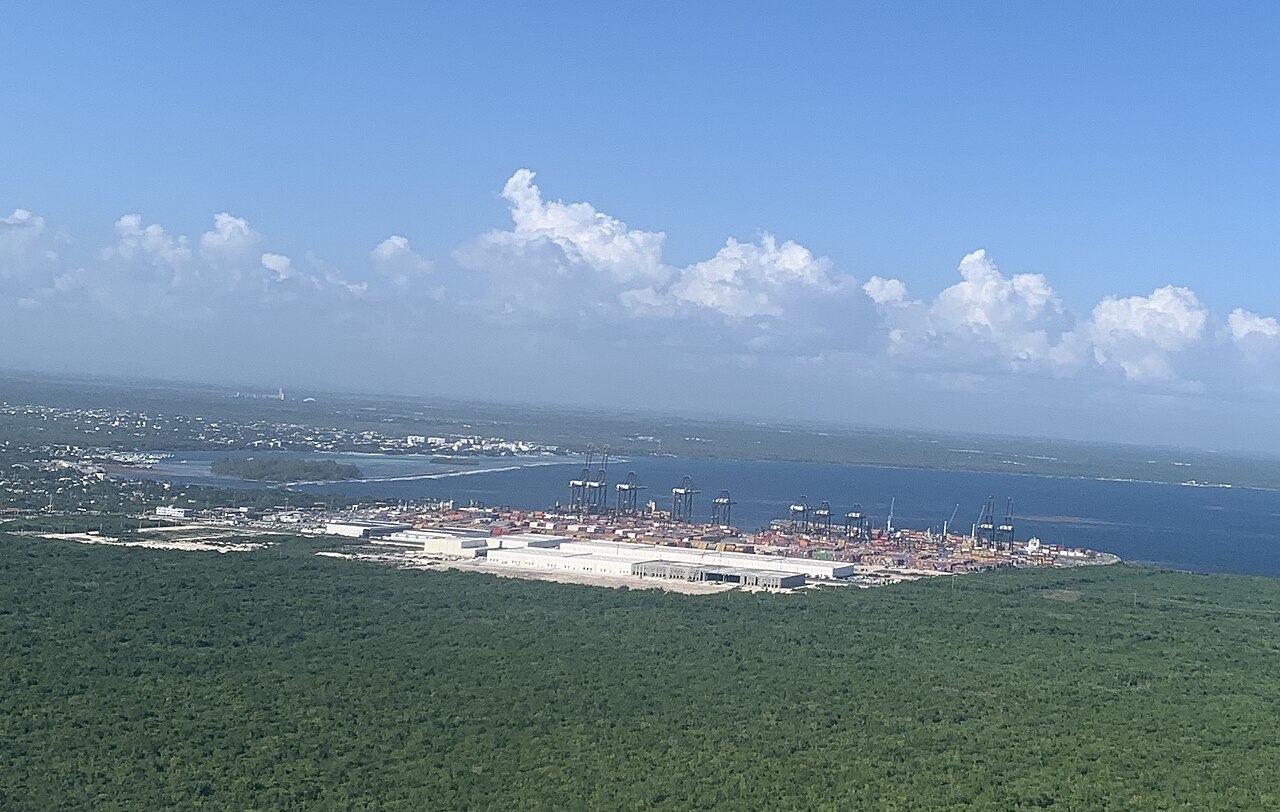
Much foreign cargo for Haiti lands in Dominican ports and crosses by truck instead. Customs director Nelson Arroyo said in September 2026 that insurance can cost double the freight for ships entering Haitian ports.
About 3,900 such containers left for Haiti between January and early September 2026, 50% more than a year earlier, Arroyo estimated.
Friction followed in mid-September 2026, when Haiti began strictly enforcing a 2015 rule that bars 22 Dominican products from its land crossings. The list includes wheat flour and cooking oil.
Abinader declared the impasse settled on 16 September with a short “Eso está resuelto” (“That is resolved”). Two weeks later the dispute moved to foreign goods.
A Haitian finance ministry circular dated 30 September 2026 bars third-country goods from reaching Haiti through Dominican territory, Le Nouvelliste reported. Haiti’s transit ban mainly hits foreign cargo routed through Dominican ports.
Goods made in the Dominican Republic can still cross at official land points. Everything else must arrive directly at Haitian seaports or airports.
Sport then added heat. Haiti beat the hosts 4-1 in Santo Domingo on 1 October 2026, in a match marred by trouble at a stadium gate.
The next day Sports Minister Kelvin Cruz barred Haiti’s national team from Dominican venues, and Abinader backed him.
Puerto Rico and the Mona Passage
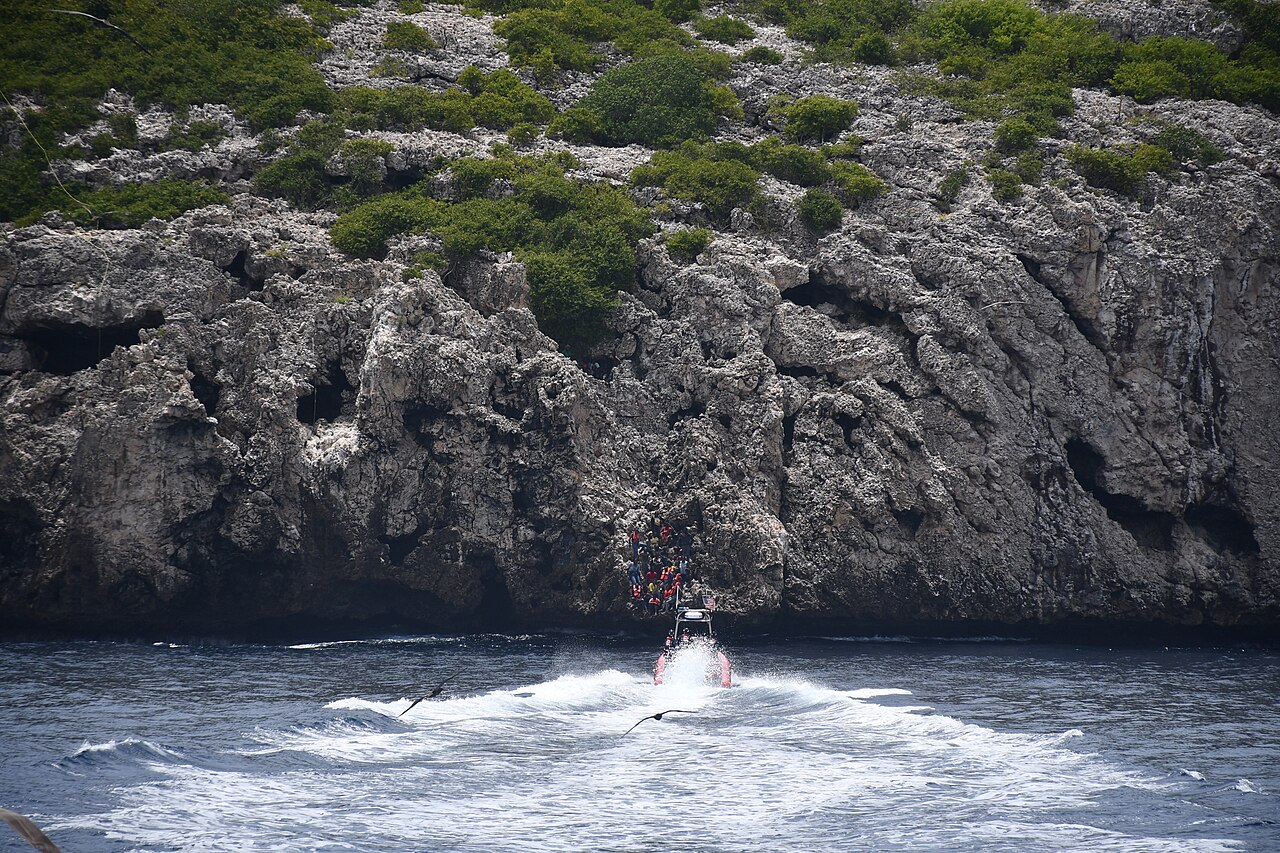
Puerto Rico, a US territory, is the Dominican Republic’s eastern neighbour across the Mona Passage. Migrants cross that strait in small wooden boats called yolas.
The crossings are deadly: in late September 2026 a crowded boat sank near Mona Island, a Puerto Rican nature reserve. The US Coast Guard rescued 40 people and recovered two bodies.
More than 15 people were missing, and survivors estimated about 60 had been aboard the boat that sank off Mona Island.
The Coast Guard sends people caught in the passage back to the Dominican Republic. In early September 2026 it repatriated more than 70, almost all Dominicans, the Spanish news agency EFE reported.
Cuba, Venezuela and the Rest of the Sea Neighbourhood
Cuba
Cuba and the Dominican Republic broke relations in 1960, under the dictatorship of Rafael Trujillo, and restored them on 16 April 1998.
Ties cooled sharply on 13 August 2026, when Santo Domingo told nine members of Cuba’s diplomatic mission to leave, without giving reasons. Cuba’s foreign ministry blamed Dominican submission to US pressure.
The Dominican foreign ministry said it wanted to preserve relations, which were not broken. Dominican exports to Cuba rose 47% in 2025, according to ProDominicana, the export agency.
Venezuela and Colombia
Venezuela suspended consular services with the Dominican Republic on 29 July 2024, and direct flights stopped. Laser Airlines resumed Caracas–Santo Domingo flights on 18 March 2026.
On 2 August 2026 both governments announced they would normalise relations step by step, starting with consulates. On 29 September 2026 the Dominican foreign ministry said preparations to reopen its Caracas consulate were advancing.
Colombia, the other sea neighbour to the south, is a growing market. Dominican exports there rose 110% in 2025, ProDominicana said.
Jamaica, the Bahamas and Turks and Caicos
Jamaica, the Bahamas and Haiti are members of CARICOM, the 15-member Caribbean Community. The Turks and Caicos Islands are an associate member.
The Dominican Republic is not in CARICOM. It deals with these neighbours one to one and through wider forums such as CARIFORUM and the OAS.
Regional Clubs: SICA, CARIFORUM, the OAS and DR-CAFTA
The Dominican Republic has been a full member of SICA, the Central American Integration System, since June 2013. It had been an associated state since December 2003.
It held SICA’s rotating presidency in the first half of 2026. It handed the post to Belize in El Salvador on 25 June 2026.
Instead of CARICOM, it sits with CARICOM’s 14 independent states and Cuba in CARIFORUM. That forum negotiates the region’s trade with the European Union.
Through CARIFORUM it is party to a trade pact with the EU. The pact has applied provisionally since December 2008, the European Commission says.
It is a member of the OAS, the Organization of American States, the hemisphere’s main political forum. It was due to host the Summit of the Americas in Punta Cana in December 2025.
On 3 November 2025 the government postponed that summit, citing deep divisions in the region. As of October 2026, the summit’s own calendar listed Punta Cana as postponed to 2026, with no date.
ECLAC, the UN’s economic commission for the region, chose Santiago de los Caballeros, a northern Dominican city, for its 41st session. It was set for 7-9 October 2026.
With the United States, the key framework is DR-CAFTA, a free-trade pact signed on 5 August 2004. It took effect for the Dominican Republic on 1 March 2007.
The other parties are the United States, Costa Rica, El Salvador, Guatemala, Honduras and Nicaragua. The US Trade Representative puts US goods and services trade with the Dominican Republic at an estimated US$34.2 billion in 2025.
Where the Dominican Republic Leads and Where It Follows
In its own neighbourhood the Dominican Republic acts as a hub. Its ports handle Haiti-bound cargo, and its exports reached a record US$10.56 billion in January to August 2026, ProDominicana said.
It also convenes the region: it chaired SICA in early 2026 and was chosen to host the October 2026 ECLAC session. As of October 2026 it remained the named host of the next Summit of the Americas.
On security and diplomacy it mostly follows Washington. In May 2026 it let US aircraft and personnel use Las Américas airport and San Isidro air base until 31 October 2026.
That month it also agreed to receive up to 30 non-Haitian deportees monthly from the United States, in transit only. Washington pays the cost, the foreign ministry said.
On Haiti it keeps its own line: a hard border, mass deportations and money for the UN force, but no soldiers.
What It Means for US Readers
In goods, the United States sells far more to the Dominican Republic than it buys. In 2025 US exports were US$12.9 billion and imports US$7.6 billion, Census Bureau data show.
That left a US$5.3 billion surplus, and in January to July 2026 exports of US$8.7 billion outpaced imports of US$4.5 billion. Services run the other way: the US bought an estimated US$9.9 billion of Dominican services in 2025 and sold US$3.8 billion.
Haiti’s crisis reaches the United States through its Dominican neighbour. Deportations, migrant boats towards Puerto Rico and Haiti-bound cargo all pass through or near Dominican territory.
For investors and shippers, the sharpest risks come from Dominican Republic neighbours, above all Haiti. The 2023 closure halted cross-border trade for nearly four weeks.
What Is Not Known
Relations with several Dominican Republic neighbours are in flux. It is unclear how strictly Haitian customs will enforce the transit ban, or how Dominican ports will adjust.
As of October 2026, no new date had been set for the Summit of the Americas in Punta Cana. The permit for US aircraft at Dominican airports ran to 31 October 2026, with no renewal announced by early October.
Haiti’s electoral council has set a first round of elections for 13 December 2026. It says the timetable depends on security and funding, Vant Bèf Info reported.
Nobody knows precisely how many Haitians now live in the Dominican Republic, because the last national immigrant survey dates from 2017. The reopening of the Dominican consulate in Caracas had no date as of late September 2026.
Frequently Asked Questions
Which countries border the Dominican Republic?
Only Haiti, by land, along a 391-kilometre line on Hispaniola. The other Dominican Republic neighbours are across the sea, including Puerto Rico, Cuba, Jamaica, the Bahamas, the Turks and Caicos Islands, Colombia and Venezuela.
Is the Dominican Republic part of CARICOM?
No. It works with CARICOM through CARIFORUM, which groups CARICOM’s independent states, Cuba and the Dominican Republic for trade with the EU. It is a full member of SICA, the Central American Integration System.
How many Haitians does the Dominican Republic deport?
The migration authority deported or returned 250,429 Haitians from January to July 2026, Acento reported. That was 16.2% more than in the same period of 2025.
What is DR-CAFTA?
It is a free-trade agreement between the United States, five Central American countries and the Dominican Republic, signed in 2004. It took effect for the Dominican Republic on 1 March 2007.
Is the Dominican Republic sending troops to Haiti?
No. In July 2026 President Luis Abinader ruled out troops for the UN-backed Gang Suppression Force and offered logistical and medical help. In May 2026 his government pledged US$20 million to a UN trust fund for the force.
How do the Dominican Republic neighbours Puerto Rico and Cuba differ?
Puerto Rico is a US territory and the target of migrant boats crossing the Mona Passage. Cuba is a one-party state whose ties with Santo Domingo cooled after the Dominican government told nine Cuban diplomats to leave in August 2026.
Sources: Office of the US Trade Representative, Dominican Republic, accessed October 2026; US Census Bureau, trade in goods with the Dominican Republic, data to July 2026; UN Division for Ocean Affairs and the Law of the Sea, Dominican Republic, accessed October 2026; Presidency of the Dominican Republic, exports January-August 2026, 14 September 2026; Presidency of the Dominican Republic, SICA presidency, 26 June 2026; Presidency of the Dominican Republic, Cuban diplomatic mission, 13 August 2026; Diario Libre, full SICA membership, 27 June 2013; CARICOM, CARIFORUM, accessed October 2026; CARICOM, member states and associate members, accessed October 2026; European Commission, EU trade with the Caribbean, accessed October 2026; Summit of the Americas Secretariat, 2026 calendar, accessed October 2026; ECLAC, 41st session, 22 September 2026; Le Nouvelliste, Gang Suppression Force mandate extended, 29 September 2026; ONE and UNFPA, National Immigrant Survey ENI-2017, 2018; Le Nouvelliste, transit ban, 2 October 2026; Diario Libre, customs controls on Haiti transit, 1 September 2026; Diario Libre, US airport permit, 13 May 2026; Acento, deportations January-July 2026, 21 August 2026; Listín Diario, border wall and 391 km border, 1 September 2026.
This article was produced by The Rio Times’ automated newsroom system. How we use AI · Report an error · Editorial responsibility: Matthias Camenzind, Editor-in-Chief