Religion in Dominican Republic Explained

DOMINICAN REPUBLIC · RELIGION
Key Facts
- —What is happening A 1954 concordat gives the Catholic Church special status, evangelical churches are growing, and Carlos Morel Diplán succeeded Francisco Ozoria Acosta as archbishop of Santo Domingo on Monday, 12 October 2026.
- —Why it matters Faith shapes Dominican law, from a near-total abortion ban in the penal code in force since 3 August 2026 to Catholic holidays and the Catholic religion classes the concordat requires in public schools.
- —The numbers Catholics were 48% of Dominicans in a 2017 survey, down from 65% in 2013, while evangelicals were 21% and 28% said they had no religion or were atheist or agnostic.
- —Who is who Archbishop Carlos Morel Diplán heads the Santo Domingo archdiocese, President Luis Abinader governs under the 1954 concordat, and evangelical groups such as CODUE opposed the abortion challenge.
- —What to watch Watch for the Constitutional Court ruling on the abortion challenge, any reform of the 1954 concordat, and the Ministry of Labor’s 2027 holiday list.
- —What it means for you Visitors should expect closures on Catholic holidays such as 21 January and 24 September, and US church groups should check current entry rules with a Dominican consulate before travel.
A 1954 treaty gives Catholicism special status, evangelical churches are growing and faith now shapes the criminal code. Here is how religion works in the country in October 2026.
Dominican Republic religion is dominated by the Catholic Church, which holds special status under a 1954 agreement with the Holy See. Evangelical churches have grown fast, and surveys show a rising share of Dominicans with no religion.
On Monday, 12 October 2026, Pope Leo XIV accepted the resignation of Archbishop Francisco Ozoria Acosta of Santo Domingo. Carlos Morel Diplán, until then coadjutor archbishop with right of succession, now leads the capital’s archdiocese.
More coverage sits on the Rio Times Dominican Republic page. This guide covers the main faiths, their political weight, festivals and daily life as of 23 October 2026.
Dominican Republic Religion in Numbers
No official census count of faiths could be confirmed, so surveys fill the gap. The Pew Research Center survey, fielded from October 2013 to February 2014, put Catholics between one-half and two-thirds of Dominicans.
In the same Pew study, 18% of Dominicans said they had no particular religion. The report text opened for this guide gives no exact Catholic or Protestant share for the country.
Latinobarómetro, a regional opinion survey, found 48% Catholic, 21% evangelical and 28% with no religion, atheist or agnostic in 2017. Diario Libre reported the results in January 2018.
The same series had Catholics at 65% in 2013 and 64% in 1995. That is a fall of 17 points between 2013 and 2017, though surveys differ and margins call for care.
Other published estimates are far apart, so no single figure is settled. Latinobarómetro results after 2017 could not be confirmed for this guide.
The Catholic Church and the 1954 Concordat
A 1954 concordat with the Holy See, the Vatican’s governing body, says the Catholic religion remains that of the Dominican nation. The text, posted by the Foreign Ministry, guarantees the Church the rights and prerogatives of divine and canon law.
The 2015 constitution separately guarantees freedom of conscience and religion, limited by public order and good customs. Its preamble invokes God, and the national motto is God, Country and Liberty.
The coat of arms displays an open Bible, set at the Gospel of John, chapter 8, verse 32. Christian language is written into the state itself.
Under the concordat, clergy, seminarians and religious are exempt from military service, except in a general mobilization. The text also commits the state to a monthly subsidy toward the administration of each diocese.

The state must also provide religious assistance in public institutions such as prisons, where a priest may enter to minister. A corps of military chaplains is placed under the jurisdiction of the Metropolitan Archbishop.
Public primary and secondary schools must teach Catholic religion and morals under article XXII, and parents may request exemption in writing. How far schools apply that rule today was not confirmed.
UNESCO inscribed Santo Domingo’s Colonial City in 1990 and says it became the site of the first cathedral in the Americas. For the colonial background, read the Rio Times history guide.
On Monday, 12 October 2026, the Holy See Press Office bulletin recorded that Pope Leo XIV accepted Archbishop Ozoria Acosta’s resignation. Morel Diplán, bishop of La Vega since 2024, had been coadjutor of Santo Domingo since Saturday, 18 October 2025.
The bulletin also named Morel Diplán military ordinary for the Dominican Republic, who oversees Catholic pastoral care for the armed forces. It accepted Ozoria Acosta’s resignation from that ordinariate as well.
Revista Mercado reported that Pope Francis named Ozoria Acosta archbishop of Santo Domingo on 4 July 2016. El Día reported that he turned 75, the age for submitting a resignation, on 10 October 2026.
Evangelical and Protestant Churches
Evangelical Protestants were 21% of Dominicans in the 2017 Latinobarómetro survey, as Diario Libre reported. The evangelical council CODUE has cited a figure near 30%, elDinero reported in 2022.
That higher figure is a claim by an interested group, not a census result. CODUE stands for the Consejo Dominicano de Unidad Evangélica.
Weddings show another side. The statistics office ONE recorded 44,349 marriages in 2024, and 4.81% took place in other religions; El Día said most were evangelical.
Evangelical bodies are active in public debate. CODUE and the Alianza Evangélica Dominicana joined the Constitutional Court case against the abortion challenge, Diario Libre reported.
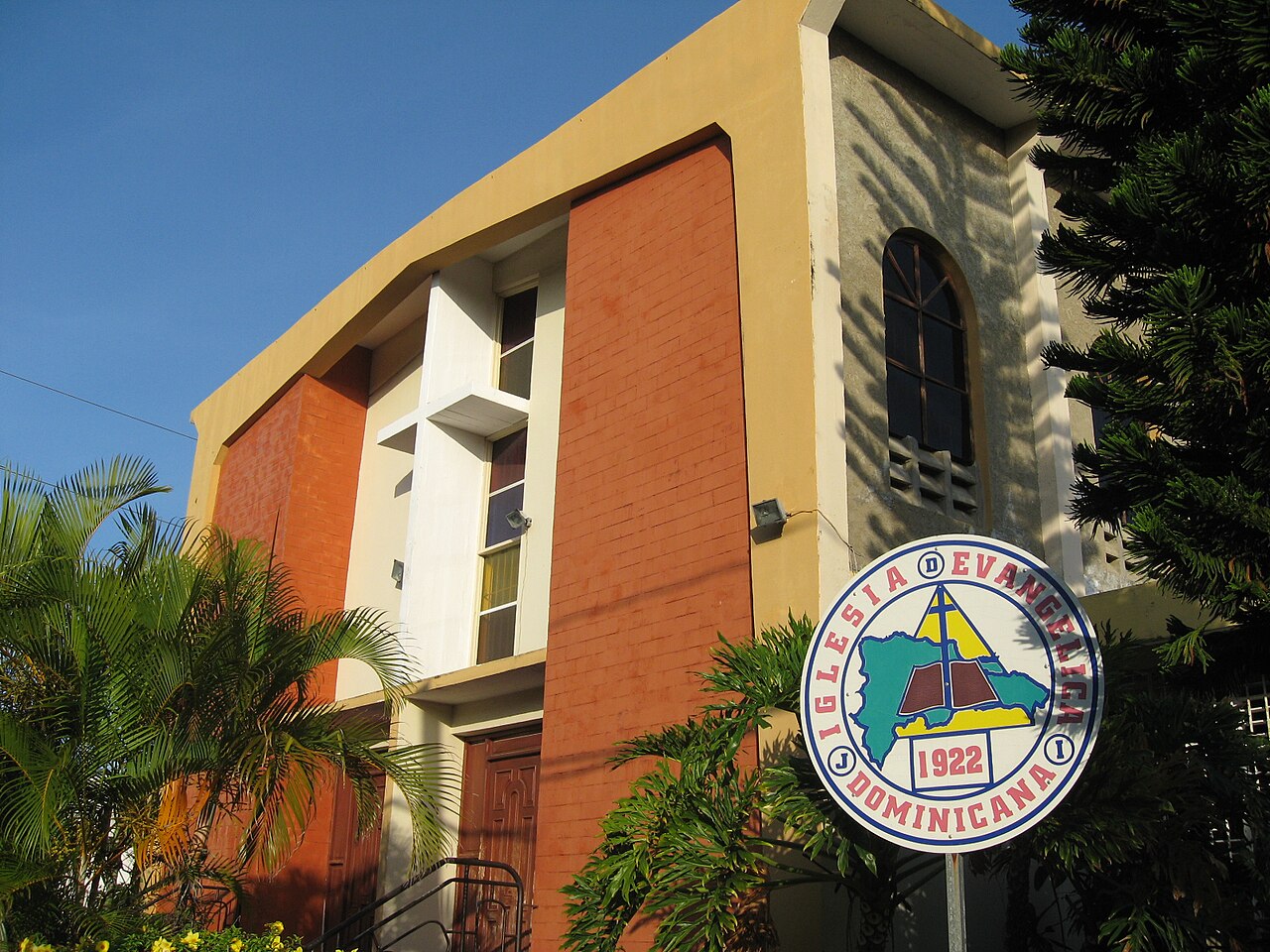
Other Faiths and Afro-Dominican Tradition
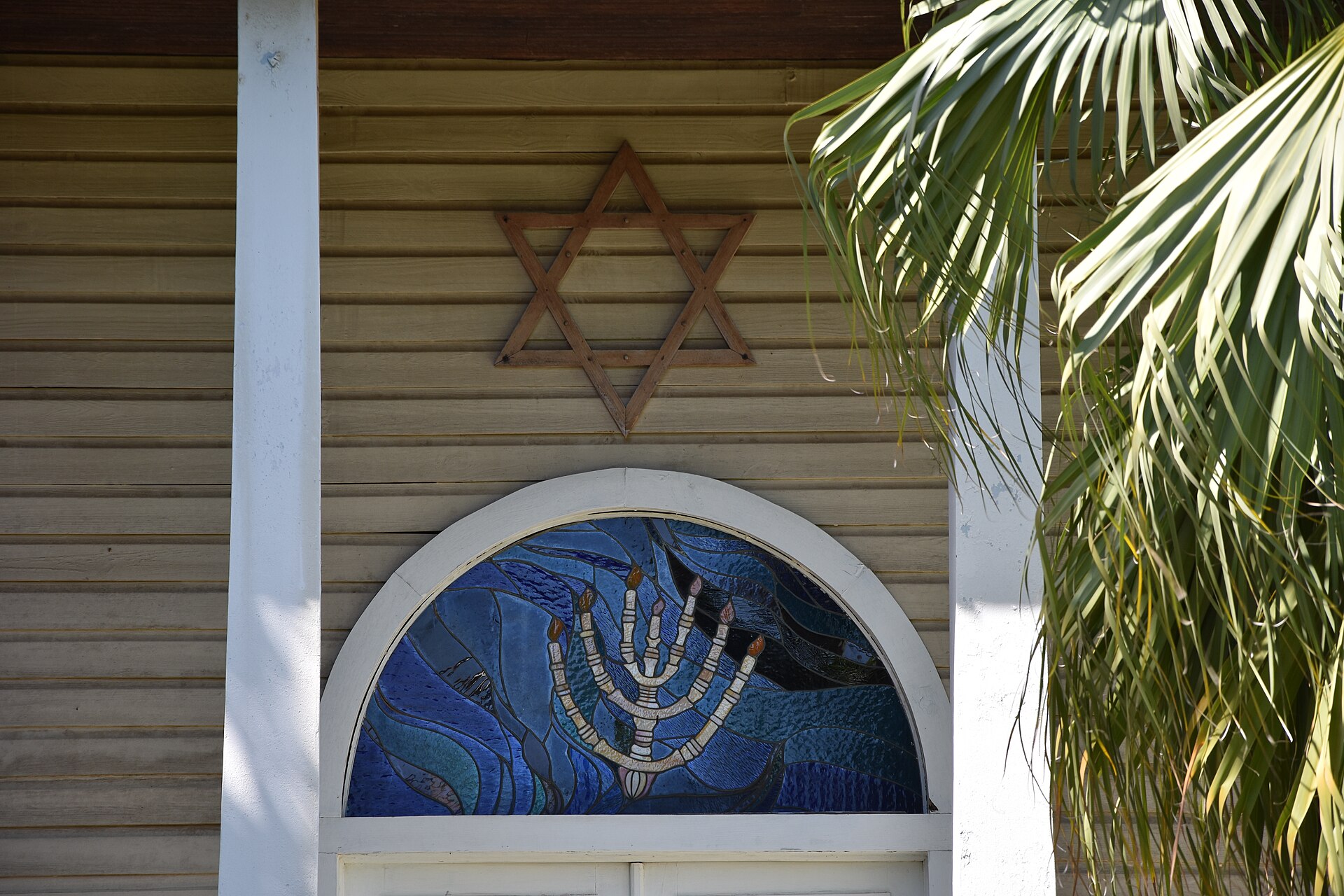
Jewish refugees from Germany and Austria founded an agricultural settlement at Sosúa between 1940 and 1947. About 750 settled there, the Jewish Telegraphic Agency reported in 2023.
The Sosúa synagogue, built in the early 1940s, was by 2023 open only for the high holidays. The town’s Jewish museum was then closed for repairs, and its current status was not confirmed.
The 2017 National Immigrant Survey counted 497,825 Haitian-born residents, Diario Libre reported in April 2018. The count alone says nothing about their faiths, and the population and ethnic groups guide sets out the wider picture.
UNESCO lists the cultural space of the Brotherhood of the Holy Spirit of the Congos of Villa Mella, inscribed in 2008. Its congos music is played at the Pentecost festival and at funerals.
UNESCO says African slaves and people of mixed origin founded the brotherhood in the sixteenth century. It is open to all without distinction of sex or origin.
At the Banko ceremony three years after a death, mourners dance to congos music as the deceased becomes an ancestor. UNESCO says prejudice and urban growth threaten the tradition.
Faith, Law and Politics
Article 37 of the constitution says the right to life is inviolable from conception until death. That wording features in the case against the penal code’s abortion rules.
The new penal code, Law 74-25, was promulgated on 3 August 2025 and took effect on Monday, 3 August 2026. It replaced a code in force since 1884, Diario Libre reported.
The code allows one exemption, when the life of the mother, the fetus or both is at risk, El Día reported. Article 111 sets out that exemption for health personnel.
President Abinader said on Wednesday, 6 August 2025, that “there are religious issues you cannot impose.” El Día reported the remark from a weekly lunch with a media group, as he discussed a code without the three grounds.
On Wednesday, 17 June 2026, the Constitutional Court heard a challenge to the code’s abortion articles, including 110 and 111. It left the case ready for a ruling, Diario Libre reported, under number TC-01-2026-0014.
The petitioners want three grounds recognized: risk to the woman’s life or health, rape or incest, and fetal malformation incompatible with life. They include Alianza Cristiana Dominicana and Católicas por el Derecho a Decidir República Dominicana.
The Archdiocese of Santo Domingo, CODUE and the Alianza Evangélica Dominicana joined the case against the challenge. INTEC, a Santo Domingo university, backed it through its gender studies centre.
The country’s bishops issued a statement on Friday, 19 June 2026, voicing deep concern over initiatives before the Court. The Catholic news agency ACI Prensa carried the text.
How such fights reach voters is covered in the power structure guide and the media landscape guide. The Court’s ruling was not found in searches as of 23 October 2026.
Festivals and Holy Days
Law 139-97 moves some holidays to the nearest Monday, so Epiphany shifted from Tuesday, 6 January to Monday, 5 January 2026. Altagracia, Good Friday, Corpus Christi and Mercedes were not moved that year.
El Caribe carried the Ministry of Labor’s 2026 list on 5 November 2025, with Altagracia on Wednesday, 21 January. Good Friday fell on 3 April, Corpus Christi on 4 June, Mercedes on 24 September and Christmas on 25 December.
Our Lady of Altagracia is honored on 21 January, when Diario Libre says the largest crowds visit the Higüey basilica. By Tuesday, 20 January 2026, dozens of faithful had set up tents around the church, El Día reported.
Many pilgrims walk long distances, and some carry crosses or light candles, El Día said. The army, police, Civil Defense and Red Cross staffed the site, and no crowd count for 21 January 2026 was found.
Tradition holds that brothers Alonso and Antonio de Trejo brought the image from Spain in the early sixteenth century. Canon Luis Gerónimo de Alcocer de Ocampo recorded its arrival, El Día said.
The Higüey basilica took 17 years to build and opened on 21 January 1971 under President Joaquín Balaguer, Diario Libre reported. The paper adds that Haitian devotees attend and a Mass is said in Haitian Creole.
Pentecost carries the Holy Spirit festival of the Villa Mella brotherhood, with prayers, dances and a procession carrying a dove, UNESCO records. The same music accompanies funerals.
The Ministry of Labor’s 2027 list was not available as of 23 October 2026. Under Law 139-97, movable holidays such as Epiphany may shift to a Monday again.
Faith in Daily Life
Most Dominicans marry in civil ceremonies. ONE recorded 44,349 marriages in 2024, of which 89.43% were civil, 5.76% Catholic and 4.81% in other religions, El Día reported.
In 2023 the same count was 47,027 marriages, with about 5% Catholic, elDinero reported. The Catholic share of weddings is therefore small even though the Church keeps its concordat status.
Catholic and Protestant groups praised the single exemption, El Día reported, while feminist groups called it a serious setback for human rights. The split shows how faith and gender politics now meet.
What It Means for US Readers
Offices and many businesses close on Catholic holidays such as 21 January, Good Friday and 24 September. The Higüey shrine draws its largest crowds around 21 January, so travelers should book transport early.
US church groups and missionaries should check current entry rules with the Dominican Foreign Ministry or a consulate before travel. This guide could not confirm visa categories for religious work.
The penal code in force since Monday, 3 August 2026 keeps abortion illegal apart from the exemption in article 111. Travelers should not assume clinics offer it.
The constitution guarantees freedom of conscience and religion, limited by public order and good customs. Evangelical, Jewish and other congregations hold services in the country.
What Is Not Known
No census count of faiths was found, and the newest survey figures confirmed here date from 2017. No later Latinobarómetro or Pew figure for the Dominican Republic was confirmed.
The Constitutional Court’s ruling on the abortion challenge was not found as of 23 October 2026. The 2027 holiday list was also not available.
The role of any presidential liaison to Protestant churches in October 2026 was not confirmed, so none is named. No source was found for the number of Vodou practitioners, and no crowd count for 21 January 2026 exists.
Frequently Asked Questions
What is the main religion in the Dominican Republic?
Catholicism is the largest, at 48% in the 2017 Latinobarómetro survey, Diario Libre reported. Evangelicals were 21% and 28% reported no religion, atheism or agnosticism.
Is Catholicism the official religion?
A 1954 concordat says the Catholic religion remains that of the Dominican nation, giving the Church special status. The 2015 constitution also guarantees freedom of conscience and religion.
Who leads the Catholic Church in the Dominican Republic?
Carlos Morel Diplán became archbishop of Santo Domingo on 12 October 2026, succeeding Francisco Ozoria Acosta. He is also military ordinary.
What is the biggest religious festival?
Our Lady of Altagracia on 21 January, a national holiday, draws the largest crowds to the Higüey basilica, Diario Libre says. In 2026 it fell on a Wednesday.
Is abortion legal in the Dominican Republic?
No, except under article 111 when a pregnancy endangers the life of the mother, the fetus or both. The Constitutional Court heard a challenge on 17 June 2026.
Can foreigners practice other religions?
Yes, the constitution guarantees freedom of conscience and religion, limited by public order and good customs. Evangelical, Jewish and other congregations hold services in the country.
Sources: Holy See Press Office bulletin, 12 October 2026; Concordat with the Holy See, 1954 (Foreign Ministry text); Constitution of 2015 (Constitute Project text); Pew Research Center, Religion in Latin America, 2014; Diario Libre, Latinobarómetro 2017; El Caribe, Ministry of Labor 2026 holidays; UNESCO, Congos of Villa Mella; UNESCO, Colonial City of Santo Domingo; El Día, ONE marriages 2024; elDinero, ONE marriages 2023; elDinero, religion surveys 2022; Diario Libre, National Immigrant Survey 2017; Jewish Telegraphic Agency, Sosúa; Diario Libre, new penal code; Diario Libre, Constitutional Court hearing; Diario Libre, Altagracia devotion; El Día, Abinader on abortion grounds; El Día, Higüey basilica; ACI Prensa, bishops’ statement; Revista Mercado, Morel Diplán (all accessed 23 October 2026).
This article was produced by The Rio Times’ automated newsroom system. How we use AI · Report an error · Editorial responsibility: Matthias Camenzind, Editor-in-Chief
Expat Guide to Dominican Republic
What The Rio Times publishes for foreigners who live in or move to Dominican Republic.
Start here
- Dominican Republic Security and Crime Explained 2026
- Best Places to Live in the Dominican Republic 2026
- Cost of Living Santo Domingo 2026 — Rent and the Power Question
- Healthcare in the Dominican Republic 2026: What Foreigners Can Actually Get
City guides
Coming up in Dominican Republic
- Soy Luna Plays Santo Domingo on 31 October 2026 31 Oct
- Eladio Carrion in Santiago, Dominican Republic, 31 October 31 Oct
- Keinemusik's &ME Plays Santo Domingo on 31 October 31 Oct
- Afro Fest Punta Cana 2026 in the Dominican Republic: Afro Nation's Afrobeats Weekender on November 6–8 6 Nov
Understand Dominican Republic