
HAITI · EXPLAINER
Live updates: Haiti crisis, every story as it happens →
A guide to Haiti’s overlapping security, political and humanitarian crises and why they matter to the United States.
Armed gangs control large parts of Port-au-Prince and are spreading into rural areas, displacing nearly 1.5 million people. Haiti has had no elected president since July 2021 and no national vote since 2016.
This page gathers essential reporting on Haiti’s security, political, humanitarian and border crises for US readers. The guide covers who governs, who controls territory, why elections are stalled and what Washington is doing.
Key Facts
- —The country Haiti, a Caribbean nation of more than 11 million people, shares the island of Hispaniola with the Dominican Republic.
- —The crisis Armed gangs control large parts of Port-au-Prince and are spreading into rural areas, displacing nearly 1.5 million people.
- —The government Prime Minister Alix Didier Fils-Aimé leads a transitional executive; Haiti has had no elected president since July 2021.
- —The election The 13 December 2026 presidential and legislative vote has been postponed indefinitely, according to the UN, after the electoral council delayed the campaign on 6 October 2026 and promised a new calendar.
- —The security force A UN-authorised Gang Suppression Force had 1,563 uniformed members as of 12 October, below its 5,500 ceiling for uniformed personnel.
In Plain English
- Transitional executive: A temporary governing arrangement meant to restore security and organise elections until an elected government returns.
- Gang Suppression Force: A UN-authorised international security mission that supports Haitian police against armed groups.
- Internally displaced people: People forced to flee their homes but still living inside their own country.
- Temporary Protected Status: A US shield from deportation with a work permit, which ended for Haitians in July 2026.
- Provisional Electoral Council: Haiti’s electoral authority, known as the CEP, responsible for organising and running elections.
How Haiti Got Here
President Jovenel Moïse was assassinated at his home near Port-au-Prince in July 2021. The killing deepened an already severe constitutional and political crisis and left Haiti without a functioning elected national government.
Armed groups subsequently expanded their control across Port-au-Prince and key transport corridors. The most powerful coalition is Viv Ansanm, an alliance of major gangs that has coordinated attacks against police stations, prisons, government facilities and neighborhoods.
Haiti has not held national elections since 2016. A transitional system was created after Prime Minister Ariel Henry resigned in 2024.
The current transition is intended to restore security, organize elections and return the country to elected government. Insecurity and institutional weakness have repeatedly extended the process.
Who Controls What
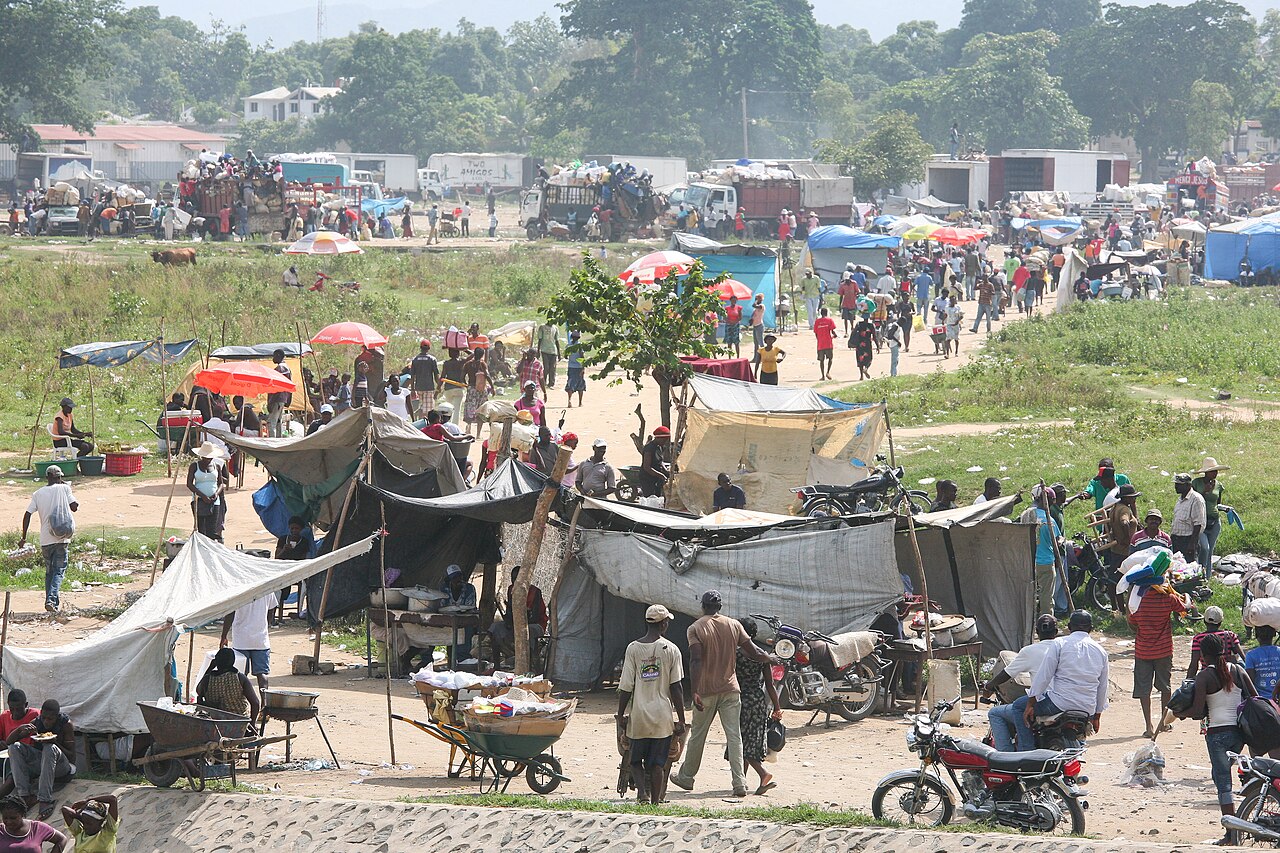
Armed groups control or contest large parts of metropolitan Port-au-Prince, including neighborhoods and roads around Croix-des-Bouquets and the Plaine du Cul-de-Sac. Four Salvadoran personnel disappeared on 18 October in Croix-des-Bouquets, east of the capital.
The Haitian National Police remains the country’s principal domestic security institution. It works with international forces but faces shortages of personnel, equipment and secure operating space.
The transitional government retains formal sovereignty and international recognition, but its practical authority is limited in many parts of the capital. The Gang Suppression Force conducts security operations with Haitian authorities but does not independently govern territory.
The 18 October attack illustrates the gap between formal authority and operational control. Foreign personnel serving an international security mission were attacked in an area where armed groups remained sufficiently strong to obstruct ground and air searches.
Elections
Presidential and legislative elections had been scheduled for 13 December 2026. On 6 October the electoral council delayed the start of the campaign, extended candidate registration to 31 October and said a new calendar would follow, and the UN describes the vote as postponed indefinitely.
The UN has cautioned against assigning a new date without first determining whether voting can be conducted safely and credibly.
The electoral authority is Haiti’s Provisional Electoral Council, known as the CEP. As of 5 October, only 759,257 potential voters appeared on the electoral lists, compared with an estimated electorate of approximately 6.5 million.
The vote is therefore not simply a calendar problem. Haiti must still resolve whether polling stations can operate outside protected areas and how displaced people will register and vote.
The unresolved status of the 13 December vote is central to the wider power vacuum. Without elections, the transition has no clear route back to normal constitutional government.
The Gang Suppression Force
The Gang Suppression Force is an international security mission that the UN Security Council authorised on 30 September 2025 in Resolution 2793, replacing the Kenya-led mission, to support Haitian authorities against armed groups. It is backed by the United States and operates with the Haitian police and other Haitian institutions.
The force remains below the level originally authorized. As of 12 October, it had 1,563 uniformed members, far fewer than the 5,500 authorized by the Security Council.
El Salvador has sent special forces to Haiti to search for four missing Salvadoran aviation technicians. Other contributors include Chad, Jamaica, Guatemala and Bangladesh, which sent 50 soldiers who arrived on 15 October.
Kenya led the earlier mission, which the new force replaced.
The Salvadoran personnel involved in the 18 October incident were aviation technicians from Task Force Libertad II. President Nayib Bukele said their primary duties involved medical evacuation and saving lives rather than conducting offensive operations.
The Dominican Border
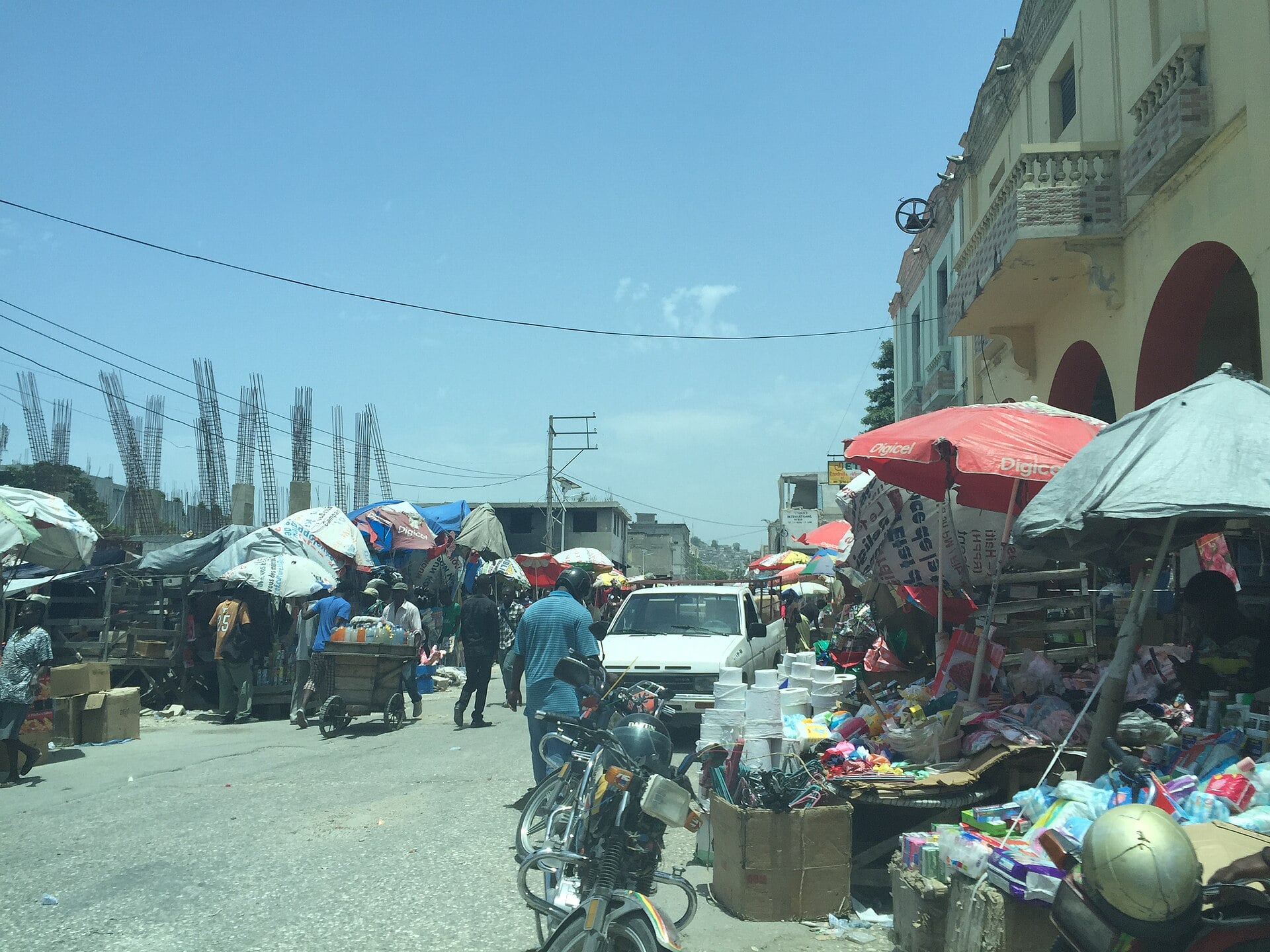
The Dominican Republic shares the island of Hispaniola with Haiti and has responded to the crisis with increased military deployment along its border, tighter entry controls and deportations of Haitians.
The border has become a major point of tension because the Dominican Republic is trying to prevent unauthorized entry while Haiti’s crisis is driving displacement and migration. Detentions and deportations have drawn criticism from humanitarian and rights organizations.
Dominican authorities present border enforcement as a matter of national security. The government said on 22 October that more than 10,000 military personnel are deployed at the border.
The border issue is linked directly to the wider crisis. Haitian insecurity pushes people toward safer areas and across the border, while Dominican authorities fear gang infiltration, trafficking and uncontrolled migration.
The Humanitarian Crisis
Nearly 1.5 million people have fled their homes inside Haiti, including more than 740,000 children. These are internally displaced people, many of whom are living in overcrowded temporary sites with limited water, sanitation, food and medical care.
Between July and early October 2026, violence linked to armed groups killed 1,123 people and injured 440, according to the latest UN Secretary-General report presented to the Security Council.
The crisis is also economic. The UN says its 2026 humanitarian plan for Haiti is only about half funded.
Hunger is aggravated by insecurity because gangs restrict movement, disrupt markets, block roads and interfere with agricultural production. The humanitarian emergency and security emergency reinforce each other.
US Policy and Migration
The United States treats Haiti as a high-risk destination and maintains a Level 4: Do Not Travel advisory. US policy combines support for international security operations with restrictions and migration measures.
The major policy questions include US logistical, diplomatic and security support for the Gang Suppression Force, deportation flights involving Haitian nationals, and the end of Temporary Protected Status for Haitians in the United States.
Duty-free access for Haitian clothing and other goods under the HOPE trade programme has been extended to 31 December 2028. Assistance to the Haitian National Police remains a priority for Washington.
Travel and Safety for Americans
Americans are advised not to travel to Haiti because of kidnapping, terrorism, civil unrest, crime, gang violence and limited emergency assistance. The danger is especially acute in and around Port-au-Prince, where armed groups control or contest major roads and neighborhoods.
Travelers already in Haiti should avoid demonstrations, gang-controlled areas and unnecessary road movement. They should shelter in place during clashes or reports of armed operations.
Keep passports, medication, water and communications equipment ready. Follow US Embassy security instructions and do not attempt to cross checkpoints controlled by armed groups.
The disappearance of the Salvadoran personnel demonstrates that even members of an international security mission can be exposed while traveling in the capital’s metropolitan area.
What It Means for US Readers
The United States has a direct stake in Haiti’s stability because the country sits close to US shores and is a major source of migration pressure. Washington backs the Gang Suppression Force and the transitional government led by Prime Minister Alix Didier Fils-Aimé.
Duty-free access for Haitian clothing under the HOPE programme runs to 31 December 2028. Migrants sent home US$4.1 billion in 2024.
The US State Department keeps Haiti at Level 4, Do Not Travel, its highest warning. An FAA order bars US airlines from flying below 10,000 feet over Port-au-Prince until 2 March 2027.
About 350,000 Haitians held Temporary Protected Status, a US shield from deportation with a work permit, which ended in July 2026 after the Supreme Court in June let the termination go ahead. The loss of that status puts at risk the remittances that support much of the Haitian economy.
What Is Not Known
The whereabouts and condition of the four missing Salvadoran aviation technicians remain unknown as of 23 October 2026. President Nayib Bukele says gangs are holding the four as hostages, but that has not been independently confirmed, and no gang has been named as responsible.
The electoral council has not published a new calendar, so it is unknown when, or whether, a vote can be held safely. The full scale of civilian casualties and displacement is also uncertain, because insecurity restricts access and reporting, particularly in rural areas.
For the full picture, follow our dossier on Haiti in crisis. Related explainers: Haiti Gang Crisis Explained and Haiti’s December Vote, What US Travellers Need to Know.
Frequently Asked Questions
Who governs Haiti right now?
Prime Minister Alix Didier Fils-Aimé has held sole executive authority since 7 February 2026, when the transitional presidential council ended. Haiti has had no elected president since July 2021 and no national vote since 2016.
Why was the December 2026 election postponed?
On 6 October 2026 the Provisional Electoral Council delayed the campaign and said it would publish a new electoral calendar. As of 5 October, only 759,257 potential voters were on the lists out of an estimated electorate of 6.5 million.
What is the Gang Suppression Force?
The Gang Suppression Force is a UN-authorised international security mission that supports Haitian police against armed groups. It had 1,563 uniformed members as of 12 October, far below its authorized ceiling of 5,500.
How many people are displaced in Haiti?
Nearly 1.5 million people have fled their homes inside Haiti, including more than 740,000 children. Many are living in overcrowded temporary sites with limited water, sanitation, food and medical care.
Is it safe for Americans to travel to Haiti?
No. The US State Department maintains a Level 4: Do Not Travel advisory for all of Haiti because of kidnapping, crime, civil unrest and gang violence. An FAA order bars US airlines from flying below 10,000 feet over Port-au-Prince until 2 March 2027.
What is the Dominican Republic doing about the border?
The Dominican Republic has deployed more than 10,000 military personnel along the border and tightened entry controls. The Army detained 12,556 Haitians in irregular migration status between 21 September and 17 October 2026.
Sources: UN News (Secretary-General report to the Security Council) · US State Department, Haiti travel advisory · The Haitian Times, electoral campaign delayed · Diario Libre, Dominican government on the border · Jamaica Observer
This article was produced by The Rio Times’ automated newsroom system. How we use AI · Report an error · Editorial responsibility: Matthias Camenzind, Editor-in-Chief
Expat Guide to Haiti
What The Rio Times publishes for foreigners who live in or move to Haiti.
Start here
Coming up in Haiti
Understand Haiti
Haiti
- Haiti Gang Crisis Explained 2026 Gangs and the UN Force
- Haiti’s 13 December Vote, What US Travellers Need to Know