Dominican Republic Population and Ethnic Groups Explained

DOMINICAN REPUBLIC · POPULATION
Key Facts
- —The basics The Dominican Republic, which shares the island of Hispaniola with Haiti, counted 10,760,028 residents in its 2022 census, and the most common self-description in surveys is indio, an everyday colour label for an intermediate skin tone.
- —Why it matters Growth has slowed to about 1.1% a year while the country ages, and two migrations, Haitians arriving to work and Dominicans leaving for the United States, shape its labour market, politics and remittances.
- —The numbers The 2022 census found 223 people per square kilometre and 35.3% of residents in Greater Santo Domingo. The 2017 immigrant survey counted 847,979 people of foreign origin, 8.3% of residents, and about 2.7 million US residents have Dominican roots.
- —Who is who The national statistics office (ONE) runs the census, the migration directorate (DGM), led by Vice Admiral Luis Rafael Lee Ballester, enforces entry and residence rules, and President Luis Abinader leads the government.
- —What to watch Whether a newer national immigrant survey replaces the 2017 count, whether ONE publishes more detailed census tables, and when the migration agency starts the farm and building-site inspections it announced on 11 October 2026.
- —What it means for you US travellers meet a young, mostly urban, mixed-heritage society, about 2.7 million people of Dominican origin live in the United States, and migration checks on workers are widening to farms and construction sites.
The Dominican Republic population stood at 10,760,028 in the 2022 census, the last full head count. This guide explains who lives there, from age and cities to ethnic identity, language, religion, Haitian migration and the diaspora.
Dominican Republic population figures rest on one count, the 2022 census by the national statistics office (ONE), which found 10,760,028 residents. As of October 2026 it is the last full head count, so every later number is an estimate.
There are two threads: a mixed-heritage society with its own identity labels, and two migrations running in opposite directions. Haitians come to work, while Dominicans leave for the United States and send billions of dollars home.
Dominican Republic Population, Size and Growth
ONE released the first census results on Thursday 10 August 2023 and counted 10,760,028 residents. That was 13.9% more than in the 2010 census.
Women numbered 5,437,095 (50.5%) and men 5,322,933 (49.5%). Average density was 223 people per square kilometre, up from 196 in 2010.
ONE put average annual growth at 1.10% between 2010 and 2022, down from 1.22% between 2002 and 2010. Over those twelve years the country added about 1.3 million residents.
The World Bank estimates fertility at about 2.2 births per woman in 2024, near the 2.1 that keeps a population stable. Its own estimates put the 2022 population near 11.2 million, which is above the census count.
Greater Santo Domingo, meaning the Distrito Nacional and Santo Domingo province, holds 35.3% of residents, roughly 3.8 million people. Santo Domingo province alone counts 2,769,589 and Santiago province 1,074,684.
Growth is fastest on the tourist coast and beside the capital. La Altagracia, home to Punta Cana, grew about 4% a year to 446,060 residents, and San Cristóbal grew about 1.6%.
- Total (2022 census): 10,760,028 residents, 13.9% above 2010.
- Growth (2010 to 2022): 1.10% a year on average, down from 1.22% in 2002 to 2010.
- Density: 223 people per square kilometre.
- Greater Santo Domingo: 35.3% of the population, about 3.8 million people.
Age, Cities and the Countryside
The population is young but ageing. ONE projected in 2020, before the census, that the median age would rise from 24.8 years in 2010 to 29.4 in 2025.
It expected people over 60 to grow from 8.6% of residents in 2010 to 12% in 2025. A ONE official has put the share near 20% by 2050.
Most Dominicans live in towns and cities. The World Bank estimates an urban share of 72.5% in 2025, a figure that depends on how urban areas are defined.
The census shows a service gap between town and country. Piped water reaches the inside of 62.7% of urban homes but only 44.0% of rural ones.
- Piped water inside the home (2022 census): 62.7% of urban homes and 44.0% of rural homes.
- Public taps (2022 census): 5.0% of urban homes and 13.7% of rural homes.
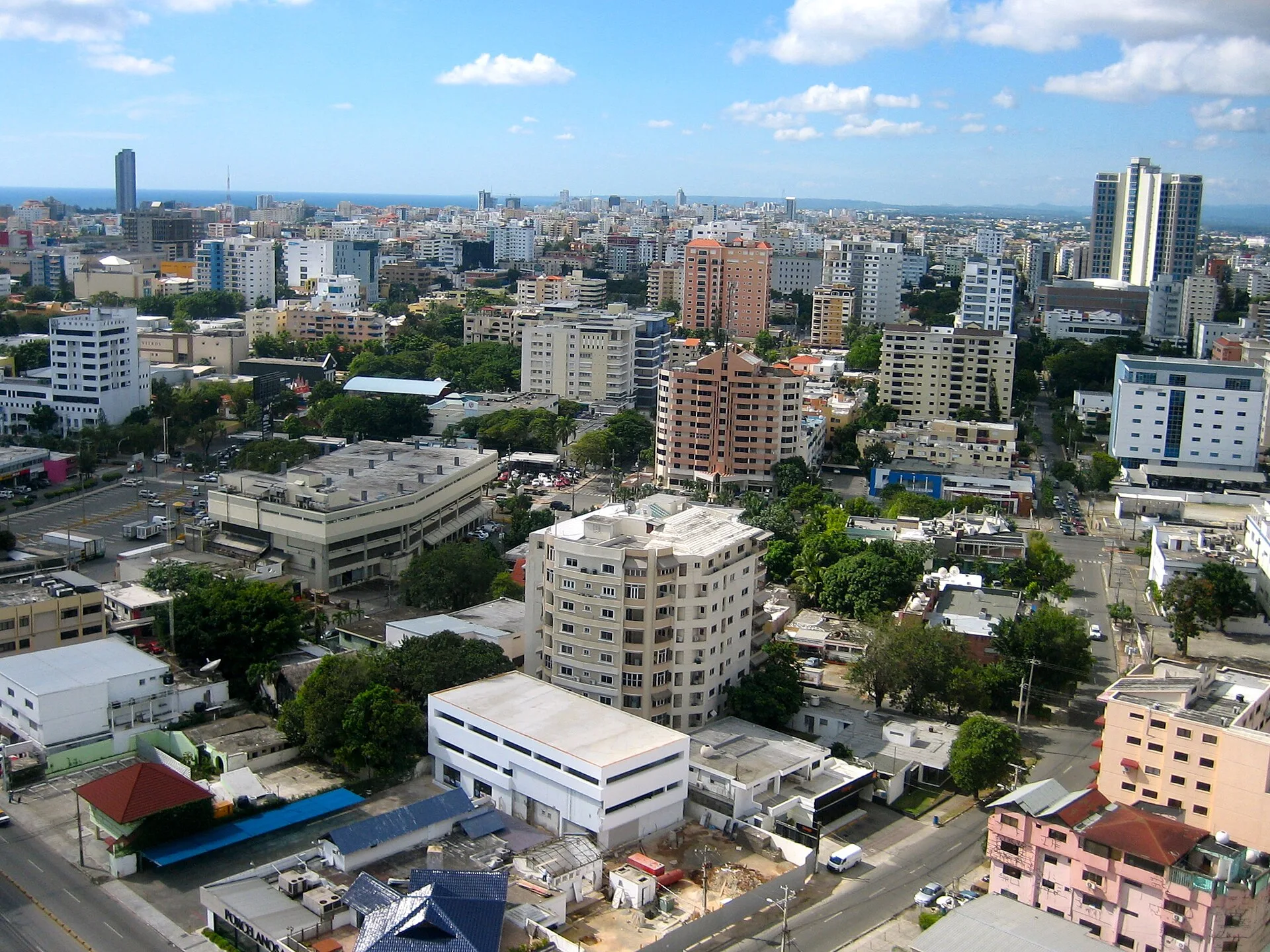
Santo Domingo is the demographic centre, with the colonial old town, the business districts and the largest neighbourhoods in one urban area. Visitors can start with the Santo Domingo city page and the guide to what to do in Santo Domingo in October 2026.
Ethnic Identity and the Words Dominicans Use
Dominicans describe themselves with colour words that differ from US race categories. The most common survey answer is indio, an everyday label for intermediate skin tones.
A UN Population Fund survey of 1,309 adults, reported by El Día on Friday 18 March 2022, asked how people see themselves. It found 45% indio, 18% white, 16% moreno, 9% mulatto and 8% Black.
These shares describe how people see themselves, not their ancestry. A sample of 1,309 adults gives a general picture, not a census count.
A December 2022 column in Acento said the 2022 census form asked about racial self-perception in question 64. No national totals for that question were found in the published census summaries used here.
Dominican culture draws on three roots, Spanish, African and Taíno, and the mix shows in music, food and speech. Moreno, indio and mulatto are everyday colour words, so surveys that offer different labels give different shares.
Music, carnival and food show these roots most clearly, and the Rio Times guide to Dominican culture covers them. Its weight in the region is in the guide to the Dominican Republic in Latin America.
Language and Religion
Spanish is the only official language, under Article 29 of the Constitution. Haitian Creole is spoken by many Haitian-born residents and their families, though no official count of speakers was found.
Article 45 of the Constitution guarantees freedom of conscience and religion. Pew Research Center found in 2013 and 2014 that Catholics were at least half of Dominicans and 18% had no particular religion.
The Pew report text reviewed here gives no Protestant share for the country, so the rest of the picture is not confirmed. The 2022 census figures used in this guide do not cover religion.
Haitian Migration, Citizenship and Official Numbers
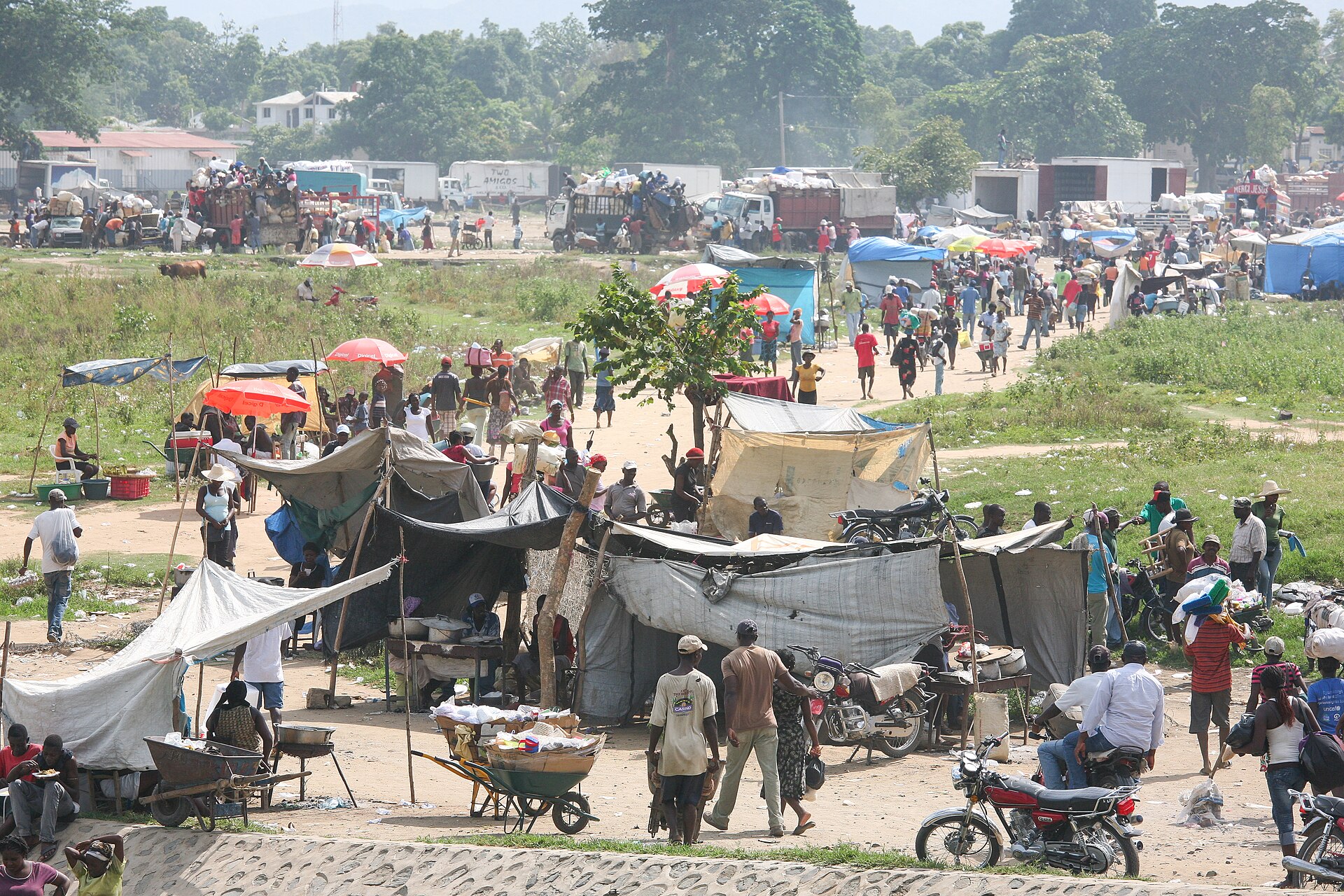
ONE’s last national immigrant survey, ENI-2017, was presented on Tuesday 5 June 2018. It found 847,979 people of foreign origin, or 8.3% of residents, up from 7.9% in 2012.
Of that group, 570,933 were born abroad and 277,046 were born in the Dominican Republic to immigrant parents. About 88.5% were Haitian-born or descendants of Haitian immigrants, and 11.5% came from other countries.
Foreign-origin residents were mostly men (58.3%) and mostly urban (69%). Among Haitian immigrants, 91.2% were in the labour force, with 33.8% in farming, 26.3% in construction and 16.3% in commerce.
The border province of Pedernales had the highest relative presence of immigrants, at 27.3% of its population. Among the 15 provinces with the largest relative presence, Bahoruco had the lowest, at 8.4%.
Citizenship is the most sensitive issue. Article 18 of the Constitution denies birthright nationality to children of foreign diplomats and of foreigners in transit or residing illegally.
Constitutional Court ruling TC/0168/13, published on Monday 23 September 2013, held that children born to foreigners in transit do not acquire nationality. The sources used here give no count of Dominican-born people left without papers.
The migration directorate (DGM) says it has deported more than 800,000 foreigners in irregular status in two years. Its director, Vice Admiral Luis Rafael Lee Ballester, said on Sunday 11 October 2026 that inspectors will check farms and building sites.
Amnesty International said in October 2026 that rights groups have documented racial profiling and arbitrary detentions in migration operations. The DGM says inspectors will confirm that foreign workers hold DGM documentation.
Recent enforcement figures are in the Rio Times reports on daily deportations to Haiti and the planned inspections of farms. The neighbouring country is profiled in the guide to Haiti in Latin America.
The Dominican Diaspora and Remittances
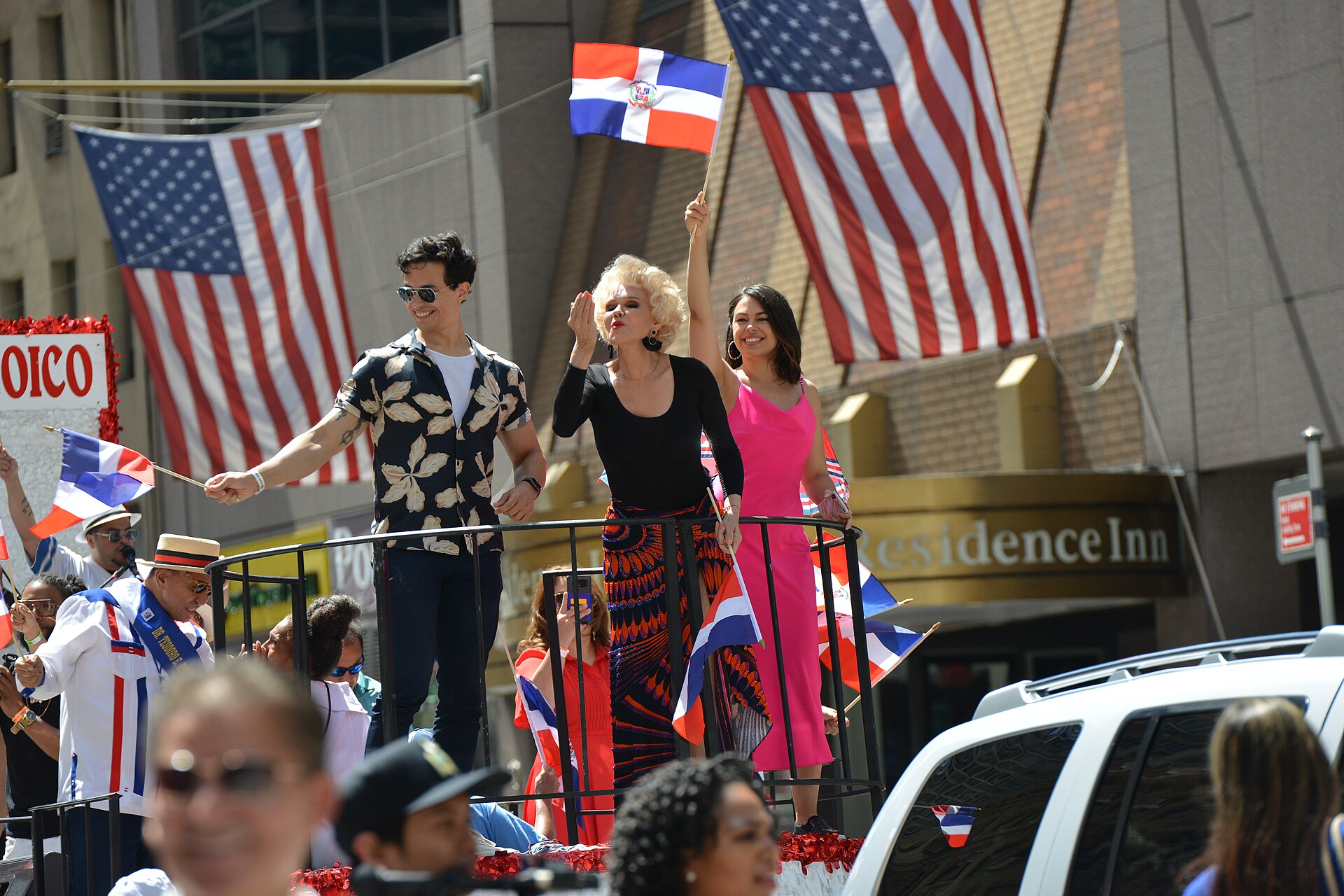
Emigration is the other half of the population story. The Migration Policy Institute (MPI) counts about 1.3 million Dominican immigrants in the United States, in a profile dated 13 August 2024.
Its tabulation of 2022 Census Bureau data reaches about 2.7 million US residents born in the Dominican Republic or reporting Dominican ancestry. That equals roughly one Dominican-origin resident in the United States for every four people living on the island.
Remittances show how tightly the diaspora is tied to home. The central bank (BCRD) counted US$11.87 billion in 2025 and US$9.49 billion from January to September 2026.
The United States supplied 80.9% of formal remittances in September 2026, central bank data show. The Rio Times guide to foreign players in the Dominican Republic maps the other money streams.
How the Groups Live Together
The 2017 survey shows where the groups share daily life: farms, building sites and shops, with 69% of foreign-origin residents in cities. Haitian-born workers fill many of those jobs, and 91.2% of Haitian immigrants were in the labour force.
Employers, landlords and security forces shape daily life for Haitian-born workers. The DGM says some Dominicans knowingly hire or house undocumented foreigners, and it promises prosecutions.
About 8% of adults called themselves Black in the UN Population Fund survey, while far more chose indio or moreno. Amnesty says migration policy discriminates by national origin or skin colour, and the DGM statement reviewed here does not address that charge.
Politics and leadership are covered in the guide to Dominican politics and who holds power. The wider contest for influence is in the Dominican Republic geopolitics guide.
What It Means for US Readers
About 2.7 million people of Dominican origin live in the United States, so island trends reach many American families. Remittances of US$11.87 billion in 2025 came mostly from the United States.
Visitors will find a young, mostly urban country where Spanish is the working language. Migration operations are frequent, so travellers should carry identification.
Investors in hotels, farms and construction should expect document checks on workers, which could tighten labour supply. Resort provinces such as La Altagracia are growing fastest, which raises demand for housing and services.
Daily coverage sits on the Dominican Republic news page. Readers weighing a move can compare areas in the Rio Times guide to the best places to live in the Dominican Republic.
What Is Not Known
National totals for the 2022 census race question were not found among the published figures used here. The same applies to the census count of foreign-born residents.
ONE’s latest immigrant survey dates from 2017, so the current number of Haitian-born residents is not officially known. Public claims of much larger Haitian populations cannot be tested against any official count.
The gap between the census count and World Bank estimates near 11.2 million for 2022 is not settled here. ONE’s coverage survey was not used, and one outlet quoted a slightly different census total of 10,773,983.
No official count of religious groups or of Haitian Creole speakers was found. The number of people in irregular status, and of Dominican-born people without papers, is not published in the sources used.
Frequently Asked Questions
What is the population of the Dominican Republic?
The 2022 census counted 10,760,028 residents, 13.9% more than in 2010. Growth has slowed to about 1.1% a year.
What are the main ethnic groups in the Dominican Republic?
Most Dominicans use colour words such as indio: a UN Population Fund survey found 45% indio and 16% moreno. About 18% said white, 9% mulatto and 8% Black.
What language do Dominicans speak?
Spanish is the only official language under Article 29 of the Constitution. Haitian Creole is spoken by many Haitian-born residents.
How many Haitians live in the Dominican Republic?
The 2017 immigrant survey counted 847,979 people of foreign origin, 8.3% of residents, and 88.5% were Haitian-born or of Haitian descent. No newer official survey was found, so the current figure is not confirmed.
How many Dominicans live in the United States?
About 2.7 million US residents were born in the Dominican Republic or report Dominican ancestry, the Migration Policy Institute counts. About 1.3 million are Dominican immigrants, the same profile says.
What religion is most common in the Dominican Republic?
Catholicism is the largest faith, and Catholics were at least half of Dominicans in a 2013 to 2014 Pew Research Center survey. About 18% said they had no particular religion in the same survey.
Sources: Presidency of the Dominican Republic, ONE first results of the 2022 census, 10 August 2023; Diario Libre, ONE first census results, 10 August 2023; El Nuevo Diario, ONE first census results, 10 August 2023; elDinero, ONE general report on water access, 28 June 2024; El Día, ONE general report, 28 June 2024; Acento, preliminary census data on density and dwellings; Acento, ONE Boletín Demográfico y Social 2020, 18 December 2020; Diario Libre, ONE Boletín Demográfico y Social 2020, 18 December 2020; El Día, ONE National Immigrant Survey ENI-2017, 5 June 2018; Diario Libre, ENI-2017, 5 June 2018; El Día, UN Population Fund survey on racial self-perception, 18 March 2022; El Caribe, UN Population Fund survey, 2025; Acento, census question 64 on racial self-perception, 14 December 2022; Constitution of the Dominican Republic (2015 text), Articles 18, 29 and 45; Constitutional Court, ruling TC/0168/13; 7 Días, Directorate General of Migration statement, 11 October 2026; Amnesty International, October 2026 statement on migration operations; Banco Central de la República Dominicana, remittances January to September 2026; elDinero, BCRD remittance release, 11 October 2026; BCRD, Informe de la economía dominicana, January to December 2025; World Bank, World Development Indicators for the Dominican Republic (population, fertility, urban share); Migration Policy Institute, Dominican immigrants in the United States (2022 ACS); Pew Research Center, Religion in Latin America, 2014 (all accessed 16 October 2026).
This article was produced by The Rio Times’ automated newsroom system. How we use AI · Report an error · Editorial responsibility: Matthias Camenzind, Editor-in-Chief
Expat Guide to Dominican Republic
What The Rio Times publishes for foreigners who live in or move to Dominican Republic.
Start here
- Best Places to Live in the Dominican Republic 2026
- Cost of Living Santo Domingo 2026 — Rent and the Power Question
- Healthcare in the Dominican Republic 2026: What Foreigners Can Actually Get
- Safety in the Dominican Republic 2026: The Real Risks for Foreigners
City guides
Coming up in Dominican Republic
- Licey vs Escogido Opens LIDOM in Santo Domingo on 16 October 16 Oct
- Soy Luna Plays Santo Domingo on 31 October 2026 31 Oct
- Eladio Carrion in Santiago, Dominican Republic, 31 October 31 Oct
- Keinemusik's &ME Plays Santo Domingo on 31 October 31 Oct
Understand Dominican Republic