Dominican Republic Security and Crime Explained 2026
DOMINICAN REPUBLIC · SECURITY
Key Facts
- —The country The Dominican Republic shares the island of Hispaniola with Haiti. It is a major US holiday destination, with 9.24 million visitors from January to September 2026.
- —Crime trend The cumulative homicide rate was 7.29 per 100,000 people as of 9 October 2026, down 16.6% on 2025 and 44.8% below 2022.
- —Who keeps order About 38,000 National Police officers answer to Interior and Police Minister Faride Raful. Mayor General Ernesto Rafael Rodríguez García has led the force since 18 August 2026.
- —The controversy At least 115 people died in police “shootouts” between 5 January and 27 September 2026, according to a Diario Libre count. The opposition wants the minister and police chief questioned.
- —The border The defence minister said in September 2026 that about 54.5 km of fencing is going up along the 391 km border with Haiti.
- —Travel advice The US State Department rates the Dominican Republic Level 2, “Exercise increased caution”, because of crime (advisory issued June 2025).
- —Still open Official data come from the government’s own task force. September 2026 had 125 homicides, 34.4% more than September 2025.
Dominican Republic security matters to Americans because the United States supplies the largest share of the country’s tourists. Government figures show a homicide rate of 7.29 per 100,000 people as of 9 October 2026, down 16.6% from 2025.
Police killings in so-called shootouts and instability in neighbouring Haiti are the main worries.

Dominican Republic Security in Numbers
Dominican Republic security data come from the Joint Task Force, a group of security agencies that publishes a regular crime report. Its report of 16 October 2026 put the cumulative homicide rate at 7.29 per 100,000 people as of 9 October.
A rate of 7.29 means about seven killings a year for every 100,000 residents. That is 16.6% lower than in 2025 and 44.8% lower than in 2022, when the rate stood at 13.20.
For the whole of 2025, the government put the rate at 8.15 per 100,000. President Luis Abinader said in March 2026 that this made the country the second safest in Central America and the Caribbean, behind El Salvador.
Robberies fell as well. The National Police reported that robberies from January to September 2026 were 29.9% lower than a year earlier, which is 20,446 fewer cases.
The trend is not smooth. September 2026 recorded 125 homicides, 34.4% more than September 2025, although the total for the year so far stayed lower.
Why People Are Killed
The data centre Cadseci, short for the Centre for Citizen Security Data Analysis, counted 625 homicides of all kinds in the first half of 2026. Its intentional homicide rate was 7.0 per 100,000, down from 8.9 a year earlier.
Interpersonal or social conflicts caused 66.5% of intentional killings, and brawls and grudges alone made up 48.7% of those cases. Killings linked to crimes such as robbery fell from 118 to 68 cases, a 42.4% drop, and made up 17.8% of the total.
Minister Raful said in September 2026 that the fall does not automatically make people feel safer. The government plans to send Congress a coexistence bill to settle disputes between neighbours before they turn violent.
Drugs, Guns and Organised Crime
The National Drug Control Directorate, known as the DNCD, leads drug enforcement. It seized about 24.1 tonnes of drugs from January to June 2026, up 33.76% from the same period of 2025.
Cocaine made up about 11.9 tonnes and marijuana about 12.1 tonnes, together more than 99% of the total. The DNCD also reported 24,076 people detained and 984 vehicles and 212 firearms seized in those six months.
Firearms are a second front. In September 2026 the police seized 448 weapons, of which 315 (70.3%) were illegal.
In August 2026 a court in Santiago convicted six members of a network that bought weapons in the United States. They shipped the guns to the island, and the longest sentence was ten years.
Weapons also flow towards Haiti, where a UN expert panel reported on 8 September 2026 that arms trafficked from the island reached gangs. Named recipients include 400 Mawozo and Gran Grif.
These groups are based in Haiti. In March 2025 customs officers at Haina port found 36,000 cartridges and 23 firearms in a container from Miami.
On 8 October 2026 the Defence Ministry confirmed that an army officer is held in preventive detention over ammunition found in San Juan province. It said any soldier involved must face justice regardless of rank.
In a separate case, Operation Pandora from November 2024, prosecutors allege that police officers took more than 900,000 projectiles from the weapons department. The accused are presumed innocent.
The National Police, 9-1-1 and the Shootout Debate
The National Police has about 38,000 officers, according to government figures cited in September 2026. Authorities said 31% of them patrol the streets, compared with 12% in earlier years.
The force reports to the Ministry of Interior and Police, led by Faride Raful. Abinader named Mayor General Ernesto Rafael Rodríguez García as police director by decree on 17 August 2026.
He is the fifth director since August 2020 and replaced Mayor General Andrés Modesto Cruz Cruz, who left after six months. The reform Abinader announced in April 2021 is still under test, Acento reported in September 2026.
Quadrant patrols, which assign officers to a neighbourhood grid, had 206 of 355 planned zones active in August 2026. The national 9-1-1 emergency system handled 1,643,164 calls from January to June 2026.
Government figures from 2024 counted about 5,200 9-1-1 surveillance cameras. The system plans to double that to more than 10,400.
The most contested issue is the number of deaths the police describe as “intercambios de disparos”, or exchanges of fire. Diario Libre counted 37 such deaths in September 2026 up to the 27th, and at least 115 between 5 January and 27 September.
Police say the dead were wanted on arrest warrants or had complaints against them. Director Rodríguez García has said the force is obliged to protect good people from bad ones.
Ombudsman Pablo Ulloa said nobody can be killed in place of a court sentence, since the country has no death penalty. Manuel María Mercedes, president of the National Human Rights Commission, called the deaths extrajudicial executions and said he would take them to international bodies.
On 19 October 2026 the Dominican Liberation Party (PLD), a major opposition party, asked for Raful and Rodríguez García to be questioned in Congress.
On 20 October the opposition party Fuerza del Pueblo said the security policy of Abinader’s governing Modern Revolutionary Party (PRM) had failed. Its spokesperson Josefina Reynoso cited at least 236 deaths caused by police in 2026.
A new Penal Code, Law 74-25, took effect on 3 August 2026 and replaced the 1884 code. It adds more than 70 offences, including femicide and contract killing, and raises the maximum prison term to 40 years.
The Armed Forces and the Haiti Border
Dominican Republic security also rests on the armed forces, which fall under the Ministry of Defence. Lieutenant General Carlos Antonio Fernández Onofre has led it since 16 August 2024, and the forces have three branches: Army, Navy and Air Force.
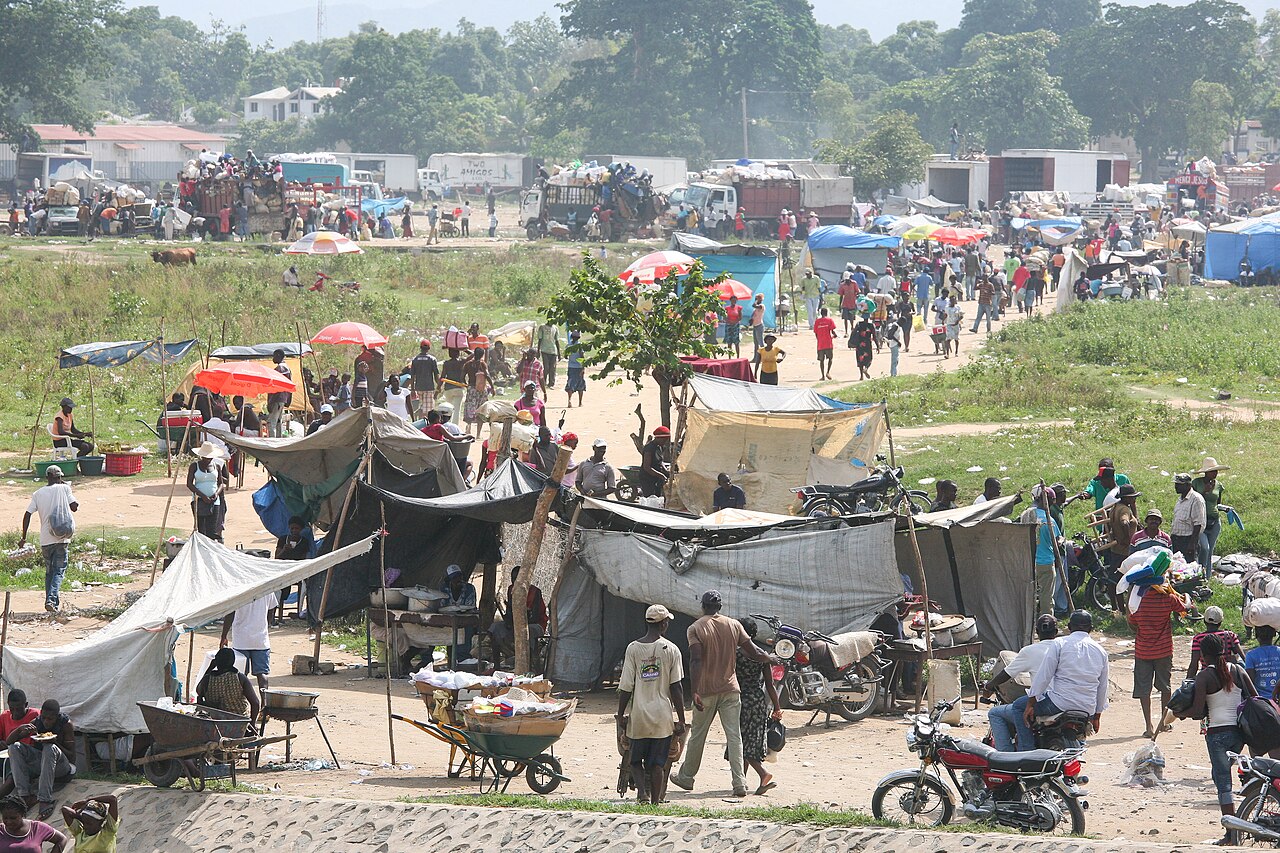
A separate border security corps, known as CESFRONT, works with the Army along the frontier with Haiti. The border runs 391 km, according to the defence minister.
He said in September 2026 that about 54.5 km of fencing is going up in the most exposed stretches. That includes 25 km already finished at Dajabón.
The budget office allocated more than RD$7.3 billion (about US$119 million) for border works from 2022 to 2026. More than RD$4.4 billion (about US$72 million) has been spent.
The minister said the wall has worked 95% and that cattle and vehicle theft in the area have practically disappeared. Those are his claims, made at Dajabón on 1 September 2026.
The Army reported 334,440 migrant interdictions between 17 August 2024 and 10 August 2026. Haitian interdictions in the first half of 2026 were 81,457, about 17.8% fewer than the 99,070 of the first half of 2025.
The defence budget was about RD$63.9 billion (about US$1.04 billion) in 2025, and the 2026 proposal exceeded RD$68.7 billion (about US$1.12 billion). Those figures are converted at about 61.5 pesos to the US dollar in October 2026.
The pressure comes from the other side of the line. UN human rights office records cited by Diario Libre in October 2026 show more than 5,700 people killed or wounded in Haiti in 2026.
Hotspots and Safer Areas
Dominican Republic security varies widely by place, and national averages hide the gaps. As of 9 October 2026, 30 of the 35 areas the task force tracks had single-digit homicide rates, and five had double-digit rates.
In the first half of 2026, Cadseci found the highest rates per 100,000 people in these provinces:
Lowest Rates and the Capital
The lowest rates were in Dajabón (2.7), Espaillat (3.3) and Santiago Rodríguez (3.5). Because several of these provinces are small, a few cases move their rates sharply.
In absolute numbers, the capital district of Distrito Nacional rose from 30 to 52 homicides in the first half, an increase of 73.3%. Santo Domingo Este recorded 41 homicides, Santo Domingo Norte 26 and Santiago, the main city of the north, 20.
Police shootout deaths in September 2026 were also concentrated there. Diario Libre counted 11 in Santo Domingo province and 6 in Santiago.
The State Department says violent crime is a concern despite more police presence in areas often visited by tourists. It adds that security outside resort areas is unpredictable, especially at night.
- Elías Piña, on the Haiti border: 25.8
- Monte Cristi, on the Haiti border: 16.8
- Pedernales, on the Haiti border: 14.9
- Hermanas Mirabal: 11.0
- María Trinidad Sánchez: 10.5
- La Romana: 10.0
Visitors, Resorts and Tourist Safety
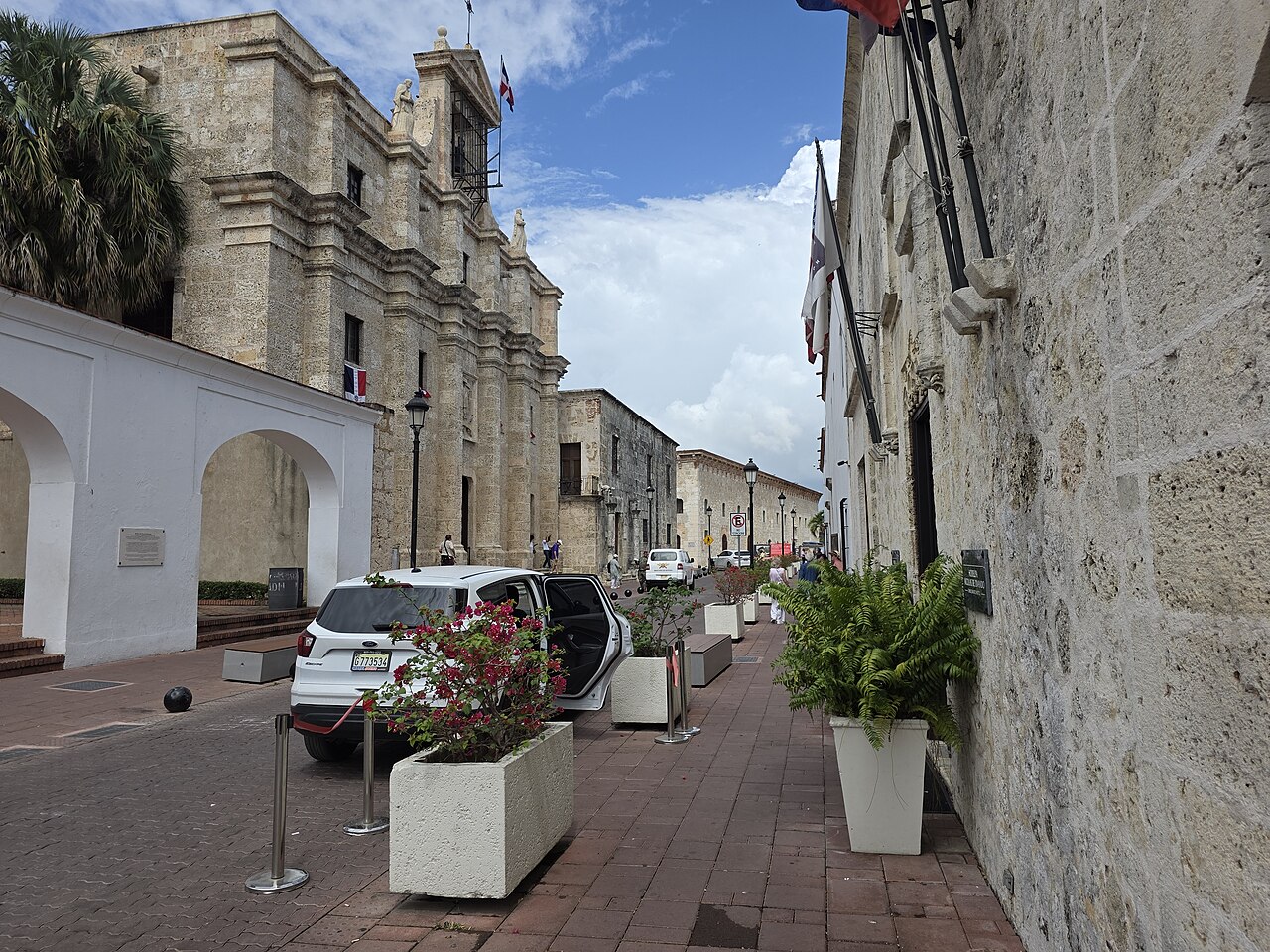
Dominican Republic security is a daily question for the tourism industry. Minister David Collado said 9,241,246 visitors arrived from January to September 2026, 7.5% more than in 2025.
The United States supplied 39% of tourists in September.
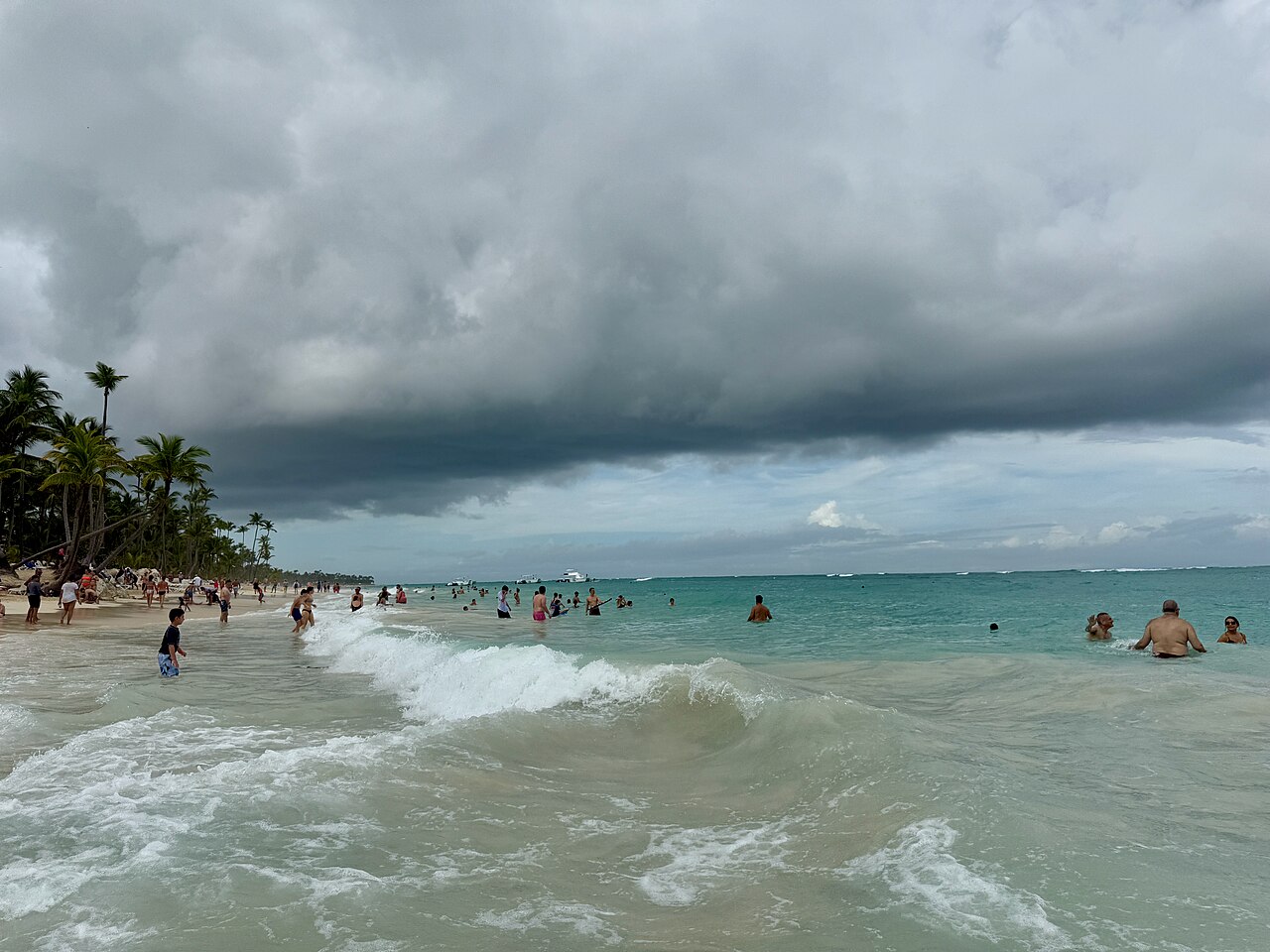
Cases that drew attention in 2025 and 2026 involved strong currents, a hotel fire, a boating accident and road crashes. Four tourists drowned in Punta Cana in January 2025 amid high waves.
A 20-year-old US resident disappeared from a Punta Cana beach on 6 March 2025, and investigators considered drowning. A hotel fire in Bayahíbe in June 2026 led to the evacuation of about 1,690 guests.
The State Department lists robbery, homicide and sexual assault as risks and warns about robberies linked to dating apps. It bars US government employees from riding motorcycle taxis.
Acento recalled that several US tourists died in Dominican hotels in 2019. Later FBI toxicology tests supported natural causes and found no criminal links between those deaths.
What It Means for US Readers
For Dominican Republic security, the State Department rates the country Level 2 and asks travellers to exercise increased caution because of crime. The advisory text dates from June 2025, with the travel guidance updated in August 2025.
Practical steps follow that advice: meet dating-app contacts only in public places, avoid motorcycle taxis and limit night travel outside resort areas. At the beach, ask your hotel about sea conditions before swimming, because strong currents have drowned visitors.
The United States is part of the story, since seized guns were bought in the US or shipped from Miami and New York. The FBI helped in the Santiago case.
Residents and retirees should note the State Department’s warning that crime is a threat throughout the country. For fuller detail, read the Rio Times coverage of police killings and civil society criticism and the UN report on Haiti arms trafficking.
For the wider political picture, see our explainer on who holds power in the Dominican Republic. Other related reading covers police reform and the opposition and the 53,000 unserved arrest warrants.
The Rio Times Dominican Republic hub at riotimesonline.com collects all current coverage.
What Is Not Known
It is unclear whether the fall in homicides will hold, since September 2026 saw 125 killings, up 34.4% on a year earlier. Fuerza del Pueblo also estimates the true homicide rate at about 11.8 per 100,000.
How many people the police have killed in 2026 is disputed. Diario Libre counted at least 115 by 27 September, while the PLD and Fuerza del Pueblo cite more than 180 and at least 236.
Investigators have not publicly named the senior figures behind the arms networks. The UN panel is still waiting for Dominican information on which military units were assigned certain ammunition lots later found in Haiti.
It is not yet known whether Congress will pass the coexistence bill, or what it will contain. When the code took effect in August 2026, a congressional commission was drafting changes to about 20 articles, including those on free speech.
Frequently Asked Questions
Is the Dominican Republic safe for American tourists?
On Dominican Republic security, the State Department rates it Level 2, “Exercise increased caution”, because of crime. About 9.24 million visitors came from January to September 2026, and reported incidents in 2025 and 2026 involved strong currents, road crashes and a hotel fire.
What is the homicide rate in the Dominican Republic?
Dominican Republic security data show a cumulative rate of 7.29 per 100,000 people as of 9 October 2026, according to the Joint Task Force. That is 16.6% lower than in 2025 and 44.8% lower than in 2022.
Does the Dominican Republic have gangs like Haiti?
Haitian gangs such as 400 Mawozo and Gran Grif are based in Haiti, and a UN panel says Dominican-trafficked weapons reached them. Dominican data attribute 66.5% of intentional killings to personal conflicts and 17.8% to crimes such as robbery.
Who runs the police and the armed forces?
Faride Raful is Minister of Interior and Police, and Mayor General Ernesto Rafael Rodríguez García has directed the National Police since 18 August 2026. Lieutenant General Carlos Antonio Fernández Onofre has been Minister of Defence since 16 August 2024.
Why are police shootouts controversial?
Diario Libre counted at least 115 deaths in police exchanges of fire between 5 January and 27 September 2026. Rights officials call them extrajudicial executions, while the police say the dead were wanted suspects.
Does the Haiti border wall work?
Defence Minister Fernández Onofre said on 1 September 2026 that it has worked 95%, with about 54.5 km of fencing built or under construction. Army figures show Haitian interdictions fell about 17.8% in the first half of 2026.
What are the main dangers for visitors?
Reported dangers include robbery, rip currents, road crashes and robberies arranged through dating apps. The State Department says security outside resort areas is unpredictable, especially at night.
Sources: US State Department, Dominican Republic Travel Advisory, June 2025 (guidance August 2025); Policía Nacional, Fuerza de Tarea Conjunta report no. 168, 8 October 2026; N Digital, Joint Task Force report no. 169, 16 October 2026; N Digital, Policía Nacional third-quarter balance, 5 October 2026; Infobae, security plan follow-up meeting, 29 September 2026; Revista Mercado, 2025 homicide rate, 4 March 2026; El Caribe, Cadseci homicide analysis, 28 September 2026; El Caribe, Distrito Nacional homicides, 29 September 2026; Diario Libre, DNCD seizures first half of 2026, 6 August 2026; Diario Libre, deaths in police exchanges of fire, 28 September 2026; Diario Libre, arms trafficking towards Haiti, 10 October 2026; Diario Libre, PLD request to question the minister, 19 October 2026; Diario Libre, visitor arrivals January to September 2026, 6 October 2026; Acento, five police directors and the police reform, 2 September 2026; Acento, Armed Forces 2024 to 2026, 16 August 2026; Acento, border wall and technology, 8 September 2026; Acento, 9-1-1 camera network, 11 August 2026; Acento, tourism under alert, 27 June 2026; Listín Diario, defence minister on the border wall, 1 September 2026; Infobae, Santiago arms-trafficking convictions, 26 August 2026; AlMomento, new Penal Code in force, 3 August 2026; El Nuevo Diario, positions on police shootouts, 2 October 2026.
This article was produced by The Rio Times’ automated newsroom system. How we use AI · Report an error · Editorial responsibility: Matthias Camenzind, Editor-in-Chief
Expat Guide to Dominican Republic
What The Rio Times publishes for foreigners who live in or move to Dominican Republic.
Start here
- Best Places to Live in the Dominican Republic 2026
- Cost of Living Santo Domingo 2026 — Rent and the Power Question
- Healthcare in the Dominican Republic 2026: What Foreigners Can Actually Get
- Safety in the Dominican Republic 2026: The Real Risks for Foreigners
City guides
Coming up in Dominican Republic
- Soy Luna Plays Santo Domingo on 31 October 2026 31 Oct
- Eladio Carrion in Santiago, Dominican Republic, 31 October 31 Oct
- Keinemusik's &ME Plays Santo Domingo on 31 October 31 Oct
- Afro Fest Punta Cana 2026 in the Dominican Republic: Afro Nation's Afrobeats Weekender on November 6–8 6 Nov
Understand Dominican Republic
Rotate for Best Experience
This report is optimized for landscape viewing. Rotate your phone for the full experience.
You've reached your free article limit
Subscribe to The Rio Times for unlimited access to our news, expat and nomad guides and market intelligence on Latin America and Africa.
Expat Guide to Dominican Republic
What The Rio Times publishes for foreigners who live in or move to Dominican Republic.
Start here
- Best Places to Live in the Dominican Republic 2026
- Cost of Living Santo Domingo 2026 — Rent and the Power Question
- Healthcare in the Dominican Republic 2026: What Foreigners Can Actually Get
- Safety in the Dominican Republic 2026: The Real Risks for Foreigners
City guides
Coming up in Dominican Republic
- Soy Luna Plays Santo Domingo on 31 October 2026 31 Oct
- Eladio Carrion in Santiago, Dominican Republic, 31 October 31 Oct
- Keinemusik's &ME Plays Santo Domingo on 31 October 31 Oct
- Afro Fest Punta Cana 2026 in the Dominican Republic: Afro Nation's Afrobeats Weekender on November 6–8 6 Nov
Understand Dominican Republic