Dominican Republic Explained 2026: The Country, Its Economy, Its Politics and What to Watch
GUIDES · DOMINICAN REPUBLIC
Key Facts
- —Capital Santo Domingo, on the south coast. The capital region held 3.8 million people in the 2022 census, or 35.3 percent of the country.
- —Population 11.5 million in 2025, according to the World Bank, roughly the population of Belgium. The 2022 census counted 10,760,028.
- —Currency The Dominican peso, written RD$. It traded at about RD$59.5 to the US dollar on 26 September 2026 (open.er-api.com), close to the central bank reference rate of RD$59.19 on 14 September.
- —Language Spanish. Visitors who leave the resort areas will need at least some of it.
- —GDP US$127.4 billion in 2025 (World Bank). That is about US$11,060 per person, roughly one-eighth of the US figure.
- —Government A presidential republic of 31 provinces plus the National District. President Luis Abinader is serving his second and final term, which ends on 16 August 2028.
The Dominican Republic drew a record 11.7 million visitors in 2025. Its central bank expects the economy to grow about 4.5 percent in 2026. For many Americans and Europeans it is a beach holiday, a retirement plan or a family link; this guide explains the country behind that.
Dominican Republic explained in one line: a mid-sized, fast-growing economy that lives on visitors, remittances and duty-free factories. Its elected government holds a large majority in Congress. It shares an island with Haiti, whose gang crisis now shapes Dominican politics.
What kind of country is this?
The Dominican Republic covers the eastern two-thirds of Hispaniola, the Caribbean island it shares with Haiti. Its territory is 48,442 square kilometres, about the size of Vermont and New Hampshire combined. The land border with Haiti runs for 388 kilometres.
It is the second-largest Caribbean country by area, after Cuba. About 11.5 million people live there, a little fewer than in Belgium. More than a third of them live in and around the capital, Santo Domingo. Santiago province, in the northern Cibao region, counted more than one million people in the 2022 census.
The country is Spanish-speaking and closely tied to the United States. More than one million Dominicans and people of Dominican descent live in New York State alone, according to the Dominican presidency. That diaspora sends money home and votes in Dominican elections. From 2028, seven of the 170 deputies in Congress will be elected to represent Dominicans abroad.
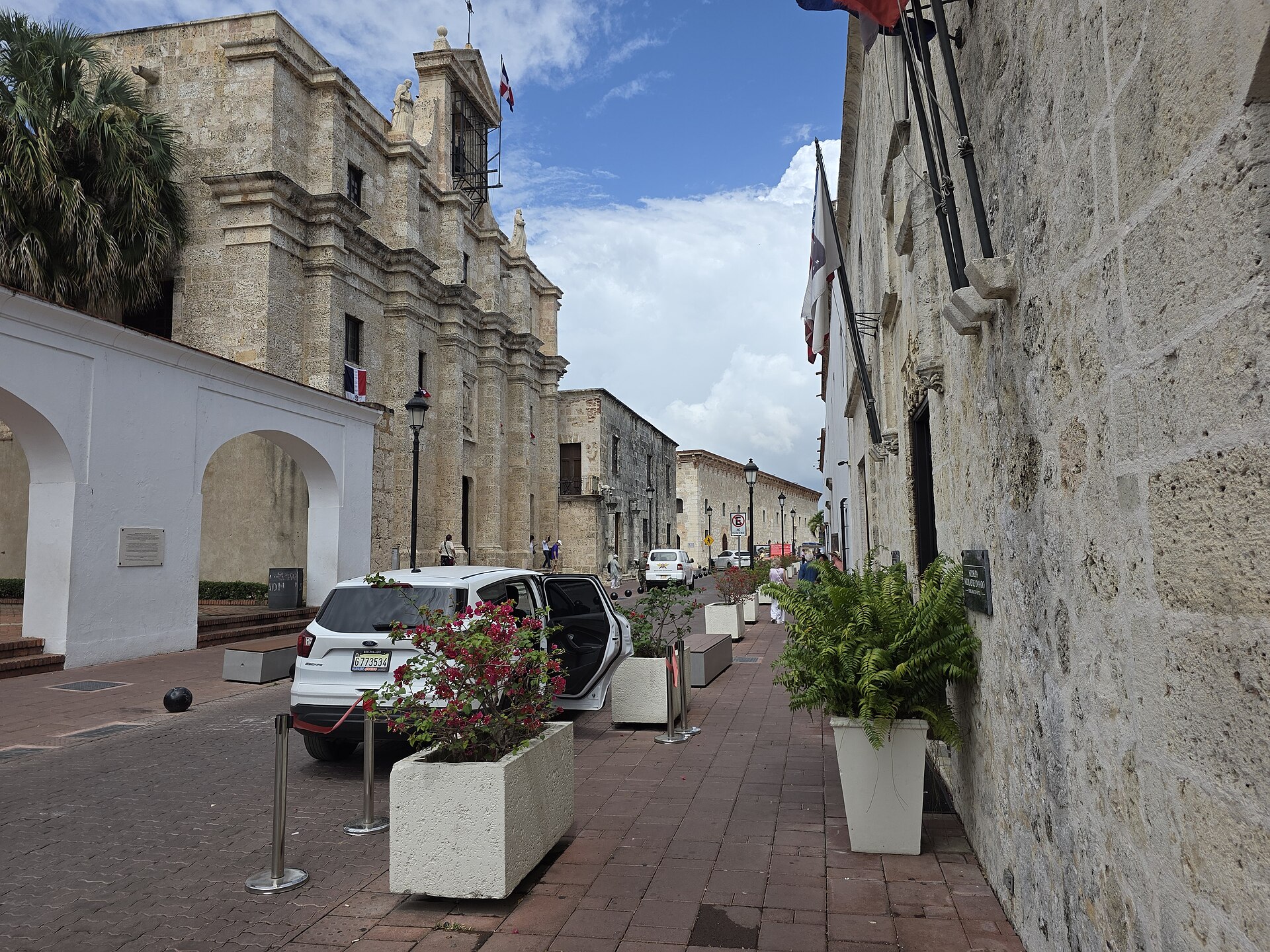
Hurricane season runs from 1 June to 30 November. The national statistics office lists storms as a yearly threat. Anyone planning a move or a long stay should treat that season as a fixed part of the calendar.
Who runs the Dominican Republic and how
The president is both head of state and head of government, elected directly for four years. There is no prime minister. Luis Abinader of the Modern Revolutionary Party (PRM) was re-elected on 19 May 2024 with 57.44 percent of the vote.
His nearest rival was former president Leonel Fernández of the People’s Force (Fuerza del Pueblo), with 28.85 percent. The Dominican Liberation Party (PLD), with Abel Martínez as its candidate, came third with 10.39 percent. Abinader won outright in the first round, so no runoff was needed.
Congress has two chambers. The Senate has 32 members, one for each province and one for the National District. The Chamber of Deputies has 190 members. In 2024 the PRM and its allies won 146 of those seats and 24 in the Senate.
The ruling party used that majority to amend the constitution in October 2024, when its members outnumbered the opposition two to one. The reformed constitution was proclaimed on 27 October 2024. It locks the two-term limit and says no future reform may change the rules of presidential election.
The same reform cuts the Chamber of Deputies from 190 to 170 seats from 2028. It moves the choice of the attorney general to the National Council of the Magistracy. From 2032 it also merges presidential, congressional and municipal elections into a single vote in May.
Abinader himself is barred for life from running again for president or vice-president. He has said publicly that he leaves office on 16 August 2028. That turns the next two years into a contest over who succeeds him.
How the economy works
The Dominican economy earns its dollars from four sources: tourists, remittances, free-zone factories and gold. Output was US$127.4 billion in 2025, according to the World Bank. That is about US$11,060 per person, roughly one-eighth of the US level of about US$90,000.
Tourism is the showcase. The country received a record 11.7 million visitors in 2025, counting air arrivals and cruise passengers, according to the tourism ministry. Between January and August 2026 it received 8,556,415 visitors, 6.9 percent more than a year earlier.
Remittances are the second pillar. Dominicans abroad sent home US$8,432.7 million between January and August 2026, the central bank reports. That was 6.5 percent more than a year earlier. In August, 80.8 percent of formal transfers came from the United States.
Goods exports reached a record US$14,644.2 million in 2025, up 13.3 percent, according to the national statistics office (ONE). Free zones, duty-free industrial parks, supplied 58.8 percent of that. At the end of 2025, 858 free-zone companies employed 200,237 people directly, according to the National Council of Export Free Zones.
The single largest export item, though, was raw gold, at US$2,467.2 million or 16.8 percent of the total. Gold exports rose 61.8 percent in a year. Next came medical instruments, at 13.1 percent, and cigars and other tobacco, at 7.1 percent.
The United States bought 48.6 percent of Dominican exports in 2025. India took 11.0 percent and Haiti 8.2 percent. Canada followed with 5.2 percent.
Monetary policy belongs to the Central Bank of the Dominican Republic (BCRD). It targets inflation of 4 percent, plus or minus one point. At its August 2026 meeting it held its policy rate at 5.25 percent.
What is happening right now
As of 26 September 2026, the economy is growing fast while inflation sits slightly above target. The central bank’s monthly activity index grew 4.5 percent in the first seven months of the year. The bank expects growth of around 4.5 percent for 2026, which it calls one of the highest in Latin America.
Annual inflation was 5.13 percent in August, down from 5.67 percent in June. The central bank blames higher world oil prices linked to the conflict in the Middle East. Core inflation, which strips out volatile items such as fuel and food, was 4.76 percent, inside the target range.
The peso has strengthened. The central bank reported a gain of about 8 percent by the end of July 2026. It credits strong inflows from tourism, remittances and investment. International reserves stood at about US$15.8 billion at the end of June, which the bank puts at about six months of imports. At its August meeting the bank put the peso’s gain at more than 7 percent by the end of that month.
The 2027 budget is now before Congress. The draft, received by the Chamber of Deputies on 23 September 2026, plans consolidated spending of RD$2,084,127.4 million (about US$35.0 billion). Central-government revenue is put at RD$1,510,574.5 million (about US$25.4 billion), or 15.7 percent of output.
The planned central-government deficit is RD$327,281.5 million (about US$5.5 billion), or 3.4 percent of output. Before interest payments the budget shows a small surplus of 0.3 percent of output. Capital spending rises 19.7 percent, to RD$257,763.8 million (about US$4.3 billion). Metro and monorail lines in Santo Domingo and Santiago are among the projects.
Crime has become the political story of September. A shooting in Boca Chica on 12 September left two dead. Days later a merengue singer’s wife was killed in their home near Santo Domingo. Lawmakers from both the ruling party and the opposition then called for a national dialogue on crime, which the government said it would back.
By the official count cited by Latin Times, the homicide rate was 7.39 per 100,000 people in the period to early September. That figure predates most of the recent violence. Separately, prosecutors raided sites across the country on 18 September in a fraud investigation at SeNaSa, the national public health insurer.
Haiti remains the constant pressure. On 23 September Abinader told the UN General Assembly that the Haiti force had been approved but not given the means to work. At home, the army reported detaining 3,651 Haitian migrants without legal status in the week of 14 to 20 September.
Trade with Washington is under negotiation. Bilateral talks on tariffs began on 9 September 2026. US negotiators asked Santo Domingo to repeal a decree taxing imported rice at 20 percent within a quota and 99 percent above it. Abinader says he wants the duty-free access of the DR-CAFTA free trade agreement respected.
What to watch
Congress must pass the 2027 budget by the end of the year for it to take effect on 1 January. Watch whether the 3.4 percent deficit target and the 4.75 percent growth assumption survive the debate.
The central bank sets its policy rate at a meeting in the last week of each month. The September inflation figure is due in early October. The bank forecasts a return inside its 3 to 5 percent band in the fourth quarter. Whether that happens will shape its next rate decisions.
Tourism figures arrive monthly from the tourism ministry. Tourism Minister David Collado has said the country is heading for 12 million visitors in 2026, which would be a new record. Through August, arrivals were running 6.9 percent ahead of 2025.
The tariff talks with the United States have no public deadline. The first test is whether Santo Domingo withdraws the rice decree. The second is whether Dominican goods receive the tariff treatment the government says DR-CAFTA guarantees.
The longer calendar is electoral. Municipal elections fall on Sunday 20 February 2028 and the general election on Sunday 21 May 2028. The next president takes office on Wednesday 16 August 2028.
What this means for foreigners
Entry is easy for most Western visitors. Citizens of the United States, Canada, the United Kingdom and the European Union need no visa for a tourist stay. A US$10 tourist card is included in the air fare, and the passport should be valid for at least six months.
Every traveller must complete a free electronic entry and exit form, the eTicket, before check-in. The standard stay is 30 days. Overstays are charged on departure, according to the US State Department. Fines run from about US$56 for one month to more than US$1,660.
The US State Department rates the country at Level 2, exercise increased caution, in an advisory issued in June 2025. It also advises travel insurance, because most private hospitals require payment in advance and do not accept US insurance.
For people planning to stay, separate Rio Times guides below cover residency, pensions, property, banking and tax. Law 171-07 gives foreign pensioners a dedicated residency track, set out in the retirement guide.
The peso gained about 8 percent against the dollar in the first seven months of 2026. Dollar incomes therefore buy fewer pesos than in January. Anyone living on US dollar income should track the exchange rate as well as local prices.
Connected Coverage
Investing in Dominican Republic as a Foreigner in 2026: A Three-Year Clock
Healthcare in the Dominican Republic 2026: What Foreigners Can Actually Get
Safety in the Dominican Republic 2026: The Real Risks for Foreigners
Retire in the Dominican Republic: The Law 171-07 Pension Track
Dominican Republic Grants Foreigners Full Property Rights Before Notary
Dominican Republic Taxes for Foreigners
Open a Dominican Bank Account as a Foreigner
Moving to Dominican Republic: Residency Steps
Cost of Living in Dominican Republic for Expats
Dominican Republic Residency: Routes & Costs
Dominican Republic Welcomes Record 7.7 Million Visitors as 2026 Economy Outpaces Rivals
Sources: Output, inflation, rates, remittances and reserves from the Banco Central de la República Dominicana; trade and population from the Oficina Nacional de Estadística; the budget from the Ministry of Finance and Economy; the constitution from the Senate; entry rules from the tourism ministry and the US State Department. Exchange rate from open.er-api.com, cross-checked against the central bank reference rate. All accessed 26 September 2026.
- Banco Central de la República Dominicana — policy rate, inflation, IMAE and exchange rate
- Oficina Nacional de Estadística — foreign trade yearbook 2025
- Oficina Nacional de Estadística — 2022 census, first results
- Consejo Nacional de Zonas Francas de Exportación — statistical report 2025
- Ministerio de Hacienda y Economía — 2027 budget bill
- Senado de la República — 2024 constitutional reform
- Inter-Parliamentary Union — May 2024 election results
- World Bank — GDP, GDP per capita and population
- US Department of State — Dominican Republic travel advisory and entry rules
- Ministerio de Turismo — entry requirements
What Is Not Known
Who succeeds Abinader. He cannot run again, so the May 2028 vote will produce a new president whichever party wins. Whether the PRM keeps its large congressional majority without him at the top of the ticket is an open question.
Where the tariff talks with Washington end. Neither side has published a timetable, and the US request over rice imports is only one of the issues on the table. The eventual tariff on Dominican exports to the United States is not settled.
Whether the September violence marks a trend. The official homicide figures run only to early September. The format, date and guest list of the proposed national dialogue on crime have not been announced.
Whether inflation returns to target as forecast. The central bank expects it back inside its range in the fourth quarter. It ties that forecast to oil prices and the conflict in the Middle East, which it cannot control.
How the Haiti crisis develops. The international force for Haiti lacks the resources Abinader says it needs. Migration pressure on the Dominican side of the border depends on events outside Dominican control.
Frequently Asked Questions
Who is the president of the Dominican Republic in 2026?
Luis Abinader of the Modern Revolutionary Party. He was re-elected on 19 May 2024 with 57.44 percent of the vote, and his second and final term ends on 16 August 2028. The 2024 constitutional reform bars him from running again.
When is the next Dominican election?
Municipal elections are on Sunday 20 February 2028 and the general election on Sunday 21 May 2028. The new president takes office on 16 August 2028. From 2032 all these votes are merged into a single election in May.
How big is the Dominican economy?
Output was US$127.4 billion in 2025, according to the World Bank, or about US$11,060 per person. The central bank expects growth of around 4.5 percent in 2026.
What currency does the Dominican Republic use?
The Dominican peso, written RD$. It traded at about RD$59.5 to the US dollar on 26 September 2026, after strengthening by about 8 percent in the first seven months of the year.
Do Americans need a visa for the Dominican Republic?
No, not for a tourist stay. Citizens of the United States, Canada, the United Kingdom and the European Union enter visa-free for 30 days, with a US$10 tourist card included in the air fare. Every traveller must complete the free eTicket form for entry and exit.
What does the Dominican Republic export?
Goods exports hit a record US$14,644.2 million in 2025. Raw gold was the largest single item at 16.8 percent, and free-zone factories supplied 58.8 percent of the total. The United States bought 48.6 percent of all exports.
This article was produced by The Rio Times’ automated newsroom system. How we use AI · Report an error
Read More from The Rio Times