CUBA · NATURAL RESOURCES
Cuba’s best-known natural resources are nickel and cobalt ore, fertile farmland, tobacco and sunny beaches, but in November 2026 several of them are stalled or struggling. Fuel and supply disruptions have stopped the island’s main nickel operation, and reports describe a sugar harvest far below its old size and a power grid short of electricity.
For readers in the United States the subject matters because Cuba lies just south of Florida and US law decides who can buy from, sell to or invest in each of these resources. This guide explains what Cuba owns, what has been confirmed from primary sources, and what is only reported.
Key Facts
- Cobalt Cuba mined 3,450 tonnes of cobalt in 2024 and an estimated 2,000 tonnes in 2025.
- Nickel Mining and processing at the Sherritt-partnered Moa nickel venture stopped at end-June 2026.
- US rules US persons generally cannot import Cuban-origin goods; US exports to Cuba hit US$1.10 billion through September.
- Prediction markets Polymarket bettors give 4.5% chance of a US-Cuba economic deal by 31 December, 10:21 a.m. ET, 18 November.
- Power Index Cuba ranks 14th of 14 in The Rio Times Latin America Power Index, with 22.5 points (November 2026 edition).
Cuba has nickel and cobalt ore, fertile farmland, a famous tobacco valley and beaches, yet fuel shortages, blackouts and sanctions keep much of that wealth idle.

The Big Picture: What Cuba Owns and Who Controls It
Under Article 23 of Cuba’s 2019 Constitution, the subterranean areas, mineral deposits, mines, forests, waters and beaches belong to the people as socialist property, and the article says they may not be transferred as property to natural or legal persons. Article 11 adds that the state exercises sovereignty over the environment and the natural resources of the country.
In practice foreign mining and energy companies such as Canada’s Sherritt International work in Cuba through joint ventures with the state. A military-run business group called GAESA is also a major player in the economy, as our GAESA explainer describes.
The World Bank’s data show that 28.02% of Cuba’s land was arable and 34.88% was forest in 2024. That is a broad base for farming and timber, yet the island’s economy has long depended on a few exports, and each of them is now under strain.
In Plain English
- Nickel and cobalt: metals dug from red clay ore, used in batteries and steel alloys.
- Joint venture: a company owned together by a foreign firm and the Cuban state.
- OFAC: the US Treasury office that licenses and enforces sanctions.
- Embargo: the US trade ban on Cuba, in force in stages since the early 1960s.
Nickel and Cobalt: Moa and Sherritt
Cuba’s most valuable mineral wealth sits in nickel-bearing red clay in the east, around the town of Moa. Moa Nickel is a joint venture between Sherritt International, a Canadian mining and energy company, and a Cuban partner, with Sherritt refining the output at a plant in Fort Saskatchewan, Alberta.
The US Geological Survey (USGS), the American government’s science agency, lists Cuba’s cobalt mine output at 3,450 tonnes in 2024 and an estimate of 2,000 tonnes in 2025, with reserves of 500,000 tonnes. Its 2026 nickel chapter gives no separate Cuban figure, so we do not quote one.
Sherritt said on 13 November 2026 that mining and processing at Moa ceased at the end of the second quarter, and that feed at its Fort Saskatchewan refinery was used up on 22 June 2026. Its share of third-quarter output was 73 tonnes of mixed sulphides (a nickel-cobalt intermediate product) and no finished nickel or cobalt.
For the first nine months of 2026 Sherritt reported 3,204 tonnes of finished nickel and 348 tonnes of finished cobalt as its share. The company says a restart depends on a second emergency licence from OFAC, the US Treasury’s sanctions office, after the agency issued a fuel licence on 19 October 2026 covering fuel oil and sulphur for Moa Nickel.
Executive Order 14404, signed on 1 May 2026, allows blocking sanctions on people operating in Cuba’s metals and mining sector, and OFAC updated the Moa Nickel S.A. listing on 7 May 2026. Our Sherritt’s third-quarter loss covers the company’s latest results.
Sugar: From Global Giant to a Fraction of Its Past
Sugar was long Cuba’s signature crop, and the island produced roughly eight million tonnes of raw sugar in 1989, according to widely cited historical estimates. That figure is reported, not confirmed, because we could not open a statistics-office series that covers it.
Recent harvests are far smaller. Press estimates put the 2024-25 harvest below 150,000 tonnes, against domestic demand of about 500,000 tonnes, but the national statistics office (ONEI, the Oficina Nacional de Estadística e Información) has not published a figure we could open, so this too is reported, not confirmed.
A country once famous for exporting sugar therefore struggles to cover its own table. Whether the 2025-26 harvest improved is not confirmed.
Tobacco: Cuba’s Most Famous Export
The tobacco fields of Pinar del Río province, including the Viñales Valley, supply the leaf behind Cuba’s premium cigars. Habanos S.A., the Cuban cigar marketer, reported global sales of US$827 million for 2024 in its own results release, but we could not find a 2025 result.
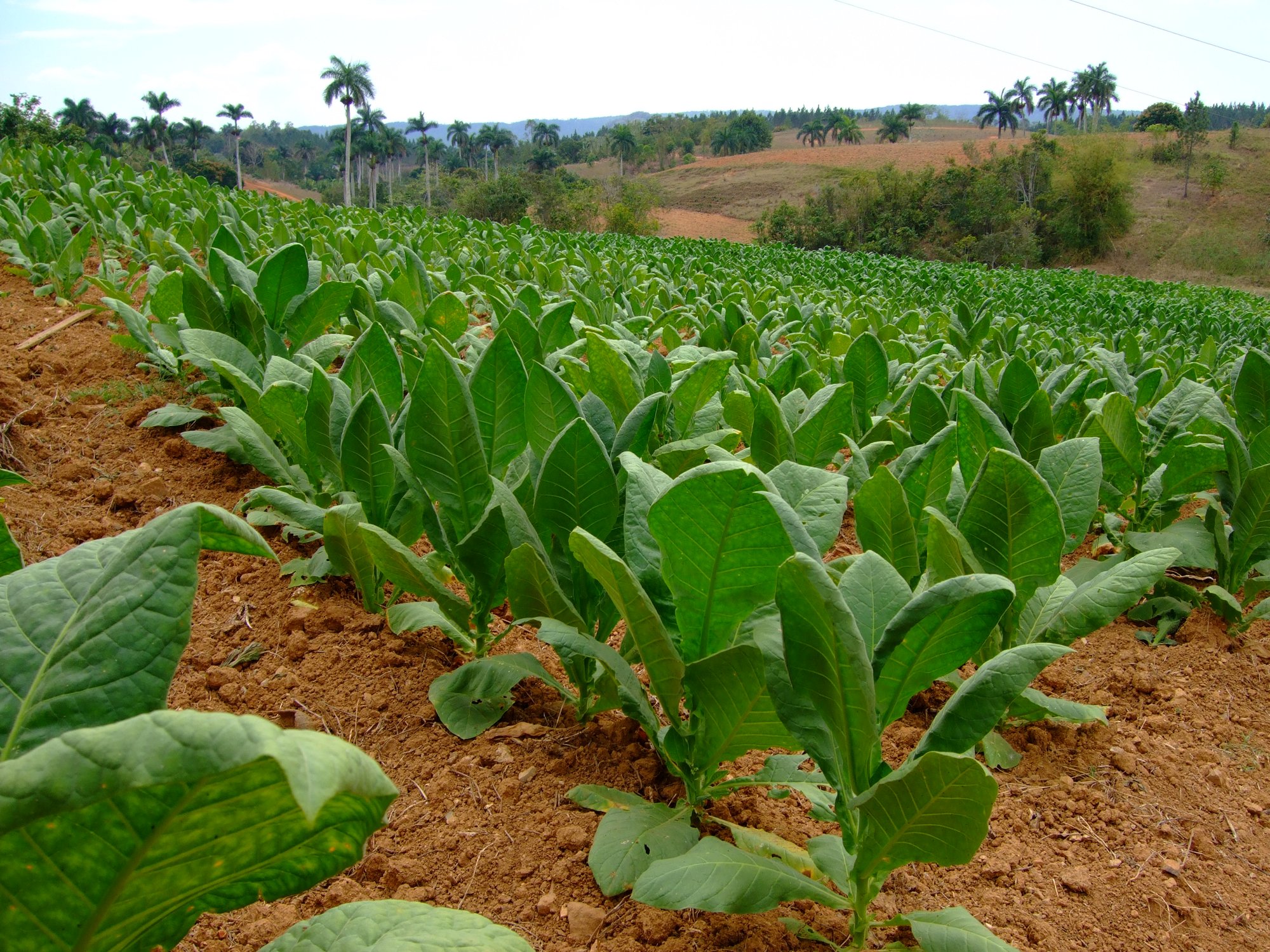
For American readers the legal point is simple. Section 515.204 of the Cuban Assets Control Regulations, the US Treasury rules on trade with Cuba, bars US persons from dealing in merchandise of Cuban origin, and section 515.560(c)(3) says the travel authorisation does not cover bringing home Cuban alcohol or tobacco products.
Cuban cigars are therefore not covered by the travel authorisation. Absent a specific licence or a rule change, that trade stays closed.
Oil and Gas: Too Little at Home, Too Little From Abroad
Cuba has some domestic natural gas, which feeds Energas, a Sherritt power venture. We could not open a primary source for its oil and gas output or its fuel imports, so we give no figures.
Oil imports are a sanctions target. Executive Order 14380, signed on 29 January 2026, declared a national emergency over Cuba and lets the President impose tariffs on any country that sells or provides oil to the island.
On 11 June 2026 OFAC added Unión Cuba-Petróleo, known as CUPET, the state oil company, to its sanctions list. Sherritt said Energas, a power venture in which it holds a one-third stake, generated 207 gigawatt-hours (units of electricity) in the second quarter of 2026 using Cuba’s own gas, a domestic source that kept running, although Sherritt suspended its direct participation in the venture on 7 May 2026.
Tourism Assets: Beaches, Hotels and Heritage
Cuba’s beaches at Varadero, the colonial streets of Old Havana and the tobacco landscape of Viñales are its biggest non-mineral assets. GAESA, the military-run business group, is active in the tourism sector, and OFAC updated its sanctions entry on 7 May 2026.
Visitor numbers have fallen sharply. Reported figures put international arrivals at 477,707 from January to September 2026, but the percentage fall differs between reports, so we treat the number as reported, not confirmed.
American travel to Cuba remains limited to authorised categories under section 515.560 of the Treasury regulations, so ordinary tourist trips are not allowed. That rule is set by the US Treasury, not by Cuba.
The Energy Crisis: Blackouts Across the Island
The grid operator, Unión Eléctrica (UNE), has reported daily shortfalls of more than 1,800 megawatts against peak demand of roughly 2,800 to 3,100 megawatts in mid-November 2026. Those daily figures reach us through state and independent reports, so they are reported, not confirmed.
Reports also describe nationwide grid collapses in 2026, but their counts differ and we give none. Our Cuba’s economic crisis tracks how the outages feed into prices, wages and migration.
Sunshine is an untapped resource for the island, but we could not confirm how much solar capacity is installed. Sherritt’s own reports point to fuel and supply disruptions as the immediate cause of the stoppage at Moa.
What Prediction Markets Say
On Polymarket, a prediction platform where users bet real money, traders put a US-Cuba economic deal by 31 December 2026 at 4.5%, with US$35,533 traded on that market. A US strike on Cuba by the same date stood at 7.5%, with US$5.59 million traded, as of 10:21 a.m. ET on 18 November 2026.
These prices are bets, not polls. Kalshi, another US prediction platform, is regulated in the US by the Commodity Futures Trading Commission (CFTC), and we found no Kalshi market on Cuba.
Why we show this: prediction markets turn real-money bets into a live probability that moves within minutes of the news, which is why investors, campaigns and newsrooms in the United States now follow them closely. We show them next to polls and official results, never instead of them.
Sanctions and Why Cuba’s Resources Matter From the United States
The core US rule is section 515.201 of the Treasury’s Cuba regulations (31 CFR Part 515), which prohibits transactions unless the Treasury Department specifically authorises them. Since 2026 executive orders add a second, list-based layer of sanctions aimed at Cuban sectors including energy and metals and mining.
The US Census Bureau, the government’s statistics agency, shows US goods exports to Cuba of US$809.6 million in 2025 and US$1,096.5 million from January to September 2026. US imports from Cuba were US$17.5 million in 2025 and US$0.6 million in the first nine months of 2026, as our US exports to Cuba report details.
Cuba’s government has long said the US embargo is the main cause of its shortages, while the US government says the island’s state-run economy is to blame. Both positions are on the record, and the resource data confirmed here cannot settle the argument.
What It Means for You
Investors in Canadian and US-listed mining and energy companies should note that Cuban assets can be idled by licence rules even when ore remains in the ground. Travellers should know that cigars and rum from Cuba cannot be brought home under the regulations, and Cuban-Americans sending money or goods should follow the current Treasury rules.
The broader picture of the country is in Cuba Explained 2026. The latest developments are on our Cuba news page.
What Is Not Known
It is not known when the second OFAC licence Sherritt needs will be issued, or whether Moa will restart this year. The 2025 figures for sugar, tobacco sales, oil output, hotel rooms and tourist arrivals have not been confirmed at a primary source.
Date not confirmed: the second OFAC licence and the next USGS commodity summary. The Polymarket markets cited above close on 31 December 2026.
Frequently Asked Questions
What are Cuba’s main natural resources?
Nickel and cobalt, farmland, tobacco, sugar cane and beaches. Cuba also has some natural gas.
How much cobalt does Cuba produce?
The US Geological Survey lists 3,450 tonnes in 2024 and an estimated 2,000 tonnes in 2025. Cuba’s reserves are put at 500,000 tonnes.
Why did Cuba’s Moa nickel operation stop?
Sherritt says mining and processing ceased at the end of the second quarter of 2026. Sherritt cites fuel and supply disruptions, and a restart needs a second OFAC licence.
Can I bring Cuban cigars into the United States?
No, not under the travel rules. Section 515.560(c)(3) excludes Cuban alcohol and tobacco products from the travel authorisation, and section 515.204 bars dealing in Cuban-origin goods.
Does Cuba have enough oil?
Cuba’s oil output and import figures are not confirmed at a primary source. A US order of 29 January 2026 allows tariffs on countries that supply oil to the island.
Is Cuba still a sugar exporter?
Not on a large scale. Press estimates put the 2024-25 harvest below 150,000 tonnes, and that figure is reported, not confirmed.
Sources: Constitute Project, Constitution of Cuba 2019 (Articles 11 and 23); USGS Mineral Commodity Summaries 2026, Cobalt; USGS Mineral Commodity Summaries 2026, Nickel; Sherritt International, third-quarter 2026 results (13 November 2026); Federal Register, Executive Order 14380 (signed 29 January 2026); Federal Register, Executive Order 14404 (signed 1 May 2026); OFAC recent actions, 11 June 2026; OFAC recent actions, 7 May 2026; Cuban Assets Control Regulations, 31 CFR Part 515; US Census Bureau, trade with Cuba; World Bank, arable land and forest area, Cuba.
This article was produced by The Rio Times’ automated AI newsroom. Editorial responsibility: Matthias Camenzind, Publisher and Editor-in-Chief. The Rio Times also runs Ask Rio Times, which answers from 100,000+ of our own articles, the daily Latin America Power Map, and prediction-market odds on elections and markets.. How we use AI · Report an error
Expat Guide to Cuba
What The Rio Times publishes for foreigners who live in or move to Cuba.
Start here
- Moving to Cuba 2026, Step by Step
- Panama Visa Appointment System Launches for Havana Applicants
- Spain and Portugal Close Their Golden Visa Doors, Forcing LATAM Investors to Reroute
Understand Cuba
Cuba and the United States
- What Is Going On Between Cuba and the United States?
- What Is Going On Between Cuba and the United States?
- Can Americans Still Travel to Cuba in 2026?
- Who Runs Cuba in 2026? Raúl Castro and the US Murder Charge