Cuba in Latin America, Its Role, Weight and Alliances

CUBA · LATIN AMERICA
Key Facts
- —The basics Cuba is an island nation in the northern Caribbean, in North America geographically and in Latin America politically, with 9,434,593 residents counted at the end of 2025, against a World Bank estimate of 10.9 million, and a one party Communist system.
- —Why it matters Cuba is a founding member of the Bolivarian alliance ALBA and a BRICS partner country, and Washington declared a national emergency over it on 29 January 2026, tightening an embargo in force since 1962.
- —The numbers As of October 2026, Cuba’s economy is projected to shrink 10.3% in 2026 after 3.8% in 2025, while Latin America grows 2.2%, and Cuba’s population fell by 313,414 in 2025.
- —Who is who President Miguel Díaz-Canel also leads the Communist Party, Manuel Marrero Cruz is prime minister, Bruno Rodríguez Parrilla is foreign minister, and former president Raúl Castro faces a US murder indictment.
- —What to watch The UN General Assembly votes each autumn on Cuba’s resolution against the US embargo; the 2025 vote was 165 to 7 with 12 abstentions, and the 2026 date is not yet confirmed.
- —Prediction markets Polymarket puts the chance that Miguel Díaz-Canel is out as leader of Cuba by 31 December 2026 at 8.5% (16 October, 10:43 a.m. ET).
- —Power Index Cuba ranks 14th of 14 in The Rio Times Latin America Power Index, with 22.5 points (October 2026 edition).
- —What it means for you As of October 2026, US rules bar tourist travel to Cuba, and since 1 May 2026 US sanctions can also hit foreign companies working in its energy, mining, defence or finance sectors.
The Cuba continent answer is North America, but Cuba is a founder of ALBA and a target of US sanctions. Here is its weight, its alliances and its disputes as of October 2026.
Cuba is in North America, since it is an island nation in the northern Caribbean, south of Florida. Politically it belongs to Latin America, and it is a founding member of the Bolivarian alliance ALBA.
Its population is shrinking, its economy is projected to fall 10.3% in 2026, and Washington has declared a national emergency over it. For US readers, Cuba matters as a sanctions target, a source of migrants and a partner of Russia and China.
The Cuba Continent Question, Answered
Geographers place Cuba in North America, as part of the Caribbean island chain. Many Latin American schools, however, teach a single American continent.
ECLAC, the UN regional commission for Latin America and the Caribbean, treats Cuba as part of that region. Its 2026 growth table even groups Cuba with Haiti and the Dominican Republic under Central America.
For a full country profile, see Cuba Explained 2026. For the island’s maritime neighbours, see Cuba and its neighbours in the Caribbean.
Cuba’s Weight in Population and Economy
Cuba’s statistics office counted 9,434,593 residents at the end of 2025, down 313,414 in one year. The office presented the figure on 21 July 2026, and the EFE agency carried it.
Net emigration of 245,264 people drove the fall, while 68,064 births compared with 136,214 deaths. Natural growth stood at minus 7.1 per 1,000 residents, the office said.
The World Bank’s series, built on United Nations estimates for mid-2025, shows 10,937,203 people, 1.5 million more than the national count. Either way, Cuba holds roughly 1.4% to 1.6% of the 666.6 million people in Latin America and the Caribbean.
The World Bank database has no Cuban output figure after 2020, when it showed US$107.4 billion. Cuba has run several exchange rates since, so the figure is not comparable with the Dominican Republic’s US$127.4 billion for 2025.
ECLAC’s Economic Survey of 20 August 2026 estimates that Cuba’s output fell 3.8% in 2025. It projects a further fall of 10.3% in 2026 and 5.1% in 2027.
That is the weakest forecast in Latin America and the Caribbean, where ECLAC expects 2.2% growth in 2026. In April it had projected a 6.5% fall for Cuba, Cubanet reported, so the August revision is sharper.
Cuba’s government set a 1% growth target for 2026 in its economic programme of 1 April 2026, Cubanet reported. ECLAC’s projection sits more than 11 points below it.
This guide converts no Cuban pesos, and its US$ figures come from the World Bank and ECLAC. The site open.er-api.com showed 24 pesos per US$ on 16 October 2026, while CiberCuba put the informal rate near 800.
Cuba’s overseas labour programmes, including its medical missions, give it influence beyond its size. The US State Department’s 2026 trafficking report counts about 18,000 Cuban state-affiliated workers in 52 countries in early 2026.
The report places Cuba in Tier 3, the lowest category, citing forced-labour indicators in the programme. That is a US government assessment, not a finding by a court or the United Nations.

Who Leads Cuba as of October 2026
Miguel Díaz-Canel is president of the republic and first secretary of the Communist Party as of mid-October 2026. The National Assembly re-elected him president in April 2023 for a term that runs to 2028.
Manuel Marrero Cruz is prime minister, and he signed Decree 184 on 29 September 2026. The government published it in the Gaceta Oficial on Monday, 12 October 2026.
Juan Esteban Lazo Hernández, president of the National Assembly, signed the oil and gas decree-law dated 3 September 2026. That law and Decree 184 take effect seven days after publication, which is 19 October 2026.
Bruno Rodríguez Parrilla is foreign minister, and he met Russia’s Sergei Lavrov on Wednesday, 23 September 2026. He also met China’s Wang Yi in Beijing on Thursday, 5 February 2026.
Raúl Castro, the former president and brother of Fidel Castro, is a defendant in the United States. On Wednesday, 20 May 2026, the Justice Department unsealed a superseding indictment against him and five others.
The case concerns the 24 February 1996 shootdown of two civilian planes, which killed four people. For the political system in detail, see Raúl Castro in 2026, Cuba’s Government Explained.
CELAC, ALBA and the Clubs Cuba Joins
Cuba belongs to the Community of Latin American and Caribbean States (CELAC), a 33-country forum without the United States and Canada. Its tenth summit met in Bogotá on 21 March 2026, and Uruguay now holds the rotating presidency.
Cuba helped found the Bolivarian Alliance for the Peoples of Our America (ALBA-TCP), a political bloc that still speaks for it. On Friday, 22 May 2026, ALBA-TCP called the US indictment of Raúl Castro illegitimate and illegal.
Its statement of 22 May also repeated that Latin America and the Caribbean is a Zone of Peace. This guide relies on Prensa Latina’s report of the statement.
Cuba is a BRICS partner country rather than a full member, a status approved at the group’s Kazan summit in October 2024. It has also been an observer of the Russian-led Eurasian Economic Union since 2020.
CARICOM, Mercosur and the Blocs Cuba Stays Outside
Cuba is not a member of the Caribbean Community (CARICOM), but ties go back to 8 December 1972. On that day Barbados, Guyana, Jamaica, and Trinidad and Tobago established diplomatic relations with Havana together.
CARICOM counts eight summits and six ministerial meetings with Cuba since then. It planned a ninth summit in Havana for March 2026.
CARICOM leaders decided at their meeting in Saint Kitts and Nevis, 24 to 27 February 2026, to send aid to Cuba. The package of milk, rice, beans, solar panels and water tanks is coordinated from Georgetown, and Mexico ships it free.
On 20 and 21 May 2026, CARICOM’s foreign ministers affirmed Cuba’s right to import fuel and condemned the obstruction of energy supplies. Guyana and Trinidad and Tobago reserved their positions, which shows how far the Caribbean consensus stretches.
Cuba is not a Mercosur member, but the South American bloc signed a partial trade agreement with it on 21 July 2006. That agreement, number 62, was signed in Córdoba, Argentina, and sits inside ALADI, the Latin American Integration Association.
The Andean Community groups Bolivia, Colombia, Ecuador and Peru, and Cuba appears nowhere on its lists of members, associates or observers. Argentina, Brazil, Chile, Paraguay and Uruguay are listed as associates.
The Organization of American States (OAS) excluded Cuba’s government in 1962. A resolution of 3 June 2009 declared that exclusion no longer in effect.
The same resolution says Cuba’s participation would follow a dialogue that begins at Cuba’s own request. No record of such a request was found for 2026.
The United States and the Embargo
The US embargo has applied since 1962, and the UN General Assembly has asked for its end 33 times since 1992. The latest vote, on Wednesday, 29 October 2025, was 165 to 7 with 12 abstentions.
On Thursday, 29 January 2026, President Donald Trump signed Executive Order 14380, which declared a national emergency over Cuba. The order accuses Havana of aligning with Russia, China, Iran, Hamas and Hezbollah.
Executive Order 14404 of 1 May 2026 allows sanctions on foreign persons in Cuba’s energy, defence, mining, finance and security sectors. The Treasury’s Office of Foreign Assets Control (OFAC) published the implementing Cuba Sanctions Regulations on Wednesday, 30 September 2026.
On Thursday, 15 October 2026, the US State Department designated Banco Internacional de Comercio, a Cuban state bank, under Executive Order 14404. The Treasury said the bank has provided services to Iran’s Karafarin Bank since at least 2022.
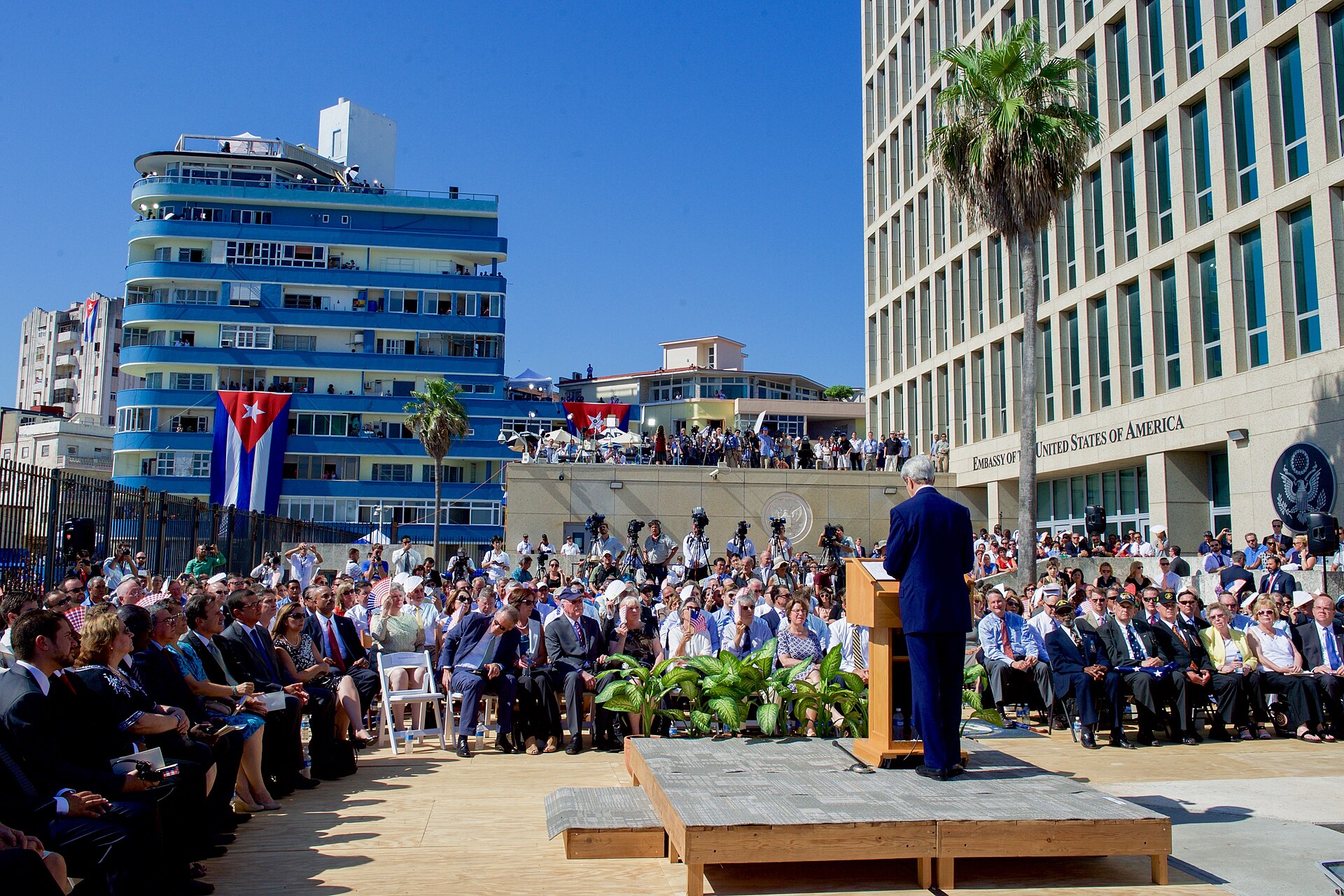
Cuba stays on the US list of state sponsors of terrorism, and Moscow urged its removal on 23 September 2026. The US embassy in Havana reopened on 14 August 2015 during a brief thaw.
On 14 October 2026, Foreign Minister Rodríguez accused Marco Rubio on X of pressing and blackmailing governments to change their UN votes. Cuban outlets expect the vote in late October, but this guide found no UN page confirming the date.
Russia, China and Venezuela, Cuba’s Partners
Russia backs Cuba in public, the Russian foreign ministry said on Wednesday, 23 September 2026. Foreign Minister Sergei Lavrov told his Cuban counterpart that Moscow wants an end to the US blockade.
Lavrov also spoke of a strategic partnership between the two countries. The US order of 29 January 2026 claims Cuba hosts Russia’s largest overseas signals intelligence facility, which this guide could not verify.
China offers rice and diplomatic cover. Wang Yi received Bruno Rodríguez in Beijing on Thursday, 5 February 2026 and promised support within China’s capacities, China’s foreign ministry said.
China promised 60,000 tonnes of rice, and the first batch carried nearly 15,000 tonnes. It reached Havana on the weekend of 23 and 24 May 2026.
Díaz-Canel thanked China on social media, writing that the gesture would reach millions of consumers in every province. Maritime Executive and the South China Morning Post both reported the delivery.
Venezuela, long Cuba’s closest partner, changed course after US forces captured Nicolás Maduro on Saturday, 3 January 2026. Cuba confirmed the next day that 32 of its citizens, among them military personnel, died in the operation.
Acting President Delcy Rodríguez met Donald Trump in New York on 22 September 2026, Prensa Latina reported. She wrote that they discussed energy, mining and security.
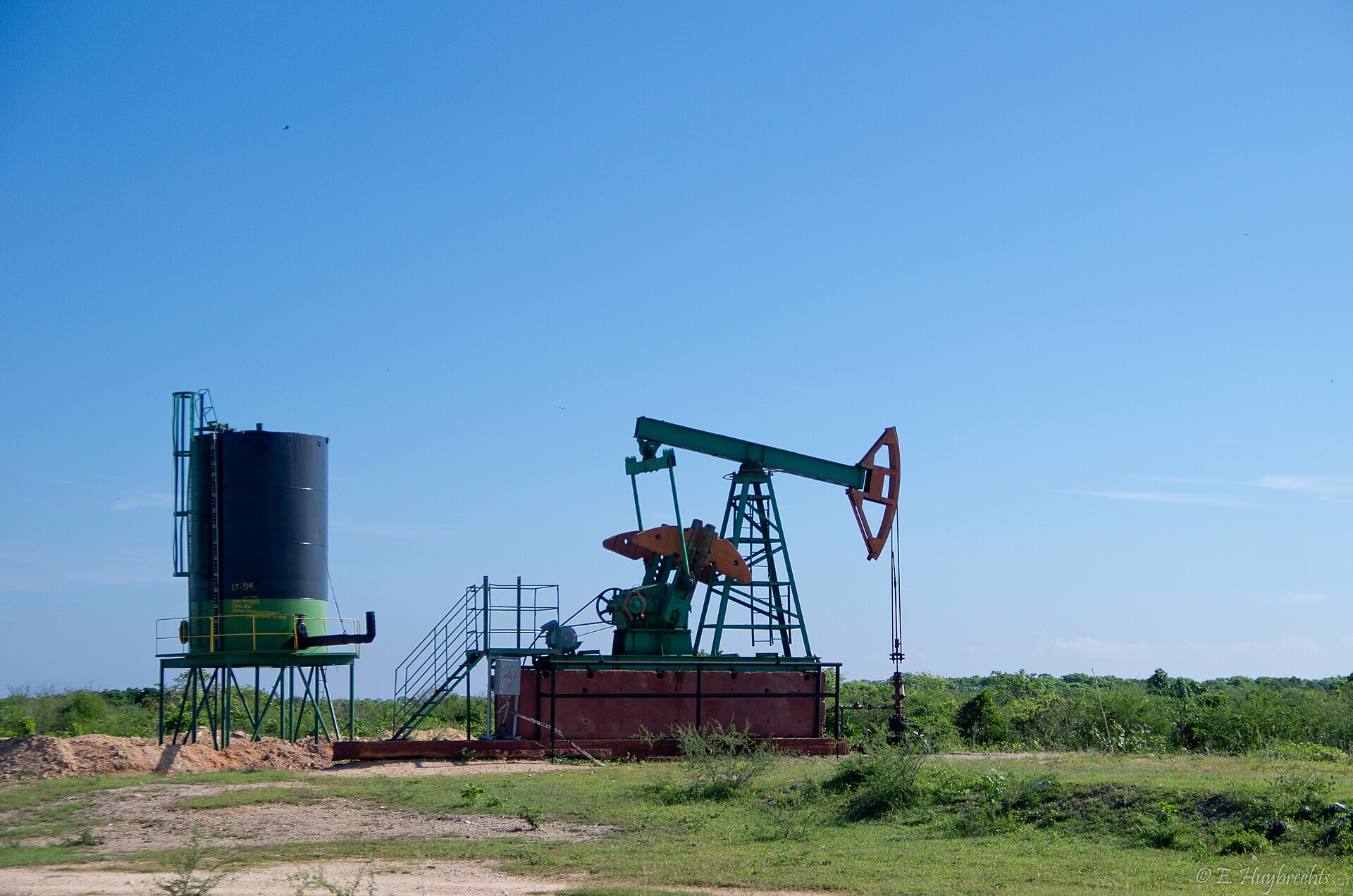
Oil sits at the centre of Cuba’s current crisis. Cuba published a new oil and gas law on Monday, 12 October 2026, and it applies to Cuban and foreign companies alike.
Mexico and the Latin American Split on Cuba
Mexico is Cuba’s most active Latin American supporter. President Claudia Sheinbaum said on Wednesday, 28 January 2026 that oil aid to Cuba was a sovereign decision, N+ reported.
On Monday, 22 June 2026 she said Mexico was working on letting private firms carry fuel to Cuba commercially. On Tuesday, 28 July 2026 she announced more aid shipments, Prensa Latina reported.
Mexico also supplied the shipping for CARICOM’s aid package, CARICOM said on 24 March 2026. It was not among the seven countries that voted against the UN resolution in 2025, nor among the 12 abstentions.
Other Latin American governments stand elsewhere. Argentina and Paraguay voted against the resolution in 2025, and Costa Rica and Ecuador abstained.
Ghana’s president, John Mahama, urged the UN General Assembly on 24 September 2026 to end the embargo. The 2025 vote showed the same pattern, a large majority against a handful of governments.
How Cuba Compares With Its Peers
Cuba has 9.4 to 10.9 million people, depending on the count. The Dominican Republic has 11.5 million and Haiti 11.9 million, World Bank data for 2025 show.
The Dominican Republic produced US$127.4 billion in 2025, or US$11,059 per person, and ECLAC expects it to grow 4.0% in 2026. Haiti produced US$32.1 billion, and ECLAC expects it to shrink 1.9% in 2026.
Jamaica, with 2.84 million people, produced US$22.7 billion in 2025 and is projected to shrink 1.2% in 2026. Guatemala has 18.7 million people and produced US$123.3 billion in 2025.
Cuba’s forecast fall of 10.3% in 2026 is the weakest in ECLAC’s table, below Haiti’s 1.9% and Jamaica’s 1.2% decline. Venezuela, long Cuba’s ally, is projected to grow 6.5% in 2026.
Cuba ranks 14th of the 14 countries in The Rio Times Latin America Power Index, October 2026 edition. The index scores Cuba’s military means and economic weight on incomplete data, as its power map explains.
The index puts Cuba and Venezuela alone in the group closer to Beijing. It shows Cuba as a BRICS partner country with Belt and Road ties.
What It Means for US Readers
US citizens cannot travel to Cuba as tourists, because OFAC allows travel only in 12 licensed categories under a 2000 law. Anyone planning a trip should check the current OFAC guidance before booking.
Companies face a second risk, since the US can now sanction foreign firms in Cuba’s energy, mining, defence or finance sectors. Cuba’s new oil and gas law, in force from 19 October 2026, invites foreign investors into exactly that sector.
On migration, Cuba’s statistics office counted net emigration of 245,264 people in 2025, about 2.6% of the population. Continued economic decline is likely to keep emigration high, which is a policy issue in Florida and Washington.
Cuban Americans follow the Raúl Castro case closely, since the charges concern the 1996 killing of four flyers. Three of the four victims were US citizens and the fourth a US national, the Justice Department said.
For practical steps, see Moving to Cuba 2026 and Cuba People Daily Life Under the Embargo. Daily news is collected on The Rio Times Cuba page.
What Prediction Markets Say
Polymarket, where users bet real money, asks whether Miguel Díaz-Canel will be out as leader of Cuba by 31 December 2026. It displayed 8.5% on 16 October at 10:43 a.m. ET, the midpoint of an 8 cent bid and a 9 cent ask.
About US$751,000 has traded on that contract. The earlier contracts for 31 March and 30 June 2026 both closed without Díaz-Canel leaving office.
The market counts him as out if he leaves the post of first secretary of the Communist Party of Cuba. Its title says leader of Cuba, not president, for that reason.
A second Polymarket bet asks whether former leader Raúl Castro will be in US custody by 31 December 2026. It displayed 3.6% at the same time, on about US$30,000 of volume.
Why we show this: prediction markets turn real-money bets into a live probability that moves within minutes of the news, which is why investors, campaigns and newsrooms in the United States now follow them closely. We show them next to polls and official results, never instead of them.
What Is Not Known
The Cuban count and the World Bank estimate differ by about 1.5 million, and no official reconciliation of the gap was found. The statistics office’s own site could not be opened, and Cuba has no recent World Bank output figure.
The date and outcome of the 2026 UN vote on the embargo are not known as of 16 October 2026. Nor is it known whether the ninth CARICOM-Cuba summit, planned for Havana in March 2026, took place.
The volume of Russian and Chinese oil, credit and aid reaching Cuba is not public. The claim about a Russian listening post comes from a US order and could not be checked.
It is not known whether Cuba will ever ask the OAS for the dialogue its 2009 resolution describes. Venezuela’s acting government is talking to Washington, and what that means for its ties with Havana is unclear.
Frequently Asked Questions
What continent is Cuba in?
Cuba is in North America, as an island in the northern Caribbean south of Florida. Politically and statistically it is part of Latin America and the Caribbean.
Is Cuba a member of CELAC, ALBA, CARICOM or the OAS?
Cuba belongs to CELAC and helped found ALBA-TCP, but it is not a CARICOM member. The OAS ended its 1962 exclusion of Cuba’s government in 2009, and Cuba would take part only after asking for a dialogue.
Who leads Cuba in October 2026?
Miguel Díaz-Canel is president and first secretary of the Communist Party, and Manuel Marrero Cruz is prime minister. Bruno Rodríguez Parrilla is foreign minister, and Juan Esteban Lazo Hernández presides over the National Assembly.
How big are Cuba’s population and economy?
Cuba’s statistics office counted 9,434,593 residents at the end of 2025, while the World Bank shows 10,937,203. ECLAC projects that the economy will shrink 10.3% in 2026.
Who are Cuba’s main allies?
Russia and China give diplomatic backing, with Chinese rice aid in 2026, and Mexico sends aid and works on fuel supplies. Venezuela, long a close partner, changed course after Nicolás Maduro was captured on 3 January 2026.
What is the US embargo and how do countries vote on it?
The embargo is a set of US sanctions in place since 1962. The UN General Assembly voted 165 to 7 with 12 abstentions against it on 29 October 2025.
Sources: Prensa Latina, ONEI population release, 21 July 2026; World Bank, Cuba and regional data (API, updated 8 October 2026); ECLAC, Economic Survey of Latin America and the Caribbean 2026, 20 August 2026; ECLAC, GDP growth table 2025 to 2027; Cubanet, ECLAC April projection; Cubanet, Cuban government 2026 target; US State Department, 2026 Trafficking in Persons Report, Cuba; Prensa Latina, Diaz-Canel, 11 October 2026; Prensa Latina, Diaz-Canel as first secretary, 1 October 2026; Cubanet, Diaz-Canel coverage, 5 to 12 October 2026; EFE via Swissinfo, Cuban population, 21 July 2026; Directorio Cubano, ONEI population release; China foreign ministry, Wang Yi and Rodriguez, 5 February 2026; Diario de Cuba, Lavrov and Rodriguez, 26 September 2026; Diario de Cuyo, re-election to 2028; Gaceta Oficial de la Republica de Cuba No. 85, 12 October 2026 (copy hosted by CiberCuba); Prensa Latina, Russian foreign ministry on the Lavrov meeting, 23 September 2026; South China Morning Post, Chinese rice shipment, 25 May 2026; Maritime Executive, rice ship in Havana, May 2026; US Department of Justice, Raul Castro indictment; White House, Executive Order 14380, 29 January 2026; White House, Cuba sanctions order, 1 May 2026; Federal Register, OFAC Cuba Sanctions Regulations, 30 September 2026; OFAC, Cuba FAQ 698 on tourist travel; UN News, General Assembly vote on the embargo, 29 October 2025; OAS, resolution AG/RES. 2438 of 3 June 2009; CARICOM, anniversary statement, 8 December 2025; CARICOM, humanitarian supplies, 24 March 2026; CARICOM, COFCOR statement on Cuba, 27 May 2026; CARICOM, member states and associate members; Andean Community, members, associates and observers; Uruguay, Law 18,337 approving the Mercosur-Cuba agreement (signed 21 July 2006); Colombian foreign ministry, Bogota Declaration, 21 March 2026; Colombian foreign ministry, Uruguay and CELAC, 15 April 2026; Prensa Latina, ALBA-TCP statement, 22 May 2026; RTP, Cuba and BRICS; Prensa Latina, Eurasian Economic Union observer status, 7 August 2026; CIDOB, Delcy Rodriguez profile; Prensa Latina, Rodriguez as acting president, 8 October 2026; Prensa Latina, Trump and Rodriguez meeting, 23 September 2026; Radio Agricultura, Cuba confirms 32 deaths, 4 January 2026; N+, Sheinbaum on Cuba, 28 January 2026; Prensa Latina, Sheinbaum on fuel, 22 June 2026; Prensa Latina, Sheinbaum on aid, 28 July 2026; US Treasury, release on Iran networks and BICSA, 15 October 2026; OFAC, recent actions, 15 October 2026; OnCuba, Rodriguez on Rubio, 15 October 2026; Diario de Cuba, Cuban officials on Rubio and the UN vote, 15 October 2026; MyJoyOnline, Mahama at the UN, 24 September 2026; Polymarket, Diaz-Canel market data; exchange rate context from open.er-api.com, 16 October 2026 (all accessed 16 October 2026).
Editorial responsibility: Matthias Camenzind, Editor-in-Chief · Editorial standards · Report an error
Expat Guide to Cuba
What The Rio Times publishes for foreigners who live in or move to Cuba.
Start here
- Moving to Cuba 2026, Step by Step
- Panama Visa Appointment System Launches for Havana Applicants
- Spain and Portugal Close Their Golden Visa Doors, Forcing LATAM Investors to Reroute
Coming up in Cuba
Understand Cuba