Cuba Explained 2026: The Economy, the Exodus, the System and What to Watch
GUIDES · CUBA
Key Facts
- —The country The largest island in the Caribbean, about 145 kilometres from Florida at the closest point. A one-party communist state since the 1959 revolution.
- —Who governs President Miguel Díaz-Canel, who also leads the Communist Party, and Prime Minister Manuel Marrero Cruz, as of September 2026.
- —Why it matters Cuba is in its deepest economic crisis in decades. The grid keeps failing, prices are up about a quarter in a year and people are leaving.
- —The people 9,434,593 residents at the end of 2025, by the official count. That is 313,414 fewer than a year earlier, a fall of about 3 percent in one year.
- —The money Three official exchange rates and one informal one. On 24 to 26 September 2026 they ranged from 24 to about 730 pesos to the US dollar.
- —What it means for you Britain advises against all but essential travel. Foreign Visa and Mastercard cards no longer work, so visitors must bring cash.
- —Still open Whether pressure from Washington ends in a negotiated deal, and whether market reforms arrive fast enough to stop the slide.
Cuba explained for foreign readers: how the one-party system works, why the peso has four prices, what has pushed the economy into free fall, and what visitors and investors need to know as of September 2026.
Cuba explained starts with a paradox. It is a state that still plans most of the economy, yet ordinary life now runs on US dollars, private shops and an exchange rate the government does not set. Understanding that gap explains almost everything else.
What kind of country is this?
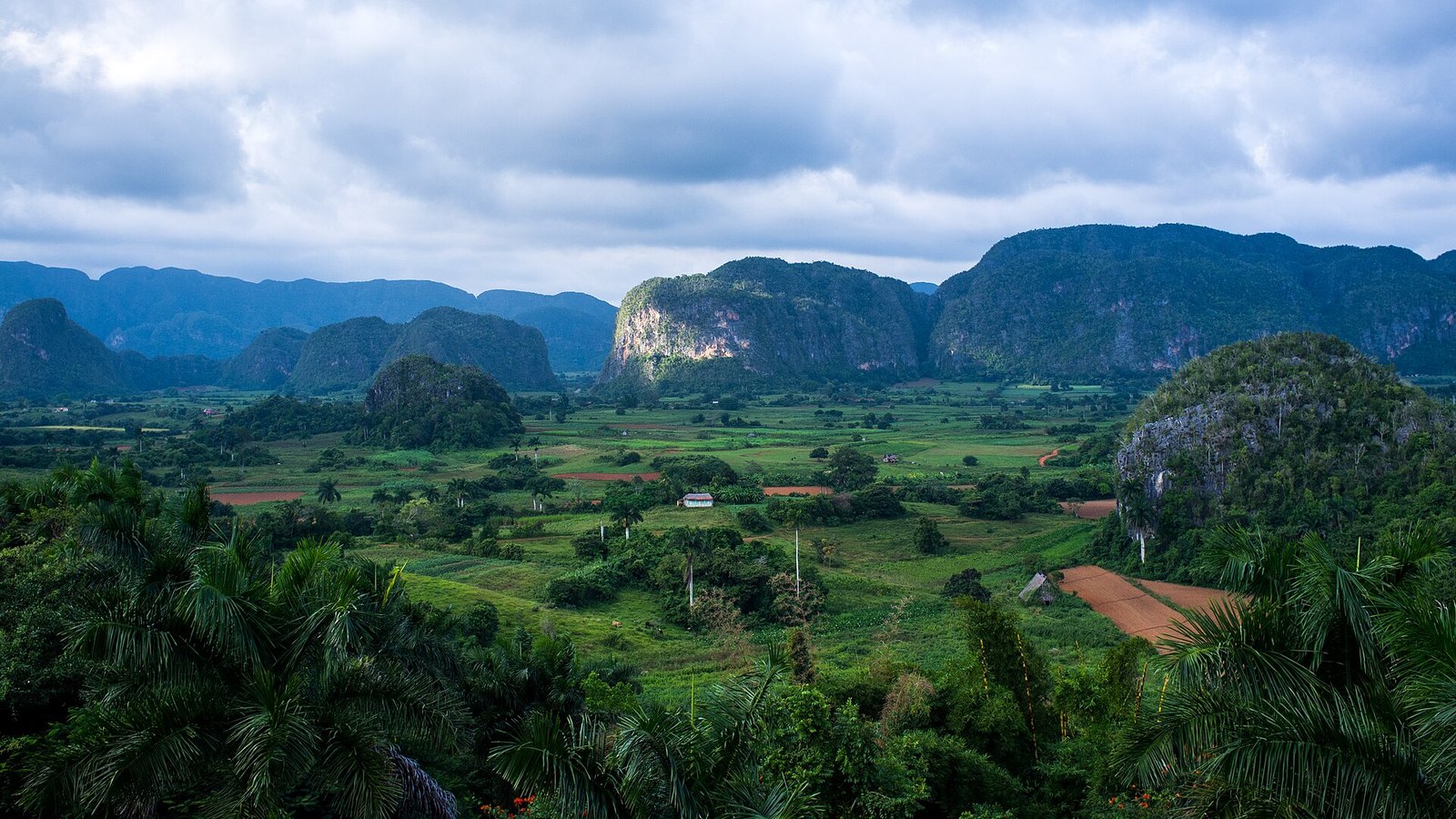
Cuba covers about 110,000 square kilometres, roughly the size of Bulgaria or the US state of Tennessee. Its north coast lies about 145 kilometres from Key West, Florida, at the closest point. That short distance has shaped Cuban history for two centuries.
Spain ruled the island until 1898. The United States then dominated it economically for six decades. In January 1959 Fidel Castro’s rebels took power, nationalised most private property and aligned with the Soviet Union. Washington imposed a trade embargo in the early 1960s that remains in force.
The population is shrinking fast. The national statistics office, ONEI, counted 9,434,593 residents at the end of 2025, roughly as many as Hungary. That was 313,414 fewer than a year earlier. The demographer Juan Carlos Albizu-Campos estimates that nearer 8 million people actually lived there at the end of 2024.
Most of the gap is emigration. Since 2021 hundreds of thousands of Cubans have left, mainly for the United States and Spain. Many are young and skilled, which leaves an ageing population and fewer workers.
Who runs Cuba and how
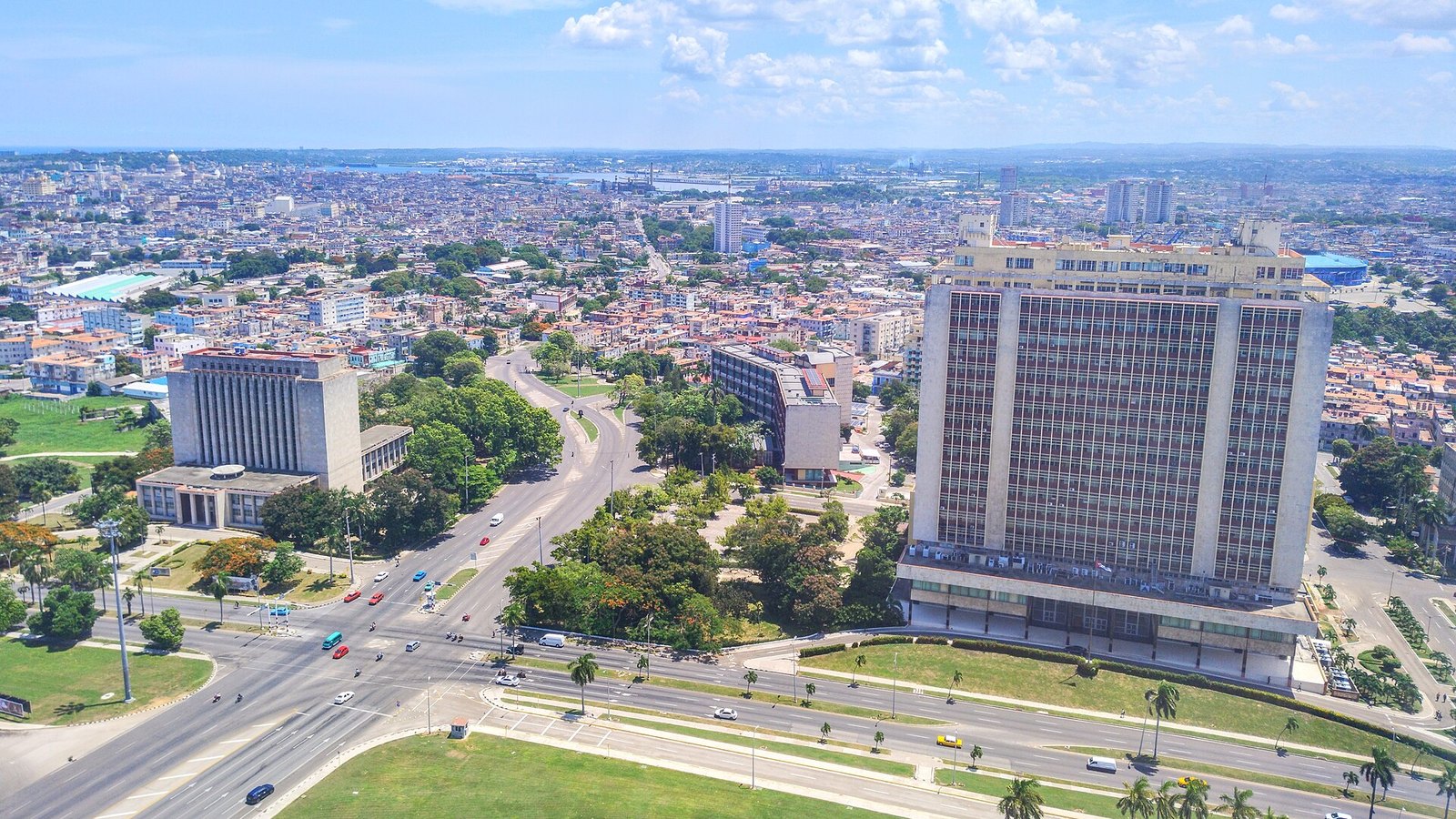
Cuba is a one-party state. The 2019 constitution names the Communist Party of Cuba as the “superior leading force” of society and the state. No other party may compete. Elections exist, but candidates are vetted and there is no organised opposition.
Miguel Díaz-Canel is president of the republic and, since April 2021, first secretary of the Communist Party. He is the first leader of the Communist Party not named Castro. His current five-year term began in 2023; the constitution limits presidents to two terms. Manuel Marrero Cruz is prime minister and runs day-to-day government.
The National Assembly of People’s Power is the legislature. Its 470 members meet only a few times a year and usually pass laws unanimously. Real decisions are taken by the party leadership and the Council of Ministers.
The armed forces matter beyond defence. A military-run conglomerate, GAESA, controls much of the hotel, retail and remittance business. Raúl Castro, Fidel’s brother, left the party leadership in 2021 but still appears at official events at 95.
How the economy works
Most large firms are state-owned, and the state sets many prices and wages. For decades Cuba lived on subsidies, first from the Soviet Union and then from Venezuelan oil. Its main foreign-currency earners are tourism, money sent by relatives abroad, doctors and nurses hired out to other countries, nickel, tobacco and rum.
Private business has been allowed back in stages. Since 2021, small and medium private firms, known as mipymes, can register legally. They now import and sell much of the food found in shops, often priced in dollars.
The economy has shrunk for three years running. ONEI reported a 1.1 percent fall in 2024. The University of Havana’s Centre for the Study of the Cuban Economy estimates output fell about 5 percent in 2025. The UN’s Economic Commission for Latin America and the Caribbean is known as ECLAC. It forecasts a 10.3 percent drop in 2026, the worst in the region.
Prices are climbing fast. Official consumer prices were 25.19 percent higher in August 2026 than a year earlier, according to ONEI. That measure covers only the formal market; prices on the street have risen faster.
The currency is the Cuban peso. Here precision matters, because Cuba has several official exchange rates at once. Since a reform on 18 December 2025, set out by the Central Bank of Cuba, the official market has three segments.
Segment I keeps the old fixed rate of 24 pesos to the US dollar. It covers state purchases of essentials such as medicines, fuel, electricity, the basic food basket and public transport. International market data also shows 24 pesos to the US dollar on 28 September 2026, because it tracks this fixed rate.
Segment II uses a fixed rate of 120 pesos to the US dollar. It applies to state and mixed-ownership companies that earn foreign currency, such as exporters. The aim is to reward exporters without devaluing the rate used for essentials.
Segment III is a floating official rate for individuals and private businesses, published daily by the central bank. It started at 410 pesos to the US dollar in December 2025. By 24 September 2026 it had reached 676 pesos to the US dollar, according to the central bank figure reported by CiberCuba.
Then there is the informal market, where most people actually trade. The independent outlet elTOQUE estimates a daily representative rate from online offers. It put the rate at 730 pesos to the US dollar on 26 September 2026. The government disputes elTOQUE’s method, but businesses widely use it.
What this means in practice: 1,000 pesos are worth about US$1.37 at the informal rate. At the floating official rate it buys about US$1.48, and at the old fixed rate US$41.67. Which rate applies depends on who you are and what you are buying.
What is happening right now
As of September 2026, the power system is failing repeatedly. The national grid collapsed on 18 September 2026, leaving most of the island without electricity. It was one of several nationwide failures in 2026. Old oil-fired plants, missing spare parts and a shortage of fuel lie behind the blackouts.
Fuel became scarcer after events in Venezuela. The United States removed Nicolás Maduro from power on 3 January 2026, and Venezuelan oil shipments to Cuba were disrupted. Later that month President Donald Trump signed an order allowing tariffs on countries that supply oil to Cuba.
Tourism has collapsed. Cuba received 450,353 international visitors from January to August 2026, down 64.4 percent on the same period of 2025, according to ONEI. In 2018 the island welcomed about 4.7 million visitors in the full year.
The government is loosening some rules under pressure. It now lets private businesses charge customers in US dollar cash, and it has opened parts of tourism to private firms. Officials describe the changes as irreversible, but say they cannot predict where they will lead.
Diplomatic isolation is growing too. Washington added sanctions on nickel companies and military officers in September 2026. Costa Rica broke off relations on 18 September 2026.
What to watch
Watch the gap between the floating official rate and the informal rate. When the two move closer, the central bank’s reform is working. When the informal rate races ahead, as in September 2026, confidence is falling.
Watch fuel deliveries and the grid. Each new tanker, or each supplier that pulls back under US pressure, shows up within weeks in blackout hours. Longer blackouts also hit water supply, hospitals and phone networks.
Watch Washington and Havana. Both sides say different things about talks. Any deal on oil, sanctions or migration would change the outlook quickly; so would tougher measures.
Watch the National Assembly’s year-end session, usually held in December. It sets the economic plan and budget for 2027 and often approves new rules for private business.
What this means for foreigners
Britain’s Foreign Office advises against all but essential travel to Cuba, citing power cuts, fuel and water shortages and travel disruption. It says international Visa and Mastercard cards are no longer accepted and cannot be used at cash machines. Visitors should bring enough US dollars or euros for their whole stay.
For Americans the rules are stricter still. Tourist travel to Cuba is prohibited under US law; travel must fit one of 12 authorised categories. The State Department rates Cuba Level 2, Exercise Increased Caution, and warns of outages lasting up to 12 hours in Havana.
Everyday costs depend on the rate you use. Private restaurants, taxis and rentals price in dollars or at the informal rate. Our cost of living guide for Cuba sets out typical rents and prices.
For investors, Cuba remains a narrow opportunity. The US embargo exposes many foreign firms to legal risk in the United States, and profits are hard to take out. This does not mean nothing is possible: joint ventures in tourism, mining and energy continue, but usually with a state partner.
Connected Coverage
Cost of Living in Cuba 2026: Rents, Prices and the Dollar Economy
Cuba’s Informal Dollar Rate at a Record: What Expats Need to Know
Britain Revises Its Cuba Travel Advice: Bring Cash, Expect Blackouts
Cuba Tourism Falls 64.4% in the First Eight Months of 2026
Venezuela Explained 2026: The Transformation and the Oil Economy
Sources: Exchange-rate segments from the Central Bank of Cuba as explained by its president in December 2025; population, prices and tourism from ONEI; growth estimates from the University of Havana and ECLAC; travel guidance from the UK Foreign Office and US State Department.
- Cubadebate — the three exchange-rate segments explained, 17 December 2025
- Central Bank of Cuba president Juana Lilia Delgado on the new exchange market, 18 December 2025
- Banco Central de Cuba — official exchange rates
- CiberCuba — informal and central bank rates, 24 September 2026
- OnCuba News — ONEI population count of 9,434,593 at end-2025
- EFE via Infobae — ONEI inflation of 25.19% in August 2026
- EFE via Infobae — CEEC estimate of a 5% contraction in 2025
- UK Foreign Office — Cuba travel advice
- US State Department — Cuba travel advisory
- Mayer Brown — US executive order on tariffs for countries supplying oil to Cuba
What Is Not Known
How many people really live in Cuba. The official count and independent estimates differ by more than a million, and ONEI does not publish a full breakdown of emigration.
Where the peso settles. The central bank has not said when, or whether, it will merge the three official segments into one rate. Until it does, the 24-peso and 120-peso rates remain far from what the market pays.
Whether talks with Washington are under way. US officials have spoken of a possible deal, while Havana says there are no negotiations. Neither side has published terms.
How deep the 2026 recession will be. ONEI has not published full national accounts for 2025, and the forecasts that exist depend heavily on fuel supplies.
Frequently Asked Questions
What is the exchange rate in Cuba in 2026?
There are four. The official rates are 24 and 120 pesos to the US dollar for state operations, and a floating official rate of about 676 on 24 September 2026. The informal rate tracked by elTOQUE was 730 pesos to the US dollar on 26 September 2026.
Who is the leader of Cuba?
Miguel Díaz-Canel is president and first secretary of the Communist Party, as of September 2026. Manuel Marrero Cruz is prime minister. Raúl Castro left the party leadership in 2021.
Can I use my credit card in Cuba?
Not if it is a foreign Visa or Mastercard card, according to the UK Foreign Office. Such cards are no longer accepted and do not work at cash machines. Bring enough US dollars or euros in cash for the whole trip.
Why does Cuba have so many blackouts?
Its old oil-fired power plants break down, spare parts are scarce and fuel imports have fallen sharply since Venezuelan supplies were disrupted in 2026. The national grid collapsed again on 18 September 2026.
Can Americans travel to Cuba?
Only within one of 12 categories authorised by the US government, such as family visits or support for the Cuban people. Tourist travel is prohibited under US law. The State Department rates Cuba Level 2, Exercise Increased Caution.
This article was produced by The Rio Times’ automated newsroom system. How we use AI · Report an error
Read More from The Rio Times
Rotate for Best Experience
This report is optimized for landscape viewing. Rotate your phone for the full experience.
You've reached your free article limit
Subscribe to The Rio Times for unlimited access to expert analysis, market intelligence, and daily briefings on Latin America.