CUBA · REGIONS
Key Facts
- Structure Cuba has 15 provinces plus one island municipality, the Isla de la Juventud, under a 2010 law.
- People 9,748,007 people lived in Cuba at the end of 2024, 3.1% fewer than a year earlier.
- Havana Havana is capital and province in one: 1,749,964 people, about 18% of the country.
- Santiago Santiago de Cuba province has 963,915 people, the most after Havana; its city is second largest.
- Travel US rules bar tourist trips to Cuba; family visits and a few other purposes remain allowed.
- Power Index Cuba ranks 14th of 14 in The Rio Times Latin America Power Index, with 22.5 points (November 2026 edition).
Cuba has 15 provinces and one special municipality, the Isla de la Juventud, and this guide groups them into west, centre and east. Together they hold 9,748,007 people (end of 2024), and Havana alone holds about 18% of them.
This guide walks through every province, from Havana to Santiago de Cuba and the beach resort of Varadero. It also explains what the map means for money, travel and remittances if you live in the United States.

How Cuba Is Divided
Cuba’s 2019 Constitution divides the national territory into provinces and municipalities and leaves their number and names to the law. Under Law 110 of 2010, Cuba has 15 provinces and 168 municipalities, according to the yearbook of the statistics office ONEI (Oficina Nacional de Estadística e Información).
The old Havana province was split in 2011 into Artemisa, Mayabeque and the city province of La Habana. The Isla de la Juventud, a large island off the south-west coast, is a special municipality that sits outside the 15 provinces.
West, centre and east are not legal units, only an editorial grouping of the long, thin island. We use them below because they roughly match how the economy and the weather differ.
Cuba’s 15 Provinces at a Glance
These figures are ONEI’s 2024 effective population, meaning residents who spent at least 180 of the last 365 days in the country. Areas are in square kilometres.
West (3,667,021 people, 37.6% of the total)
- Pinar del Río: 515,208 people; 8,884 km²
- Artemisa: 452,430 people; 4,003 km²
- La Habana: 1,749,964 people; 728 km²
- Mayabeque: 330,260 people; 3,744 km²
- Matanzas: 619,159 people; 11,792 km²
Centre (2,442,315 people, 25.1% of the total)
- Cienfuegos: 342,709 people; 4,189 km²
- Villa Clara: 665,447 people; 8,412 km²
- Sancti Spíritus: 404,037 people; 6,777 km²
- Ciego de Ávila: 376,919 people; 6,972 km²
- Camagüey: 653,203 people; 15,386 km²
East (3,565,650 people, 36.6% of the total)
- Las Tunas: 475,343 people; 6,593 km²
- Holguín: 911,674 people; 9,216 km²
- Granma: 749,289 people; 8,374 km²
- Santiago de Cuba: 963,915 people; 6,228 km²
- Guantánamo: 465,429 people; 6,168 km²
Special municipality
- Isla de la Juventud: 73,021 people; 2,419 km²
Camagüey is the largest province by area, at 15,386 square kilometres, and Matanzas is second at 11,792. Havana is the smallest of the 15 provinces at 728 square kilometres, yet it has the most people.
Western Cuba: Havana and the Tobacco Belt
The west holds about 38% of Cuba’s people, and most of them live in or near Havana. Pinar del Río, at the far western end, is known for tobacco and for the Viñales Valley, a UNESCO World Heritage landscape.
Artemisa and Mayabeque are Havana’s farming and commuter neighbours. Artemisa also hosts the Mariel Special Development Zone, a port and industrial area that Cuba set up to attract foreign investors.
Matanzas, to the east of Havana, is Cuba’s main beach-resort province because Varadero sits there. It also has the Antonio Guiteras power station, one of Cuba’s biggest.
Havana: A Capital That Is Also a Province
La Habana is both the capital and a province, and ONEI counts all 1,749,964 of its residents as urban. That is about 18% of Cuba’s population on 728 square kilometres, or 2,403 people per square kilometre against 89 for the country as a whole.
The province shrank by 3.5% in one year, from 1,814,207 people at the end of 2023 to 1,749,964 at the end of 2024. That is a loss of 64,243 people, the largest of any province in absolute numbers.
For a US reader, Havana is where the US Embassy, the country’s main international airport and most big hotels sit. It is also where Cuba’s government sits, as our guide to who holds power in Cuba explains.
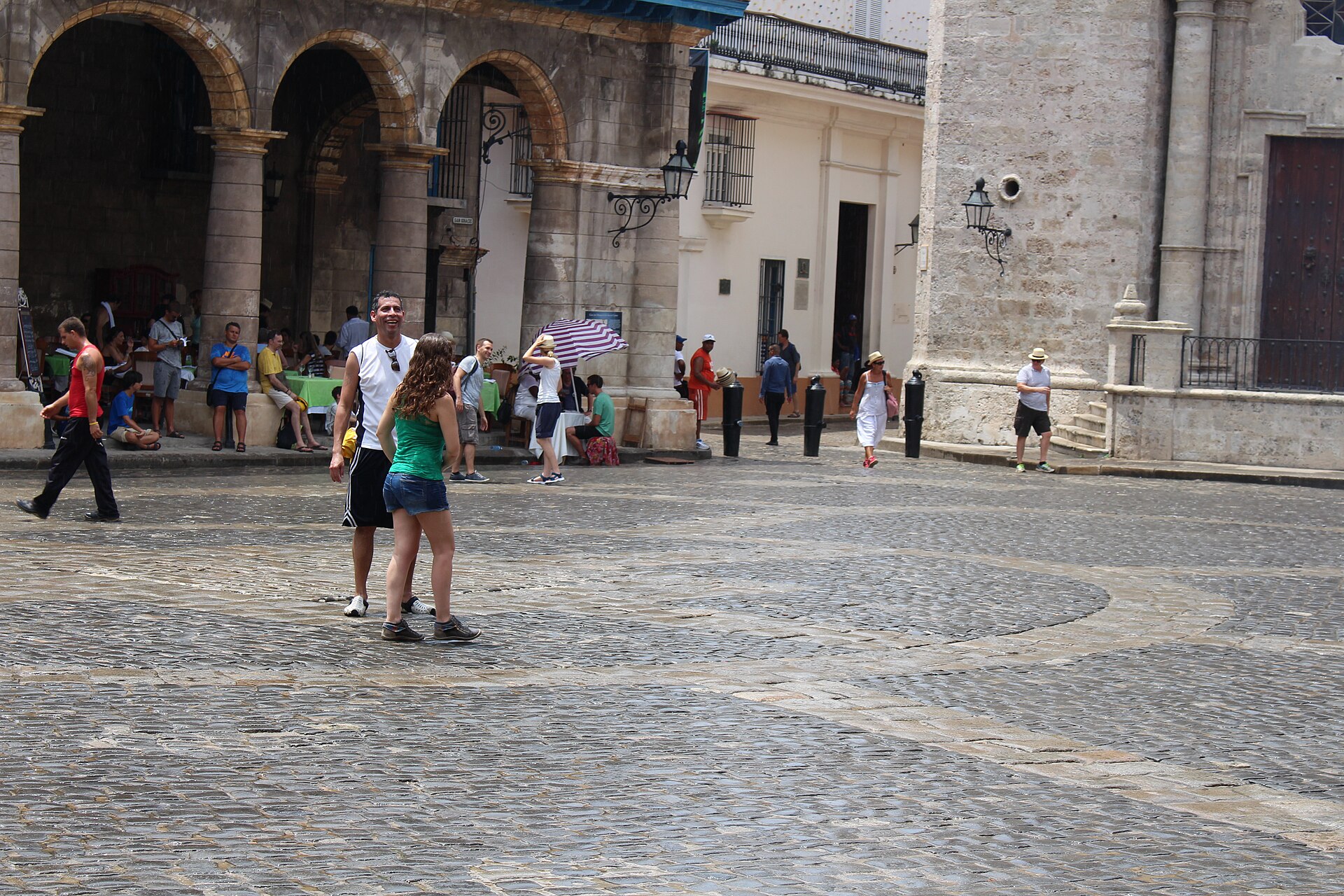
Central Cuba: Colonial Towns and Farmland
Five provinces form the centre: Cienfuegos, Villa Clara, Sancti Spíritus, Ciego de Ávila and Camagüey. Together they hold 2,442,315 people, about 25% of the country.
Cienfuegos is a bay city with a UNESCO-listed historic centre, and Sancti Spíritus is home to the old colonial town of Trinidad. Ciego de Ávila is known for the island resorts off its north coast, and Camagüey is known for cattle ranching.
Santa Clara, the capital of Villa Clara, had 185,440 residents at the end of 2024. Camagüey city had 254,867, just ahead of Holguín city at 254,358.
Eastern Cuba: Santiago, Holguín and the Hurricane Coast
The east holds 3,565,650 people, about 37% of the country, in five provinces that run from Las Tunas to Guantánamo. It is also the part of the island most exposed to hurricanes from the Caribbean.
Hurricane Melissa hit Santiago de Cuba province near the coastal town of Chivirico on 29 October 2025 as a Category 3 storm, according to US and Cuban forecasters. Cuban authorities reported 76,689 homes affected on 7 November 2025, a preliminary count that later rose.
Holguín, with 911,674 people, is the third-largest province by population after Havana and Santiago de Cuba, and Granma has 749,289. Guantánamo province hosts the US naval station at Guantánamo Bay.
Santiago de Cuba: The Second City
Santiago de Cuba province has 963,915 people, the most after Havana. Its capital city, with 393,589 residents, is Cuba’s second largest by a wide margin.
The province lost 2.5% of its population in 2024, from 988,655 people to 963,915. That is slower than Havana’s 3.5%, and it covers the year before Hurricane Melissa struck the province.
Varadero and Matanzas: Where the Beaches Are
Varadero is a resort strip on the Hicacos Peninsula in Matanzas province, and it is where most foreign beach holidays in Cuba are sold. Matanzas province has 619,159 residents, ranking seventh, and its provincial capital, Matanzas city, has 125,272.
Tourism is the reason Varadero matters to the national economy. ONEI counted 1,810,663 international visitors in 2025, down from 2,203,117 in 2024, a fall of 17.8%, and Canada was the largest market at 754,010.
How the Economy Differs by Province
ONEI publishes province-level population and land data, but we found no comparable output figure for each province. Still, the best-known earners are easy to place: tourism in Matanzas and the Ciego de Ávila resorts, services in Havana, farming in Pinar del Río and the centre, and nickel in Holguín.
Moa, on Holguín’s north coast, is Cuba’s best-known nickel site, run as a joint venture of Cuba’s state-owned General Nickel Company and Canada’s Sherritt International. Sherritt said in May 2026 that it had suspended its direct participation after new US sanctions.
Population is falling in every province. Cuba’s effective population fell by 3.1% in 2024, from 10,055,968 to 9,748,007, and the Isla de la Juventud fell by 4.1%.
The Isla de la Juventud
The Isla de la Juventud, once called the Isle of Pines, is the island’s own special municipality with 73,021 people on 2,419 square kilometres. Its capital, Nueva Gerona, had 39,627 residents at the end of 2024.
It has the lowest density of any territory in the data, with 30 people per square kilometre. It lost 4.1% of its people in 2024, the steepest fall in the country.
In Plain English
- Province: Cuba’s main regional unit, with its own governor and council under the 2019 Constitution.
- Municipality: the local unit below a province, 168 in all.
- Special municipality: a municipality with special administrative status that is not part of any province, as with the Isla de la Juventud.
- Effective population: ONEI’s headcount of residents who spent at least 180 days in Cuba in the last 365.
- OFAC: the US Treasury’s sanctions office, which writes the rules for travel and money to Cuba.
- Cuba Restricted List: a State Department list of companies tied to Cuba’s military, intelligence or security services.
- Cuba Prohibited Accommodations List: a State Department list of Cuban properties where US persons may not stay.
What It Means for US Readers
US law bars tourist travel to Cuba, so a beach trip to Varadero is not a permitted reason to go. OFAC, the US Treasury’s sanctions office, says travel-related transactions are allowed only for the categories its regulations list, such as visits to close relatives, official government business, journalism and certain research and religious activities.
On Wednesday 30 September 2026 OFAC removed the authorisation to attend or organise professional meetings in Cuba and ended group people-to-people educational travel. Travellers in Cuba under the old professional-meetings rule had until 30 October 2026 to leave, and group educational trips keep limited protection only if the traveller had made a travel-related payment, such as buying a ticket, before 30 September.
OFAC also bars staying at properties on the State Department’s Cuba Prohibited Accommodations List and, since 30 September 2026, indirect financial dealings with entities on the Cuba Restricted List. The State Department rates Cuba Level 2, Exercise Increased Caution, citing crime and unreliable electrical power, in an advisory issued on 7 May 2025.
Remittances are a separate track: a US person aged 18 or older may send money to a close relative who is a Cuban national. The recipient must not be a prohibited Cuban government official, a Communist Party member or a close relative of either, and the money must not be for emigration.
OFAC also allows gifts to Cuban nationals who are not such officials, payments to independent private entrepreneurs and civil-society groups, and support for religious organisations and students. Two one-time payments of up to US$1,000 each per person are allowed for emigration costs, and anything that routes through an entity on the Cuba Restricted List is excluded.
Banks, registered brokers and US-registered money transmitters may process these authorised payments, subject to record-keeping rules. This is reporting, not advice, and OFAC and the State Department update their pages often, so the rules can change after publication.
Our guides to Cuba population and ethnic groups and Cuba history from colonisation to 2026 give more background, and our Cuba news hub tracks the latest sanctions and blackout news. Our report on Cuba tourism falling shows how the visitor drop plays out.
What Is Not Known
ONEI has not published, in the data we reviewed, a province-by-province breakdown of economic output, so we cannot say which province earns the most. Hurricane Melissa’s full effect on the 2025 population figures will only show when ONEI releases its next yearbook.
We also do not know whether the 30 September 2026 travel changes will be followed by more rules, because OFAC can amend its regulations at any time. A final count of hurricane damage by province has also not been published.
Frequently Asked Questions
How many provinces does Cuba have?
Cuba has 15 provinces and one special municipality, the Isla de la Juventud. Law 110 of 2010 sets 15 provinces and 168 municipalities.
What is the biggest province in Cuba?
By population, Havana is the biggest with 1,749,964 people at the end of 2024. By area, Camagüey is the largest at 15,386 square kilometres.
Where is Varadero?
Varadero is a beach resort on the Hicacos Peninsula in Matanzas province, east of Havana. It is Cuba’s best-known resort area for foreign visitors.
Can Americans travel to Cuba as tourists?
Not for tourism, because US law bars it. OFAC only allows trips in listed categories such as visits to close relatives, journalism and certain research.
Can I send money to family in Cuba?
Yes, a US person aged 18 or older may send remittances to close relatives who are Cuban nationals, with limits on who may receive them. Transactions involving entities on the Cuba Restricted List are excluded.
Which province is Santiago de Cuba in?
Santiago de Cuba is both a province and its capital city, in the east. The province has 963,915 people and the city 393,589.
What is the Isla de la Juventud?
It is a special municipality, not a province, with 73,021 people. It lies off Cuba’s south-west coast and its capital is Nueva Gerona.
Sources: ONEI, Anuario Demográfico de Cuba 2024, July 2025; Constitution of Cuba, 2019; US Treasury OFAC, Cuba Sanctions FAQs, updated 29 September 2026; US State Department, Cuba travel advisory, 7 May 2025; US National Hurricane Center, Hurricane Melissa Discussion 32, 29 October 2025; ONEI international visitor statistics 2025; Cuban government damage statements, 7 November 2025; Sherritt International company statements, May 2026.
This article was produced by The Rio Times’ automated AI newsroom. Editorial responsibility: Matthias Camenzind, Publisher and Editor-in-Chief. The Rio Times also runs Ask Rio Times, which answers from 100,000+ of our own articles, the daily Latin America Power Map, and prediction-market odds on elections and markets.. How we use AI · Report an error
Expat Guide to Cuba
What The Rio Times publishes for foreigners who live in or move to Cuba.
Start here
- Moving to Cuba 2026, Step by Step
- Panama Visa Appointment System Launches for Havana Applicants
- Spain and Portugal Close Their Golden Visa Doors, Forcing LATAM Investors to Reroute
Understand Cuba
Cuba and the United States
- What Is Going On Between Cuba and the United States?
- What Is Going On Between Cuba and the United States?
- Can Americans Still Travel to Cuba in 2026?
- Who Runs Cuba in 2026? Raúl Castro and the US Murder Charge