
GUIDES · CUBA
Key Facts
- —The island A one-party Communist state 145 kilometres (90 miles) from Florida, a BRICS partner country and, since 29 January 2026, a US national-emergency target.
- —US pressure Executive Order 14380 (29 January 2026) declared a national emergency, and its oil-supplier tariffs were ended on 20 February 2026. Order 14404 (1 May 2026) created a sanctions list that named Miguel Díaz-Canel on 4 June 2026.
- —Russia and China A Russian tanker brought about 730,000 barrels on 31 March 2026. China has sent rice and solar equipment by ship in 2026.
- —Europe The EU is reviewing its 2016 cooperation agreement. The European Parliament voted 283 to 199 on 18 June 2026 to urge its suspension.
- —UN scorecard On 29 October 2025 the UN General Assembly backed ending the US embargo by 165 votes to 7, with 12 abstentions.
- —Prediction markets Polymarket gives an 8.5% chance that Miguel Díaz-Canel is out as Cuba’s leader by 31 December 2026 (17 October, 9:12 a.m. ET). It gives 11.5% for a US strike on Cuba by that date.
- —Power Index Cuba ranks 14th of 14 in The Rio Times Latin America Power Index, with 22.5 points (October 2026 edition).
Cuba geopolitics explained: which powers press, feed or court Havana in October 2026, and what each of them wants. Every claim carries its date and a named source.
Cuba geopolitics in 2026 is a contest over a fuel-starved island 145 kilometres (about 90 miles) south of Florida. Washington is squeezing it, Moscow and Beijing are keeping it afloat, and Europe is questioning its own deal with Havana.
For US readers it matters because the pressure runs through American law, American ports and American tariffs. This guide covers the United States, Russia, China, the European Union, Mexico, the Gulf states, Turkey, India and BRICS.
The United States Sets the Terms
No other state shapes Cuba’s choices as much as the United States. The embargo dates from the early 1960s, and Washington has held the Guantánamo Bay naval station since a 1903 lease that Havana disputes.
On 29 January 2026 President Donald Trump signed Executive Order 14380, declaring a national emergency over Cuba. It let the President set extra tariffs on goods from any country that supplies oil to the island, directly or through intermediaries.
Commerce would find whether a country supplies oil, State would recommend, and the President would decide. Executive Order 14389 of 20 February 2026 then ended the extra duties under that order, although the national emergency remains.

A second order, number 14404, followed on 1 May 2026. It created a sanctions list covering Cuba’s energy, defence, mining, financial services and security sectors.
It also reaches foreign banks that handle significant transactions for listed persons. The Treasury told non-US firms to finish winding down existing dealings with GAESA, the military-run business group, by 5 June 2026.
The Treasury’s Office of Foreign Assets Control listed GAESA under the new order on 7 May 2026. On 4 June 2026 it added President Díaz-Canel, his wife Lis Cuesta Peraza and the Revolutionary Armed Forces ministry.
On 15 October 2026 the Treasury added a Havana bank, Banco Internacional de Comercio, to the same list. New regulations that took effect on 30 September 2026 ended group people-to-people travel and US bank accounts for independent Cuban entrepreneurs.
Talks are the other half of the picture. On 5 October 2026 Cuba’s chargé d’affaires in Washington, Lianys Torres Rivera, said the two sides keep channels of communication but hold no formal negotiations.
President Trump said in late September 2026 that Secretary of State Marco Rubio was deep into negotiations, and a State Department spokesperson said talks were ongoing. Havana calls its political system a red line and says it will not negotiate it.
Military action is a stated worry rather than a declared plan. No US government announcement of an operation against Cuba had been confirmed as of 17 October 2026.
Oil, Mexico and Venezuela Redraw the Map
Cuba relies heavily on imported petroleum, and Venezuela and Mexico were among its suppliers. That supply chain broke in January 2026.
Venezuelan cargoes stopped after the US operation of early January 2026 that removed Nicolás Maduro from power. Mexican President Claudia Sheinbaum said on 27 January 2026 that Mexican shipments had paused, calling it a sovereign decision.
Pemex, the Mexican state oil company, had shipped nearly 20,000 barrels a day to Cuba from January to 30 September 2025. Shipments fell sharply after Secretary of State Rubio visited Mexico City in September 2025, according to energy analyst Jorge Piñón.
On 30 March 2026 Sheinbaum said Mexico has the right to send fuel to Cuba, whether as aid or commerce. She gave no date for a new cargo and stressed a humanitarian motive.
Mexico matters because it is close to Cuba and a major US trading partner. Every Mexican decision on Cuban oil is therefore also a trade question with Washington.
Russia Supplies Oil and Seeks Business
Russia is Cuba’s oldest great-power partner and the only state to have delivered a large oil cargo in 2026. The tanker Anatoly Kolodkin entered Matanzas Bay on 31 March 2026 carrying about 730,000 barrels.
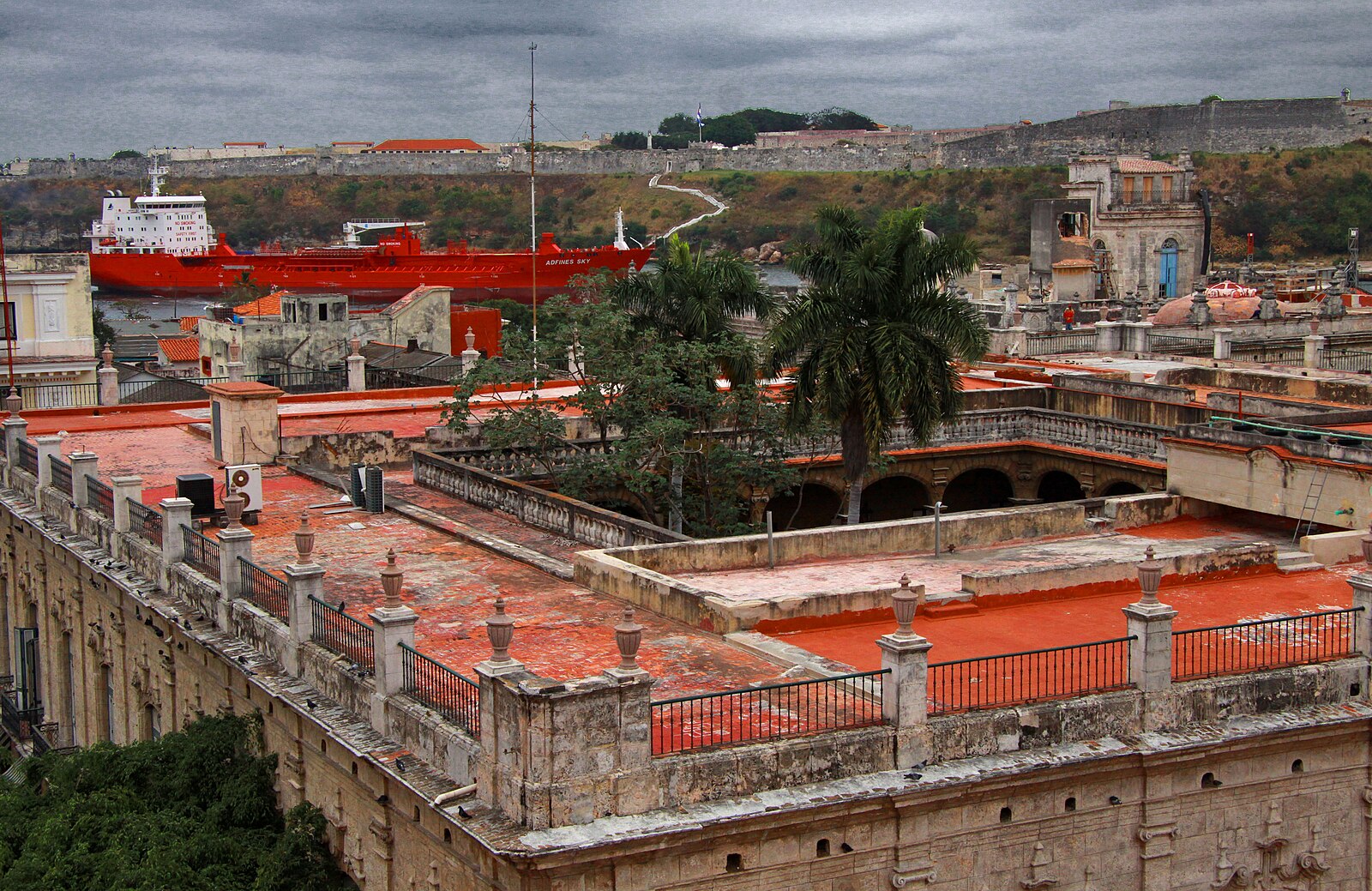
President Trump said he had no problem with Russian oil reaching the island and let the ship through on humanitarian grounds. Analysts estimated the cargo covered nine to ten days of Cuba’s diesel demand.
Russian Foreign Ministry spokeswoman Maria Zakharova called Cuba “our closest friend and partner in the Caribbean” on 1 April 2026. Energy Minister Sergei Tsivilev said on 2 April that a second vessel was being loaded.
Cuba’s energy minister, Vicente de la O Levy, said on 22 April 2026 that the Russian oil would last only until the end of April. Russia’s ambassador, Viktor Koronelli, promised on 8 May 2026 that Moscow would keep supporting Cuba.
Business ties run through an intergovernmental commission, which met for the 23rd time in St Petersburg on 1 April 2026. CiberCuba reported that it agreed investments above US$1 billion and let Russian firms manage Cuban industrial sites, including vehicle assembly.
At the St Petersburg International Economic Forum on 4 June 2026, Cuban Deputy Prime Minister Óscar Pérez-Oliva Fraga offered Russian companies energy, refining and transport projects. Russian Deputy Prime Minister Dmitry Chernyshenko said Russia would keep investing despite US sanctions.
China Builds Solar Parks and Sends Rice
China helps Cuba with food, solar power and diplomacy rather than with oil. CiberCuba reported on 26 March 2026 that the ship Loyalty Hong had reached Havana with 15,600 tons of Chinese rice.
CiberCuba described that cargo as part of a 30,000-ton donation announced in January 2026. It named no official source for the figure, so treat it as reported rather than confirmed.
CiberCuba reported that Chinese ambassador Hua Xin said in early October 2026 that Beijing will keep backing Cuban energy projects. The outlet, citing grid reports, said solar output peaked at 562 MW on 29 September 2026.
Against that, CiberCuba cited the state grid operator’s forecast of a shortfall of about 2,040 MW at peak demand on 2 October 2026. Solar power fades at dusk, just when Cubans switch on the lights.
Four battery systems of 50 MW each are planned, but in early October 2026 only the Cotorro unit was confirmed working, CiberCuba reported. Batteries are the missing link between daytime sun and evening demand.
Beijing says it opposes unilateral sanctions and backs Cuban sovereignty. The terms of Chinese credit, Cuban debts to China and any security cooperation are not public, so this guide does not claim any.
The European Union Questions Its Own Deal
Europe is Cuba’s main Western partner and is now rethinking the relationship. The EU and Cuba signed a Political Dialogue and Cooperation Agreement in December 2016.
On 20 May 2026 EU foreign-policy chief Kaja Kallas told the European Parliament the agreement was under review and had not delivered the expected results. She said the EU does not finance the Cuban state and that a negotiated reform is better than a collapse.
On 18 June 2026 Parliament voted 283 to 199, with 85 abstentions, for a resolution on repression in Cuba. It urged suspension of the agreement and EU sanctions on Díaz-Canel and GAESA executives.
Parliament’s resolution does not bind the Commission or the Council of the EU. As of 17 October 2026 we found no decision by either body to suspend the agreement.
Brussels keeps sending aid alongside the pressure. Brussels Signal reported on 23 July 2026 that the Commission committed 10 million euros (about US$11.3 million) more for medicines, food and water repairs.
That conversion uses the European Central Bank reference rate of 1.1253 dollars to the euro on 16 October 2026. Japan, a distant partner, gave food worth US$1 million through the World Food Programme on 16 October 2026, including 425 tons of rice, CiberCuba reported.
The UN Vote and the BRICS Bid
The annual UN General Assembly vote on the US embargo is the clearest scorecard of Cuba’s friends. On 29 October 2025 it passed with 165 votes in favour, 7 against and 12 abstentions.
In 2024 the tally was 187 in favour, with only the United States and Israel against. The seven opponents in 2025 were the United States, Israel, Argentina, Hungary, Paraguay, North Macedonia and Ukraine.
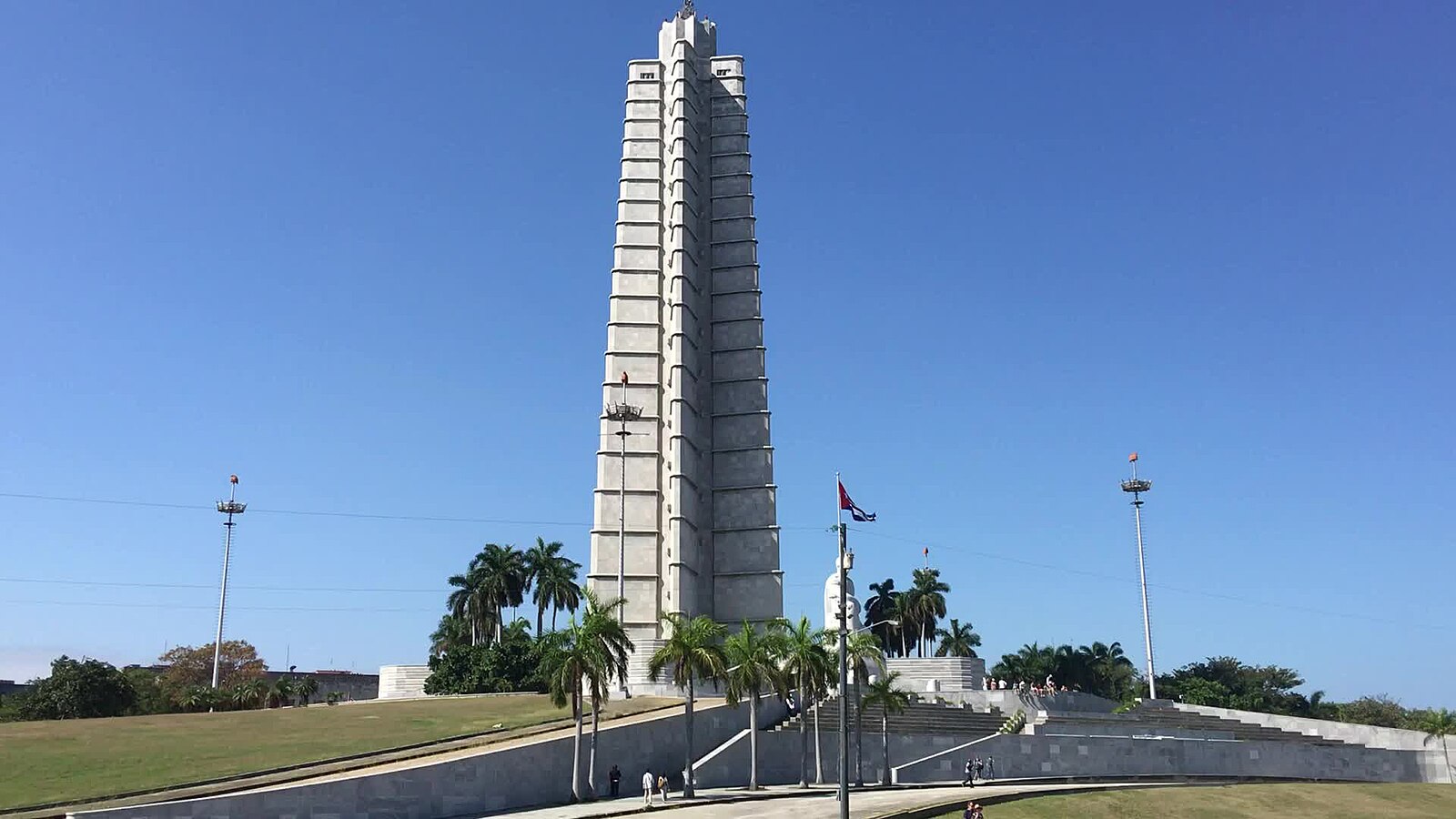
Twelve states abstained, including Costa Rica, Ecuador and Morocco. In Latin America the shift came from Argentina and Paraguay voting against and from Costa Rica and Ecuador abstaining.
As of September 2026 Cuba is a BRICS partner country, a status short of full membership. Other partners include Belarus, Bolivia, Kazakhstan, Malaysia, Nigeria, Thailand, Uganda, Uzbekistan and Vietnam.
At the 18th BRICS summit in New Delhi in September 2026, Foreign Minister Bruno Rodríguez Parrilla said Cuba wants to become a full member. India’s External Affairs Minister, Subrahmanyam Jaishankar, met him on 12 September 2026 and called the talks useful.
Kremlin spokesman Dmitry Peskov said on 14 September 2026 that Russia supports Cuba’s aspiration to join the group’s work, CubaNet reported. BRICS decides by consensus, and no timetable or member agreement on Cuban admission has been announced.
The Gulf, Turkey and Other Partners
Saudi Arabia is the Gulf state with the clearest footprint in Cuba. The Saudi Fund for Development is financing a King Salman Mosque in Old Havana, budgeted at about US$9.3 million, 14ymedio and CiberCuba reported in late September 2026.
The fund has financed seven other Cuban projects in health, sanitation and infrastructure worth about US$193.3 million, the outlet said. A mosque does not ease fuel shortages, and no start date has been published.
Little is public about the United Arab Emirates or Qatar in Cuba. No 2026 deal from either has been confirmed.
Turkey’s Karadeniz Holding supplies floating power plants through its Karpowership unit. A contract signed in October 2018 began at 110 MW and had grown to 300 MW by November 2021, El Toque reported in 2022.
Whether the barges still run at that scale in October 2026 is not confirmed, and payment terms were never published. No 2026 Turkish government statement on Cuba is confirmed either.
What It Means for US Readers
Investors face secondary-sanctions risk, because foreign banks and firms that deal with listed Cuban entities can be sanctioned under Executive Order 14404. Oil and shipping companies should note that the oil-supplier tariffs under Executive Order 14380 were ended on 20 February 2026, but the emergency and sanctions remain.
Tourist travel by US persons remains barred by US law, and since 30 September 2026 group people-to-people trips no longer qualify under a general licence. Travellers who completed a trip-related transaction before that date may be grandfathered.
Cuban-American families and entrepreneurs should know that US banks must block funds held in accounts opened for independent Cuban entrepreneurs under the old authorisation unless the Treasury licenses them. Accounts for Cuban nationals in Cuba remain available, but funds must be remitted to Cuba.
Expats and exporters should expect the rules to keep moving. The Treasury added Cuba designations on 7 May, 18 May, 4 June, 6 August and 15 October 2026.
What Prediction Markets Say
Polymarket gives an 8.5% chance that Miguel Díaz-Canel is out as Cuba’s leader by 31 December 2026 (17 October, 9:12 a.m. ET). That market has about US$752,000 in volume, and the price fell 2.5 points over the past week.
The market for a US strike on Cuba by 31 December 2026 stands at 11.5%, with about US$5.4 million traded. Contracts for a strike by 31 January and by 31 March 2026 both closed without one.
A separate market on a US invasion of Cuba in 2026 stands at 7.5% on about US$3.6 million in volume, up 3 points in a week. A US-Cuba economic deal by 31 December 2026 is priced at 12.5%, but only about US$33,000 has traded.
These prices are bets, not polls, and they move on news within minutes. They show what traders expect, not what will happen.
Why we show this: prediction markets turn real-money bets into a live probability that moves within minutes of the news, which is why investors, campaigns and newsrooms in the United States now follow them closely. We show them next to polls and official results, never instead of them.
What Is Not Known
Several May 2026 reports said a second Russian tanker turned away from Cuba, and we have not confirmed the outcome or when Russia will deliver again. Nor is it known how much Cuba owes China or on what terms.
It is unclear whether Washington will use another tool to penalise countries that supply oil to Cuba, now that the Order 14380 duties have ended. The two governments describe the US-Cuba contacts differently, so their content is unconfirmed.
Cuba’s BRICS bid has no timetable, and the 2026 UN vote date and tally are not yet public. The output of the Turkish power barges and Cuba’s 2025 trade shares by partner are also unconfirmed.
Connected Coverage
Frequently Asked Questions
Which countries support Cuba most in 2026?
Russia and China are its most visible backers, with a Russian oil cargo on 31 March 2026 and Chinese rice and solar help. Cuba’s energy minister said the Russian oil would last only until the end of April 2026.
What US sanctions apply to Cuba as of October 2026?
The national emergency declared by Executive Order 14380 of 29 January 2026 remains, although its oil-supplier tariffs were ended on 20 February 2026. Order 14404 of 1 May 2026 created a sanctions list that includes GAESA and President Díaz-Canel, and new Treasury rules took effect on 30 September 2026.
What does the United States want from Cuba?
The January 2026 order alleges Russian and Chinese intelligence and defence ties, links to Hezbollah and Hamas, and repression of political opponents. Havana calls its political system a red line and says it will not negotiate it.
Is Cuba a member of BRICS?
As of September 2026 Cuba is a BRICS partner country, not a full member. Foreign Minister Bruno Rodríguez Parrilla said in New Delhi that Cuba wants full membership, and Russia has voiced support.
How did countries vote at the UN on the Cuba embargo?
On 29 October 2025 the General Assembly voted 165 to 7, with 12 abstentions, to call for an end to the embargo. The United States, Israel, Argentina, Hungary, Paraguay, North Macedonia and Ukraine voted against.
Does the EU still have an agreement with Cuba?
Yes, the 2016 Political Dialogue and Cooperation Agreement remains in place, but the EU said on 20 May 2026 that it is under review. The European Parliament voted on 18 June 2026 to urge its suspension.
Can Americans travel to Cuba in 2026?
US law bars tourist travel, and since 30 September 2026 group people-to-people trips no longer qualify under a general licence. Travellers should check Treasury rules before booking.
Sources: US Treasury, OFAC recent actions of 4 June 2026, 6 August 2026 and 15 October 2026; Executive Order 14404 (Federal Register, 7 May 2026); Executive Order 14380 of 29 January 2026 (91 FR 5085) and Executive Order 14389 of 20 February 2026 (91 FR 9437); Cuba Sanctions Regulations of 29 September 2026, per Holland & Knight; Arnold & Porter advisory of 11 June 2026. UN General Assembly vote of 29 October 2025, UN News. European Parliament vote of 18 June 2026, HowTheyVote.eu; Brussels Signal; CubaHeadlines. European Central Bank euro reference rate, 16 October 2026 (ECB data portal). Cuba, Russia, China and the US talks: Reuters interview with Lianys Torres Rivera, 5 October 2026; AP, March 2026; NPR, 28 January 2026; Sheinbaum, 30 March 2026; Al Jazeera, 1 April 2026; CubaHeadlines, 8 May 2026; CiberCuba, 11 April 2026; CiberCuba, 4 June 2026; CiberCuba, 26 March 2026; CiberCuba, 3 October 2026; CiberCuba, 16 October 2026; The Moscow Times, 2 April 2026. BRICS: The Star, 14 September 2026; New Kerala, 13 September 2026; CubaNet, 15 September 2026. Saudi Fund and Turkey: 14ymedio and CiberCuba reporting of late September 2026; El Toque, updated 22 April 2023. Prediction-market prices read from Polymarket on 17 October 2026, 9:12 a.m. ET. All accessed 17 October 2026.
This article was produced by The Rio Times’ automated newsroom system. How we use AI · Report an error · Editorial responsibility: Matthias Camenzind, Editor-in-Chief
Expat Guide to Cuba
What The Rio Times publishes for foreigners who live in or move to Cuba.
Start here
- Moving to Cuba 2026, Step by Step
- Panama Visa Appointment System Launches for Havana Applicants
- Spain and Portugal Close Their Golden Visa Doors, Forcing LATAM Investors to Reroute
Coming up in Cuba
Understand Cuba