
Published Monday, 16 November, 4:28 p.m. ET (4:28 p.m. Havana) · Source: Trump–Hewitt interview, Cuban government statements, US Treasury, Kalshi, Polymarket
Donald Trump has put a clock on his Cuba ambitions: he wants the matter settled before his term ends in 2029. The US president said so in a radio interview on Thursday, 12 November, and added that he would “certainly consider” a short military operation.
The remark landed as Havana prepares for the worst. Our cuba news dossier tracks the crisis, which sits about 90 miles from Florida and touches migration, travel and Caribbean shipping.
Key Facts
- What Trump said on 12 November he wants to “get Cuba done” before leaving office in 2029.
- Options He would “certainly consider” a short military operation; no US decision is announced.
- Havana President Díaz-Canel announced wartime preparations on 13 November.
- Pressure New US Treasury sanctions hit Cuban oil tankers and shipping firms earlier this month.
- Prediction markets Kalshi, a US-regulated exchange, prices a Cuba trade deal by 1 January at 12% (4:22 p.m. ET).
This story is part of our coverage of the cuba news. Dates, times and how to follow it are in our guide.
Trump named no date or plan for military action, and Cuba has announced wartime preparations in response.
In plain English
Cuba is a one-party communist island of about 10 million people. The United States has squeezed it with sanctions for decades, and now its president is openly discussing force.
Trump Sets a Clock on Cuba
Trump spoke to Hugh Hewitt, a conservative radio host. He called Cuba a “failed” country and said Secretary of State Marco Rubio, whose parents came from Cuba, “would love to do it”.
In February, Trump had said talks with Havana could lead to a “friendly takeover” of Cuba. That is the language of a deal, and Thursday’s remark is of a different kind.
Hewitt did not press him on timing, legality or Congress.
Havana Answers With Defence Drills
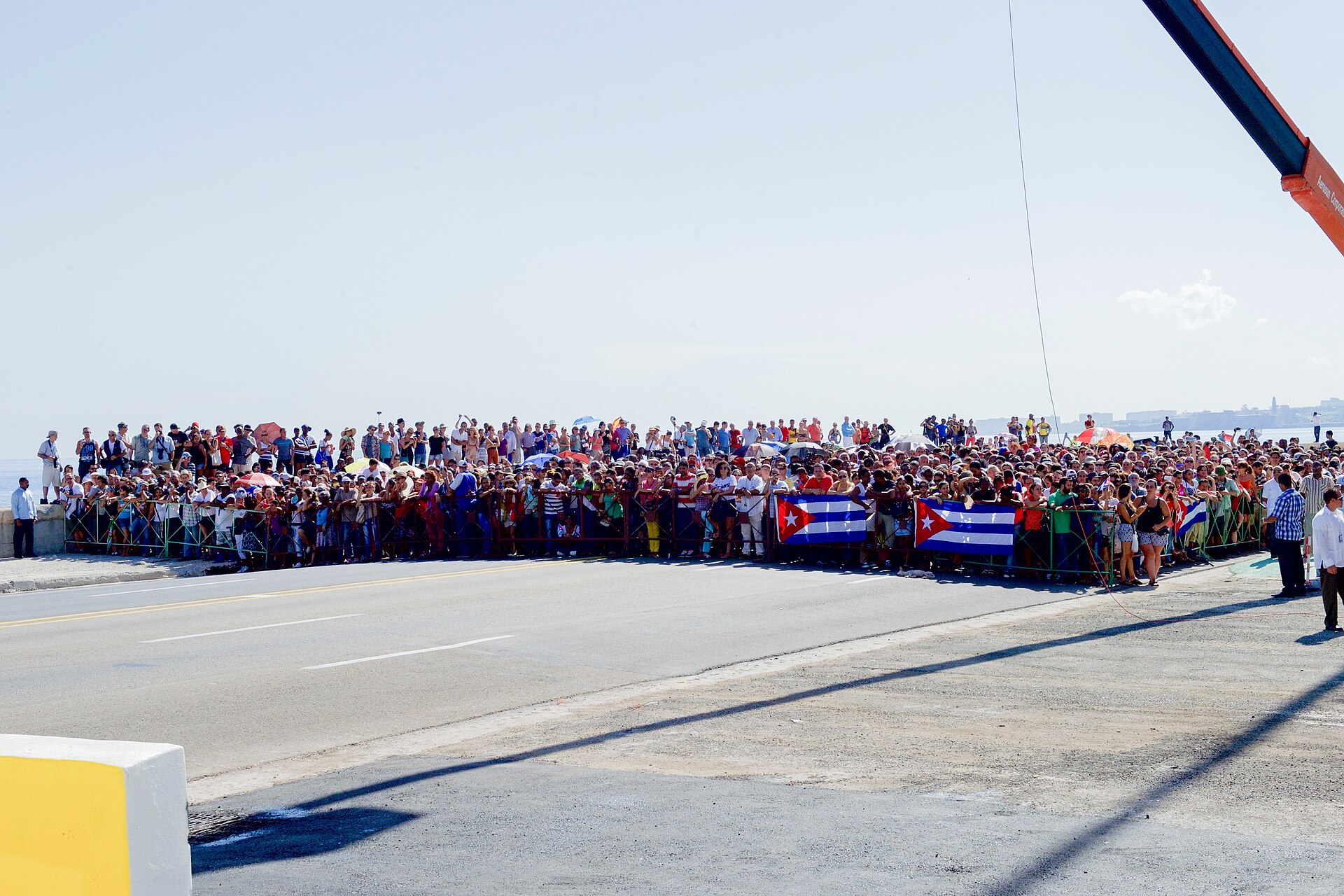
Cuban President Miguel Díaz-Canel announced wartime preparations on 13 November at a defence council meeting in Boyeros, a district of Havana. He said Cuba has decided to reject any attempt at foreign military aggression against the country.
The measures follow Cuba’s “War of the Entire People” doctrine, in which civilians and local units help defend the island. We found no public sign that the United States is moving troops or ships toward Cuba.
Sanctions Tighten the Squeeze
On 5 November the US Treasury Department sanctioned Cuban oil tankers and shipping companies. It also threatened anyone doing business in Cuba’s maritime industries.
Cuba’s government calls the US oil blockade an “energy siege”. Foreign Minister Bruno Rodríguez puts the cost of the wider US embargo from March 2025 to February 2026 at US$8.1 billion, a Cuban government figure that excludes damage from the oil blockade.
Washington raised pressure after the US military action in Venezuela that captured Nicolás Maduro, Venezuela’s former president. In April, Senate Republicans voted 51 to 47 to dismiss a resolution to end the oil blockade.
What Prediction Markets Say
Kalshi, a prediction market regulated in the US by the Commodity Futures Trading Commission, put the chance of a Trump trade deal with Cuba before 1 January at 12%, with 75,028 contracts traded (4:22 p.m. ET, 16 November). Polymarket, a crypto-based exchange, priced US military action against Cuba by 31 December at 10%, with about US$5.6 million traded on that market.
These prices are bets, not polls.
Why we show this: prediction markets turn real-money bets into a live probability that moves within minutes of the news, which is why investors, campaigns and newsrooms in the United States now follow them closely. We show them next to polls and official results, never instead of them.
What It Means for US Readers
Bettors see force as unlikely this year, yet a nearby crisis can still move travel plans and shipping costs. Tankers and shipping firms that touch Cuban trade face sanctions risk from the Treasury.
Families with relatives on the island should expect more rhetoric before any concrete change. Rules on flights and remittances are set in Washington, and none have been announced.
What Is Not Known
We could not confirm any direct reply from Havana to Trump’s 12 November remarks, or any US troop or naval movement. The time of day of the interview was not given.
Trump has said Cuba is negotiating with him and Rubio and that a deal will come “very soon”, but the date of that remark is unclear. We found no recent poll by a named institute and no scheduled date for talks.
Frequently Asked Questions
What did Trump say about Cuba?
In a 12 November radio interview with Hugh Hewitt, Trump said he wants to “get Cuba done” before leaving office in 2029. He said he would “certainly consider” a short military operation.
Is the United States preparing to invade Cuba?
We found no public evidence of invasion preparations, and the White House has announced no decision on military action. Economic pressure through sanctions is the visible tool.
Sources: Trump interview with Hugh Hewitt, 12 November 2026; Cuban government statements, 13 November 2026; US Treasury Department sanctions notices, November 2026; Kalshi, Trump Cuba trade deal market; Polymarket, US military action against Cuba market
This article was produced by The Rio Times’ automated AI newsroom. Editorial responsibility: Matthias Camenzind, Publisher and Editor-in-Chief. The Rio Times also runs Ask Rio Times, which answers from 100,000+ of our own articles, the daily Latin America Power Map, and prediction-market odds on elections and markets.. How we use AI · Report an error
Cuba and the United States
- What Is Going On Between Cuba and the United States?
- What Is Going On Between Cuba and the United States?
- Can Americans Still Travel to Cuba in 2026?
- Who Runs Cuba in 2026? Raúl Castro and the US Murder Charge