What Is Petrobras? Brazil’s Oil Giant Explained — the Business, the Politics and What to Watch
GUIDES · BRAZIL
Key Facts
- —What it is Petróleo Brasileiro S.A., Brazil’s state-controlled oil and gas company, founded in 1953 and headquartered in Rio de Janeiro.
- —Production 3.34 million barrels of oil equivalent a day of its own output in the second quarter of 2026. About 83 percent came from the deep-water pre-salt fields.
- —Latest results Net income of US$10.4 billion in the second quarter of 2026, more than double a year earlier. Sales revenue was US$33.6 billion.
- —Who controls it The federal government holds 50.26 percent of the voting shares but only 29.02 percent of the total capital, as of August 2026.
- —Chief executive Magda Chambriard, in office since 24 May 2024 and still in post as of September 2026.
- —Shares Preferred shares closed at R$47.99 (about US$9.25) in São Paulo on 25 September 2026. The New York receipts, ticker PBR, closed at US$20.37. The real traded at R$5.19 to the US dollar, according to market data.
What is Petrobras, how does it make its money, who really controls it, and why do fuel prices keep turning into politics? A plain guide for foreign readers and investors.
What is Petrobras? It is Brazil’s oil company, owned partly by the state and partly by private investors around the world. It pumps most of its oil from beneath a thick layer of salt far off the coast. And because the government controls it, every change in fuel prices is also a political decision.
What is Petrobras and what does it do?
Petrobras was created by law in October 1953 under President Getúlio Vargas. For more than four decades it held a legal monopoly on Brazilian oil. The sector was opened to competitors in the late 1990s, but Petrobras remains by far the country’s biggest producer.
Its core business is exploration and production: finding oil and gas and pumping it out. Oil companies usually measure operating profit as EBITDA: earnings before interest, tax, depreciation and amortisation. In the second quarter of 2026, this division produced US$15.9 billion of Petrobras’s adjusted EBITDA.
Most of that oil comes from the pre-salt. These reservoirs lie under a salt layer up to two kilometres thick. They sit deep beneath the Atlantic off Rio de Janeiro and São Paulo. The oil is costly to reach but cheap to lift once wells are running.
How cheap? In the second quarter of 2026, lifting a barrel from the pre-salt cost Petrobras US$4.45, before taxes and leasing. Brent crude, the international benchmark, averaged US$104.52 a barrel over the same three months.
Petrobras also refines. Its refineries ran at 101.2 percent of nominal capacity in the second quarter, a company record. They produced about 1.9 million barrels a day of diesel, petrol, jet fuel and other products. It sells gas and generates some electricity too.
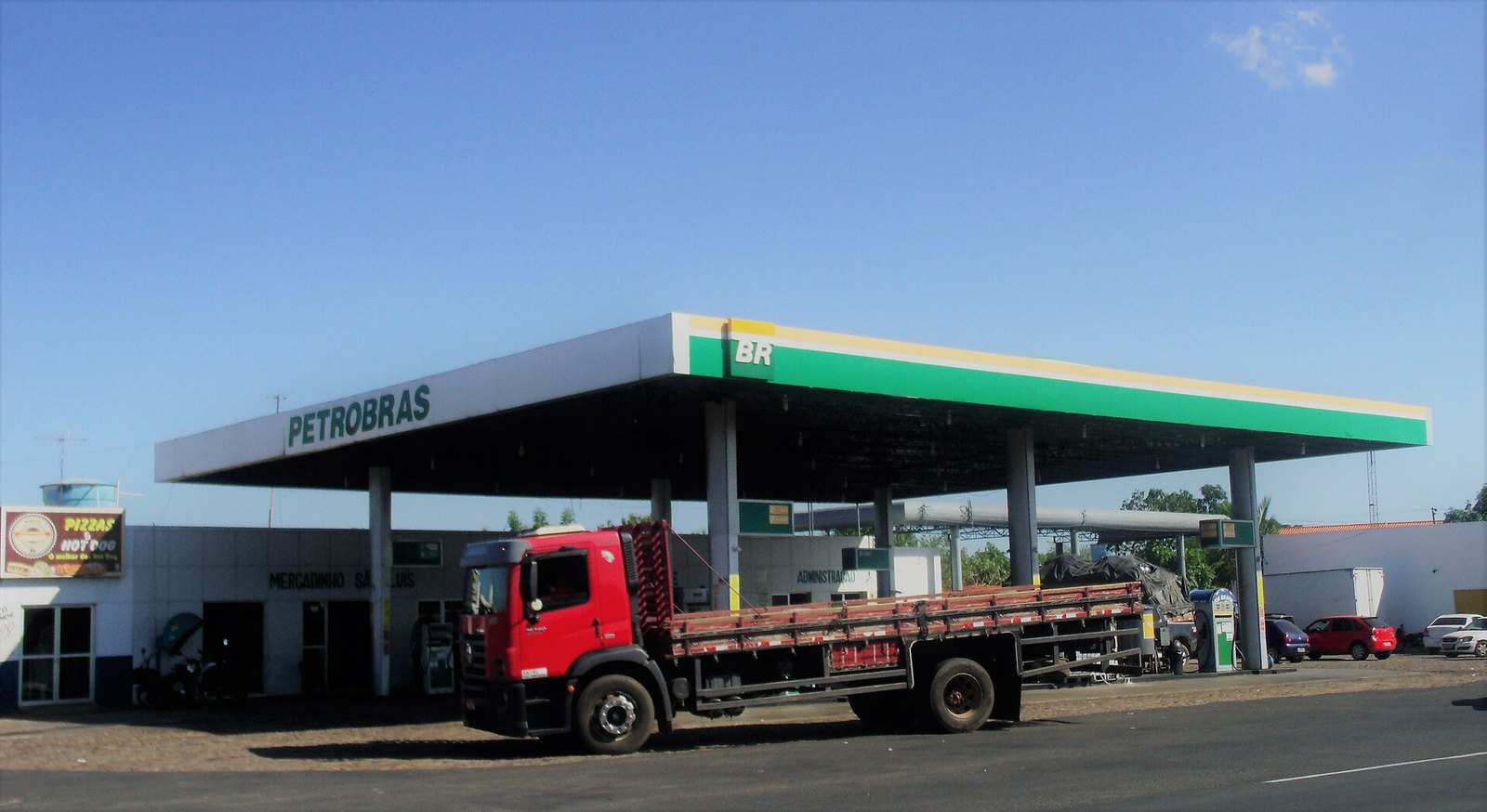
What Petrobras does not do is run the green-and-yellow petrol stations that carry its name. Those belong to Vibra Energia, the former BR Distribuidora, which Petrobras sold off. Vibra uses the Petrobras brand under licence.
The numbers: what the latest results show
The latest reported results cover the second quarter of 2026, the three months to 30 June. Petrobras published them on 6 August 2026. It reports in reais and in US dollars; the dollar figures are used here.
Sales revenue was US$33.6 billion, up 60 percent on a year earlier. Net income was US$10.4 billion, up 120 percent.
Stripping out one-off items, such as currency gains and the new export tax, net income was US$11.1 billion. Adjusted EBITDA on the same basis was US$20.0 billion. The company called it one of its highest quarterly results on record.
Two things drove it. Oil was expensive, with Brent averaging US$104.52 a barrel against US$67.82 a year earlier. And output was at a record: own production rose 14.1 percent on the year, as new production ships reached full flow.
The cash side matters most to shareholders. Operating cash flow was US$12.3 billion and free cash flow, what is left after investment, US$7.7 billion. Capital spending in the quarter was US$5.3 billion.
Debt is under control by the company’s own yardstick. Gross debt was US$70.8 billion at the end of June, below the US$75 billion ceiling in its 2026–2030 business plan. Net debt was 1.14 times a year’s adjusted EBITDA.
Petrobras is also one of the state’s biggest cash sources. It says it paid R$88.6 billion (about US$17.1 billion) in taxes to federal, state and municipal governments in the quarter. That is roughly R$1 billion (about US$190 million) a day.
Live Company IntelligencePetroleo Brasileiro Petrobras SA ADR — the full investor dossier
Wall Street view
Valuation & profitability
Price & risk
$10.6552-wk high
$21.99
Revenue trend · 6y
Ownership
Dividend
Owners and management: who controls Petrobras
Petrobras is a mixed-capital company. It is listed on the São Paulo exchange, B3, and in New York. By law, however, the federal government must keep voting control. That control is the single most important fact about the company.
As of August 2026, the federal government held 50.26 percent of the common, or voting, shares. It held no preferred shares, which carry dividend priority but no vote. So its stake in the whole company was only 29.02 percent.
The state development bank, BNDES, and its investment arm hold another 6.43 percent of the capital. Together the state bloc owns about 35.45 percent. Non-Brazilian investors held 48.29 percent, more than the state.
Voting control means the government chooses the majority of the board and, through it, the chief executive. The board is chaired by Guilherme Santos Mello, appointed by the controlling shareholder.
Magda Chambriard, an engineer who spent more than two decades at Petrobras and later headed the national oil regulator, the ANP, became chief executive on 24 May 2024. She replaced Jean Paul Prates, whom President Luiz Inácio Lula da Silva removed. She was still in post as of September 2026.
Turnover at the top is a known risk. Chambriard is the sixth chief executive since January 2019. Several of her predecessors left after clashing with the government of the day over fuel prices.

Its role in the market
Petrobras is not just a company in Brazil’s economy; it shapes it. Its refineries supply much of the country’s diesel and petrol, so its wholesale prices set the tone for what drivers pay. It commissions the giant floating production ships that shipyards and suppliers depend on. Its platform contracts run to billions of dollars each.
It is also a large exporter. Crude exports approached one million barrels a day in the second quarter, while imports of crude fell to 89,000 barrels a day. The pre-salt has made Brazil Latin America’s largest oil producer, well ahead of Guyana and Venezuela, its neighbours to the north.
The business plan approved in November 2025 foresees US$109 billion of investment from 2026 to 2030. About US$69 billion goes to exploration and production, most of it in the pre-salt. Production is planned to peak at around 3.4 million barrels of oil equivalent a day in 2028 and 2029.
The plan was drawn up in late 2025, when oil was much cheaper. Prices in 2026 have been far higher, largely because of the Middle East war. The gap explains the record profits, and why the government wants a share of them.
Petrobras also holds 47.03 percent of the voting shares in Braskem. Braskem is the largest producer of thermoplastic resins in the Americas. Braskem is trying to restructure about US$11 billion of debt, and Petrobras has said it will not inject capital alone.
Risks and controversies: fuel prices, politics and the Amazon
Fuel prices are the permanent flashpoint. Until May 2023 Petrobras priced fuel at “import parity”, tracking what it would cost to import. It then switched to a commercial strategy that also weighs the domestic market. That lets it smooth out swings in world prices rather than pass them straight on.
2026 has tested it. When the Middle East war pushed oil prices up, the government acted on 12 March. It created a 12 percent export tax on crude and a 50 percent export tax on diesel. It also paid a subsidy of R$0.32 a litre (about US$0.06) on road diesel.
Petrol followed the same pattern. On 28 May Petrobras raised its petrol price to distributors by R$0.48 a litre (about US$0.09). A federal discount of R$0.44 (about US$0.08) absorbed most of it. On 9 September the discount ended and Petrobras added R$0.19 (about US$0.04), lifting the cost to distributors by R$0.63 a litre (about US$0.12).
That left the average wholesale price at R$3.24 a litre (about US$0.62). A temporary cut in federal fuel taxes of the same size was meant to keep pump prices unchanged. In an election year, the effect has been to keep higher oil costs away from drivers.
The crude export tax is contested. Producers say it is unconstitutional. A court suspended it in late August, and an appeals court reinstated it on 31 August. The original emergency measure had lapsed in July; since then the government has kept the crude levy alive through resolutions of its foreign-trade committee, Gecex. It had raised R$7.98 billion (about US$1.54 billion) by July and cost Petrobras US$965 million in the second quarter alone.
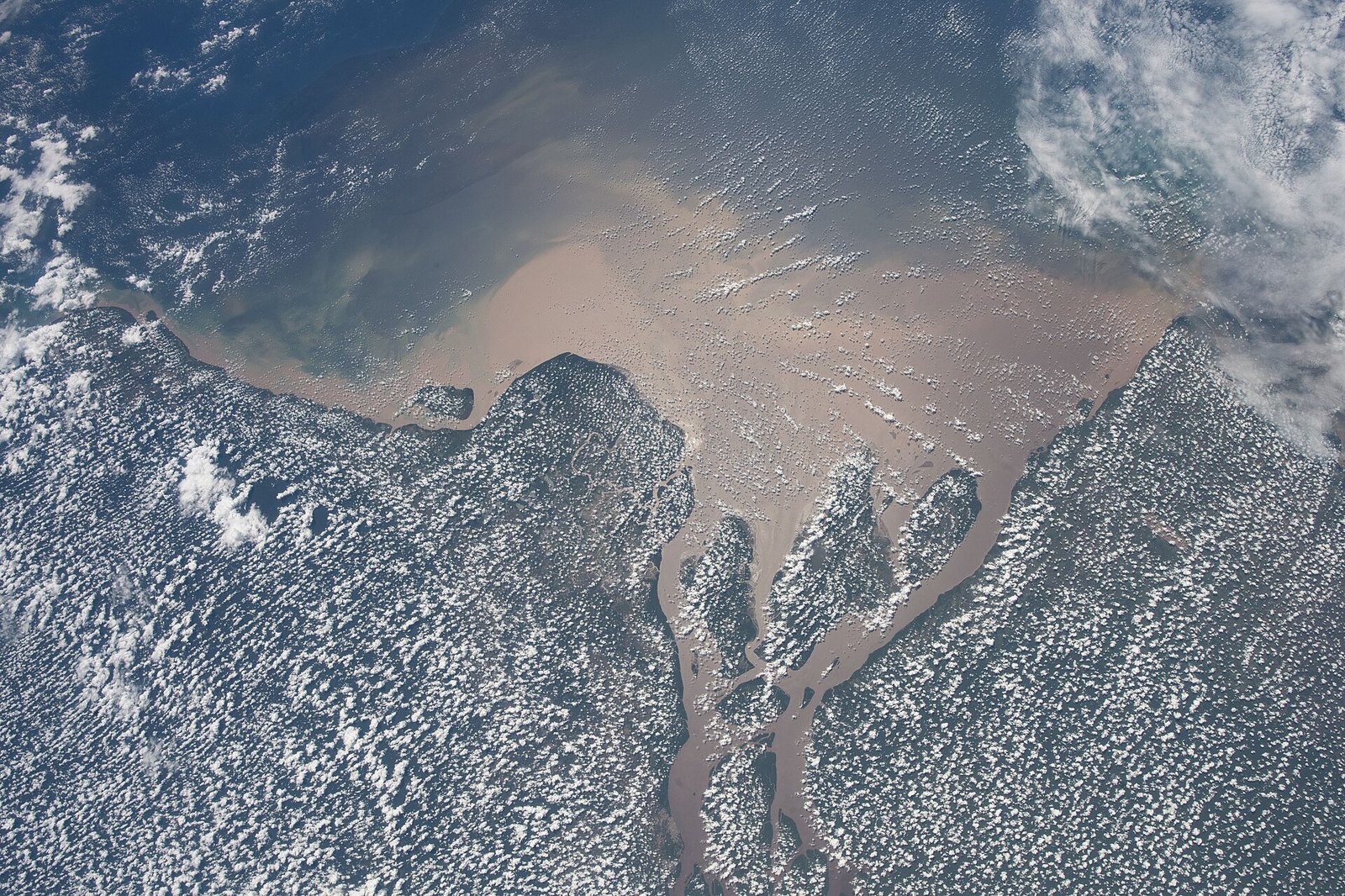
The Margem Equatorial is the environmental fight. This is a stretch of Brazil’s northern coast, near the mouth of the Amazon, which geologists compare with the fields off Guyana. After refusing a first request in 2023, the environment agency IBAMA licensed Petrobras to drill there in October 2025.
On 14 August 2026 Petrobras reported signs of hydrocarbons in its Morpho well. The well is in block FZA-M-59, about 175 kilometres off the state of Amapá. It has not said whether the find is commercial. Environmental groups and federal prosecutors still question the licensing.
The past also weighs. The Lava Jato, or Car Wash, investigations from 2014 exposed a bribery and cartel scheme around Petrobras contracts. In 2018 the company agreed to pay US$2.95 billion to settle a US class action and US$853 million to US authorities.
What to watch
The election. Brazil votes on 4 October 2026, with a possible runoff on 25 October. Whoever takes office in January 2027 will shape Petrobras’s board, its pricing and its dividends. Our election briefing sets out the race.
The export tax. The 12 percent levy runs until November, and the court case over it is not settled. Whether it is renewed or dropped will move Petrobras’s export earnings.
The Amazon well. Drilling at Morpho was expected to end in October 2026. IBAMA authorised three more wells nearby on 4 September 2026, and Petrobras plans to start drilling them in January 2027. The results will decide whether the Margem Equatorial becomes a new pre-salt or a costly dry run.
The next business plan. Petrobras usually approves its five-year plan in late November. The key numbers are investment, the debt ceiling and the oil price it assumes.
Braskem. A buyout auction is set for 16 October, with the debt deadline in November. Any call on Petrobras’s cash would be a test of its investment discipline.
What this means for foreigners and investors
Foreign investors can buy Petrobras in New York. Each PBR receipt represents two common shares, and each PBR.A receipt two preferred shares. In São Paulo the tickers are PETR3 for common and PETR4 for preferred shares.
At the closing prices of 25 September 2026, the whole company was worth about R$656 billion (about US$126.5 billion). The PETR3 common shares closed at R$53.04 (about US$10.23).
Dividends are the main attraction, and they follow a formula. When gross debt is at or below the plan’s ceiling, Petrobras must pay out 45 percent of free cash flow. For the second quarter of 2026 it approved R$17.4 billion (about US$3.35 billion) in dividends and interest on capital.
A few things this does not mean. Majority voting control does not mean the state owns most of the company; directly it owns less than a third. And Petrobras does not set pump prices. It sets wholesale prices; taxes, ethanol blending and retail margins do the rest.
It also does not mean the dividend is fixed. The formula depends on free cash flow, which depends on oil prices, taxes and investment. A new government can change the policy through the board. Our Brazil explainer covers the wider political system.
Connected Coverage
Brazil Explained: The Country, Its Politics, Its Economy and What to Watch
Brazil Economy 2026: Growth, Selic, Inflation and Election
Petrobras Lifts Brazil Pre-Salt Oil Past 4 Million Barrels Daily
Brazil’s Margem Equatorial Could Rival Pre-Salt, Says BNDES Chief
Ibovespa Explained: Brazil’s Stock Market and How to Invest in 2026
Sources: Results and production from Petrobras’ second-quarter 2026 filings with the US Securities and Exchange Commission and its news agency, ownership from its investor-relations site, and share prices and exchange rates from market data at the close on 25 September 2026.
- Petrobras — Financial Performance 2Q26, Form 6-K, August 2026
- Agência Petrobras — second-quarter 2026 results, 6 August 2026
- Petrobras Investor Relations — shareholding structure
- Petrobras Investor Relations — board and management
- Agência Petrobras — Business Plan 2026–2030
- Agência Petrobras — shareholder remuneration policy
- Agência Petrobras — petrol price adjustment, 28 May 2026
What Is Not Known
Whether the Amazon find is worth developing. Petrobras has reported signs of hydrocarbons, not a commercial discovery. It has given no estimate of volumes, and appraisal wells start only in 2027.
What the next government will do. Petrobras policy on prices, dividends and investment has changed with almost every administration. The winner of the October election is not known, and neither is their choice of chief executive.
How long the export tax lasts. It has been extended by resolutions of the government’s foreign-trade committee, suspended by one court and restored by another. The final ruling on whether it is constitutional has not been made.
Where oil prices settle. The 2026 results rest on prices well above the company’s own planning assumptions. How long the Middle East war keeps them there cannot be forecast.
What Braskem will cost. The restructuring talks are unresolved. Petrobras has not said how far it would go if the other owners do not match its terms.
Frequently Asked Questions
What is Petrobras?
Petrobras, or Petróleo Brasileiro S.A., is Brazil’s state-controlled oil and gas company, founded in 1953 and based in Rio de Janeiro. It produced 3.34 million barrels of oil equivalent a day in the second quarter of 2026, mostly from deep-water pre-salt fields.
Who owns Petrobras?
The federal government holds 50.26 percent of the voting shares, which gives it control, but only 29.02 percent of the total capital. With the development bank BNDES, the state owns about 35 percent. Non-Brazilian investors held about 48 percent as of August 2026.
Who is the CEO of Petrobras in 2026?
Magda Chambriard, an engineer who spent more than two decades at Petrobras and later headed the national oil regulator, the ANP. She took office on 24 May 2024 and was still chief executive as of September 2026.
Does Petrobras pay dividends?
Yes. Its policy requires it to pay out 45 percent of free cash flow while gross debt stays at or below the ceiling in its business plan, currently US$75 billion. For the second quarter of 2026 it approved R$17.4 billion, about US$3.35 billion.
Does Petrobras set petrol prices in Brazil?
It sets the wholesale price it charges distributors, not the pump price. Pump prices also include federal and state taxes, the ethanol blend and distributor and retailer margins. In 2026 the government used tax cuts and discounts to offset Petrobras price rises.
Can foreigners buy Petrobras shares?
Yes. Petrobras receipts trade on the New York Stock Exchange as PBR, each representing two common shares, and PBR.A for preferred shares. In São Paulo the shares trade as PETR3 and PETR4.
This article was produced by The Rio Times’ automated newsroom system. How we use AI · Report an error
LatAm Markets: Live Signals → — real-time movers, turnover leaders and FX across Latin America.
Read More from The Rio Times