Brazil Explained 2026: The Country, Its Politics, Its Economy and What to Watch
GUIDES · BRAZIL
Key Facts
- —Capital Brasília, a purpose-built federal capital opened on 21 April 1960. About 3.0 million people live in the Federal District.
- —Population 214.2 million as of 1 July 2026, growing 0.37 percent a year. Two in five Brazilians live in the southeast, around São Paulo and Rio de Janeiro.
- —Currency The real, written R$. It traded at R$5.14 to the US dollar on 23 September 2026, the central bank’s PTAX rate.
- —Language Portuguese, and only Portuguese. Brazil is the one Portuguese-speaking country in the Americas, which is why Spanish gets a foreigner less far than expected.
- —Economy Around US$2.2 trillion a year, the largest in Latin America. Exports hit a record US$349 billion in 2025, with China taking 28.7 percent of them.
- —Government A federal presidential republic under the 1988 constitution. No prime minister, a directly elected president, and 26 states plus the Federal District.
Brazil explained from the ground up: how a country of 214 million is governed, what it sells to the world, and which dates in the next twelve months actually matter.
Brazil explained properly begins with one fact that shapes everything else: no Brazilian president has ever commanded a majority in Congress. The country is large, federal and politically fragmented, and that fragmentation decides how fast anything moves — taxes, visas, interest rates, the lot.
What kind of country is this?
Brazil covers about 8.5 million square kilometres, which makes it the fifth-largest country on earth and larger than the continental United States. It shares a border with every South American country except Chile and Ecuador. That scale is not a detail. It is why domestic flights are long and expensive, and why a rule that works in São Paulo may be applied differently in Manaus. Any account of Brazil explained for newcomers has to start there.
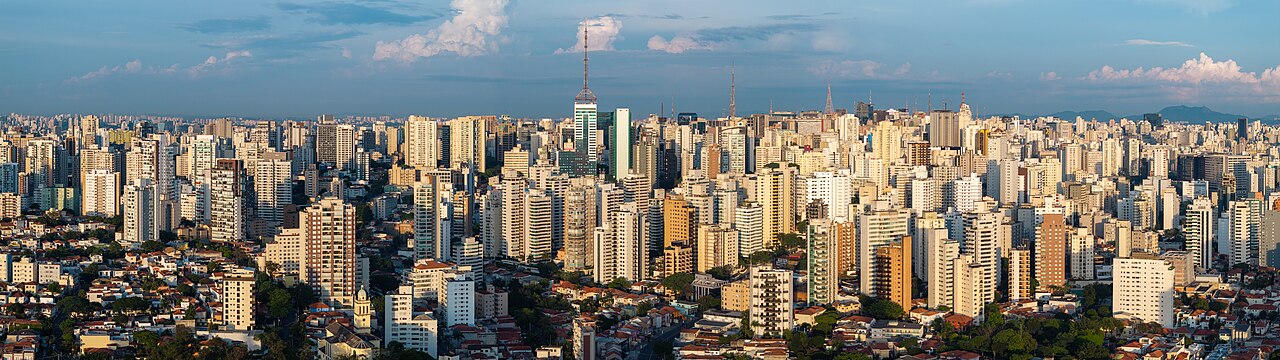
The population sits overwhelmingly on the coast and in the southeast. About 41.6 percent of Brazilians live in the southeast region and 26.8 percent in the northeast. Only 8.8 percent live in the north. The north is the Amazon, and by far the biggest slice of territory. São Paulo city alone holds 11.9 million people, Rio de Janeiro 6.7 million. Most of the map is empty of people and full of soil, ore and water.
The country was a Portuguese colony until 1822, an empire until 1889, then a republic interrupted by a military dictatorship from 1964 to 1985. The current constitution dates from 5 October 1988 and is the settlement that followed that dictatorship. It is long, detailed and unusually generous with rights, which is one reason Brazilian courts are so central to public life. A foreigner who understands 1988 understands why the Supreme Federal Court appears in the news most weeks.
Who runs Brazil and how
The president is head of state and head of government, directly elected in two rounds for a four-year term, renewable once in a row. There is no prime minister and no confidence vote. Luiz Inácio Lula da Silva of the Workers’ Party has held the office since 1 January 2023, his third term after 2003 to 2010. His vice-president is Geraldo Alckmin, a former centre-right rival, which tells you something about how Brazilian coalitions are built.
Congress has two chambers. The Chamber of Deputies has 513 members elected by open-list proportional representation, with each state as a single district. The Federal Senate has 81 members, three per state and the Federal District, on eight-year terms. More than twenty parties hold seats. No president has ever arrived with a majority of their own.
So every Brazilian government governs by assembling a coalition and then re-buying it, continuously. The broker is the Centrão, a bloc of ideologically flexible centre-right parties that trades votes for ministries and budget amendments. Since 2015 Congress has also clawed back a large share of discretionary spending. The practical effect for anyone watching policy is that the president proposes far more than the president delivers.
The third power is the judiciary, and specifically the Supreme Federal Court. Eleven justices, nominated by the president, confirmed by the Senate, serving until they turn 75. The 1988 constitution lets almost any dispute reach them, so they rule on matters other supreme courts never touch. This court convicted former president Jair Bolsonaro in 2025, and it is at the centre of the institutional argument running through 2026.
How the economy works
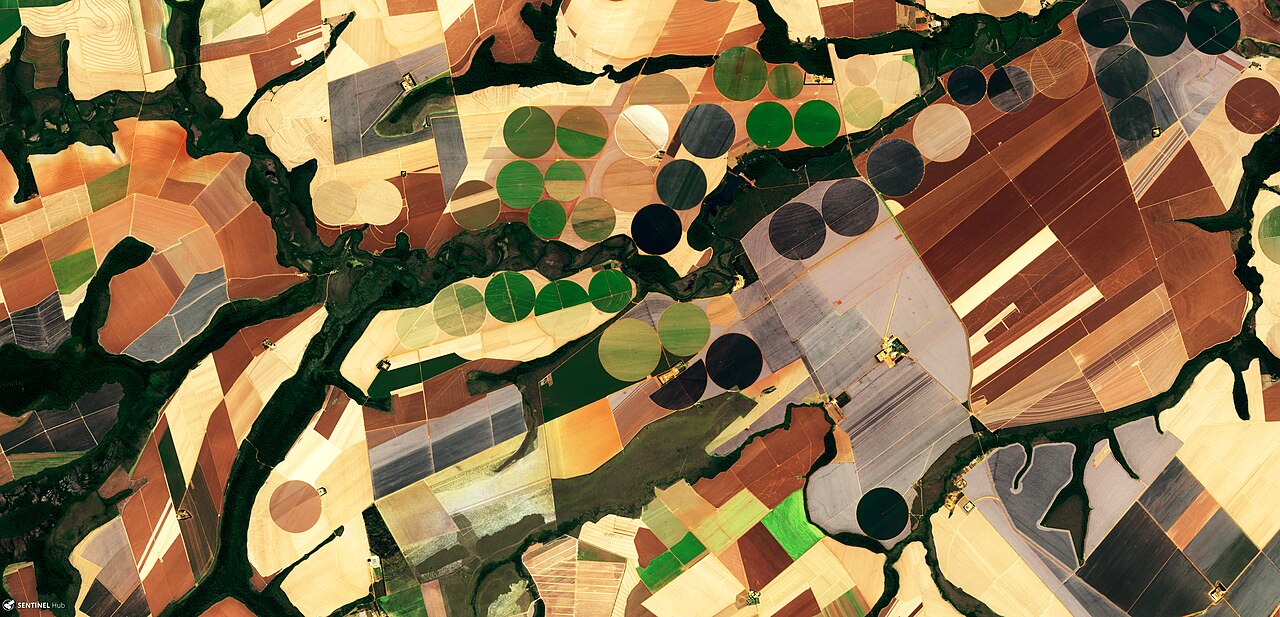
Brazil earns its foreign currency from the ground. The export list runs soy, iron ore, crude oil, beef, sugar, coffee, poultry and wood pulp. Agriculture was the fastest-growing sector in the second quarter of 2026, up 6.2 percent over twelve months. Domestically, though, services are about 70 percent of output. Brazil is a commodity exporter with a large, mostly self-contained consumer economy attached.
Exports reached a record US$349 billion in 2025 with a trade surplus near US$68 billion. China took US$100 billion of that, 28.7 percent of everything Brazil sold abroad. The United States took US$37.7 billion, and that number fell 6.6 percent as American tariffs took hold. Argentina, in third place, rose 31.4 percent. The direction of travel is east.
As of September 2026 twelve-month inflation stood at 4.22 percent, inside the central bank’s 3 percent target band with its 1.5-point tolerance. The Selic policy rate was cut to 13.75 percent on 16 September, the fifth consecutive cut. Unemployment was at a record low of 5.3 percent. Against that, gross government debt climbed from 78.70 percent of output in January 2026 to 82.56 percent in July.
That last number is the argument. Brazil is growing with low unemployment and falling inflation while its debt rises, and no leading politician has set out how the gap closes. Our standing Brazil economy pillar carries the detail on growth, the Selic and the fiscal arithmetic. Go there for the numbers. This guide gives you the shape.
What is happening right now
As of 24 September 2026 the general election is ten days away and genuinely undecided. Brazilians vote on 4 October for president, all 513 deputies, 54 of the 81 senators, every governor and every state assembly. Lula leads the first round in every published poll, on somewhere between 37 and 46 percent depending on the polling house. That is nowhere near the 50 percent needed to avoid a second round on 25 October.
In a runoff the polls disagree in a way that is not merely noise. Quaest had Flávio Bolsonaro ahead of Lula 42 to 41 on 21 September. AtlasIntel had Lula ahead 50.2 to 49.8. BTG and Nexus had Lula 46 to 45. All three sit inside their own margins of error, and both leading candidates carry rejection rates near 50 percent.
Trade with the United States is the second running story. A 25 percent tariff on targeted Brazilian goods took effect on 22 July 2026. A further 12.5 percent duty followed two days later, reaching 37.5 percent on products with no exemption. Roughly 400 tariff lines were exempted, including coffee, orange juice, beef, iron ore and Embraer aircraft, so more than half of Brazil’s exports to the United States were untouched. Brazil opened consultations on 14 August and has deliberately not retaliated while talks run.
The third is an institutional crisis at the Supreme Federal Court. Messages between a banker under investigation in the Banco Master fraud case and Justice Alexandre de Moraes, the judge who convicted Bolsonaro, were unsealed by a fellow justice. Fifty-four impeachment requests against Moraes now sit in the Senate. The Senate has never removed a justice of that court.
What to watch
Four dates carry most of the near-term weight. The first round of voting falls on Sunday 4 October 2026, and Brazil’s fully electronic system usually produces a result within hours of polls closing. If nobody clears 50 percent of valid votes, the runoff is on Sunday 25 October.
On 9 October the statistics agency publishes September inflation. That is the first reading after a one-off electricity credit unwinds. The number will jump from August’s negative 0.32 percent, and the size of the jump is the thing to read. The central bank’s own market survey pointed to 4.92 percent for the full year on 18 September, against a running rate of 4.22 percent.
The rate-setting committee meets on 3 and 4 November, the first decision after the vote, and again on 8 and 9 December. Third-quarter output arrives on 2 December. Then on 18 December the electoral court formally certifies the winners, a step that used to be a formality and is now watched closely. The new presidential term begins on 5 January 2027.
What this means for foreigners
Entry rules changed recently and catch people out. Since 10 April 2025 nationals of the United States, Canada and Australia need a visa again, on reciprocity grounds. It is an electronic visa, and it has to be printed — travellers have been refused boarding without a paper copy. European Union, British and most South American passport holders remain visa-free for tourism. Our Brazil residency and visa guide sets out each route and its thresholds.
The rule that catches remote workers is tax residency. A foreigner on a temporary visa who spends up to 183 days in Brazil within a twelve-month window is a non-resident for income tax. On day 184 they become a tax resident, and Brazilian tax residents are taxed on worldwide income, not only Brazilian income. Anyone arriving on a permanent visa or with work authorisation is a tax resident from the day they land, with no grace period.
Income tax itself changed this year. A law in force since 1 January 2026 exempts monthly incomes up to R$5,000, about US$970 at the September rate, and tapers the relief up to R$7,350, about US$1,430. It is funded by a new minimum tax on annual incomes above R$600,000, roughly US$117,000. Our taxes and healthcare pillars go through the practical consequences, including the public health service and private plans.
The honest summary for a newcomer is that Brazil rewards patience. Bureaucracy is slow and documentary, the cost base is low by North American or Western European standards, and the political weather changes faster than the rules do. Brazil explained in one line: a large, legalistic, federal country where the formal process matters and the timetable does not belong to you.
Connected Coverage
Brazil Economy 2026: Growth, Selic, Inflation and Elections
Brazil Residency and Visa Guide 2026: Every Route and Threshold
Taxes in Brazil for Expats 2026
Sources: Population and output from IBGE, exchange rates and the policy rate from the Banco Central do Brasil, the electoral calendar from the Superior Electoral Court, tax residency from the Receita Federal, and trade data from Brazil’s development and trade ministry.
- IBGE — population estimate, 214.2 million in 2026
- Banco Central do Brasil — SGS open data, PTAX, Selic, IPCA and gross debt series
- Tribunal Superior Eleitoral — 2026 electoral calendar
- Receita Federal do Brasil — resident and non-resident status for income tax
- Agência Senado — Law 15,270/2025, income tax exemption to R$5,000 a month
- IBGE via Agência Brasil — second-quarter 2026 national accounts
- Presidência da República — Constitution of 1988, consolidated text
- Peterson Institute for International Economics — the 2026 United States tariffs on Brazil
What Is Not Known
Who wins on 4 October. The polls do not merely differ at the margin; they point in opposite directions inside their own error bands, and the two leading candidates are each rejected by close to half the electorate. Anyone claiming to know the outcome is reading a single poll.
What happens to the Supreme Federal Court. Fifty-four impeachment requests against Justice Alexandre de Moraes sit in the Senate over the unsealed Banco Master messages. The Senate has never removed a justice, the court is publicly divided about the decision to unseal the material, and whether the Senate president advances any request may depend on who wins the election. No timetable exists.
Where the tariff dispute lands. Brazil opened consultations with Washington on 14 August 2026 and has held back from retaliating while talks continue. Even the current effective rate is contested, because 25 percent, 37.5 percent and “more than half of exports exempt” are all true of different baskets of goods. The outcome depends substantially on who takes office in January.
Whether the fiscal path holds. Gross government debt rose almost four points of output in the seven months to July 2026 while income tax was cut for fifteen million people and the main cash transfer was raised 15 percent. Every serious analyst describes an unresolved adjustment. None of the leading candidates has said how they would make it, and that is the single biggest open question for anyone holding Brazilian assets.
The near-term inflation path. August 2026 recorded outright deflation of 0.32 percent, but that was flattered by a one-off electricity credit which unwinds in September. The central bank’s own survey points to 4.92 percent for the full year against a running rate of 4.22 percent, and the September reading was not yet published when this guide was written.
Frequently Asked Questions
Frequently Asked Questions
What language do people speak in Brazil?
Portuguese, and it is the only official language. Brazil is the one Portuguese-speaking country in the Americas, so Spanish does not carry a foreigner as far as people expect. English is common in international business in São Paulo and thin almost everywhere else.
Who is the president of Brazil in 2026?
Luiz Inácio Lula da Silva of the Workers’ Party, in office since 1 January 2023. It is his third term, after two from 2003 to 2010, and he is standing for a fourth in the election of 4 October 2026.
When is the Brazilian election and what is being decided?
The first round is on Sunday 4 October 2026 and a runoff, if needed, on Sunday 25 October. Voters choose the president, all 513 federal deputies, 54 of the 81 senators, every state governor and every state assembly. The new presidential term starts on 5 January 2027.
Do Americans need a visa for Brazil?
Yes, since 10 April 2025. Nationals of the United States, Canada and Australia need an electronic visa again, on reciprocity grounds, and it must be carried as a printed copy. European Union, British and most South American passport holders remain visa-free for tourism.
When does a foreigner become a tax resident in Brazil?
On day 184 within a twelve-month window if they are on a temporary visa, counting days that need not be consecutive. Anyone arriving on a permanent visa or with work authorisation is a tax resident from the day they arrive. Brazilian tax residents are taxed on worldwide income.
What does Brazil sell to the rest of the world?
Mostly commodities: soy, iron ore, crude oil, beef, sugar, coffee, poultry and wood pulp. Exports reached a record US$349 billion in 2025, and China alone took 28.7 percent of them, against 10.8 percent for the United States.
This article was produced by The Rio Times’ automated newsroom system. How we use AI · Report an error
Read More from The Rio Times
Rotate for Best Experience
This report is optimized for landscape viewing. Rotate your phone for the full experience.
You've reached your free article limit
Subscribe to The Rio Times for unlimited access to expert analysis, market intelligence, and daily briefings on Latin America.