Petrobras Lifts Brazil Pre-Salt Oil Past 4 Million Barrels Daily as FPSO Hub Sets Records
Energy · Brazil
—The stakes. Brazil’s pre-salt province supplied 82.4 percent of national oil and gas output in July 2026, making it the country’s dominant energy asset.
Runoff · Sunday, 25 October
Brazil Runoff 2026: Lula vs Flávio
Date, polls, debates, odds and how the runoff works, updated every day.
Read our Brazil election 2026 runoff guide →
Brazil runoff polls · Polymarket and Kalshi odds · When results come · Brazil election poll data (CSV)
Prediction markets · who wins the runoff
Implied chance of winning Brazil’s presidency on 25 October, from traders’ prices.
Polymarket
Flávio Bolsonaro 79.9% · Lula 19.5% (US$194 million traded)
Kalshi (regulated in the US by the CFTC)
Flávio Bolsonaro 79% · Lula 22%
As of 24 October, 6:20 am ET (11:20 Lisbon), updated every 20 minutes. Prices are bets, not polls, and can move fast.
Why we show this: prediction markets turn real-money bets into a live probability that moves within minutes of the news, which is why investors, campaigns and newsrooms in the United States now follow them closely. We show them next to polls and official results, never instead of them.
—The date. December 2025 was the first month Brazil passed 4 million barrels per day of oil. July 2026 reached 4.498 million bpd and 5.851 million boe/d.
—The milestone. Tupi/Iracema returned to 1 million barrels per day on January 9, 2026, while Búzios platforms hit the same daily record in October 2025.
—The operator. Petrobras lifted operated production to a record 4.32 million boe/d in 2025, of which 3.70 million came from pre-salt fields.
—The frontier. Ibama licensed the Equatorial Margin in October 2025, Petrobras found oil there in August 2026, and three more wells were cleared on 3 September.
Brazil’s pre-salt oil province has become the first deepwater carbonate play to sustain national output above four million barrels of oil per day, a mark passed only in December 2025. The Santos Basin anchor fields, built entirely around a fleet of high-capacity FPSOs, now define how investors measure upstream execution in ultra-deep water.
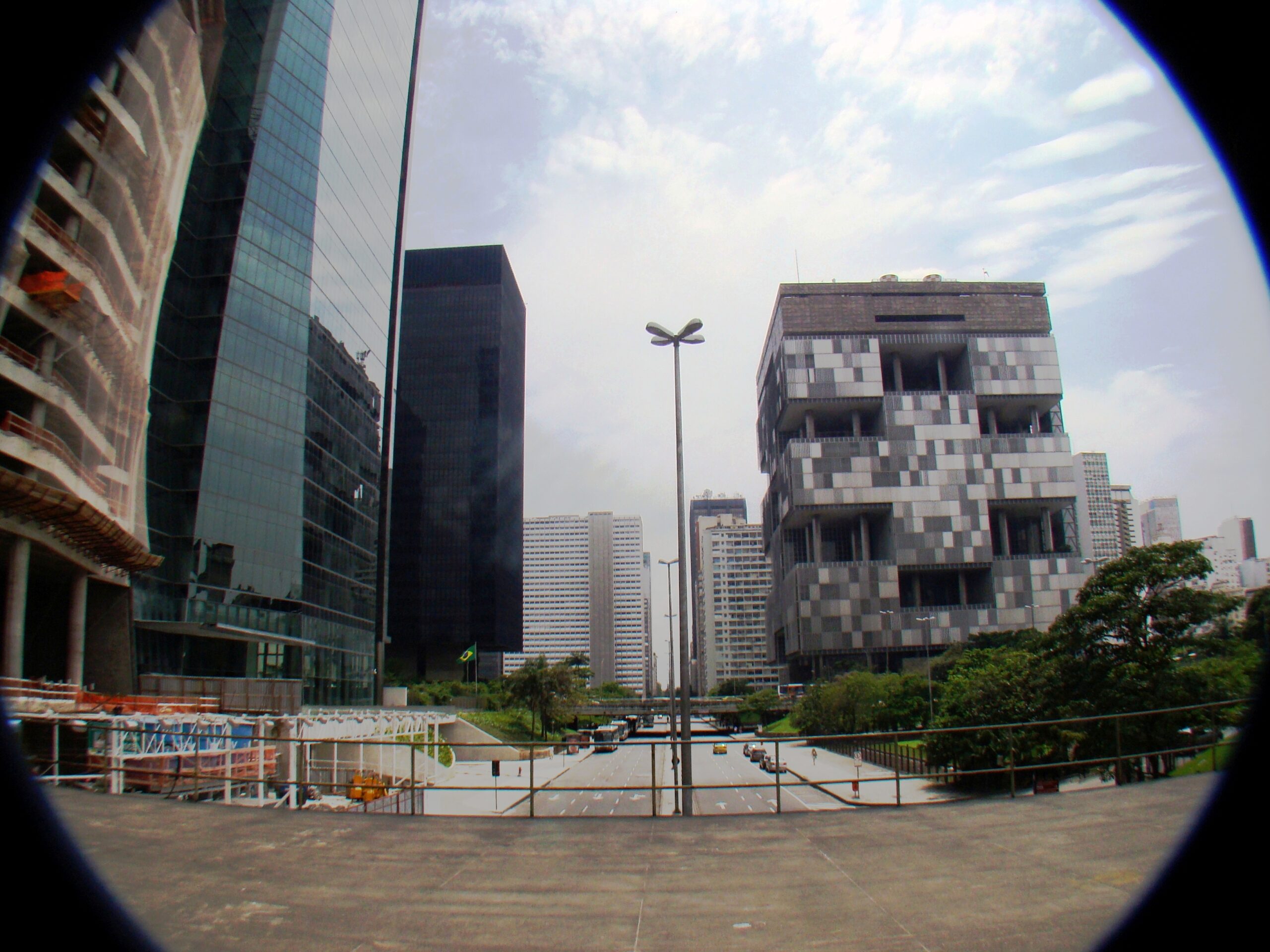
What Brazil’s Pre-Salt Oil Province Actually Is
Brazil’s pre-salt province refers to hydrocarbon reservoirs trapped beneath thick layers of salt, mainly in the Santos, Campos and Espírito Santo basins offshore the southeast coast.
These reservoirs sit at water depths often exceeding 2,000 meters, with total depths of 5,000 to 7,000 meters from sea surface to reservoir.
The National Agency of Petroleum, Natural Gas and Biofuels, the ANP, defines pre-salt reservoirs as those drilled below extensive evaporite salt layers deposited after the breakup of Gondwana, typically in the Aptian stratigraphic level.
The Santos Basin has become the main pre-salt production center, accounting for roughly 77.8 percent of Brazil’s offshore oil and gas output in 2025.
Key reservoirs such as Lula, later called Tupi, are microbial carbonate build-ups in post-rift settings with high porosity zones next to tight sections.
The 2006 Discovery That Opened the Santos Basin
Petrobras reports the commercial discovery of Brazil’s pre-salt occurred in 2006 offshore the Brazilian coast, commonly cited as the Lula or Tupi landmark that opened the Santos pre-salt.
The Tupi field held estimated recoverable reserves of 5 to 8 billion barrels of light oil in microbial carbonates.
First oil from the pre-salt came in 2008 at the Jubarte field in the Campos Basin, followed by Santos Basin pre-salt production starting in 2009.
The early discovery sequence included Júpiter in 2008 with up to 60 trillion cubic feet of gas and condensate, plus Sapinhoá, Carioca and Franco in the late 2000s.
Franco later became part of the Búzios development, now Brazil’s single largest producing field with multiple high-capacity FPSOs.
Live Company IntelligencePetroleo Brasileiro Petrobras SA ADR — the full investor dossier
Wall Street view
Valuation & profitability
Price & risk
$10.7852-wk high
$26.39
Revenue trend · 6y
Ownership
Dividend
How the Deepwater Carbonate Layer Actually Produces
Pre-salt wells are drilled in ultra-deep waters, mostly at 2,000 to 2,200 meters water depth, with long subsea wellbores through salt.
The drilling requires advanced directional drilling, salt geomechanics and real-time imaging to place wells in the heterogeneous carbonate reservoirs.
Production uses subsea trees tied back to floating production, storage and offloading units, known as FPSOs, via flexible risers and umbilicals.
Each FPSO typically handles 150,000 to 225,000 barrels of oil per day plus associated gas.
Petrobras highlights pre-salt operations as having low emissions intensity, citing Tupi and Iracema production at 9.7 kilograms of CO2 equivalent per barrel of oil equivalent, among the lowest in the global upstream industry.
Passing the Four Million Barrel Daily Threshold
Brazil produced 3.770 million barrels of oil per day in 2025, a 12.3 percent rise over the 3.358 million bpd recorded in 2024.
December 2025 oil production reached 4.015 million bpd, the first time the country exceeded 4 million barrels per day in a single month.
Total oil and gas production that month hit 5.237 million barrels of oil equivalent per day.
For all of 2025, Brazil’s total oil and natural gas production reached 4.897 million boe/d, up 13.3 percent over 2024 and the highest annual volume ever recorded.
Pre-salt fields accounted for 79.63 percent of that national output, with post-salt offshore at 15.45 percent and onshore fields at only 4.92 percent.
Petrobras and the International Partner Framework
Petrobras produced 2.99 million boe/d of its own total production in 2025, an 11 percent increase from the prior year.
Its total operated production, including partner volumes in operated fields, reached a record 4.32 million boe/d in 2025, above the previous record of 3.87 million boe/d set in 2023. It has since risen again, to 4.87 million boe/d in the second quarter of 2026.
Petrobras pre-salt oil production reached 2,020 thousand barrels per day in 2025, 11.4 percent higher than in 2024.
The 2010 pre-salt legislation introduced production-sharing contracts and strengthened Petrobras as sole operator in strategic areas.
Around 175 pre-salt wells were in production as of December 2025, feeding the FPSO fleet that anchors Brazil’s upstream expansion.
The FPSO Fleet Behind the Output Record
The Búzios field platforms broke a record of 1 million barrels of oil per day on October 29, 2025, driven by aggregate field output from multiple FPSOs.
Tupi and Iracema reached 1 million barrels per day on January 9, 2026, repeating a milestone first achieved in 2019.
Leading fields in 2025 included Tupi with 21.36 percent of national production, Búzios with 20.47 percent and Mero with 14.44 percent.
Itapu and Jubarte rounded out the top five fields, contributing 4.19 percent and 4.14 percent respectively.
Rio de Janeiro state was the largest producer, responsible for 87.8 percent of oil extracted in 2025.
Field Architecture and Reservoir Heterogeneity
The Santos Basin holds reservoirs ranging from microbial carbonate build-ups at Tupi to syn-rift coquinas and mixed carbonate sequences at Franco, now Búzios.
Hydrocarbons sit in both sag and upper syn-rift megasequences, with high porosity zones juxtaposed against tight sections that affect well placement.
Sapinhoá, formerly Guará, was described as a smaller but significant pre-salt oil field adjacent to Lula and Tupi, extending the carbonate fairway.
Júpiter added a large gas column in deepwater carbonate sequences, important for Brazil’s pre-salt gas resource base.
These discoveries transformed the Santos Basin into a single productive trend where the same FPSO-based development model can be repeated across adjacent fields.
The Equatorial Margin and New Frontier Debate
Petrobras has said it lost ten years by not exploring the Equatorial Margin, the northern deepwater frontier seen as Brazil’s next pre-salt-style play.
The Brazilian Institute of Environment and Renewable Natural Resources, Ibama, upheld a denial for Petrobras drilling in the Amazon Basin in late 2024. That position has since reversed.
In October 2025 Ibama issued the operating licence for the Morpho well in block FZA-M-59, about 175km off Amapá in water 2,886 metres deep.
Petrobras drilled it and confirmed hydrocarbons in August 2026, the first oil indication ever recorded in the Foz do Amazonas basin. Ibama then authorised three further wells on 3 September.
None of that makes it a commercial discovery. Volume, quality and viability are still being assessed, and the reported plan runs to about fifteen more wells.
The regulatory block leaves untested reserves outside the proven Santos Basin fairway, where every producing pre-salt field currently sits.
New pre-salt discoveries have also raised concern among environmental groups about Brazil’s goal of becoming an environmental powerhouse.
The Equatorial Margin result remains the single largest variable for investors trying to assess reserve replacement beyond the Santos and Campos basins.
Sovereign Wealth and the Energy Transition Tension
The rise of pre-salt output has generated recurring debate in Brazil about creating a sovereign wealth fund from oil revenues, though no dedicated pre-salt sovereign vehicle operates as of 2026.
The oil revenue debate sits alongside Brazil’s low emissions intensity claims, with Petrobras citing 9.7 kg CO2e per boe at Tupi and Iracema.
Brazil’s growing pre-salt production creates tension between expanding offshore output and maintaining a credible environmental position in global climate negotiations.
The pre-salt province now dominates national production so heavily that any energy transition policy must account for continued offshore expansion.
For foreign investors, the regulatory stability of the Equatorial Margin and the fiscal treatment of pre-salt revenues matter more than short-term output records.
Where Brazil Ranks Among World Oil Producers
Brazil’s December 2025 mark of 4.015 million barrels per day of oil placed it above many mature offshore producers, though the research base does not provide a precise global rank.
The previous annual oil record was 3.770 million bpd in 2025, up from 3.358 million bpd in 2024, a pace driven almost entirely by pre-salt fields.
Total operated production by Petrobras reached 4.32 million boe/d in 2025, meaning the company alone moves volumes comparable to a mid-tier OPEC producer.
Brazil’s total oil and gas output of 4.897 million boe/d in 2025 pushed the country further up the global supply table after October 2025 first exceeded 5.255 million boe/d.
The concentration of output in Rio de Janeiro state and the Santos Basin makes Brazil a distinct deepwater specialist rather than a diversified onshore and offshore producer.
More: Brazil news in English, every day from The Rio Times.
Background: Oil Wrap: Guyana Boom, Petrobras Pre-Salt Rise on Monday.
Background: Brazil Cut the Fuel Tax and Petrobras Raised the Price on the Same Night.
The Investment Read on Brazil’s Pre-Salt Province
Investors tracking Brazil pre-salt oil should watch the FPSO delivery schedule, since each new unit adds 150,000 to 225,000 bpd of processing capacity.
The Tupi return to 1 million bpd in January 2026 and the Búzios platform record in October 2025 confirm mature pre-salt fields can sustain plateau production.
The 2025 operated production record of 4.32 million boe/d for Petrobras validates the production-sharing contract model introduced in 2010.
The Equatorial Margin is no longer a permitting question but a resource one. What matters now is volume, quality and whether any of it is commercial.
For foreign capital, the pre-salt province is now a cash-generating deepwater system with measured decline curves, visible FPSO additions and a frontier decision still unresolved.
Connected Coverage
Brazil’s Financial Morning Call for Tuesday, September 8, 2026
The Big Picture
Latest developments
- Brazil Stocks Slip 0.9% Before Bradesco Earnings — 22 October 2026
- Brazil Newspaper Asks Court to Stop Meta — 22 October 2026
- Brazil Prosecutors Sue Meta Over Bans — 21 October 2026
- Brazil Stocks Fall 0.9% as Poll Tightens — 21 October 2026
This article was produced by The Rio Times’ automated newsroom system. How we use AI · Report an error · Editorial responsibility: Matthias Camenzind, Editor-in-Chief
LatAm Markets: Live Signals → — real-time movers, turnover leaders and FX across Latin America.
Expat Guide to Brazil
What The Rio Times publishes for foreigners who live in or move to Brazil.
Start here
- Do US Citizens Need a Visa for Brazil? Yes, US$80.90 E-Visa
- Brazil Education and Healthcare Explained
- Brazil Security and Crime Explained 2026
- Brazil Rent and Power Bills After 4.58% Inflation
City guides
Rio de Janeiro, São Paulo, Florianópolis, Salvador, Belo Horizonte, Curitiba, Porto Alegre, Brasília
Coming up in Brazil
- Brazil Runoff Date and Results Time: 25 October, 4 p.m. ET 25 Oct
- Brazil Runoff Day on 25 October for Foreign Visitors 25 Oct
- Brazil Votes 25 October, Polls Close 4 p.m. Eastern 25 Oct
- Brazil Election 2026: Lula vs Flávio Runoff on 25 October 25 Oct
Understand Brazil