What Is Vale? Brazil’s Mining Giant Explained: Iron Ore, the Dam Legacy and What to Watch
GUIDES · BRAZIL
Key Facts
- —What it is Vale S.A., a Brazilian mining company based in Rio de Janeiro. The state founded it in 1942 as Companhia Vale do Rio Doce and sold it to private investors in 1997.
- —What it sells Its iron ore business, mainly ore and pellets, brought in about 75 percent of revenue in the second quarter of 2026. Copper and nickel, grouped in Vale Base Metals, made up the rest.
- —Latest results Net income of US$1.375 billion in the second quarter of 2026, down 35 percent on a year earlier. Revenue rose 19 percent to US$10.5 billion.
- —Who owns it Nobody controls it. The four largest holders are BlackRock, the pension fund Previ, Japan’s Mitsui and Capital World Investors. Each held 5 to 7.5 percent on 30 June 2026.
- —Chief executive Gustavo Pimenta, in office since October 2024 and still in post as of September 2026.
- —Shares VALE3 closed at R$70.77 (about US$13.61) in São Paulo on 25 September 2026; the New York receipts (VALE) closed at US$13.61. Conversions use the central bank’s PTAX rate of R$5.1991 per US dollar for that day.
What is Vale, how does it make money, who runs it, and why do two dam collapses still cost it? A plain guide for foreign readers and investors.
What is Vale? It is a Brazilian mining company and one of the world’s largest iron ore producers. About half of what it sells goes to China, and two tailings-dam disasters, in 2015 and 2019, still shape its costs, courts and reputation.
What is Vale and what does it do?
Vale mines iron ore, the main ingredient of steel, in Brazil and ships most of it abroad. Part is turned into pellets, small hardened balls of ore that make steel furnaces run more efficiently.
It runs three production systems. The North System sits in Carajás, in the Amazon state of Pará; the Carajás Railroad carries its ore to the Ponta da Madeira terminal at São Luís.
The Southeast and South systems lie in Minas Gerais, Brazil’s historic mining state; the Vitória–Minas Railway takes their ore to the port of Tubarão in Espírito Santo. Both railway concessions were extended in 2020 to 2057.
In the second quarter of 2026 Vale produced 84.3 million tonnes of iron ore, its best second quarter since 2018. It expects 335 to 345 million tonnes for the full year.
It runs eight pellet plants in Brazil and two in Oman, and sells most exports through its Swiss trading arm, Vale International.
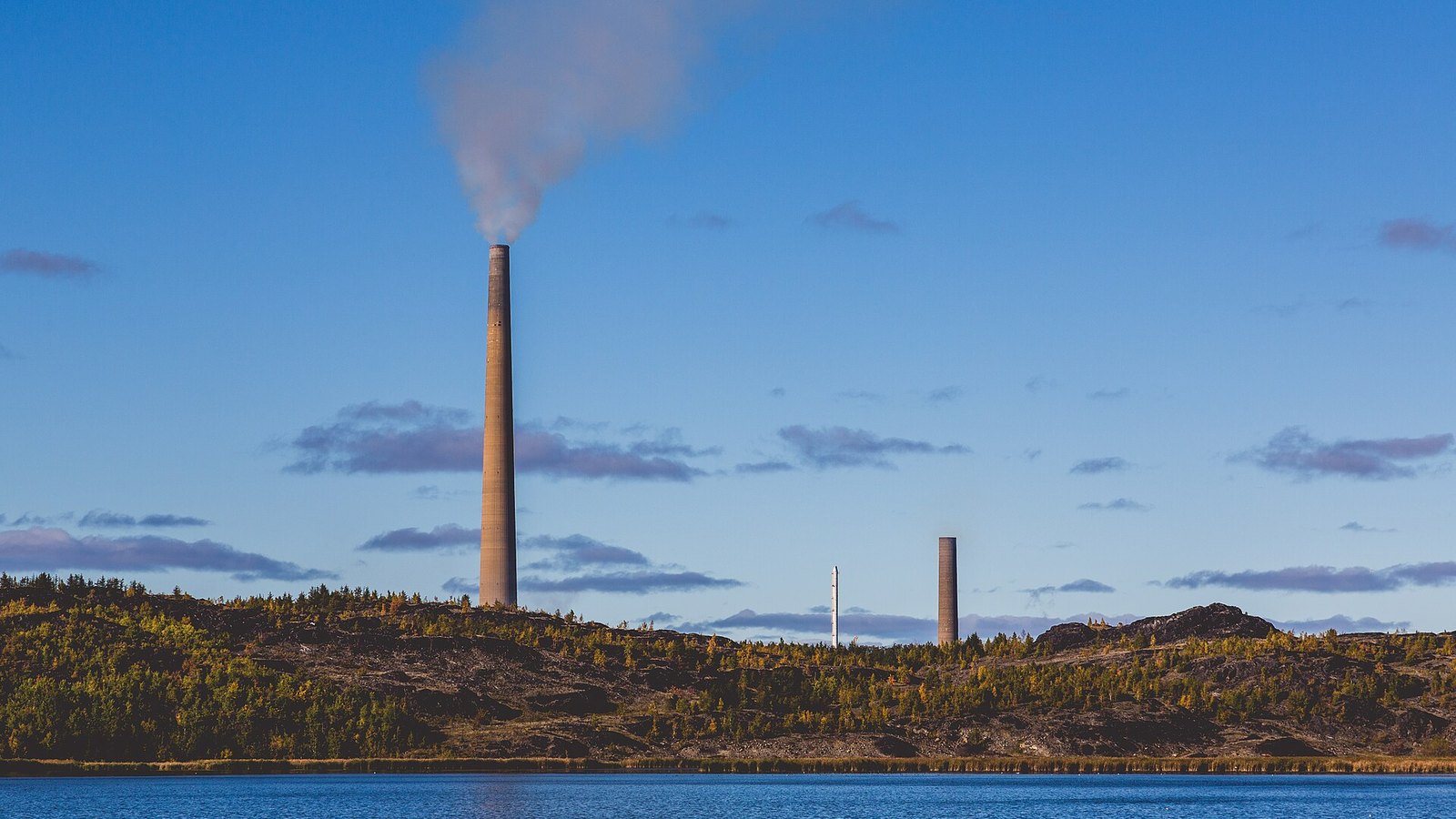
The second business is Vale Base Metals, a UK-based holding company. It mines nickel and copper at Sudbury in Ontario and Voisey’s Bay in Newfoundland and Labrador, runs the Salobo and Sossego copper mines and the Onça Puma nickel operation in Pará, and holds a stake in PT Vale Indonesia.
In the second quarter of 2026 it produced 98,400 tonnes of copper, up 6 percent and the best second quarter since 2017, and 42,000 tonnes of nickel, up 4 percent. Manara Minerals, owned by Saudi Arabia’s Ma’aden and Public Investment Fund, holds 10 percent of Vale Base Metals.
Vale is not a state company: unlike Petrobras, it has had no government controller since 1997. It dropped the name Vale do Rio Doce in 2007.
The numbers: what the latest results show
Vale reports in US dollars. Its second-quarter 2026 results, for April to June, came out on 30 July 2026.
Net operating revenue was US$10.5 billion, up 19 percent from US$8.8 billion a year earlier, mostly on prices. Iron ore fines fetched an average US$95.0 a tonne, up 12 percent, and copper US$14,062 a tonne, up 57 percent.
Profit went the other way. Net income attributable to shareholders fell 35 percent to US$1.375 billion, from US$2.117 billion, even though operating income rose to US$2.16 billion from US$2.0 billion.
The damage came below that line. Other financial items swung from a US$459 million gain to a US$186 million loss on currency and derivative effects, and the tax bill rose.
Miners are usually judged on EBITDA, earnings before interest, tax, depreciation and amortisation. Vale’s adjusted EBITDA was US$3.68 billion, up 9 percent. Its pro-forma measure, which strips out Brumadinho and dam-dismantling expenses, was US$4.1 billion, up 19 percent.
The mix is shifting. Iron ore produced US$3.06 billion of EBITDA and Vale Base Metals US$1.29 billion, up 79 percent. Base metals now earn about three dollars in every ten of segment EBITDA.
Costs rose. The C1 cash cost, the cost of mining and processing a tonne of iron ore before freight and royalties, was US$24.1 a tonne, up 9 percent, mainly because of the stronger real. Vale raised its full-year cost guidance to US$22.5 to US$23.5 a tonne.
Recurring free cash flow was US$1.5 billion. Capital spending was US$1.1 billion, in line with a 2026 budget of US$5.4 billion to US$5.7 billion. Expanded net debt, which adds leases and dam-disaster commitments to borrowing, fell to US$16.7 billion.
On 2 September 2026 shareholders received R$8.64 billion (about US$1.66 billion), or R$2.0307 a share (about US$0.39), in dividends and interest on capital. Vale also bought back 8.77 million shares in the quarter and approved a new buyback of up to 100 million.
Quarterly profit can swing hard. In the last quarter of 2025, a US$3.5 billion write-down of Canadian nickel assets pushed Vale into a US$3.8 billion loss despite strong output.
Live Market IntelligenceBrazil — Live Market Board
Rio Times · Live Market Intelligence
Brazil — Live Market Board
-0.27%
183,476.86
-0.27%
64,992.23
+1.13%
11,256.80
-0.38%
2,893,751
-1.57%
2,584.72
-0.95%
59,934.37
+1.27%
| Instrument | Last | Change | YoY | Prev. | High | Low | Volume |
|---|---|---|---|---|---|---|---|
| IBOV | 183,476.86 | -0.27% | +21.85% | 183,965.91 | 168,310 | 167,142 | — |
| USD/BRL | 5.16 | +0.01% | -5.13% | 5.16 | 5.18 | 5.14 | — |
| SELIC | 14.00% | — | — | — | — | — | |
| PETR4 | 41.64 | -0.05% | +35.19% | 41.66 | 41.97 | 41.15 | 41,499,400 |
| VALE3 | 72.97 | +0.83% | +30.75% | 72.37 | 73.54 | 72.66 | 17,658,000 |
| ITUB4 | 38.60 | -1.03% | +4.57% | 39.00 | 39.34 | 38.39 | 29,487,800 |
| BBDC4 | 16.85 | +0.36% | +3.50% | 16.79 | 16.90 | 16.67 | 19,416,900 |
| BBAS3 | 19.37 | +0.47% | +0.73% | 19.28 | 19.44 | 19.16 | 11,069,200 |
| B3SA3 | 14.26 | -0.21% | +12.73% | 14.29 | 14.47 | 14.11 | 33,037,800 |
| ABEV3 | 14.89 | -0.80% | +21.91% | 15.01 | 15.07 | 14.81 | 16,453,100 |
| WEGE3 | 47.59 | +0.49% | +29.99% | 47.36 | 48.08 | 47.36 | 3,364,600 |
| PRIO3 | 59.14 | -0.19% | +50.67% | 59.25 | 59.81 | 58.74 | 3,325,600 |
| SUZB3 | 41.33 | +2.35% | -23.55% | 40.38 | 41.48 | 40.35 | 3,914,900 |
| RENT3 | 34.68 | -0.09% | +0.84% | 34.71 | 34.96 | 34.35 | 7,979,100 |
| AZZA3 | 15.89 | -2.63% | -53.76% | 16.32 | 16.42 | 15.82 | 1,330,300 |
| CSNA3 | 4.30 | +0.47% | -42.65% | 4.28 | 4.41 | 4.26 | 10,076,100 |
| GGBR4 | 24.69 | +2.19% | +51.38% | 24.16 | 24.85 | 24.18 | 7,047,600 |
| ENEV3 | 24.21 | -1.38% | +70.49% | 24.55 | 24.64 | 23.99 | 9,297,000 |
Owners and management: who controls Vale
Vale has no controlling shareholder. That is rare among large Brazilian companies, most of which have a family, a state or a holding company in charge.
It was not always so. After privatisation in 1997, Vale was controlled by Valepar, a holding company of Previ-led pension funds, Bradesco’s investment arm, Mitsui and the development bank BNDES.
In 2017 Vale converted its preferred shares into ordinary shares and joined the Novo Mercado, the strictest governance tier of B3, the São Paulo exchange. A transitional shareholders’ agreement covering about 20 percent of the shares expired on 9 November 2020.
On 30 June 2026 BlackRock held 7.44 percent of the shares outstanding; Previ, the Banco do Brasil staff pension fund, 7.09 percent; Mitsui 6.73 percent; and Capital World Investors 5.35 percent. About 73 percent traded freely.
The federal government holds 12 special “golden shares”, out of 4.4 billion, giving it a limited veto over certain decisions and one fiscal council seat, but not control.
The state still has leverage. Vale needs federal railway concessions and licences for every mine, and courts, prosecutors and environmental agencies decide when a stopped mine may reopen.
Gustavo Pimenta, previously Vale’s head of finance and investor relations for three years, has been chief executive since October 2024, when he replaced Eduardo Bartolomeo.
Daniel André Stieler chairs the board; he was nominated by Previ. Marcelo Bacci is the chief financial officer, and Shaun Usmar runs Vale Base Metals.
Its role in the market
Vale is one of the most valuable companies on the São Paulo exchange, worth about R$301 billion (about US$58 billion) at the 25 September 2026 close, using the end-June share count.
In the second quarter of 2026, customers in China bought US$5.28 billion of the US$10.5 billion Vale sold, or 50 percent, almost all of it iron ore. Japan and the rest of Asia took another US$1.73 billion.
So the price of iron ore in China drives Vale’s earnings. The benchmark for ore with 62 percent iron delivered to China stood at US$96.6 a tonne on 25 September 2026, and Chinese crude steel output fell 3.7 percent year on year in August. Our daily iron ore wrap tracks the moves.
Vale’s finance chief said in September 2026 that the company is preparing a first yuan-denominated “panda” bond in China, possibly in 2026. It has also signed long freight contracts for new ore carriers, including a US$3.5 billion, 25-year deal with South Korea’s HMM and US$1.65 billion of charters backing four more ships.
Because Brazil is far from China, Vale introduced ore carriers of up to 400,000 tonnes, known as Valemaxes; it relies mostly on long-term charters rather than owning ships.
The Serra Sul +20 expansion at Carajás started up in July 2026 and should add volume from 2027. On 22 September Vale agreed to pay about US$190 million for 30 percent of the Pará miner Ligga, subject to approvals. It has also brought forward a copper project at Salobo to the first half of 2028.
Competition is growing too. Guinea’s Simandou project is adding high-grade ore to the market that Vale serves. Our Brazil mining guide sets out the wider industry.
Risks and controversies: the dams, the courts and the costs
Two dam collapses in Minas Gerais define Vale’s modern history. Both involved tailings dams, which hold the wet waste left after ore is processed.
The first was at Mariana on 5 November 2015. The Fundão dam, owned by Samarco, a 50-50 joint venture of Vale and the Australian miner BHP, gave way and killed 19 people. The mud reached the Atlantic via the Doce River.
On 25 October 2024, the companies signed a definitive settlement with the federal government, the two affected states and prosecutors. It is valued at R$170 billion (about US$32.7 billion) and was ratified in November 2024.
About R$38 billion (about US$7.3 billion) had already been spent before the deal. R$100 billion (about US$19.2 billion) is paid to governments over 20 years. R$32 billion (about US$6.2 billion) covers work Samarco must carry out itself.
Samarco carries the main responsibility; Vale and BHP step in, half each, if it cannot pay. Vale’s Samarco provision stood at US$2.1 billion on 30 June 2026, after US$846 million of payments in the first half.
Mariana is not closed abroad. In London the High Court found BHP liable in November 2025, and in May 2026 the Court of Appeal refused BHP permission to appeal. Vale, which agreed in 2024 to share any payout equally with BHP, booked a US$449 million provision.
A separate case against Vale runs in Amsterdam, where a court froze shares in a Dutch subsidiary as security. In Brazil, an appeals court on 3 September 2026 convicted Samarco and three former managers. Vale and BHP kept their acquittals, and further appeals are open.
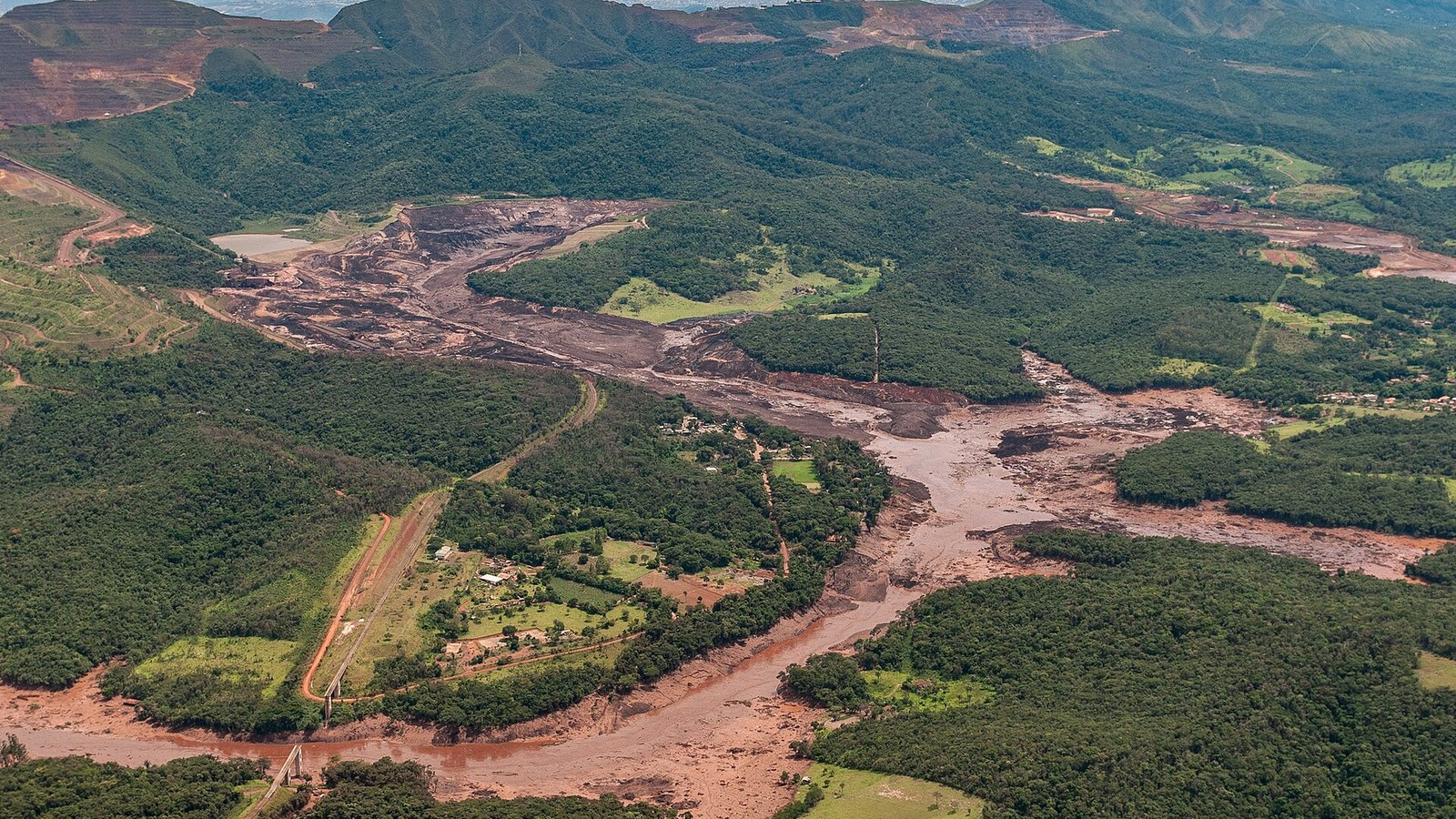
The second disaster was Vale’s own. On 25 January 2019, Dam I at the Córrego do Feijão mine in Brumadinho collapsed and killed 270 people, or 272 in counts that include two unborn children. The chief executive at the time stepped aside weeks later.
In February 2021 Vale signed a reparation agreement worth R$37.69 billion (about US$7.25 billion) with the state of Minas Gerais, prosecutors and the public defender. Vale still carried US$1.77 billion of Brumadinho liabilities on 30 June 2026.
Payments continue. Vale transfers R$133.1 million a month (about US$25.6 million) in emergency aid, which the mining industry association has asked the Supreme Federal Court to stop. On 15 September 2026 a justice asked for the payment data before ruling.
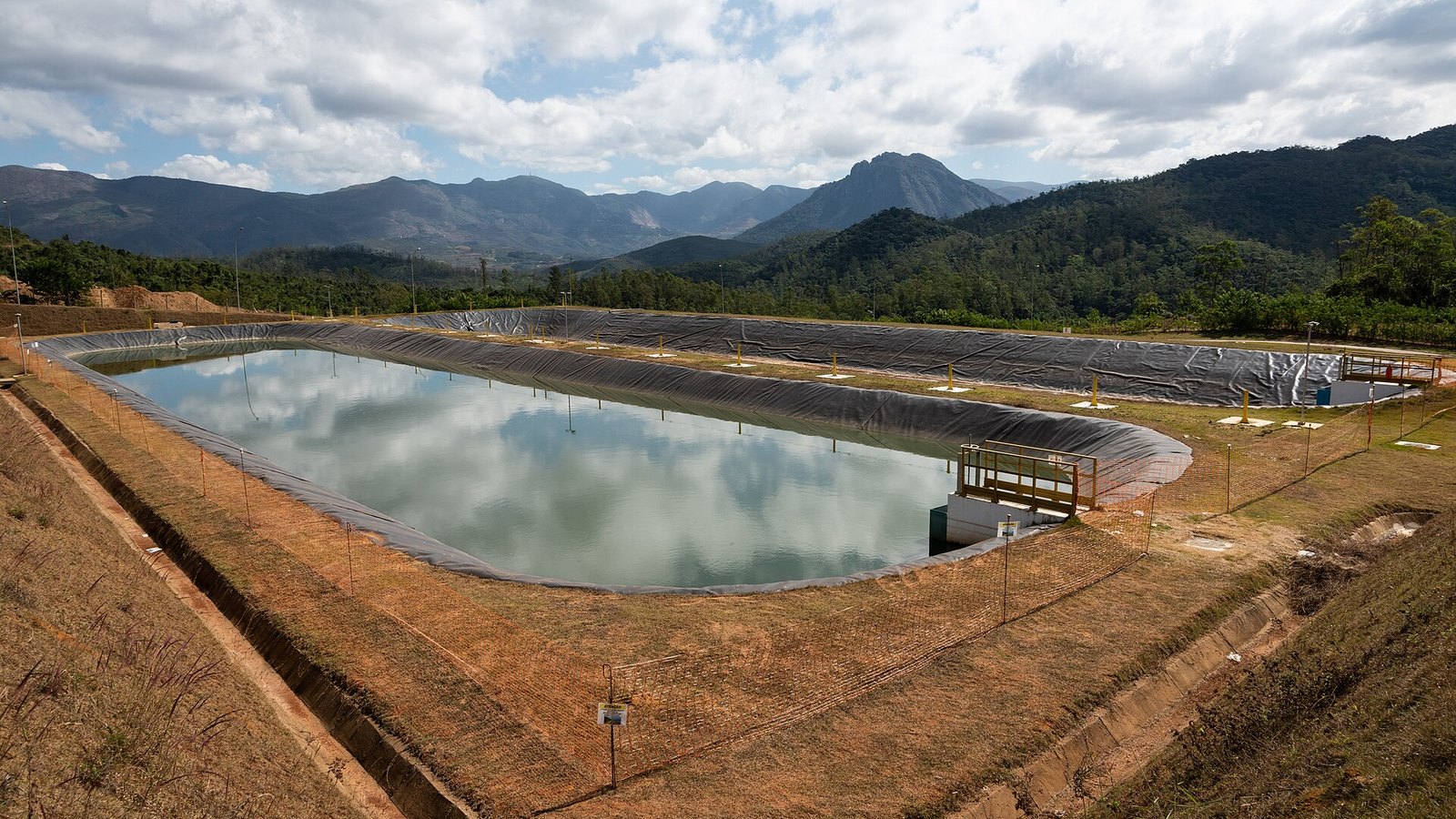
After Brumadinho, Vale decided to dismantle every dam in Brazil built by the “upstream” method, in which the walls are raised on top of the tailings themselves. Its provision for that work and for closing old sites was US$6.15 billion on 30 June 2026.
Smaller incidents still stop output. In January 2026 sediment-laden water overflowed at the Fábrica and Viga mines in Minas Gerais, and both stopped. With a state court’s approval, Vale began a partial restart at Fábrica on 23 September 2026, while a federal prosecutor has sued over Viga.
What to watch
Iron ore and Chinese steel: the benchmark price, Chinese steel output and port stocks.
The next results. Vale normally publishes third-quarter production and financial results in the second half of October. Watch iron ore volumes, the C1 cost and copper output.
Mariana abroad. An Amsterdam first-stage decision is not expected before the fourth quarter of 2026; Vale expects the London damages judgment between April 2027 and March 2028.
Brazil’s election. Voters choose a president on 4 October 2026, with a possible runoff on 25 October. Railway concessions, royalties and licensing all run through government. Our election briefing sets out the race.
What this means for foreigners and investors
Foreign investors can buy Vale in New York, where each VALE receipt represents one ordinary share, or in São Paulo under the ticker VALE3.
Vale’s by-laws require it to pay out at least 25 percent of net income, after certain reserves. It usually pays twice a year, partly as interest on capital, a Brazilian instrument taxed at source. How much a foreign holder keeps depends on where they are resident; our Brazil tax guide covers the basics.
Currency cuts both ways. Vale earns mostly in dollars but pays many costs in reais, so a stronger real, as in 2026, raises its costs in dollar terms.
A 50 percent dependence on China does not mean Vale sells to the Chinese state; its customers are steel mills. And a regular dividend is not a stable one: payouts follow profit, and profit follows the ore price.
In Minas Gerais and Pará, Vale is a large employer. Our Brazil explainer covers the wider political and economic system.
Connected Coverage
Brazil Explained: The Country, Its Politics, Its Economy and What to Watch
Brazil Mining 2026: Iron Ore, Critical Minerals and Vale
What Is Petrobras? Brazil’s Oil Giant Explained
Ibovespa Explained: Brazil’s Stock Market and How to Invest in 2026
Brazil Economy 2026: Growth, Selic, Inflation and Election
Taxes in Brazil for Expats 2026
Vale’s Iron Ore Rises 3% in Q1 While Copper and Nickel Hit Records
Sources: Results, ownership, provisions and litigation from Vale’s second-quarter 2026 financial statements filed with the US Securities and Exchange Commission and its results release; volumes and prices from its 2Q26 production report; leadership from its investor pages; the exchange rate from the Banco Central do Brasil (PTAX, 25 September 2026); and share prices from market data at the close on 25 September 2026.
- Vale — interim financial statements 2Q26, Form 6-K, July 2026
- Vale — 2Q26 results release, 30 July 2026
- Vale — production and sales report 2Q26, 22 July 2026
- Vale — leadership and board of directors
- Vale — definitive settlement for Mariana
- Banco Central do Brasil — PTAX exchange rates
What Is Not Known
The final bill for Mariana. London damages have not been assessed, and Vale says it cannot yet reliably estimate a possible loss in Amsterdam.
How long Brumadinho aid lasts. The Supreme Federal Court has not ruled, and neither the number of recipients nor the individual payment has been published.
Where iron ore settles. Chinese steel output is falling while new supply arrives from Guinea.
Whether Vale Base Metals will be listed. Vale has sold minority stakes in the unit but has not committed to a separate stock-market listing or a date.
When Fábrica and Viga return in full. The Fábrica restart is partial and conditional, and no restart date for Viga has been announced.
Frequently Asked Questions
What is Vale?
Vale S.A. is a Brazilian mining company based in Rio de Janeiro and one of the world’s largest producers of iron ore. It also mines copper and nickel through Vale Base Metals. It was founded by the state in 1942 and privatised in 1997.
Who owns Vale?
No single shareholder controls Vale. As of 30 June 2026 the largest holders were BlackRock with 7.44 percent, the pension fund Previ with 7.09 percent, Mitsui with 6.73 percent and Capital World Investors with 5.35 percent. The government holds 12 golden shares with limited veto rights.
Who is the CEO of Vale in 2026?
Gustavo Pimenta, Vale’s former head of finance and investor relations. He became chief executive in October 2024, replacing Eduardo Bartolomeo, and was still in post as of September 2026. Daniel André Stieler chairs the board.
What happened at Mariana and Brumadinho?
At Mariana in November 2015 the Fundão dam of Samarco, owned half by Vale and half by BHP, collapsed and killed 19 people. At Brumadinho in January 2019 a Vale tailings dam collapsed and killed 270 people. Both disasters led to multibillion-real settlements that are still being paid.
How much does Vale depend on China?
Heavily. In the second quarter of 2026 customers in China accounted for about 50 percent of Vale’s US$10.5 billion revenue, almost all of it iron ore. That makes Chinese steel demand the main driver of its earnings.
Can foreigners buy Vale shares?
Yes. Vale’s receipts trade on the New York Stock Exchange under the ticker VALE, each representing one ordinary share. In São Paulo the shares trade as VALE3. Vale pays dividends and interest on capital, usually twice a year.
This article was produced by The Rio Times’ automated newsroom system. How we use AI · Report an error
LatAm Markets: Live Signals → — real-time movers, turnover leaders and FX across Latin America.
Read More from The Rio Times