Guyana Explained 2026: The Oil Boom, the Politics, the Economy and What to Watch
GUIDES · GUYANA
Key Facts
- —Capital Georgetown, a port city at the mouth of the Demerara River. It sits in Region 4, one of ten administrative regions, and hosts the headquarters of the Caribbean Community (CARICOM).
- —Population About 836,000 in 2025 by the World Bank’s count, or 1.02 million for 2026 by the International Monetary Fund’s (IMF). Either way, fewer people than the US state of Delaware.
- —Currency The Guyana dollar (G$). It traded at about G$209 to the US dollar on 26 September 2026.
- —Language English. Guyana is the only country in South America where English is the official language. Most Guyanese also speak Creolese, an English-based creole.
- —GDP US$27.1 billion in 2025 (World Bank), after growth of 43.8 percent in 2024 and 19.3 percent in 2025. That is about US$32,400 per person on paper.
- —Government A unitary republic with an executive president chosen through a 65-seat National Assembly. President Irfaan Ali won a second five-year term on 1 September 2025.
Guyana explained for outsiders: an English-speaking country the size of Idaho, with fewer people than Delaware. In under seven years it went from no oil output to about 900,000 barrels a day. What happens there now matters for oil markets, for Venezuela and for anyone doing business in the Caribbean.
Guyana explained in one fact: ExxonMobil found oil offshore in May 2015 and first oil flowed in December 2019. By the first half of 2026 the country pumped about 902,000 barrels a day, roughly one for every resident. That has changed its politics, its budget and its relations with Venezuela.
What kind of country is this?
Guyana sits on the northeast shoulder of South America. Its neighbours are Venezuela to the west, Brazil to the south and Suriname to the east.
It covers 214,969 square kilometres, about the size of Idaho or the island of Great Britain. Most people live on a narrow strip of Atlantic coast, and the interior is largely rainforest and savannah.
It feels more Caribbean than Latin American. Guyana was a Dutch and then a British colony, known as British Guiana, until independence on 26 May 1966.
It became a republic on 23 February 1970, and English is the only official language. The Caribbean Community, the regional bloc known as CARICOM, has its headquarters in Georgetown.
Society reflects the colonial plantation economy. At the 2012 census about 40 percent of people were of Indian descent and 29 percent of African descent.
About 20 percent were mixed and 10.5 percent Indigenous. Party politics has long tracked that division, which is why elections here are watched so closely.
Then there is the border. Venezuela claims the whole Essequibo region, the land west of the Essequibo River and roughly two-thirds of Guyana’s territory.
Much of the offshore oil lies in waters that depend on where that line is drawn. Guyana explained without the Essequibo question is only half the story.
Who runs Guyana and how
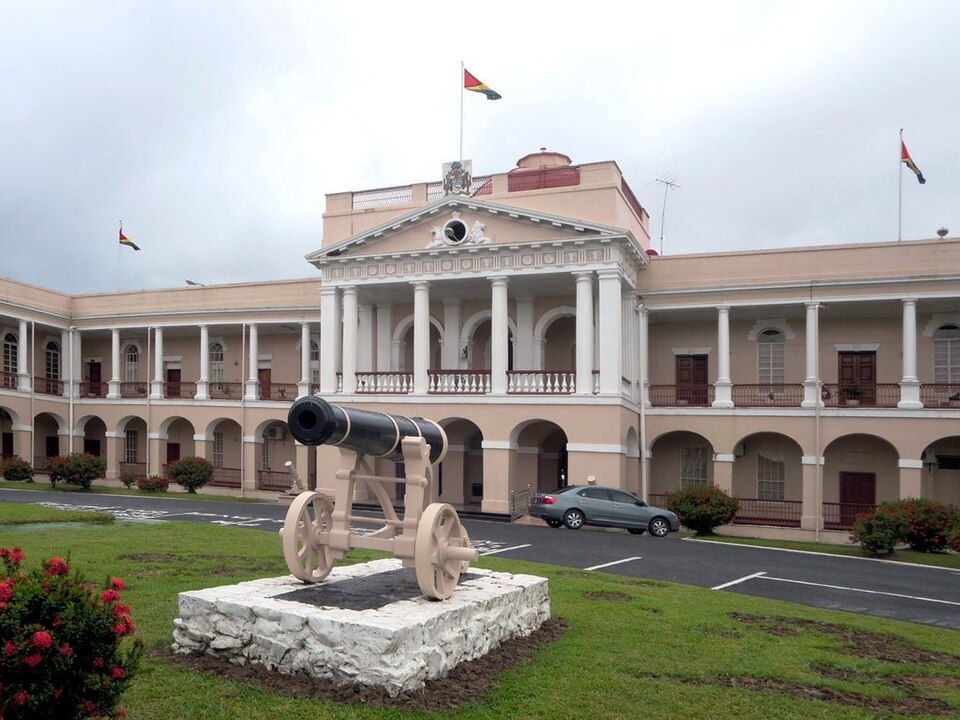
The system is unusual. Voters choose party lists for the 65-seat National Assembly by proportional representation.
Each list names a presidential candidate, and the candidate of the list with the most votes becomes president. There is no separate presidential ballot.
Irfaan Ali of the People’s Progressive Party/Civic (PPP/C) has been president since August 2020. The Guyana Elections Commission (GECOM) declared him re-elected on Saturday 6 September 2025, after a partial recount requested by APNU confirmed the preliminary count. Mark Phillips was sworn in again as prime minister and Bharrat Jagdeo, a former president, as vice-president.
The 1 September 2025 result was decisive. The PPP/C won 242,497 votes and 36 seats, a working majority.
A new party, We Invest in Nationhood (WIN), came second with 109,075 votes and 16 seats. The long-established A Partnership for National Unity (APNU) fell to 12 seats, and the Forward Guyana Movement took one.
WIN’s founder, the businessman Azruddin Mohamed, is now opposition leader and faces a United States extradition request. He and his father were arrested on 31 October 2025 and released on bail. US prosecutors allege wire fraud, mail fraud, money laundering and customs offences tied to gold exports.
Power in practice is concentrated in the presidency and the governing party. With a majority of its own, the PPP/C does not need coalition partners to pass a budget. The opposition’s main tools are parliamentary debate, the courts and public pressure.
How the economy works
Oil is the economy now. ExxonMobil operates the offshore Stabroek Block with partners Chevron and CNOOC, and has made more than 30 significant discoveries there since May 2015. Four floating production, storage and offloading vessels (FPSOs), ships that pump, process and store crude at sea, were producing in 2026.
They came on in steps. Liza Destiny started the boom in December 2019 with capacity of 120,000 barrels a day.
Liza Unity followed in February 2022 and Prosperity in 2023, at 220,000 barrels each. The largest, ONE GUYANA, started on 8 August 2025 with capacity of 250,000 barrels a day.
The result shows up in national accounts. The World Bank puts output at US$27.1 billion in 2025, against US$14.7 billion in 2022.
Growth ran 63.3 percent in 2022, 33.8 percent in 2023, 43.8 percent in 2024 and 19.3 percent in 2025. Those are among the fastest rates recorded anywhere.
Per-person figures need care. GDP of about US$32,400 per person is, on paper, the highest in South America.
But GDP counts all oil pumped in Guyana, and much of it belongs to the foreign consortium. What households feel is the government’s share and how it is spent.
That share runs through the Natural Resource Fund, a sovereign fund managed by the Bank of Guyana that receives the state’s oil earnings. The government reported a balance of US$4.29 billion at the end of June 2026.
The exchange rate is about G$209 to the US dollar, the open.er-api.com mid-rate on 26 September 2026. The Bank of Guyana’s published rates on 25 September were G$207.98 buying and G$210.45 selling. All conversions here use G$209.
Beyond oil, Guyana still mines gold and bauxite and grows sugar and rice. The non-oil economy grew 10.1 percent in the first half of 2026, with construction up 24.7 percent and gold mining up 11.3 percent. Net domestic bank credit reached G$1.286 trillion (about US$6.2 billion) at the end of June.
What is happening right now
As of 26 September 2026, Guyana has an oil windfall. The government’s 2026 Mid-Year Report, released in mid-September, says crude exports earned US$15.05 billion in the first half.
Export volumes rose about 40 percent on a year earlier and crude prices about 28.9 percent. Total exports reached US$16.2 billion.
The report counted 163.3 million barrels produced from January to June, an average of about 902,000 barrels a day. It projects total petroleum revenue of US$6.50 billion for 2026. That splits into US$5.97 billion of profit oil, the state’s share of production after costs, and US$508 million in royalties.
The state’s cut is rising. Reuters reported on 31 July 2026 that ExxonMobil had recouped its initial costs.
On 18 August President Ali said Guyana was now entitled to nearly 40 percent of production from the block. Overall growth reached 33.3 percent in the first half, and the government projects 20.8 percent for the year.
Offshore, the fifth vessel has arrived. The Errea Wittu FPSO, built by the Japanese firm MODEC for the Uaru project, reached Guyanese waters in August 2026.
It can process 250,000 barrels a day. First oil is expected in the fourth quarter of 2026, which would lift installed capacity above one million barrels a day.
The International Court of Justice (ICJ) is the United Nations’ top court. It heard the merits of Guyana’s border case in The Hague from 4 to 11 May 2026.
Guyana asks the court to confirm the 1899 arbitral award that fixed the boundary. Venezuela argues the court lacks jurisdiction and that the 1966 Geneva Agreement requires negotiation.
Venezuela itself has changed. Nicolás Maduro was arrested in January 2026, and Delcy Rodríguez leads the government as acting president.
On 12 May she said Venezuela would not respect an ICJ ruling in Guyana’s favour. At the UN General Assembly in late September both sides restated their positions. Guyana urged respect for the coming ruling, and Venezuela argued for a negotiated settlement.
What to watch
The ICJ judgment is the big date. President Ali told Al Jazeera in September that he hopes for a ruling early in 2027.
The government notes the court has usually taken six to eight months after hearings, pointing to a window between November 2026 and January 2027. The court itself has set no date.
Uaru first oil comes next. MODEC and ExxonMobil point to the fourth quarter of 2026.
Watch the government’s monthly production figures for the jump above one million barrels a day, and whether older fields hold steady. Output dipped in May and June, mostly at the Liza field.
The pipeline does not stop there. Whiptail, the sixth project, was approved in 2024.
Hammerhead, the seventh, has an FPSO contract with MODEC. Longtail, the eighth, is being designed as the Stabroek Block’s first gas-focused development.
In Georgetown, the extradition hearing against Azruddin Mohamed and his father resumes on Monday 28 and Tuesday 29 September 2026. The Chief Magistrate is hearing the case.
In July 2026 the Caribbean Court of Justice ruled that the extradition process could resume. The outcome will shape who leads the opposition.
On the budget side, watch the Natural Resource Fund. The government plans withdrawals of US$2.37 billion in 2026, and the balance was US$4.29 billion at the end of June. The next general election is due by 2030.
What this means for foreigners
Getting in is easy. US citizens need no visa for stays of up to 90 days, but their passport must be valid for six months beyond arrival.
Travellers must declare more than US$10,000 in cash on entry and exit. Proof of yellow fever vaccination is required for arrivals from certain countries.
Safety is the first practical question. The US State Department raised Guyana to Level 3, reconsider travel, on 26 August 2026, citing violent crime, especially at night.
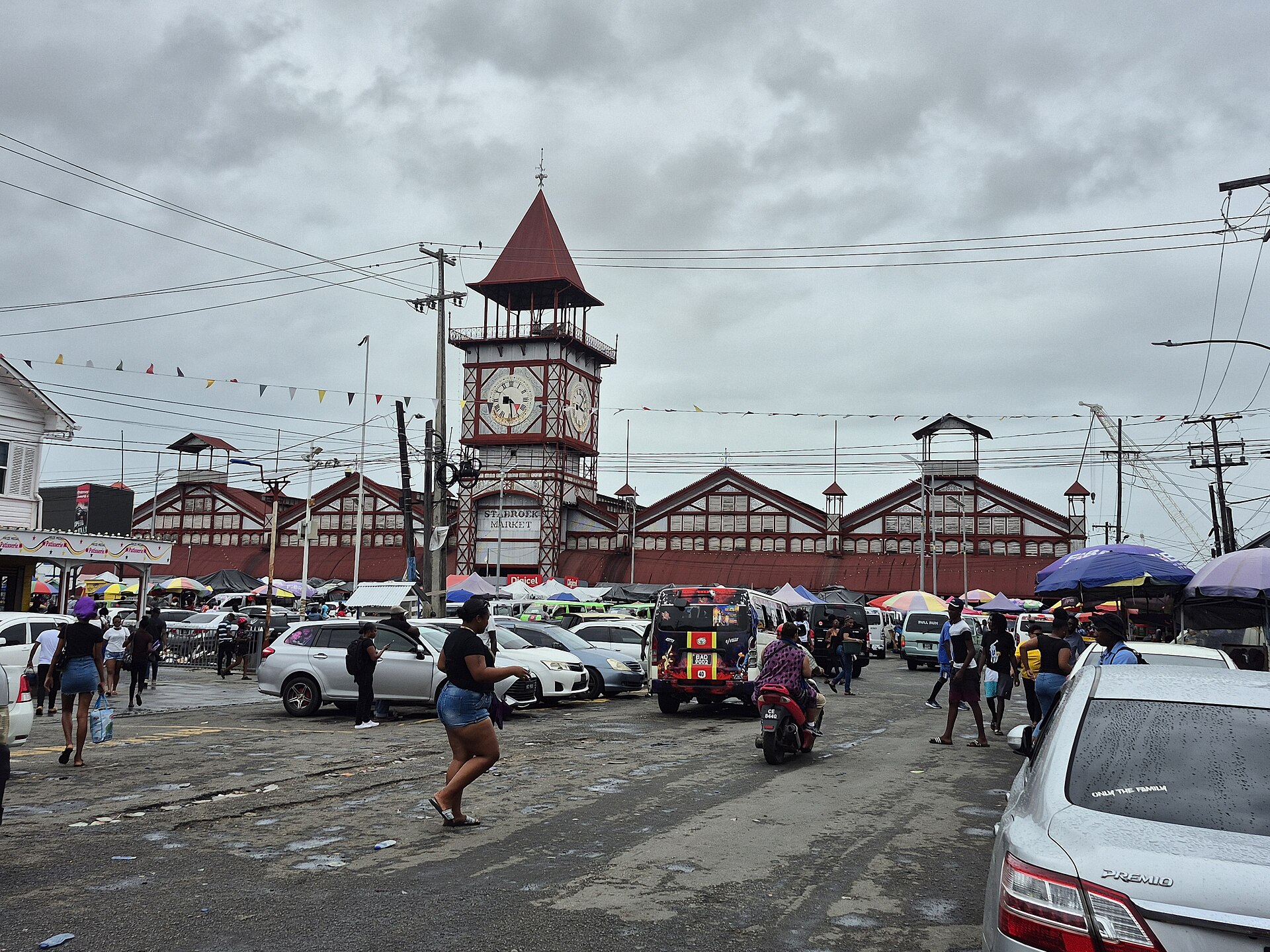
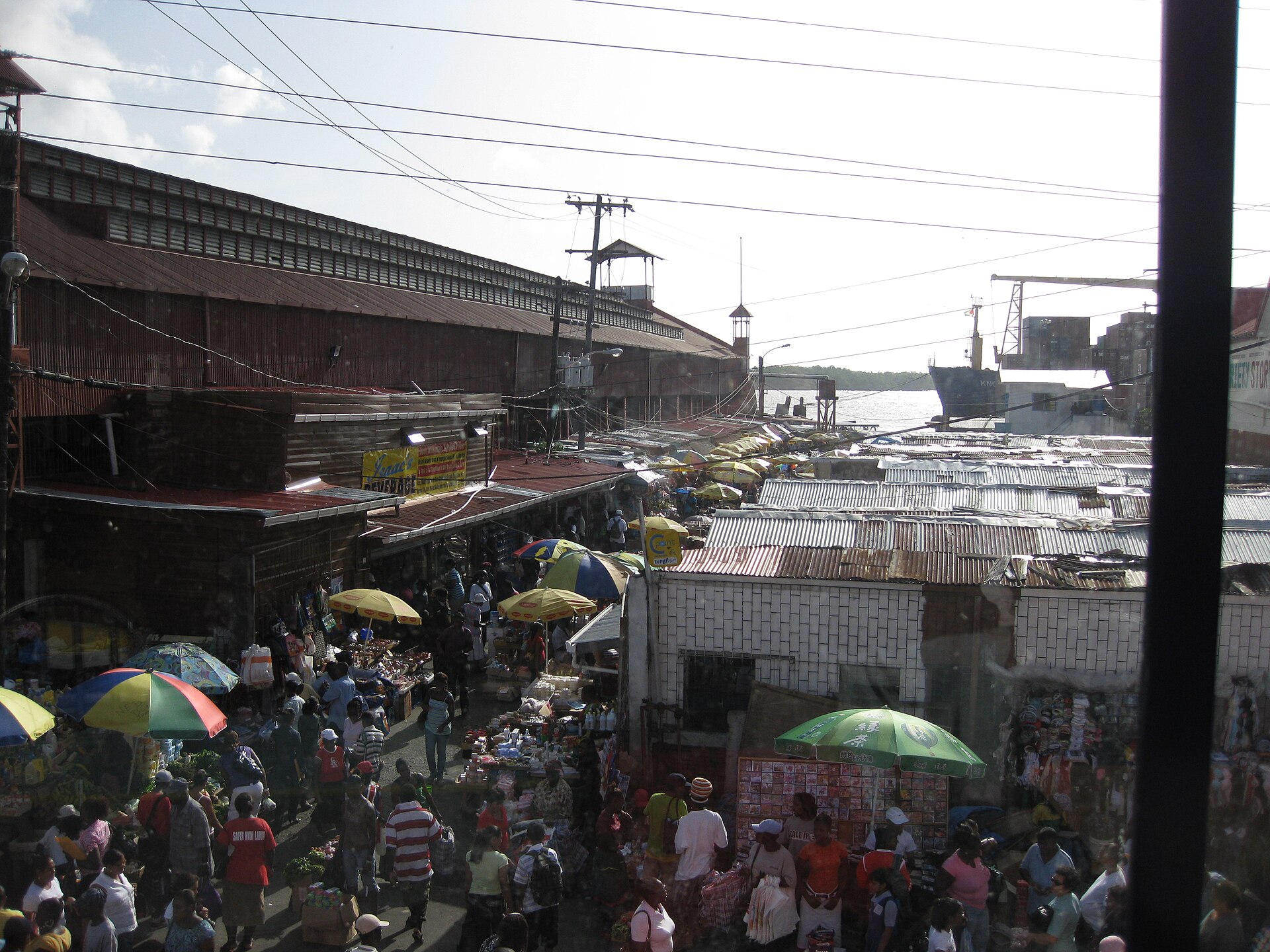
It puts Stabroek Market off limits to US government employees at all times, and Bourda Market in the evening. Our pillar on safety in Guyana covers neighbourhoods and routines.
Healthcare and money need planning. Our healthcare guide covers hospitals, insurance and medical evacuation, which is worth pricing before arrival. Opening a bank account involves a tax identification number and small minimum deposits, while personal income tax has two bands, 25 and 35 percent.
For business, the attraction is obvious: an English-speaking common-law country with fast growth and a government spending heavily on roads, power and housing. The friction is equally real, from infrastructure bottlenecks to rising prices. Guyana explained for an investor comes down to one question: how well the state turns its oil share into lasting capacity.
Connected Coverage
Is Guyana Safe for Expats? Georgetown Crime, Oil-Boom Security and Daily Reality
Healthcare in Guyana for Expats: Hospitals, Insurance and the Evacuation Reality
Guyana Bank Accounts for Foreigners: US$5 Tax Number, US$10 Minimums, Dollar Approval Question
Guyana Raises Its Tax-Free Allowance, Keeping Two Bands of 25% and 35%
ExxonMobil Drives Guyana Oil Boom Past 900,000 Barrels Daily as Suriname Race Heats Up
Sources: Election results from the Guyana Elections Commission, the border case from the International Court of Justice, output and growth from the World Bank, the IMF and Guyana’s Ministry of Finance, exchange rates from the Bank of Guyana, and entry rules from the US Department of State. All accessed 26 September 2026.
- Guyana Elections Commission — declaration of the 2025 results, 6 September 2025
- Stabroek News — vote totals by party, 2025 elections
- International Court of Justice — Arbitral Award of 3 October 1899 (Guyana v. Venezuela), case page
- ExxonMobil — Guyana project overview, FPSO capacities and start dates
- World Bank — World Development Indicators, GDP, growth and population
- International Monetary Fund — World Economic Outlook data for Guyana
- Bank of Guyana — foreign exchange rates, 25 September 2026
- Ministry of Finance 2026 Mid-Year Report via Caribbean National Weekly — oil exports, output, Natural Resource Fund
- Caribbean Today — first-half 2026 growth by sector
- Offshore Energy — Errea Wittu FPSO arrival and Uaru timetable
- US Department of State — Guyana entry requirements and travel advisory
What Is Not Known
When the ICJ will rule, and what it will say. The court has announced no date, and the early-2027 estimate is the Guyanese government’s. Venezuela has said it will not accept a ruling in Guyana’s favour, and how a post-Maduro government would act on that is untested.
How many people live in Guyana. The World Bank counts about 836,000 for 2025, while the IMF uses 1.02 million for 2026. Every per-person figure, including GDP per head, moves with that choice.
How long the windfall lasts. First-half 2026 earnings were lifted by crude prices about 28.9 percent higher than a year earlier. If prices fall back, revenue falls with them, even as output rises with Uaru.
How the Mohamed extradition case ends, and what it means for the opposition. The hearing is still taking evidence, and appeals are likely whichever way the magistrate rules.
Frequently Asked Questions
Who won the 2025 election in Guyana?
The People’s Progressive Party/Civic of President Irfaan Ali. It won 242,497 votes and 36 of the 65 seats on 1 September 2025. We Invest in Nationhood took 16 seats, A Partnership for National Unity 12 and the Forward Guyana Movement one.
How much oil does Guyana produce?
About 902,000 barrels a day on average in the first half of 2026, according to the government’s 2026 Mid-Year Report. Four floating production vessels were operating, and a fifth, for the Uaru project, arrived in August 2026 with first oil expected in the fourth quarter.
What is the Essequibo dispute?
Venezuela claims the land west of the Essequibo River, roughly two-thirds of Guyana. Guyana asked the International Court of Justice to confirm the 1899 arbitral award that set the border. Hearings on the merits ended on 11 May 2026, and President Ali expects a ruling early in 2027.
How fast is Guyana’s economy growing?
Output grew 43.8 percent in 2024 and 19.3 percent in 2025, by World Bank data. The government reported 33.3 percent growth in the first half of 2026 and projects 20.8 percent for the full year. The non-oil economy grew 10.1 percent in the first half.
Do Americans need a visa for Guyana?
No, not for stays of 90 days or less, according to the US State Department. The passport needs six months’ validity beyond arrival. The department’s advisory for Guyana has stood at Level 3, reconsider travel, because of crime since 26 August 2026.
This article was produced by The Rio Times’ automated newsroom system. How we use AI · Report an error
Read More from The Rio Times