
BRAZIL · HISTORY
Key Facts
- —The country Latin America’s most populous nation, 214.2 million people in 2026.
- —Colonial era Portugal claimed the coast in 1500; independence came in 1822.
- —Slavery About 4 million enslaved Africans arrived; abolition came in 1888.
- —Democracy Military rule began in 1964; the current constitution dates from 1988.
- —What happened Flávio Bolsonaro led Lula 47.03% to 45.16% on 4 October.
- —Prediction markets Kalshi gives Flávio Bolsonaro 87% for the 25 October runoff (9 October, 5:07 a.m. ET). Polymarket puts Flávio Bolsonaro’s chance of winning at 87% and Kalshi at 87% (Lula: 14% and 13%), as of 9 October, 6:40 am ET; prices are bets, not polls.
Brazil history runs from indigenous societies through Portuguese rule, slavery, empire and dictatorship to a democracy that votes again in October 2026.
Brazil history begins long before 1500, with indigenous peoples who still number about 1.7 million today. It then runs through three centuries of Portuguese rule built on enslaved African labour.
Independence in 1822, abolition in 1888, a 21-year military regime and the 1988 constitution shaped the country Americans deal with today. The road to 2026 ends in a presidential runoff on Sunday, 25 October.
Before 1500, the Indigenous Peoples
People lived in what is now Brazil for thousands of years before Europeans arrived. They formed many separate societies, from the Atlantic coast to the rivers of the Amazon basin.
No census counted them, and estimates of their number in 1500 vary widely. What is clear is that contact brought disease, war and enslavement, and their numbers fell steeply.
Indigenous Brazil did not disappear. The 2022 census by IBGE, the national statistics office, counted 1,694,836 indigenous people, or 0.83% of the population.
About 36.7% of them lived on officially recognised indigenous lands, many of them in the Amazon. Who controls those lands remains a recurring fight in Brazilian politics.
Colonial Brazil, Sugar and Slavery
The Portuguese navigator Pedro Álvares Cabral reached the coast in 1500 and claimed it for Portugal. IBGE marks that landing as the start of Portuguese rule in South America.
Settlement was slow at first. IBGE estimates that only about 100,000 Portuguese arrived in the first two centuries, roughly 500 a year.
The colony’s early wealth came from sugar, grown on large coastal plantations in the Northeast. Those plantations ran on forced labour, first indigenous and then overwhelmingly African.
IBGE estimates that about 4 million enslaved African men, women and children arrived between the 16th and mid-19th centuries. That was more than a third of the entire slave trade, IBGE says.
No country in the Americas imported more enslaved Africans than Brazil, according to IBGE. Its own tables count 1.9 million arrivals up to 1780 and 2.1 million from 1781 to 1855.
That legacy shapes the population today. In the 2022 census, 55.5% of Brazilians identified as Black or pardo, the official term for mixed race.

Gold, the Royal Court and Independence
In the 18th century, gold finds in the interior, in what is now Minas Gerais, drew a rush of settlers. IBGE counts about 600,000 Portuguese arrivals between 1701 and 1760.
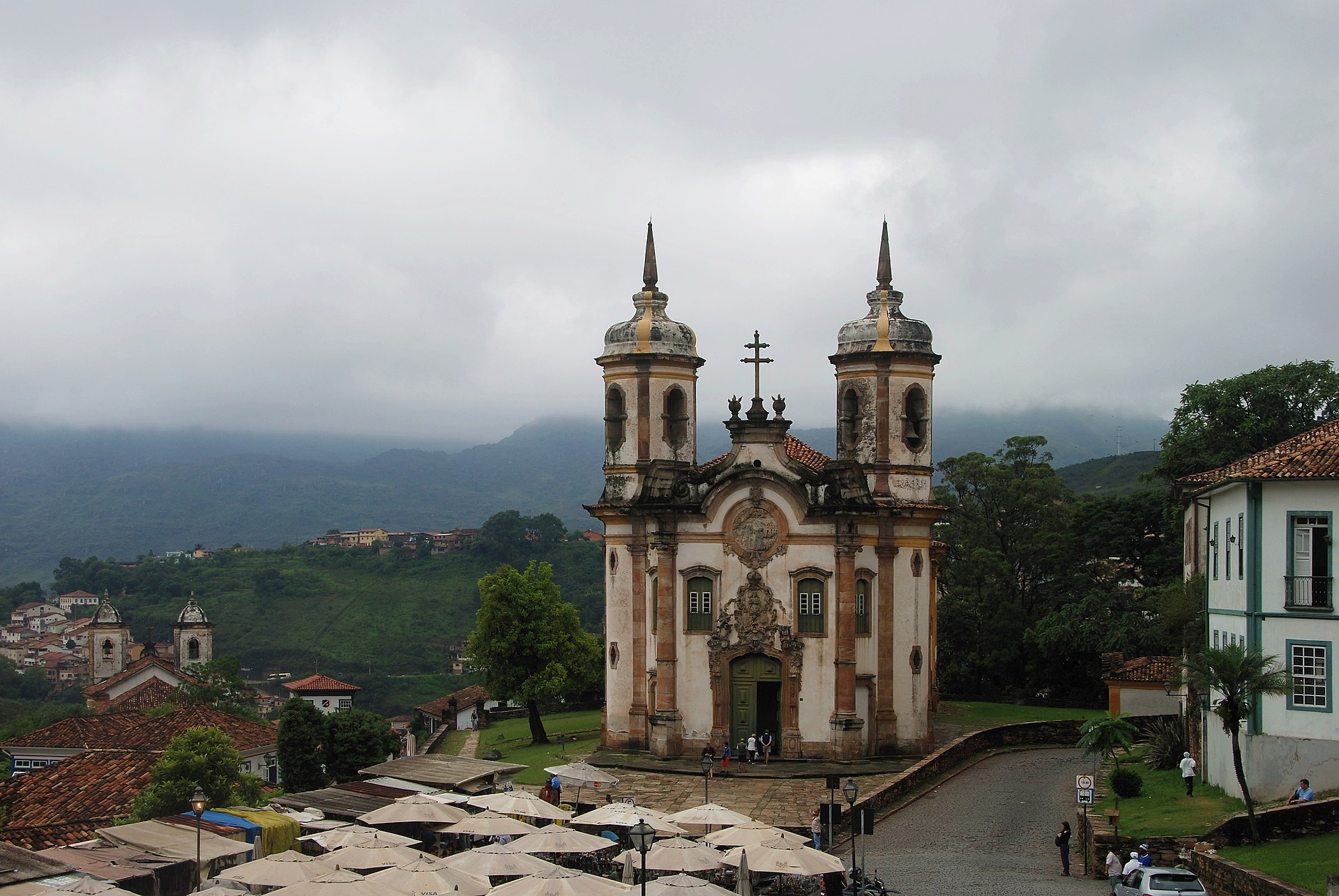
That was about 10,000 a year, twenty times the earlier pace. Mining wealth paid for baroque churches and hill towns such as Ouro Preto.
In 1808 the Portuguese royal court fled Napoleon’s invasion of Portugal and settled in Rio de Janeiro. A colony suddenly became the seat of a European monarchy, an unusual reversal of roles.
When the king later returned to Lisbon, his son Pedro stayed behind. On 7 September 1822 Pedro declared Brazil independent and soon became its first emperor, Pedro I.
Brazil thus kept a monarchy, its vast territory and its slave economy after independence. Its Spanish-speaking neighbours, by contrast, became republics, and several split apart.
Empire, Abolition and the First Republic
His son, Pedro II, reigned for most of the 19th century. Law No. 581 of 4 September 1850 set out measures to repress the import of enslaved Africans.
Slavery itself continued for almost four more decades. On 13 May 1888 Princess Isabel, acting as regent for Pedro II, signed Law No. 3,353, known as the Golden Law.
Its first article declared slavery extinct in Brazil from that date. The law had just two articles and offered freed people no land, pay or schooling.
Abolition came more than two decades after the 13th Amendment ended slavery in the United States. Eighteen months later, on 15 November 1889, army officers overthrew the monarchy.
Decree No. 1, issued that day by a provisional government, proclaimed Brazil a federative republic. The First Republic that followed was run largely by landowning elites, notably coffee interests in São Paulo.
Vargas, Brasília and the Military Regime
Getúlio Vargas took power after the Revolution of 1930 and dominated politics for much of the next quarter century. From 1937 to 1945 he ruled as a dictator under a regime called the New State.
Vargas built the modern central state, with labour laws and state-led industry. He returned as elected president in 1951 and died by suicide in office in 1954.
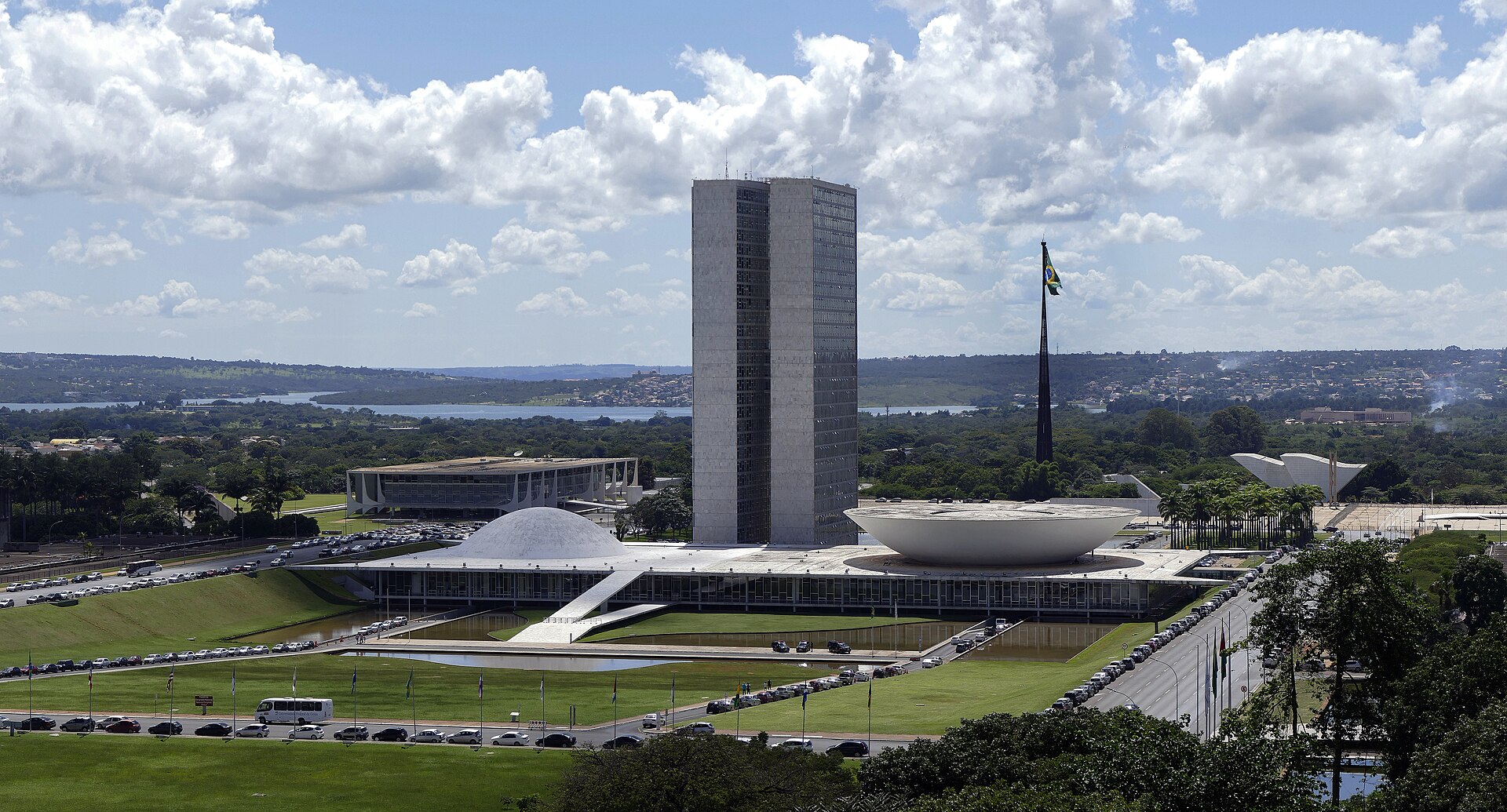
Law No. 3,273 of 1957 set 21 April 1960 as the day the capital would move from Rio de Janeiro. The new seat was Brasília, a planned city on the central plateau.
The armed forces seized power on 31 March 1964, ousting the left-leaning President João Goulart. Military rule lasted 21 years.
Institutional Act No. 5 of 13 December 1968 hardened the regime. It let the president remove elected officials and suspend citizens’ political rights for ten years.
Censorship, torture and forced disappearances followed. The National Truth Commission reported in December 2014 that 434 people were killed or disappeared, and named 377 people as responsible.
An amnesty law of 28 August 1979 covered political crimes committed since September 1961. Exiles returned, and a civilian government took over in 1985.
Democracy Since 1988 and the Road to 2026
The constitution signed on 5 October 1988 remains in force. It enshrined direct elections and made voting compulsory for literate adults aged 18 to 70.
On 1 July 1994 the Real Plan introduced the real, the currency still in use today. It ended years of runaway inflation and gave Brazil a stable base for growth.
Luiz Inácio Lula da Silva, a former union leader, governed from 2003 to 2010. His Workers’ Party (PT) is the main left-wing party.
His successor, Dilma Rousseff, was removed by the Senate on 31 August 2016, by 61 votes to 20.
Jair Bolsonaro, a conservative former army captain, won the presidency in 2018 and lost to Lula in 2022. On 8 January 2023 his supporters stormed Congress, the presidential palace and the Supreme Court in Brasília.
On 11 September 2025 the Supreme Federal Court (STF), Brazil’s top court, sentenced Jair Bolsonaro to 27 years and 3 months. The conviction was for plotting a coup, a charge he has denied.
His son Flávio Bolsonaro, a senator for Rio de Janeiro, runs for the conservative Liberal Party (PL). In the first round on Sunday, 4 October 2026, he took 47.03% of valid votes to Lula’s 45.16%.
Those are the final figures of the Superior Electoral Court (TSE), with all polling stations counted. Because no one won a majority, the two meet in a runoff on Sunday, 25 October 2026.
The constitution fixes runoffs on the last Sunday of October. The winner takes office on 5 January 2027, under a 2021 amendment that moved the inauguration from 1 January.
For the full cast of parties, courts and power brokers, see the guide to Brazil’s political key players. The legal fight over the coup case is traced in the coverage of the Bolsonaro coup case files.
How Brazil History Shapes the Country Today
Slavery’s legacy still runs through gaps in income, policing and political representation. In the 2022 census, white workers earned on average 78% more from work than Black workers, IBGE data show.
The colonial pattern of large estates still marks the countryside, where farm and mining exports drive growth. Disputes over indigenous land and the Amazon echo the first encounters of 1500.
Military rule still divides voters, and many on the right see the armed forces as protectors of order. The left recalls repression and an amnesty that shielded abusers.
The 2026 race replays that divide. It pits the left’s best-known leader against the son of a former president convicted of plotting a coup.
Brazil’s mixed ancestry, regional gaps and faiths are mapped in the explainer on Brazil’s population and ethnic groups. Its music, writers and icons appear in Brazil culture and its key figures.
What It Means for US Readers
Brazil’s past explains much of its politics, its markets and its role in the region. The 25 October runoff matters for the real and for Brazilian firms with US-listed shares, such as Petrobras and Vale.
Relations with Washington have swung with each government in Brasília, from close cooperation to open friction. The Brazil geopolitics explainer covers that relationship in detail.
For travellers, the colonial centres of Salvador and Ouro Preto and modernist Brasília each preserve one chapter of this story. Daily news from the country is collected on the Rio Times Brazil page.
What Prediction Markets Say
On Kalshi, a US exchange regulated by the Commodity Futures Trading Commission (CFTC), traders gave Flávio Bolsonaro an 87.0% chance of winning. Lula stood at 13.0% on 9 October at 5:07 a.m. ET.
These are bets on the 25 October runoff, not polls. Survey data tell a closer story, as shown in the coverage of the first Datafolha runoff poll.
Prediction markets · who wins the runoff
Implied chance of winning Brazil’s presidency on 25 October, from traders’ prices.
Polymarket
Flávio Bolsonaro 86.5% · Lula 13.5% (US$178 million traded)
Kalshi (regulated in the US by the CFTC)
Flávio Bolsonaro 87% · Lula 13%
As of 9 October, 6:40 am ET (11:40 Lisbon), updated every 20 minutes. Prices are bets, not polls, and can move fast.
Why we show this: prediction markets turn real-money bets into a live probability that moves within minutes of the news, which is why investors, campaigns and newsrooms in the United States now follow them closely. We show them next to polls and official results, never instead of them.
Why we show this: prediction markets turn real-money bets into a live probability that moves within minutes of the news, which is why investors, campaigns and newsrooms in the United States now follow them closely. We show them next to polls and official results, never instead of them.
What Is Not Known
No reliable count exists of how many indigenous people lived in Brazil in 1500. Estimates differ by millions, and historians still debate them.
The runoff winner is not known until the TSE counts the votes on 25 October. How smoothly power changes hands on 5 January 2027 is also still open.
Jair Bolsonaro’s legal situation, including calls in Congress for an amnesty, may still change. The full toll of the military regime may also rise as more archives open.
Frequently Asked Questions
When did Brazil become independent?
Prince Pedro declared independence from Portugal on 7 September 1822. He became Emperor Pedro I, and Brazil stayed a monarchy until 1889.
Why does Brazil speak Portuguese?
Portugal claimed the territory in 1500 and ruled it for more than three centuries. Portuguese became the language of government, the church and most settlers.
When did Brazil abolish slavery?
Brazil abolished slavery on 13 May 1888 with the Golden Law. About 4 million enslaved Africans had arrived before the trade ended, IBGE estimates.
Was Brazil ever a dictatorship?
Yes, twice in the 20th century. Getúlio Vargas ruled as a dictator from 1937 to 1945, and the armed forces governed from 1964 to 1985.
Why is Brasília the capital instead of Rio de Janeiro?
Leaders wanted to develop the interior and move government away from the coast. The capital moved to the new planned city of Brasília on 21 April 1960.
Who is in Brazil’s 2026 presidential runoff?
President Luiz Inácio Lula da Silva of the left-wing Workers’ Party faces conservative senator Flávio Bolsonaro of the Liberal Party. The runoff is on Sunday, 25 October 2026.
Sources: IBGE, Brasil: 500 anos de povoamento (Africans); IBGE, Brasil: 500 anos de povoamento (Portuguese); IBGE 2022 census, indigenous population; IBGE 2022 census, colour or race; IBGE population estimates; IBGE 2022 census, income from work; Arquivo Nacional, Os Presidentes e a República; Law No. 581 of 1850; Law No. 3,353 of 1888; Decree No. 1 of 1889; Law No. 3,273 of 1957; Institutional Act No. 5; Law No. 6,683 of 1979; Federal Constitution of 1988; Law No. 9,069 of 1995; Superior Electoral Court (TSE), 2026 presidential results; Rádio Senado; Agência Brasil; Diário do Grande ABC; Bahia Notícias (all accessed 9 October 2026).
This article was produced by The Rio Times’ automated newsroom system. How we use AI · Report an error · Editorial responsibility: Matthias Camenzind, Editor-in-Chief