Sudan War 2026: What Is Happening, Who Is Fighting, and What Comes Next
Key Facts
—Who is fighting — Sudan’s army (SAF), led by General Abdel Fattah al-Burhan, against the paramilitary Rapid Support Forces (RSF) of Mohamed Hamdan Dagalo, known as Hemedti. The war began in April 2023.
—The map — The army holds the centre and east, including Khartoum and Port Sudan. The RSF holds the western arc after capturing El Fasher, the last army stronghold in Darfur, in October 2025.
—The toll — Roughly 12 to 13 million people displaced, the world’s largest displacement crisis. Famine is confirmed in El Fasher and Kadugli, and some 20 million people face acute hunger.
—The next feared catastrophe — El Obeid, capital of North Kordofan, is under what the UN calls a “functional siege” by the RSF, with warnings of a repeat of the El Fasher massacre.
—The foreign hand — UN investigators and the European Parliament point to the UAE as the RSF’s key backer; Egypt and Saudi Arabia support the army. Supply routes run through Libya, Chad and Ethiopia.
Sudan’s war is now in its fourth year, and it has settled into a grim geography: the army holds the middle of the country, the RSF holds the west, and between them lies the world’s largest humanitarian crisis. Here is what is happening, who is fighting, and what comes next.
How the war started
The fighting erupted on 15 April 2023, when a power struggle between two former allies exploded into open warfare in Khartoum. On one side: the Sudanese Armed Forces, the regular army, commanded by General Abdel Fattah al-Burhan, who also heads Sudan’s sovereign council. On the other: the Rapid Support Forces, a paramilitary born out of the Janjaweed militias accused of atrocities in Darfur in the early 2000s, commanded by Mohamed Hamdan Dagalo — Hemedti.
The two men had jointly seized power in a 2021 coup, derailing Sudan’s transition to civilian rule after the 2019 overthrow of Omar al-Bashir. Their dispute over how — and whether — to fold the RSF into the regular army turned a political crisis into a civil war that has since fragmented into a technologically driven conflict of drones, sieges and shifting regional fronts.
The map in 2026: a country split in two
The front lines have stabilised into a rough partition. The army, after recapturing Khartoum and the central belt through 2025, holds the centre and east: the capital, the Red Sea hub of Port Sudan — seat of the internationally recognised government — and much of the Gezira and Blue Nile regions.
The RSF consolidated the west after its bloodiest victory of the war: the capture of El Fasher on 26 October 2025, ending a two-year siege of the army’s last stronghold in Darfur. UN investigators concluded in February 2026 that the RSF’s siege and capture of the city bore “the hallmarks of genocide”, alongside documented war crimes and crimes against humanity. Satellite analysis by Yale’s Humanitarian Research Lab found evidence of widespread, systematic killing after the takeover — and of a campaign to destroy the evidence.
With all five Darfur state capitals in its hands, the RSF has set up a parallel administration, the so-called Tasis government — an institutional stake it will not surrender without either defeat or a political guarantee. Neither is currently on offer.
El Obeid: the city the UN fears is next
The war’s most dangerous point is now El Obeid, the army-held capital of North Kordofan and the strategic hinge between central Sudan and Darfur. The RSF has sought to reimpose a blockade, and the UN has issued a “red alert” over what one official called a “functional siege”: more than 83,000 displaced civilians have taken shelter in the city, and nearly 400,000 people in its vicinity face food shortages. Verified footage has placed RSF fighters within 40 kilometres of the city, and satellite imagery shows the military building a defensive earth berm around it.
Drone warfare now defines the conflict. According to the United Nations, more than 1,000 civilians were killed in drone strikes in the first five months of 2026 alone; an RSF drone strike on a courthouse in North Kordofan killed at least 10 people in August. After losing a key highway between Khartoum and El Obeid, Hemedti told his fighters to consider themselves “unleashed”. The army, for its part, says it is advancing on all fronts and intends to eliminate the RSF before the end of the year.
The world’s largest humanitarian crisis
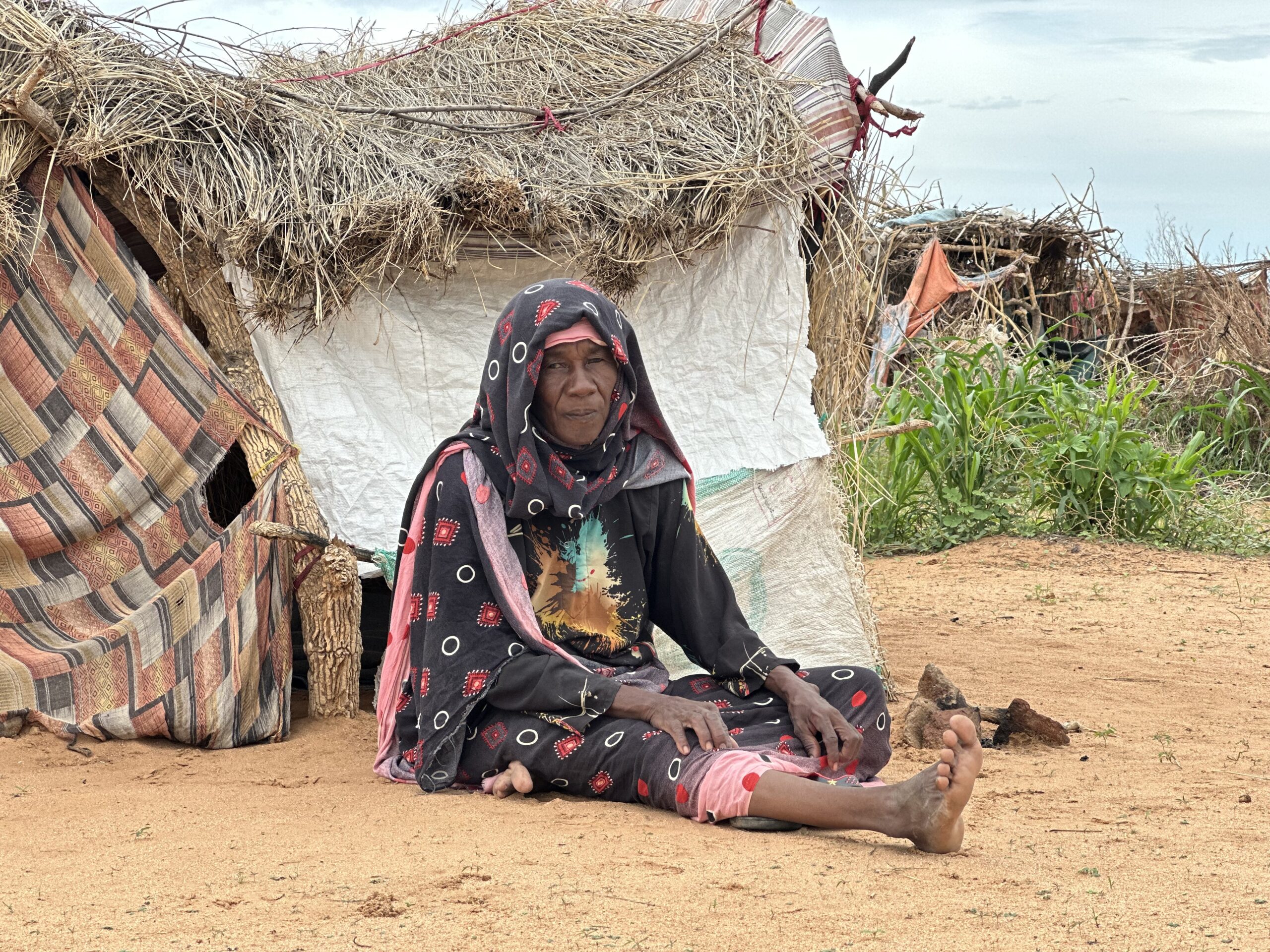
The numbers defy comprehension. Roughly 12 to 13 million people — about 9.5 million inside Sudan and more than 3 million as refugees in neighbouring countries — have been driven from their homes, the largest displacement crisis on earth. Famine, the most severe level of hunger on the international scale, has been confirmed in El Fasher and Kadugli. Nearly half the population, some 20 million people, faces acute hunger; the World Food Programme says it needs $579 million to sustain operations through October 2026, and UN agencies warn aid supplies are running out. Aid cuts are closing clinics, and MSF warns the health system is near collapse.
The overall death toll is genuinely unknown. The conflict database ACLED had recorded at least 59,000 deaths by April 2026; the UN recorded 1,400 civilian deaths in the first half of 2026 alone, and media investigations suggest the true figure may be far higher. Where humanitarian agencies cannot reach, neither can the people counting.
The foreign backers
Sudan is no longer just an internal war. A UN fact-finding mission reported this month on the weapons, fighters and external support networks fuelling the conflict. Sudan’s government told the Security Council in August that supply routes to the RSF run through eastern Libya, Chad and Ethiopia — citing cargo flights through Kufra and cross-border smuggling networks, allegations partially documented by UN panels and Yale researchers. We covered those claims in detail when Sudan presented them to the Council.
The European Parliament has expressly named the United Arab Emirates as a key backer of the RSF; Emirati officials deny the allegations, and an International Court of Justice case brought by Sudan was dismissed in May 2025 on jurisdictional grounds. Egypt and Saudi Arabia back the army. This bifurcation matters: as long as each side has a reliable external patron, neither faces the financial pressure that historically pushes combatants to negotiate in earnest.
What comes next
The diplomacy is thin. Five blocs of envoys — the so-called Quintet — opened the first wartime peace talks in Khartoum earlier this year, but the army’s December 2025 ceasefire proposal demands full RSF withdrawal before any political process, and the RSF’s parallel government gives it every reason to hold out. The African Union and US-led mediation efforts remain constrained by the rivalries of the very powers arming the belligerents.
Three scenarios dominate the analysis. The first is a de facto partition: the army entrenched in the centre and east, the RSF in the west — a “Libyan scenario” of rival governments. The second is a fall of El Obeid, which would reopen the road to Khartoum and risk a humanitarian catastrophe dwarfing El Fasher. The third is exhaustion: aid collapse, famine expansion and the slow internationalisation of the war forcing a ceasefire neither side wants. For the 50 million Sudanese caught between two generals, none of these scenarios arrives fast enough.
Frequently Asked Questions
What is happening in Sudan’s war in 2026?
Sudan’s civil war, now in its fourth year, has split the country in two. The army holds Khartoum, Port Sudan and the centre-east; the paramilitary RSF holds Darfur after capturing El Fasher in October 2025. The RSF is now besieging El Obeid in North Kordofan, famine is confirmed in two areas, and roughly 12 to 13 million people have been displaced — the world’s largest humanitarian crisis.
Who is fighting in Sudan?
The Sudanese Armed Forces, led by General Abdel Fattah al-Burhan, against the Rapid Support Forces, a paramilitary commanded by Mohamed Hamdan Dagalo (“Hemedti”). The two were allies in a 2021 coup before their power struggle erupted into open war in April 2023.
What happened in El Fasher?
The RSF captured El Fasher, the army’s last stronghold in Darfur, on 26 October 2025 after a two-year siege. UN investigators concluded the siege and takeover bore “the hallmarks of genocide”, with documented war crimes, mass killings and a subsequent campaign to destroy evidence.
Is there a peace process for Sudan?
Only a fragile one. A Quintet of international envoys opened the first wartime talks in Khartoum in 2026, but the army demands full RSF withdrawal before any political process, and the RSF’s parallel “Tasis” government has no incentive to comply. External backing — the UAE for the RSF, Egypt and Saudi Arabia for the army — removes the financial pressure that usually forces combatants to the table.
{“@context”:”https://schema.org”,”@type”:”FAQPage”,”mainEntity”:[
{“@type”:”Question”,”name”:”What is happening in Sudan’s war in 2026?”,”acceptedAnswer”:{“@type”:”Answer”,”text”:”Sudan’s civil war, now in its fourth year, has split the country in two. The army holds Khartoum, Port Sudan and the centre-east; the paramilitary RSF holds Darfur after capturing El Fasher in October 2025. The RSF is now besieging El Obeid in North Kordofan, famine is confirmed in two areas, and roughly 12 to 13 million people have been displaced — the world’s largest humanitarian crisis.”}},
{“@type”:”Question”,”name”:”Who is fighting in Sudan?”,”acceptedAnswer”:{“@type”:”Answer”,”text”:”The Sudanese Armed Forces, led by General Abdel Fattah al-Burhan, against the Rapid Support Forces, a paramilitary commanded by Mohamed Hamdan Dagalo (Hemedti). The two were allies in a 2021 coup before their power struggle erupted into open war in April 2023.”}},
{“@type”:”Question”,”name”:”What happened in El Fasher?”,”acceptedAnswer”:{“@type”:”Answer”,”text”:”The RSF captured El Fasher, the army’s last stronghold in Darfur, on 26 October 2025 after a two-year siege. UN investigators concluded the siege and takeover bore the hallmarks of genocide, with documented war crimes, mass killings and a subsequent campaign to destroy evidence.”}},
{“@type”:”Question”,”name”:”Is there a peace process for Sudan?”,”acceptedAnswer”:{“@type”:”Answer”,”text”:”Only a fragile one. A Quintet of international envoys opened the first wartime talks in Khartoum in 2026, but the army demands full RSF withdrawal before any political process, and the RSF’s parallel Tasis government has no incentive to comply. External backing — the UAE for the RSF, Egypt and Saudi Arabia for the army — removes the financial pressure that usually forces combatants to the table.”}}
]}
Sources: UN Independent International Fact-Finding Mission for the Sudan (A/HRC/63/23, 3 September 2026); OHCHR; UN OCHA and WFP operational updates (August–September 2026); ACLED conflict data (April 2026); Yale School of Public Health Humanitarian Research Lab; France 24 (3 August 2026); Fides (25 August 2026); European Parliament resolution; The Rio Times Sudan coverage.
More: Sudan coverage and Africa coverage from The Rio Times.
This article was produced by The Rio Times’ automated newsroom system. How we use AI · Report an error
Read More from The Rio Times