
SUDAN’S WAR · REFUGEES
More than 11 million people have been driven from their homes by Sudan’s war, and millions of them crossed into Chad, Egypt, South Sudan and other neighbours.
Sudan’s refugees fled a war between the army and the paramilitary Rapid Support Forces (RSF) that began in April 2023. The UN refugee agency (UNHCR) counted 11.3 million people forced from their homes by 5 October 2026, making it one of the largest displacement crises in the world.
Most stayed inside Sudan, but 4.6 million crossed into neighbouring countries, which are themselves poor and under strain. For Americans the story reaches home too, because Sudanese in the United States hold a deportation shield whose deadline has just passed without a decision.
In Plain English
- RSF The Rapid Support Forces, the paramilitary group fighting Sudan's army since April 2023.
- UNHCR The UN refugee agency, which counts people who cross borders.
- IOM The UN migration agency, which tracks people displaced inside Sudan.
- Returnee Someone who has gone back to their home area after fleeing.
- TPS Temporary Protected Status, a US shield from deportation for people from countries in crisis.
Key Facts
- —Displaced 11.3 million people since April 2023: 6.4 million inside Sudan, 4.6 million abroad.
- —Chad About 935,400 Sudanese refugees have arrived since April 2023.
- —Egypt 851,947 registered Sudanese refugees and asylum seekers at the end of June.
- —Going home 4.6 million people had returned to their home areas by June 2026.
- —United States Sudan’s deportation shield ran to 19 October; holders keep protection for now.
- —Prediction markets Polymarket: 8% chance of a ceasefire by 31 December 2026 (21 October, 10:19 a.m. ET)
How Many People Have Fled
UNHCR’s weekly update of 5 October 2026 counts 11.3 million people forcibly displaced by the war: 6.4 million inside Sudan and 4.6 million in neighbouring countries. Of those abroad, about 3.7 million are refugees and asylum seekers, while the rest are mostly South Sudanese who had lived in Sudan and went back home.
The International Organization for Migration (IOM), which tracks people displaced inside Sudan, uses a wider count. It recorded 8.7 million internally displaced people at the end of June 2026, including 2.2 million who had fled earlier conflicts, down from a peak of 11.6 million in January 2025.
Darfur, the western region now held almost entirely by the RSF, borders Chad, which is why Chad has received so many people. In Kordofan, the central battlefield, more than 300,000 people have fled their homes since October 2025, the UN said this month.
Where Sudan’s Refugees Went
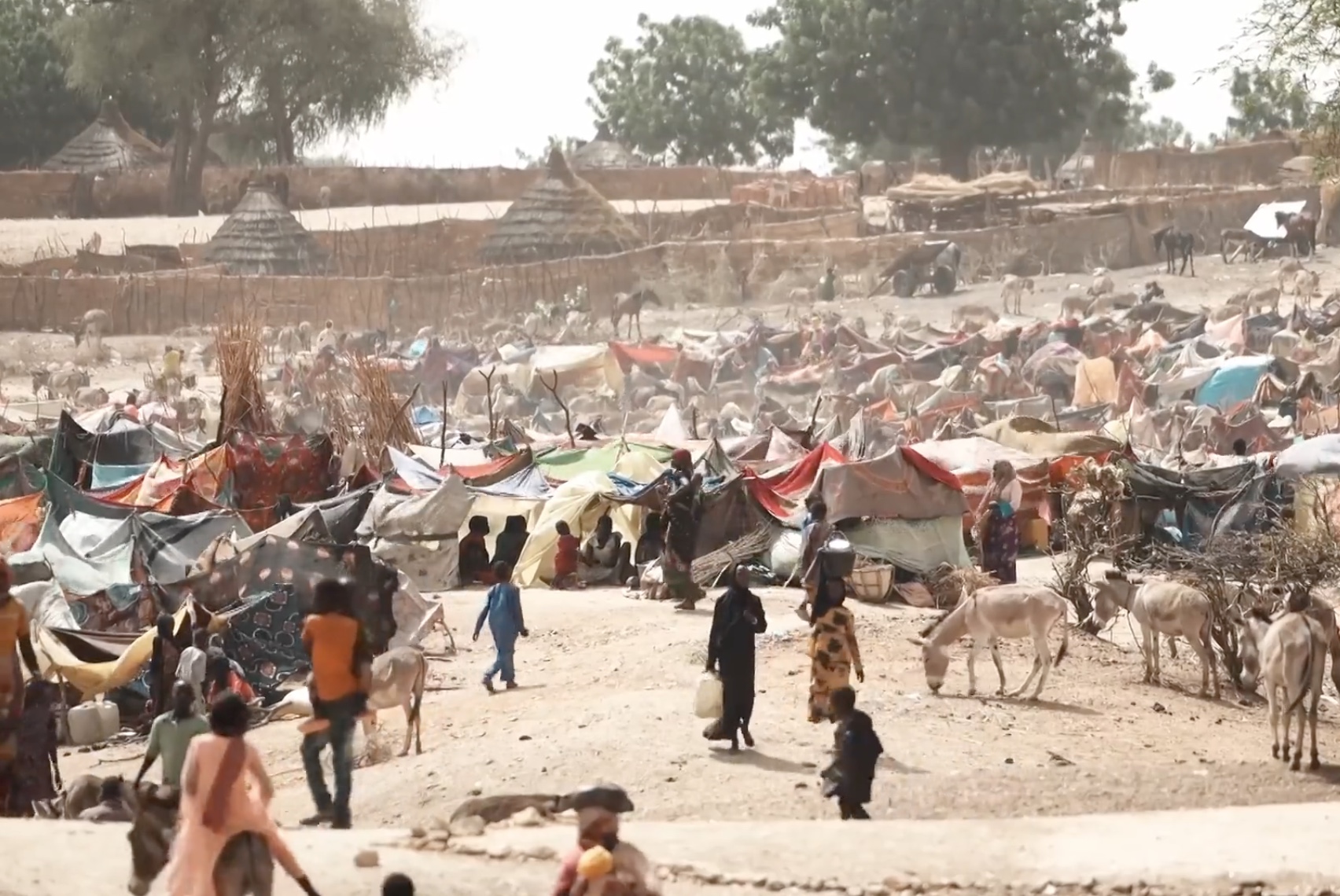
Chad, Sudan’s western neighbour, has taken in the most Sudanese refugees, with Egypt to the north close behind. South Sudan has received both Sudanese refugees and its own citizens fleeing back across the border.
The figures below come from UNHCR’s regional update for the end of June 2026, the latest with full country detail. They count people registered or recorded by UNHCR and its partners, so the real numbers in some countries are likely higher.
Country by Country (UNHCR, 30 June 2026)
Chad About 935,400 Sudanese refugees since April 2023.
Egypt 851,947 registered Sudanese refugees and asylum seekers, 78% of all refugees in Egypt.
South Sudan 1.4 million arrivals: 452,080 Sudanese refugees and 940,514 South Sudanese returning home.
Uganda 95,579 Sudanese refugees.
Libya 93,831 Sudanese registered in Tripoli; many more are not registered.
Central African Republic About 37,400, most of them at Korsi in the north-east.
Ethiopia 33,638 new arrivals since the war began.
Life in the Host Countries
Most of the countries that host Sudan’s refugees are poor themselves, and the money to help them is short. UNHCR’s regional plan for refugees from Sudan asked for US$1.6 billion for 2026, and it was only 15% funded at the end of June.
The war has also followed refugees across borders. The UN said on 20 October that violence in the east of the Central African Republic is partly driven by Sudan’s war, after armed groups attacked the border town of Am-Dafock on 30 June and held it for five days.
Going Home to a Broken Country
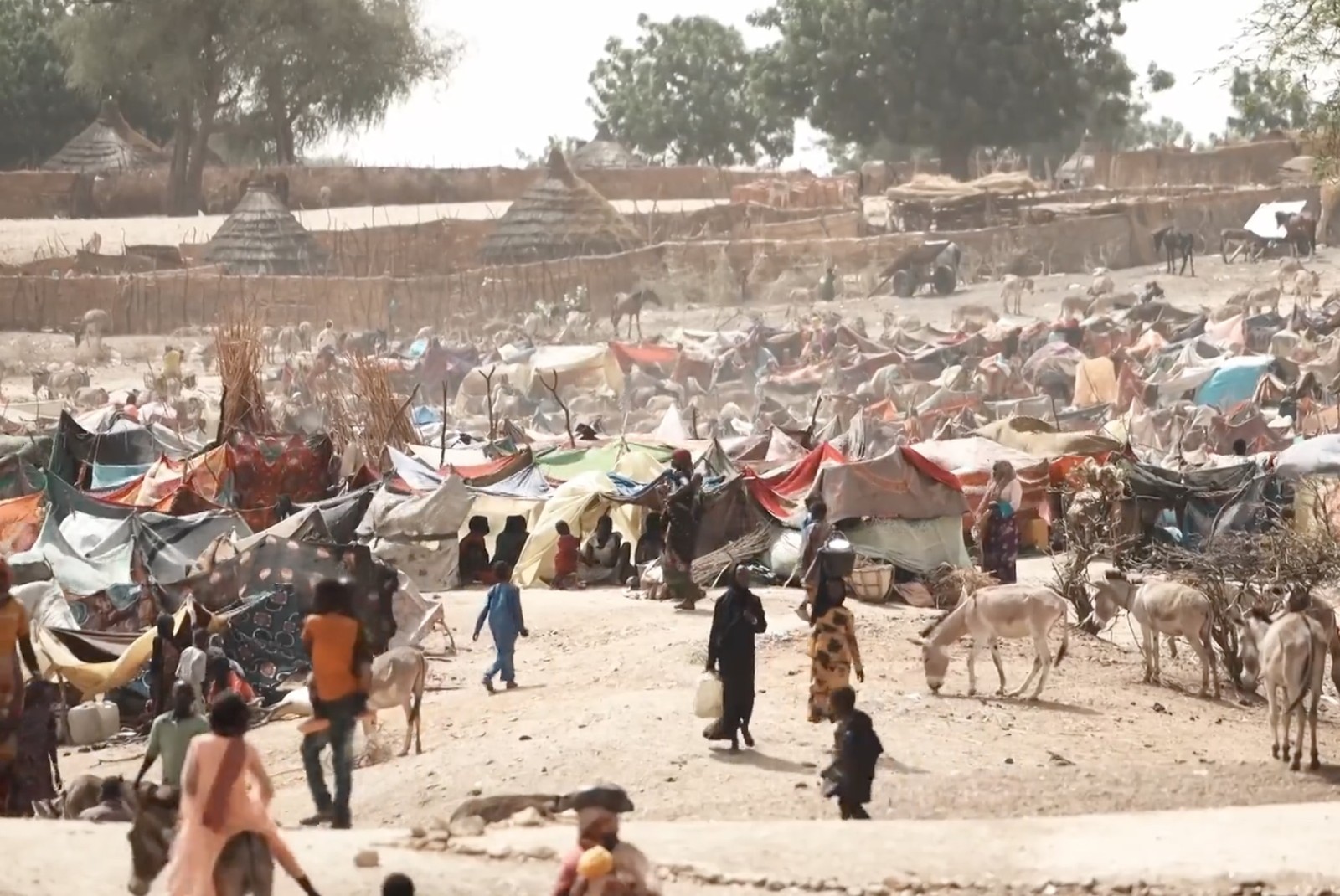
Where the fighting has moved on, people are going back. The IOM counted 4.6 million returnees by the end of June 2026, about 0.8 million of them from abroad, and UNHCR says most returnees aim for Khartoum, Gezira and Blue Nile states.
Returning does not end the danger for these families. Drone strikes still reach Khartoum, where a strike killed four people, three of them children, on 19 October, a medical source said.
Sudanese in the United States
Some Sudanese living in the United States hold Temporary Protected Status (TPS), which shields them from deportation and lets them work. The last extension, published in January 2025, ran for 18 months from 20 April 2025 to 19 October 2026 and covered about 1,900 people eligible to re-register.
The Department of Homeland Security had announced no decision by the deadline and says current holders keep their protection while it decides. Under US law, if the government does not end a designation in time, it is extended automatically for at least six months.
What Prediction Markets Say
For most refugees, going home depends on the fighting stopping. Traders on Polymarket, an online prediction-market exchange, gave an official ceasefire between the army and the RSF by 31 December 2026 a chance of about 8% on 21 October.
That price is a bet, not a forecast by experts, and it moves with the news. The live card below updates every 20 minutes.
Prediction markets · Sudan’s war
The implied chance of a ceasefire, from traders’ prices on Polymarket.
Official ceasefire in Sudan's war by...
Polymarket: US$120,000 traded on this question, US$15,000 of it on the nearest deadline. It counts only a publicly announced, mutually agreed halt to the fighting between the army and the RSF; humanitarian pauses do not count.
Earlier deadlines of 31 December 2025, 31 March 2026 and 30 June 2026 passed without a ceasefire.
As of 21 October, 10:19 a.m. ET (15:19 Lisbon), updated every 20 minutes. Prices are bets, not polls, and can move fast.
Why we show this: prediction markets turn real-money bets into a live probability that moves within minutes of the news, which is why investors, campaigns and newsrooms in the United States now follow them closely. We show them next to polls and official results, never instead of them.
What Is Not Known
Many refugees are not registered, especially in Libya and Egypt, so the true number abroad is uncertain. It is also unknown how many of those who returned will have to flee again if the front moves.
Whether Washington will extend Sudan’s protected status, and for how long, is open. Our explainer on what is happening in Sudan covers the war, and our guide to Sudan’s hunger crisis and how to help explains where aid goes.
Frequently Asked Questions
How many refugees has Sudan’s war created?
UNHCR counted 11.3 million people forcibly displaced by 5 October 2026. About 3.7 million of them are refugees and asylum seekers in other countries.
Which country hosts the most Sudanese refugees?
Chad has received about 935,400 Sudanese refugees since April 2023. Egypt follows, with 851,947 registered Sudanese refugees and asylum seekers at the end of June 2026.
Are Sudanese refugees going home?
Yes, where the fighting has stopped. The IOM counted 4.6 million returnees by June 2026, about 0.8 million of them from abroad.
Has TPS for Sudan ended?
No decision had been announced when the designation reached its 19 October 2026 end date. The Department of Homeland Security says current holders keep their protection while it decides.
Sources: UNHCR, regional update (5 October 2026); UNHCR, Sudan Situation External Update 120 (June 2026); Eastleigh Voice on IOM figures (24 July 2026); OCHA, Sudan key facts (13 August 2026); UN News, Central African Republic (20 October 2026); France 24, Khartoum strike (19 October 2026); Federal Register, TPS Sudan extension (17 January 2025); CBS News, TPS (18 October 2026); 8 U.S.C. 1254a(b)(3)(C); Polymarket public market data (21 October 2026). As of 21 October 2026.
More: Sudan’s War: the dossier, with every story, the live odds and the latest developments.
Editorial responsibility: Matthias Camenzind, Editor-in-Chief · Editorial standards · Report an error
Part of our ongoing coverage
Africa: The New Scramble — the great-power contest over the continent.
Horn of Africa and the Red Sea
- Horn of Africa 2026: Why It Matters and Who Backs Whom
- Ethiopia’s Neighbors Explained, Ports, Eritrea, Somalia
- Eritrea Explained 2026, a Red Sea Country Guide
- Somalia Explained: Al-Shabaab, Somaliland, the Ports and the Fight Over a 2026 Vote