Sudan’s Neighbours and the Horn of Africa Explained in 2026

AFRICA · SUDAN · HORN OF AFRICA · GUIDE
Key Facts
- •The country Sudan is a nation of about 51.7 million people on the Nile and the Red Sea, at war since April 2023 between its army and the paramilitary Rapid Support Forces (RSF). It shares land borders with seven countries: Egypt, Libya, Chad, the Central African Republic, South Sudan, Ethiopia and Eritrea.
- •Why it matters Sudan’s neighbours shelter its refugees, carry its oil and trade, and are accused of arming one side or the other. The UN refugee agency counts about 959,000 Sudanese refugees in Chad, 570,000 in Libya and 468,000 in South Sudan, and Egypt has reported 1.5 million arrivals.
- •Why now Ethiopia is fighting Tigrayan rebels again, and its army chief accuses Sudan, Egypt and Eritrea of backing them, which Sudan and Egypt deny. On Thursday 1 October 2026 Ethiopia closed its embassy in Eritrea, and Eritrea cut all diplomatic ties in reply.
- •What happened On Sunday 4 October, Egypt hosted Sudan’s army leader, Gen. Abdel Fattah al-Burhan, with the presidents of Eritrea and Somalia at New Alamein. Their declaration says the Red Sea is for coastal states to govern and rejects unilateral moves on the Nile.
- •Prediction markets On Polymarket at 1:08 a.m. ET on Wednesday 7 October, bets on a Sudan ceasefire by 31 December 2026 priced about a 12% chance, and bets on Eritrea invading Ethiopia by the same date about 27%.
- •What it means for you The US rates Sudan Level 4, Do Not Travel, and has had no working embassy in Khartoum since April 2023. Washington has sanctioned both war leaders and in September 2026 refused Burhan a visa for the UN General Assembly.
- •Still open Whether Ethiopia’s war spills over its borders with Eritrea and Sudan, and whether the United States can turn its pressure on both Sudanese commanders into an actual truce.
Sudan’s war is no longer only a Sudanese story. Seven countries share a land border with Sudan, and in October 2026 nearly all of them are sheltering its refugees, moving goods through its territory or being accused of arming one of its two armies.
This guide explains who those neighbours are, what each wants, and where the risks sit. It matters to an American reader for three reasons: Sudan’s war has driven millions of people across borders, the country sits on the Red Sea shipping lane between the Suez Canal and the Indian Ocean, and a new rift between Ethiopia and its neighbours is pulling Sudan into a wider regional contest.
For the basics of Sudan itself, see our Sudan explainer; for the view from Addis Ababa, see Ethiopia in the Horn of Africa.
Where Sudan Sits on the Map
Sudan touches seven countries. Egypt lies to the north and Libya to the north-west. Chad and the Central African Republic lie to the west and south-west, on the far side of the Darfur region. South Sudan, which broke away in 2011, lies to the south. Ethiopia and Eritrea lie to the east, and the Red Sea coast runs along the north-east, with Saudi Arabia on the far shore.
That position explains why Sudan is often discussed as part of the Horn of Africa even though, in the narrow geographic sense, the Horn means Ethiopia, Eritrea, Djibouti and Somalia. Sudan shares the Nile with Egypt and Ethiopia, shares a coast and a border with Eritrea, and its eastern states face the same security pressures as the Horn.
It also links two very different worlds. To the west, Darfur opens onto the Sahel and Central Africa, a zone of long, lightly policed borders. To the east, the Red Sea coast connects Sudan to the Gulf states, Egypt and the shipping lanes that run to the Suez Canal.

Who Is Fighting in Sudan
The Sudanese Armed Forces (SAF), the national army, are led by Gen. Abdel Fattah al-Burhan, who also chairs the Transitional Sovereignty Council, the body that acts as Sudan’s collective head of state. Day-to-day government is run by a civilian prime minister, Kamil Idris, appointed by the army-led authorities.
The Rapid Support Forces (RSF) are a paramilitary force led by Mohamed Hamdan Dagalo, known as Hemedti, that grew out of militias used in Darfur. The RSF has announced its own governing authority in the areas it holds; the UN Security Council said in August 2025 that it rejected that move.
Washington treats both sides as responsible for the war. The US Treasury sanctioned Hemedti on 7 January 2025 and Burhan on 16 January 2025. In September 2026 the State Department refused Burhan a visa for the UN General Assembly and said neither the army, the RSF nor their leaders “represent legitimate, constitutional governance for Sudan.” Foreign Minister Mohieldin Salem spoke for Sudan in New York instead.
Egypt Is the Army’s Closest Ally
Egypt, ruled by President Abdel Fattah al-Sisi, is the most important neighbour for Sudan’s army-led government. It is also the largest host of Sudanese who have fled: the UN refugee agency’s data portal records 1.5 million new arrivals in Egypt, a figure supplied by the Egyptian government in January 2025.
The two countries share a position on the Nile. Ethiopia inaugurated the Grand Ethiopian Renaissance Dam (GERD) on the Blue Nile on 9 September 2025. Egypt’s foreign minister, Badr Abdelatty, wrote to the UN Security Council that the dam “remains a unilateral endeavor that violates international law.” Ethiopia’s foreign minister, Gedion Timothewos, replied that the dam marks Ethiopia’s determination to use the river “to attain development and prosperity.”
On Sunday 4 October 2026, Sisi hosted Burhan, Eritrea’s President Isaias Afwerki and Somalia’s President Hassan Sheikh Mohamud at New Alamein on Egypt’s Mediterranean coast. Their declaration said governing the Red Sea is “the exclusive responsibility of littoral states,” rejected “any unilateral measures that harm the existing water uses of the Nile’s downstream states,” backed Sudan’s unity and rejected parallel entities there, and rejected any recognition of Somaliland.
Relations between Cairo and Addis Ababa are now openly hostile. On 1 October Ethiopia declared an Egyptian diplomat persona non grata, and Egypt expelled an Ethiopian embassy counsellor in return.
Ethiopia, the Dam and a New War Next Door
Ethiopia is the region’s giant, with about 135.5 million people, and the neighbour Sudan’s army distrusts most. Prime Minister Abiy Ahmed, leader of the ruling Prosperity Party, was sworn in for a new term on Monday 5 October 2026 and promised to “work relentlessly to ensure that the country has access to the sea.” Ethiopia has been landlocked since Eritrea became independent in 1993.
Ethiopia is again at war in its north. Federal forces are fighting the Tigray People’s Liberation Front (TPLF), the party that ran the Tigray region and fought the government from 2020 to 2022, and its allies. The TPLF launched a major offensive on 23 September 2026; government troops entered Mekelle, the Tigrayan capital, on Saturday 3 October after the TPLF said it had “temporarily moved out” of the city.
On 27 September, Ethiopia’s army chief, Field Marshal Birhanu Jula, accused Sudan, Egypt and others of backing the rebels. Sudan’s army spokesman, Asim Awad Abdelwahab, called the claims “baseless” and accused Ethiopia in turn of providing the RSF with “training, logistics, and the launch of strategic and kamikaze drones against Sudan.”
Tigray borders Sudan in the west, so the fighting sits directly across Sudan’s eastern frontier. Ethiopia also hosts a smaller Sudanese refugee population: about 56,000 people, according to the latest UN count, from September 2025.
Eritrea Guards the Eastern Flank
Eritrea, a country of about 3.6 million people ruled by President Isaias Afwerki since independence, shares a land border with Sudan’s eastern states, including the area around Kassala. It sits with Egypt in the bloc that backs Burhan’s government.
Its quarrel with Ethiopia is now formal. On Thursday 1 October, Ethiopia closed its embassy in Asmara, citing Eritrea’s “direct and indirect acts of hostility and belligerence,” and gave 10 Eritrean diplomats 48 hours to leave. Eritrea’s foreign ministry replied that it had “no option but to reciprocate in kind and sever all diplomatic ties with Ethiopia.”
For Sudan, that matters because Eritrea and Ethiopia both border it. A war between them would put Sudan’s eastern states between two armies.
South Sudan Needs Sudan’s Pipelines
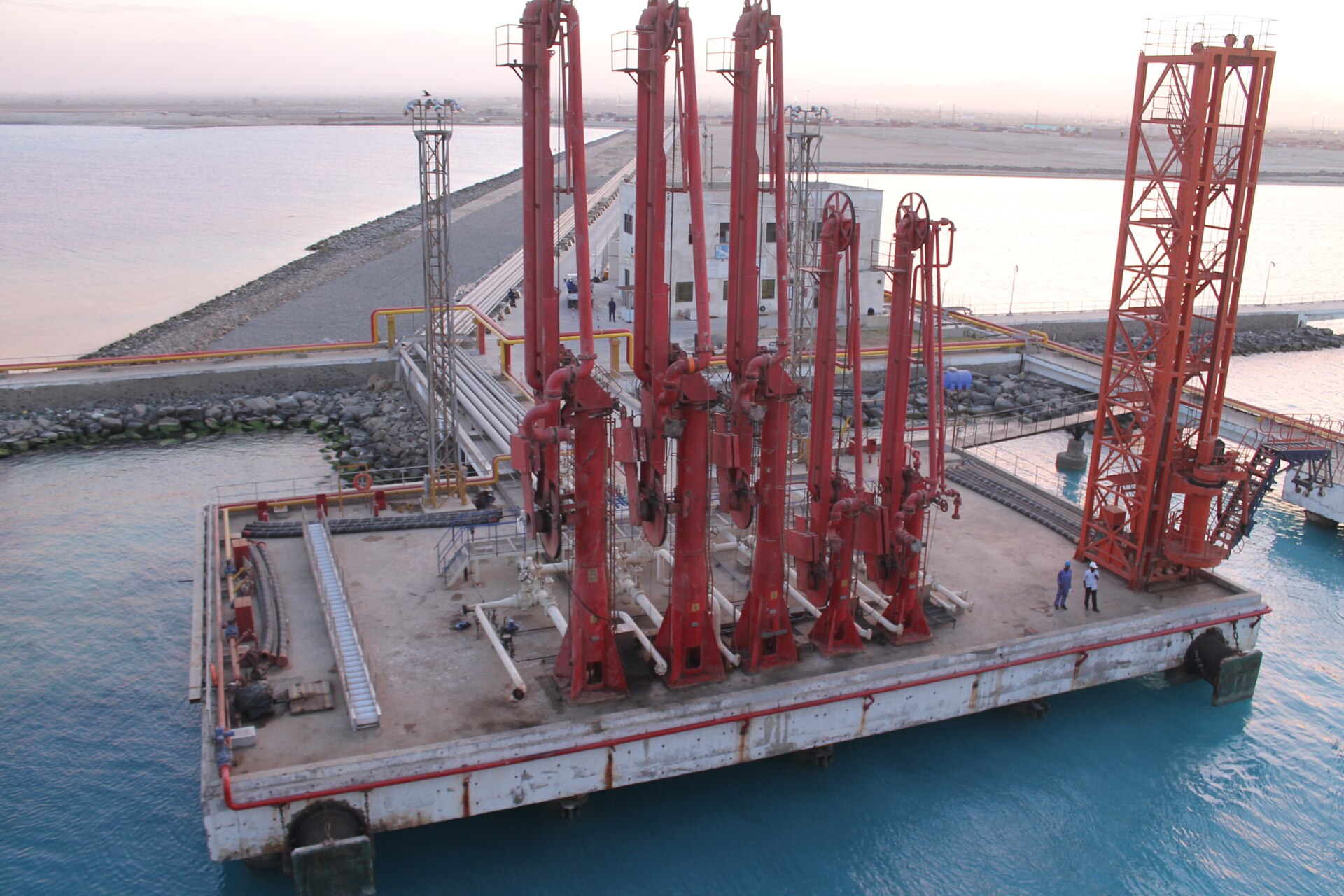
South Sudan became independent in 2011 and took most of the old country’s oil fields with it, but it has no coast. Its crude still has to travel by pipeline across Sudan to the Red Sea, so Sudan’s war is also South Sudan’s budget problem.
The RSF seized the Heglig oil field, on the border, on 8 December 2025. Under a three-way arrangement between Juba, the Sudanese government and the RSF, the paramilitary now collects US$4 a barrel on South Sudanese crude crossing its territory, while the government keeps US$7 of the original US$11 transit fee, the regional newspaper Sudan Tribune reported on 27 September 2026.
People move both ways. The UN counts about 468,000 Sudanese refugees in South Sudan and more than 910,000 South Sudanese who have returned home from Sudan since the war began. Our South Sudan explainer covers that country in full.
Chad, Libya and the Central African Republic
Sudan’s western frontier is where the war’s human cost lands first. Chad hosts 959,126 Sudanese refugees who arrived after April 2023, most of them from Darfur, according to UNHCR figures dated 21 September 2026. Adré, a border town of about 40,000 people before the war, was hosting more than 180,000 Sudanese refugees by February 2026, according to the British Foreign Office.
Libya, split between rival authorities in the west and east, has taken in 569,703 Sudanese refugees by the same count. The Central African Republic, itself recovering from years of conflict, hosts 38,434 Sudanese refugees, according to UNHCR data from 31 August 2026, and had registered 7,133 returning Central Africans by 29 June 2026.
These borders are long, remote and hard to police, which is why they matter for arms flows and armed groups as well as for refugees. The UN Security Council has urged all states “to refrain from external interference which seeks to foment conflict and instability” in Sudan.
What Prediction Markets Say
Polymarket, a crypto-based prediction market, runs two bets that touch Sudan’s neighbourhood. At 1:08 a.m. ET on Wednesday 7 October 2026, “Yes” on a Sudan civil war ceasefire by 31 December 2026 was quoted at about 12 cents, which reads as a 12% chance. Trading is thin: the bid was 9 cents, the ask 16 cents, and about US$14,900 had been traded on that contract.
A second bet, on Eritrea invading Ethiopia by 31 December, was quoted at about 27 cents, up 8 points in a week, with about US$42,800 traded. The same bet with an end-October deadline stood near 10 cents.
Why we show this: prediction markets turn real-money bets into a live probability that moves within minutes of the news, which is why investors, campaigns and newsrooms in the United States now follow them closely. We show them next to polls and official results, never instead of them.
What It Means for You
Travel. The State Department’s advice for Sudan is Level 4, Do Not Travel. The US Embassy in Khartoum suspended operations in April 2023; Americans needing help are told to contact the US Embassy in Cairo. Ethiopia as a whole is Level 3, Reconsider Travel, but the State Department says do not travel to Tigray, Amhara or the areas along Ethiopia’s borders with Sudan, South Sudan, Eritrea, Somalia and Kenya.
Business and sanctions. Both Burhan and Hemedti are on the US Treasury’s sanctions list, so US persons are barred from dealing with them or entities they control. Anyone trading with Sudan, or with firms in neighbouring countries that work there, needs a sanctions check first.
Shipping and energy. The Alamein bloc of Egypt, Sudan, Eritrea and Somalia says only coastal states should govern the Red Sea, while Ethiopia insists it needs a sea outlet. That dispute sits on the route between the Suez Canal and the Gulf of Aden, the shortest sea link between Europe and Asia.
Migration. Sudanese refugees now number in the millions across Egypt, Chad, Libya and South Sudan. Any new fighting on Sudan’s eastern border would add to that pressure.
What Is Not Known
Ethiopia says Sudan, Egypt and Eritrea are helping the Tigrayan rebels, and Sudan’s army says Ethiopia is helping the RSF. Sudan and Egypt deny Ethiopia’s accusations, and no independent body has published evidence that settles either claim.
It is not known how many Sudanese are in Egypt today. The 1.5 million figure dates from January 2025 and comes from the Egyptian government. Refugee counts in Libya and the Central African Republic are also partial, because many people cross where no one is counting.
It is also unclear whether the RSF-held Heglig arrangement will keep South Sudan’s oil flowing, and whether the US will turn its visa pressure on Burhan into a wider push for a truce.
Frequently Asked Questions
Which countries border Sudan?
Seven: Egypt, Libya, Chad, the Central African Republic, South Sudan, Ethiopia and Eritrea. Sudan also has a Red Sea coast, with Saudi Arabia on the opposite shore.
Is Sudan part of the Horn of Africa?
Not in the narrow geographic sense, which covers Ethiopia, Eritrea, Djibouti and Somalia. Sudan is usually included in the wider region because it borders Ethiopia and Eritrea, shares the Nile and has a Red Sea coast.
Why are Egypt and Sudan at odds with Ethiopia over the Nile?
Ethiopia inaugurated its Grand Ethiopian Renaissance Dam on the Blue Nile on 9 September 2025. Egypt calls it a unilateral act that violates international law, and the October 2026 Alamein declaration rejected unilateral measures that harm downstream states.
How many Sudanese refugees are in neighbouring countries?
UNHCR counts about 959,000 in Chad, 570,000 in Libya, 468,000 in South Sudan, 56,000 in Ethiopia and 38,000 in the Central African Republic, and Egypt has reported 1.5 million arrivals.
Can Americans travel to Sudan?
The US State Department says do not travel. Sudan is at Level 4, the US Embassy in Khartoum has been closed since April 2023, and Americans needing help are told to contact the US Embassy in Cairo.
Sources: UNHCR, Sudan situation data portal (figures to 21 September 2026), UN Geospatial, map of Sudan, World Bank, population 2025, UN Security Council, press statement on Sudan, August 2025, UN Security Council, press statement on Sudan, 2026, US Treasury, sanctions on Burhan, 16 January 2025, US State Department, Sudan travel advisory, US State Department, Ethiopia travel advisory, Amhara Media Corporation, Abiy on sea access, 6 October 2026, Daily News Egypt, Alamein Declaration, 4 October 2026, Daily Maverick, Eritrea severs ties with Ethiopia, 2 October 2026, Sudan Tribune, army rejects Ethiopian claims, 28 September 2026, Sudan Tribune, Heglig transit fees, 27 September 2026, Sudan Tribune, Prime Minister Kamil Idris, August 2026, Eyewitness News, US refuses Burhan visa, 23 September 2026, Egyptian Streets, Egypt’s letter to the Security Council on the dam, 10 September 2025, The Reporter Ethiopia, Ethiopia’s letter to the Security Council, September 2025, Africanews, Sudan rejects Ethiopia’s claims, 28 September 2026, Business Day, government forces take Mekelle, 4 October 2026, UK Foreign, Commonwealth & Development Office, Adré visit, 3 February 2026. Prediction market prices: Polymarket public data, 7 October 2026, 1:08 a.m. ET. All retrieved 7 October 2026.

This article was produced by The Rio Times’ automated newsroom system. How we use AI · Report an error · Editorial responsibility: Matthias Camenzind, Editor-in-Chief