SUDAN · AFRICA
Key Facts
- Size The World Bank puts output at US$60.2 billion in 2025, about US$1,165 per person, for 51.7 million people.
- Growth Output fell 29.4% in 2023 and 14.0% in 2024, then grew 3.1% in 2025, according to the World Bank.
- Prime minister Professor Kamil Idris heads the cabinet, which calls itself the Government of Hope, and was in office on 30 October 2026.
- Money ministers Jibril Ibrahim runs finance and Al-Mutasim Ibrahim Ahmed runs energy, both in office in autumn 2026.
- Central bank Governor Amna Mirghani Hassan Al-Tom was in office on 24 October 2026, with Al-Mutasim Abdullah Al-Faki as first deputy.
- Latest decrees On 26 October 2026 the prime minister exempted industrial inputs and staple foods from duties and value-added tax.
- Banks The central bank’s own branch locator lists 37 banks, from Bank of Khartoum to Faisal Islamic Bank of Sudan.
The Sudan economy is run in 2026 by a wartime cabinet, a central bank, state utilities and two phone companies. This guide names who holds each lever, using official Sudanese sites, and says what no primary source confirms.

How Sudan’s Economy Is Run in 2026
Sudan has 51.7 million people and is in a civil war between the army and the Rapid Support Forces, a paramilitary group. The Sudan economy is steered by a government led by Prime Minister Kamil Idris.
The official cabinet list names more than 20 posts, among them finance, energy, minerals, agriculture, industry and trade, and digital transformation. The ministers named here were in office in autumn 2026, according to dated official pages.
Control of the Sudan economy is shared among a few institutions. The prime minister signs decrees, the finance ministry runs the budget, and the central bank oversees banks and payments.
- Prime minister: Professor Kamil Idris, who issues decrees on customs duties and taxes.
- Finance and Economic Planning: Dr Jibril Ibrahim, the budget and the tax collection system.
- Energy: Eng. Al-Mutasim Ibrahim Ahmed, the power grid and the state electricity company.
- Central bank: Governor Amna Mirghani Hassan Al-Tom, banks, payments and foreign-exchange rules.
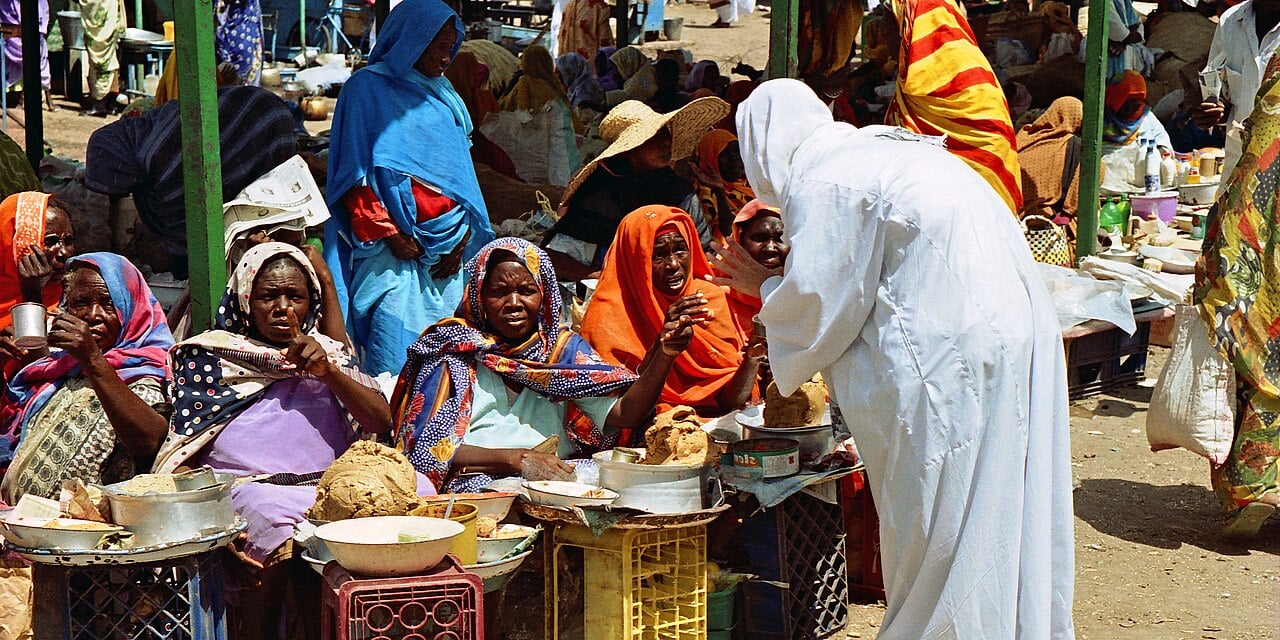
The Prime Minister’s October Decrees
On 26 October 2026 Prime Minister Idris issued a decree exempting industrial inputs from customs duties and taxes, including value-added tax. The government says the aim is to rebuild the country’s factories.
He issued a second decree the same day exempting staple foods from duties and tax. The list covers flour, lentils, rice, fava beans, cooking oil, beans, chickpeas and peas.
A further decision lifted import bans on some foods and other goods. The decrees tell the finance ministry, the industry and trade ministry and the customs forces to carry them out.
The decrees show where power sits, because the prime minister can cut taxes and open imports by order. They name the customs forces and the General Intelligence Service as enforcers.
The Finance Ministry and Its Team
Dr Jibril Ibrahim was finance minister in September 2026, according to his ministry’s website. On 3 September he met the head of the national electricity company and Alaa al-Din al-Tayeb, who runs Nile Petroleum.
On 24 September he chaired the 25th session of the trustees of the Savings and Social Development Bank. On 28 and 29 September he attended an Asian Infrastructure Investment Bank meeting in Doha with central bank deputy governor Dr Sami Abdel Hafiz.
Acting Undersecretary Mohamed Ali Jumaa signs the ministry’s contracts. Two other economic ministers are Nour al-Daim Taha at minerals and Engineer Ahmed al-Dardiri Gandour at digital transformation.
The October decrees put the industry and trade ministry in charge of food and factory imports. We do not name its minister because no dated autumn 2026 page confirmed the holder.
The Central Bank and the 37 Banks
Governor Amna Mirghani Hassan Al-Tom leads the Central Bank of Sudan and met the higher education minister on 24 October 2026. They agreed a financing portfolio, led by the Real Estate Bank, to repair teachers’ housing and add solar power.
Her first deputy is Al-Mutasim Abdullah Al-Faki and her deputy is Dr Sami Abdel Hafiz. Its website also lists a strategic plan for 2026 to 2030 and a 2026 rule on bank agents.
Its branch locator lists 37 banks. They include Bank of Khartoum, Omdurman National Bank, Faisal Islamic Bank of Sudan, Nile Bank and the Agricultural Bank of Sudan.
Others are the Real Estate Commercial Bank, the Animal Wealth Bank and the Export Development Bank. Several carry foreign names, such as Abu Dhabi Islamic Bank, Qatar Islamic Bank and National Bank of Egypt.
The locator does not say who owns each bank, so this guide does not rank them by size. The Sudan economy’s banking map is clear, but the balance sheets are not published there.
- At the 2026 IMF and World Bank annual meetings in Bangkok, the central bank agreed regular monetary and balance-of-payments data sharing with the IMF.
- The IMF agreed to assign a full-time resident representative to Sudan, and talks covered a roadmap toward debt relief under the HIPC initiative.
- The central bank also asked for help to set up a monetary policy committee and a financial stability committee.
- The central bank also advertises a tender to build a national instant payment system.
Electricity Under Drone Attack
Energy Minister Al-Mutasim Ibrahim Ahmed was at Prime Minister Idris’s side on 30 October 2026 at the Marwaikhat substation, west of Omdurman. With them was Abdullah Mohamed Ahmed, general manager of the Sudan Electricity Holding Company.
The government says Rapid Support Forces drones put the station out of service and cut power across large parts of Khartoum and River Nile. It lists four other damaged stations: Al-Hawata, Al-Junaid, Mashkour and Al-Fao.
The minister called Marwaikhat one of the most important substations for carrying power to Khartoum and nearby areas. He promised to rebuild every attacked station to a better standard than before.
Electricity is the clearest case of a state company deciding how much of the Sudan economy can run. The government publishes no figure for lost output or repair cost, and we do not estimate one.
Zain, MTN and the State Payment System
Two phone companies sit inside the government’s money flows. The finance ministry signed a text-message contract with MTN Sudan on 27 September 2026 and one with Zain on 4 October 2026.
The contracts serve Eisali, the ministry’s electronic collection system, whose name is Arabic for “my receipt”. Citizens use it for government payments, and the text messages confirm each one.
The central bank also lists tenders for a national instant payment system and a mobile payment project, which point the same way. Contract values, user numbers and the owners of the two operators are not published on the sites we reached.
Farm and Solar Credit in the Provinces
The central bank is pushing credit to farms outside the capital. On 15 October 2026 its Dongola branch launched a solar and farm-inputs portfolio in Northern State with five banks.
On 17 October 2026 it launched a similar portfolio in River Nile State with seven banks. The Northern State portfolio aims at about 10,000 beneficiaries.
Its officials say the launches show that the banking sector is recovering and can lend to productive sectors. The Arab Organization for Agricultural Development took part in the Northern State event.
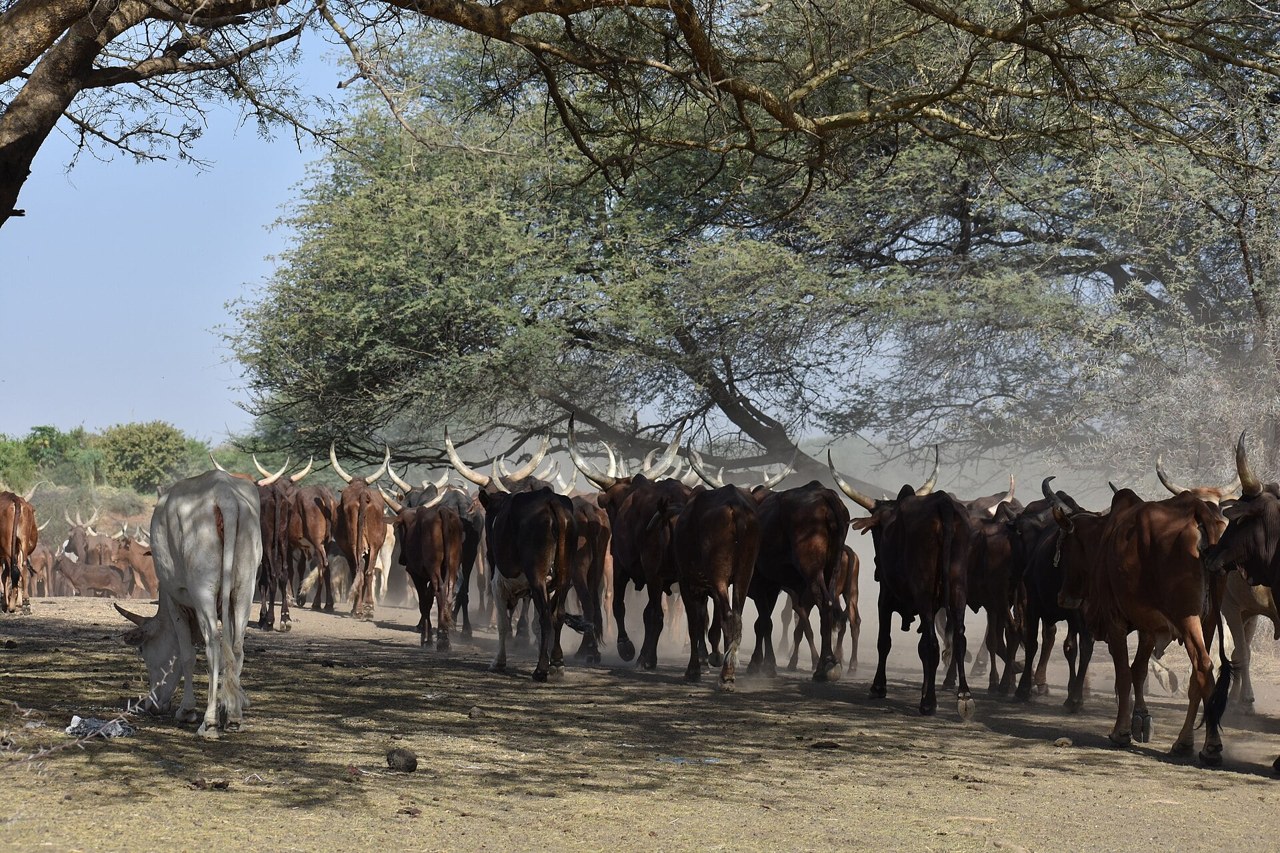
What the World Bank Numbers Show
The World Bank’s data, updated on 8 October 2026, show how deep the fall was. Real output shrank 29.4% in 2023 and 14.0% in 2024, then rose 3.1% in 2025.
Chained together, those three rates leave real output about 37% below its 2022 level, by our own calculation. Nominal Sudan economy output was US$39.9 billion in 2023, US$49.7 billion in 2024 and US$60.2 billion in 2025.
Output per person was US$1,165 in 2025, up from US$985 in 2024 and US$797 in 2023. The 2022 figure was US$1,046, so the 2025 figure is about 11% above it.
The World Bank puts farming at 29.4% of output in 2025, industry at 33.7% and services at 37.0%. These shares moved sharply from year to year, for example services at 54.7% in 2024, so they should be read as rough.
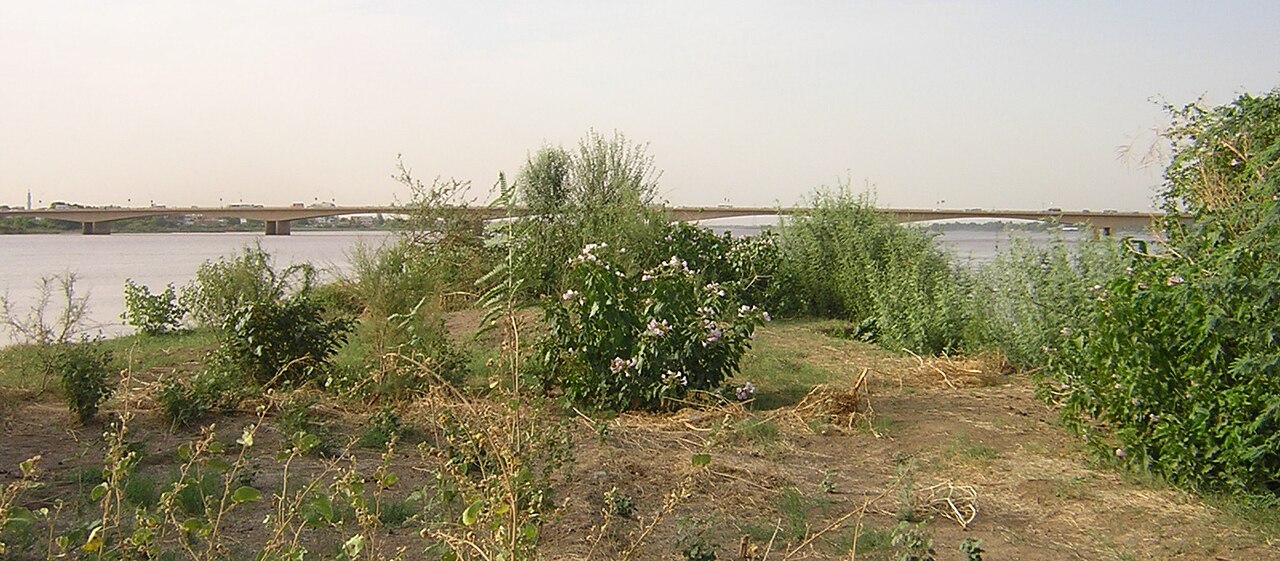
What It Means for US Readers
For anyone sending money or aid to Sudan, the people in this guide set the rules. Customs decrees, bank licences, payments and power repairs all pass through four offices.
Those offices are the prime minister, the finance ministry, the central bank and the energy ministry. For gold, read our gold exports story, our report on gold miners and our piece on the EU gold ban.
Trade routes matter too, as our report on halted truck traffic from Egypt shows. Our report on Ukraine and the Rapid Support Forces covers the government’s accusations, and more is on our Sudan page.
What Is Not Known
No official source we reached states how much gold Sudan produces or exports in 2026, or who buys it. The same is true of oil, where output, pipeline flows and the state oil company’s role are not published.
No business family or army-linked company was confirmed against a dated primary source, so this guide names none. The economy of the areas held by the Rapid Support Forces is also not documented by any source we could verify.
Exchange rates, inflation and the budget deficit are missing as well. The central bank’s exchange-rate page carries only old tables, and the World Bank’s inflation series is empty after 2022.
The IMF’s current assessment and any agreed programme could not be read, and we found no source on the Khartoum stock exchange. No price data yet shows whether the October decrees will lower food prices in the Sudan economy.
Frequently Asked Questions
Who runs the economy of Sudan in 2026?
Prime Minister Kamil Idris, Finance Minister Jibril Ibrahim, Energy Minister Al-Mutasim Ibrahim Ahmed and Central Bank Governor Amna Mirghani Hassan Al-Tom hold the main levers, according to official Sudanese sites.
How big is the Sudan economy?
The World Bank puts nominal output at US$60.2 billion in 2025, or about US$1,165 per person, for 51.7 million people.
How much did the Sudan economy shrink in the war?
World Bank data show real output down 29.4% in 2023 and 14.0% in 2024, followed by growth of 3.1% in 2025.
What did the prime minister decide on 26 October 2026?
He exempted industrial inputs and staple foods such as flour, lentils, rice and cooking oil from customs duties and value-added tax, and lifted import bans on some foods.
Which phone companies work with the Sudanese government on payments?
The finance ministry signed text-message contracts for its Eisali electronic collection system with MTN Sudan on 27 September 2026 and Zain on 4 October 2026.
How many banks does Sudan have?
The central bank’s branch locator lists 37 banks, including Bank of Khartoum, Omdurman National Bank and Faisal Islamic Bank of Sudan.
Sources: Government of Sudan: Prime Minister inspects the Marwaikhat substation, 30 October 2026, 2026; Government of Sudan: decree exempting industrial inputs from duties and tax, 26 October 2026, 2026; Government of Sudan: decrees exempting staple foods from duties and tax and lifting import bans, 26 October 2026, 2026; Government of Sudan: ministerial formation (cabinet list), 2026; Government of Sudan: minister pages for finance, energy, minerals and digital transformation, 2026; Ministry of Finance and Economic Planning: news, September and October 2026, including the Eisali contracts, 2026; Central Bank of Sudan: news, 15, 17 and 24 October 2026, and the IMF and World Bank annual meetings, 2026; Central Bank of Sudan: bank and branch locator, 2026; World Bank Data: GDP, growth, GDP per capita, sector shares and population for Sudan (updated 8 October 2026), 2026.
This article was produced by The Rio Times’ automated newsroom system. How we use AI · Report an error · Editorial responsibility: Matthias Camenzind, Editor-in-Chief
Horn of Africa and the Red Sea
- Horn of Africa 2026: Why It Matters and Who Backs Whom
- Ethiopia’s Neighbors Explained, Ports, Eritrea, Somalia
- Eritrea Explained 2026, a Red Sea Country Guide
- Somalia Explained: Al-Shabaab, Somaliland, the Ports and the Fight Over a 2026 Vote
Brazil runoff date: Sunday, October 25, poll closing times and when results start · Brazil runoff polls: Flávio 51%, Lula 49% · Kalshi and Polymarket odds
Rotate for Best Experience
This report is optimized for landscape viewing. Rotate your phone for the full experience.
You've reached your free article limit
Subscribe to The Rio Times for unlimited access to our reporting from across Africa.
Keep reading for free
Your first article was on us. Register with your email address to read 6 free articles every month. You will also receive Africa Intelligence: African markets, politics and business, every weekday morning.