
CHILE · SOUTHERN CONE
Key Facts
- —What it is Chile shares three land borders with Argentina, Bolivia and Peru, plus Pacific-facing commercial links that extend its regional influence.
- —Why it matters Chile’s neighbours shape its trade corridors, migration flows, energy supply and access to South American and Asian markets.
- —The numbers The Argentina border runs more than 5,000 kilometres.
- —The catch Bolivia and Chile have not maintained full diplomatic relations since 1978, though practical trade and border cooperation continue.
- —What it means for you Foreigners and investors in Chile encounter a country whose ports, mining projects and migration rules are inseparable from its three neighbours.
Chile neighbours Argentina, Bolivia and Peru across a long Andean frontier, and those relationships shape everything from port traffic to mining investment and migration policy.
Chile is a narrow Pacific nation whose geography makes it both isolated and connected. This guide explains how its three land borders work, where cooperation is strongest, and what the current state of play means for foreigners, investors and curious readers in 2026.

Chile’s Physical Neighbourhood
Chile borders Argentina along the Andes in a frontier stretching more than 5,000 kilometres. To the north, it shares borders with Bolivia across the regions of Arica and Parinacota, Tarapacá and Antofagasta, and with Peru principally between the Chilean Region of Arica and Parinacota and Peru’s Tacna department.
The Andes make Chile geographically narrow and defensible but complicate overland connectivity. Chile’s Pacific ports, by contrast, give Argentina, Bolivia and parts of southern Peru potential access to Asian shipping routes. That geography explains the recurring regional agenda: border crossings, customs, railways, roads, ports, energy, mining logistics and migration.
Chile’s National Directorate of Borders and State Boundaries, known as DIFROL, coordinates border-related policy and participates in integration committees with all three neighbours. These committees address the movement of people, vehicles and goods, as well as health, education, culture and local development.
Argentina: Chile’s Closest Strategic Partner
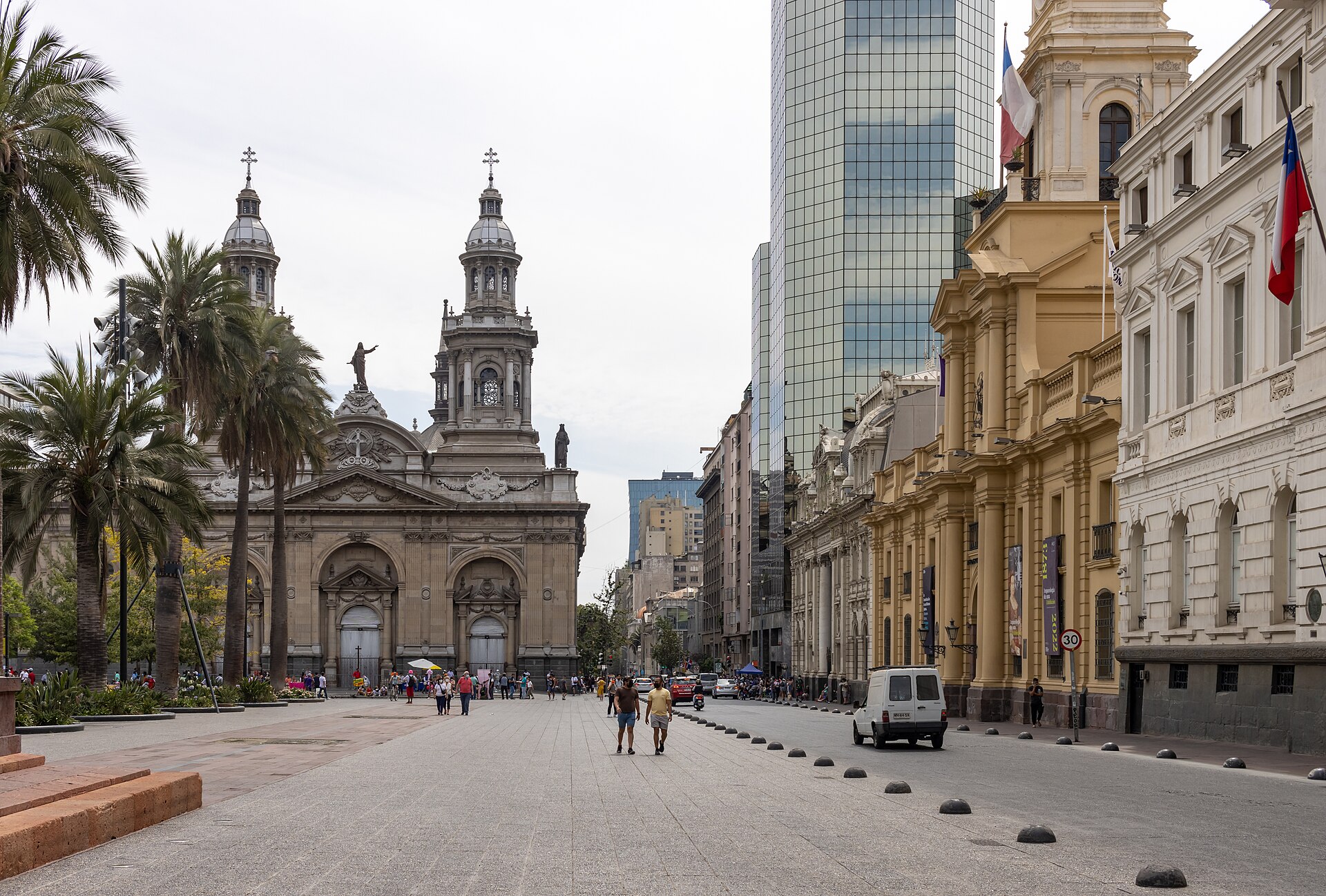
Chile and Argentina rest their relationship on the 1984 Treaty of Peace and Friendship, which ended the Beagle Channel crisis, and on the political decision by Presidents Patricio Aylwin and Carlos Menem. In 1991, Presidents Patricio Aylwin and Carlos Menem agreed to resolve 22 of the 24 outstanding territorial issues; the remaining two were settled later. The relationship is now institutionally dense.
This is the most developed bilateral architecture Chile has with any neighbour.
Trade and investment frameworks
The main economic framework includes Economic Complementation Agreement No. 16, signed bilaterally in 1991, and the MERCOSUR–Chile Economic Complementation Agreement No. 35, in force since 1 October 1996. The double-taxation agreement was signed in 2015 and has been in force since 2016, while the investment-promotion and protection agreement was signed in 1991 and entered into force in 1995.
Argentina is important to Chile both as a neighbouring market and as a supplier of energy, agricultural products and industrial inputs. Chile, in turn, offers Argentine companies Pacific ports, mining services, capital-market access and routes to Asian markets.
Mining integration across the Andes
The framework allows cross-border mining projects to coordinate customs, taxation, labour rules and infrastructure through project-specific protocols.
The treaty is especially significant in the Andes, where mineral deposits and prospective projects can straddle the frontier. Chile’s investment-promotion agency says the arrangement is intended to reduce duplicated permitting and infrastructure costs by allowing companies to plan a project across the border rather than as two entirely separate operations.
The framework is strategically attractive because Argentine deposits near the Andes may use Chilean roads, ports, contractors and mining expertise. It also gives Chilean suppliers a route into Argentine mining investment. The framework remains an enabling mechanism, not proof that all proposed projects are financed, permitted or operating.
Border crossings and connectivity
Chile and Argentina maintain regular integration committees for border management. Their agenda includes customs and immigration procedures, road and tunnel infrastructure, freight and tourism, emergency coordination, energy and mining, and cross-border investment.
For investors, the constraint is less the absence of legal instruments than the practical reliability of Andean crossings. Weather, altitude, road capacity, customs coordination and seasonal closures can affect supply chains between central Chile and western Argentina.
Bolivia: Economic Pragmatism Amid a Maritime Dispute
Chile and Bolivia have not maintained full diplomatic relations since 1978, but they continue to cooperate through consulates, border institutions and practical trade arrangements. The central political dispute is Bolivia’s demand for sovereign access to the Pacific.
The International Court of Justice ruled in 2018 that Chile was not legally obliged to negotiate such access. The decision removed one major legal uncertainty, but it did not eliminate the issue from Bolivian politics.
Border institutions and trade corridors
It focuses especially on the Chilean regions of Tarapacá and Antofagasta and the Bolivian departments of La Paz, Potosí and Oruro. Its remit includes movement of people and goods, border development, education, health and culture, customs and transport, and security and local cooperation.
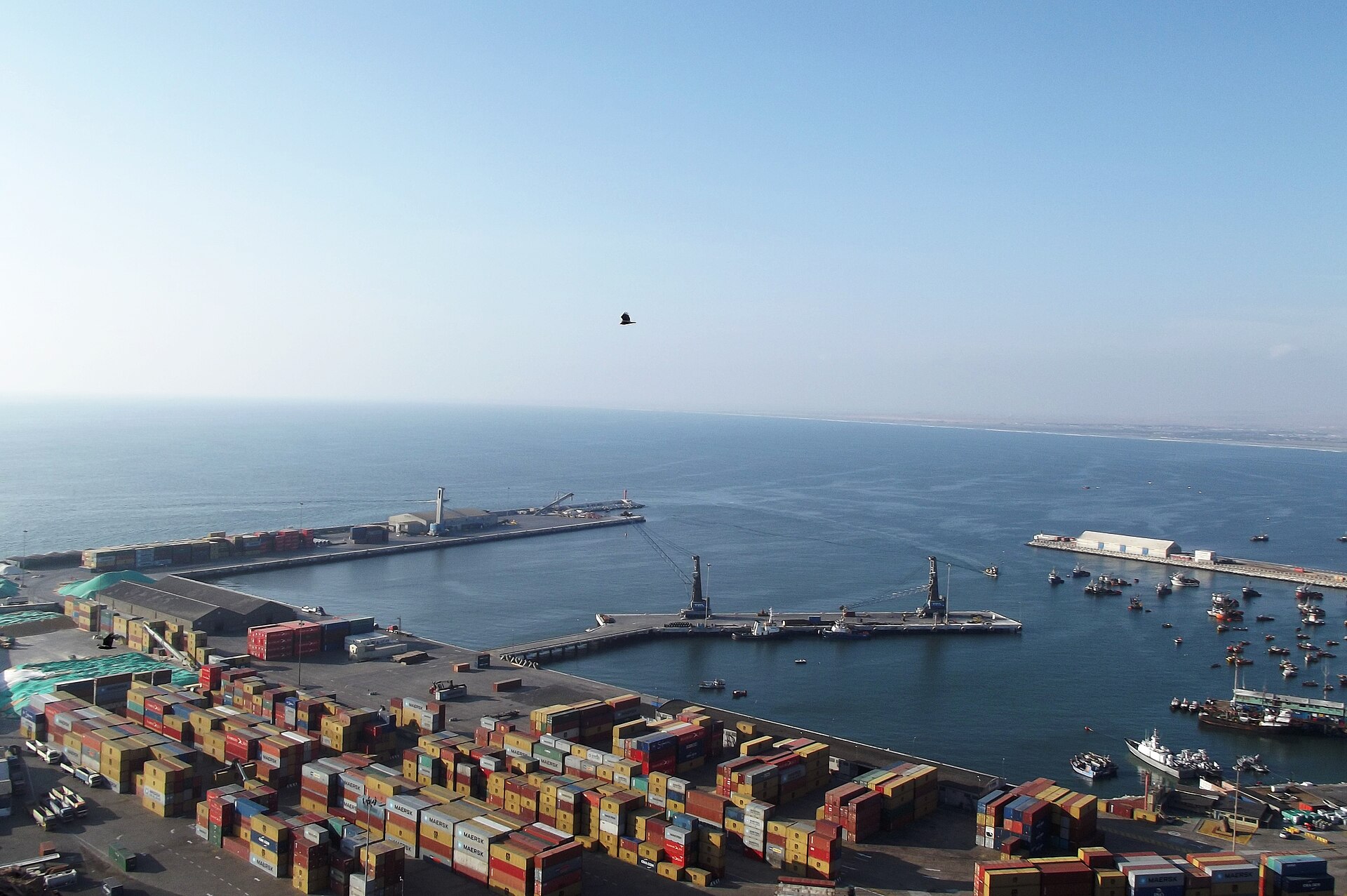
Bolivia is landlocked, so Chilean ports, particularly Arica and Antofagasta, are important to Bolivian foreign trade. This creates a relationship that is simultaneously commercially interdependent and politically sensitive. Chile benefits from port, transport, logistics and warehousing activity connected to Bolivian cargo. Bolivia seeks predictable, affordable and efficient access to the Pacific. Disagreements over customs, port charges, transport conditions and border administration can therefore become politically significant.
The search material reports that Bolivian and Chilean officials in 2026 agreed to pursue discussions on connectivity, border integration, trade, migration, security, water resources, hydrocarbons and energy. That development suggests a pragmatic opening, but it should not be described as a settlement of the maritime question.
Energy and water
The bilateral agenda increasingly includes hydrocarbons, electricity and shared water resources. Northern Chile and western Bolivia face related challenges involving high-altitude ecosystems, mining, transport and water scarcity. However, the available material does not establish a new binding 2026 water treaty or a specific shared-river allocation. Any article should avoid implying that all water cooperation amounts to a comprehensive basin-management regime.
Peru: A More Normalised but Competitive Relationship
Chile and Peru combine commercial cooperation, daily cross-border movement and institutional coordination with a history shaped by the War of the Pacific and later territorial disputes. The International Court of Justice’s 2014 judgment settled the maritime-boundary case submitted by the two countries. The ruling reduced legal uncertainty, although border management, migration and competition over ports and logistics remain active issues.
Tacna–Arica integration
The most concentrated bilateral interaction occurs between Tacna in Peru and Arica and Parinacota in Chile. Its work covers border crossings, trade and retail, tourism, transport, health and public services, migration, and coordination between Tacna and Arica.
In March 2026, Chile and Peru held the third meeting of their Binational Migration Cooperation Committee. Peru’s foreign ministry said the two sides discussed irregular migration, transnational organised crime, information exchange, smoother legal movement and modernisation of the Santa Rosa–Chacalluta border complexes. The frontier is therefore not only a diplomatic line. It is a daily economic zone in which workers, shoppers, tourists, freight operators and families cross in both directions.
Competition as well as cooperation
Chile and Peru cooperate in tourism, trade and border management but compete for Pacific shipping and transshipment, foreign investment, mining supply chains, access routes into Bolivia, and logistics and port activity. This competition is structural rather than necessarily hostile. Both countries seek to position their ports and infrastructure as gateways between the Pacific, the Andes and the interior of South America.
Migration: Regional Mobility and Border Pressure
Chile’s migration policy is connected to the Mercosur Residence Agreement framework, under which nationals of Argentina, Bolivia, Brazil, Paraguay and Uruguay can obtain temporary residence if they meet the applicable requirements. This is important because Chile is not a full Mercosur member but participates in a residence arrangement covering Mercosur nationals and Bolivia.
Migration cooperation with neighbours has become more security-focused. Chile and Argentina created a bilateral working commission to exchange information on migration and consular policy, cooperate in third countries and facilitate migrant transit. Chile and Peru have focused on irregular migration and organised crime while attempting to preserve orderly cross-border movement. With Bolivia, the 2026 agenda reportedly includes migration alongside trade, security and border integration.
A useful distinction for readers is between regular residence and labour mobility, supported by regional agreements, and irregular migration, which has prompted stronger border controls and bilateral security coordination.
Shared Rivers and Water Systems
Chile’s Southern Cone relations involve shared waters, but the geography is uneven. With Argentina, the Andes contain numerous transboundary watersheds, glaciers and high-altitude basins. Water is also relevant to mining, hydropower, agriculture and ecosystems. With Bolivia, the high-altitude borderlands include connected lake and wetland systems, and water resources are part of the current bilateral agenda. With Peru, the most immediate shared-water issues are concentrated in the arid northern frontier and the wider Pacific-drainage environment.
The available evidence confirms that water resources were included in the 2026 Chile–Bolivia agenda, but it does not provide enough detail to identify a new treaty, river commission or quantified allocation. A final article should verify current agreements through Chile’s foreign ministry, DIFROL, the General Water Directorate and the equivalent agencies in Argentina, Bolivia and Peru.
Regional Organisations: Where Chile Participates
Chile’s regional strategy is distinctive because it combines Pacific orientation with South American integration. Chile is a founding member of the Pacific Alliance, alongside Colombia, Mexico and Peru. The bloc aims to deepen trade, investment, services, mobility and links with Asia-Pacific markets. For Chile, the Pacific Alliance reinforces its role as a Pacific economy and creates a framework for cooperation with Peru, its northern neighbour. It also differentiates Chile from the more Atlantic-oriented economic geography of Mercosur.
Chile is not a full Mercosur member. It is an associate country and maintains preferential access through ACE 35. That arrangement gives Chile commercial links to Argentina, Brazil, Paraguay and Uruguay without requiring full adoption of the bloc’s common external tariff or all of its institutional obligations. This is one of Chile’s recurring regional choices: preserve policy autonomy and a broad network of trade agreements while participating selectively in South American mechanisms.
At the bilateral level, Chile relies heavily on technical bodies rather than headline political summits: integration and border committees, permanent boundary commissions, and sector-specific working groups. For foreigners and investors, this means the practical rules of engagement with Chile’s neighbours are often set in technical meetings rather than presidential declarations.
What to Watch in Chile’s Neighbourhood
The most consequential developments for Chile’s neighbours in the coming years are likely to involve the implementation of the revived binational mining treaty with Argentina, the practical outcomes of the 2026 Chile–Bolivia dialogue, and the modernisation of border complexes with Peru. Each of these has direct implications for trade costs, investment timelines and the daily movement of people.
For foreigners living in or investing in Chile, the neighbourhood matters in concrete ways. Argentine energy and agricultural inputs affect Chilean prices. Bolivian cargo affects port activity in Arica and Antofagasta. Peruvian cross-border movement affects labour markets and retail in the north. The quality of Andean road and tunnel infrastructure affects supply chains across the region.
Chile’s approach to its neighbours is pragmatic and institutional rather than ideological. It builds technical committees, signs economic complementation agreements, and keeps diplomatic channels open even where political relations are strained. That approach has served Chile well, but it also means progress is often slow, incremental and vulnerable to domestic politics in any of the four countries involved.
Related reading: Chile news and analysis; Chile Explained: the Kast government and what to watch; Argentina neighbours explained; Peru neighbours explained; Uruguay neighbours explained.
Frequently Asked Questions
Which countries border Chile?
Chile borders Argentina along the Andes, Bolivia in the north across Arica and Parinacota, Tarapacá and Antofagasta, and Peru at the northern tip between Arica and Parinacota and Tacna.
Does Chile have diplomatic relations with Bolivia?
Chile and Bolivia have not maintained full diplomatic relations since 1978, but they continue to cooperate through consulates, border institutions and practical trade arrangements.
Is Chile a member of Mercosur?
Chile is not a full Mercosur member. It is an associate country and maintains preferential access through Economic Complementation Agreement No. 35.
What is the Pacific Alliance?
The Pacific Alliance is a trade and integration bloc founded by Chile, Colombia, Mexico and Peru, aiming to deepen links with Asia-Pacific markets.
How long is the Chile–Argentina border?
The Chile–Argentina border stretches more than 5,000 kilometres along the Andes.
What was the 2018 ICJ ruling on Bolivia’s Pacific access?
The International Court of Justice ruled in 2018 that Chile was not legally obliged to negotiate sovereign access to the Pacific for Bolivia.
Sources: difrol.cl, difrol.cl, aduananews.com, gob.pe, riotimesonline.com, serviciomigraciones.cl. Retrieved 3 October 2026.
This article was produced by The Rio Times’ automated newsroom system. How we use AI · Report an error · Editorial responsibility: Matthias Camenzind, Editor-in-Chief