Uruguay Neighbours Explained, the Southern Cone in 2026

URUGUAY · SOUTHERN CONE
Key Facts
- —What it is Uruguay sits between Argentina and Brazil, with Paraguay, a founding Mercosur member, and Bolivia, a full member since July 2024, while Chile is an associated state.
- —Why it matters Uruguay’s small domestic market makes its neighbours its main customers, suppliers, investors and migration partners.
- —The numbers Brazil and Uruguay traded US$4.965 billion in 2024, according to Brazil’s Foreign Ministry, with Brazilian exports at US$2.707 billion and imports at US$2.257 billion.
- —The catch Mercosur’s EU trade deal was signed on January 17, 2026 and has applied provisionally since May 1, but full entry into force still needs the European Parliament and EU member states.
- —What it means for you A foreigner in Uruguay can live, work and trade across much of the Southern Cone under Mercosur residence and tariff arrangements, but border rules and infrastructure still vary by country.
Uruguay neighbours Argentina, Brazil and Paraguay through Mercosur, the South American trade bloc founded in 1991. These relationships define how Uruguay trades, who migrates across its borders, and where it leads or follows in the Southern Cone.
Uruguay is a small, stable country of 3.4 million people wedged between two South American giants. This guide explains how its neighbourhood works, what the numbers show, and what to watch as of September 2026.
What Uruguay’s Neighbourhood Actually Looks Like
Uruguay’s immediate Southern Cone neighbours are Argentina to the west and south, Brazil to the north and east, and Paraguay further inland. Chile is an associated state of Mercosur rather than a founding member, but it shares transport, energy and trade initiatives with Uruguay. Bolivia became a full Mercosur member in July 2024.
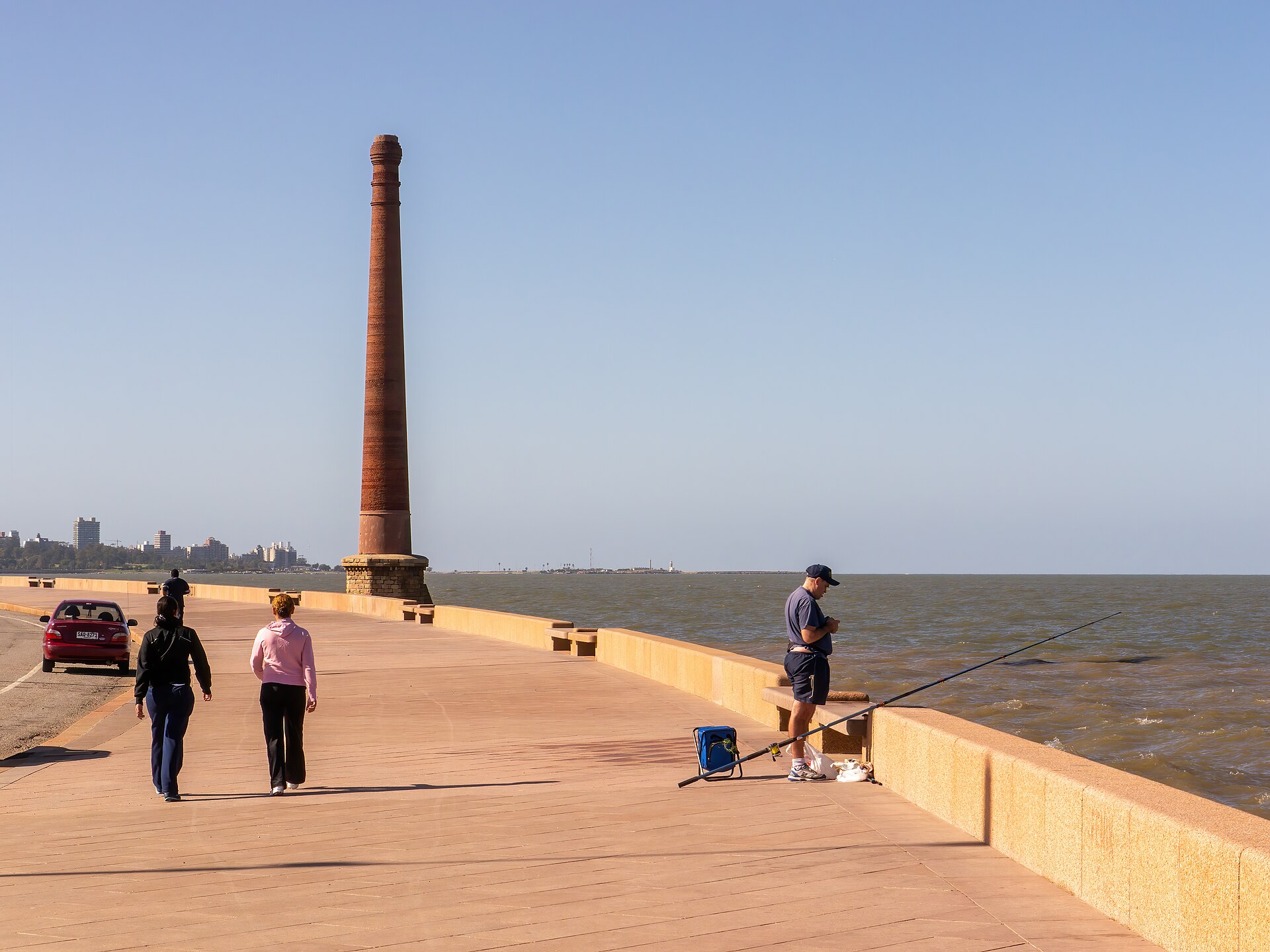
The geography is defined by water. The Uruguay River separates Uruguay from Argentina along much of its western border. The Río de la Plata, a vast estuary, lies between Montevideo and Buenos Aires. To the north, the Jaguarão River marks part of the border with Brazil. These rivers are not just boundaries; they are trade routes, sources of hydroelectric power, and occasional sources of dispute.
Mercosur, the Common Market of the South, is the institutional backbone of this neighbourhood. Argentina, Brazil, Paraguay and Uruguay signed the Treaty of Asunción in 1991. The bloc aims to create a common market with free movement of goods, services, capital and people. In practice, it remains an imperfect customs union with a long agenda of unfinished integration.
Brazil: The Largest and Most Institutionalised Border
Brazil is Uruguay’s biggest neighbour in every sense. The two countries share a land border of approximately 1,069 kilometres. Brazil’s Foreign Ministry describes the relationship as having a high level of political and human trust, covering political, economic, technological, cultural and social cooperation.
Trade is substantial. According to Brazil’s Foreign Ministry, bilateral trade reached US$4.965 billion in 2024. Brazilian exports to Uruguay totalled US$2.707 billion, while Brazilian imports from Uruguay reached US$2.257 billion.
The border is not just about goods. A bilateral permanent-residence agreement between Brazil and Uruguay entered into force on July 7, 2017, making it easier for citizens of either country to live and work in the other. Border committees and the Brazil–Uruguay New Agenda for Cooperation and Border Development manage daily issues from traffic to health services.
Infrastructure projects matter here. The two countries have discussed a second international bridge over the Jaguarão River to improve freight and passenger traffic. The existing Barão de Mauá International Bridge, linking Jaguarão in Brazil with Río Branco in Uruguay, opened in 1930 and was declared Mercosur historical heritage in 2015. Restoration work on that bridge is part of the bilateral agenda.
Rivera Airport, on the Uruguayan side of the border, is used by Brazilian companies under a binational arrangement. Cooperation also extends to the Uruguay–Brazil waterway, involving the Patos and Mirim lagoons and their tributaries. This waterway is a practical example of how two countries can share a natural system for transport and flood management.
Argentina: Close Ties, Recurring Friction
Argentina is Uruguay’s closest cultural neighbour. The two countries share the Uruguay River, the Río de la Plata, extensive family and migration ties, tourism flows, energy networks and shared media markets. Many Uruguayans have Argentine relatives, and Buenos Aires is a short ferry ride from Montevideo.
But the relationship also contains recurring disputes. Environmental regulation, river use, port competition and cross-border industrial projects have all caused friction over the years. The Uruguay River and Río de la Plata are governed through bilateral arrangements and binational bodies, most importantly the Administrative Commission of the Uruguay River and the Administrative Commission of the Río de la Plata.
In August and September 2026, a dispute emerged over HIF Global’s proposed green-hydrogen and synthetic-fuels plant in Paysandú, on the Uruguay River. The controversy followed remarks by President Yamandú Orsi and several denials from the Argentine side. As of September 2026, the issue remained unresolved, with official environmental filings and binational commission statements still pending.
Argentina’s political situation affects Uruguay directly. When Argentina’s economy contracts or its currency swings, Uruguayan tourism and exports feel the impact. Argentine visitors are a major source of revenue for Uruguay’s coastal resorts, particularly Punta del Este and Colonia del Sacramento.
Paraguay: The Inland Waterway Partner
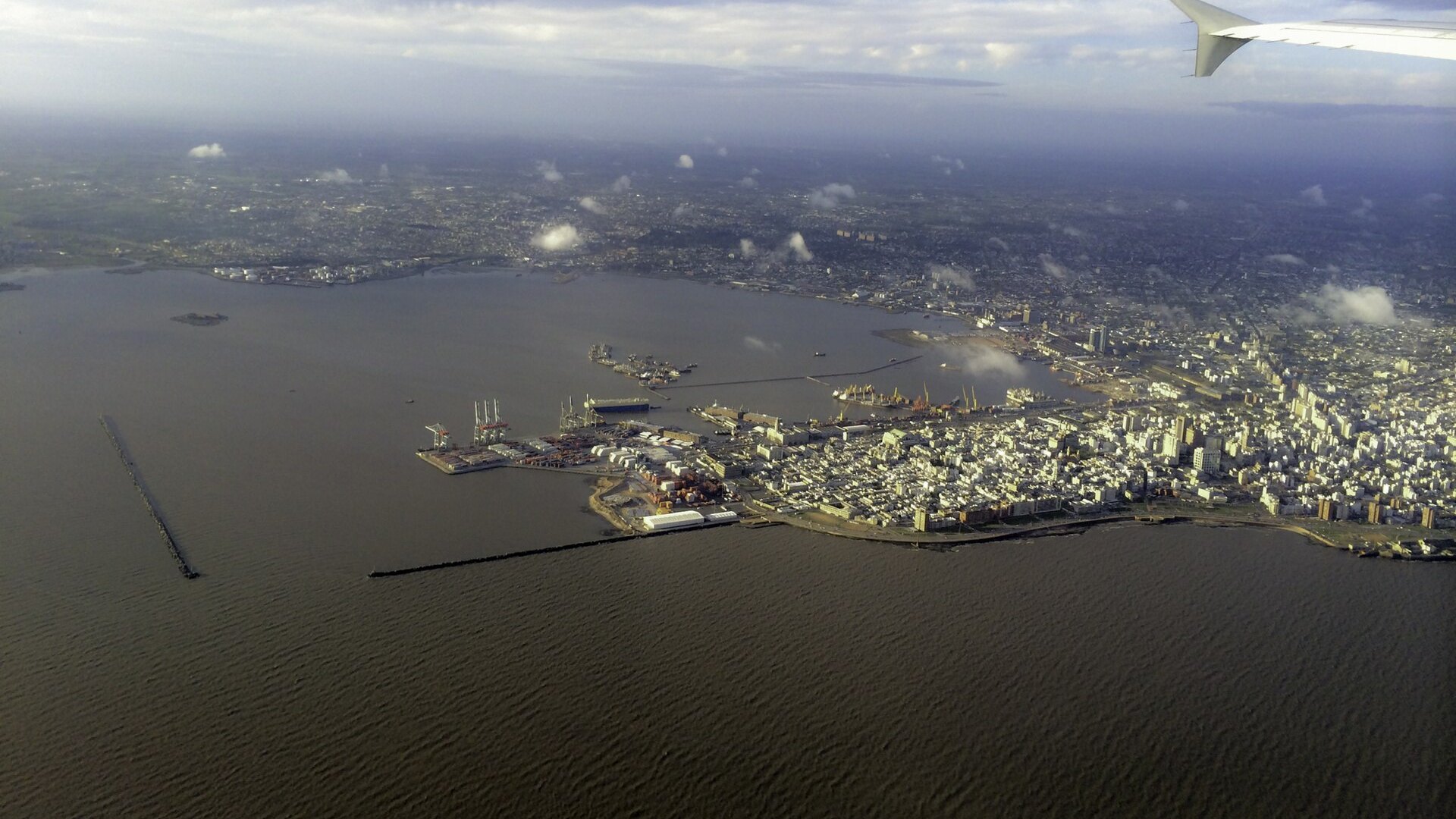
Paraguay is landlocked, which makes its relationship with Uruguay surprisingly important. The Paraguay–Paraná waterway system connects Paraguay’s inland production areas with ports on the Río de la Plata and the Atlantic. Uruguay’s ports, particularly Montevideo and Nueva Palmira, serve regional cargo that moves along this waterway.
Paraguay hosted the June 30, 2026 Mercosur summit, at which Uruguay assumed the bloc’s rotating presidency for the second half of 2026. The summit communiqué identified President Santiago Peña Palacios of Paraguay and President Yamandú Orsi of Uruguay among the participants. Argentina was represented by its Minister of Foreign Affairs, International Trade and Worship, Pablo Quirno.
Mercosur governments have been discussing border-control modernisation, regional road and transport corridors, digital connectivity, energy integration, disaster-risk management, and the Paraguay–Paraná–Uruguay waterway. These are practical issues that affect how goods move across the region.
Mercosur: Uruguay’s Principal Regional Platform
Uruguay uses Mercosur as its main platform for regional trade and external negotiations. The bloc’s agenda includes customs integration, border facilitation, regional infrastructure, migration, digital interoperability and external trade negotiations.
During Uruguay’s 2026 pro tempore presidency, the stated priorities included implementing the recently concluded agreements with the European Union and EFTA, continuing external negotiations, improving border integration, fighting transnational organised crime, and implementing regional agreements on human trafficking and protection of women facing gender violence.
The FOCEM structural-convergence fund is a key instrument. It is intended to reduce regional asymmetries through infrastructure and development projects. Uruguay announced that FOCEM would finance the Regional Northern Technology Park in Rivera, led by Uruguay’s technological institute. This project shows how smaller members can use Mercosur funds for local development.
Mercosur and the European Union signed an Association Agreement and an Interim Trade Agreement on January 17, 2026, in Asunción. According to the Argentine Foreign Ministry factsheet, the EU would eliminate tariffs on 92% of Mercosur exports, with a further 7.5% receiving preferential access through quotas or other mechanisms. The Interim Trade Agreement would apply provisionally from May 1, 2026.
All four Mercosur countries have completed ratification. Uruguay’s parliament gave final approval on February 26, 2026, Argentina’s Senate did so the same day, Brazil’s Congress followed on March 4 and Paraguay’s on March 17. What remains open is on the EU side. In January 2026 the European Parliament asked the EU Court of Justice whether the deal is compatible with the EU treaties, which pauses its consent, and the wider partnership agreement also needs ratification by EU member states.
Where Uruguay Leads and Where It Follows
Uruguay leads its neighbours in several areas. It is generally viewed as one of South America’s most stable democracies. Its digital government and public administration are considered comparative strengths. Uruguay has built a much larger share of renewable electricity generation than most regional neighbours. Its residence rules for South American nationals are relatively open, supported by Mercosur residence arrangements.
Uruguay also leads in small-state diplomacy. Its 2026 Mercosur presidency gives Montevideo an opportunity to mediate between larger partners and push practical regional measures. The country has historically used its institutional credibility to punch above its weight in regional forums.
But Uruguay follows in other areas. Brazil and Argentina dominate the regional consumer and industrial markets. Brazil has the region’s deepest manufacturing base. Uruguay’s ports are strategically important but handle less total cargo than Brazil’s and Argentina’s largest systems. Inside Mercosur, Uruguay’s influence depends heavily on coalition-building because Brazil and Argentina account for most of the bloc’s population and economic weight.
Energy scale is another area where Uruguay follows. The country has a strong renewable-electricity profile but depends on regional interconnections and imports during adverse hydrological or demand conditions. This interdependence is a feature of the Southern Cone, not a bug.
What This Means for Foreigners, Investors and Expats
For a foreigner living in Uruguay, the neighbourhood is a practical advantage. Mercosur residence arrangements make it easier to move between member countries. A permanent-residence agreement with Brazil, in force since July 7, 2017, simplifies settlement for Brazilians and Uruguayans. Similar arrangements exist within the broader Mercosur framework.
For investors, Uruguay’s neighbours are both a market and a risk. Brazil’s US$4.965 billion in bilateral trade with Uruguay in 2024 shows the scale of opportunity. The Mercosur–EU agreement, which has applied provisionally since May 1, 2026, is meant to open European markets to Uruguayan exports. But Argentina’s economic volatility and the slow pace of Mercosur integration are real constraints.
For expats, the cultural proximity to Argentina is a daily reality. Buenos Aires is a short ferry ride away. Argentine media, food and family networks are part of Uruguayan life. The border with Brazil is more institutionalised, with binational infrastructure and cooperation on daily issues.
What to Watch in the Southern Cone
The Mercosur–EU agreement is the biggest item on the regional agenda. Signature happened on January 17, 2026. Provisional application of the Interim Trade Agreement began on May 1, 2026. The four Mercosur countries have finished ratifying. Full entry into force now depends on the EU side: the European Parliament’s consent, which is on hold while the EU Court of Justice gives its opinion, and ratification by EU member states. That process could take a long time.
The Paysandú green-hydrogen dispute is another issue to watch. As of September 2026, the controversy over HIF Global’s proposed plant on the Uruguay River remained unresolved. The outcome will signal how Uruguay and Argentina manage cross-border environmental and industrial projects.
Uruguay’s Mercosur presidency runs through the second half of 2026. The stated priorities include implementing the EU and EFTA agreements, improving border integration, and fighting transnational organised crime. How much progress Uruguay can achieve will depend on cooperation from Brazil and Argentina.
Finally, watch the infrastructure agenda. The proposed second bridge over the Jaguarão River, the restoration of the Barão de Mauá International Bridge, and the development of the Paraguay–Paraná–Uruguay waterway are concrete projects that affect daily life and trade. Their progress will show whether Mercosur can move from declarations to delivery.
Related reading: More from Uruguay, Uruguay explained, the beef quota Uruguay offered Brazil, Uruguay’s August trade balance and the Montevideo port dispute.
Frequently Asked Questions
Which countries are Uruguay’s neighbours?
Uruguay’s immediate neighbours are Argentina to the west and south, Brazil to the north and east, and Paraguay further inland. Chile is an associated state of Mercosur rather than a founding member.
How much trade does Uruguay do with Brazil?
Brazil and Uruguay traded US$4.965 billion in 2024, according to Brazil’s Foreign Ministry. Brazilian exports to Uruguay totalled US$2.707 billion, while Brazilian imports from Uruguay reached US$2.257 billion.
What is Mercosur?
Mercosur is the Common Market of the South, a trade bloc founded in 1991 by Argentina, Brazil, Paraguay and Uruguay. It aims to create a common market with free movement of goods, services, capital and people.
Has the Mercosur–EU trade agreement entered into force?
Mercosur and the European Union signed an Association Agreement and an Interim Trade Agreement on January 17, 2026. The Interim Trade Agreement applies provisionally from May 1, 2026, but full entry into force depends on the European Parliament and EU member states, because all four Mercosur countries had completed ratification by March 17, 2026.
Can Brazilians live in Uruguay easily?
Yes. A bilateral permanent-residence agreement between Brazil and Uruguay entered into force on July 7, 2017, making it easier for citizens of either country to live and work in the other.
What is the Paysandú hydrogen dispute about?
In August and September 2026, a dispute emerged over HIF Global’s proposed green-hydrogen and synthetic-fuels plant in Paysandú, on the Uruguay River. The controversy followed remarks by President Yamandú Orsi and several denials from the Argentine side, and remained unresolved as of September 2026.
Who is Uruguay’s president in 2026?
Yamandú Orsi is President of Uruguay, according to the June 30, 2026 Mercosur summit communiqué. Mario Lubetkin was identified as Uruguay’s foreign minister in August 2026.
Sources: gub.uy, gub.uy, gub.uy, boletinoficial.gob.ar, gov.br, cancilleria.gob.ar. Retrieved 3 October 2026.
This article was produced by The Rio Times’ automated newsroom system. How we use AI · Report an error · Editorial responsibility: Matthias Camenzind, Editor-in-Chief