
CHILE · RESOURCES
Key Facts
- —The basics As of October 2026, Chile resources centre on copper, lithium, iodine and molybdenum from its mines, with fruit, wine, forests and farmed salmon in the centre and south, while most oil and gas is imported.
- —Why it matters Chile mined about 23% of the world’s copper in 2025 and holds the largest lithium reserves, and it supplied 68% of US refined copper imports from 2021 to 2024.
- —The numbers Goods exports reached about US$110.4 billion in 2025, including US$58.7 billion from copper and US$6.2 billion from salmon; from January to September 2026, copper earned US$49.2 billion, up 18.7%.
- —Who is who Codelco, the state copper company chaired by Bernardo Fontaine, runs El Teniente and Chuquicamata; BHP runs Escondida; SQM and Codelco share Atacama lithium, where Albemarle of North Carolina also operates.
- —What to watch The central bank decides on interest rates on Tuesday, 27 October 2026, and Codelco holds a shareholders’ meeting requested by the government on Thursday, 5 November over inconsistent 2024 and 2025 output figures.
- —Power Index Chile ranks 3rd of 14 in The Rio Times Latin America Power Index, with 63.6 points (October 2026 edition).
- —Prediction markets Kalshi gives a 93% chance that the Central Bank of Chile holds its 4.5% policy rate on 27 October, and 5% for a small cut (15 October, 8:27 a.m. ET).
- —What it means for you US investors in New York-listed BHP, Freeport-McMoRan, Albemarle and SQM are exposed to Chilean strikes, accidents and water rules, and weaker Chilean output tightens copper supply for US manufacturers.
Chile resources run from the copper and lithium of the Atacama Desert to the fruit, forests and salmon of the south. Here is who extracts them, who profits and what it costs, as of October 2026.
Chile resources start with copper, and the country mined about 23% of the world’s supply in 2025, the US Geological Survey estimates. It also holds the largest known lithium reserves and produces most of the world’s iodine outside the United States.
For US readers, Chile matters far beyond its borders, supplying 68% of US refined copper imports from 2021 to 2024. This guide explains every major resource, who extracts it, who profits and the environmental cost, as of October 2026.
Chile Resources at a Glance
Chile is a narrow country more than 4,000 kilometres long, and its resources change with the climate from north to south. The Atacama Desert holds much of the mineral wealth, while the centre grows fruit and the rainy south has forests and salmon.
Mining dominates the export bill. Goods exports reached US$110.4 billion in 2025, and mining made up US$66.7 billion, the central bank’s trade data show.
Copper alone earned US$58.7 billion, or about 53% of all goods exports. Fruit brought in US$8.5 billion, salmon US$6.2 billion, and pulp, paper and related products US$3.7 billion.
Other metals add to the haul, and gold exports more than doubled to US$3.1 billion in 2025. Molybdenum products earned about US$3.1 billion and lithium products about US$2.4 billion.
The weak spot is energy, because Chile has little oil or gas of its own. Imported fuels and gas cost it US$13.0 billion in 2025, central bank data show.
Copper, the Metal That Pays the Bills
Chile mined about 5.3 million tonnes of copper in 2025, well ahead of DR Congo’s 3.2 million, US Geological Survey estimates show. It also holds 180 million tonnes of reserves, the most of any country and about 18% of the world total.
Codelco, the state copper company, mined 564,000 tonnes in the first half of 2026, 11% less than a year earlier. It blamed El Teniente, still limited after a deadly 2025 accident, maintenance at Chuquicamata and lower ore grades at Ministro Hales.
Six workers died in that El Teniente accident on 31 July 2025. Two contract workers then died in a snow avalanche at the mine on Sunday, 11 October 2026.
Prosecutors and the PDI, Chile’s investigative police, went to the site, Codelco said. A report on the El Teniente avalanche has the details, and an explainer on Codelco covers the company.
Codelco is investigating whether its Ministro Hales and Salvador divisions counted the same material twice in 2024 and 2025. The board learned of it on Tuesday, 6 October 2026, hired EY for an outside audit and informed prosecutors.
Finance Minister Jorge Quiroz and Mining Minister Daniel Mas, acting for the president as owner, requested a shareholders’ meeting. The board called it for Thursday, 5 November 2026, to review the inconsistencies in 2024 and 2025 output figures.
Among private operations, Escondida in the Atacama Desert is run by Australia’s BHP, which owns 57.5%. Rio Tinto holds 30% and two JECO companies the other 12.5%, according to BHP’s 2026 filing with US regulators.
Antofagasta plc, a London-listed miner, runs Los Pelambres and Centinela. A foundation tied to the Luksic family controlled about 60.7% of its ordinary shares at end-2025, its 2025 annual report says.
Freeport-McMoRan, based in Phoenix, manages the El Abra mine, in which Codelco keeps a 49% stake. Anglo American and Codelco also finalised a joint Los Bronces and Andina plan, adding about 2.7 million tonnes over 21 years.
Output is falling just as prices climb. INE, the statistics institute, counted 369,500 tonnes of copper in August 2026, with its mining index down 11.7% on a year earlier.
A report on the August output slump explains the causes. Cochilco, the state copper commission, put the copper price at US$6.66 a pound on Friday, 9 October 2026.
Its 2026 average so far, US$6.11 a pound, was 40.4% above the same period of 2025. Cochilco named a strike at Antofagasta plc’s Centinela mine and falling London stocks among the drivers of that week’s rise.
Lithium, Iodine and Molybdenum
Chile holds 9.2 million tonnes of lithium reserves, the world’s largest, ahead of Australia’s 8.4 million, US Geological Survey data show. It mined about 56,000 tonnes in 2025, about 19% of reported world output, behind Australia and China.
The lithium comes from brine pumped from under the Salar de Atacama, a salt flat, and evaporated in large ponds. Two companies operate there: SQM, now in a joint venture with Codelco, and Albemarle of Charlotte, North Carolina.
The venture, Nova Andino Litio, holds the Atacama contracts with Corfo, the state development agency, until 2060. Codelco owns one share more than half, and SQM manages it until 2030, SQM’s 2025 annual report states.
SQM sold a record 84,100 tonnes of lithium carbonate equivalent in the second quarter of 2026, mostly from Chile. It also accrued more than US$1.6 billion in payments to the Chilean state in the first half.
Lithium carbonate exports reached US$3.5 billion from January to September 2026, up from US$1.3 billion a year earlier. A guide to Chile’s lithium deals and policy and a report on its shrinking market share add detail.

The same desert holds caliche, a nitrate ore that also yields iodine. Chile produced about 23,000 tonnes of iodine in 2025, roughly two-thirds of world output outside the United States.
Chile supplied 88% of US iodine imports from 2021 to 2024, and SQM calls itself the world’s largest iodine producer. The element’s leading uses are X-ray contrast media, liquid crystal displays and medicines, the USGS says.
Molybdenum, an alloying metal used mainly in steel, comes in Chile as a by-product of copper mining. Chile produced about 42,000 tonnes in 2025, second only to China, and supplied 74% of US ferromolybdenum imports in 2021 to 2024.
Oil, Gas, Sun and Wind
ENAP, the state oil company, produces oil and gas in Chile only in Magallanes, the far southern region, its website says. Crude oil and diesel imports therefore cost about US$4.4 billion each in 2025, central bank data show.
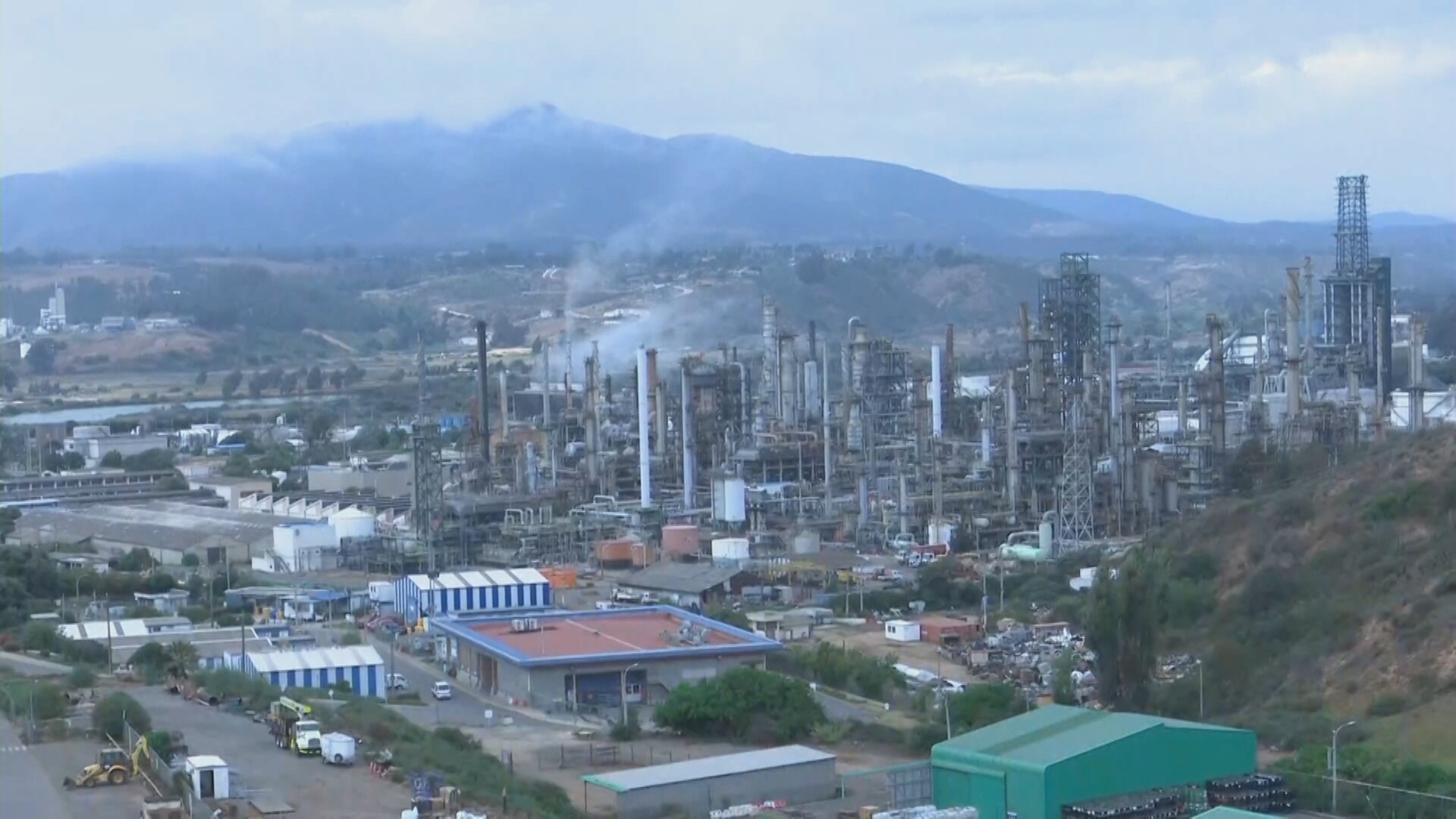
Liquefied and pipeline natural gas imports added another US$1.5 billion, and coal about US$0.6 billion. ENAP’s refineries, including Aconcagua and Bío Bío, produced about 12 million cubic metres of fuels in 2025.
In October 2026 ENAP, led by general manager Julio Friedmann, said September was its second-best production month ever. Sun and wind, by contrast, are where Chile is rich.
Solar and wind supplied about 38% of grid power in 2025, data from the Coordinador Eléctrico Nacional, the grid operator, show. Including hydropower, about two-thirds of Chile’s electricity was renewable that year.
In Magallanes, ENAP says its Vientos Patagónicos wind farm helped draw investment interest in green hydrogen. ENAP built it with Pecket Energy near Punta Arenas, and it can supply more than 15% of the region’s household power.
Farmland, Forests and Fisheries
The central valleys, with a Mediterranean climate, make Chile a major fruit exporter. Fruit exports earned US$8.5 billion in 2025, led by cherries at US$3.3 billion, central bank data show.
Grapes earned US$985 million, blueberries US$497 million and avocados US$447 million in 2025. Much of the harvest ships during the northern winter, when US orchards are out of season.
Cherry shipments run almost entirely from November to February, so the 2026 to 2027 season is only starting. From January to September 2026, cherry exports reached US$1.3 billion, down 26.7% on a year earlier.
Wine exports are smaller and shrinking. Bottled wine earned US$1.30 billion in 2025, down from US$1.34 billion in 2024, and bulk wine US$239 million.
Pine and eucalyptus plantations in the south-central regions feed a large pulp industry. Pulp, paper and related products earned US$3.7 billion in 2025, and sawn wood, panels and other wood products US$2.1 billion.
The main companies include Arauco, the forestry arm of the Empresas Copec conglomerate, and CMPC, a maker of pulp, packaging and tissue. Empresas Copec calls Arauco the company with the greatest forest holdings in South America.
Salmon is the biggest single export product after copper in central bank data. It earned US$6.2 billion in 2025 and US$4.8 billion from January to September 2026, up 8.0%.
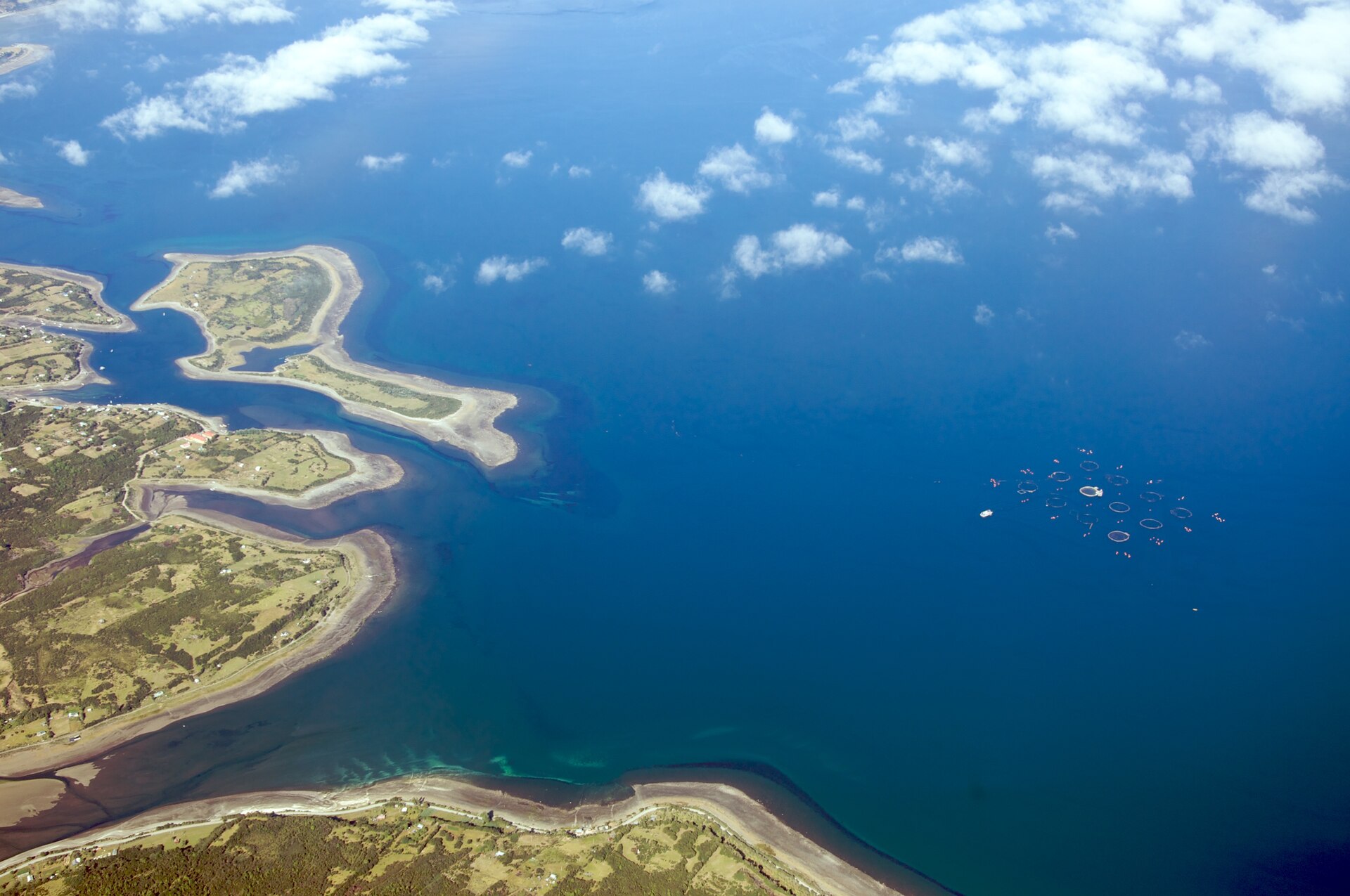
The fish are farmed in sea pens in the southern regions of Los Lagos, Aysén and Magallanes. Farms use antibiotics against SRS, a bacterial fish disease, and Sernapesca, the fisheries service, reports how much they use.
Wild fisheries matter less, but fishmeal and fish oil still earned about US$781 million in 2025. Empresas Copec also holds interests in Corpesca, a fishmeal producer, through its Igemar unit.
Who Extracts and Who Profits
The state profits through Codelco, taxes, royalties and lithium contracts. Codelco’s payments to the treasury rose 15% to US$933 million in the first half of 2026, and EBITDA rose 68%.
A mining royalty under Law 21,591 took effect on 1 January 2024. It charges large copper miners 1% of sales plus a tax on their operating margins.
The law caps their potential total tax burden at 46.5% of adjusted mining operating income. It also created a regional fund that channels money to regional governments for productive investment.
José Antonio Kast, a conservative, has been president since Wednesday, 11 March 2026. His finance and mining ministers represent the state as Codelco’s owner, and a guide to who runs Chile’s economy has more.
Foreign miners such as BHP, Rio Tinto, Anglo American and Freeport-McMoRan take a large share of private output. A guide to foreign powers and investors in Chile explains who brings what.
In March 2026, SQM’s main shareholders were the Pampa Group of Chilean holdings, about 25.5%, and China’s Tianqi Lithium, about 21.9%. Tianqi said in February 2026 that it would sell up to 1.25% of SQM.
Chilean business families also profit, notably the Luksic family through Antofagasta plc. An explainer on who dominates Chile covers the country’s elites and regions.
Local communities often see fewer gains. The Atacameño Peoples Council, which represents 18 Indigenous communities, advocates on land use, the environment and economic development in the Atacama region.
In January 2024 a splinter group blocked roads to SQM’s Atacama site for four days in protest at the Codelco deal. Operations stopped for one day, SQM says in its annual report.
Water, Pollution and the Environmental Cost
Water is the scarcest resource in the mining north. Albemarle says its Salar de Atacama and La Negra sites face high baseline water stress, which could hurt brine extraction.
SQM has pledged to cut its water use by 65% and its brine extraction by 50% of authorised limits. Miners are also turning to the sea, as a report on BHP’s desalination plant shows.
Seawater, including desalinated water, made up 57% of BHP’s water withdrawals in its 2026 financial year. The company says this reflects its effort to reduce reliance on land-based water in Chile.
Water law has also shifted. A 2022 Water Code reform, Law 21,435, grants new water rights for up to 30 years and puts human consumption first.
The reform also bans new water rights on glaciers and in officially protected biodiversity areas. Those limits matter in a country where mines, farms and towns compete for the same rivers and aquifers.
Pollution is the other cost. Codelco shut down the furnaces of its Ventanas smelter on Wednesday, 31 May 2023, in the industrial bay of Quintero and Puchuncaví.
That month, schoolchildren in the area fainted with symptoms of poisoning during a gas episode, Reporte Minero reported. The environment regulator then imposed provisional measures on seven local companies.
Mining also remains dangerous work, as six deaths in July 2025 and two in October 2026 at El Teniente show. The causes of the October 2026 avalanche are still under investigation.
What It Means for US Readers
Chile is the main source of US refined copper imports, and copper joined the US critical minerals list in November 2025. Chile also supplied 54% of US lithium imports from 2021 to 2024, USGS data show.
US investors are exposed through New York-listed BHP, Freeport-McMoRan, Albemarle and SQM. Strikes, accidents, audits and water rules in Chile can move their results.
Travellers see this resource economy too, from the central valley vineyards to the Atacama salt flats. The Santiago city page covers the capital, and the Chile hub collects all Rio Times coverage.
What Prediction Markets Say
Kalshi, a US exchange regulated by the CFTC, lists bets on the Central Bank of Chile’s decision on Tuesday, 27 October 2026. A hold at 4.5% traded at 93% and a cut of up to 0.25 points at 5% (15 October, 8:27 a.m. ET).
The bank held its rate at 4.5% by a unanimous vote on Tuesday, 8 September 2026. Copper earnings affect the peso and inflation, and about 30,000 contracts had traded across all outcomes by 15 October.
Why we show this: prediction markets turn real-money bets into a live probability that moves within minutes of the news, which is why investors, campaigns and newsrooms in the United States now follow them closely. We show them next to polls and official results, never instead of them.
What Is Not Known
The scale of any overstatement in Codelco’s 2024 and 2025 output is not yet known, pending the EY audit. The causes of the El Teniente avalanche have not been officially established.
No official figure yet exists for Chile’s total copper or lithium output in 2026. Whether the Centinela strike continued after 9 October is not confirmed in official sources.
The 2026 to 2027 cherry season will only be measurable after the southern summer harvest. No national figure for water used by each sector in 2026 has been published.
Frequently Asked Questions
What are Chile’s main natural resources?
Copper matters most, and Chile also exports lithium, iodine, molybdenum, gold and silver. The centre and south add farmland, forests, salmon farms and strong sun and wind, but little oil or gas.
How much of the world’s copper comes from Chile?
Chile mined about 5.3 million tonnes in 2025, about 23% of world output, the US Geological Survey estimates. It also holds 180 million tonnes of reserves, the most of any country.
Who controls Chile’s lithium?
Most comes from the Salar de Atacama, where Codelco controls Nova Andino Litio, its venture with SQM, under contracts to 2060. Albemarle, based in Charlotte, North Carolina, also produces lithium there.
Does Chile have oil?
Very little of its own. ENAP, the state oil company, produces oil and gas only in Magallanes, and Chile imported US$13.0 billion of energy products in 2025.
What is Codelco?
Codelco is Chile’s state-owned copper company, chaired by Bernardo Fontaine and run by executive president Jorge Gómez. It mined 564,000 tonnes in the first half of 2026 and paid US$933 million to the treasury.
Why does Chile matter to the United States?
Chile supplied 68% of US refined copper imports and 54% of US lithium imports from 2021 to 2024. New York-listed firms such as BHP, Freeport-McMoRan, Albemarle and SQM depend on Chilean mines.
Sources: USGS, Mineral Commodity Summaries 2026: Copper; USGS, Lithium; USGS, Iodine; USGS, Molybdenum; Banco Central de Chile, exports by product; Banco Central de Chile, imports by category; Banco Central de Chile, policy statement of 8 September 2026; Banco Central de Chile, meeting calendar; Cochilco, copper market report, 5 to 9 October 2026; INE, mining production; Codelco, first-half 2026 results; Codelco, 6 October 2026; Codelco, 11 October 2026; Codelco, 14 October 2026; Codelco, 29 July 2026; SQM, Form 20-F for 2025; SQM, second-quarter 2026 results; BHP, Form 20-F for 2026; Albemarle, Form 10-K for 2025; Freeport-McMoRan, Form 10-K for 2025; ENAP, Magallanes; ENAP, production release; Diario Oficial, Law 21,591; Empresas Copec; CMPC; BCN Ley Chile, Law 21,435 (Water Code reform); Antofagasta plc, Annual Report 2025; Diario Financiero, Ventanas closure, 31 May 2023; Reporte Minero, Ventanas smelter; Portal Minero, grid data for 2025; Redimin, grid data for 2025; Sernapesca, antimicrobial use in salmon farming, 2025 report (all accessed 15 October 2026).
This article was produced by The Rio Times’ automated newsroom system. How we use AI · Report an error · Editorial responsibility: Matthias Camenzind, Editor-in-Chief
Expat Guide to Chile
What The Rio Times publishes for foreigners who live in or move to Chile.
Start here
- Santiago Rent for Foreigners in 2026, US$422 to US$886
- Best Places to Live in Chile for Expats 2026
- Chile’s Rent Unit Rose 0.6% Before Inflation Data
- How to Get Residency in Chile in 2026: Permits, Fees and the Kast-Era Rules
City guides
Coming up in Chile
- BTS Chile Concerts Set for 14, 16 and 17 October 17 Oct
- Aitana in Santiago, Chile: Cuarto Azul World Tour at Movistar Arena on October 19, 2026 19 Oct
- Los Fabulosos Cadillacs Play Santiago on 29 October 29 Oct
- Foro de las Artes 2026 in Santiago, Chile: 30+ Free Events, 1–30 October 30 Oct
Understand Chile