ZIMBABWE · NEIGHBOURS
Key Facts
- —The country A landlocked southern African republic of about 390,757 square kilometres, home to 15.2 million people at the 2022 census.
- —The neighbours Zimbabwe neighbours South Africa, Mozambique, Zambia and Botswana; the four meet near Kazungula on the Zambezi River.
- —Biggest partner South Africa supplied 37.5% of Zimbabwe’s imports in 2025, about US$3.8 billion, according to ZIMSTAT, the national statistics agency.
- —People South Africa’s 2022 census counted 1,012,059 people born in Zimbabwe, its largest foreign-born group.
- —Shared assets The Kariba Dam and Victoria Falls with Zambia, and a 294-kilometre fuel pipeline from Mozambique’s port of Beira.
- —Regional clubs A member of SADC and COMESA, Zimbabwe was SADC’s outgoing chair at the August 2026 summit and joins the UN Security Council in 2027.
- —Still open What South Africa offers the Zimbabweans whose special exemption permits run out in May 2027.
Zimbabwe neighbours South Africa, Mozambique, Zambia and Botswana, and those four borders decide how its trade, fuel, power and tourists move.
It buys more than a third of its imports from South Africa and pipes fuel in from Mozambique’s port of Beira. It shares Victoria Falls and the Kariba Dam with Zambia, and has agreed with Botswana to phase in ID-card travel.

Where Zimbabwe Sits on the Map
Zimbabwe has no coastline, and the United Nations lists it among 32 landlocked developing countries. Its government puts its area at about 390,757 square kilometres, a little larger than Montana.
Zimbabwe neighbours South Africa across the Limpopo River and Zambia across the Zambezi. Mozambique lies along its eastern border and Botswana along its western one.
Namibia does not border Zimbabwe, but it lies a short distance away: at Kazungula on the Zambezi, Zimbabwe, Zambia and Botswana meet, with Namibia close by.
Because the country is landlocked, most seaborne cargo and fuel must first cross a neighbour’s territory. That fact puts its neighbours at the centre of its trade and diplomacy.
For a portrait of the country itself, read the Zimbabwe explainer. Daily coverage sits on the Zimbabwe news hub.
South Africa, the Neighbour That Matters Most
South Africa is Zimbabwe’s biggest supplier by a wide margin. In 2025 it sold Zimbabwe US$3.8 billion of goods, or 37.5% of all imports, according to ZIMSTAT.
Zimbabwe sold US$2.2 billion of goods to South Africa in the same year, 22.7% of its exports. Only the United Arab Emirates bought more, taking 48.7%.
South Africa’s president, Cyril Ramaphosa, set out the relationship at a bilateral business forum on 21 August 2026. He said trade between the two reached R81 billion (about US$4.8 billion) in 2025, nearly double the 2021 level.
That conversion uses 16.7 rand per US dollar, the Reserve Bank of Zimbabwe’s rate on 5 October 2026. Ramaphosa also said South Africa’s exports to Zimbabwe are roughly eight times the value of its imports from there.
Vehicles and earthmoving equipment go north, he said, while coal, chromium ore, gold, semi-finished steel and raw tobacco come south. ZIMSTAT’s own 2025 figures show a far narrower gap, about 1.7 to 1.
The ratio is examined in South Africa sells Zimbabwe eight times what it buys back.
Lorries cross the Limpopo at Beitbridge, where Ramaphosa said the average truck crossing time had fallen to roughly 14 hours. He added that a one-stop border post, where both countries clear traffic in one place, was still under development.
Migrants and the Money They Send
South Africa’s 2022 census counted 1,012,059 people born in Zimbabwe, up from 672,308 in 2011. Zimbabwe was the top country of birth among foreign-born residents, according to Statistics South Africa.
The Zimbabwean Exemption Permit is a special South African status that shields its holders from arrest and deportation. A Home Affairs directive, gazetted in October 2025, extended it to May 2027.
Home Affairs says it will put recommendations on the permits’ future to Cabinet by the end of its 2026/27 financial year.
Remittances from Zimbabweans abroad made up 14.4% of foreign currency receipts in the first half of 2026, the central bank says. Total receipts reached US$10.72 billion over those six months.
Migration is a recurring item on the regional agenda. At the August 2026 SADC summit, South Africa briefed leaders on migration, and the communiqué called for regional dialogue on its causes.
Mozambique and the Beira Corridor
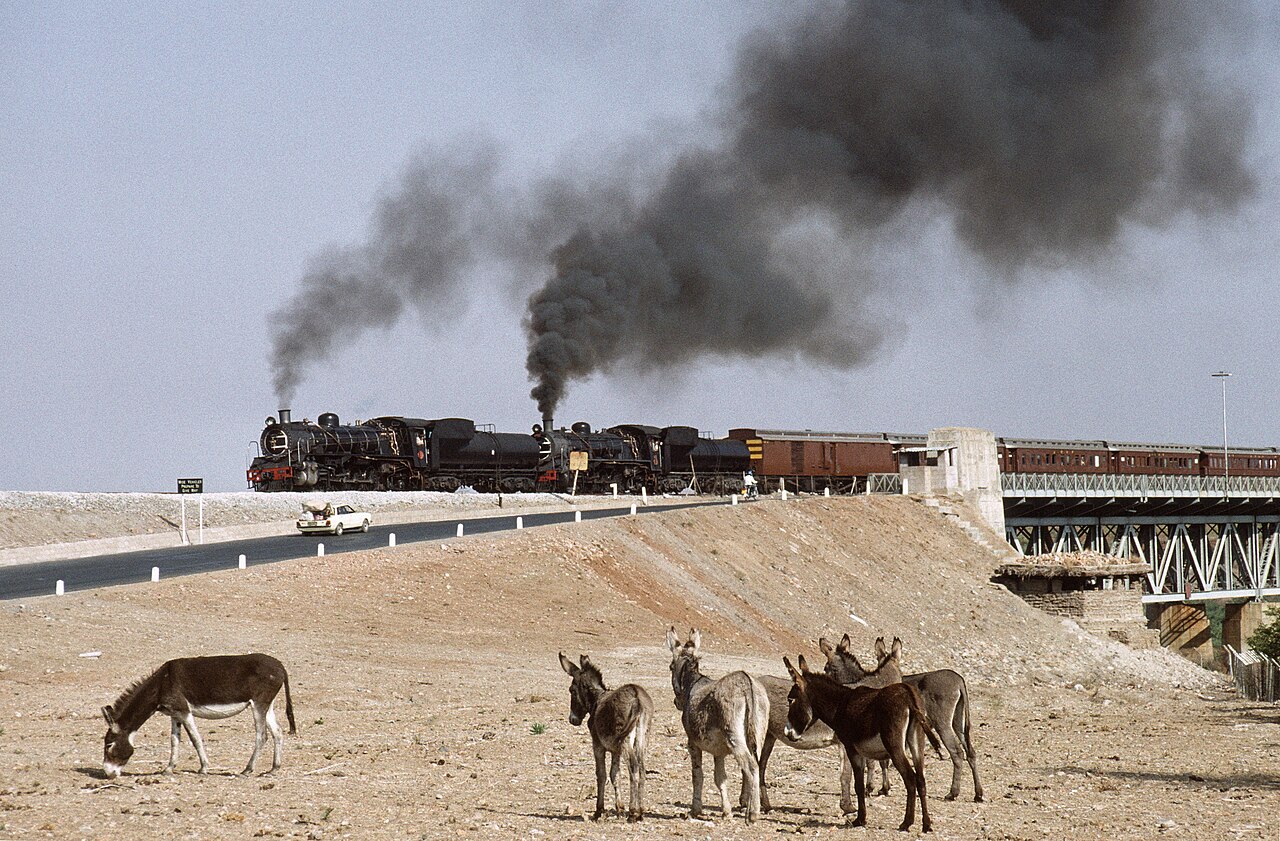
Mozambique gives Zimbabwe a route to the Indian Ocean through the port of Beira, the hub of the Beira Corridor. Fuel arrives through a 294-kilometre pipeline from Beira to Feruka in Zimbabwe.
The pipeline belongs to CPMZ, a company founded in 1982 as a partnership between Mozambique’s government and private investors. On 2 September 2026, Zimbabwe’s president, Emmerson Mnangagwa, and Mozambique’s president, Daniel Chapo, launched work to expand it.
The project should lift yearly capacity from three million to five million cubic metres by late 2027, a 67% rise. CPMZ says the extra fuel will also serve Zambia, Botswana, Malawi and the Democratic Republic of Congo.
Goods trade is smaller but steady. ZIMSTAT recorded US$457.7 million of imports from Mozambique and US$266.2 million of exports to it in 2025.
Zimbabwe also buys electricity from Hidroeléctrica de Cahora Bassa, the Mozambican company that runs the Cahora Bassa dam. The neighbour’s own story is told in the Mozambique explainer.
Zambia, Kariba and the Shared Zambezi
Zambia and Zimbabwe share the Zambezi River, Victoria Falls and the Kariba Dam. UNESCO has listed Mosi-oa-Tunya / Victoria Falls as a World Heritage Site of both countries since 1989.
The falls are about 1,708 metres wide, according to UNESCO. Above and below the falls, the Zambezi marks the border between the two countries.
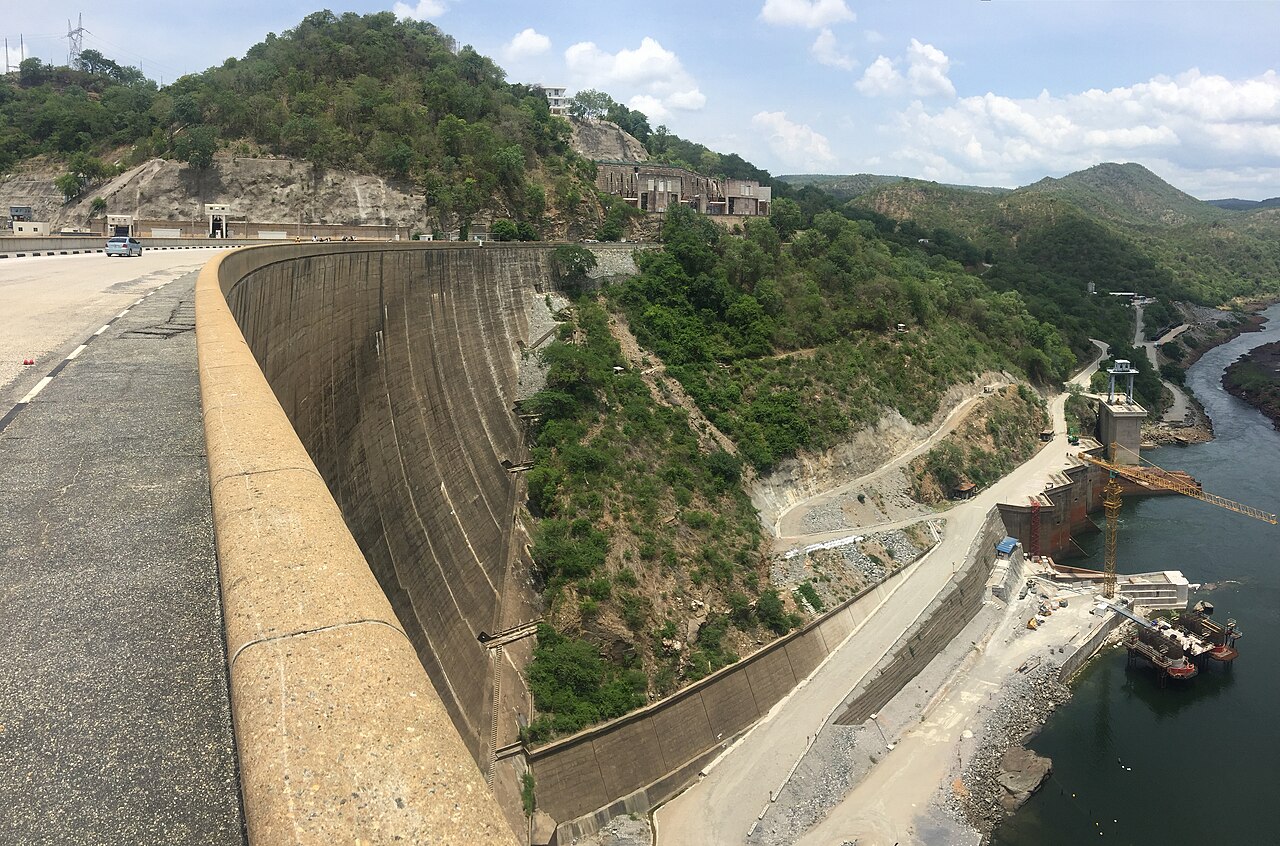
Kariba is the bigger economic tie. Its wall, built between 1956 and 1960, stands 128 metres high and holds back a lake 280 kilometres long.
The Zambezi River Authority, owned equally by Zambia and Zimbabwe since 1987, runs the dam and rations its water. Zambia’s state utility ZESCO runs the 1,080-megawatt north bank station, and the Zimbabwe Power Company runs the 1,050-megawatt south bank station.
On 5 October 2026 the lake stood at 480.83 metres, or 38.04% of usable storage, up from 477.56 metres a year earlier.
The two governments also plan a 2,400-megawatt Batoka Gorge scheme, 47 kilometres below Victoria Falls. The authority’s project page still lists securing finance among its open tasks.
Zambia’s president, Hakainde Hichilema, took the oath for a second term in Lusaka on 1 September 2026. ZIMSTAT recorded US$321.1 million of imports from Zambia and US$131.4 million of exports to it in 2025.
Road links matter too; see the Harare–Chirundu highway toll deal. The Zambia explainer covers the other bank.
Botswana and the Kazungula Crossroads
Of the four states Zimbabwe neighbours, Botswana is the smallest trade partner. ZIMSTAT recorded just US$65.2 million of imports from Botswana and US$34.0 million of exports to it in 2025.
Politics is warmer than the trade figures suggest. In April 2026 Botswana’s president, Duma Boko, visited Harare for the fifth Bi-National Commission, a regular joint meeting of both governments.
The sides signed 10 agreements, covering trade, defence, police work on cross-border crime, immigration, prisons and aviation safety. They also agreed to replace passports with national identity cards in phases, starting with border communities and short trips.
Boko told his hosts that many Zimbabweans go to Botswana and ask to settle there. He argued that migration tends not to cause problems where opportunities abound.
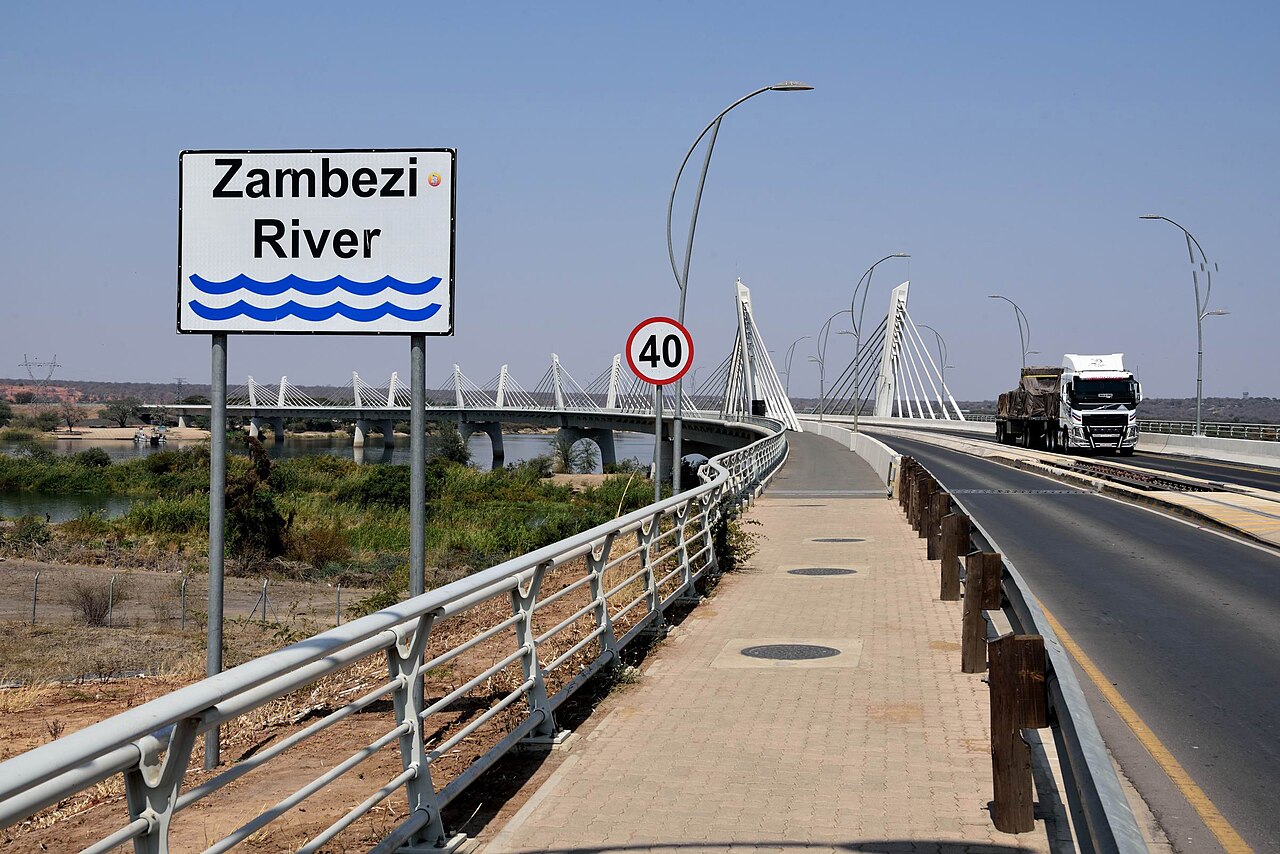
The Kazungula Bridge over the Zambezi cost US$259 million and was commissioned on 10 May 2021. It links Botswana and Zambia at the point where four borders meet, and Mnangagwa attended the ceremony, according to SADC.
Kazungula also matters for tourists. KAZA, the Kavango Zambezi Transfrontier Conservation Area, spans Angola, Botswana, Namibia, Zambia and Zimbabwe, and gives its name to a shared visa.
Unlike Botswana, Zimbabwe is not in SACU, the Southern African Customs Union. Its members are Botswana, Eswatini, Lesotho, Namibia and South Africa, and it dates from 1910.
More on the neighbour is in the Botswana explainer.
Electricity Imports and the Regional Power Pool
Zimbabwe cannot cover its electricity needs from its own plants alone. The government’s 2025 National Energy Compact puts national installed capacity at 2,962 megawatts.
The state generator’s dependable output, however, is only 1,200 to 1,600 megawatts, against peak demand of 2,000. Imports and load shedding fill the gap, the compact says.
The compact says Zimbabwe imports about 300 megawatts from Eskom, South Africa’s state utility, and 50 megawatts from Cahora Bassa in Mozambique. Imports can reach 500 megawatts, while Zimbabwe exports about 204 megawatts, mainly to Namibia, Zambia and the Democratic Republic of Congo.
Zimbabwe trades power as a member of the Southern African Power Pool, a grid club SADC governments set up in 1995. Its coordination centre sits in Harare, and the compact calls Zimbabwe’s network the pool’s Central Transmission Corridor.
The power sector itself is being reorganised, as reported in the overhaul of Zimbabwe’s state power utility.
SADC, COMESA and Zimbabwe’s Regional Weight
SADC, the Southern African Development Community, is the region’s main political and economic club. It has 16 member states and its headquarters in Gaborone, Botswana.
When leaders met in Durban on 17 August 2026, the summit communiqué named Mnangagwa SADC’s outgoing chair. Ramaphosa, interim chair until then, was elected chair, and Zambia’s president is next in line.
The summit again called for the removal of sanctions on Zimbabwe, saying they limit its economic potential. It also approved a regional tourist visa, explained in the SADC UniVisa guide, and called on members to sign it.
COMESA, the Common Market for Eastern and Southern Africa, is Zimbabwe’s second trade bloc. It has 21 members and a secretariat in Lusaka, Zambia’s capital.
Of the four countries Zimbabwe neighbours, only Zambia is also in COMESA; South Africa, Botswana and Mozambique are not. ZIMSTAT says Zimbabwe’s exports to COMESA are more varied, led by iron and steel products at 30.6% in July 2026.
On trade and electricity, Zimbabwe depends on South Africa more than the reverse. It carries more weight in shared institutions: it hosts the power pool’s coordination centre and co-owns Kariba with Zambia.
Its voice is also growing beyond the region. In June 2026 the UN General Assembly elected Zimbabwe to the Security Council for 2027-2028 with 182 votes.
Money Across the Borders: the ZiG and the US Dollar
The Reserve Bank of Zimbabwe introduced the ZiG, short for Zimbabwe Gold, on 5 April 2024. It is backed by gold and foreign currency reserves.
The bank quoted about ZiG26.8 per US dollar on 5 October 2026. It says the rate has stayed within ZiG25 to ZiG27 per US dollar through 2026.
US dollars remain in wide use alongside the local money. The ZiG accounted for around 40% of transactions in the national payment system in mid-2026, the bank says.
Annual ZiG inflation fell to 2.9% in August 2026, the lowest since 1980, before rising to 3.7% in September. Foreign currency reserves backing the ZiG passed US$2 billion in September 2026, about two months of import cover.
What It Means for US Readers
For American travellers, the KAZA UniVisa is the practical tool. It costs US$50, covers Zambia and Zimbabwe for up to 30 days, and allows day trips into Botswana through Kazungula.
Zambia’s immigration department lists US citizens as eligible. Entry rules for Zimbabwe alone are set out in Zimbabwe’s visa and residency guide.
For investors, risk in Zimbabwe is regional. Because Zimbabwe neighbours its suppliers, fuel, power and trade hinge on the Beira pipeline, Kariba water, Eskom and Beitbridge.
Washington’s position is mixed. On 4 March 2024 it ended its Zimbabwe sanctions programme, but the Treasury sanctioned Mnangagwa for corruption and human rights abuse.
He was still on the Treasury’s sanctions list in October 2026. SADC governments keep calling for the sanctions on Zimbabwe to be lifted.
From January 2027 Zimbabwe will also sit beside the United States on the UN Security Council.
What Is Not Known
It is not yet clear what South Africa will offer Zimbabwean exemption permit holders after May 2027. Neither government has announced a start date for ID-card travel between Zimbabwe and Botswana.
The SADC UniVisa agreement still awaited members’ signatures after the August 2026 summit. The Beira pipeline expansion is due only by the end of 2027.
Rain is the wild card. The central bank is watching a forecast El Niño for the 2026/27 farming season.
The rains in the Zambezi catchment will decide how much water Kariba has to share in 2027.
Frequently Asked Questions
Which countries are Zimbabwe’s neighbours?
Zimbabwe neighbours South Africa, Mozambique, Zambia and Botswana. Namibia lies close to Zimbabwe near Kazungula but does not share a border with it.
Does Zimbabwe have a coastline?
No. Zimbabwe is landlocked, so its sea trade runs through ports in neighbouring countries, such as Beira in Mozambique, which also feeds its fuel pipeline.
How many Zimbabweans live in South Africa?
South Africa’s 2022 census counted 1,012,059 people born in Zimbabwe, its largest foreign-born group. Holders of a special Zimbabwean exemption permit may stay until May 2027 under a Home Affairs directive.
What is the Kariba Dam?
A hydropower dam on the Zambezi owned equally by Zambia and Zimbabwe through the Zambezi River Authority. Each country runs a power station there, of 1,080 and 1,050 megawatts.
Can Americans use one visa for Zimbabwe and Zambia?
Yes. The KAZA UniVisa costs US$50, covers both countries for up to 30 days and allows day trips into Botswana through Kazungula.
What currency does Zimbabwe use?
The ZiG, introduced in April 2024, alongside widely used US dollars. The central bank quoted about ZiG26.8 per US dollar on 5 October 2026.
Is Zimbabwe in SADC and COMESA?
Yes, it belongs to both. Zimbabwe neighbours three SADC members that are not in COMESA: South Africa, Botswana and Mozambique.
Sources: ZIMSTAT, external trade by country (July 2026 release), September 2026; The Presidency of South Africa, keynote at the South Africa–Zimbabwe BNC Business Forum, 21 August 2026; Statistics South Africa, Census 2022 statistical release, 10 October 2023; South Africa Government Gazette No. 53484, Home Affairs directive on Zimbabwean Exemption Permits, 7 October 2025; Reserve Bank of Zimbabwe, MPC resolutions, 28 September 2026; Reserve Bank of Zimbabwe, Q2 2026 snapshot, July 2026; Reserve Bank of Zimbabwe, exchange rates, 5 October 2026; Zambezi River Authority, lake levels, 5 October 2026; Zambezi River Authority, hydrological outlook, 21 July 2026; SADC, communiqué of the 46th Summit, 17 August 2026; Government of Zimbabwe, National Energy Compact, 2025; 360 Mozambique (from Diário Económico), CPMZ pipeline expansion launch, 7 September 2026; US Treasury, Zimbabwe sanctions action, 4 March 2024; SADC, Kazungula Bridge and One-Stop Border Post commissioned, 11 May 2021; Zambia Department of Immigration, KAZA UniVisa, accessed 5 October 2026; US Treasury OFAC, Specially Designated Nationals list, accessed 5 October 2026.
This article was produced by The Rio Times’ automated newsroom system. How we use AI · Report an error · Editorial responsibility: Matthias Camenzind, Editor-in-Chief
Rotate for Best Experience
This report is optimized for landscape viewing. Rotate your phone for the full experience.
You've reached your free article limit
Subscribe to The Rio Times for unlimited access to our reporting from across Africa.