Zimbabwe Halts Raw Lithium Exports as Africa Critical Minerals Race Splits US and China
Economy · Africa
—The stakes. Resource nationalism in the DRC and Zimbabwe is redirecting cobalt and lithium supply chains away from raw export toward local processing.
—The date. Policy shocks hit in February 2026 in Zimbabwe and followed DRC cobalt restrictions first imposed in February 2025.
—The actors. The United States, China and the European Union are competing for offtake deals, refining capacity and transport corridors across Africa.
—The corridors. The Lobito Corridor upgrade and revived TAZARA line are central to Western efforts to move Congolese and Zambian minerals to Atlantic and Indian Ocean ports.
—The investor risk. Bans, quotas and local-processing demands are squeezing feedstock availability and creating price volatility for battery and electric vehicle supply chains.
Africa’s minerals boom is colliding with a new wave of resource nationalism. Export bans and quotas in the DRC and Zimbabwe are forcing buyers to choose between waiting out supply shocks or helping build the refining capacity African governments now demand.
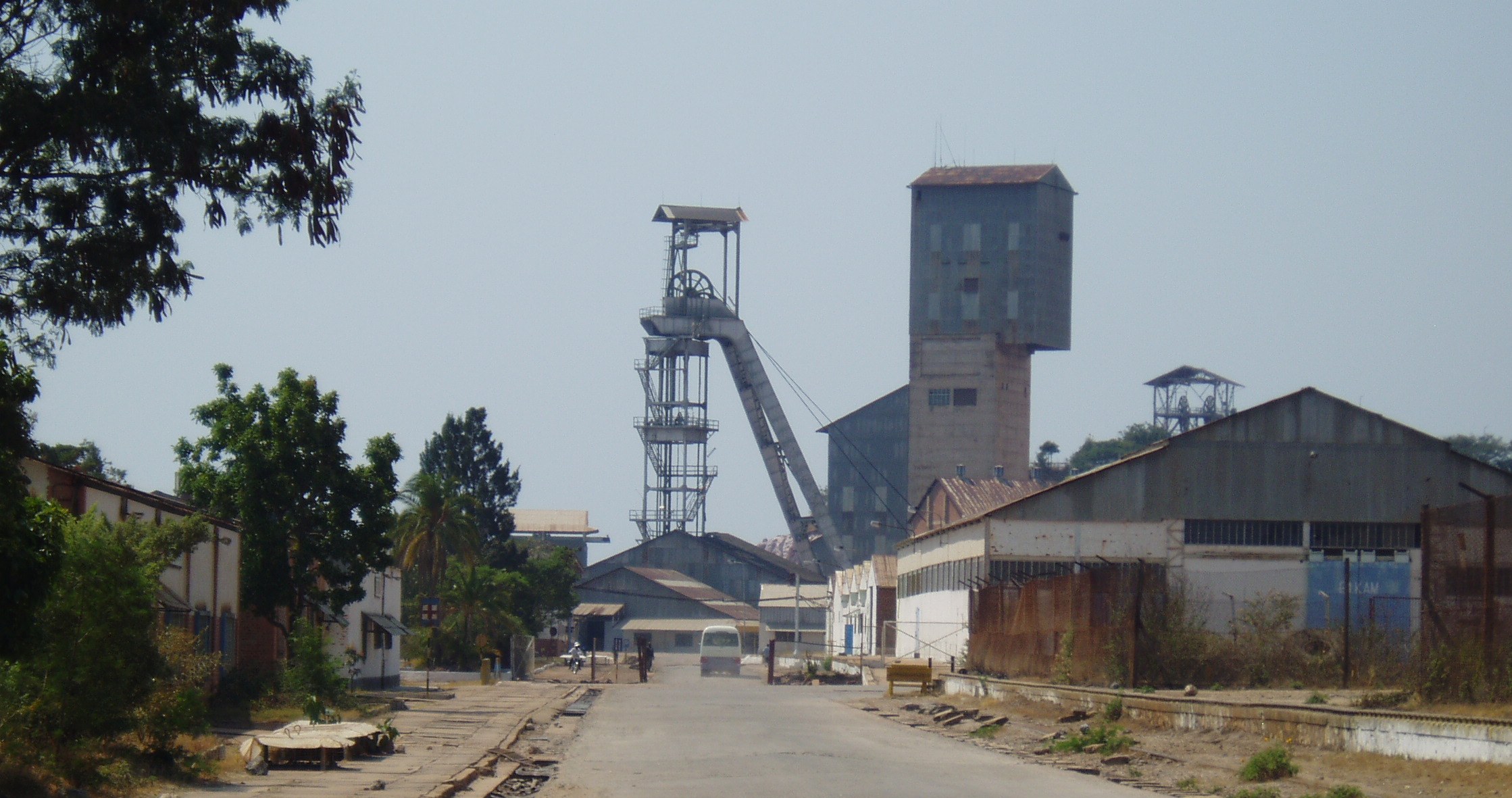
The DRC Cobalt Shock That Reset Global Supply
The Democratic Republic of the Congo supplied 73% of global mined cobalt in 2025, with output concentrated in Lualaba and Haut-Katanga provinces. The country also holds around half of the world’s cobalt reserves.
In February 2025 the DRC introduced export restrictions that effectively acted as a ban before being modified into a quota system. The Cobalt Institute said the measure significantly reduced cobalt availability to global markets in 2025.
For 2026 the DRC announced an annual quota of 96,600 tonnes of cobalt, of which 87,000 tonnes goes pro rata to producers and 9,600 tonnes is held by the regulator ARECOMS, excluding an additional 18,125 tonnes from 2025 that were re-allocated. The institute said the export ban and subsequent quota system dominated the cobalt market in 2025.
The policy interrupted supply rather than eliminated it. Buyers were forced to race for allowed volumes while producers inside the DRC weighed whether to sell raw material or invest in local processing.
The broader lesson was clear. A single government decision in Kinshasa could tighten a market that battery makers and defence contractors had treated as reliably open.
Zimbabwe Brings Forward Its Lithium Export Ban
On 25 February 2026 Zimbabwe’s Mines Minister Polite Kambamura announced that exports of all raw minerals and lithium concentrates were suspended with immediate effect. The suspension even included minerals already in transit.
The move brought forward a full ban on lithium concentrate exports that had been scheduled for January 2027. Zimbabwe framed the decision as part of its Value Addition strategy.
Zimbabwe accounts for about 10% of global lithium production. In 2025 the country exported 1.128 million metric tonnes of lithium-bearing spodumene concentrate to China, equal to about 15% of China’s lithium concentrate imports that year.
Lithium prices surged and EV manufacturers faced immediate feedstock shortages.
The shock was amplified by timing. Chinese refiners had depended on Zimbabwean spodumene concentrate, and the suspension exposed how little alternative supply was available outside existing bottlenecks.
Quotas and Local Processing Conditions
In a letter dated 2 April 2026 Zimbabwe’s mines ministry told producers it would introduce lithium concentrate export quotas. It also required commitments for more local processing before exports could resume.
The quota approach mirrored the DRC’s earlier shift from outright ban to managed volumes. It signalled that Harare did not want to kill revenue entirely but intended to force investment in domestic beneficiation.
BMI analysts described the Zimbabwe ban as following similar restrictions on cobalt exports introduced by the DRC in February 2025, which had since been modified into a quota.
For producers, the new conditions meant that offtake contracts signed before 2026 were suddenly subject to renegotiation. Miners without local processing partners faced the longest delays.
The combined DRC and Zimbabwe measures compressed the global feedstock pool for cobalt and lithium at the same moment. This gave state-owned companies and governments stronger bargaining power over private operators.
Mali Lithium Joins the Nationalist Trend
Mali’s lithium projects added another layer to the regional shift. Governments in West Africa watched the DRC and Zimbabwe experiments closely because they faced the same pressure to capture more value from mining.
The push for local processing in Mali sat inside a broader pattern of states demanding that minerals leave only after at least one stage of transformation happens domestically.
For foreign investors, Mali’s moves created a new compliance cost. Contract reviews, tax reassessments and local content rules changed the economics of projects that had been approved under older frameworks.
Mali was not the largest lithium producer in Africa, but its policy direction reinforced the signal that raw ore exports would face rising political risk. Buyers could no longer treat African lithium as a stable, low-cost input.
The cumulative effect was strategic. African governments learned that supply chain anxiety in consuming countries gave them room to demand more than a royalty cheque.
Guinea Bauxite and the Refining Question
Guinea supplies a large share of the world’s bauxite, the ore that feeds aluminium refining. Its role made it a key test of whether resource nationalism would spread from battery minerals into industrial metals.
The logic already visible in cobalt and lithium applied to bauxite as well. Exporting raw ore captured only a fraction of the value locked in downstream refining and smelting.
For the US and EU, Guinea mattered because China has expanded bauxite offtake and processing links across West Africa. Western buyers faced the risk of losing access to ore if local processing demands tightened.
Guinea’s bauxite bargaining power was structural. Refiners in China and elsewhere needed the ore, and alternative deposits could not be brought online quickly enough to offset a major policy shift.
The threat was not yet a ban. But the example of Zimbabwe showed how fast an export suspension could move from proposal to implementation.
Tanzanian Graphite and the Anode Supply Chain
Tanzanian graphite projects gave the US and Europe a rare opportunity to diversify battery anode supply away from China. Graphite is used in battery anodes and is heavily refined in China.
Tanzania’s deposits were among the most advanced new sources outside China. Western automakers and battery producers had begun signing offtake agreements to lock in future supply.
The same resource nationalist logic applied to graphite. Tanzanian officials saw little reason to export raw flake when coated spherical graphite sold at a much higher price.
Local processing ambitions bumped against infrastructure limits. Building coating and shaping plants required reliable power, transport and technical skills that were still scarce.
For supply chain planners, Tanzanian graphite symbolised the trade-off. Western buyers wanted diversification from China, but African governments wanted the jobs and value that China was also offering through processing investment.
The US DFC and the Push Against Chinese Dominance
China controls, wholly or in part, 15 of the largest copper and cobalt mines in the DRC.
The US has tried to counter that position. In mid-January 2026 the DRC sent Washington a shortlist of state-owned assets including manganese, copper-cobalt, gold and lithium projects for US investors under a minerals pact.
The US International Development Finance Corporation issued a letter of intent for an equity investment, while state miner Gécamines signed a minerals marketing joint venture with Mercuria in December 2025. It also backed the $553 million Lobito Corridor upgrade.
The DFC strategy combined finance with logistics. Funding a rail corridor served the same goal as taking an equity stake in a mine since both locked mineral flows toward Atlantic ports and Western buyers.
The Cobalt Institute noted deepened US involvement in the DRC and Rwanda aimed at facilitating access to critical mineral assets and challenging China’s embeddedness in the Congolese cobalt-copper industry.
The Lobito Corridor Becomes a Western Artery
The Lobito Corridor links the DRC’s Copperbelt to the Atlantic port of Lobito in Angola. Its upgrade was identified as a key pillar of US engagement in the region.
The corridor offered an alternative to trucking minerals through East Africa toward Indian Ocean ports dominated by Chinese logistics networks. For Washington and Brussels, it was infrastructure with strategic intent.
had deeper port and rail influence.
Trafigura is to supply raw materials via the Lobito route to the EVelution Energy refinery in Arizona. The project is projected to cover around 40% of US cobalt demand.
The corridor was not just about moving metal. It was a test of whether Western-led infrastructure could compete with Chinese speed and finance in Africa’s mining heartland.
TAZARA and the Indian Ocean Alternative
The Tanzania-Zambia Railway Authority, known as TAZARA, links Zambia’s Copperbelt to the Tanzanian port of Dar es Salaam on the Indian Ocean. It was built with Chinese assistance in the 1970s.
Reviving TAZARA gave Southern African producers an alternative export route when bottlenecks or policy disputes affected Atlantic corridors. The line’s condition had deteriorated but interest in rehabilitation grew.
China viewed TAZARA as its historical corridor, while the US and EU saw reviving it as a way to keep options open if Lobito capacity proved insufficient.
The competition between Lobito and TAZARA was not purely commercial. Each route aligned minerals with different refining destinations and different geopolitical backers.
For miners in the DRC and Zambia, dual corridor access was a negotiating tool. The existence of a second ocean outlet reduced the risk that a single state or investor could control their freight.
What Resource Nationalism Means for Supply Chains
Export bans and quotas have shifted the bargaining power from mining companies toward governments. A producer can no longer assume that an offtake contract guarantees shipment under all political conditions.
Local-processing requirements add capital costs and delay timelines. Refineries, smelters and chemical plants take years to build, yet African governments are using export restrictions to force that investment now.
Price volatility increases when feedstock is withheld. The Zimbabwe suspension alone removed significant lithium supply, and markets responded with sharp price moves within days.
China’s refining dominance gives it some insulation because it often buys concentrate before policy shifts hit. Western automakers and battery producers face greater exposure because they have less direct control over African processing.
The long-term outcome is uncertain. African states want to move up the value chain, but doing so requires reliable energy, logistics and technical capacity that cannot be created by decree alone.
The Strategic Fault Line for Investors
Foreign investors face a split between Chinese integrated models and Western attempts to build alternative supply chains. China pairs mining, logistics and refining inside a single financial envelope.
The US and EU rely on development finance, rail corridors and offtake diplomacy, but they lack a comparable domestic refining base for several critical minerals. That gap makes their efforts slower to scale.
Risk has moved from the mine site to the policy table. A mining licence is now less important than a government’s willingness to let processed or unprocessed material leave the country.
Investors must price in the possibility of sudden bans, quota allocations and retroactive local-content rules. The Zimbabwe suspension in February 2026 showed that such shifts can arrive without warning.
Africa’s critical minerals race is no longer only about finding ore. It has become a contest over who controls the points where raw material becomes battery-grade product, and which governments can hold that control.
Connected Coverage
DR Congo: Kinshasa Comics Festival Returns After Six Years
The Big Picture
Latest developments
- Zambia Convicts Copper Miner Over Concentrates Declared as Cement — 28 September 2026
- UAE Agrees to Lift Its Ebola Travel Ban on Uganda, Pending an Inspection — 27 September 2026
- Report Maps 289 Online Channels Luring Kenyans to Fight for Russia — 27 September 2026
- Niger Doubles Its Stake in a Big Uranium Project to 40%, Ending a Lawsuit — 27 September 2026
This article was produced by The Rio Times’ automated newsroom system. How we use AI · Report an error · Editorial responsibility: Matthias Camenzind, Editor-in-Chief
Expat Guide to Zimbabwe
What The Rio Times publishes for foreigners who live in or move to Zimbabwe.
Start here
Understand Zimbabwe
Critical Minerals in Africa
- Africa’s Critical Minerals 2026: Who Holds What and Why
- DR Congo Explained 2026, Its War, Cobalt and Politics
- Zambia Explained: The Country, Its Copper Economy, Its Politics and What to Watch
- The Lobito Corridor: A New Railway for African Copper