Zimbabwe Visa and Residency 2026: Permits, Costs and What Foreigners Need
GUIDES · ZIMBABWE
Key Facts
- —What it is A standing guide to Zimbabwe’s visas, work permits, residence permits and permanent residence for foreigners.
- —Who it’s for Tourists, safari visitors, contract workers, investors, spouses of Zimbabweans and would-be retirees from North America and Europe.
- —What it costs US$30 for an ordinary single-entry visa, US$50 for the KAZA UniVisa, and US$300 to US$1,000 for most work and residence permits.
- —The rules Americans and most Europeans can buy a visa on arrival or online; work or residence needs a permit from the Department of Immigration.
- —Why it matters Zimbabwe prices its immigration fees in US dollars, so the swings of its local ZiG currency do not change what you pay.
- —The catch There is no dedicated retirement permit, and time on a work permit does not count towards permanent residence.
Zimbabwe is a landlocked southern African country slightly larger than Germany, best known abroad for Victoria Falls. For foreigners, it runs a three-tier visa system, with every fee quoted in US dollars.
Zimbabwe visa and residency rules sort visitors by passport and residents by purpose. A US or British tourist can usually buy a visa at the airport. Anyone who wants to work, invest or settle needs a permit approved in Harare, the capital.
Who needs a visa: the three nationality categories
The Department of Immigration, part of the Ministry of Home Affairs, runs entry under the Immigration Act (Chapter 4:02). Its visa regime splits the world into three groups, called Category A, B and C.
Category A nationals need no visa at all. The list includes most neighbours, such as South Africa, Botswana and Zambia, plus Kenya, Singapore, Malaysia, Jamaica, Cyprus and Malta.
Category B nationals need a visa but may buy it at the port of entry. This group includes the United States, Britain, Canada, Australia and Japan.
Most European Union members also sit in Category B, among them Germany, Italy, Spain, the Netherlands, Ireland, Poland and Sweden. Switzerland and Norway are in the same group.
Category C nationals must apply and pay online before travelling. The list includes Nigeria, Pakistan, the Philippines, Vietnam, Colombia and Saudi Arabia.
The department encourages every traveller, visa-free or not, to complete the Zimbabwe Entry Declaration Form before the trip. Online visas are issued through evisa.gov.zw and sent by email for printing.
Visa fees in US dollars, and what the ZiG is
The department’s fee schedule lists an ordinary single-entry visa at US$30, whether bought online or at the border. A multiple-entry visa costs US$55, and an emergency online visa costs US$100.
British nationals pay a separate, higher rate: US$55 for a single entry and US$70 for a double entry, both online. That is almost double what an American pays for the same single entry.
Britain’s Foreign, Commonwealth and Development Office (FCDO) says a visa on arrival is usually granted for 30 days. It advises carrying enough US dollars in small notes to pay the fee at the desk.
Under the Immigration Act, a visitor’s entry certificate cannot exceed six months in the first instance. The FCDO says extensions are made in person at the Immigration Department, and the embassy in London no longer issues visas.
Zimbabwe’s own currency is the ZiG, short for Zimbabwe Gold, which the Reserve Bank of Zimbabwe (RBZ) introduced in April 2024. It is backed by gold and foreign-currency reserves, and it circulates alongside the US dollar.
The RBZ’s interbank average on 25 September 2026 was 26.63 ZiG to the US dollar. At that rate, a permit fee paid in local money would take about 13,315 ZiG (about US$500). That ZiG sum moves whenever the rate does.
The RBZ reported annual ZiG inflation of 3.70 percent for September 2026, against 3.46 percent for prices measured in US dollars. For a foreigner, the practical rule is simple: budget in dollars and carry clean, small notes.
The KAZA UniVisa for Victoria Falls
Victoria Falls sits on the Zambezi River, which forms the border between Zimbabwe and Zambia. The KAZA UniVisa lets eligible tourists cross between the two countries on one visa.
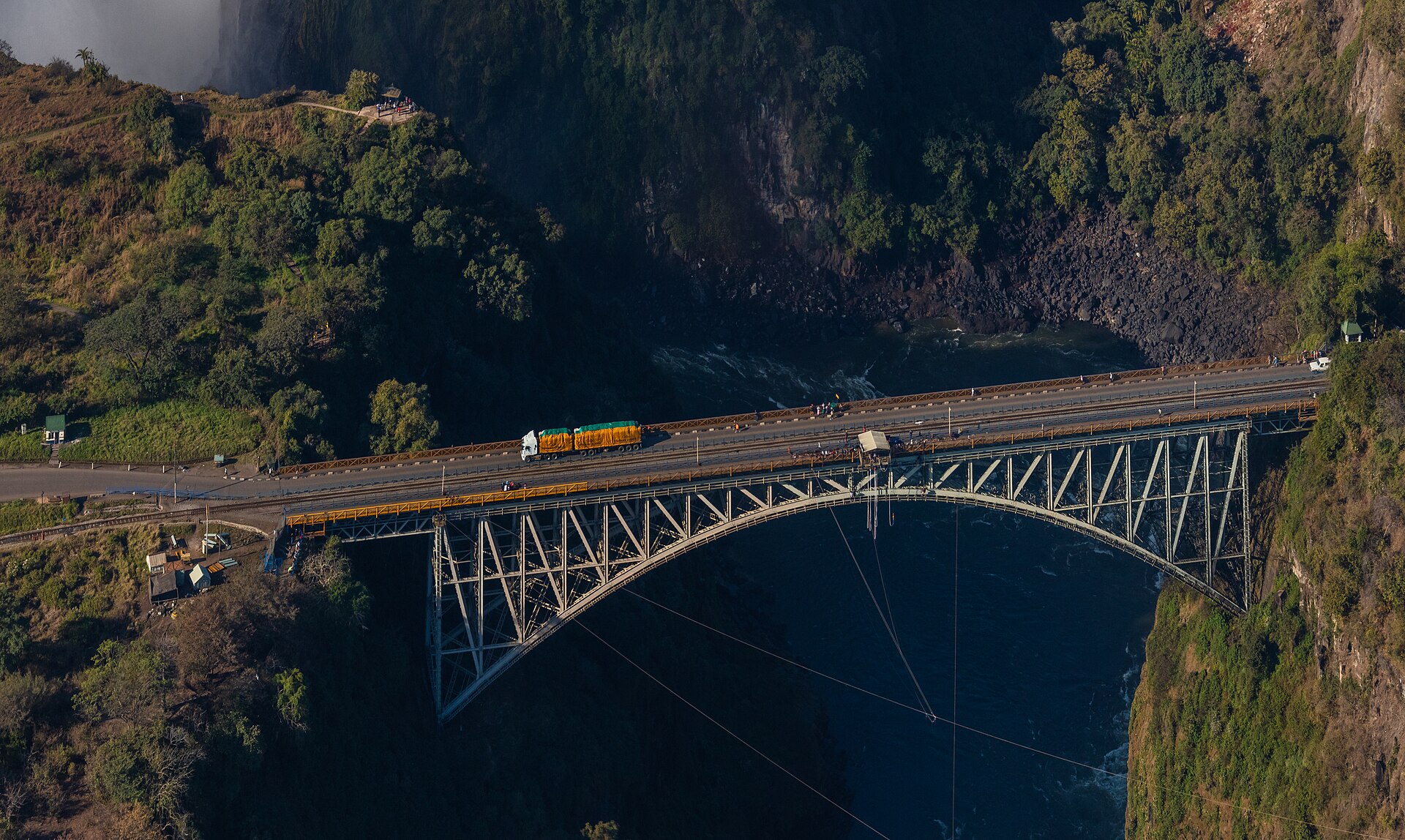
The UniVisa pilot began on 28 November 2014. It is named after the Kavango Zambezi Transfrontier Conservation Area (KAZA), shared by Angola, Botswana, Namibia, Zambia and Zimbabwe. Permanent issuance started on 21 December 2016.
According to Zambia’s Department of Immigration, the UniVisa costs US$50 and is valid for up to 30 days in any 12-month period. It covers day trips into Botswana through the Kazungula border.
On the Zimbabwe side, Zambia lists Harare and Victoria Falls airports and the Victoria Falls and Kazungula land borders as issuing points. The FCDO adds Bulawayo airport, Zimbabwe’s second city.
The eligible list includes the United States, Britain, Canada, Australia and most EU countries, including France and Germany. It pays off only if you would otherwise need a visa for both countries.
Zambia has exempted nationals of 167 countries from visa requirements since 1 January 2025. If your passport is on Zambia’s exempt list, a Zimbabwe multiple-entry visa may serve you as well as the UniVisa.
Working in Zimbabwe: the temporary employment permit
Paid work needs a temporary employment permit, and the FCDO says volunteers and missionaries need one too. The application goes through the e-permits portal at epermits.zimimmigration.gov.zw and the head office in Harare.
The fee is US$500, plus US$300 for each dependant, and none of it is refundable. An extension costs another US$500, and a separate short-term permit is also priced at US$500.
The employer carries much of the paperwork. It must show a local newspaper advertisement for the post and the CVs of shortlisted candidates. It must also name Zimbabweans who will understudy the foreign worker.
The worker supplies a contract, a CV and notarised degrees. A police clearance under six months old and a radiological (chest X-ray) certificate are also required. The company adds a licence from the Zimbabwe Investment and Development Agency (ZIDA). It also files tax clearance from the Zimbabwe Revenue Authority (ZIMRA).
For a worker bringing a spouse and two children, the first-year fees alone come to US$1,400. That is before notary, translation, medical and courier costs, which are not set by the state.
Investor, spouse and residence permits
A residence permit lets a foreigner live in Zimbabwe beyond the visitor period. The fee schedule prices both the non-investor and the investor residence permit at US$500, with US$300 per dependant.
The investor route is paperwork-heavy. It asks for a project proposal, banking history from the home country and proof of funds ready for transfer. Applicants also list the equipment they will import and the foreign and local staff they will hire.
The company behind the investment must file its registration papers, a ZIDA licence and ZIMRA tax clearance. The department’s permit pages do not publish a minimum investment amount.
Foreign spouses of Zimbabwean citizens have their own permit, backed by a guarantee form and proof of funds from the local spouse. The fee table prices it at US$300, while the requirements page states US$500 for a first application.
Students pay US$200 plus US$300 per dependant, and school pupils, called scholars, pay US$100. A separate temporary permit is listed at US$1,000, and a duplicate of a lost permit costs US$100.
Retiring in Zimbabwe: no dedicated permit
Zimbabwe does not list a retirement permit or visa. The department’s current permit pages cover scholars, students, investors, temporary employment and spouses only.
A retiree without a job, investment or Zimbabwean spouse would normally need the non-investor residence permit, priced at US$500. An archived version of the department’s site set out that ordinary residence permit in detail.
That archived page required a close-relative guarantee signed by a resident of Zimbabwe, with the guarantor’s bank statements and proof of accommodation. In plain terms, the ordinary route assumes family or a sponsor already in the country.
Foreign pensioners without those ties should expect the investor route or repeated visitor stays. Before any move, confirm the current route in writing with the department in Harare.
The path to permanent residence
Permanent residence is the settled status that removes the need to renew permits. The fee schedule lists it at US$500 for ordinary applicants and US$1,000 for investors.
Five years is the key number. The department’s archived rules allowed an application after five continuous years on a residence permit or a dependant’s residence permit. Holders of a temporary employment permit, NGO staff, government-to-government contract workers and diplomats did not qualify.
The Immigration Act adds a longer benchmark for domicile, the legal term for having Zimbabwe as your settled home. It requires ten years of lawful, continuous residence, and time spent on any permit other than a residence permit does not count.
That is the key trap for contract workers. Years on a temporary employment permit do not build towards domicile under the Act. A long career in Zimbabwe does not by itself lead to settlement.
Under the same Act, domicile is lost by settling abroad for good or by five years of continuous absence. The minister can extend that period on request.
How to apply without delays
Visas are handled online at evisa.gov.zw, and permits through the e-permits portal. Every permit file needs the residence permit application form, known as I.F.5, and a letter to the Chief Director of Immigration.
Documents from outside Zimbabwe must be notarised, and those issued inside the country certified by a Commissioner of Oaths. All translations must be in English, with originals available for inspection.
The head office is the Chingaira Building at the corner of L. Takawira and H. Chitepo streets in Harare. It is open from 07:45 to 16:45 Central Africa Time, Monday to Friday, except public holidays.
At the border, the US State Department asks travellers to carry two blank passport pages, or six if arriving via South Africa. A yellow fever certificate is required when arriving from or through countries where the disease is endemic.
Cash rules matter in a dollar-using country. The FCDO says cash of US$10,000 or more must be declared on arrival. It warns that leaving with more than US$2,000 is illegal. The US State Department says more may leave if it was declared and documented on entry.
The simplest sequence is to enter as a visitor, secure the job, investment or marriage papers, then file the permit. Keep receipts for every US dollar paid, because fees are non-refundable.
Connected Coverage
Zimbabwe’s ZiG Holds at 26 per Dollar as Gold Reserves Top US$1.5 Billion
Africa Currency Reform Wave Tests Nigeria, Egypt and Zimbabwe as Inflation Bites
Zimbabwe Halts Raw Lithium Exports as Africa Critical Minerals Race Splits US and China
Sources: Visa categories, fees and permit requirements come from Zimbabwe’s Department of Immigration and the Immigration Act, with KAZA and travel rules from Zambia’s Department of Immigration, the UK FCDO and the US State Department, and exchange-rate and inflation data from the Reserve Bank of Zimbabwe. All accessed 26 September 2026.
- zimimmigration.gov.zw
- zimimmigration.gov.zw
- zimimmigration.gov.zw
- zimimmigration.gov.zw
- zimimmigration.gov.zw
- zimimmigration.gov.zw
- zimimmigration.gov.zw
- web.archive.org
- web.archive.org
- evisa.gov.zw
- zambiaimmigration.gov.zm
- zambiaimmigration.gov.zm
- gov.uk
- travel.state.gov
- rbz.co.zw
- open.er-api.com
What Is Not Known
Whether a minimum investment applies to the investor residence permit is not stated on the Department of Immigration’s permit pages. Any threshold would sit with ZIDA or with the department’s case-by-case review, and it should be confirmed before money is committed.
The spouse permit fee is not settled by the department’s own pages. The fee table says US$300, while the requirements page says US$500 for a first application.
The published visa-category lists do not show every country. France and Finland, for example, appear on none of the three lists, although both are on Zambia’s KAZA UniVisa list.
The five-year residence rule for permanent residence comes from an archived version of the department’s site. The current website does not restate it, and processing times for any permit are not published.
Where the ZiG goes next is not known. It traded at 26.63 to the US dollar on 25 September 2026, but fees stay in US dollars whatever the rate does.
More: Africa news in English, every day from The Rio Times.
Frequently Asked Questions
Do Americans need a visa for Zimbabwe?
Yes. The United States is in Category B, so Americans need a visa but can buy it on arrival or online at evisa.gov.zw. The Department of Immigration lists an ordinary single-entry visa at US$30 and a multiple-entry visa at US$55.
How much is a Zimbabwe visa for British citizens?
British nationals pay a separate rate: US$55 for a single-entry visa and US$70 for a double-entry visa, both online. The UK Foreign Office says a visa on arrival is usually granted for 30 days and advises carrying US dollars in small notes.
What is the KAZA UniVisa and how much does it cost?
The KAZA UniVisa is one visa for Zimbabwe and Zambia. It costs US$50, is valid for up to 30 days in any 12-month period, and covers day trips into Botswana through Kazungula. It is issued at Harare and Victoria Falls airports and at the Victoria Falls and Kazungula borders.
How much does a Zimbabwe work permit cost?
A temporary employment permit costs US$500, plus US$300 for each dependant, and the fees are non-refundable. An extension costs another US$500. The employer must show a local newspaper advertisement and name Zimbabweans who will understudy the foreign worker.
Does Zimbabwe have a retirement visa?
No. The Department of Immigration lists no retirement permit or visa. Retirees without a job, investment or Zimbabwean spouse would normally have to fit the non-investor residence permit, priced at US$500, which has historically required a guarantor resident in Zimbabwe.
How do foreigners get permanent residence in Zimbabwe?
An archived checklist from the Department of Immigration required five years of continuous residence on a residence permit. The fee is US$500 for ordinary applicants and US$1,000 for investors. Time on a temporary employment permit does not count towards domicile under the Immigration Act.
This article was produced by The Rio Times’ automated newsroom system. How we use AI · Report an error
Part of our ongoing coverage
Africa: The New Scramble — the great-power contest over the continent.
Read More from The Rio Times