Zambia Explained 2026: The Country, Its Copper Economy, Its Politics and What to Watch
GUIDES · COUNTRY
Key Facts
- —Where and what A landlocked republic in southern Africa of about 753,000 square kilometres, a little larger than Texas. It borders eight countries, from Congo to Zimbabwe.
- —People 19.6 million at the 2022 census; the IMF estimates about 22.5 million for 2026. Half of all Zambians are younger than 18.3 years.
- —Currency The kwacha, written K. It closed at K18.87 to the US dollar on 25 September 2026, on market data. That is about 17 percent stronger than at the start of the year.
- —Economy About US$28.9 billion of output in 2025 on IMF figures. It grew 5.4 percent that year, according to ZamStats. Refined copper earned about 63 percent of export income in August 2026.
- —Government A presidential republic. Hakainde Hichilema won a second five-year term on 13 August 2026 with 60.49 percent of the vote. He was sworn in on 1 September.
- —Why it matters now Zambia is Africa’s second-largest copper producer and the first African country to default in the pandemic. The election aftermath, with treason and sedition charges against the runner-up, is testing its democratic reputation.
Zambia explained for newcomers: how a copper country of 22 million is run, and which decisions in the coming months matter to foreigners.
Zambia explained in one sentence: a stable, landlocked democracy whose fortunes rise and fall with the copper price. That price reached records in 2026, and the kwacha strengthened with it. The politics after the August 2026 election have been rougher than Zambia’s reputation suggests.
What kind of country is this?
Zambia sits on a high plateau in the middle of southern Africa, with no coastline. Its eight neighbours are Angola, the Democratic Republic of Congo, Tanzania, Malawi, Mozambique, Zimbabwe, Botswana and Namibia. Every tonne of copper it sells must therefore cross at least one border by road or rail to reach a port.
The country was the British protectorate of Northern Rhodesia until independence on 24 October 1964. Kenneth Kaunda led it for 27 years, from 1972 as a one-party state. Multiparty elections returned in 1991, and Kaunda lost and left office peacefully.
That habit has held. Governing parties lost power at the ballot box in 1991, 2011 and 2021. This record is a large part of why investors and donors have long treated Zambia as one of the region’s steadier democracies. It does not mean the system is free of strain, as the 2026 election showed.
The population is young and growing fast. The Zambia Statistics Agency (ZamStats), the national statistics office, counted 19.6 million people in 2022, up from 13.1 million in 2010. That is growth of about 3.5 percent a year. About 63 percent of Zambians are under 25.
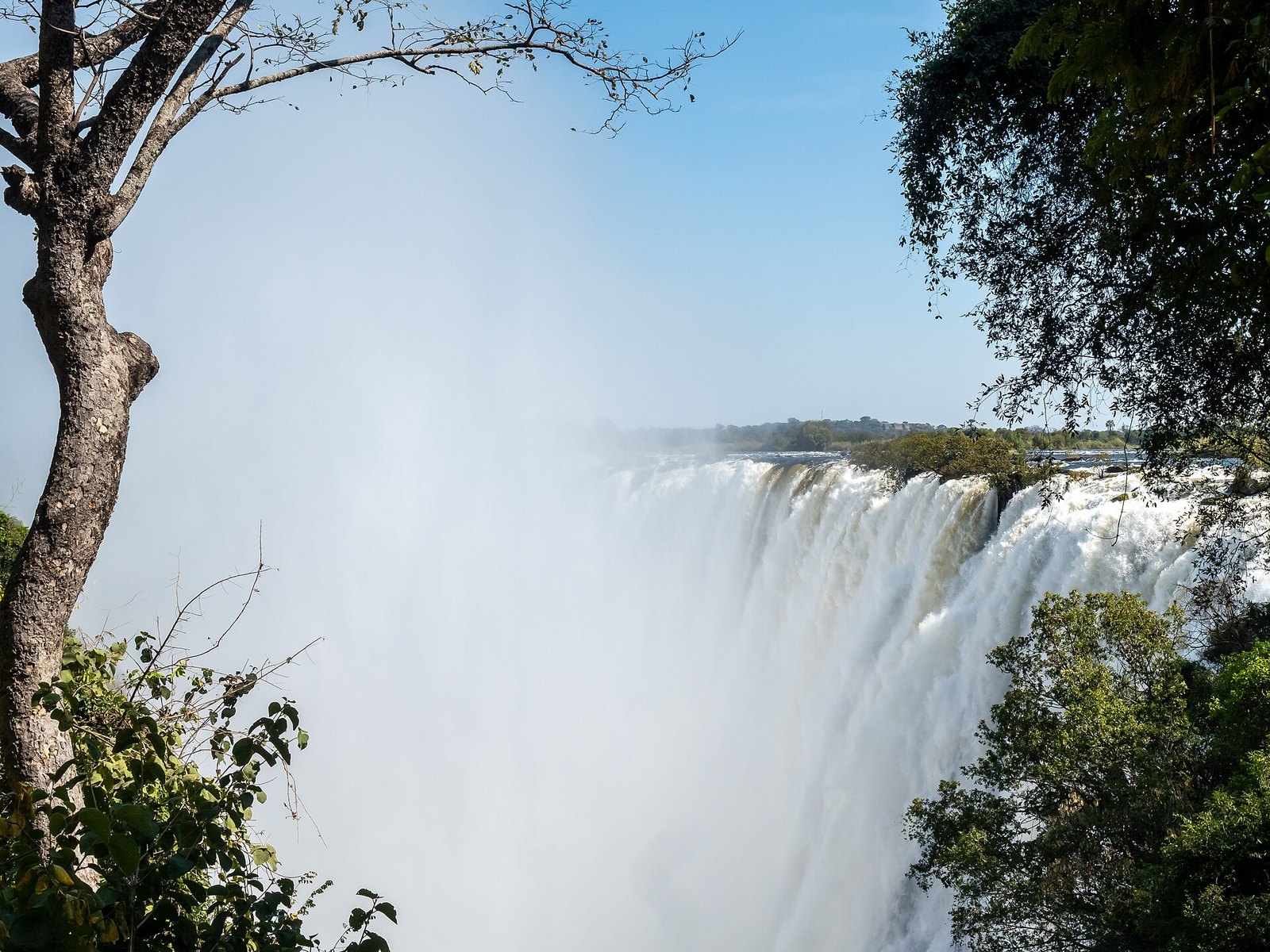
English is the official language of government, courts and business. Bemba, Nyanja, Tonga and Lozi are the most widely spoken of more than 70 local languages. Lusaka, the capital, is the largest city. The Copperbelt province, on the Congolese border, is the mining heartland. Livingstone, in the south, faces the Victoria Falls, which Zambians call Mosi-oa-Tunya.
Who runs Zambia and how
The president is both head of state and head of government. To win, a candidate needs more than half of the valid votes. Otherwise a runoff between the top two follows within 37 days. A president serves five years and may be elected only twice.
Hakainde Hichilema of the United Party for National Development (UPND) has held the office since August 2021. A businessman, he won on his sixth attempt, defeating Edgar Lungu, who died in June 2025. His vice-president is Mutale Nalumango. On 14 September 2026 he reappointed Situmbeko Musokotwane as finance minister, the post Musokotwane has held since 2021.
Parliament, the National Assembly, changed shape for the 2026 vote. A constitutional amendment signed on 18 December 2025 enlarged it to up to 277 members. Of these, 226 are elected in single-member constituencies and 40 by proportional representation, reserved for women, young people and people with disabilities. The president may appoint up to 11 more.
Unofficial compilations of the results give the UPND about 136 of the 226 constituency seats, and roughly 160 to 170 seats once its share of the proportional seats is added. That is a clear working majority. The government can pass ordinary laws without opposition votes. It does not by itself give the two-thirds needed for most constitutional changes.
The courts matter more than their low profile suggests. The Constitutional Court hears challenges to a presidential result, and the deadline is seven days after the declaration. Zambia is divided into ten provinces, run largely from Lusaka, with elected councils handling local services.
Live Market IntelligenceCommodities — Live Market Board
Rio Times · Live Market Intelligence
Commodities — Live Market Board
-0.03%
| Instrument | Last | Change | YoY | Prev. | High | Low | Volume |
|---|---|---|---|---|---|---|---|
| GOLD | 4,461 | +1.78% | +33.20% | 4,383 | 4,503 | 4,421 | 139,824 |
| SILVER | 65.59 | +1.26% | +73.05% | 64.77 | 66.98 | 64.81 | 46,406 |
| BRENT | 88.88 | -0.03% | +34.42% | 88.91 | 90.07 | 88.12 | 29,713 |
| WTI | 83.11 | -0.11% | +31.57% | 83.20 | 84.35 | 82.40 | 166,848 |
| COPPER | 6.61 | +0.03% | +46.70% | 6.61 | 6.71 | 6.61 | 39,543 |
| LITHIUM | 75.20 | +1.47% | +62.95% | 74.11 | 75.80 | 75.08 | 89,275 |
| IRON ORE | 161.91 | — | +58.10% | 161.91 | 161.91 | 1 | |
| SOY | 1,184 | +3.20% | +17.05% | 1,148 | 1,199 | 1,168 | 163,179 |
| CORN | 480.50 | +10.02% | +29.34% | 436.75 | 480.75 | 459.50 | 341,248 |
| WHEAT | 655.00 | +3.93% | +29.70% | 630.25 | 657.75 | 631.50 | 128,793 |
| COFFEE | 317.25 | -5.51% | +0.67% | 335.75 | 321.20 | 313.55 | 21,747 |
| SUGAR | 16.43 | -1.79% | -3.01% | 16.73 | 17.11 | 16.22 | 171,992 |
| COCOA | 5,719 | +3.18% | -34.96% | 5,543 | 5,779 | 5,574 | 26,773 |
| ORANGE JUICE | 138.55 | -0.47% | -45.38% | 139.20 | 141.05 | 137.50 | 703 |
| COTTON | 85.03 | +2.33% | +26.78% | 83.09 | 82.90 | 81.96 | 16,546 |
| BEEF | 223.60 | -3.93% | -5.18% | 232.75 | 226.40 | 223.00 | 16,126 |
| CATTLE | 339.10 | -3.16% | -1.82% | 350.17 | 345.50 | 338.60 | 10,164 |
| USD/BRL | 5.16 | +0.01% | -5.13% | 5.16 | 5.18 | 5.14 | — |
How the economy works
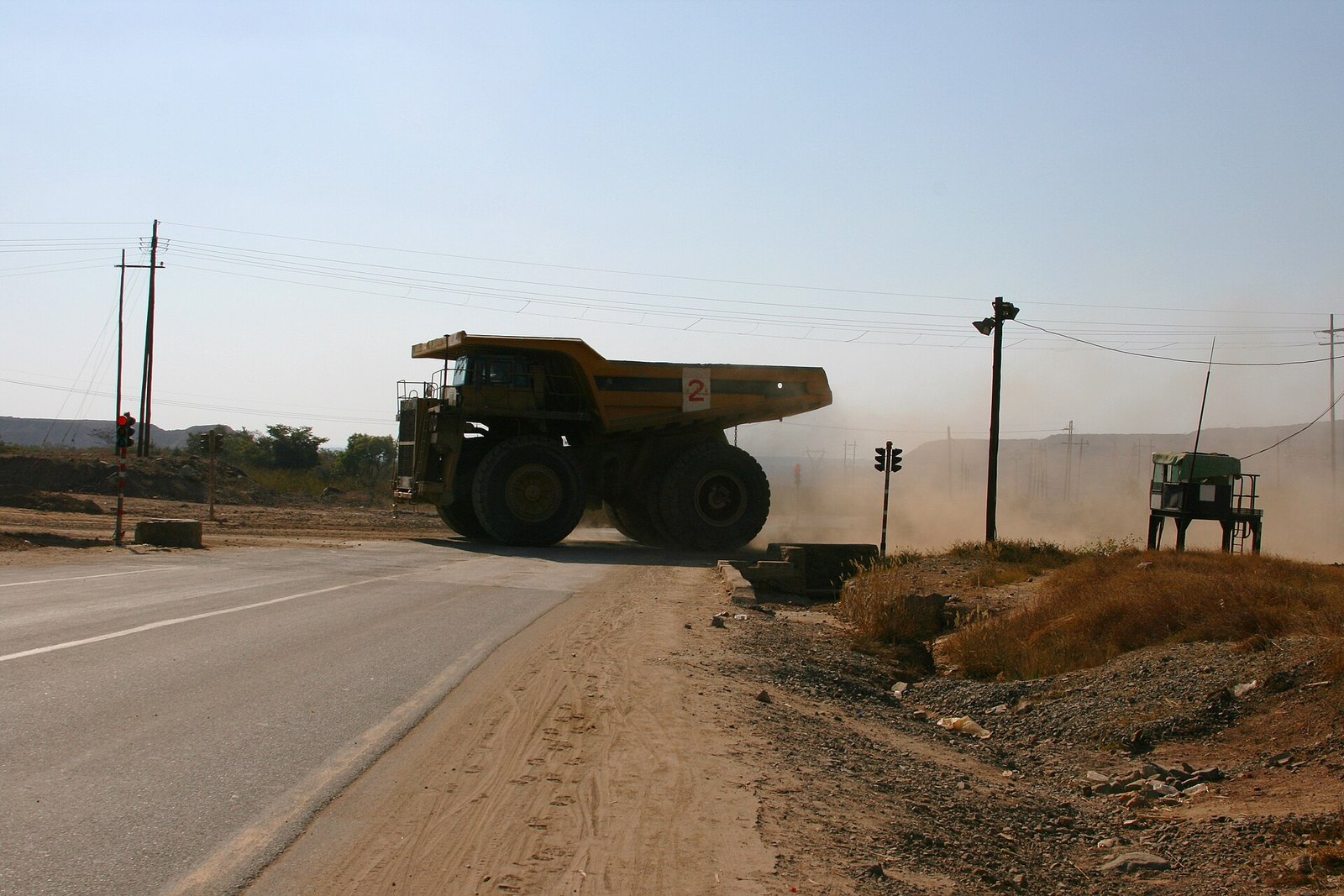
Copper is the economy’s engine and its main risk. In August 2026 refined copper brought in about US$1.10 billion of US$1.75 billion in export earnings, roughly 63 percent. When the copper price rises, dollars flow in and the kwacha strengthens. When it falls, the reverse happens.
Mines produced 890,346 tonnes of copper in 2025, up 8 percent on 2024, according to the mines ministry. That fell short of the government’s own target of one million tonnes. The official goal is three million tonnes a year by 2031, more than three times the 2025 level.
Output in the first half of 2026 was 447,182 tonnes, almost unchanged on a year earlier, according to the mines ministry. Refined copper exports did better: 608,100 tonnes from January to August, up 9.0 percent. A price of about US$14,350 a tonne in August, on London Metal Exchange averages reported by ZamStats, did the rest.
The big mines are mostly foreign-owned, with the state holding minority stakes through ZCCM-IH, its mining investment company. Canada’s First Quantum runs Kansanshi and Sentinel. Barrick runs Lumwana. India’s Vedanta controls Konkola Copper Mines, whose Nchanga smelter restarted in September 2026. An Abu Dhabi group bought 51 percent of Mopani in 2024.
Copper is not the whole economy. Mining and quarrying made up 14.5 percent of output in 2025, behind wholesale and retail trade at 18.0 percent. Telecoms and farming contributed most to 2025 growth. Most Zambians still earn their living from small-scale farming and informal trade, not from mines.
Electricity is the other constraint. Most power comes from hydroelectric dams on the Zambezi, including Kariba, shared with Zimbabwe. The 2024 drought emptied the reservoirs and forced power cuts that at their worst ran for most of the day. Lake Kariba held 42.25 percent of usable storage in early September 2026, against 18.74 percent a year earlier.
The government has answered with solar. Installed capacity rose from about 88 megawatts in 2021 to about 841 megawatts in 2026, as the Rio Times has reported. That diversifies supply, but a dry rainy season would still bite.
What is happening right now
As of September 2026, three stories define Zambia: a disputed election aftermath, a recovery from debt default, and falling inflation.
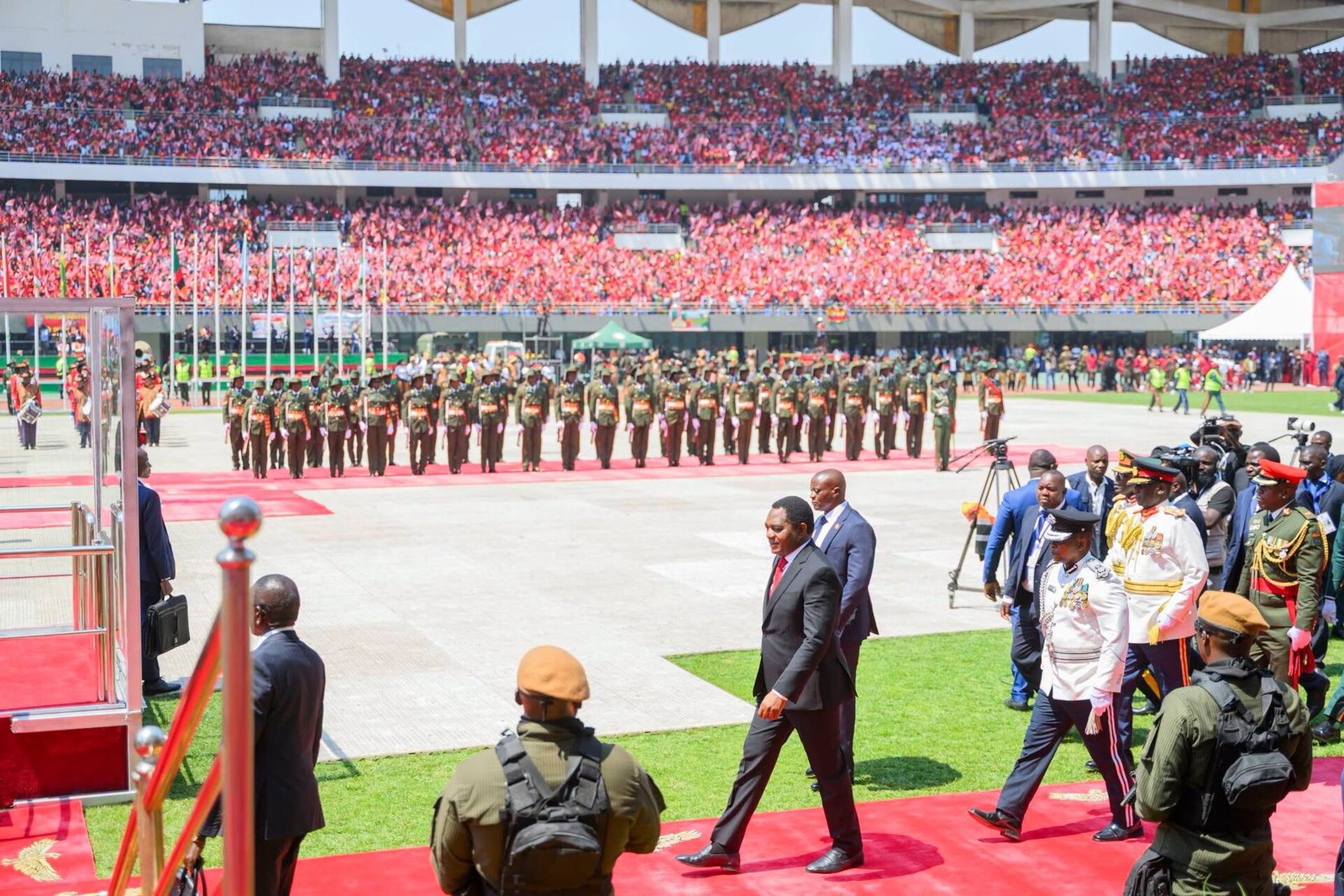
Zambians voted on 13 August 2026. The Electoral Commission of Zambia declared Hichilema re-elected on 18 August with 2,965,326 votes, or 60.49 percent. Brian Mundubile of the National Reconciliation Party for Unity and Prosperity took 37.87 percent. Turnout was 57.23 percent of 8.79 million registered voters, down from 70.61 percent in 2021. Our report on the Zambia election result has the detail.
The aftermath was violent. On 14 August police raided opposition sites in Lusaka and arrested eleven people. Former cabinet minister Mutotwe Kafwaya was shot dead during that operation. The government says the raid targeted an armed militia; the opposition rejects that account.
On 24 August, the last day for filing an election petition, the courts were closed, with the authorities citing security. Mundubile’s lawyer said an electronic filing bounced and emailed the petition to the Chief Justice instead. The government says no petition was formally received, and none has been heard. Hichilema was sworn in on 1 September.
Mundubile and his running mate, Makebi Zulu, were charged with treason on 29 August with sixteen others. On 11 September they were also charged with sedition. On 17 September the European Parliament voted 562 to 1 for an independent investigation into Kafwaya’s killing. That resolution is a political statement; it does not suspend aid or trade.
The economic picture is calmer. Annual inflation fell to 6.1 percent in September 2026, from 6.2 percent in August, according to ZamStats. That is inside the Bank of Zambia’s target band of 6 to 8 percent. In 2021 it was roughly 24 percent. The central bank’s policy rate has stood at 13.25 percent since a cut on 13 May 2026.
The debt story is nearly finished. Zambia missed a Eurobond payment in November 2020 and entered the G20’s Common Framework, a process for restructuring poor countries’ debts. Bondholders swapped their bonds in 2024. By late 2025 agreements covered about 94 percent of the debt being restructured. In November 2025 S&P lifted Zambia out of default to CCC+.
A US$1.7 billion IMF loan programme ended with its final review on 27 January 2026. The government wants a successor programme and has said it aims to agree one by the end of 2026. On 17 September the new cabinet approved the framework for the 2027 budget, without publishing figures.
What to watch
The 2027 budget is the first test of the second term. Cabinet has named job creation, single-digit inflation, a stable exchange rate and a wider tax base as priorities. The 2026 budget spent K253.1 billion (about US$13.4 billion at the September rate). The new total will show whether spending stays restrained.
A new IMF programme would matter well beyond the money. It would signal to lenders that the post-default reforms continue. Watch also for a deal with the remaining private creditors, which rating agencies want before upgrading Zambia further.
The treason and sedition cases will show how far the authorities intend to go against the opposition. The two men first appeared in court on 25 September, before magistrates in Solwezi on the sedition charge, and that case was adjourned to 5 October for plea. No treason trial date, bail decision or charge sheet had been made public by late September 2026.
For the economy, watch copper output against the three-million-tonne goal, and the export routes being built for it. The United States and European Union back a western railway to the Angolan port of Lobito. Zambia is betting on it. A Chinese company holds a 30-year, US$1.4 billion concession, signed in 2025, to rebuild the TAZARA line to Tanzania’s coast.
Finally, watch the weather. The rainy season runs roughly from November to March, and it decides how full Lake Kariba will be in 2027. A good season protects both power supply and the maize harvest; a bad one threatens both.
What this means for foreigners
Entry is easy for most Western visitors. Zambia waives visas for 167 nationalities, including the United States, United Kingdom, Canada and the European Union. Visitors may stay up to 90 days in a year. The KAZA UniVisa covers Zambia and Zimbabwe together. Our Zambia visa and residency guide covers permits, costs and the new immigration law awaiting commencement.
Working is a different matter. An employment permit costs K24,000 (about US$1,272) and is filed by the employer, not the worker. Anyone planning to stay should budget time for paperwork done from abroad.
Money moves fast in both directions. The kwacha has gained about 17 percent against the dollar in 2026, but it was near K28.89 per dollar in March 2025. Salaries, rents and school fees quoted in kwacha can change sharply in dollar terms within months. Businesses with tax arrears should note that a waiver of penalties and interest runs until 31 December.
On safety, the United States State Department rates Zambia at level 1, “exercise normal precautions”, its lowest warning. That rating predates the 2026 election. Foreigners should stay away from political rallies and avoid public comment on the election dispute. Sedition charges have been used against critics.
For investors, the message is continuity. The same president and finance minister are in charge, inflation is in its target band, and the copper price is high. The risks are a copper downturn, a poor rainy season and a harder political climate.
Connected Coverage
Zimbabwe Explained 2026: The ZiG Currency, the Politics, the Economy and What to Watch
Zambia Visa and Residency: Permits, Costs and the Path to Staying
Angola Explained: Oil, Politics, the Economy and What to Watch
Tanzania Explained: The Country, Its Politics, Its Economy and What to Watch
South Africa Explained: The Country, the Coalition Government and What to Watch
Sources: Population, output, trade, copper exports and inflation from the Zambia Statistics Agency; the policy rate from the Bank of Zambia; the IMF programme and output estimates from the IMF; election results and the parliament’s structure from the Electoral Commission of Zambia via IFES; copper output from the Ministry of Mines and Minerals Development; the exchange rate from market data. All accessed 27 September 2026.
- ZamStats — The Monthly, Vol. 282, September 2026: final 2025 GDP, inflation, trade and copper exports
- ZamStats — annual inflation of 6.1 percent, September 2026
- ZamStats — 2022 census population and age structure
- IMF DataMapper — Zambia GDP in US dollars and population estimate
- IMF — sixth and final review of the Extended Credit Facility, 27 January 2026
- IMF — staff visit to Zambia, 14 May 2026
- Bank of Zambia via Reuters/CNBC Africa — policy rate cut to 13.25 percent, 13 May 2026
- IFES — Zambia 2026 general elections: seats, electoral system and registered voters
- Ministry of Mines via Reuters — 2025 copper output of 890,346 tonnes
- Reuters via CNBC Africa — Musokotwane reappointed finance minister, 14 September 2026
- Zambia Monitor — Treasury on 94 percent of external debt restructured
- Mail & Guardian — Lake Kariba storage, September 2026
- US State Department — Zambia travel advisory
What Is Not Known
Whether the election petition will ever be heard. The Chief Justice referred the emailed filing to the Constitutional Court to decide whether it counts as a petition. No ruling has been published.
The final shape of parliament. The Electoral Commission had not published a consolidated national seat tally or allocated the 40 proportional-representation seats at the time of writing. Opposition seat counts in unofficial compilations differ.
What the treason case rests on. Police say weapons were recovered in the 14 August raid, but no charge sheet, trial date or independent evidence has been released. The circumstances of Kafwaya’s death have not been independently investigated.
Whether copper can reach three million tonnes by 2031. Output was flat in the first half of 2026. The target depends on new mines that are not yet built and on power and rail capacity that is still being added.
When a new IMF programme will be agreed, and on what terms. The government aims for the end of 2026; the IMF has not announced a timetable.
Frequently Asked Questions
Who is the president of Zambia in 2026?
Hakainde Hichilema of the United Party for National Development. He first won in August 2021 and was re-elected on 13 August 2026 with 60.49 percent of the vote. He was sworn in for a second and final five-year term on 1 September 2026.
Do Americans and Europeans need a visa for Zambia?
No, not for short visits. Zambia waives visas for 167 nationalities, including the United States, United Kingdom, Canada and the European Union, for up to 90 days in a year. Working or living there needs a permit.
What currency does Zambia use?
The kwacha, written K. It traded at K18.87 to the US dollar on 25 September 2026, about 17 percent stronger than at the start of the year. It moves closely with the copper price.
Why does copper matter so much to Zambia?
Refined copper earned about 63 percent of Zambia’s export income in August 2026. Mines produced 890,346 tonnes in 2025, and the government wants three million tonnes a year by 2031. Copper prices drive the kwacha, tax revenue and growth.
Is Zambia still in debt default?
Largely no. Zambia defaulted in November 2020 and has since reached agreements on about 94 percent of the debt being restructured. S&P lifted it out of default to CCC+ in November 2025, and a deal with the remaining private creditors is still pending.
Is Zambia safe for foreigners?
The US State Department rates Zambia at level 1, its lowest warning. Politics became tense after the August 2026 election, with opposition leaders charged with treason and sedition. Visitors should avoid political gatherings and public comment on the dispute.
This article was produced by The Rio Times’ automated newsroom system. How we use AI · Report an error
Read More from The Rio Times