NIGERIA · GEOPOLITICS
Key Facts
- —The country Nigeria is Africa’s most populous nation, with about 237.5 million people in 2025. It is a federal republic led by President Bola Tinubu.
- —Why it matters Nigeria geopolitics draws in Washington, Beijing, Moscow, Brussels and the Gulf. To the north, Niger, Mali and Burkina Faso have left ECOWAS, West Africa’s main bloc.
- —The US file Since 24 July 2026, Nigerian goods face an extra 12.5% US tariff, crude oil excepted. AGOA, a US duty-free scheme for Africa, runs to 31 December 2028.
- —China Chinese lenders were owed US$5.49 billion of Nigeria’s US$54.52 billion external debt on 30 June 2026, more than any other country.
- —Visas Since 1 January 2026, the US has partly suspended visa issuance to Nigerians for immigrant, tourist, business, student and exchange travel, with exceptions such as valid existing visas.
- —What it means for you US importers pay extra duties, most Nigerian partners cannot get new US visas, and travellers face a ‘reconsider travel’ warning.
- —Still open Whether and when Washington lifts its religious freedom blacklisting, and how the 20 February 2027 presidential election reshapes Nigerian foreign policy.
Nigeria geopolitics matters to Americans because Africa’s most populous country is caught up in US tariff, visa and security policy.
Abuja answers by keeping doors open to China, the Gulf, Europe and the BRICS bloc, a stance it calls strategic autonomy. This guide explains what each power wants, and what Nigeria wants back.

How Nigeria Sees the World in 2026
Nigeria had an estimated 237.5 million people in 2025, according to the World Bank. Ethiopia, the next most populous African country, had about 135.5 million.
That weight explains why so many capitals compete for Abuja’s attention. It also explains how Abuja can work with Washington on security while borrowing from Beijing.
President Bola Tinubu of the All Progressives Congress (APC), the ruling party, faces voters again on 20 February 2027. The profile Who Is Bola Tinubu? explains his reforms and his rivals.
Day-to-day diplomacy is run by Foreign Minister Bianca Odumegwu-Ojukwu, a former ambassador. Her predecessor, Yusuf Tuggar, resigned in 2026 to pursue his political career, the State House said.
“Strategic autonomy does not mean isolation,” she told foreign envoys in Abuja on 17 September 2026, Punch, a Lagos daily, reported. She said it meant preserving Nigeria’s right to choose the partners that best serve its people.
For the basics, start with Nigeria Explained and the Rio Times Nigeria page.
The United States: Tariffs, AGOA and Trade
The United States sold Nigeria US$6.78 billion of goods in 2025 and bought US$5.02 billion, US Census Bureau data show. That left Americans with a goods surplus of US$1.76 billion.
The relationship looked very different in 2008, when US imports from Nigeria reached US$38.07 billion. From January to July 2026, the US bought just US$2.11 billion of Nigerian goods.
Since 12:01 a.m. Eastern time on 24 July 2026, Nigerian goods have faced an extra 12.5% duty, apart from listed exemptions. The Office of the US Trade Representative (USTR) imposed it under Section 301 of the Trade Act of 1974.
USTR ruled that 60 economies, Nigeria among them, failed to impose or enforce a ban on imports made with forced labour. Economies with a ban, or a pledge to adopt one, pay 10%.
Crude petroleum is on the exempt list. So are goods already hit by separate US national-security tariffs, known as Section 232 duties.
The African Growth and Opportunity Act (AGOA), a US law dating from 2000, lets eligible African countries ship many goods duty-free. Nigeria is on the 2026 list of eligible countries in the US tariff schedule.
A law signed on 2 September 2026 extended AGOA to 31 December 2028. An earlier spending law had kept it alive only to the end of 2026, the White House noted.
AGOA removes normal US duties, but not the new 12.5% charge. That charge applies to all Nigerian products except listed exemptions.
Visas, Deportations and the Religious Freedom Label
A presidential proclamation of 16 December 2025 suspended the issuance of immigrant visas and of B-1, B-2, F, M and J visas to Nigerians who did not hold a valid visa on 1 January 2026. Those categories cover business, tourist, student and exchange travel.
The rule took effect on 1 January 2026. It does not apply to green-card holders, people who already held a valid visa, dual nationals on another passport, or diplomats.
The proclamation cited Boko Haram and the Islamic State operating in parts of Nigeria. It also cited a 5.56% overstay rate on business and tourist visas and 11.90% on student and exchange visas.
Consular officers were also told to shorten the validity of any other visas issued to Nigerians. The core restrictions were still in force in September 2026.
Nigeria has pushed back on deportations. In July 2025, then foreign minister Yusuf Tuggar said Nigeria would not bow to US pressure to take Venezuelan deportees, DW reported.
“We have enough problems of our own,” Tuggar told Nigerian television. He said Washington was pressing African countries to take such deportees.
Britain got further during Tinubu’s state visit in March 2026, when the two governments agreed to speed up removals. London said annual returns to Nigeria had nearly doubled to 1,150.
On 31 October 2025, President Donald Trump again designated Nigeria a Country of Particular Concern. That is a US blacklist for severe religious freedom violations.
Trump first applied the label in 2020, and President Joe Biden removed it in 2021. Riley Moore, a Republican congressman from West Virginia, recalled that history when he welcomed the move.
A US-Nigeria working group on the label met in Abuja on 22 January 2026 and in Washington on 12 August 2026. Talks covered Christian communities in the central Middle Belt, prosecutions and military cooperation, the State Department said.
Nigeria’s delegation was led by National Security Adviser Nuhu Ribadu. Washington noted Nigeria’s reported prosecutions of hundreds of Boko Haram and Islamic State suspects, and 50,000 new police recruits.
Security: US Strikes Against the Islamic State
Security ties with Washington have changed sharply since 2025. US forces struck targets in north-western Sokoto State on 25 December 2025, according to a congressional letter.
Washington described the targets as Islamic State militants. In March 2026, two House members, Sara Jacobs and Jason Crow, asked the Pentagon about civilian harm and stray missiles.
On 16 May 2026, US Africa Command (AFRICOM), the Pentagon’s Africa arm, ran an operation in north-eastern Nigeria with Nigerian coordination. Its initial assessment was that Abu-Bilal al-Minuki, director of global operations for ISIS, was killed.
Further strikes, also coordinated with Nigeria’s government, followed on 18 May 2026. General Dagvin Anderson, AFRICOM’s commander at the time, credited “the cooperation and coordination of our forces in recent months.”
In September 2026, Nigeria’s Defence Headquarters said about 200 US personnel deployed for training and intelligence support were being drawn down. It said intelligence sharing and training would continue, The Sun, a Lagos daily, reported.
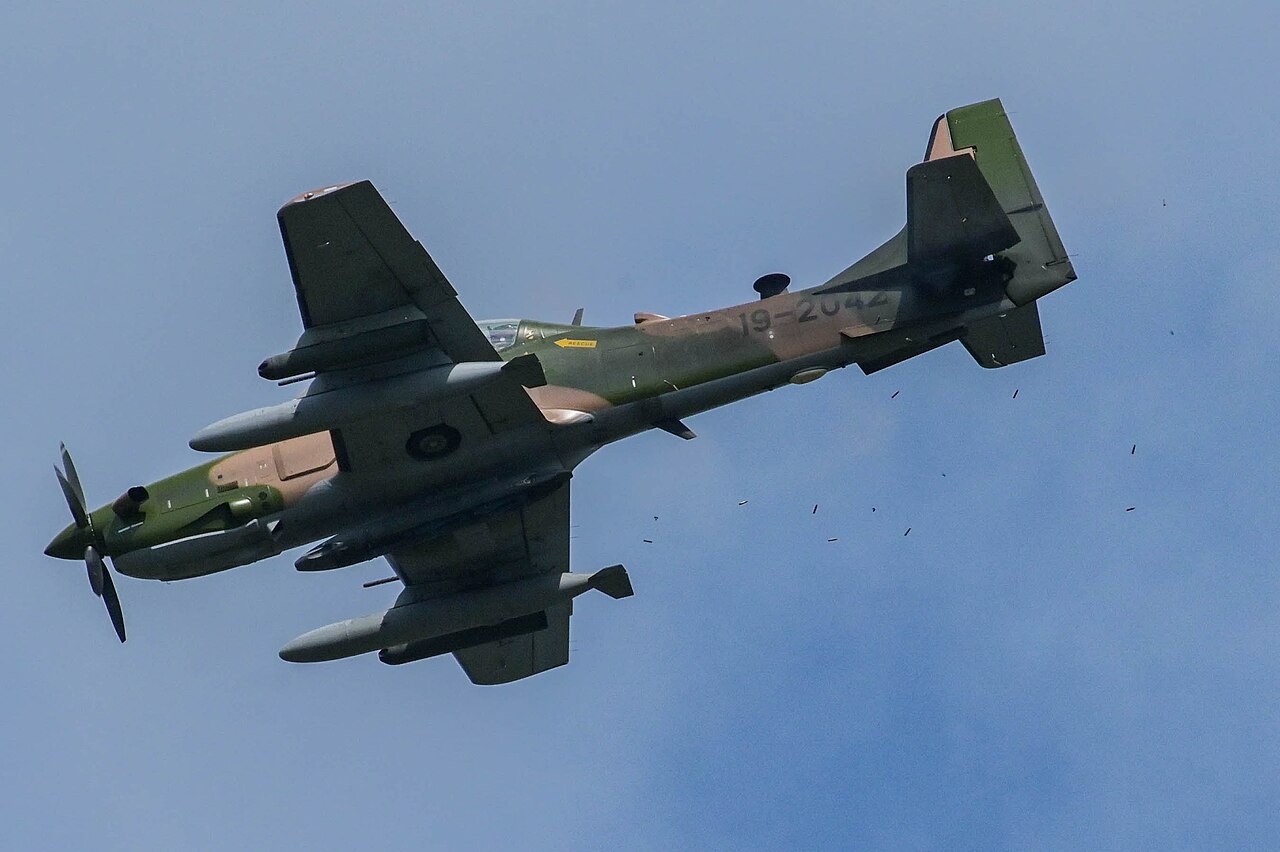
For travellers, the State Department advisory, updated on 25 June 2026, rates Nigeria Level 3, “reconsider travel”. States including Borno, Kano, Kaduna and Sokoto are Level 4, “do not travel”.
China: Loans, Trade and the Lekki Port
China is Nigeria’s largest bilateral lender, data from the Debt Management Office (DMO), Nigeria’s debt agency, show. On 30 June 2026, the Export-Import Bank of China was owed US$4.91 billion.
China Development Bank was owed another US$574 million. Together that is US$5.49 billion, about 10% of Nigeria’s US$54.52 billion external debt.
The World Bank’s International Development Association was owed more, US$19.12 billion. Holders of Nigeria’s Eurobonds, bonds sold to foreign investors, were owed US$18.55 billion.
Trade is growing fast. China’s embassy in Abuja said two-way trade reached US$18 billion in the first half of 2026, up 35%.
Chinese imports from Nigeria rose 81% over the same period, the embassy said. It added that since 1 May 2026, China has applied zero tariffs to goods from 53 African countries.
More detail on that tariff offer sits in Nigeria’s exports to China.
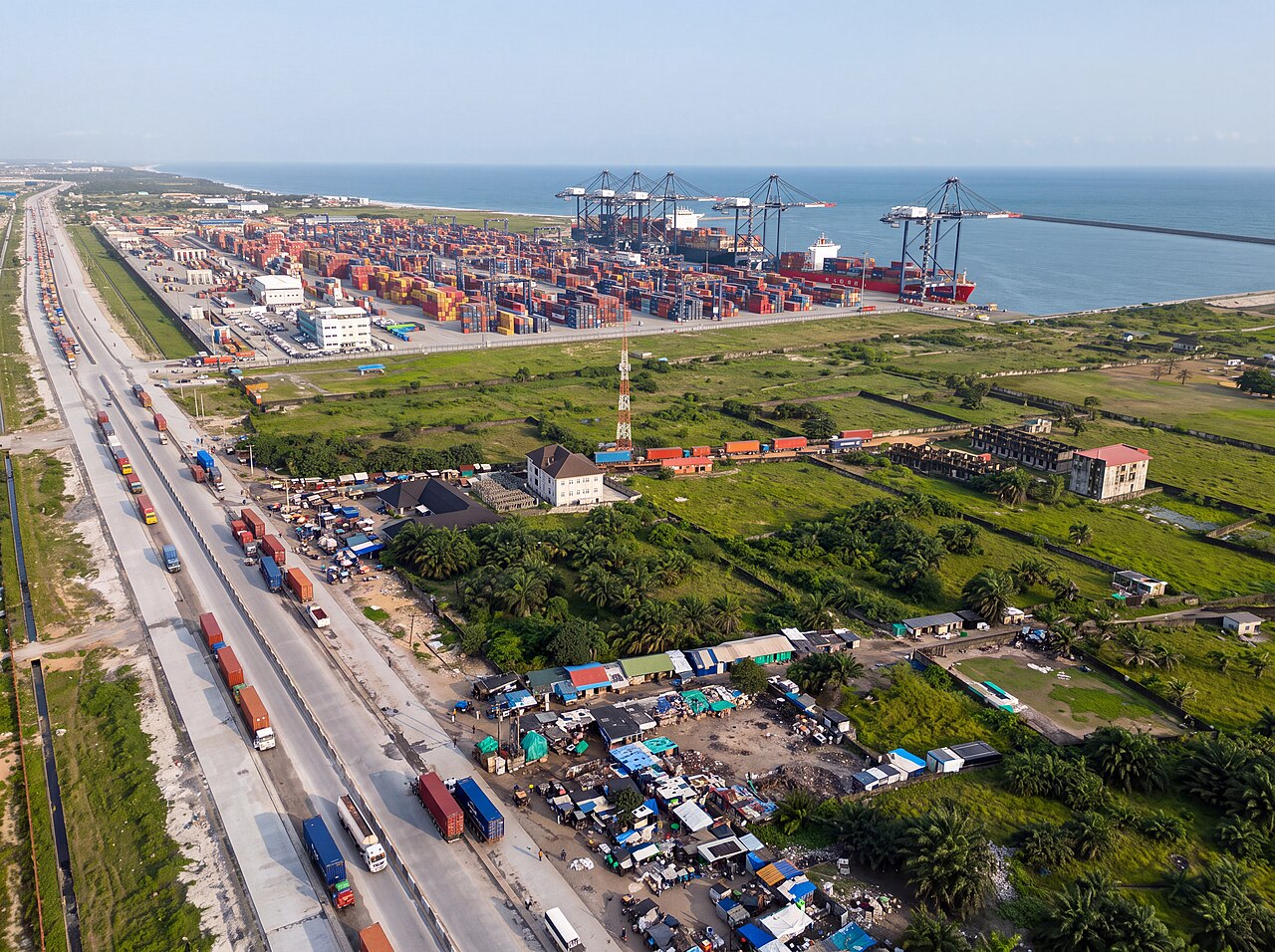
The clearest Chinese footprint is the Lekki Deep Sea Port in Lagos State, fully operational since 1 April 2023. Its owners include China Harbour Engineering Company and the Tolaram Group, the port says.
The Lagos State government and the Nigerian Ports Authority are also shareholders. The two governments describe their wider tie as a comprehensive strategic partnership.
Abuja has a director general for that partnership, Power Minister Joseph Tegbe. In September 2026, China said it wants to align its new five-year plan with Tinubu’s “Renewed Hope” agenda.
Russia, the Sahel Juntas and the ECOWAS Split
In Nigeria geopolitics, Russia matters mostly through the northern neighbourhood. Mali, Burkina Faso and Niger left the Economic Community of West African States (ECOWAS) on 29 January 2025, the bloc confirmed.
When the exit took effect, ECOWAS said it would keep honouring their passports, trade preferences and visa-free travel until further notice.
In Mali, a military government that took power in coups in 2020 and 2021 relies on Russia’s Africa Corps.
Human Rights Watch, a New York-based rights group, calls the force Russian government-controlled. It says Africa Corps airstrikes killed eight civilians in central Mali on 15 June 2026.
Nigeria’s own ties with Moscow are lower-key. In September 2026, Russia’s chargé d’affaires proposed cooperation with Nigerian anti-corruption officials on tracing illicit funds and asset recovery.
He spoke at an Abuja event attended by the head of the ICPC, Nigeria’s anti-corruption commission. Voice of Nigeria, the state broadcaster, also noted a 2018 legal-assistance treaty between the two countries.
Senegal’s President Bassirou Diomaye Faye took over the ECOWAS chair at a summit in Sierra Leone on 19 July 2026.
For the border story, read Nigeria Neighbours Explained and Niger Explained.
Europe, the Gulf, Turkey and India
Beyond the big powers, Nigeria geopolitics runs through a crowded field of middle powers. Each brings money, trade or weapons, and each wants something in return.
Europe and Britain
Kaja Kallas, the EU’s foreign policy chief, co-chaired an EU-Nigeria ministerial dialogue in Abuja on 23 March 2026. Tinubu asked for closer European help against violent extremism, the EU’s diplomatic service said.
France’s development agency, AFD, was owed US$906 million on 30 June 2026, DMO data show. Tinubu’s March 2026 state visit to Britain produced the returns deal described above.
The Gulf
Abu Dhabi is also a major source of loans. First Abu Dhabi Bank, a UAE lender, held US$3.37 billion of Nigeria’s external debt on 30 June 2026.
That sum combines a US$1.87 billion syndicated loan and a separate US$1.5 billion deal, DMO data show.
The United Arab Emirates and Nigeria signed a Comprehensive Economic Partnership Agreement, a trade pact, in Abu Dhabi on 13 January 2026. WAM, the UAE news agency, reported the signing.
Turkey
Tinubu visited Ankara on 27 January 2026, where the two governments signed nine agreements, including on military cooperation. Anadolu, Turkey’s state news agency, reported the deals.
Two-way trade reached US$688.4 million in the first 11 months of 2025. Counting energy, Nigeria was Turkey’s largest trading partner in sub-Saharan Africa that year, Anadolu said.
President Recep Tayyip Erdoğan said Turkey stands with Nigeria in its fight against terrorism.
India
India’s High Commission in Abuja says two-way trade fell from US$14.95 billion in 2021-22 to US$7.13 billion in 2024-25. It blames lower Indian purchases of Nigerian oil.
Prime Minister Narendra Modi visited Nigeria on 16-17 November 2024. The mission estimates that Indian-owned firms are Nigeria’s second-largest employer after the federal government.
BRICS and the Global South
Nigeria became a BRICS partner country in 2025, one of ten, according to India’s BRICS 2026 website. BRICS, named after Brazil, Russia, India, China and South Africa, had eleven full members in 2026.
Partner status is a step short of membership. Nigeria takes part in BRICS meetings while keeping its AGOA access and its security ties with Washington.
Vice President Kashim Shettima represented Nigeria at the 18th BRICS summit in New Delhi. He met Modi there on 13 September 2026, All India Radio, India’s public broadcaster, reported.
In Abuja, the foreign minister has pressed foreign embassies to ease visa delays for Nigerians, Punch reported. That plea captures Nigeria geopolitics in 2026: open to every partner, but pressing for doors to open in return.
What It Means for US Readers
For US importers, Nigerian goods other than exempt items now carry the 12.5% Section 301 duty, even when AGOA removes normal tariffs. Crude petroleum is exempt.
For companies and universities, the proclamation in force since January 2026 blocks most Nigerians seeking new tourist, business, student or exchange visas.
For investors, Nigeria geopolitics is a balancing act. Abuja works with Washington on security while borrowing from China and Abu Dhabi.
For travellers, the Level 3 advisory and the Level 4 zones in the north and south-east apply. The 20 February 2027 presidential election is the next moment that could reset these ties.
What Is Not Known
The biggest open question in Nigeria geopolitics is the religious freedom file. Washington has not set a date for lifting the Country of Particular Concern designation.
The State Department’s August 2026 readout listed continuing challenges, including reports of civilian deaths.
It is unclear whether Nigeria will adopt a forced labour import ban, which could move it to the lower 10% US rate. The DMO table also does not publish the interest rates or collateral behind the Chinese loans.
Neither government has said whether more joint strikes on the Islamic State are planned after the US drawdown. The election is set for 20 February 2027, according to the electoral commission’s timetable, but its outcome is open.
Frequently Asked Questions
What does Nigeria geopolitics look like in 2026?
Nigeria geopolitics in 2026 is a balancing act. Abuja works with Washington on security and borrows from China and Abu Dhabi. It trades with Europe and India and sits in BRICS as a partner country.
Does AGOA still cover Nigeria?
Yes. Nigeria is on the 2026 list of AGOA-eligible countries, and a law signed on 2 September 2026 extended AGOA to 31 December 2028. Since 24 July 2026, however, Nigerian goods also pay a 12.5% Section 301 tariff, with exemptions such as crude petroleum.
Can Nigerians get US visas in 2026?
Since 1 January 2026, a presidential proclamation suspends entry for Nigerians as immigrants and on B-1, B-2, F, M and J visas. Exceptions include green-card holders, people who held valid visas before that date, dual nationals on another passport and diplomats.
How much does Nigeria owe China?
On 30 June 2026, Nigeria owed the Export-Import Bank of China US$4.91 billion and China Development Bank US$574 million. That is US$5.49 billion, about 10% of its external debt, Debt Management Office data show.
Is Nigeria a member of BRICS?
Not a full member. Nigeria became one of ten BRICS partner countries in 2025. Vice President Kashim Shettima attended the September 2026 summit in New Delhi.
Why does the US call Nigeria a Country of Particular Concern?
The label is a US blacklist for severe religious freedom violations. President Trump reapplied it on 31 October 2025, and a joint working group met in January and August 2026 to address it.
Who is Nigeria’s foreign minister?
Ambassador Bianca Odumegwu-Ojukwu held the post as of late September 2026. She succeeded Yusuf Tuggar, who resigned in 2026 to pursue his political career.
Sources: US Census Bureau, trade in goods with Nigeria, 2025 and January-July 2026 data; Federal Register, USTR Section 301 forced labour actions (91 FR 47318), 28 July 2026; Public Law 119-103 (H.R. 6500), GovInfo, 2 September 2026; USITC, HTSUS General Notes, Revision 20 (2026), 2026; The White House, AGOA proclamation, 19 May 2026; The White House, entry restriction proclamation, 16 December 2025; US State Department, CPC Joint Working Group, 13 August 2026; US Africa Command, 16 May 2026; US State Department, Nigeria travel advisory, 25 June 2026; Debt Management Office Nigeria, external debt stock, 30 June 2026; Embassy of China in Nigeria, 23 September 2026; Lekki Port, 2026; ECOWAS Commission, 19 July 2026; Human Rights Watch, 31 July 2026; UK Home Office, 19 March 2026; European External Action Service, 23 March 2026; High Commission of India, Abuja, 2026; BRICS India 2026, September 2026; World Bank population data, 2025; Rep. Sara Jacobs, letter on Sokoto strikes, 9 March 2026; State House Nigeria, 8 June 2026.
This article was produced by The Rio Times’ automated newsroom system. How we use AI · Report an error · Editorial responsibility: Matthias Camenzind, Editor-in-Chief
Rotate for Best Experience
This report is optimized for landscape viewing. Rotate your phone for the full experience.
You've reached your free article limit
Subscribe to The Rio Times for unlimited access to our reporting from across Africa.