Cameroon History Explained, From Origins to 2026
This is a plain guide to how Cameroon was made, divided, united and governed. It also explains why that past still shapes its politics and its risks.

Africa: Cameroon History
Cameroon’s history began as a German colony from 1884, which Britain and France split between them during and after World War I. The country became independent in 1960 and 1961, and only two presidents have run it since. This guide explains how a coastal trading treaty grew into a country with two colonial legacies.
It follows the story from the first German treaty to the disputed presidential election of October 2025.
Key Facts
- Who. Paul Biya, president since 1982, succeeded Ahmadou Ahidjo, the first president, as only the second leader.
- What. A German colony became two League of Nations mandates, then a federation, then a unitary state.
- When. Independence came on 1 January 1960, and the two halves united on 1 October 1961.
- As of. 19 November 2026.
This is a plain guide to how Cameroon was made, divided, united and governed. It also explains why that past still shapes its politics and its risks.
How Germany Created Kamerun
In July 1884, Germany signed a treaty with Duala chiefs, the local rulers on the coast along the Wouri River. Germany then declared the Kamerun protectorate, a territory it claimed to control without formally annexing it.
Germany first held only a coastal foothold, built around the trading port of Douala. Everything inland came later.
After the treaty, Germany pushed inland from the coast. The name Kamerun comes from the Portuguese Rio dos Camarões, meaning river of prawns, which German officials spelled Kamerun.
A protectorate is a territory that a stronger state controls without making it a full part of its own country. For Germany, a coastal treaty became the basis for a much larger claim.
The record is thin on how ordinary people experienced German rule in these years. The sections below therefore stick to the treaties, the borders and the political choices that shaped the later state.
A Country Divided Between Britain and France
During World War I, British and French forces drove Germany out of Kamerun. German rule in the territory ended as a result of that defeat.
In 1916, Britain and France divided Kamerun by agreement between themselves. The League of Nations, the international body created after the war, confirmed the two mandates in 1922.
A mandate was a territory that the League placed under the care of a winning power. France received the larger eastern part, which became French Cameroun.
Britain took a long, thin strip along the Nigerian border, known as British Cameroons. It ran the strip as part of Nigeria, so it was not governed as a separate country.
In 1946, both mandates became United Nations trust territories, which the UN supervised until their future was settled. The 1916 agreement matters because it drew the line between the two later halves of the country.
Everything that followed, including independence and union, built on that line. It still shapes the debate over who belongs to Cameroon and on what terms.
The Fight for Independence in French Cameroun
Ruben Um Nyobè led the Union of the Peoples of Cameroon, known as the UPC, a nationalist party. France banned the UPC in 1955.
French forces killed Um Nyobè on 13 September 1958. The UPC’s fight shaped the demand for independence, and France fought it with force.
French Cameroun became independent on 1 January 1960. The independence monument in Yaoundé, the capital, marks the day.
Ahidjo, who came from the north, was prime minister at independence and became the first president in May 1960. On 20 September 1960, the UN General Assembly, the body in which all member states vote, admitted the Republic of Cameroun to the United Nations.
Independence for French Cameroun did not settle the fate of the British side of the old colony. That question was decided separately, as the next section shows.
Two Territories Become One Federation
The British Cameroons followed a different path. On 16 October 1959, the UN General Assembly passed resolution 1352 (XIV), which organised a plebiscite in the Southern Cameroons.
A plebiscite is a direct public vote on a single question. On 11 February 1961, in a UN-supervised plebiscite, the Southern Cameroons chose to join the Republic of Cameroun, while the Northern Cameroons chose to join Nigeria.
On 21 April 1961, the General Assembly adopted resolution 1608 (XV) by 64 votes to 23, with 10 abstentions, which dealt with the future of the territory. The Foumban Conference, a meeting held in July 1961, then negotiated the terms of union.
On 1 October 1961, the Federal Republic of Cameroon began, with two states, East Cameroon and West Cameroon. A federation shares power between a central government and regional states.
The record here is contested. Some Anglophone groups, meaning English-speaking communities in the former British territory, argue that the union terms were not honoured, and that dispute still drives politics today.
From Federation to the Biya Era
In May 1972, a referendum replaced the federation with a unitary state, the United Republic of Cameroon. A unitary state keeps power in one central government, and the change also expanded presidential powers.
Anglophone critics point to the loss of West Cameroon’s own institutions as a central grievance. For these critics, the 1972 vote ended the federal promise of 1961.
On 4 November 1982, Ahidjo announced his resignation. His prime minister, Paul Biya, took office on 6 November 1982.
In April 1984, a coup attempt against Biya was put down. Earlier in 1984, the state had been renamed the Republic of Cameroon.
Multiparty politics returned in the early 1990s. In April 2008, the National Assembly, Cameroon’s elected legislature, voted to remove presidential term limits.
Readers who want to know who holds power in Cameroon today can follow this profile of the key players. A companion explainer on the country’s power structure shows how the Presidency, the office of the head of state, fits in.
The Anglophone Crisis and Other Violence
The Anglophone crisis began with a lawyers’ strike in October 2016. The lawyers were protesting against the dominance of the French language in the courts.
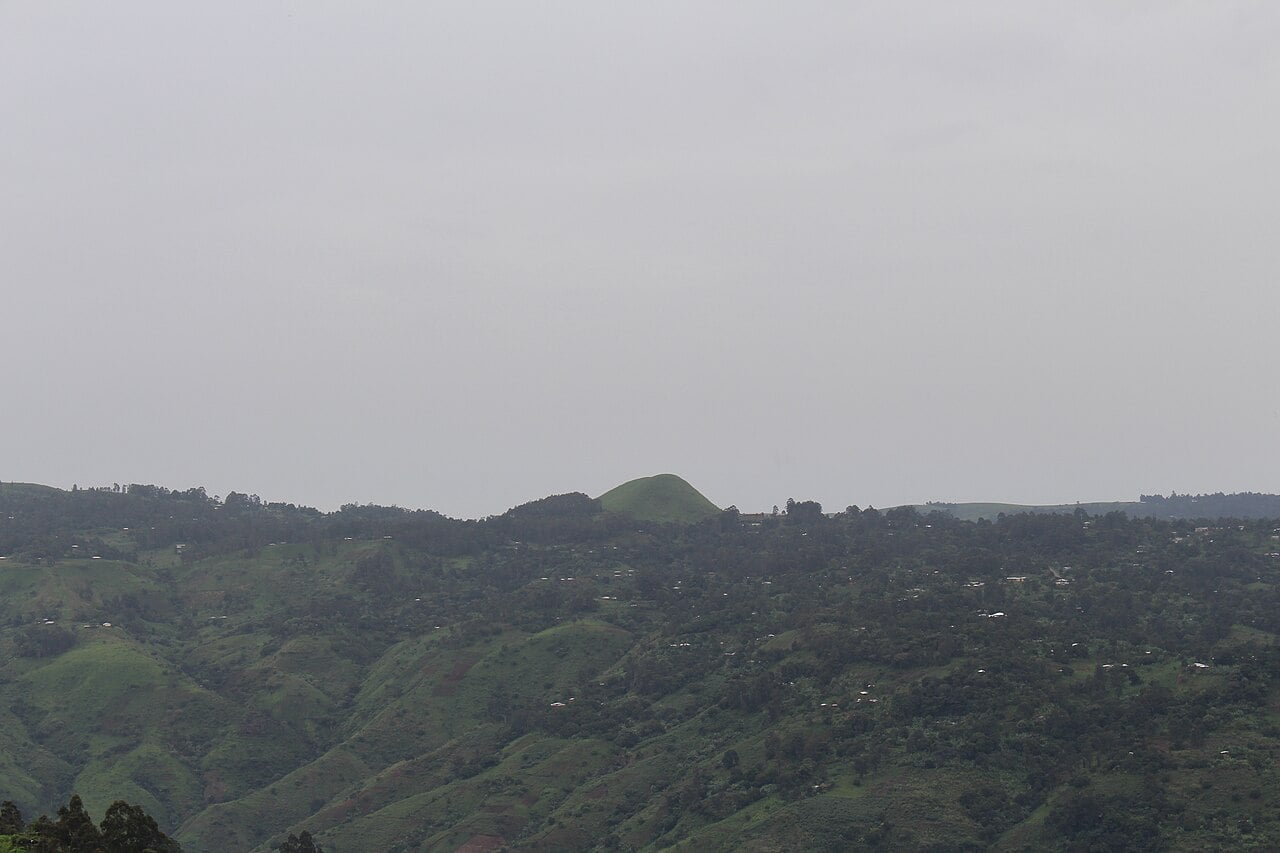
Teachers joined the protests in November 2016. On 1 October 2017, the anniversary of the union, separatists symbolically declared an independent state they call Ambazonia.
Separatists are people who want a region to break away and form a state of its own. Fighting between armed separatists and state forces has continued since 2017.
Death toll figures are disputed, and no single authoritative count exists. The UN Office for the Coordination of Humanitarian Affairs, known as OCHA, gives a picture of the human cost.
Its Humanitarian Needs and Response Plan 2026 says 2.9 million people need aid in Cameroon, and it prioritises six regions, including the North-West and South-West. OCHA’s year-end 2025 dashboard put the number of internally displaced people in the North-West and South-West at nearly 335,000.
The plan seeks US$319 million and was 20% funded on 31 March 2026. Boko Haram, an Islamist armed group, and other Islamist violence in the Far North region, which borders Nigeria and Chad, is a second security problem.
The 2025 Election and What Comes Next
Cameroon held a presidential election on 12 October 2025. On 27 October 2025, the Constitutional Council, the body that certifies election results, announced that Paul Biya had won an eighth term.
Biya, who is 93 years old and has been in office since 1982, took 53.66% of the vote. Issa Tchiroma Bakary, the main opposition candidate, received 35.19%.
Turnout was 57.76%, which is the share of registered voters who cast a ballot. Tchiroma Bakary rejected the result and said he had won.
The Constitutional Council’s ruling is final and cannot be appealed. Tchiroma Bakary’s claim of victory therefore has no further legal route.
The government has called legislative and municipal elections for 7 February 2027. Those votes concern the national parliament and local councils.
The makeup of the country shapes these contests, as explained in this guide to population and ethnic groups. The Council’s ruling and the opposition’s rejection of it leave the political mood unsettled.
What Cameroon’s Past Means for US Readers
The US State Department’s travel advisory for Cameroon warns of armed violence, terrorism, kidnapping and unmarked explosive devices, especially in the North-West, South-West and Far North regions. The advisory changes over time, so readers should check travel.state.gov before any trip.
For US readers, the central question is stability after a president who is in his 90s. Cameroon’s constitution sets the rules of succession, which are explained in this page on succession rules.
The history above explains why the Anglophone regions and the Far North carry the most risk today. It also explains why the 1961 union and the 1972 vote still matter in political arguments.
Many of today’s disputes trace back to choices made between 1884 and 1972. A reader who knows that sequence can follow the news with more context, and the Cameroon country guide offers a wider overview.
Casualty figures remain disputed, and the opposition still rejects the 2025 result. The next dated step is the vote of 7 February 2027.
Frequently Asked Questions
When did Cameroon become independent?
French Cameroun became independent on 1 January 1960. The Southern Cameroons joined it on 1 October 1961 to form the Federal Republic of Cameroon.
Who has ruled Cameroon since independence?
Only two presidents have run the country since independence. Ahmadou Ahidjo led until his resignation in 1982, and Paul Biya has held office since then.
What is the Anglophone crisis?
It is a conflict between armed separatists and state forces in the English-speaking North-West and South-West regions. It began with a lawyers’ strike in October 2016 and has continued since.
Who won the 2025 presidential election?
The Constitutional Council announced on 27 October 2025 that Paul Biya had won an eighth term with 53.66% of the vote. The opposition candidate, Issa Tchiroma Bakary, rejected the result.
Is Cameroon safe for US travellers?
The US State Department warns of armed violence, terrorism and kidnapping, especially in the North-West, South-West and Far North regions. The advisory changes, so check travel.state.gov for current guidance.
Sources: UN General Assembly resolutions 1352 (XIV) and 1608 (XV); the Republic of Cameroon’s UN admission of 20 September 1960; League of Nations mandates; Constitutional Council of Cameroon; UN OCHA Humanitarian Needs and Response Plan 2026; US Department of State travel advisory for Cameroon; UN OCHA Cameroon humanitarian dashboard, 31 December 2025.
This article was produced by The Rio Times’ automated AI newsroom. Editorial responsibility: Matthias Camenzind, Publisher and Editor-in-Chief. The Rio Times also runs Ask Rio Times, which answers from 100,000+ of our own articles, the daily Latin America Power Map, and prediction-market odds on elections and markets.. How we use AI · Report an error
Expat Guide to Cameroon
What The Rio Times publishes for foreigners who live in or move to Cameroon.
Start here
Understand Cameroon