Nigeria Economy 2026 — Dangote Cut the Petrol Import Bill by 96 Percent
Economy · Nigeria
Updated 1 time · Latest: 19 September 2026
Key Facts
- —The stakes President Tinubu’s subsidy removal and naira float improved government finances but kept living costs and currency risk high.
- —The tax haul Tax collection hit ₦27.1 trillion (about US$20.5 billion) in the first seven months of 2026, with tax-to-GDP near 13%.
- —The refinery effect Dangote’s refinery hit full 650,000 barrel-a-day capacity in February 2026, as petrol import value fell 96% in early 2026.
- —The oil picture The regulator put March 2026 crude output at 1.84 million barrels a day; NNPC cited 1.71 million for the year to April.
- —The growth GDP expanded 4.43 percent year on year in the second quarter of 2026, up from 3.89 percent in the first, lifting first-half growth to 4.16 percent, the fastest pace in over a decade.
- —The prices Inflation cooled to 15.4 percent in July from a 34-percent peak, and the naira has stabilised.
- —The catch Nigeria still imports crude to feed the Dangote refinery, and pump prices remain high even after local refining took over supply.
- —The politics The cost-of-living squeeze now dominates an election campaign that began in August. President Tinubu is asking voters for a second term, five months before the vote.
Nigeria’s reform programme is entering its third year with stronger government finances and a changed fuel market. The economy is now growing at its fastest pace in over a decade. Whether ordinary households are better off is a separate question, and it now dominates an election campaign that began in August.
Tinubu’s Two Foundational Reforms
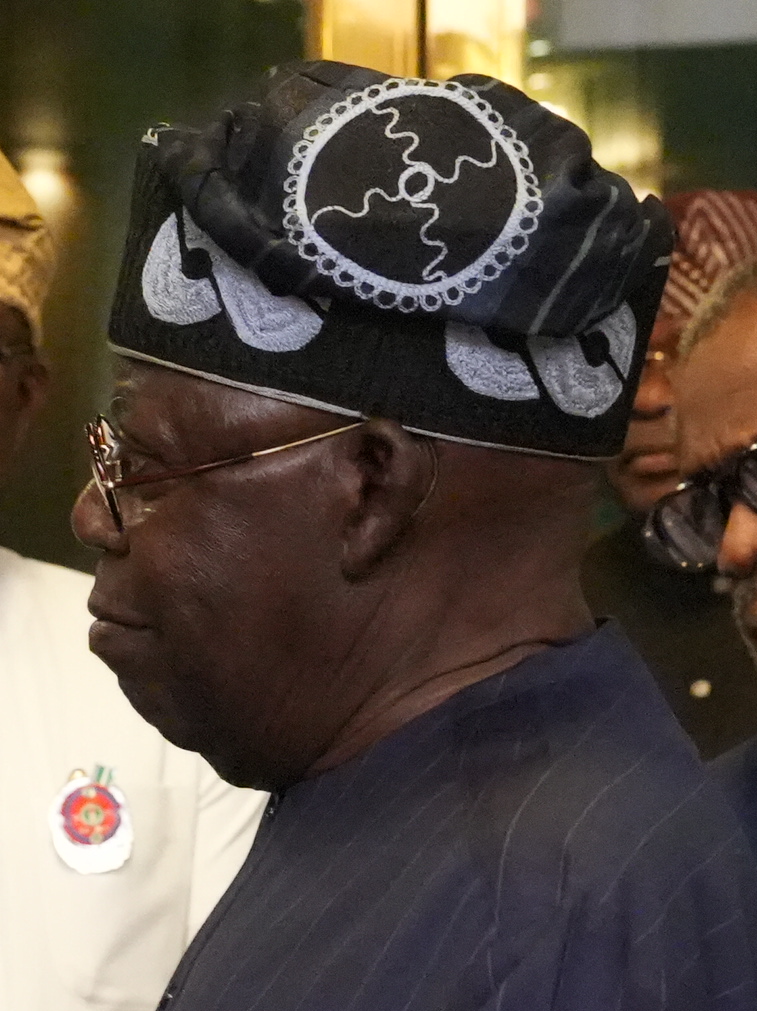
President Bola Ahmed Tinubu removed Nigeria’s petrol subsidy soon after taking office in May 2023. He also unified the country’s foreign-exchange market, moving from multiple official rates to one market-set rate.
Nigerian officials and analysts treat these two steps as the base of everything that followed. Government sources say they freed up money for other spending and helped narrow chronic budget deficits.
The political cost has been steep. Higher pump prices and transport fares hit household budgets immediately, well before any broader gains showed up.
The Naira Float and Crude Payments
Companies earning large amounts of foreign currency, particularly telecoms and energy firms, can now report dollar earnings more accurately. President Tinubu also approved a naira payment plan letting local refiners buy some crude oil in naira rather than dollars.
That mechanism eases the pressure on Nigeria’s hard-currency reserves, since some crude sales inside the country no longer require dollar settlement. The government credits it with helping the Dangote refinery expand exports of petrol and aviation fuel.
Four New Tax Laws From January 2026
Four new tax laws took effect in Nigeria on 1 January 2026. Two set the tax rules: the Nigeria Tax Act and the Nigeria Tax Administration Act.
Two set up the institutions: the Nigeria Revenue Service Establishment Act and the Joint Revenue Board Establishment Act. Together, the four laws overhaul how Nigeria collects tax.
The laws renamed the Federal Inland Revenue Service, or FIRS, as the Nigeria Revenue Service, or NRS. The NRS also absorbed some non-tax collections that other agencies used to handle.
The NRS has pushed digital tools, including a national e-invoicing system for large taxpayers. Centralised collection and stricter enforcement are the drivers officials point to.
Tax collections reached ₦27.1 trillion in the first seven months of 2026. That is about US$20.5 billion at the September 2026 rate of roughly 1,322 naira to the dollar.
Nigeria’s tax-to-GDP ratio, tax revenue as a share of the economy, rose to about 13%.
Crude Production: Two Conflicting Figures
Nigeria’s crude output was about 1.459 million barrels a day in January 2026. That is according to the Nigerian Upstream Petroleum Regulatory Commission, or NUPRC, which put March 2026 output at 1.84 million.
State oil firm NNPC Ltd gave a different figure: 1.71 million barrels a day. Chief executive Bayo Ojulari said on 28 April 2026 that this was the average over the past year, a five-year high.
The two figures cover different periods, but gaps between regulator and company data are common in Nigeria’s oil reporting. Much of Nigeria’s crude output also repays debts to oil majors, banks and traders, put at around 400,000 barrels a day.
Because of those debt-linked allocations, the Dangote refinery gets only about five domestic crude cargoes a month, but needs 13 to 15. It buys the rest abroad at world prices, narrowing its cost edge over imported fuel.
Dangote Refinery Reaches Full Capacity
The Dangote Petroleum Refinery, billed as the world’s largest single-train refinery, has a nameplate capacity of 650,000 barrels a day. Company and market reporting say it reached that full capacity in February 2026.
Nigeria’s downstream regulator, NMDPRA, reported average petrol supply of 64.9 million litres a day in January 2026. Domestic refiners, mainly Dangote, supplied 40.1 million litres of that, against 24.8 million litres of imports.
That was the first month in 13 that local output beat imports. By February, refiners supplied 36.5 million litres a day against just 3.0 million litres of imports, NMDPRA data show.
That put domestic refining at about 92% of national petrol supply.
From Fuel Importer To Exporter
By March 2026, NMDPRA data showed average petrol output of 48.2 million litres a day. About 434 million litres were exported that month, Nigeria’s first sustained run as a net petrol exporter.
Nigeria’s National Bureau of Statistics reported that the naira value of petrol imports fell 96% in the first quarter of 2026. It fell from ₦2.271 trillion a year earlier to ₦87.401 billion.
Officials credit the fall to rising domestic supply from Dangote. That is a drop in import value, not litres, but it matches the volume declines NMDPRA reported over the same months.
Reuters separately found that record pump prices persisted even as imports fell. That shows local refining has not yet meant cheaper fuel for drivers.
A Legal Fight Over Import Licences
Dangote Refinery has taken NNPC, fuel marketers and NMDPRA to court over import permits. It argues Nigerian law only allows fuel imports when local supply cannot meet demand.
The refinery filed its latest suit at the Federal High Court in Lagos on 15 May 2026. By August 2026, Dangote had also begun refusing to sell petrol to marketers who kept importing fuel, deepening the standoff.
Inflation And Living Costs
The end of the fuel subsidy and the naira float triggered a sharp repricing of transport, food and utilities. Government officials say the reforms restored fiscal room, but the cost-of-living squeeze on households remains visible.
Reuters reported that record pump prices persisted into late March 2026 despite the new refining capacity. Nigeria’s finance minister called the current stage a “consolidation phase” in January 2026.
Officials still use that phrase to explain why relief has been slow to reach households.
Growth and inflation show the other side of the ledger. GDP expanded 4.43 percent year on year in the second quarter of 2026, up from 3.89 percent in the first, lifting first-half growth to 4.16 percent. Inflation cooled to 15.4 percent in July from a 34-percent peak, and the naira has stabilised.
The catch is political. The cost-of-living squeeze now dominates an election campaign that began in August, and President Tinubu is asking voters for a second term, five months before the vote.
Corporate Earnings Rise Alongside Tax Revenue
Five listed groups, MTN, Dangote, BUA, Transcorp and Seplat, reported combined first-half 2026 revenue of ₦14.4 trillion, about US$10.9 billion. Their combined profit came to ₦4.99 trillion, about US$3.8 billion.
Officials link the gains partly to clearer pricing under the unified exchange rate, which helps firms with large dollar earnings. The same broad reform story, tax enforcement plus FX unification, also explains the tax-to-GDP rise.
More: Nigeria news in English, every day from The Rio Times.
The big picture: Nigeria explained — economy, politics, society and daily life in one read.
Risks Ahead
Domestic fuel prices remain historically high even with local refining at full capacity. That traces back to the cost of imported crude feedstock and to debt-service claims on Nigeria’s own oil output.
Nigeria’s tax-to-GDP ratio of about 13% remains low by international standards, leaving room for further enforcement. The market-set naira can still move quickly on oil output figures and crude prices.
Nigeria’s economy in September 2026 tells a clearer fiscal story than at any point since the reforms began. But those gains have not yet reached most households as lower living costs.
The fight over fuel imports shows the transition is still unfinished.
Connected Coverage
Nigeria’s Central Bank Cut a Rate Its Market Was Pushing Higher
Nigeria Is Back in the FTSE Frontier Index, Three Years On
Nigeria’s Exports to China Jump 81% After Tariffs End
The Big Picture
More from the Nigeria section
Frequently Asked Questions
How is Nigeria’s economy doing in 2026?
Growing at its fastest pace in over a decade. GDP expanded 4.43 percent year on year in the second quarter of 2026, inflation cooled to 15.4 percent in July from a 34-percent peak, and the naira has stabilised. The cost-of-living squeeze remains severe and dominates the election campaign that began in August 2026.
What are Tinubu’s economic reforms?
President Bola Tinubu ended the fuel subsidy in 2023, floated the naira, overhauled the tax system and cleared the central bank’s foreign-exchange backlog. Investors and economists praise the reforms; households bore a sharp cost-of-living crisis as inflation spiked to 34 percent before cooling through 2025 and 2026.
How did Nigeria’s fuel subsidy removal work out?
Mixed but increasingly positive. It freed large fiscal savings and removed a distortion that had suppressed prices for years, but triggered a painful inflation spike. By mid-2026 growth had accelerated above 4 percent and inflation had more than halved from its peak.
When is Nigeria’s next presidential election?
Early 2027. Campaigning formally began in August 2026, five months before the vote, with President Tinubu seeking a second term amid a divided opposition.
This article was produced by The Rio Times’ automated newsroom system. How we use AI · Report an error · Editorial responsibility: Matthias Camenzind, Editor-in-Chief
LatAm Markets: Live Signals → — real-time movers, turnover leaders and FX across Latin America.
Expat Guide to Nigeria
What The Rio Times publishes for foreigners who live in or move to Nigeria.
Start here
- Nigeria Security and Crime Explained 2026
- Davido Lagos Residency Books Three National Theatre Nights in Nigeria
- Nigeria Visa 2026: US$2,000 Residence Card, US$15 Daily Fine
- Healthcare in Nigeria for expats and what it actually costs
City guides
Coming up in Nigeria
- Lagos Church Opens Free Camp Meeting on 21 October 2026 21 Oct
- Lagos Fashion Week Runs 28 October to 1 November 2026 28 Oct
- AFRIFF 15 Film Festival Runs 1 to 7 November in Lagos 1 Nov
- CANEX WKND 2026 Opens in Lagos on 5 November 5 Nov
Understand Nigeria