Who Is Bola Tinubu? Nigeria’s President, His Reforms and the 2027 Race Explained
PROFILES · NIGERIA
Key Facts
- —The country Nigeria is Africa’s most populous nation, with about 237.5 million people in 2025 on World Bank figures. Its economy was worth about US$291 billion that year, and it is a major oil exporter.
- —Who he is Bola Ahmed Tinubu, president since 29 May 2023. A US-trained accountant and former oil executive, he governed Lagos State from 1999 to 2007.
- —Power base Lagos and the Yoruba southwest, plus the All Progressives Congress (APC), the party he helped found in 2013.
- —Record Ended the petrol subsidy and floated the naira in 2023. Growth reached 4.43 percent in the second quarter of 2026 and inflation eased to 15.39 percent in August.
- —Controversies A 1993 US civil forfeiture of US$460,000, disputes over his Chicago degree, and a dismissed 2011 asset case. He was never criminally charged in the US and denies wrongdoing.
- —Outlook He seeks a second term in the presidential election on Saturday 16 January 2027, against Atiku Abubakar, Peter Obi and 15 other candidates.
Who is Bola Tinubu? A plain-English profile of Nigeria’s president: his origins, his political machine, his reforms, the allegations against him and the January 2027 election.
Bola Tinubu runs the largest country in Africa by population and one of its biggest economies. His 2023 reforms reset Nigeria’s currency and fuel prices. His re-election bid in January 2027 will shape the outlook for investors, oil markets and West Africa.
Naira figures in this profile are converted at about 1,329 naira to the US dollar, the market rate on 29 September 2026.
Early life and career
Bola Ahmed Tinubu was born in Lagos on 29 March 1952, according to his official biography. Political opponents have long disputed that birth year. He has not changed it.
He studied in Chicago in the 1970s, first at Richard J. Daley College and then at Chicago State University. The university has confirmed that he graduated in 1979 with a degree in business administration.
After graduating he worked as an accountant at the US offices of Arthur Andersen and Deloitte. He then returned to Nigeria as a senior finance executive at Mobil Oil. That mix of American accounting and oil-industry money shaped his later reputation as a numbers man.
For a foreign reader, the key point is simple. Tinubu came to politics from business, not from the army or the civil service. Most of Nigeria’s earlier leaders came from one of those two.
Rise to power
Tinubu entered the Senate in December 1992 for Lagos West, representing the Social Democratic Party. His term ended in November 1993, when General Sani Abacha seized power and dissolved the elected institutions.
He then joined the National Democratic Coalition, known as NADECO, a pro-democracy movement opposed to military rule. He spent 1994 to 1998 in exile. He returned as the generals prepared to hand power back to civilians.
In 1999 he won the governorship of Lagos State for the Alliance for Democracy. He served two terms, from 29 May 1999 to 29 May 2007, later under the Action Congress banner. Lagos is Nigeria’s commercial capital, and his supporters credit him with modernising its tax collection.
His biggest move came in 2013. He helped merge several opposition parties into the All Progressives Congress. The new party backed Muhammadu Buhari. In 2015 Buhari became the first opposition candidate to unseat a sitting Nigerian president.
After two Buhari terms, it was Tinubu’s turn. On 25 February 2023 he won the presidency with 8,794,726 votes, or 36.61 percent. Atiku Abubakar took 29.07 percent and Peter Obi 25.40 percent. Turnout was only 26.71 percent.
Both rivals challenged the result. On 26 October 2023 a seven-judge Supreme Court panel dismissed their appeals and upheld his victory.
Power base
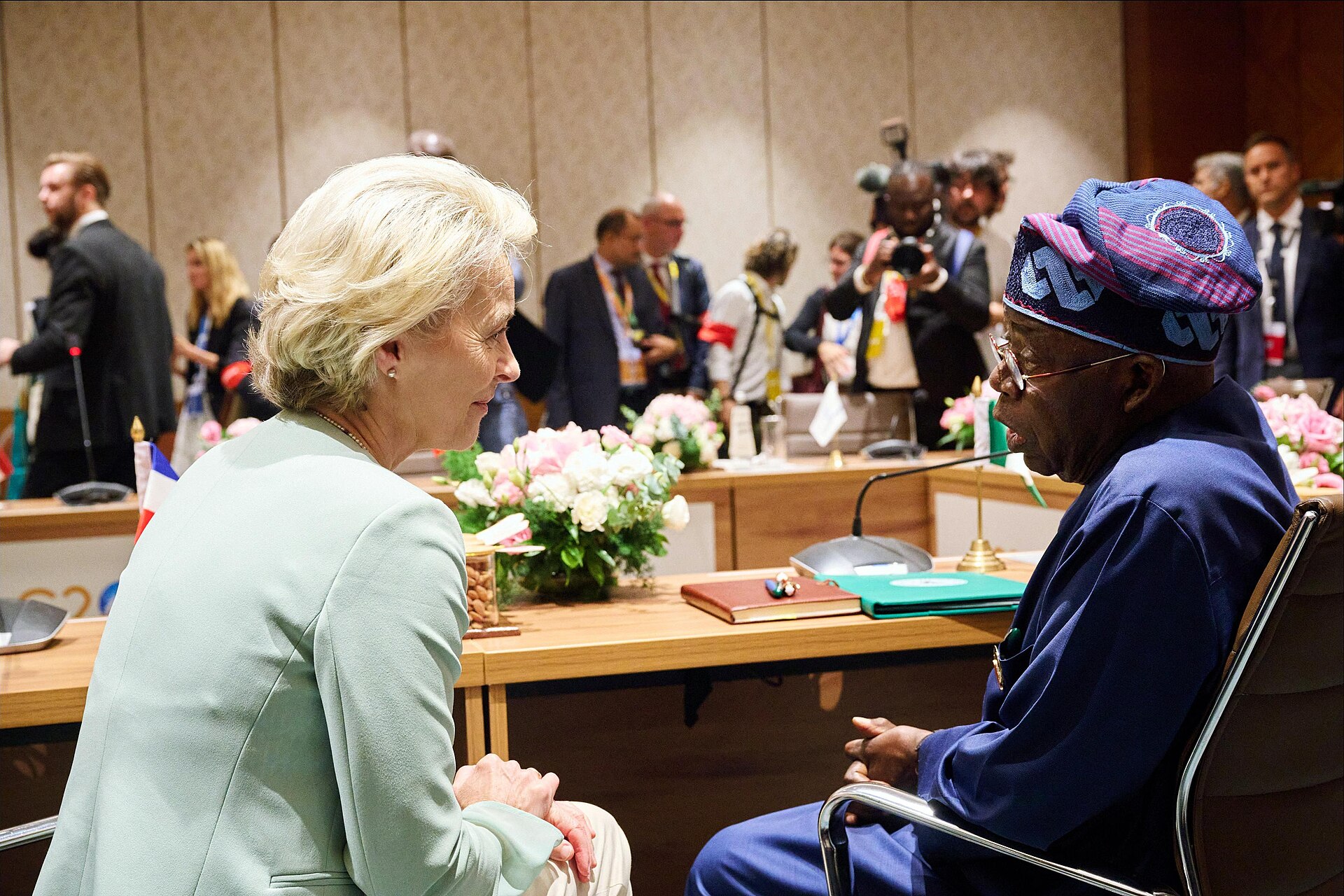
Tinubu’s first power base is Lagos. His former aides and allies have governed the state since he left office. Its current governor, Babajide Sanwo-Olu, is from Tinubu’s own party. Nigerians often call Tinubu by his chieftaincy title, Jagaban.
The second is the Yoruba-speaking southwest, the region he has represented in national bargaining for three decades. Federal politics in Nigeria is a balancing act between north, southwest and southeast. His 2023 victory depended on keeping enough northern support as well.
The third is the APC itself. The party controls the presidency and most state governments. It confirmed Tinubu as its 2027 candidate with Vice President Kashim Shettima, a former Borno State governor, again as his running mate.
His style is transactional and patient. He is known less for speeches than for building coalitions and placing loyalists in key posts. That skill won him the presidency. Critics say it also blurs the line between party, state and personal network.
Record in office
The two big reforms of 2023
On inauguration day, 29 May 2023, Tinubu declared that the petrol subsidy was gone. The subsidy had kept pump prices artificially low for decades and cost the state heavily.
The effect was immediate. The National Bureau of Statistics (NBS) put the average petrol price at ₦238.11 (about US$0.18) a litre in May 2023. By June it was ₦545.83 (about US$0.41). In May 2026 it reached ₦1,596.25 (about US$1.20).
The second reform was the currency. On 9 June 2023 he suspended the central bank governor, Godwin Emefiele. On 14 June the central bank unified its exchange-rate windows. Reuters reported that the naira fell more than 36 percent on the official market that day.
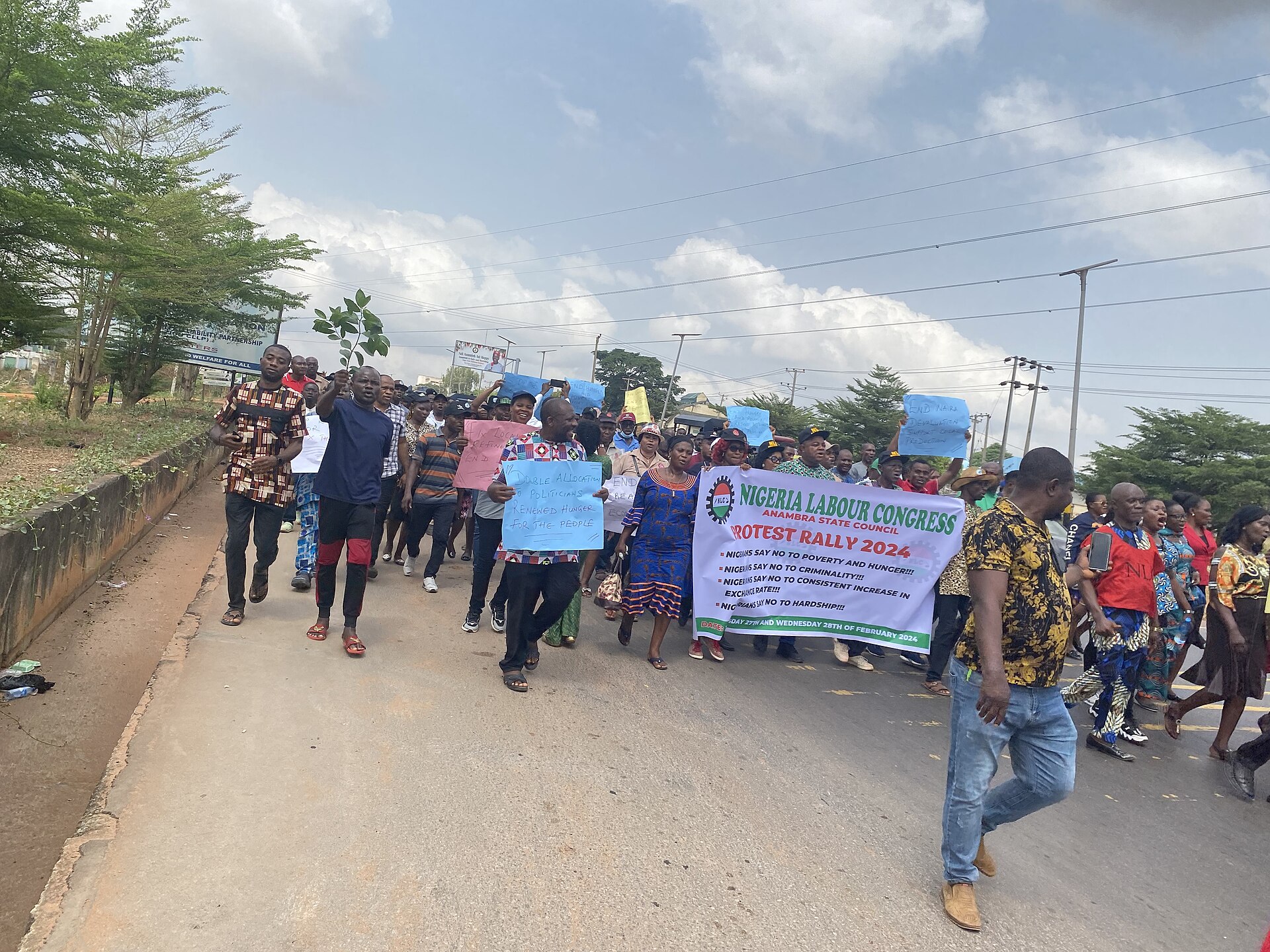
Together these moves ended two costly distortions at once. They also drove prices up sharply. Households paid for the adjustment, and many are still paying.
Wages, taxes and the numbers now
Labour unions pushed back hard. On 29 July 2024 Tinubu signed a new national minimum wage of ₦70,000 (about US$53) a month into law.
On 26 June 2025 he signed four tax reform acts, which took effect on 1 January 2026. They merged old tax laws into one Nigeria Tax Act and turned the federal tax office into the Nigeria Revenue Service.
The big numbers have improved. The NBS reported growth of 4.43 percent in the second quarter of 2026, up from 3.89 percent in the first quarter. Inflation fell to 15.39 percent in August 2026. The statistics office rebased the price index in 2025, so older rates above 30 percent are not directly comparable.
On 22 September 2026 the Central Bank of Nigeria cut its policy rate from 26.5 percent to 23 percent. Foreign reserves stood at US$55.25 billion on 18 September, an 18-year high, the central bank said.
Security and the state
On 18 March 2025 Tinubu declared a six-month state of emergency in oil-rich Rivers State. He suspended the governor, Siminalayi Fubara, and the state assembly. He ended it in September 2025 and restored them.
Late in 2025 the United States named Nigeria a Country of Particular Concern over religious freedom. Tinubu replied that Nigeria protects citizens of all faiths. On 25 December 2025 US forces struck Islamic State targets in Sokoto State, in coordination with Nigeria’s government.
In January 2026 the military said it had foiled a coup plot. In April a court martial opened for 36 service personnel on mutiny charges, behind closed doors. Six civilians charged separately in a federal court pleaded not guilty.
Controversies
Several allegations have followed Tinubu for years. None has led to a criminal conviction. Each is set out below with who raised it, where it stands and what he says.
The 1993 US forfeiture case
In 1993 US prosecutors in Illinois alleged that money in bank accounts linked to Tinubu came from heroin trafficking. A federal court ordered the civil forfeiture of US$460,000. The case targeted the money, not the man, and he was never criminally charged.
In 2023 Nigeria’s election tribunal found that petitioners had not proved he was ever arrested, convicted or sentenced in the United States. The issue returned through a US freedom-of-information lawsuit by the activist Aaron Greenspan.
In April 2025 Judge Beryl Howell ruled that the FBI and the Drug Enforcement Administration had wrongly refused to confirm their records. Redacted pages have since been released. Tinubu joined the case to argue that remaining redactions should stay, citing privacy.
His spokesman, Bayo Onanuga, said in September 2026 that it was “not a criminal case against President Bola Ahmed Tinubu”.
The Chicago degree dispute
After the 2023 election, Atiku Abubakar alleged that the Chicago State University certificate Tinubu filed with the electoral commission was forged. A US court ordered the university to release his records to Atiku’s lawyers.
The university confirmed that Tinubu attended and graduated in 1979. Tinubu’s lawyers rejected the forgery claim. The Supreme Court refused to admit Atiku’s new evidence because it came too late. The claim was therefore never tested on its merits in a Nigerian court.
The 2011 foreign accounts case
In 2011 the federal government charged Tinubu before the Code of Conduct Tribunal. The charges alleged he illegally operated ten foreign bank accounts while governor. On 30 November 2011 the tribunal dismissed the case, calling the charges defective. Tinubu had denied the charges and challenged the tribunal’s authority, a challenge it rejected.
Health and absences
Tinubu left Nigeria on 30 August 2026 for London and Paris on what the presidency calls a working vacation. He missed the UN General Assembly for a third straight year, and Vice President Shettima led the delegation.
On 20 September Atiku demanded a public explanation for the repeated absences. On 21 September he asked who was constitutionally in charge while the president was abroad. The presidency has given no medical details and says the president is well and working from Europe.
What to watch
As of 27 September 2026, the campaign is under way. Presidential campaigning opened on 19 August 2026 under a new Electoral Act signed in February. The electoral commission lists 18 presidential candidates.
The main challengers are Atiku Abubakar for the African Democratic Congress, with Rotimi Amaechi as running mate. Peter Obi runs for the NDC, with Rabiu Kwankwaso. Both are former Tinubu rivals from 2023.
- 1 October 2026: Independence Day, Nigeria’s 66th, and a traditional moment for a presidential address.
- Monthly NBS inflation data: whether the decline since the rebasing holds after the rate cut.
- The naira: whether the official rate holds near 1,330 to the dollar through the campaign.
- Saturday 16 January 2027: presidential and National Assembly elections.
- Saturday 6 February 2027: governorship and state assembly elections.
Nigeria’s constitution also requires a winner to take at least a quarter of the vote in two-thirds of the states. That rule makes a runoff possible in a close three-way race.
What this means for foreigners and investors
For investors, Tinubu stands for continuity of the 2023 reforms. That means a market-set naira, no petrol subsidy and a central bank now cutting rates. A second term would most likely extend that course. A change of president would reopen questions about policy direction.
Foreign money has noticed the stabilisation. BusinessDay reported that J.P. Morgan added Nigerian bonds to a new emerging-market index in 2026, after an 11-year absence. Election periods in Nigeria, however, often bring currency pressure and delays in decisions.
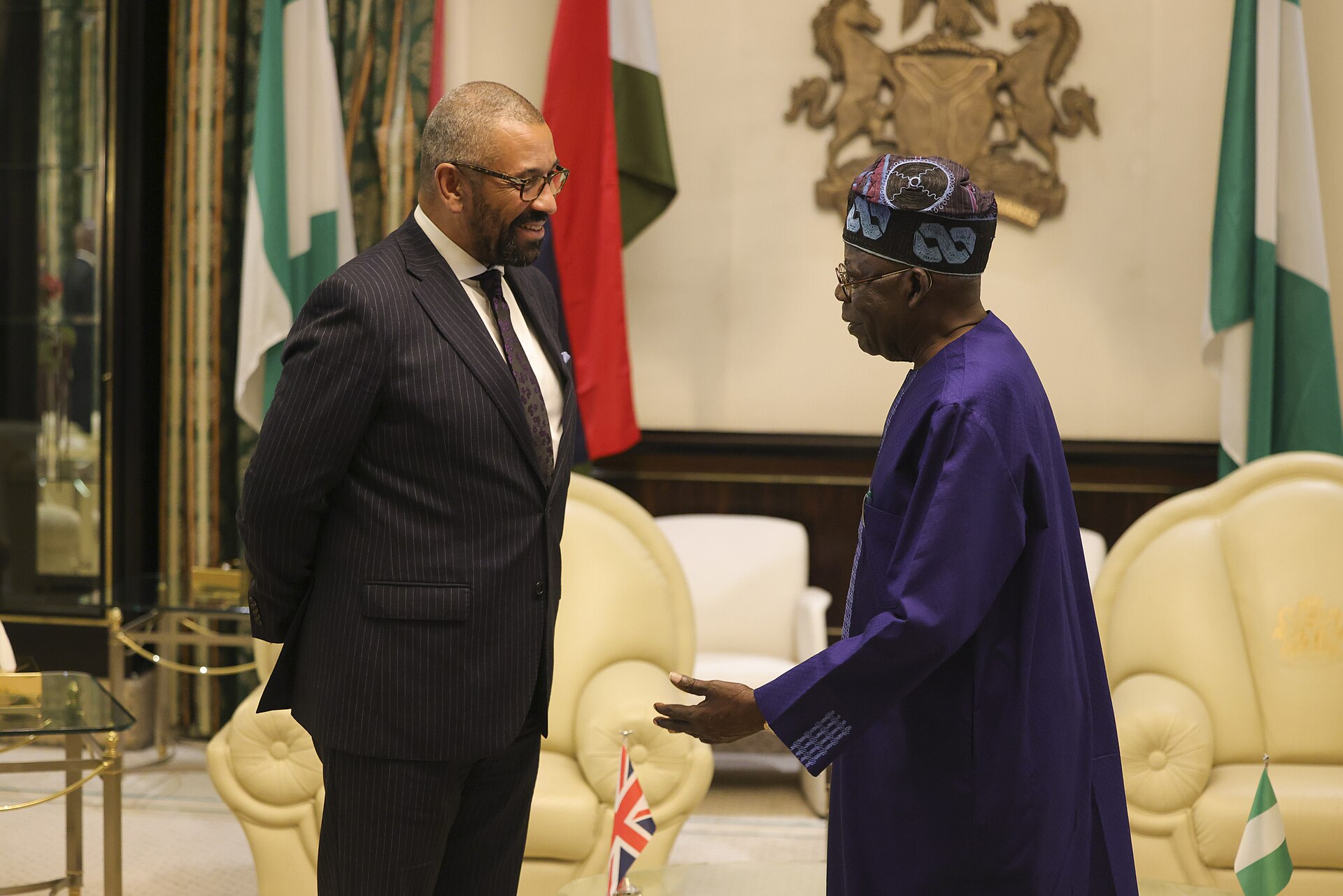
For foreign residents and visitors, daily costs are shaped by the same forces. Fuel, transport and food prices move with the naira and petrol prices. Security varies sharply by region, so official travel advice matters more than national averages.
Connected Coverage
Nigeria Explained: The Country, Tinubu’s Reforms and What to Watch
Tinubu Secures APC Nomination for Nigeria 2027 Election Race as Opposition Coalition Falters
Nigeria’s President Tinubu Delays Return From Europe Again, Now Due Tuesday
Tinubu Asks US Court to Keep His FBI and DEA Records Sealed
Nigeria’s Tinubu Skips UN General Assembly for Third Straight Year
Who Is Aliko Dangote? Africa’s Richest Man Explained: the Refinery, the Empire and What to Watch
What Is Not Known
Tinubu’s exact age. His official birth date is 29 March 1952, but opponents dispute it and no independent record has settled the question publicly.
What the remaining redacted US records say. The FBI and DEA files released so far are partly blacked out, and the court fight over the rest continues.
The state of his health. The presidency has published no medical information, and claims either way are unverified.
Who wins in January 2027. Nigeria has little reliable independent polling, and turnout in 2023 was barely a quarter of registered voters.
Sources: Election data from the Independent National Electoral Commission. Economic data from the National Bureau of Statistics, the Central Bank of Nigeria and the World Bank. Court records as reported by Nigerian and international media. All accessed 27 September 2026.
- Voice of Nigeria — INEC revised timetable for the 2027 general election
- World Bank — Nigeria population and GDP, 2025
- Voice of Nigeria — NBS: GDP grew 4.43 percent in Q2 2026
- Premium Times — NBS: inflation 15.39 percent in August 2026
- Lagos Chamber of Commerce — CBN rate decision, 22 September 2026
- Channels Television — Supreme Court upholds 2023 election result
- Sahara Reporters — Code of Conduct Tribunal dismisses 2011 charges
- Andersen Nigeria — the 2025 tax reform acts
Frequently Asked Questions
Who is Bola Tinubu?
Bola Ahmed Tinubu has been president of Nigeria since 29 May 2023. He is a former accountant and Mobil Oil executive who governed Lagos State from 1999 to 2007 and co-founded the All Progressives Congress in 2013.
What are Tinubu’s main economic reforms?
He ended the petrol subsidy on his first day in office and let the naira float in June 2023. He later signed four tax reform acts that took effect on 1 January 2026.
Was Tinubu charged with drug trafficking in the United States?
No. In 1993 a US court ordered the civil forfeiture of US$460,000 that prosecutors alleged was linked to heroin trafficking. The case targeted the money, and Tinubu was never criminally charged. His spokesman says it was not a criminal case against him.
When is Nigeria’s next presidential election?
The presidential and National Assembly elections are on Saturday 16 January 2027. Governorship and state assembly elections follow on Saturday 6 February 2027.
Who is running against Tinubu in 2027?
The electoral commission lists 18 presidential candidates. The main challengers are Atiku Abubakar of the African Democratic Congress and Peter Obi of the NDC.
This article was produced by The Rio Times’ automated newsroom system. How we use AI · Report an error
Read More from The Rio Times
- MOGA Festival 2026 Last-Minute Guide: Essaouira, Morocco, Opens 30 September With Saturday Day Passes Sold Out
- ULTRA South Africa 2027: Cape Town on 30 April, Johannesburg on 1 May as First Tickets Sell Out
- Oskido Big Day Out 2026: Two Stages at Johannesburg’s Huddle Park, South Africa, on 28 November