Healthcare in Nigeria for expats and what it actually costs
Nigeria · Healthcare
Key Facts
- —What the state provides Nigeria runs health care in three tiers — federal tertiary hospitals, state general hospitals, and primary care in 774 local government areas.
- —Who is covered Health insurance has been compulsory for residents since May 2022, but about 91 per cent of the population had none in 2024.
- —What a visit costs A private consultation in Lagos ran 20,000 to 25,000 naira (about US$15 to US$19) in late 2025, plus a registration fee.
- —What to be vaccinated for Yellow fever certification is required to enter and to leave Nigeria. Hepatitis A, typhoid and the routine schedule are also advised.
- —The cover that travels Medical evacuation cover pays to fly a patient to a hospital that can treat the case. Operators publish no prices.
- —The catch Compulsory insurance is the law, not the waiting room. Private cover and evacuation are what foreign residents actually rely on.
The public system is three tiers deep and nine tenths uninsured. What a foreign resident actually uses sits alongside it, and costs less than you would guess.
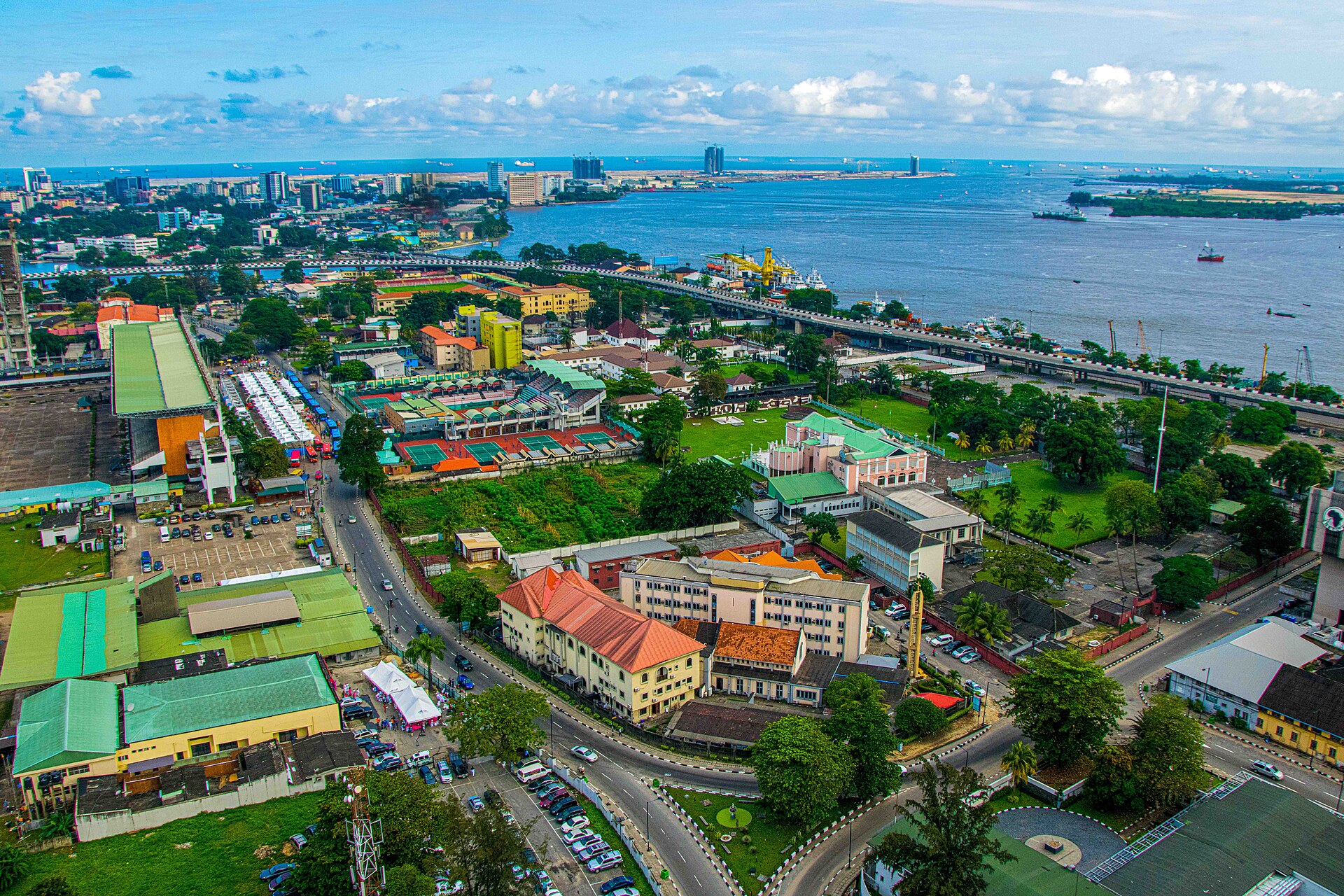
Healthcare in Nigeria for expats is not one system but two, running side by side. There is the public network, and there is the private sector almost every foreign resident uses instead.
The distance between the two is the whole story. It decides what you pay, where you go, and what happens on the worst day.
All naira figures below convert at 1,327.88 naira (about US$1), the mid-market rate on 17 September 2026. Where a price carries a date, the date is given.
Three tiers of government, and three tiers of care
Nigeria divides health care by tier of government. The federal government runs tertiary care through teaching hospitals, federal medical centres and specialist hospitals.
State governments run secondary care through general hospitals and coordinate primary care. The 774 local government areas run primary health care themselves.
The Commonwealth Fund’s country profile, dated January 2026, records what that design produces. Nigeria spent 3.86 per cent of GDP on health in 2023.
Total health expenditure was US$16.6 billion in 2022, of which the government share was US$2.2 billion. Per capita spending was US$70, and US$48 of that came out of patients’ pockets.
Out-of-pocket payment accounted for 70.94 per cent of all health spending in 2023. The average across lower-middle-income countries is 35.5 per cent.
There were 38 primary care physicians per 100,000 people in 2023. Those two figures together explain most of what a foreign resident meets.
The 2022 law that made cover compulsory
The National Health Insurance Authority Act 2022 commenced on 19 May 2022. Section 14 makes health insurance mandatory for every Nigerian and for legal residents.
Expatriates holding a residence permit are legal residents. On paper, the obligation reaches them.
Section 58 repealed the older National Health Insurance Scheme Act. Sections 25 to 30 create a Vulnerable Group Fund for people who cannot pay for themselves.
Sections 48 and 49 provide for offences and sanctions against parties who fail to comply. Whether an employer-provided plan discharges the section 14 duty is not settled in published guidance.
Coverage is the gap. Vanguard reported on 8 July 2026 that NHIA Director-General Dr Kelechi Ohiri put the covered population at 22.03 million.
He was speaking at an industry meeting in Lagos, and the figure was a rise of 35 per cent year on year. Nigeria’s population is well above 200 million.
The Commonwealth Fund put insurance at 9 per cent public and 2 per cent private in 2024. About 91 per cent of the population had no cover at all.
Mandatory, then, describes the statute rather than the waiting room. An arriving foreigner should treat private cover as the arrangement that actually functions.
Where foreign residents actually go
In Lagos the short list is well known. Reddington Hospital on Victoria Island and Evercare Hospital in Lekki Phase 1 sit at the top of it.
Lagoon Hospital runs sites on Victoria Island and at Ikeja. St Nicholas Hospital on Lagos Island is the other name that recurs.
Published Lagos fees, last verified around late December 2025, give a workable benchmark. A consultation at Reddington, Evercare or Lagoon Victoria Island was 25,000 naira (about US$19).
Registration at those three added 10,000 naira (about US$8). At Lagoon Ikeja and St Nicholas the consultation was 20,000 naira (about US$15), with registration of 8,000 naira (about US$6).
Two Abuja names that recur are Cedarcrest Hospitals and Nisa Premier. Neither publishes a consultation fee, and nor does Duchess International Hospital in Ikeja.
HMO plans are the local insurance layer, sold by health maintenance organisations. AXA Mansard EasyCare was listed at 12,000 naira a year (about US$9).
The Lagos State scheme Ilera Eko, run by LASHMA, was listed at 8,500 naira a year (about US$6) for one adult. MyCoverGenius FlexiCare was 4,000 naira a month (about US$3).
These are Nigerian plans paying Nigerian tariffs at Nigerian hospitals. They are inexpensive because of what they do not reach.
The cover that matters is the one that moves you
Cost is the wrong lens on healthcare in Nigeria for expats. Access is the right one.
For a serious event, the decisive variable is not the consultation fee. It is whether you can be moved to a facility able to treat you.
That is what medical evacuation cover buys. An international policy with an evacuation benefit pays to fly a patient out to a hospital that can treat them.
Air ambulance operators publish no prices for Nigeria. Missions are quoted one at a time, and the quote turns on a short list of variables.
Those are distance and route complexity, the aircraft type, and the ground ambulance transfers at each end. Crew qualifications, onboard equipment, international permits and customs processing complete the bill.
Flying Doctors Nigeria, founded by Dr Ola Orekunrin, is the best-known operator domiciled in the country. Other operators fly the route to Europe from outside Nigeria.
The practical test of a policy is not the sum insured. It is whether evacuation is included, who authorises it, and how quickly that decision is made.
What you need in your arm before you land
A yellow fever vaccination certificate is required of all travellers entering Nigeria. It is required on exit as well, which catches people at the airport.
Infants under nine months and adults over sixty are exempt from the requirement. Vaccination is still advised for them, because transmission occurs throughout the country.
The paper yellow card is being phased out in favour of a digital record. The United Kingdom’s travel health service publishes the current position on that change.
Beyond yellow fever, its advice for all travellers covers the routine schedule. That means measles, mumps and rubella, tetanus, polio and diphtheria, plus hepatitis A and typhoid.
Depending on the posting, it also lists hepatitis B, meningococcal ACWY, rabies and tuberculosis. Dengue, chikungunya and cholera vaccines appear for some travellers.
As of September 2026 the same source recorded Lassa fever across 24 states. There were 1,056 confirmed cases and 253 deaths in the year to that point.
Malaria is a fact, not a scare
Malaria risk is high across the whole of Nigeria, through the year. This is not a warning about one bad region; it is the baseline condition.
Chemoprophylaxis is the standard answer. The recommended options are atovaquone with proguanil, doxycycline, or mefloquine, chosen with a doctor before departure.
Prophylaxis does not replace not being bitten. Bite avoidance from dusk to dawn does most of the work, and long-term residents keep at it for years.
The other half of living with malaria is testing early. Fever is tested for malaria first and treated quickly, and that is routine rather than alarming.
Water, food and the ordinary precautions
Tap water in Nigeria is not uniformly safe to drink. Residents use bottled, filtered or boiled water, including for ice and for brushing teeth.
The same logic applies to food. Salads washed in untreated water and ice from unknown sources are the usual routes to a bad week.
Cholera outbreaks were current in September 2026, alongside dengue, on the same travel health advice. Those are the reasons the habit is worth keeping.

Checking that the medicine is medicine
Counterfeit medicine is a documented problem rather than a rumour. Nigeria’s regulator, NAFDAC, launched an app called Greenbook in March 2025 to address it.
Greenbook is a searchable database of NAFDAC-registered drug products. A product is looked up by name, brand or registration number before it is taken.
It was launched in Port Harcourt, Rivers State, under Director-General Professor Mojisola Adeyeye. Nigeria was described as the first African country to deploy the technology.
The scale is not theoretical. Reporting at the time cited counterfeit drugs worth 100 billion naira (about US$75 million) seized in Ibadan.
A further seizure in Lagos was valued at 1.2 billion naira (about US$904,000). Those are enforcement figures from March 2025, not a running total.
The step residents take is small. Buy only from a registered pharmacy, then check the NAFDAC number in Greenbook before the first dose.
Blood, ambulances and the traffic
Blood supply is the quiet constraint. The World Health Organization’s Africa office put Nigeria’s national requirement at about 1.8 million units a year.
In the same statement, dated 14 June 2018, voluntary unpaid donation accounted for only 10 per cent of collection. The remainder came from family replacement and paid donors.
That figure is old, and Nigerian newspapers have since reported a continuing shortfall attributed to the national blood service. A planned operation can still depend on relatives presenting themselves.
Lagos State runs its own emergency service. The number is 123, and treatment in the first 24 hours of an emergency is free as a matter of state policy.
The state health ministry lists 15 ambulance points across Lagos, with five more planned. Ten of the ambulances are mobile intensive care units capable of advanced life support.
There is also a Marine Rescue Unit for incidents on the water. A city that needs boats to reach patients is telling you something about its roads.
Fifteen ambulance points is not many for a city the size of Lagos. That arithmetic, more than any brochure, is why the private evacuation market exists.
What a year of this actually looks like
Healthcare in Nigeria for expats settles, for most people, into a routine. A local HMO plan handles ordinary care at a private hospital chosen in advance.
An international policy with evacuation cover sits behind it. The first pays for the clinic; the second pays for the aeroplane.
Register at that hospital before you need it, because registration is a separate fee and a separate queue. Keep the file number to hand.
Keep prophylaxis going and keep a rapid malaria test in the house. Keep drinking water you trust, and keep checking medicines against Greenbook.
Know your blood group, and know that 123 reaches a Lagos ambulance. Know also how long that ambulance would take to reach your street.
None of this is exotic. It is a set of small, repeatable habits that turn a difficult system into a manageable one.
More: Africa coverage, every day from The Rio Times.
Sources: The Commonwealth Fund on Nigeria’s three tiers and out-of-pocket spending, Law Nigeria on the text of the National Health Insurance Authority Act 2022, Vanguard on NHIA enrolment reaching 22 million, NaTHNaC on vaccination and malaria advice for Nigeria, NaTHNaC on the phase-out of the paper yellow card, Lagos.cool on consultation fees and HMO plans in Lagos, Channels Television on the NAFDAC Greenbook app, WHO Africa on Nigeria’s annual blood requirement, Lagos State Ministry of Health on LASAMBUS and LASEMS, Medical Air Service on how air ambulance missions to Nigeria are priced
This article was produced by The Rio Times’ automated newsroom system. How we use AI · Report an error
Read More from The Rio Times