
GUIDES · NIGERIA
Key Facts
- —The country Nigeria had 237.5 million people and a GDP of about US$291 billion in 2025, per the World Bank. It is a federation of 36 states.
- —Oil output Crude oil and condensate averaged 1,677,777 barrels a day in August 2026, per the upstream regulator NUPRC. Crude alone met the OPEC quota.
- —Reserves 37.01 billion barrels of oil and condensate and 215.19 trillion cubic feet of gas, declared as of 1 January 2026.
- —Minerals Nigeria and the United States signed a minerals investment framework on 23 September 2026, covering exploration, processing and infrastructure.
- —Land Farmland covered 77.1 percent of land area in 2024, per the World Bank. Farming, forestry and fishing made up 23.0 percent of GDP in 2025.
- —Prediction markets Polymarket gives Bola Tinubu a 73.5% chance of winning Nigeria’s 2027 presidential election (13 October, 8:58 a.m. ET).
Nigeria resources start with oil and gas, with 37.01 billion barrels of oil and condensate declared on 1 January 2026. Gas reserves stood at 215.19 trillion cubic feet.
Beneath them sit lithium, gold and tin, vast farmland and two great rivers. For a US reader, Nigeria is an oil supplier, a new critical-minerals partner and a test of who gains from extraction.
Oil: How Much Nigeria Pumps and Holds
Oil is still the core of Nigeria resources and of the state budget. The Nigerian Upstream Petroleum Regulatory Commission (NUPRC), the regulator created by the 2021 Petroleum Industry Act, publishes the official numbers.
Its monthly reports and its annual reserve declaration are the figures every investor watches.
In August 2026, crude oil and condensate output averaged 1,677,777 barrels a day, up 0.4 percent on July. The NUPRC published the figures on Sunday 13 September.
Crude alone, without condensate, averaged 1,500,190 barrels a day. That met Nigeria’s quota in OPEC, the exporters’ group, for a fourth month in a row.
Daily output swung between 1.64 million and 1.71 million barrels during the month. The regulator credited the resolution of problems with a loading buoy at the deepwater Erha field.
Bonny terminal led all export points at 320,040 barrels a day, ahead of Forcados at 317,400.
Reserves are large but no longer growing. The NUPRC put oil and condensate at 37.01 billion barrels on 1 January 2026, down 0.74 percent in a year.
Crude made up 31.09 billion barrels and condensate, a light oil produced with gas, 5.92 billion.
At current production, the regulator says, those barrels would last 59 years. The decline reflects 2025 output and revised field studies, said Oritsemeyiwa Eyesan, the NUPRC’s chief executive.
Fresh acreage is meant to reverse that trend.
Gas: The Larger Prize Below the Delta
Gas is the part of Nigeria’s endowment with the longer runway. Total gas reserves rose 2.21 percent to 215.19 trillion cubic feet as of 1 January 2026, the NUPRC declared.
Discoveries and better reservoir studies drove the increase.
Just under half of that gas, 100.21 trillion cubic feet, is associated gas, found together with oil. The other 114.98 trillion cubic feet is non-associated gas in dedicated fields.
The regulator gives gas a reserve life of 85 years at current output, far longer than oil.
Much of the associated gas has long been burned off at the wellhead, a practice called flaring. The 2021 law ordered every gas producer to file a flare elimination and monetisation plan within 12 months.
A Premium Times investigation in October 2026 found that enforcement has fallen far short of the law.
Gas also feeds exports. Liquefied natural gas terminals on the coast chill the gas so tankers can carry it overseas.
Who Extracts the Oil and Who Gets Paid
Ownership has shifted fast. Shell completed the sale of its onshore subsidiary, the Shell Petroleum Development Company, to Renaissance Africa Energy.
ExxonMobil sold its onshore and shallow-water business to Seplat, a Nigerian producer, and has planned new deepwater investment at the Usan field.
Oil majors have drifted offshore after offloading onshore assets. Chevron, the US major, still operates through Chevron Nigeria.
NNPC Limited, the national oil company led by group chief executive Bayo Ojulari, partners them in joint ventures. President Bola Tinubu, in office since 2023, also serves as Minister of Petroleum Resources.
New acreage comes through licensing rounds. On Tuesday 6 October 2026, the NUPRC launched its 2026 round of 40 blocks on land, in shallow water and deep water.
Bidders must now disclose their beneficial owners, the real people behind each company.
The money follows the constitution. Oil and gas revenue goes into the Federation Account and is shared among the federal, state and local governments.
Section 162(2) of the 1999 Constitution gives producing states not less than 13 percent of revenue from resources in their territory.
That 13 percent remains a live fight. Bayelsa State Governor Douye Diri and former president Olusegun Obasanjo called in October 2026 for a review in the Niger Delta’s favour.
Since 2021, oil companies must also pay a statutory 3 percent contribution into host community development trusts.
Refining is the newest link in the chain. The private Dangote refinery near Lagos, built by industrialist Aliko Dangote, now buys Nigerian crude at home.
Dangote Petroleum Refinery and Petrochemicals is running an initial public offering, and has courted investors as far away as Kenya.
Solid Minerals: Lithium, Gold and Tin
Solid minerals are the second pillar the government wants to build. Dele Alake, the Minister of Solid Minerals Development, leads that push.
The government says Nigeria must shift from exporting raw minerals to processing them locally.
On Thursday 2 July 2026, President Tinubu inaugurated a lithium processing plant at Endo, in Nasarawa State, through Vice President Kashim Shettima. The government called it West Africa’s largest lithium plant.
It has a daily processing capacity of 6,000 tonnes, and its operator says it has created more than 1,000 direct jobs.
A week earlier, on Wednesday 24 June 2026, Alake announced a polymetallic mineral province in Kaduna State. The Nigerian Geological Survey Agency verified the find, he said.
It contains platinum group metals, gold, nickel, copper, lithium and rare earth elements.
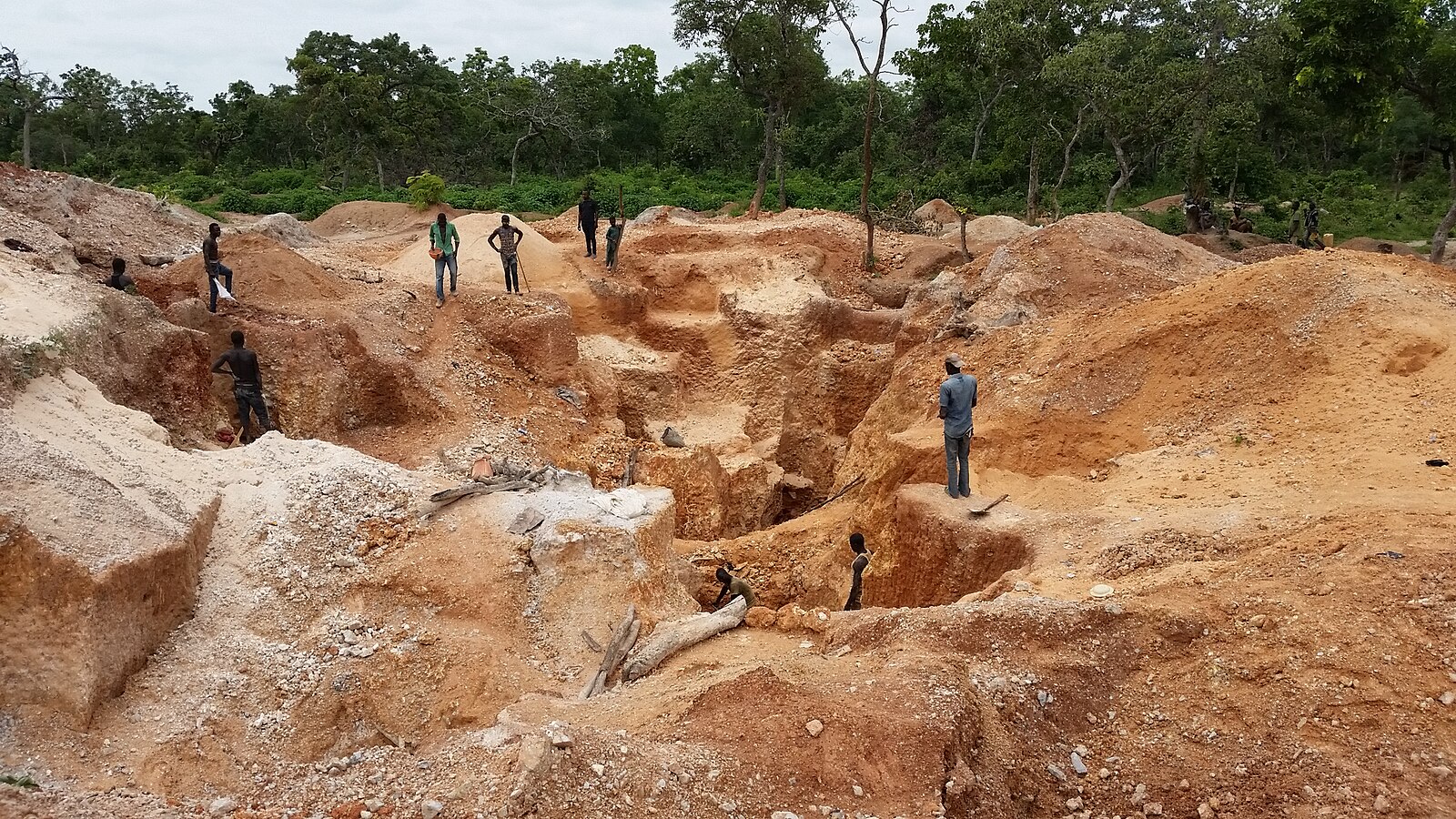
Much gold is dug by hand in small pits, as in Kwara State, pictured above. Tin has been mined on the Jos Plateau for more than a century.
Insecurity in mining areas of states such as Zamfara, Katsina and Niger draws repeated warnings in Nigerian media.
The risks are human as well as financial. In September 2026, 37 suspected illegal miners died in the custody of the Nigeria Security and Civil Defence Corps in Niger State.
The federal government set up a panel to investigate, and 20 officers were suspended.
Washington is now involved. On 23 September 2026, Alake and US Deputy Secretary of State Christopher Landau signed a minerals investment framework in New York.
The government says Nigeria’s mineral resources are worth an estimated US$700 billion, a figure that has not been independently audited.
Farmland, Water, Forests and Fisheries
Land is the resource most Nigerians actually live from. Agricultural land covered 77.1 percent of the country in 2024, and arable land 40.8 percent, World Bank data show.
Farming, forestry and fishing produced 23.0 percent of GDP in 2025.
About a third of all jobs, 33.5 percent in 2025, were in agriculture, according to a modelled International Labour Organization estimate. That makes land, rain and rivers the livelihood of tens of millions of Nigerians.
Water shapes the map. The Niger River enters from the northwest and the Benue from the east.
They meet at Lokoja, then run south to the delta. Lake Chad, shared with three neighbours, waters the far northeast.
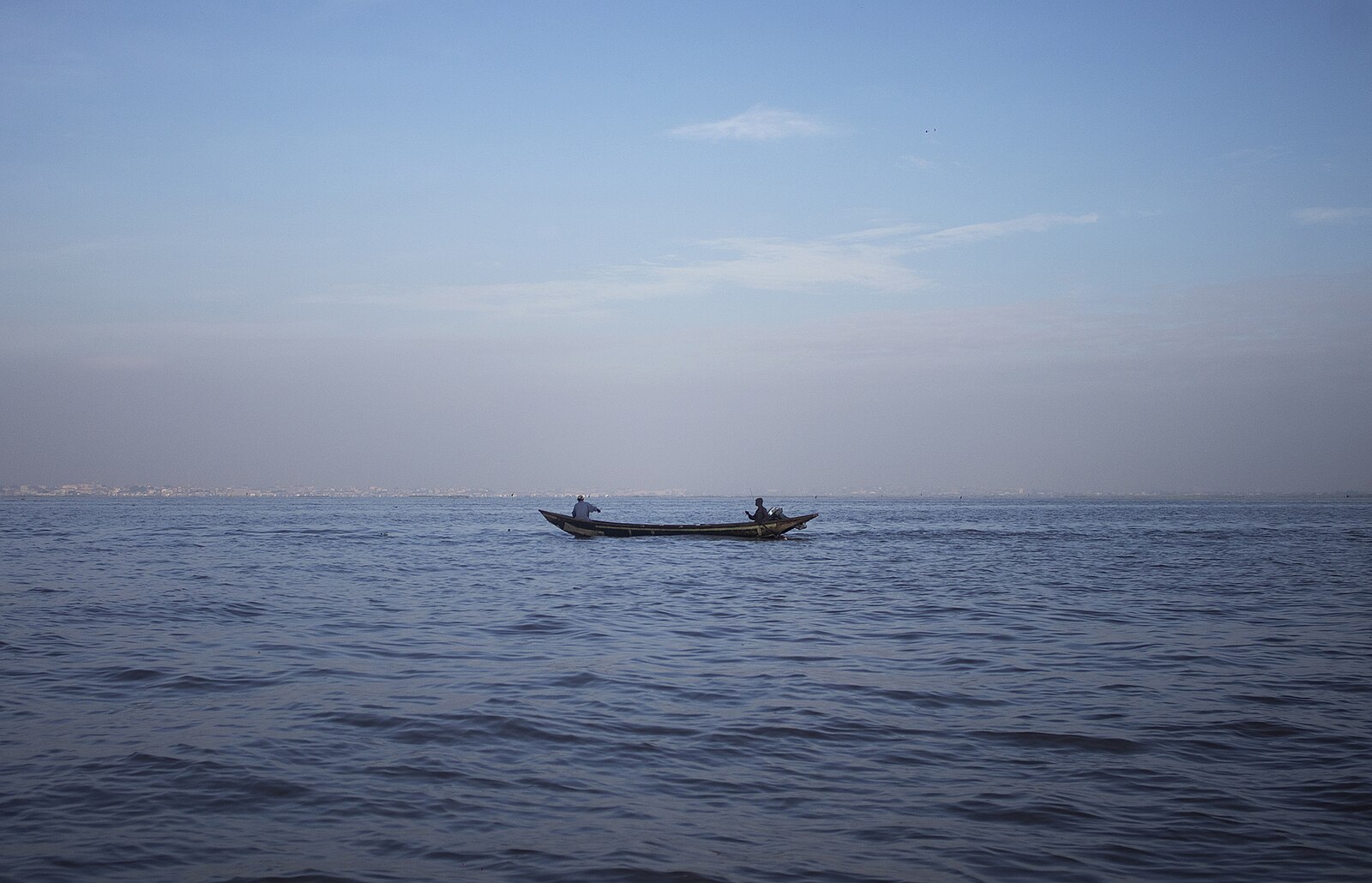
Forests covered 18.9 percent of land area in 2024, per the World Bank. The delta’s mangroves are the most exposed.
One internal Shell presentation, cited by Amnesty International, identified about 375 square kilometres of mangrove affected by pollution. Fisheries run along the Atlantic coast and through the creeks and lagoons.
The Environmental Cost in the Niger Delta
The price of oil is paid most heavily in the Niger Delta. The United Nations Environment Programme (UNEP) assessed Ogoniland, in Rivers State, from more than 4,000 samples at over 200 sites.
A federal agency, the Hydrocarbon Pollution Remediation Project (HYPREP), was set up to carry out the clean-up.
Progress is disputed. In October 2025, a House of Representatives committee held hearings into how clean-up funds were managed.
In August 2026, 51 civil society groups opposed restarting the Yorla South field in Ogoniland before its spills are cleaned up.
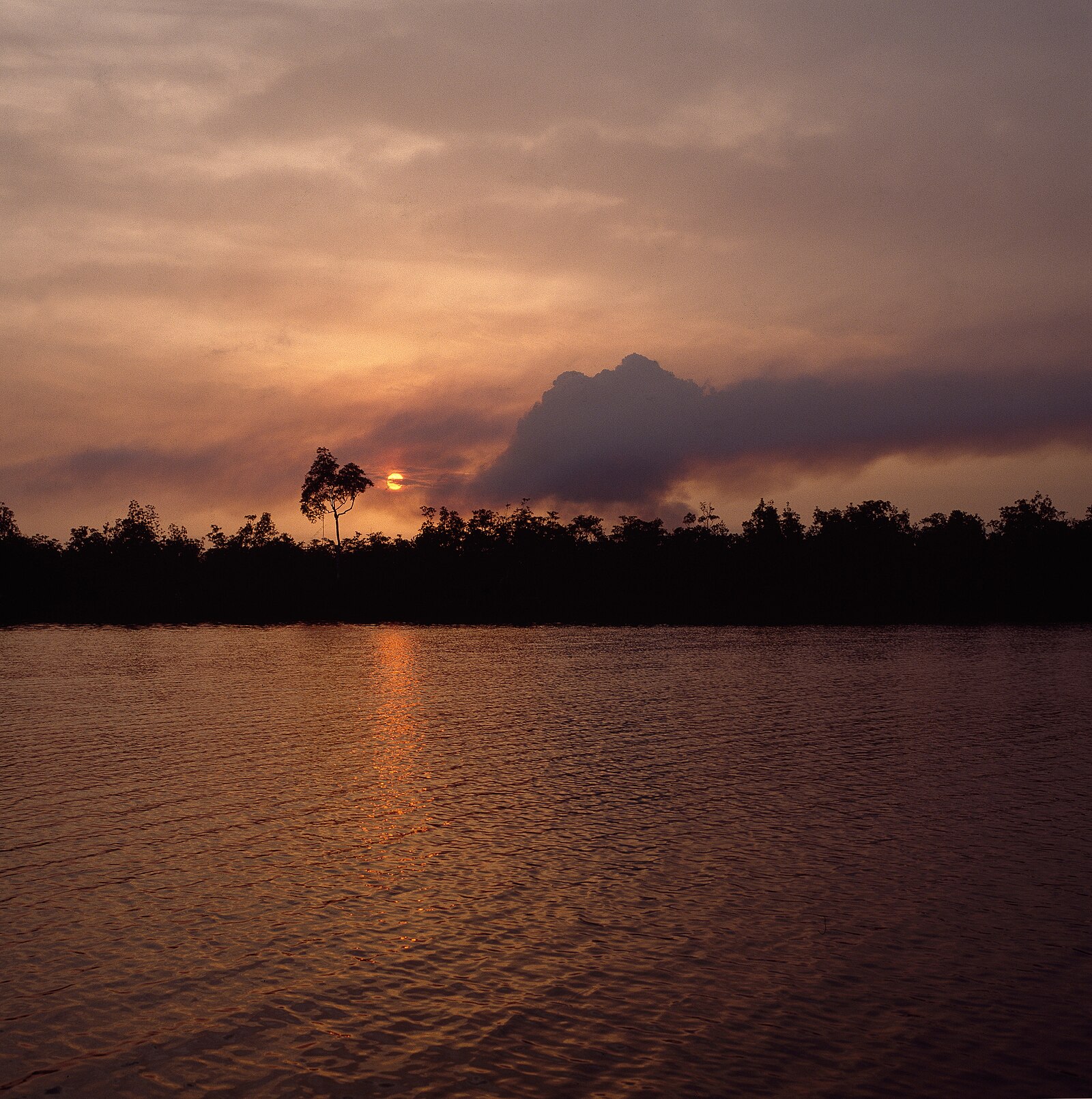
Old infrastructure keeps leaking. Crude escaped from a dormant wellhead at Kpean, in Ogoniland, in August 2025, civil society groups say.
They say ageing wellheads should be decommissioned, not returned to operation.
A report by Amnesty International and seven other groups draws on internal Shell documents disclosed in UK litigation. Premium Times covered it in July 2026.
It alleges Shell knew of serious pipeline and well integrity failures. It also cites an internal estimate of US$10.9 billion to decommission Shell’s onshore assets.
Shell rejected the report’s characterisation, saying it did not reflect the difficult operating environment of the time.
Courts will decide some of these questions. Claims by the Ogale and Bille communities against Shell remain before UK courts, with the Bille trial set for March 2027.
Environmental groups such as the Health of Mother Earth Foundation now warn that mining could repeat the delta’s damage.
What It Means for US Readers
For investors, Nigeria resources mean barrels and new acreage. Output above 1.6 million barrels a day adds steady Atlantic-basin supply.
The 40-block licensing round opens doors for US independents and service firms. The minerals framework invites American capital into lithium and rare earths.
The risks are concrete. Pipeline theft, security costs, community disputes and slow regulation can shut in barrels and stall mines.
Payments to the federation are tracked by Nigeria’s extractive industries transparency body, NEITI, which buyers and lenders should read before committing.
The delta and the northern mining belts carry security risks for travellers and expats. Check the US State Department advisory before any trip.
The Central Bank of Nigeria’s official rate was ₦1,331.60 per US dollar on 12 October 2026, a useful anchor for any budget.
What Prediction Markets Say
Oil and minerals policy runs through the presidency, because President Tinubu also holds the petroleum portfolio. The 2027 presidential election will therefore decide who controls licensing, gas pricing and the minerals push.
On Polymarket, bets give Tinubu a 73.5% chance of winning, as of 13 October, 8:58 a.m. ET. Tinubu belongs to the ruling All Progressives Congress (APC).
Peter Obi, a former governor of Anambra State, trades at 20%. About US$130,000 has been traded on the whole market, including US$82,000 on Tinubu.
The latest move is small. Obi slipped 3.5 points in a day and 4 points over the week, while Tinubu gained 2.5 points on the week.
These are bets with real money, not polls.
Why we show this: prediction markets turn real-money bets into a live probability that moves within minutes of the news, which is why investors, campaigns and newsrooms in the United States now follow them closely. We show them next to polls and official results, never instead of them.
What Is Not Known
The 40 blocks in the 2026 licensing round had not been named in full by mid-October 2026, and the bidding timetable was still to be published. Nobody yet knows which US firms, if any, will bid.
The size and grade of the Kaduna mineral province have not been published in an independent resource statement. The US$700 billion value of Nigeria’s minerals is a government estimate, not an audited figure.
The full cost of cleaning the Niger Delta is unknown, and so is who will pay it after the onshore sales. The UK court cases, the HYPREP probe and the Niger State deaths inquiry have not reached final conclusions.
Frequently Asked Questions
What are Nigeria’s main natural resources?
Oil and natural gas dominate, with 37.01 billion barrels of oil and condensate and 215.19 trillion cubic feet of gas declared as of 1 January 2026. Lithium, gold, tin, farmland, rivers and fisheries follow.
How much oil does Nigeria produce?
Crude oil and condensate averaged 1,677,777 barrels a day in August 2026, according to the regulator NUPRC. Crude alone averaged 1,500,190 barrels a day and met the OPEC quota.
Will Nigeria’s gas outlast its oil?
On current numbers, yes. The regulator puts the gas reserve life at 85 years, against 59 years for oil, at current production.
Who profits from Nigeria’s oil?
Revenue flows to the federation and is shared between federal, state and local governments. Oil-producing states get at least 13 percent of resource revenue, and host communities get a trust fund under the 2021 petroleum law.
Does Nigeria have lithium?
Yes. A lithium processing plant in Nasarawa State was inaugurated on 2 July 2026, and the government announced lithium among the minerals found in a new Kaduna State province in June 2026.
What is the environmental cost of oil in the Niger Delta?
Decades of spills and gas flaring have damaged farms, creeks and fisheries. Cases by the Ogale and Bille communities against Shell are still before UK courts, with the Bille trial set for March 2027.
Sources: NUPRC national reserves declaration, 1 January 2026 (Premium Times), https://www.premiumtimesng.com/business/business-news/868682-nigerias-oil-gas-reserves-hit-37bn-barrels-215-tcf-nuprc.html; NUPRC August 2026 production report (Premium Times), https://www.premiumtimesng.com/business/business-news/909563-nigerias-oil-output-rises-0-4-in-august.html; NUPRC 2026 licensing round (Premium Times), https://www.premiumtimesng.com/business/business-news/915207-nuprc-announces-2026-licensing-round-unveils-plans-to-boost-production.html; World Bank Open Data, Nigeria indicators, https://data.worldbank.org/country/nigeria; Central Bank of Nigeria exchange rates, https://www.cbn.gov.ng/rates/ExchRateByCurrency.html; Lithium plant inauguration in Nasarawa (Premium Times), https://www.premiumtimesng.com/business/business-news/892498-tinubu-inaugurates-lithium-plant-in-nasarawa-favours-local-mineral-processing.html; Kaduna polymetallic province announcement (Premium Times), https://www.premiumtimesng.com/news/more-news/890562-fg-announces-discovery-of-platinum-lithium-rare-earth-deposits-in-kaduna.html; Nigeria-US minerals framework and HOMEF response (Premium Times), https://www.premiumtimesng.com/news/top-news/913787-homef-raises-alarm-over-nigeria-us-mining-pact-warns-against-oil-curse-repeat.html; Amnesty International report on Shell documents (Premium Times), https://www.premiumtimesng.com/news/top-news/898944-shell-documents-reveal-basket-pipeline-missing-wells-10-9-billion-clean-up-liability-in-niger-delta-report.html; Ogoniland restart opposition (Premium Times), https://www.premiumtimesng.com/regional/south-south-regional/901133-ogoniland-51-civil-society-groups-oppose-planned-resumption-of-oil-production.html; Gas flaring enforcement investigation (Premium Times), https://www.premiumtimesng.com/investigationspecial-reports/913916-investigation-nuprc-fails-to-enforce-nigerias-anti-flaring-law-as-methane-emissions-go-unchecked-2.html; UNEP Environmental Assessment of Ogoniland, https://www.unep.org/explore-topics/disasters-conflicts/where-we-work/nigeria/environmental-assessment-ogoniland-report. All accessed 13 October 2026.
This article was produced by The Rio Times’ automated newsroom system. How we use AI · Report an error · Editorial responsibility: Matthias Camenzind, Editor-in-Chief
Expat Guide to Nigeria
What The Rio Times publishes for foreigners who live in or move to Nigeria.
Start here
- Davido Lagos Residency Books Three National Theatre Nights in Nigeria
- Nigeria Visa and Residency: US$2,000 Residence Card, US$15 Daily Fine for Overstaying
- Healthcare in Nigeria for expats and what it actually costs
- Taxes in Nigeria for Expats Under the New Regime
City guides
Coming up in Nigeria
- Dave Lagos Concert Set for 16 and 17 October 17 Oct
- Lagos Church Opens Free Camp Meeting on 21 October 2026 21 Oct
- Lagos Fashion Week Runs 28 October to 1 November 2026 28 Oct
- CANEX WKND 2026 Opens in Lagos on 5 November 5 Nov
Understand Nigeria